I’m almost at the halfway point of my work at El Fénix and I’m starting to get in the groove! Over the last few days, I’ve been working on various projects around the farm and processing some more coffee.
Woodworking
I’ve always loved woodworking, and now I’m getting some chances to put that to use by building a few things around the farm. So far, I’ve built a bench, a sifter for compost, and a drying rack for coffee. We also fixed a railing around the house that holds up a fence to keep the dogs in. The tools here are limited in comparison to, say, the 3 mile island boathouse that I worked in last summer, but they get the job done!

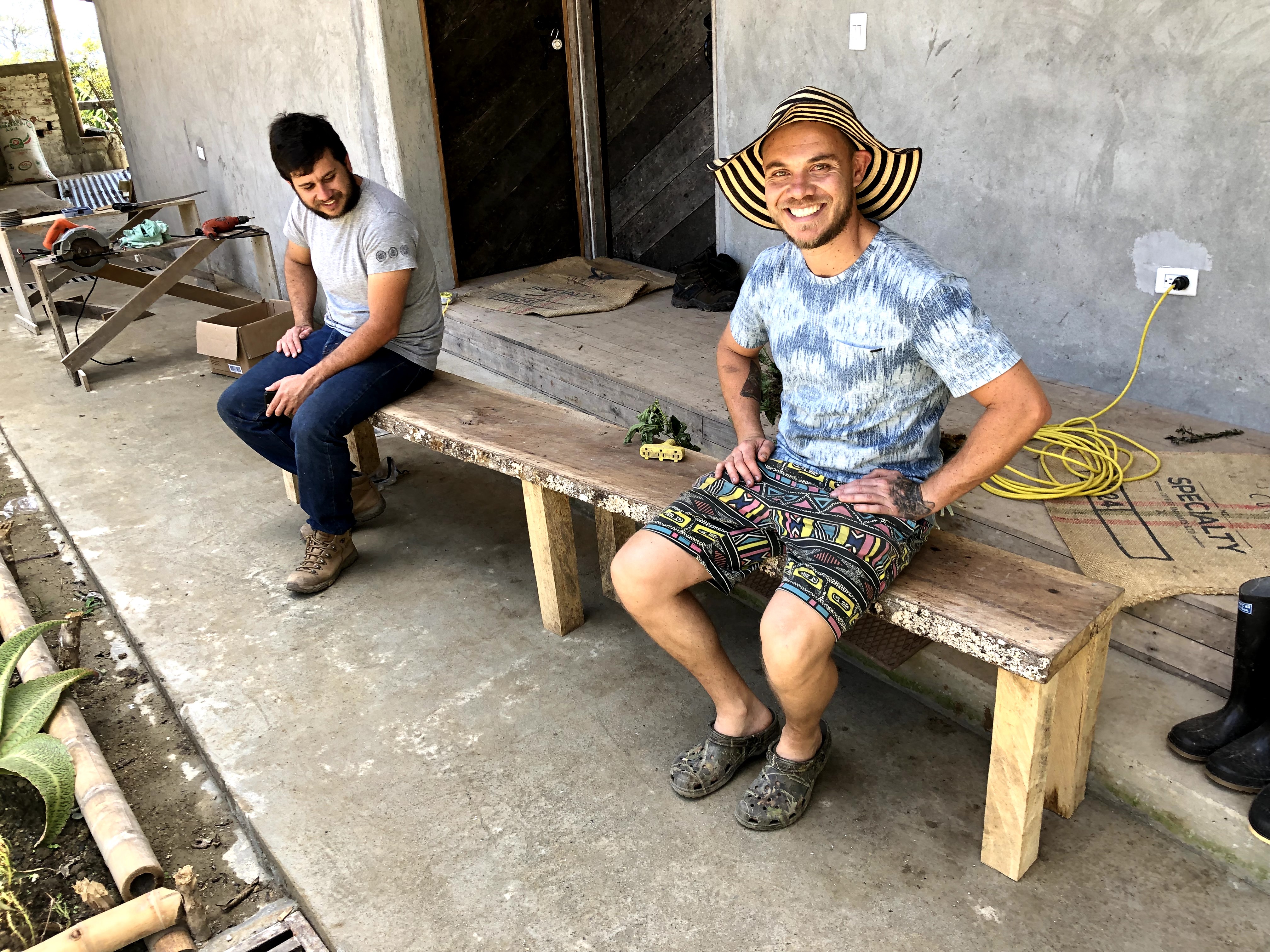
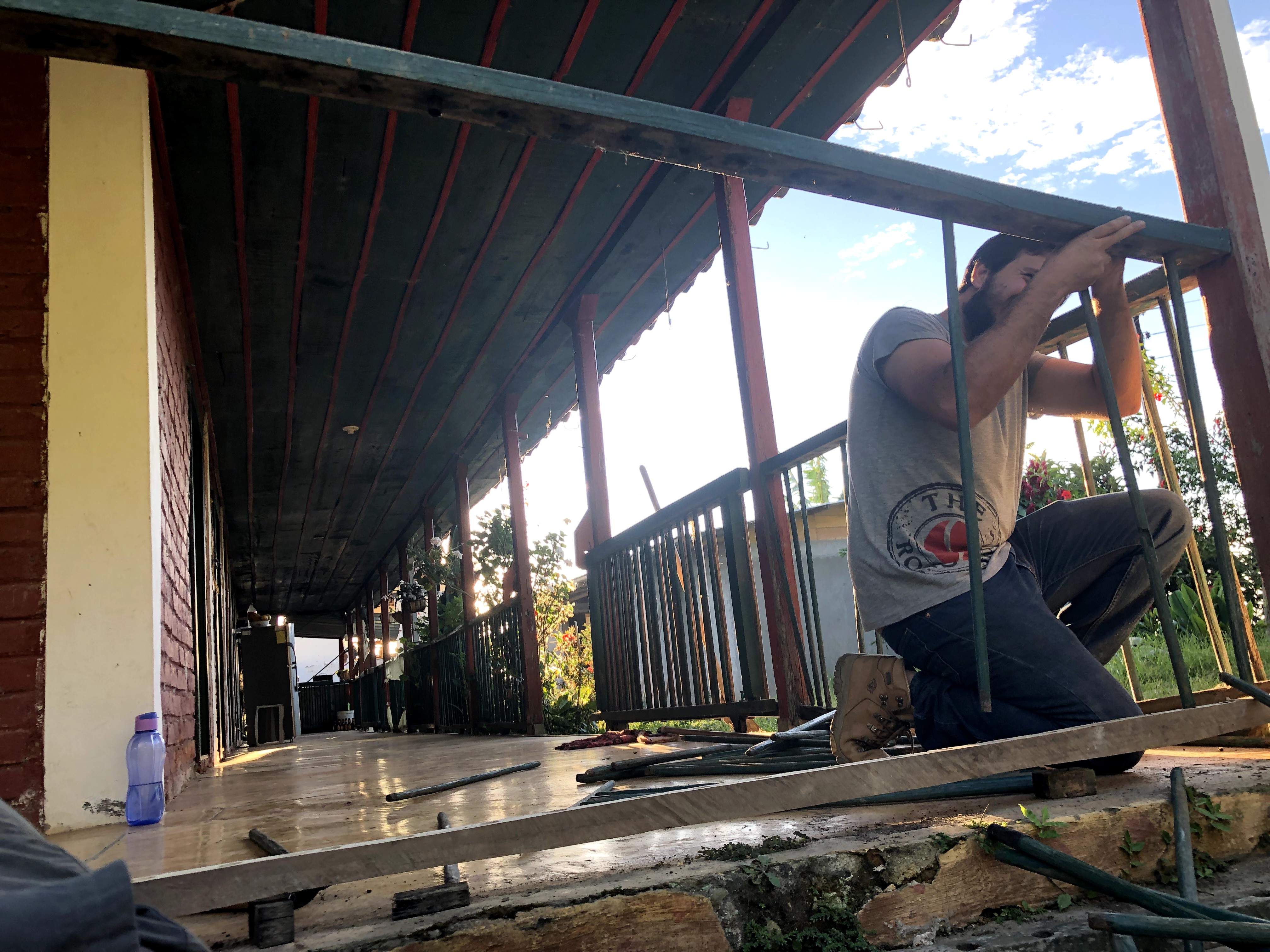
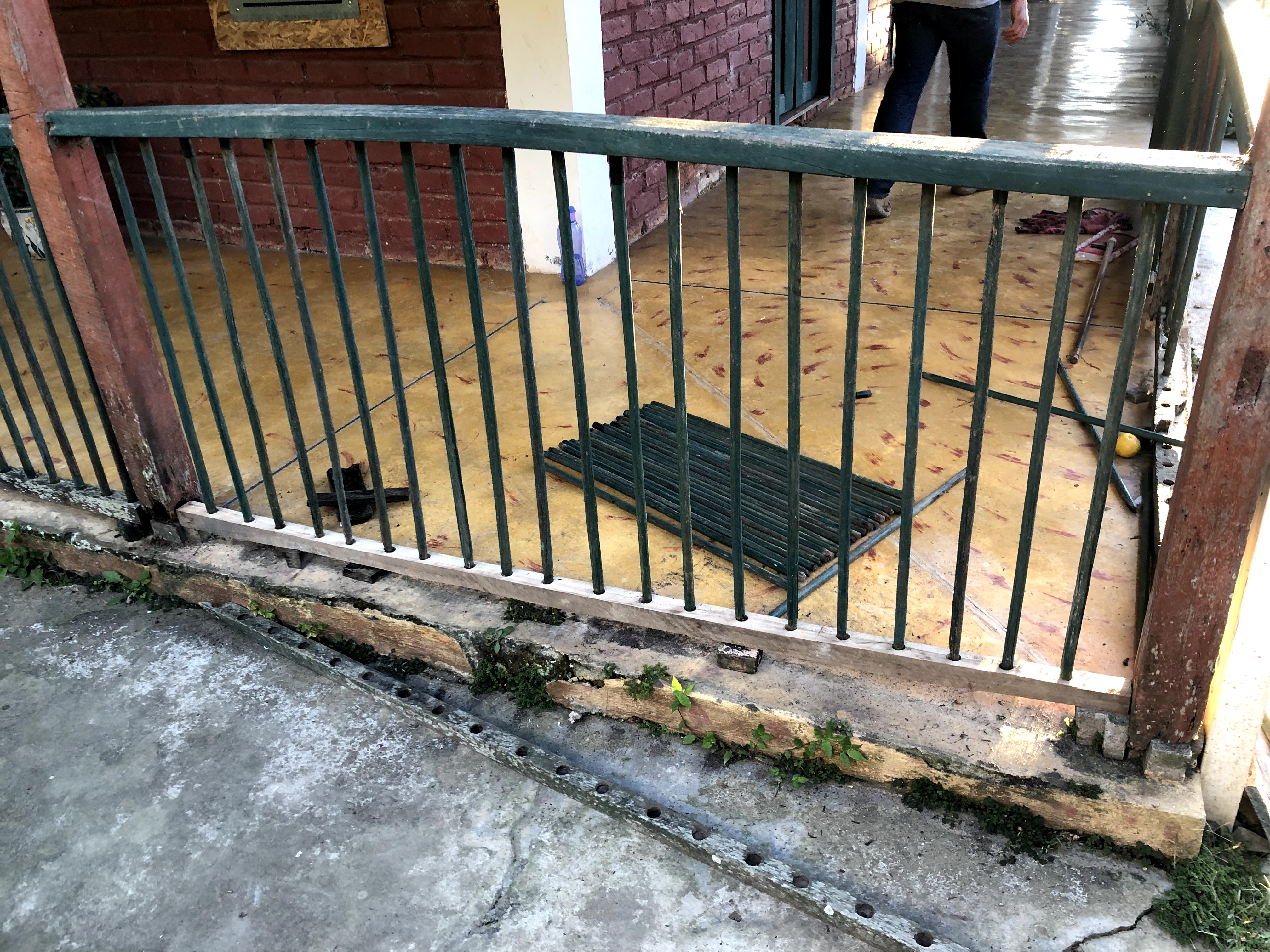
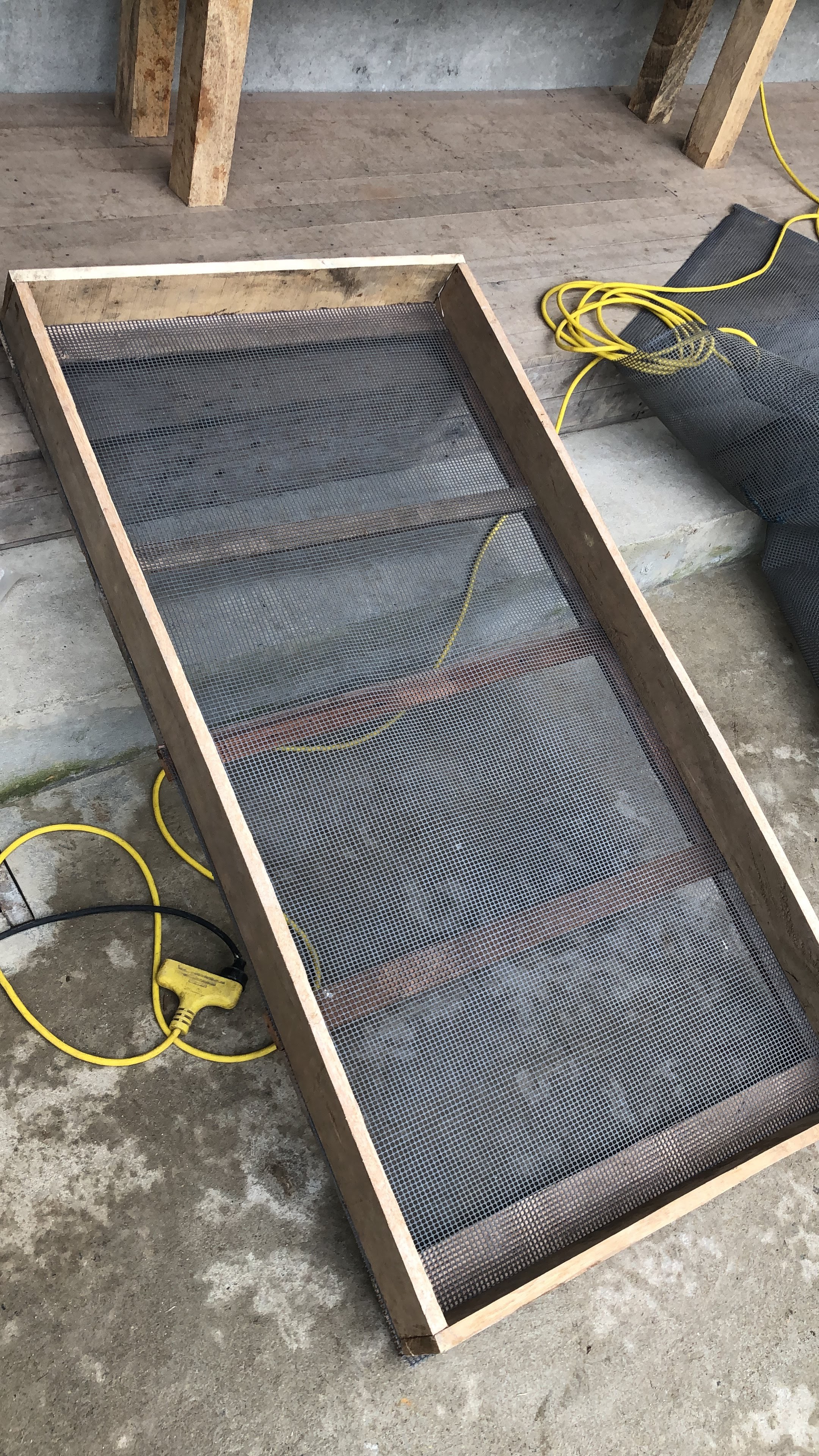
The bench is a very nice addition because before it, the only place to sit was the picnic table next to the kitchen, which gets very buggy at night. Now the bench nicely straddles the entrances to the rooms, providing a comfortable area to take your shoes off or to hang out with the dogs!

Trip on a Truck
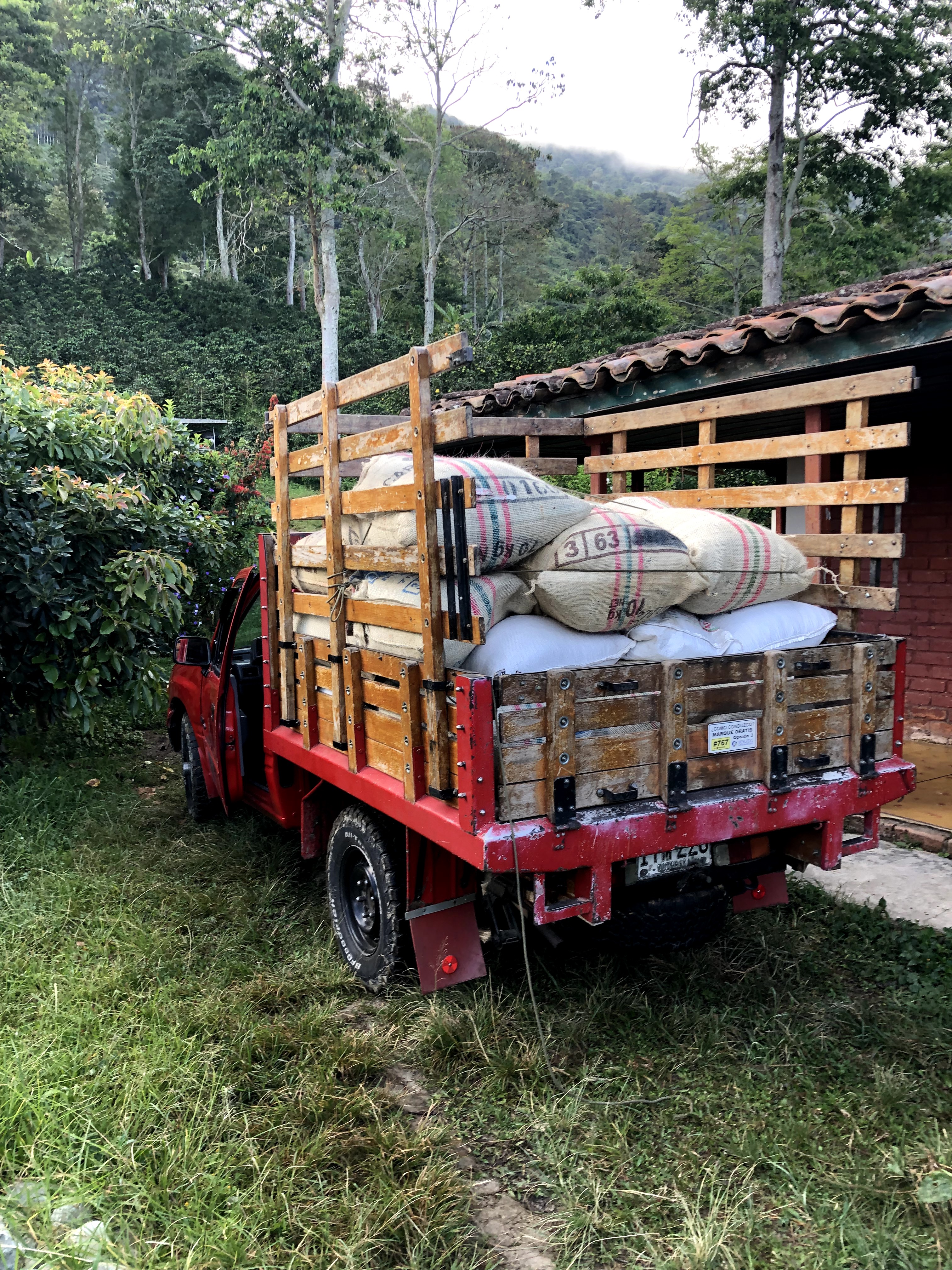
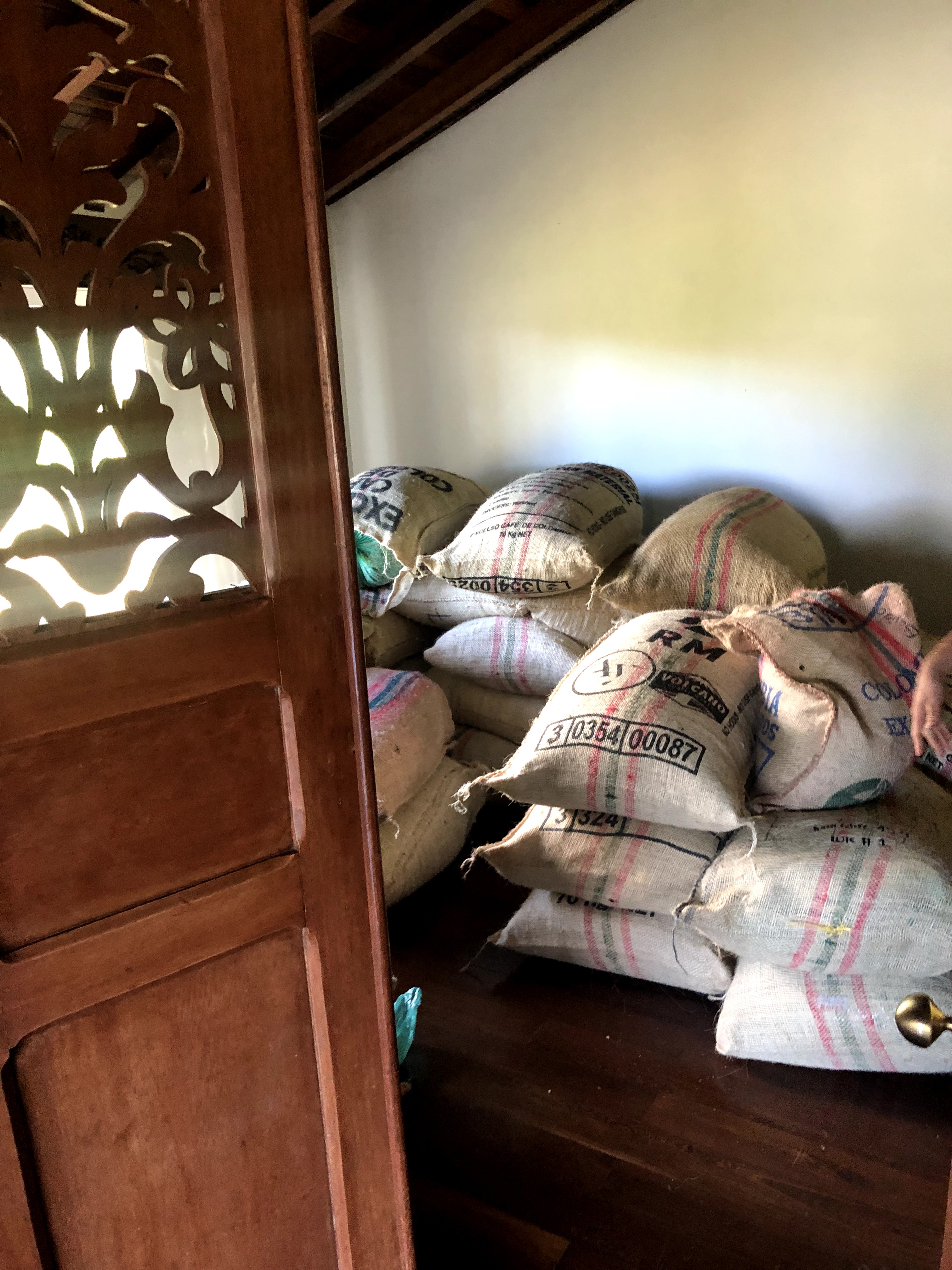
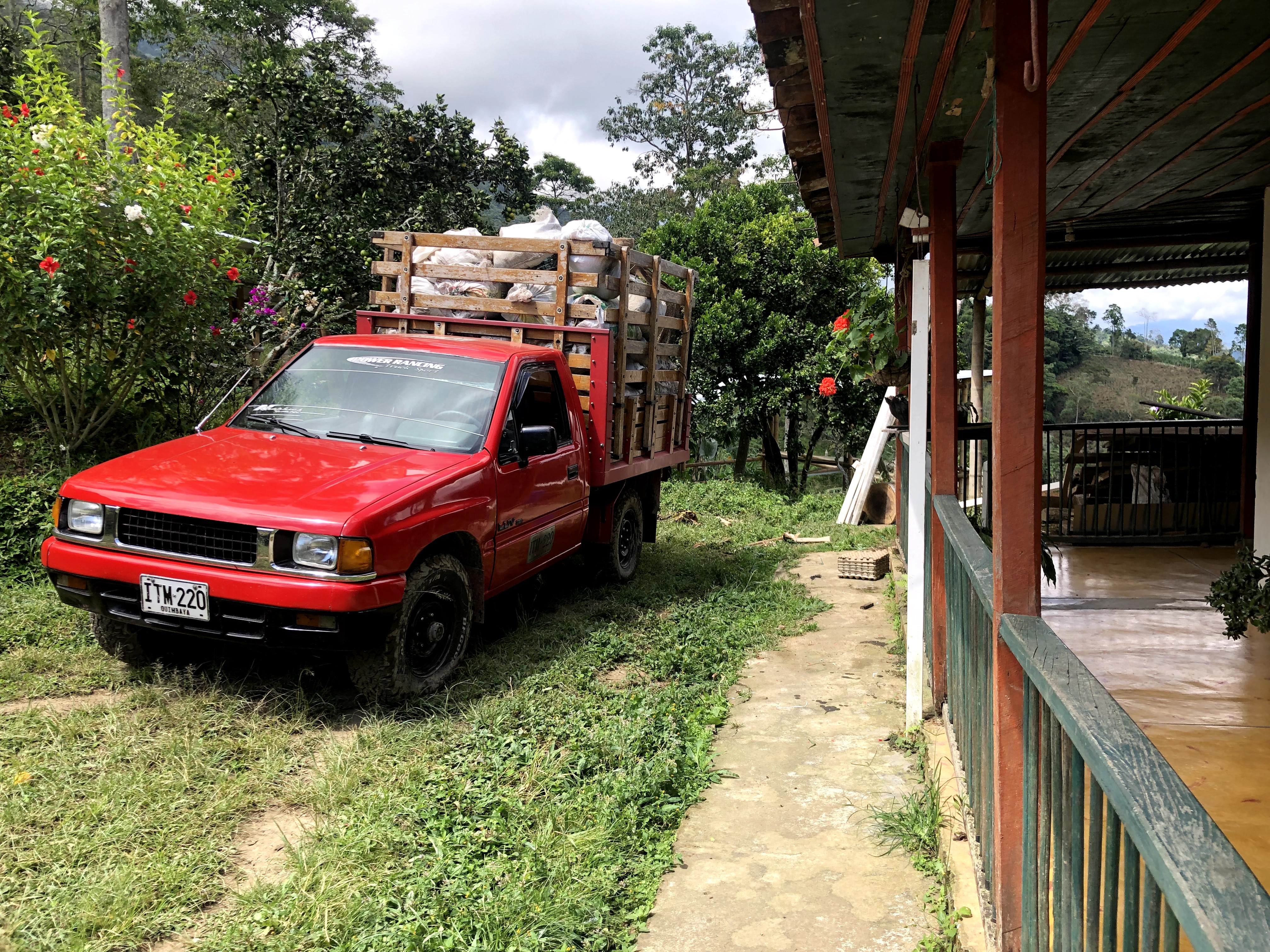
Yesterday Fidel, a friend who bravely takes his modified pickup truck through the mountains, came by to help us finish a few errands. First, we loaded up a bunch of coffee and brought it to Miguel’s family’s house. Then, we packed 10 sacks of crushed bricks and fixed the road to the farm with them. Finally, we loaded all of the trash from the farm onto the truck for Fidel to take away. 3 trips, 3 full loads – and all before 10am!

The road to El Fénix is in very good condition for what it is. In fact, all of the roads in the Quindio department are in excellent shape. Although the mountain road from Calarca to the farm is dirt, it has several concrete runoff lanes for streams and the steepest parts have concrete tracks (imagine if a road were paved only where the wheels go) to help cars. There is a single part of the road that’s falling apart, though, so that’s where we went to fix!
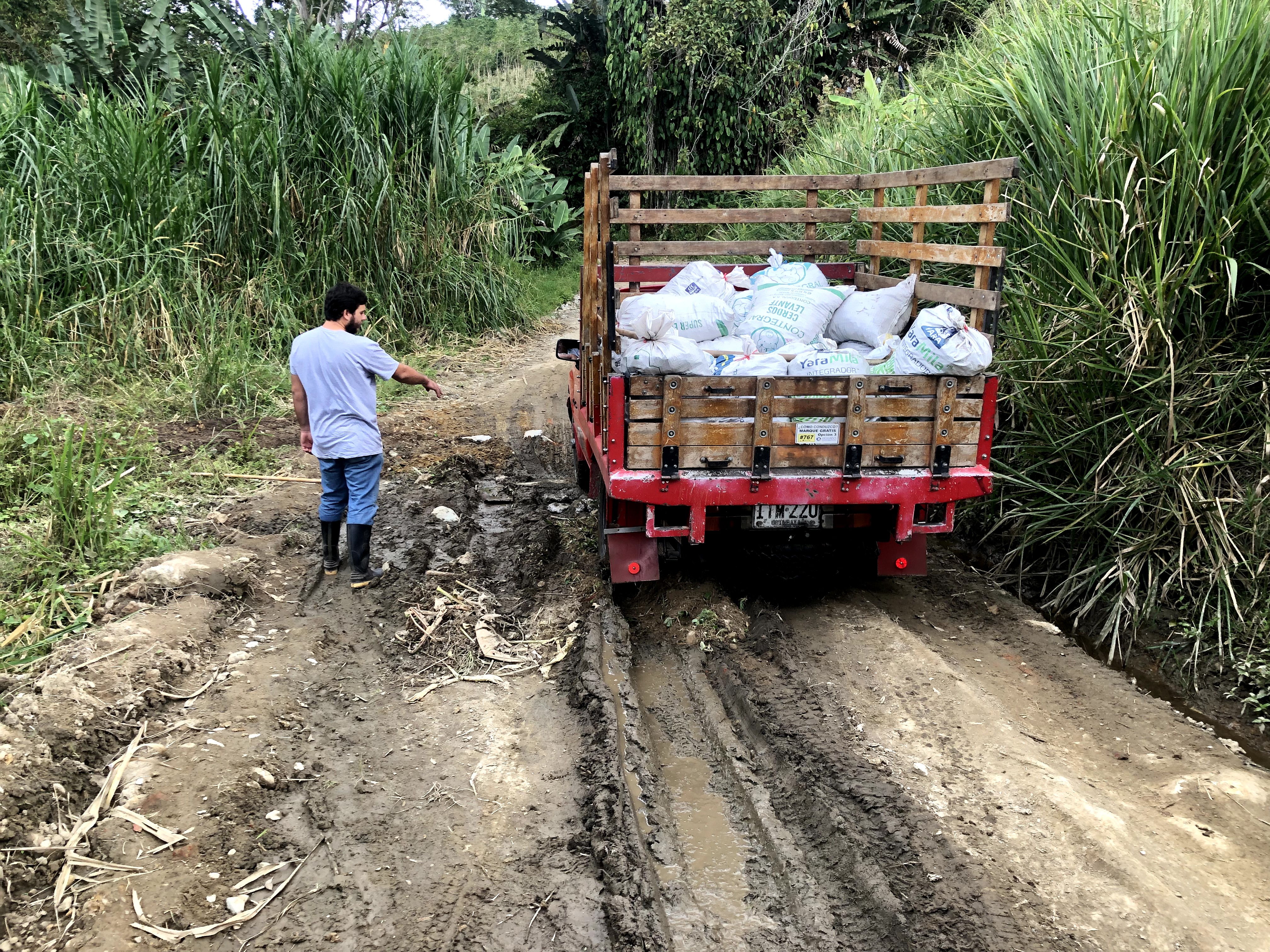
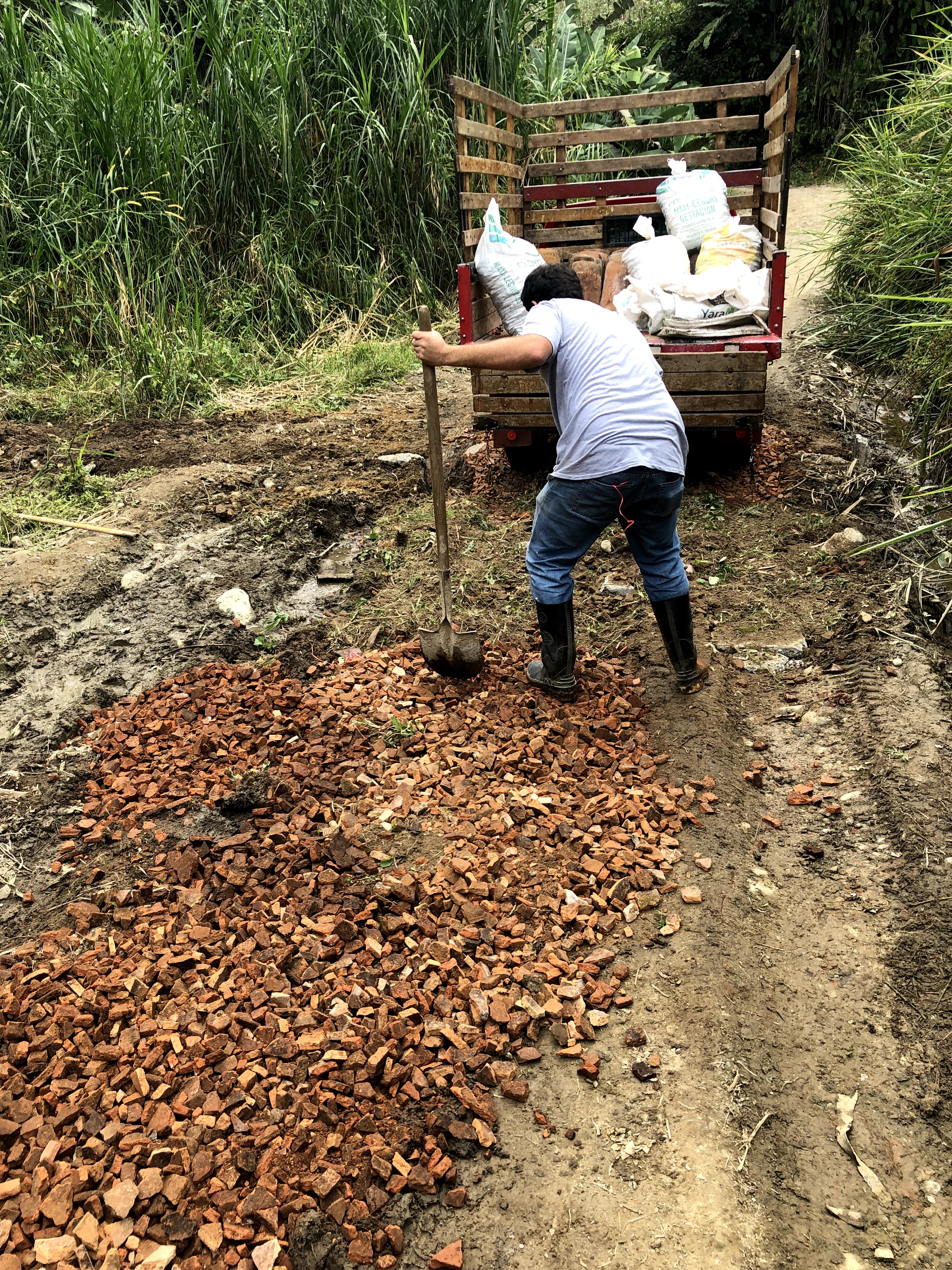
We undertook this fixing because the day before, a maintenance crew had come to install a pipe underneath the road for drainage, so the road here would stop flooding. The only thing left to do was to fix the current mud, and hopefully we did so!
Last but not least, we loaded the truck to the top with all of the trash the farm has accumulated over the last few weeks for Fidel to take to a dump.
Coffee Farming
Life has continued on the coffee farm. This week workers have started harvesting some of the special varietal lots, including the Pink Bourbon, Mokas, and Geshas, which means I have more coffee for experiments!
The pink bourbon cherries (which you may recall I picked myself a few days ago) are a softer orange-ish pink than regular cherries. Their main defining feature, though, is the super high sugar content of the ripe cherry. Biting into it, I immediately noticed how sugary it was. Geshas, on the other hand, have a very low natural sugar content. Instead, they are well-known for delicate, floral flavors in the cup. I have been processing them separately in extended in-cherry fermentation, first in water and now sealed in plastic bags cooled inside a bucket of water.
First of all, though, the cherries are all pretty visually distinct. This is especially true for Moka cherries, which are perhaps the most unique looking coffee cherries in the Arabica species due to their size.


It’s not incredibly obvious from this picture, but moka cherries are about the size of a pea whereas other coffee cherries are generally about the size, well, of a cherry.
In any case, here’s what my experiments look like at the moment:

The bags are gently sealed to allow air to escape, and they are in water to help with temperature regulation. The right large bag is the pink bourbon; the left large bag is gesha; the small bag is the little bit of moka that was picked.
In about 10 minutes, I’ll head to the wet mill to drain the bags and start drying the cherries without pulping – the natural process. We’ll see how it turns out!
That’s the scoop here from El Fénix. Either tomorrow or Friday I’ll head to the Armenia office of Raw Materials, so look out for a blog post in the next few days on their social business model and hopefully on milling some of my samples!
Have a great day!
Alex


Wow looks like you are working hard – bricks, bags of coffee and trash run all before 10 am! And that looks like a great truck.
LikeLike
Beautiful bench!!!
LikeLike