Hello, blog! It’s me, Alex! I live on a coffee farm now! I have so many exciting things to tell you all about, so I hope you’ll stick with me through this post!
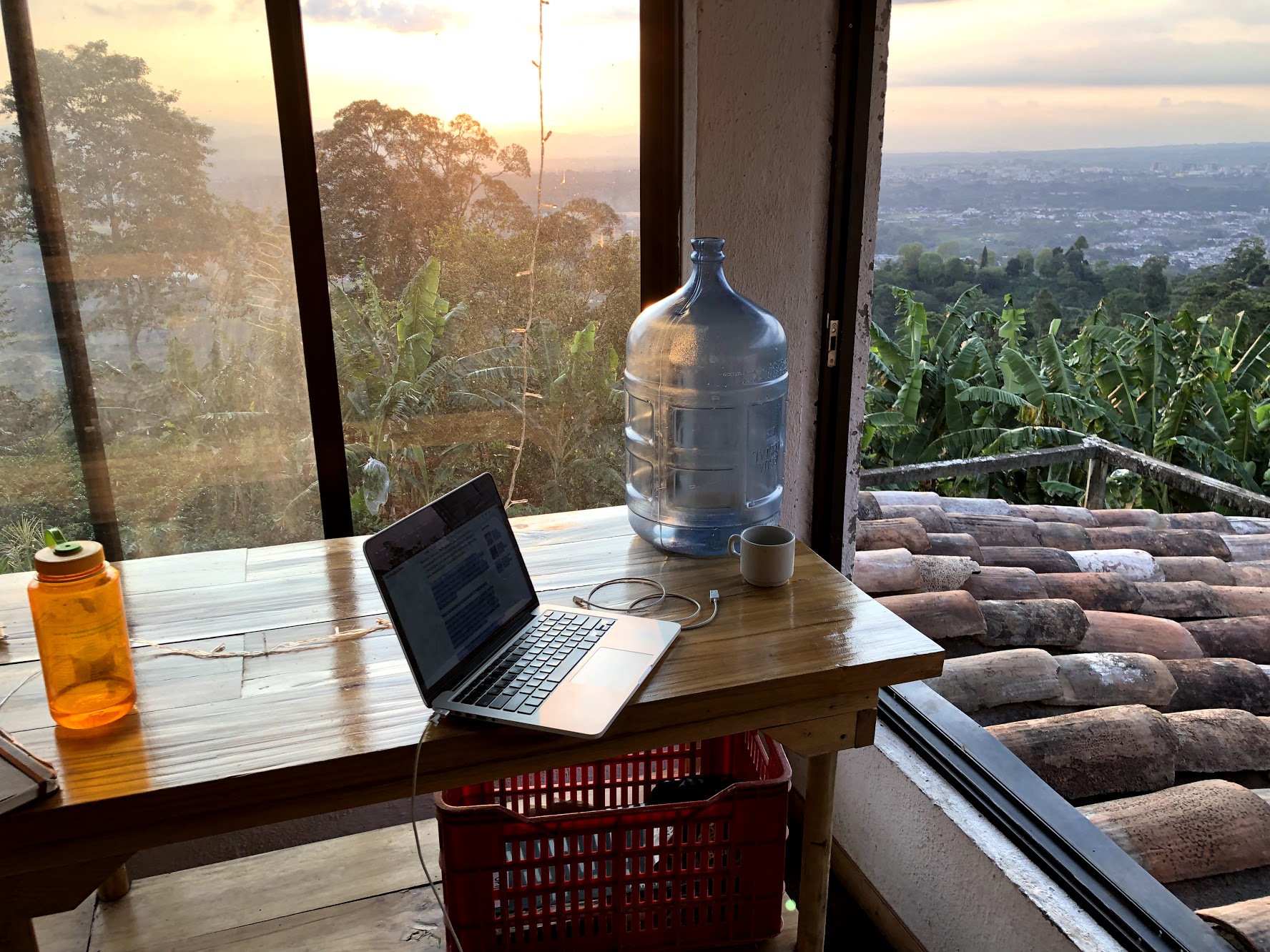
Instead of listing all of the things that I’ve done in chronological order, I’d like to try to give you a sense of what life is like on a coffee farm. Spoiler: it is very hard work. I’ve been exhausted the last few days, and I apologize for my lack of posting, but hopefully I can make it up to you with some beautiful pictures and stories from El Fénix.
The Coffee Farm
El Fénix is a coffee farm. It has about 10 different lots of land with coffee trees on it; in total, there are several thousand coffee trees. A small dirt road accesses El Fénix from the nearby town of Calarca in the Quindio department of Colombia. The farm has a main courtyard that is surrounded by lots of coffee on all sides, along with a wet mill station and drying beds.
The courtyard houses three buildings. The oldest building contains a storage room, a house for the keeper of the farm, and a bunkroom for workers. In total, there are 7 workers and 2 contractors, while Don Eduardo and his family keep up the house and cook meals for the workers (and myself!). The smallest building, which is the only one with two stories, is much newer. The top floor of the smallest building houses probably the most beautifully situated cupping lab in the world, while the bottom floor has bathrooms for guests. The final building is a brand new structure with three large bedrooms for international guests (like coffee buyers). This is where I’m staying, along with Miguel and Alejandro.
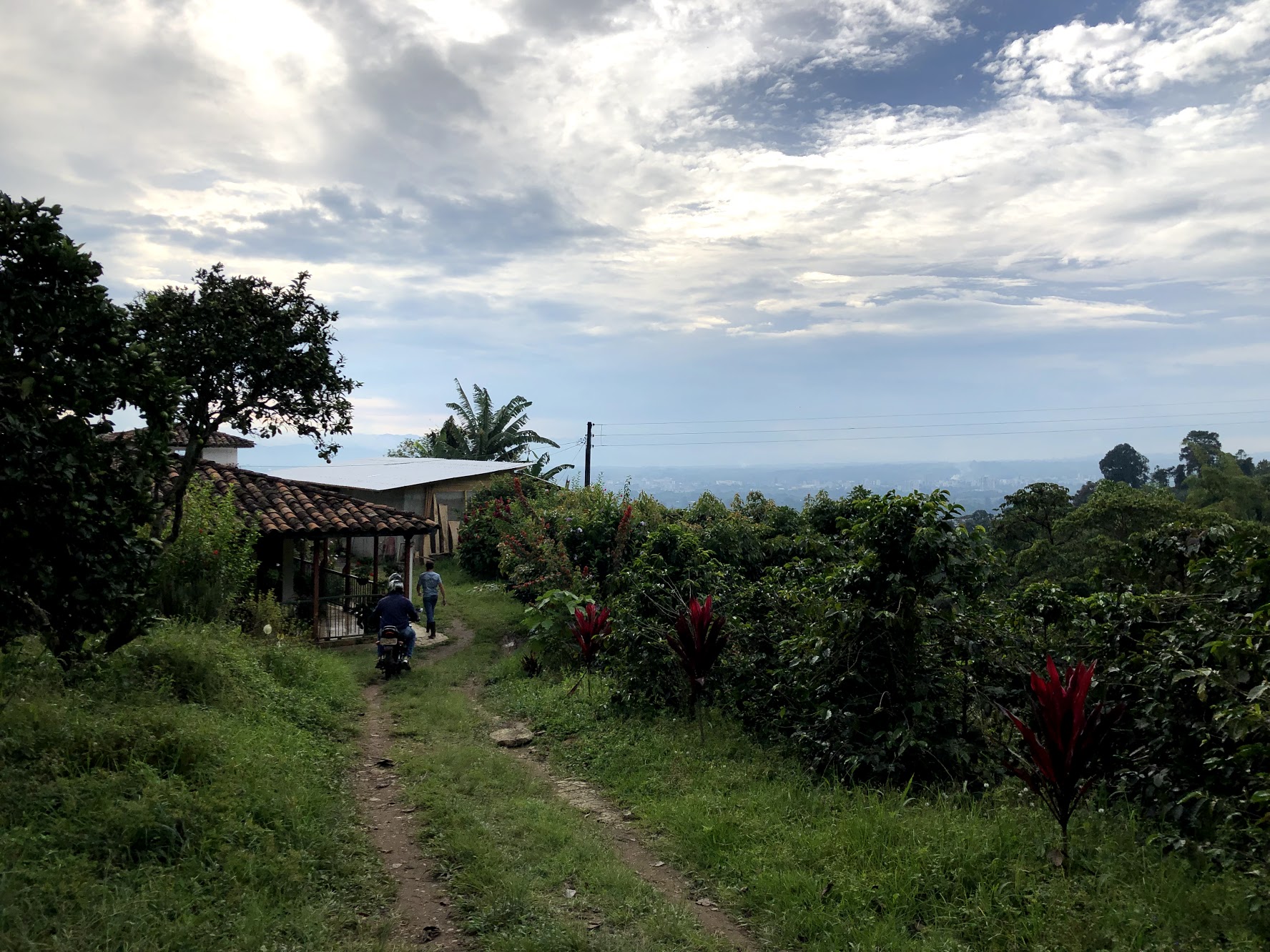
Approaching the farm. The older house is visible on the left, while you can make out the white roof of the new guesthouse on the right. The road, like everything, is surrounded by coffee trees. 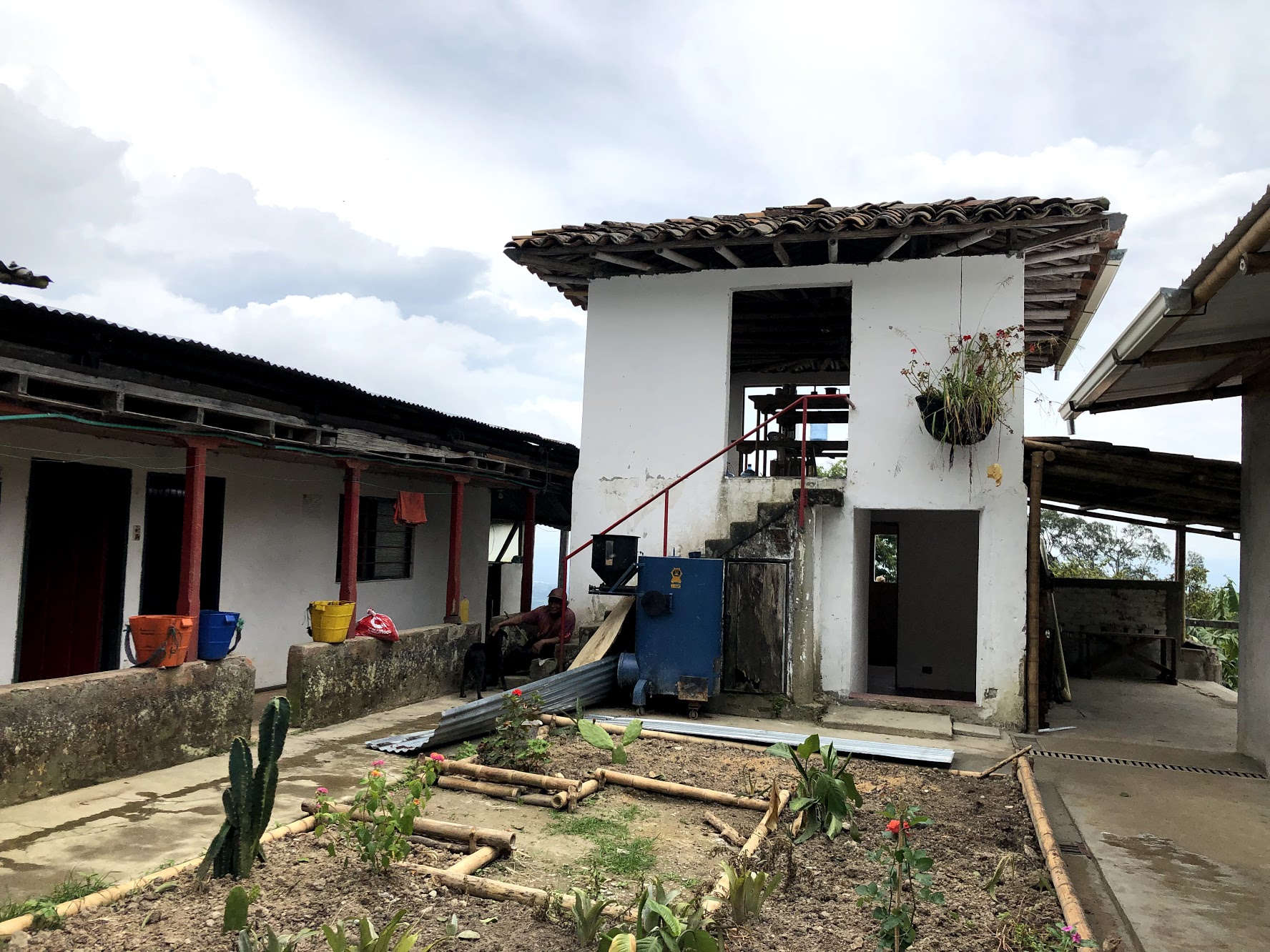
The cupping lab/bathroom building, situated between the workers’ residence in the main house (door on the left) and the newer guesthouse. 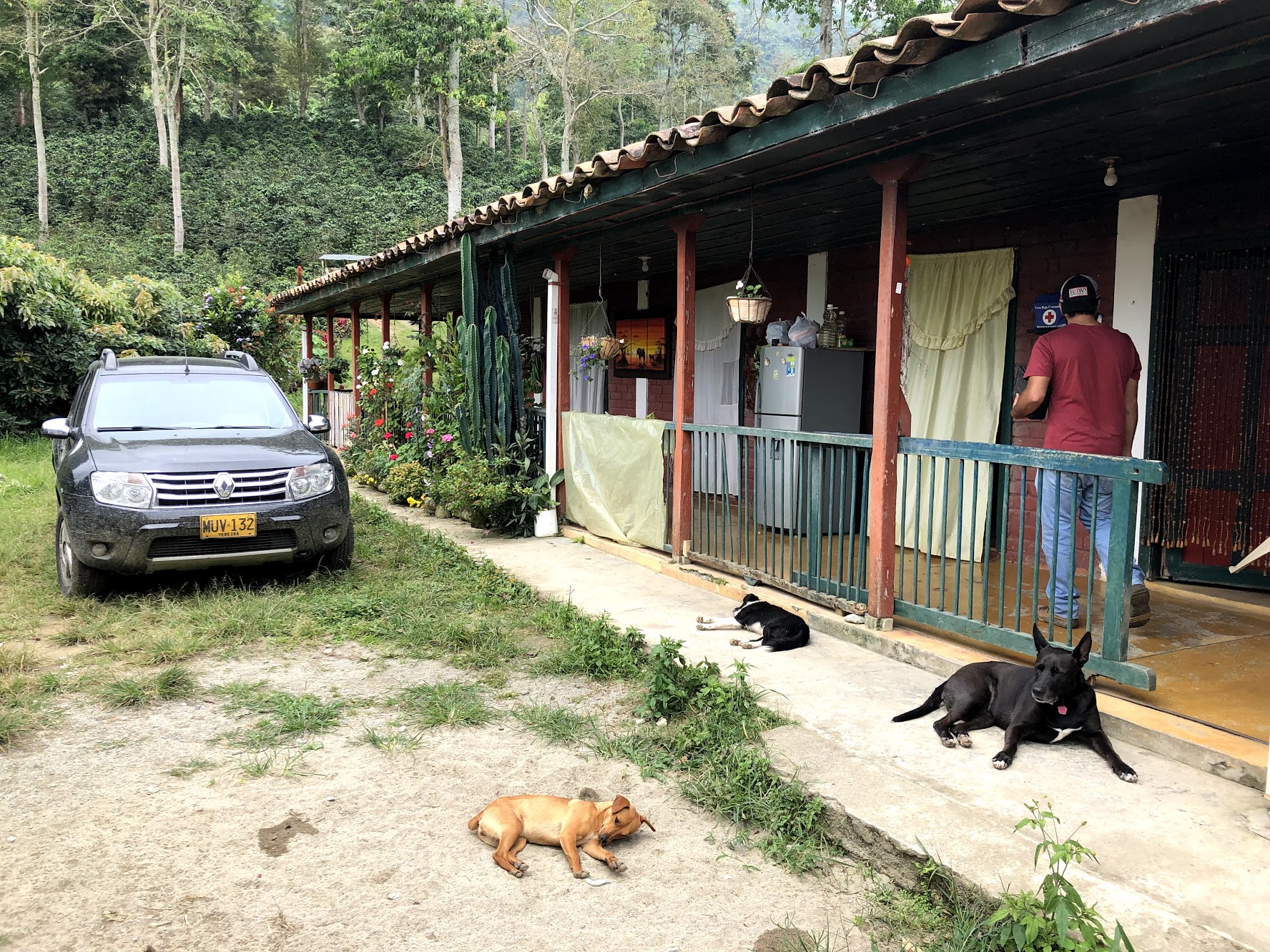
The main house, where Don Eduardo and his family live and cook meals. 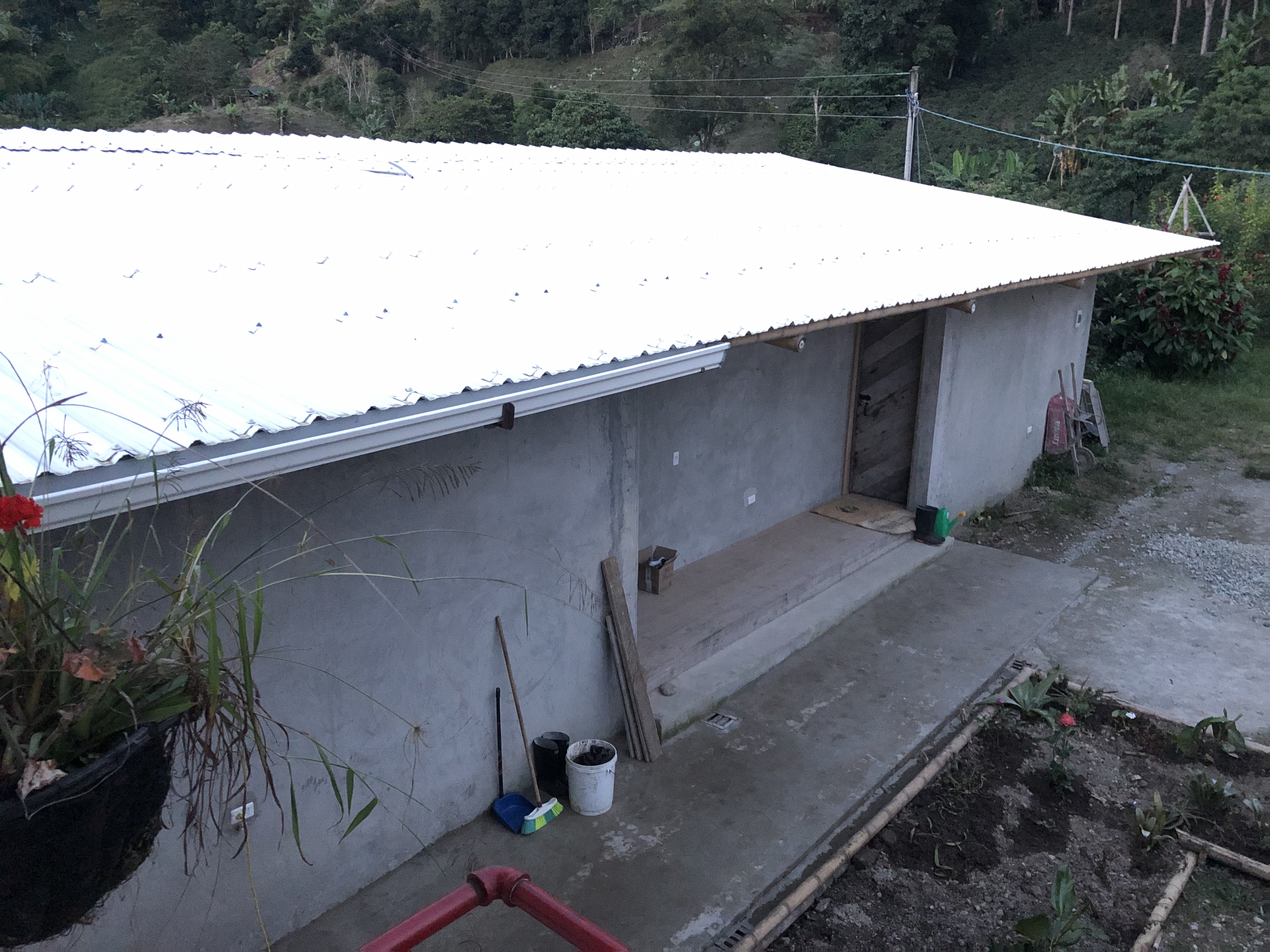
The guesthouse, in its fancy new concrete and wooden finish. Well, it’s not quite a “finish” – all of the wooden flooring is waiting to be sanded and varnished sometime next week. Like everything, it’s a work in progress! 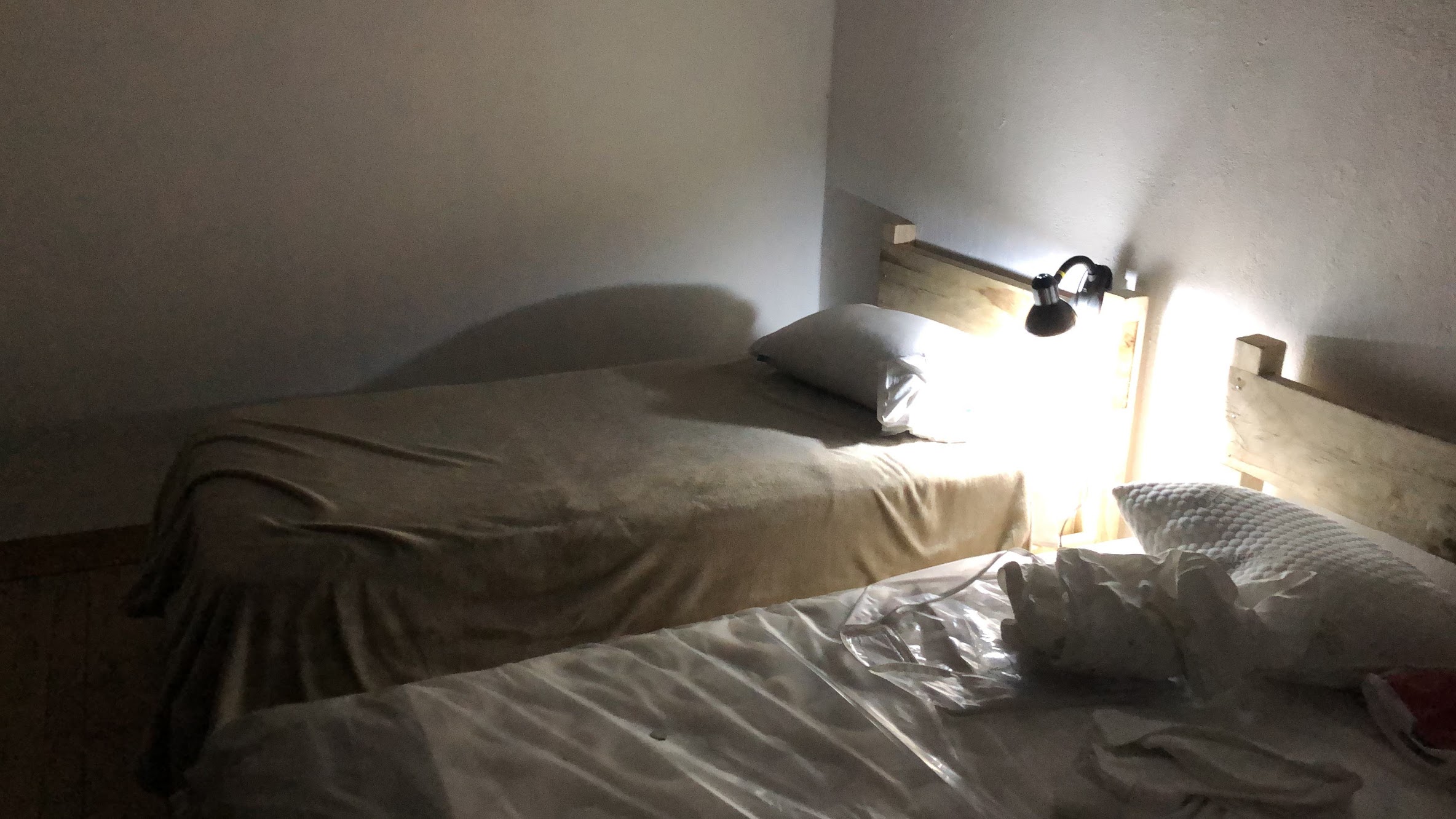
My humble bedroom. Our first task upon my arrival was to move the bedframes in (they’d just been assembled the day before I got here) and set up the mattresses. There are no lights installed where wires come out of the walls yet, but this lamp works great. 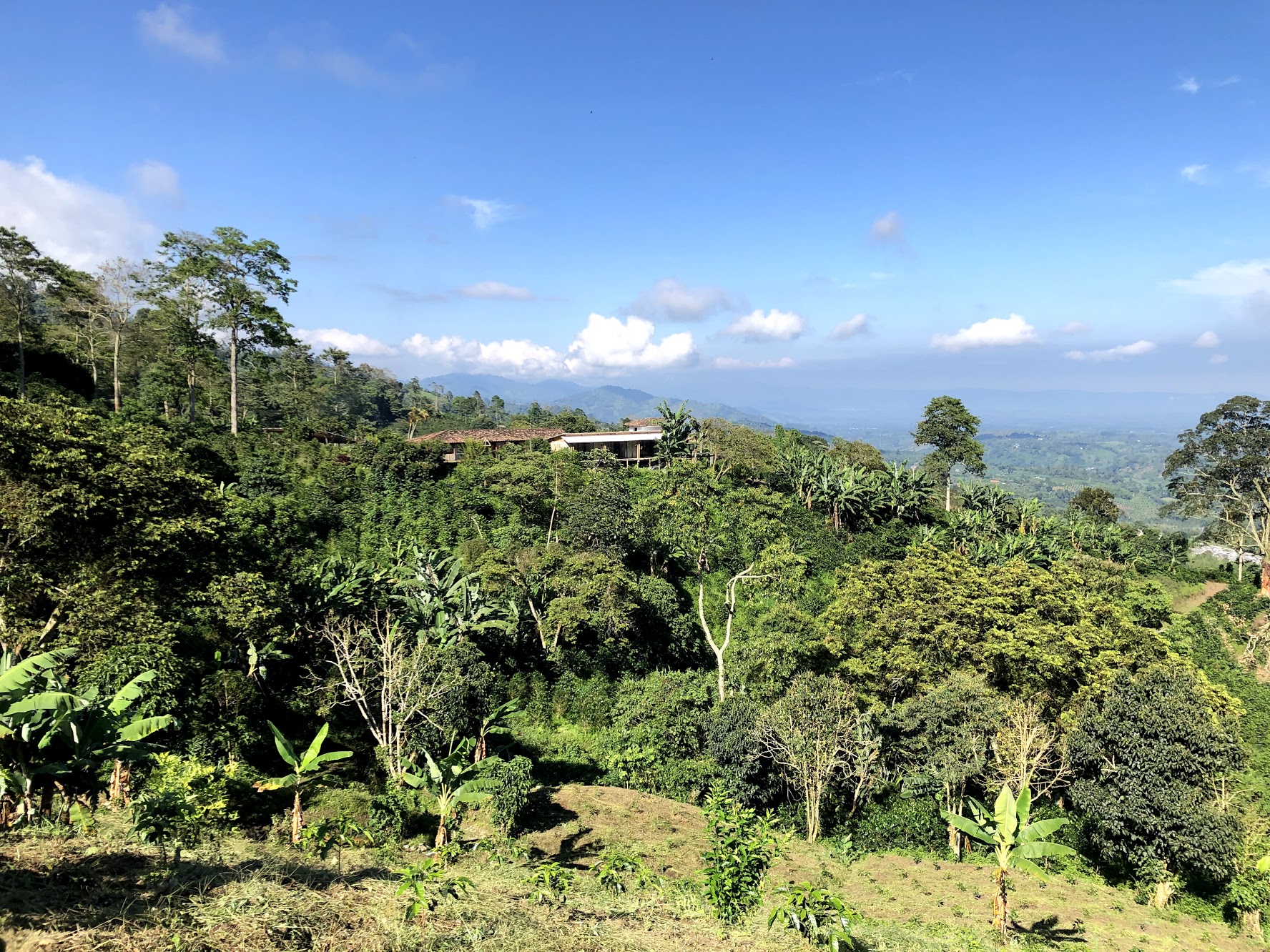
A view of the main buildings from the field. Stunning
The Equipment
As I mentioned, El Fénix also has a wet mill and drying beds for processing coffee. The wet mill is state-of-the-art – nearly brand new – and it’s a delight to work on. Currently we are on the last pass of a harvest, so the majority of the recently ripened coffee has already been processed. This works out very well for me: pickers collect about one or two 50-kilo bags of cherry a day, which is small enough that it can be processed manually and experimented with without making a big dent in the export crop.
The wet mill consists of several parts, separated into three stages. It is situated on a hill with three stepped platforms so that gravity can help move the coffee down the hill as it is processed. The first platform serves as the coffee receiving station: it has a scale for weighing bags as they come in, a section to dry bags and a lot of new bags to take out. (Coffee is collected in buckets that strap around your waste, but after one pass through the trees you can aggregate the buckets into a grain bag to make it easier to carry.) The first stage also has a large hopper to pour fresh cherries into, which feeds them into the second stage.
The second stage of the wet mill is a long channel that separates floating cherries (“floaters”) from “sinkers” with a small skimmer that pushes off the top of the water. If a coffee cherry floats, it’s a sign that the cherry is either underdeveloped/underripe or that there has been internal damage to the cherry. In this way, separating floaters from sinkers is a crucial stage to maintain quality. The sinkers collect into a hopper that feeds them down the next level, to the pulping station. The floaters are also collected in a separate bin to process them as pasilla, or low-grade coffee, and sell for domestic consumption.
The final stage of the wet mill is its most important, where coffee is pulped and then dealt with. Pulping refers to the removal of the bean from the cherry. This is accomplished with a pulper, which presses cherries against a narrow channel via a cheese-grater like turning cylinder. Out pops the bean, while the cherry is pulled through by the cylinder and deposited on the other side. It’s a wonderful device that’s been around for many years, albeit in different forms.
(N.B.: Some coffee is not pulped, and is instead dried directly in the cherry. As mentioned previously, this is called the natural process, and it can result in a fruitier, if a bit less clean-tasting, cup.)
After pulping, the processor can either lay the pulped coffee directly on the drying beds or let the coffee sit for some amount of time. Pulped coffee, as pictures and videos below demonstrate, is covered in a sticky, fruity mucilage. We refer to pulped coffee that is laid to dry as-is or after some amount of resting as “honey processed” coffee. (Catch up on this again here.)
Finally, one can pulp the coffee, let it sit (ferment!), then wash it in water to remove all of the mucilage – the washed process. This results in the cleanest parchment and subsequently the cleanest cup profile.
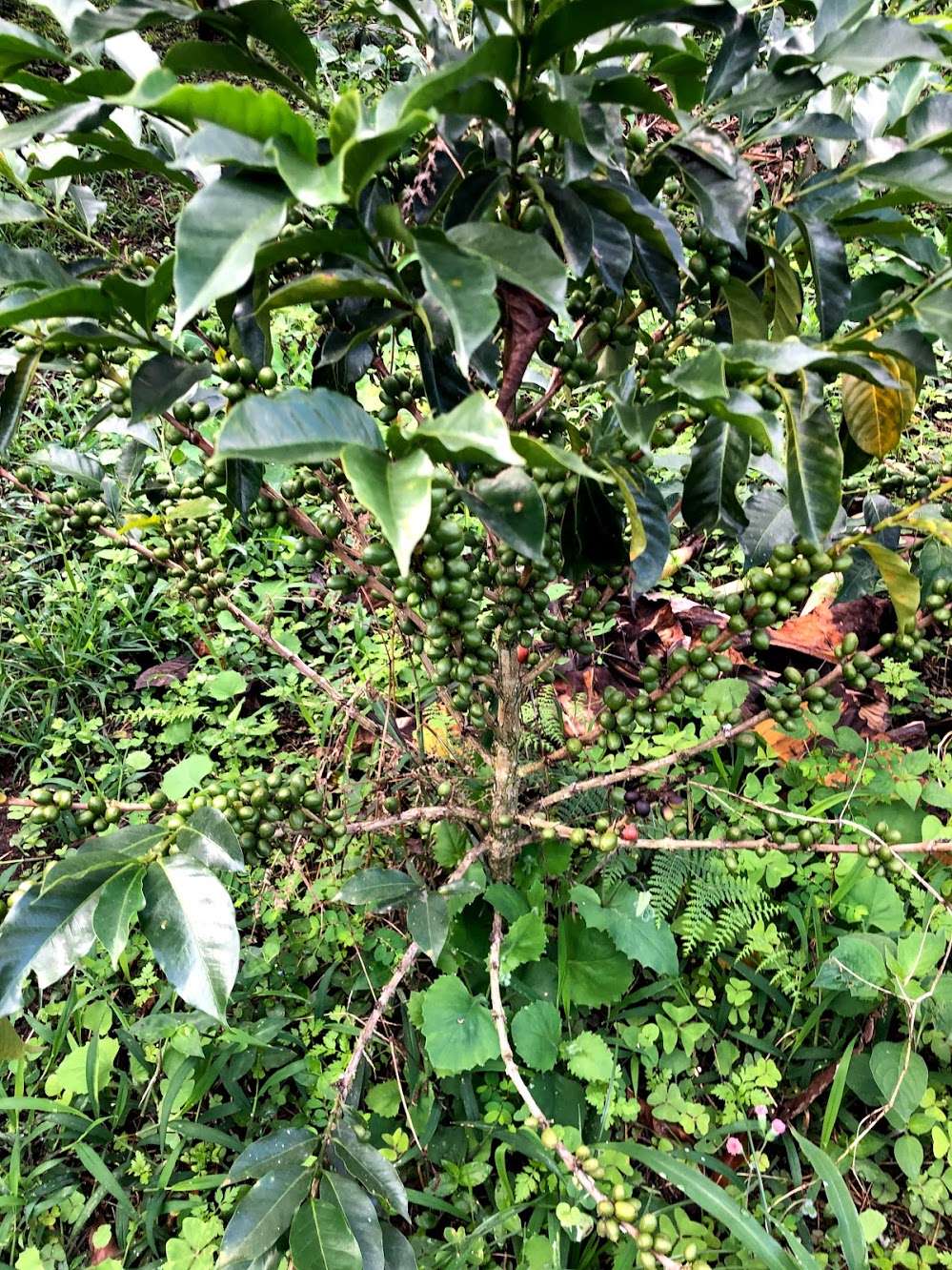
The equipment used to ferment, wash, and dry coffee at El Fénix is rather straightforward. Here at El Fénix, we use an array of plastic tubs to transport coffee in (some on wheels, some carried on your shoulder) in addition to a few large hoses that hang from overhead. So far, I’ve worked at the wet mill most afternoons processing coffee by myself to understand processing better, but more on this in a bit.
After fermentation and processing, the coffee is dried. As is common in Colombia, the parchment coffee is dried as much as it can via air-drying before it is transferred to a “mechanical dryer” to achieve the desired 10-12% moisture content. The mechanical dryer is simply a silo of husked coffee parchment, an oven, a big fan, and a bed that hot air blows through. We are currently using the mechanical dryer to dry the pulped cherries for cascara, which is a tea-liked drink made from dry coffee cherries. I highly recommend you seek it out and try it!
After the coffee is dried it is ready to be sold at a cooperative or dry milled and directly exported, so the last step we do at El Fénix is bagging dried parchment coffee.
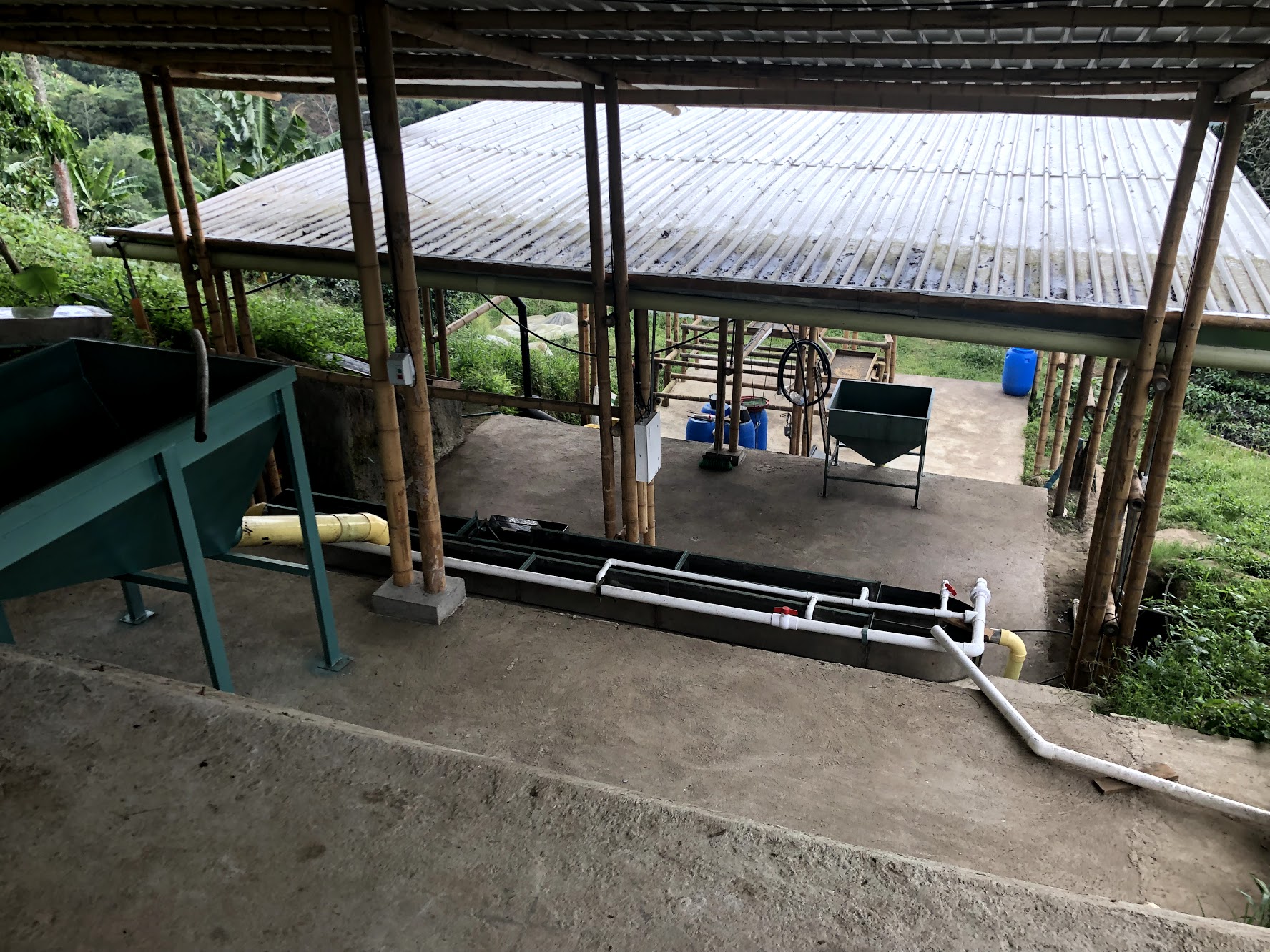
An picture of the three levels of the wet mill. The freshly picked bags of coffee are just out of frame here to my left. Typically, they’re put into the hopper to run through the floating channel in the middle of the frame. 
Fresh cherries from a bag. Notice the impressive ripeness – the pickers here are extremely selective in only picking the ripest cherries. I processed these without the water channel, as it was just a small amount of coffee. 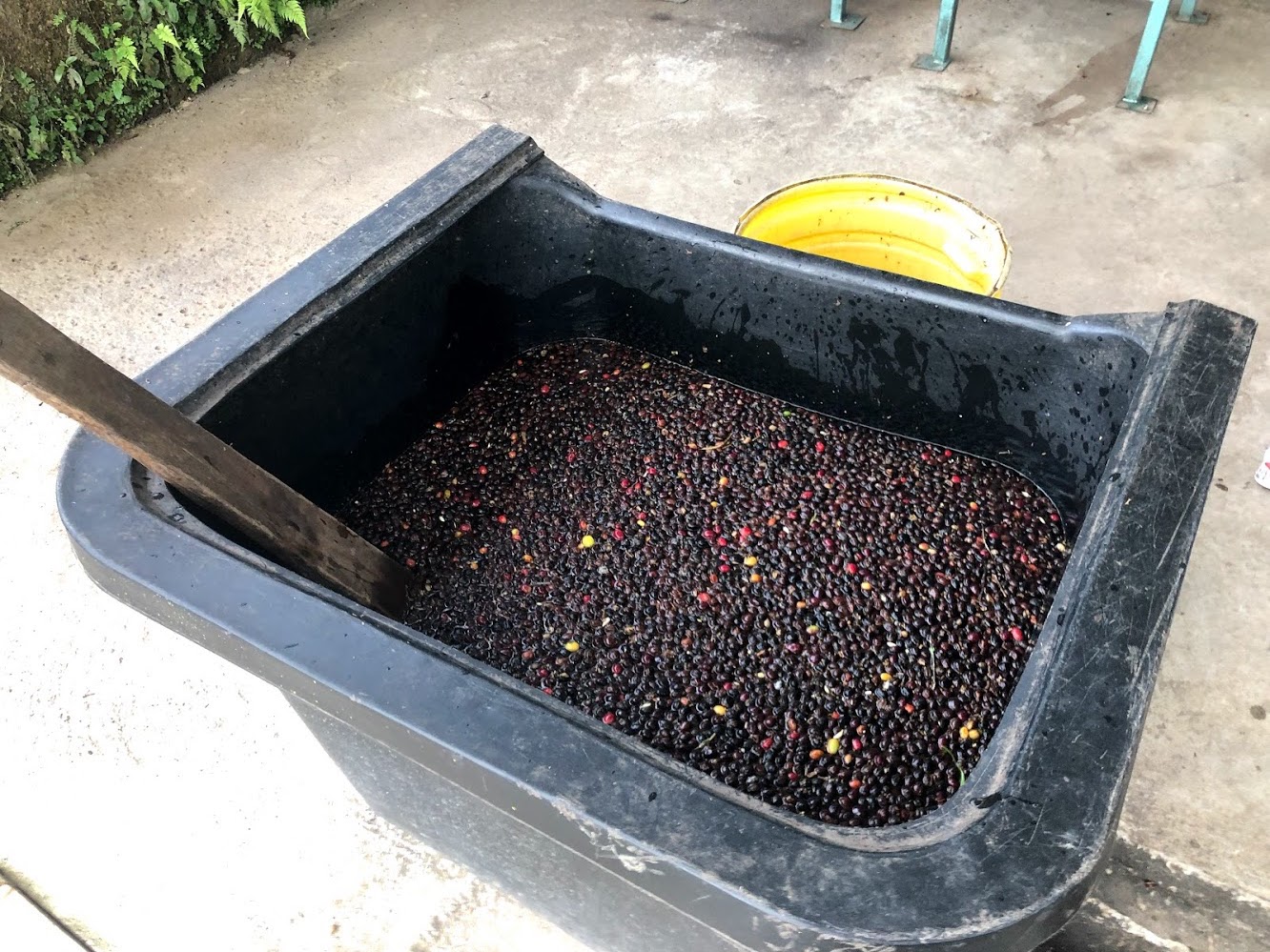
First, the floating cherries (often the overripe or underripe ones) are removed. Here, a lot of dried, overripe cherries float – these will taste bad in the cup. 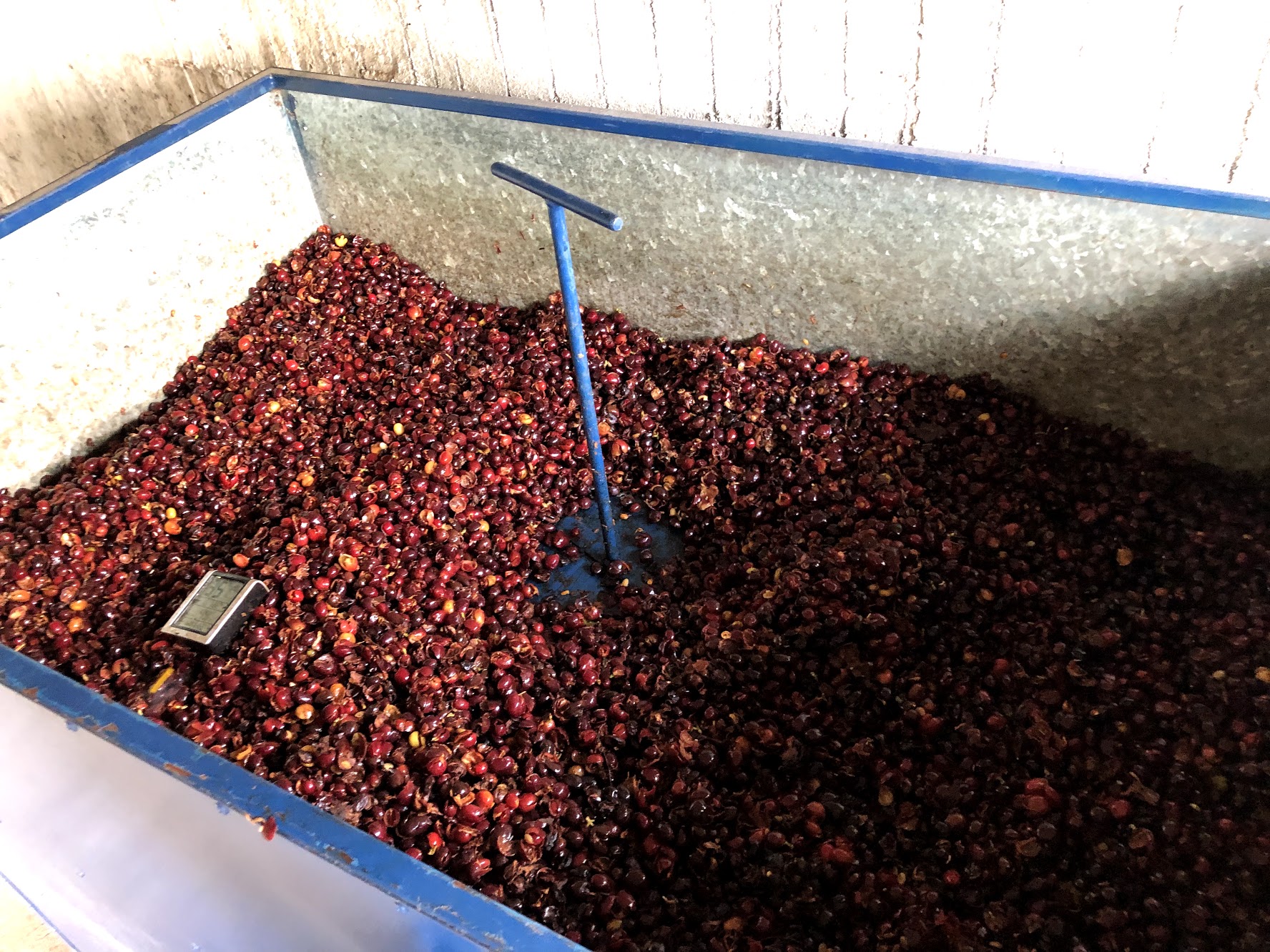
See the video below for pulping. After pulping, we dry the cascara in the mechanical dryer 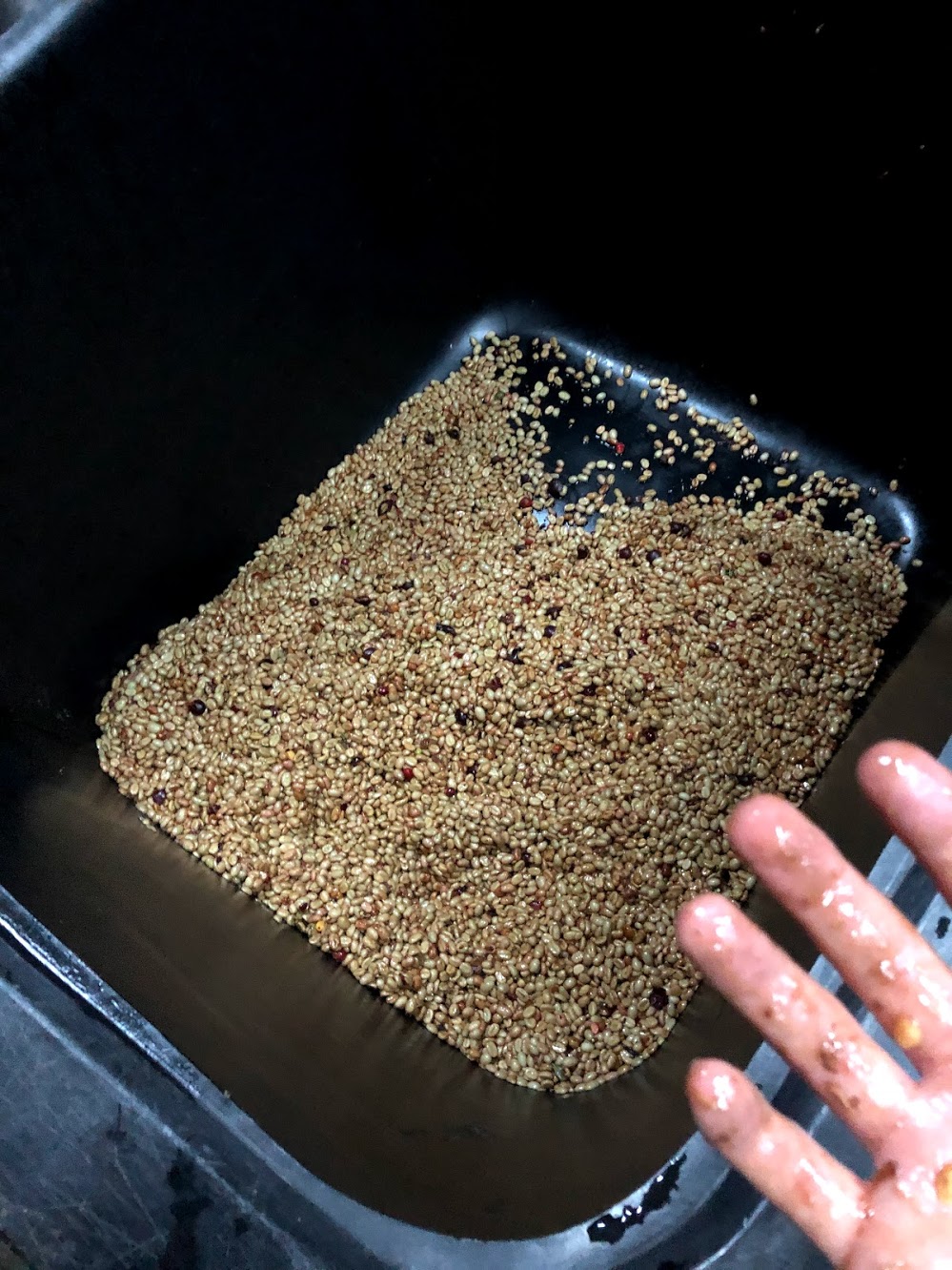
Meanwhile, the pulped parchment coffee is slimy and sticky, covered in mucilage. It is left to ferment. 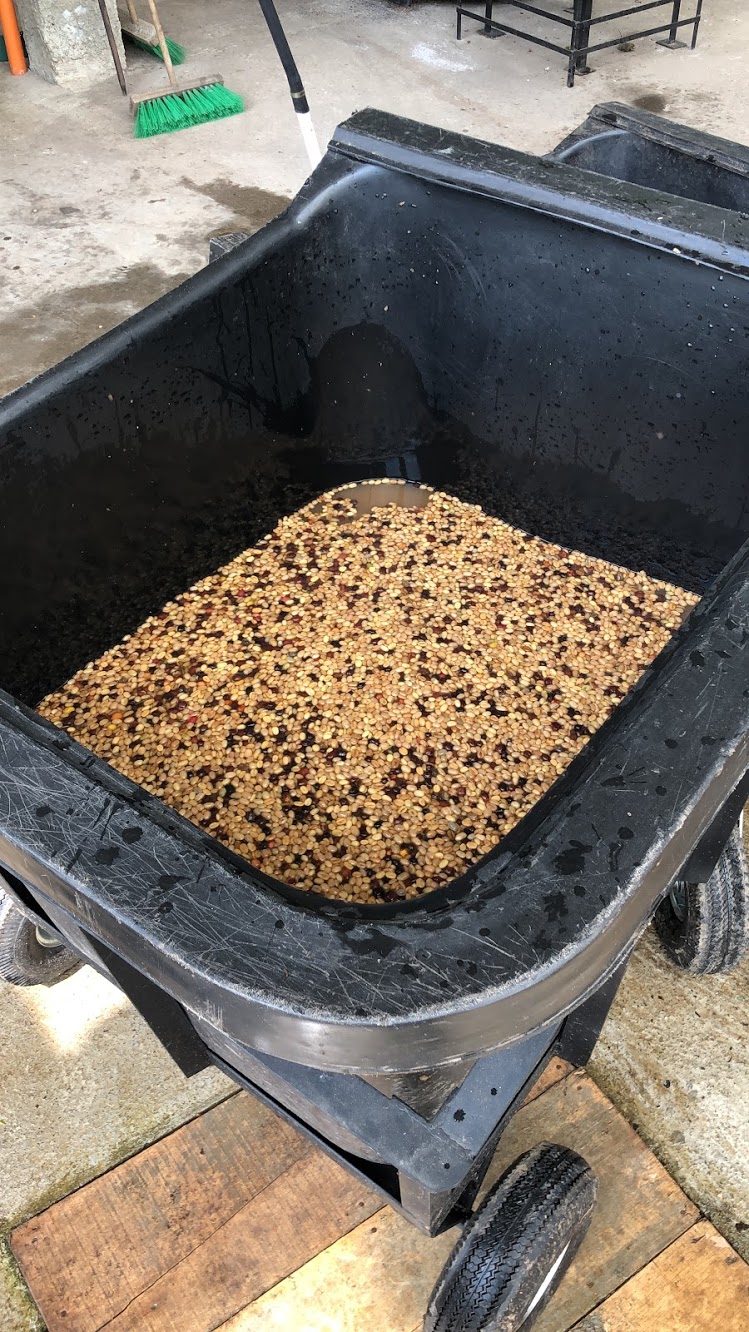
After fermenting, the parchment coffee is again floated to remove the floaters. Then the coffee is washed (by swishing it around with a big wooden plank) three times, each with fresh water. By the end, the cleaned parchment coffee has the texture of smooth stones. 
After washing, the coffee is laid to dry. Here you can see one of the longer drying beds in a greenhouse that helps trap heat inside and hasten drying. 
This smaller drying bed 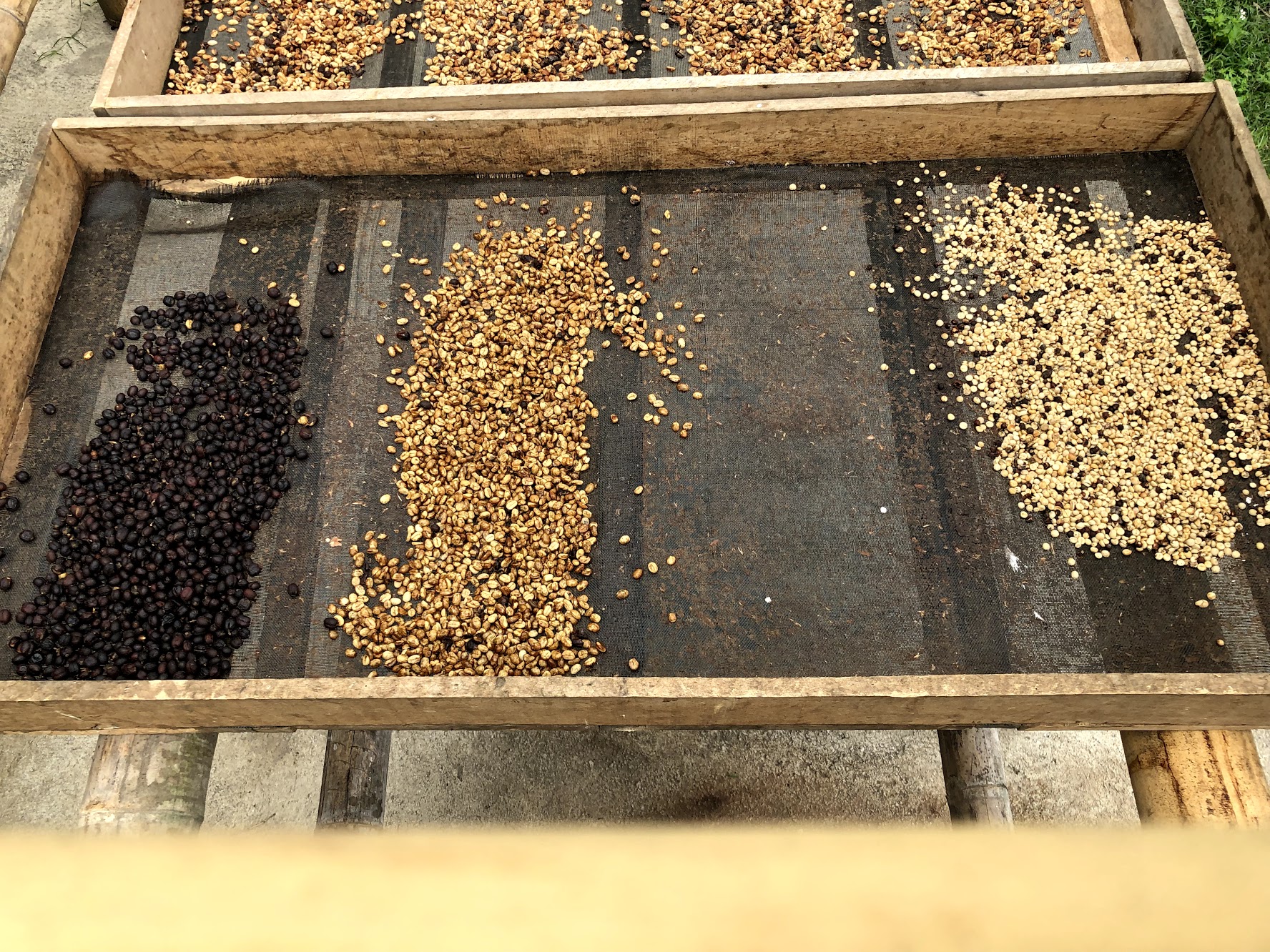
Here you can see the three different processing methods we’ve laid out as an example (from left to right): natural, honey, and washed. 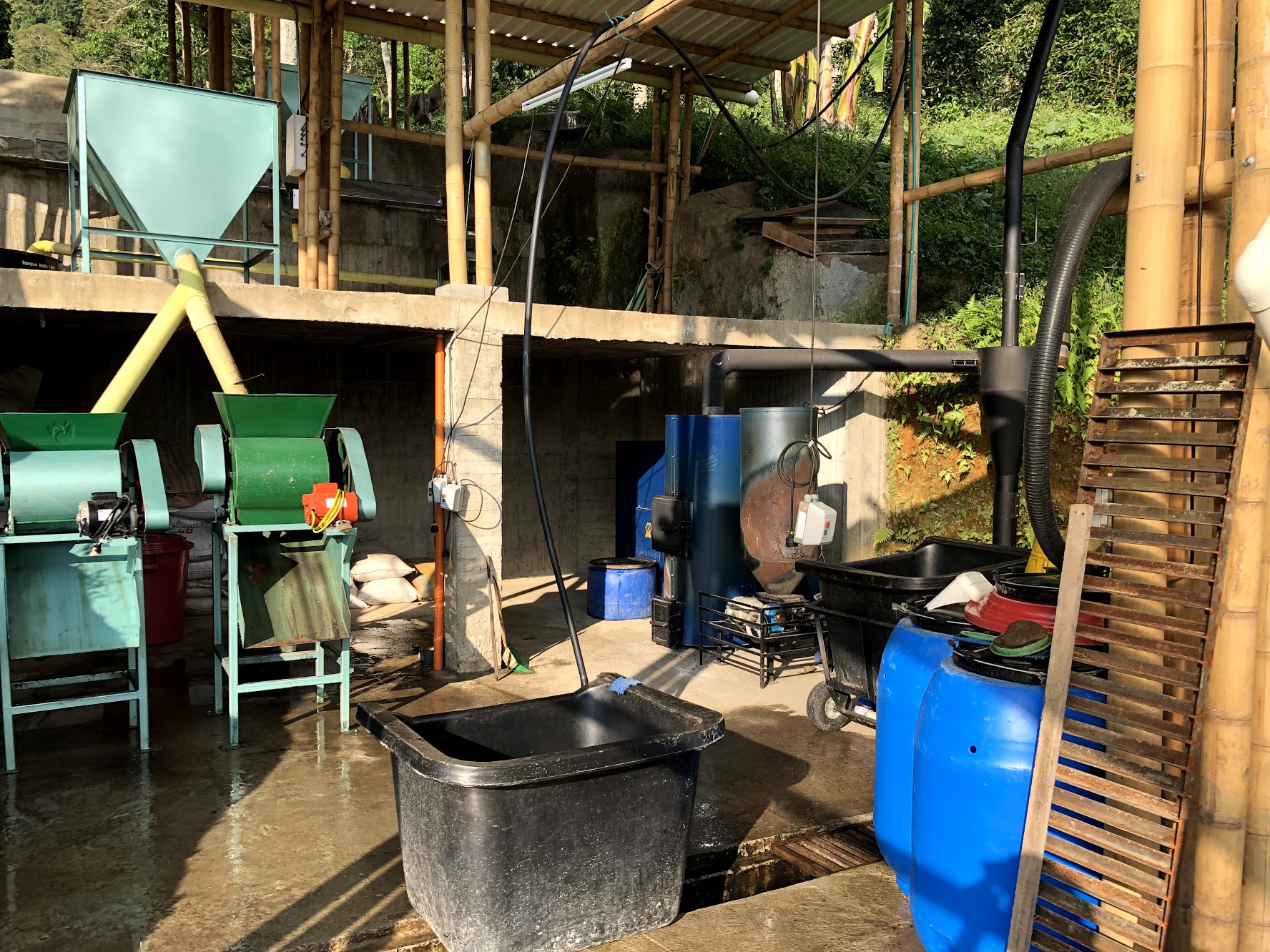
Finally, a good picture of the processing station. You can see the pulpers, some bins, and the mechanical dryer in the back. Also notice that the ground is wet, as we’ve used a lot of water to process the coffee.
The Greenery
This is a farm and it’s very difficult to ignore that fact. The location is surrounded on all sides by the lush greenery of the Colombian Andes. There are a number of crops and types of coffee on the farm, some of which I’ll talk you through here.
The main aspect of the coffee farm is the coffee. El Fénix has five varietals of coffee planted, all of the Caffea Arabica species: Castillo, Gesha, Moka, Tabi, and Pink Bourbon. Castillo is a varietal developed by the Colombian Coffee Federation known for its slight resistance to some of the major diseases afflicting coffee trees, so it is incredibly common throughout Colombia. All of the Castillos at El Fénix are from the previous owner of the farm, and they are slowly being replaced by newer varietals. Geshas and Mokas are incredibly finicky crops that are highly susceptible to disease but also offer very favorable tasting characteristics. Tabi and Pink Bourbon are also interesting varietals that are less widespread. The Pink Bourbon has probably been the most successful crop on the farm in terms of the health of the trees planted here.
Each varietal has many different properties, including appearance and taste characteristics, each of which affect how it grows. For El Fénix, this means that there are many harvests throughout the years as each different varietal ripens. The Castillos had their peak harvest a few weeks ago and we’re now on the last phase of picking them, while the Pink Bourbons and Geshas may be ready to harvest in about 4 weeks.
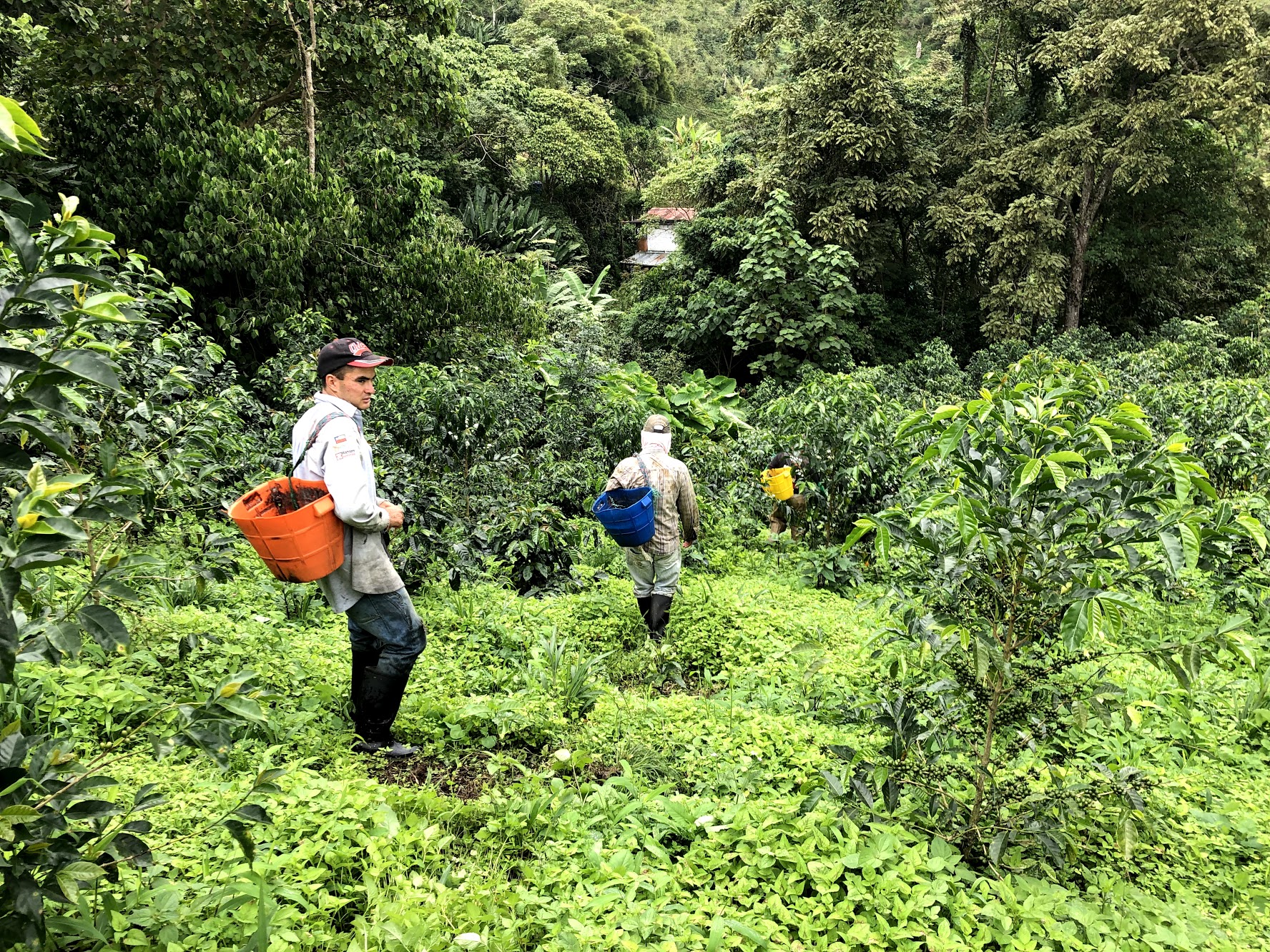
Picking coffee is an extremely labor intensive task, which I’ve now learned about and have a new appreciation for. In farms that control for quality, pickers must make multiple passes through the same lots because cherries on a tree all ripen at different rates.
Additionally, an important part of coffee farming is the ecosystem that surrounds the coffee. Like wine, the longer a coffee plant takes to develop a cherry, the better it tastes. This is because (as best I understand) when cellular respiration is slowed down, the plant puts more of its nutrients into its fruits – its offspring – rather than into growing new branches or leaves. Thus, El Fénix is growing a thriving ecosystem to aid in its coffee production and to achieve self-sufficiency. The two areas of focus in this are planting shade trees (whose name is rather self-explanatory) and a vegetable garden.
El Fénix has already planted over 1000 shade trees to shelter new coffee trees from direct sunlight and will expand this number to newer lots in the coming years. The veggie garden, meanwhile, is a separate project that hopes to contribute to the social responsibility of the farm as a whole. Currently the veggie garden, which consists of four or five planters, has a variety of herbs, vegetables, and fruits. As the farm grows and hosts more visitors, Alejandro hopes to serve only food grown in and around the veggie garden.
The last part of the ecosystem of the coffee farm are the insects and diseases that can kill coffee trees. The two most common are La Broca and La Roya, or the coffee berry borer beetle and coffee leaf rust. Both are present at El Fénix, although the farm does not use artificial insecticides or fungicides to kill the pests.
A coffee tree with cherries in all stages of ripening 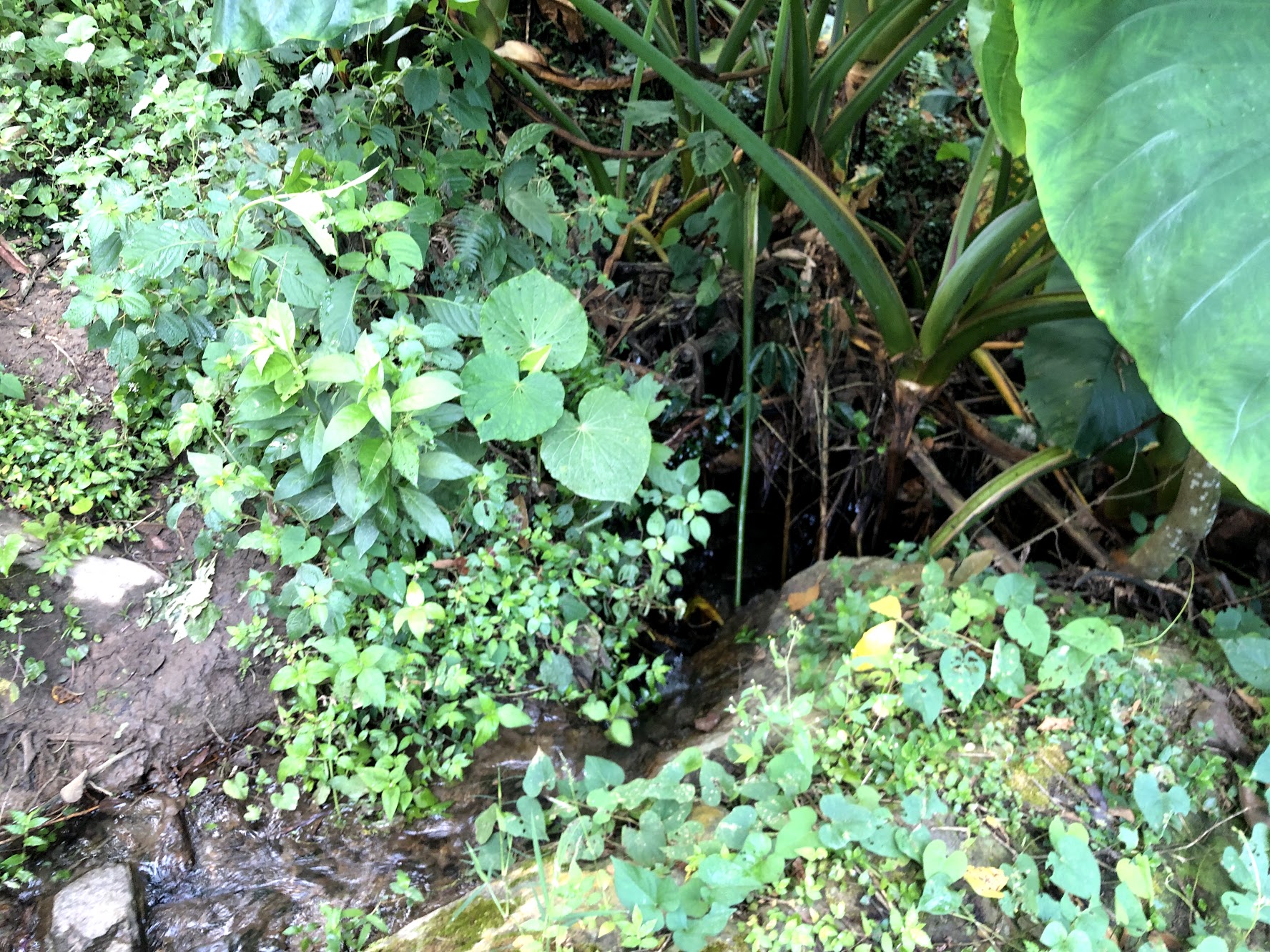
Streams run through the farm and provide water and nutrients to the soil. They also provide a habitat for large shade trees to grow on. 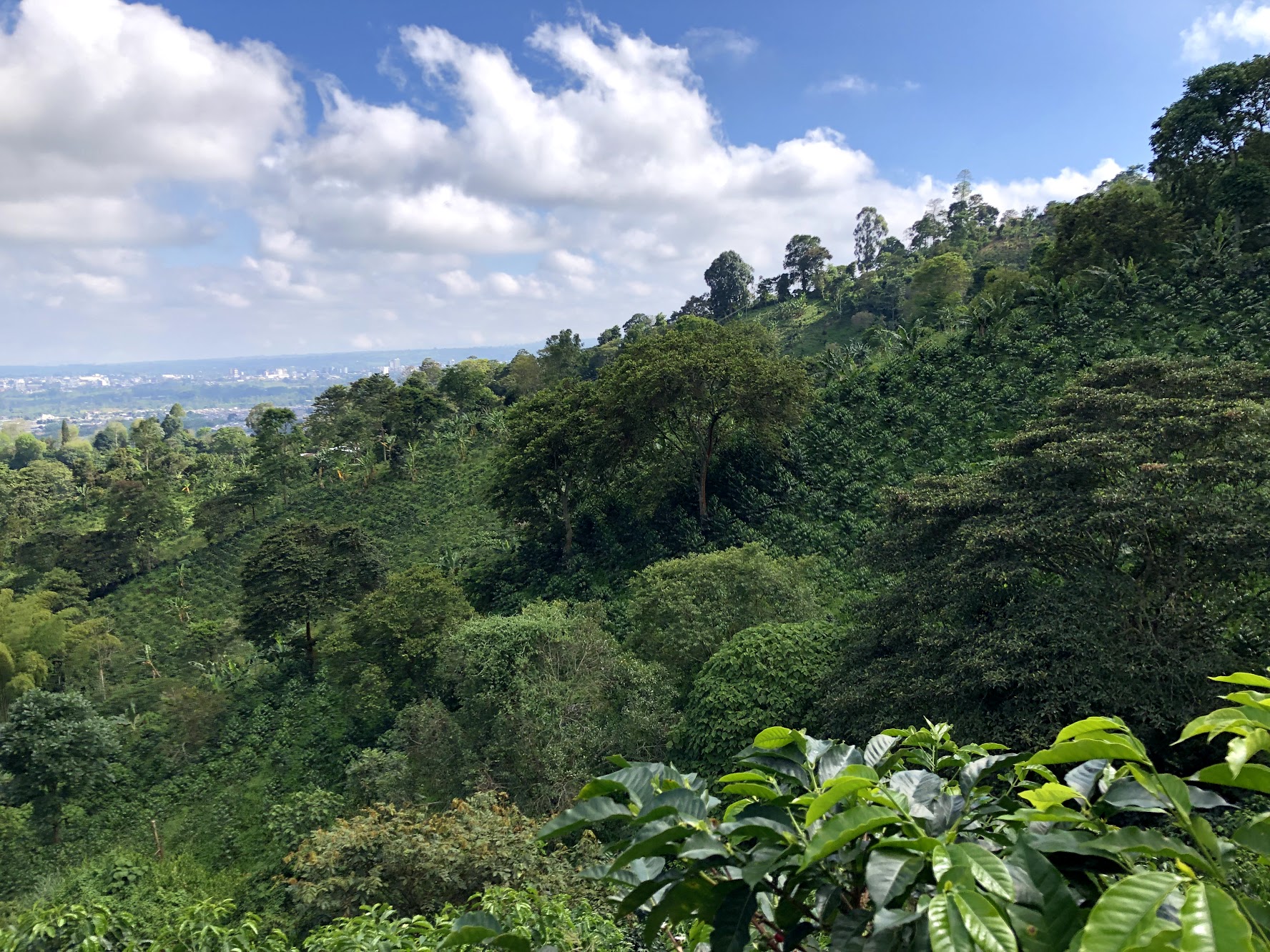
Coffee, as far as the eye can see! Notice the interspersing of shade trees and the meticulous plotting, which makes trees easier to pick and grow healthier. 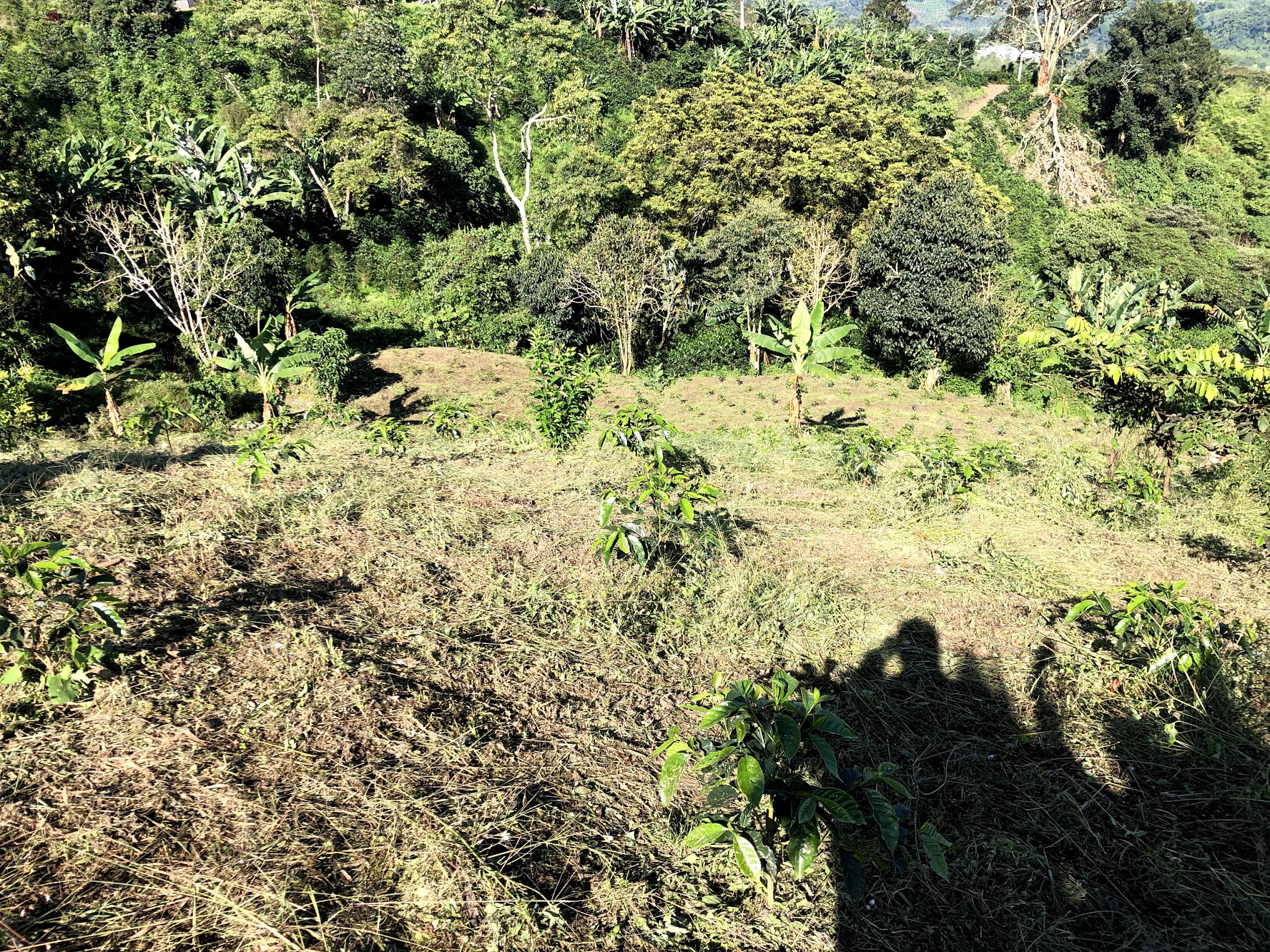
A field of newly planted Tabis just after 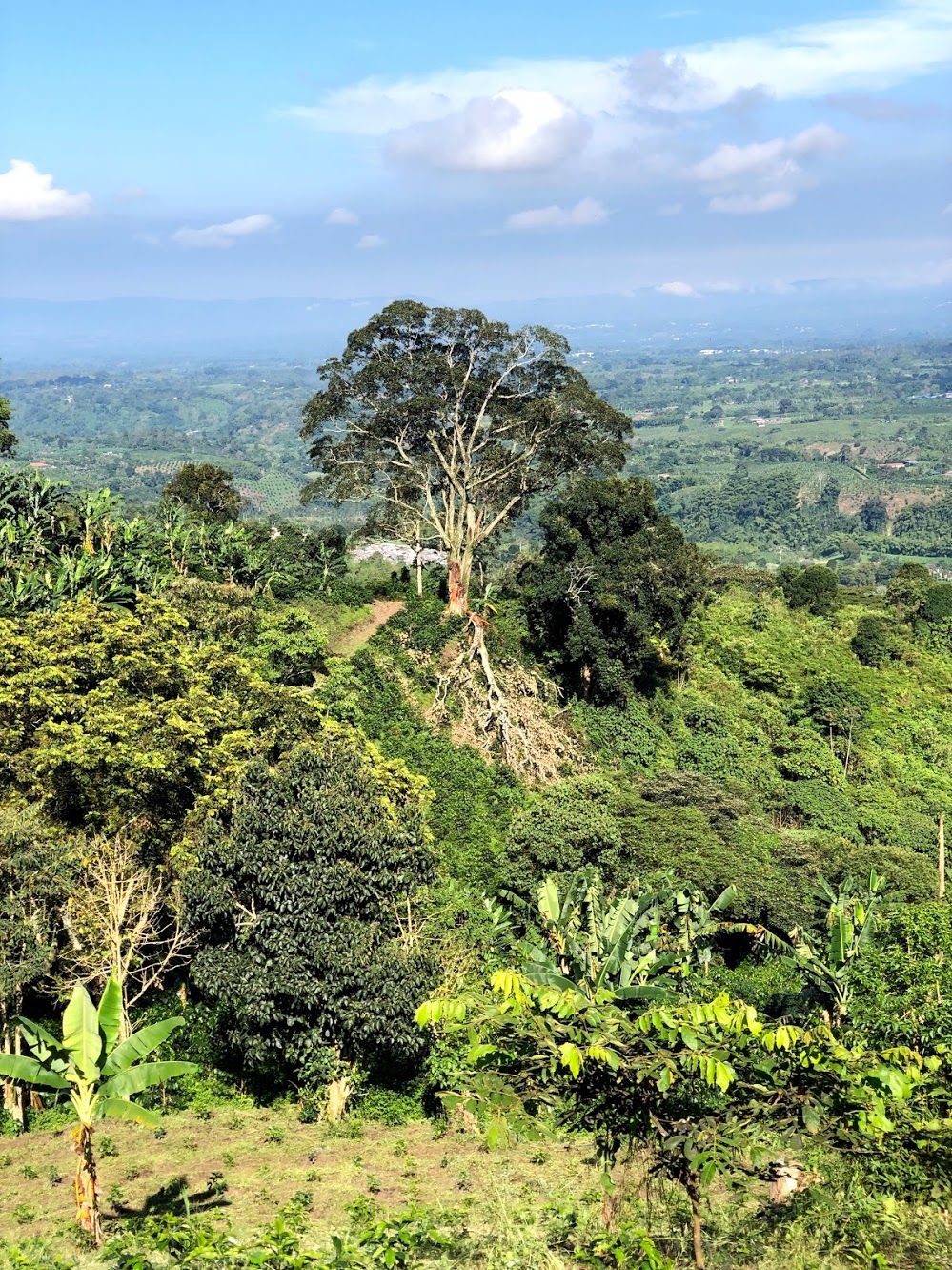
One of the farm’s largest shade trees fell apart in a rainstorm the other day; 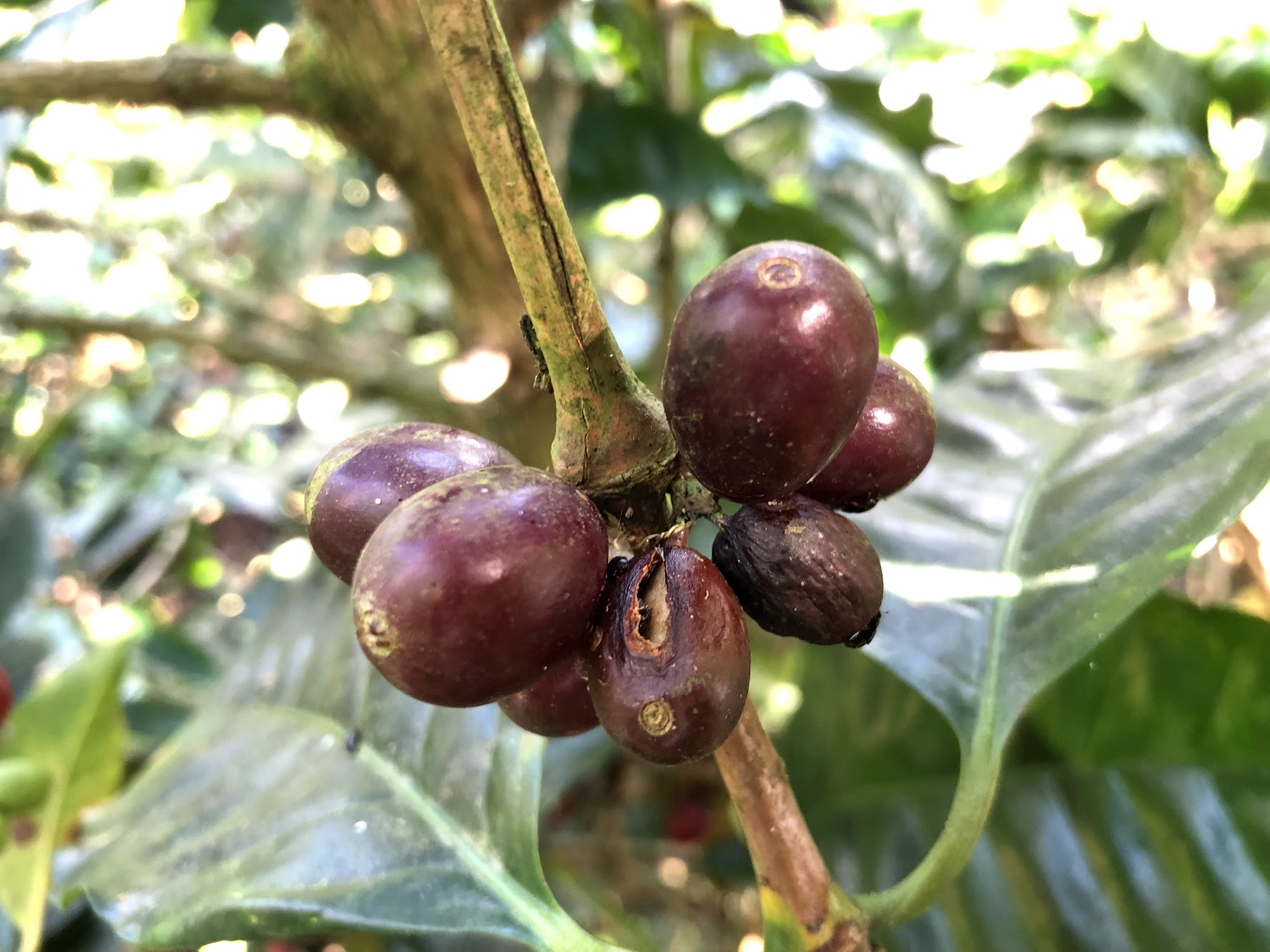
Here, broca climbs out of a coffee cherry I was about to pick. 
A healthy gesha which will produce a full crop in a few weeks. 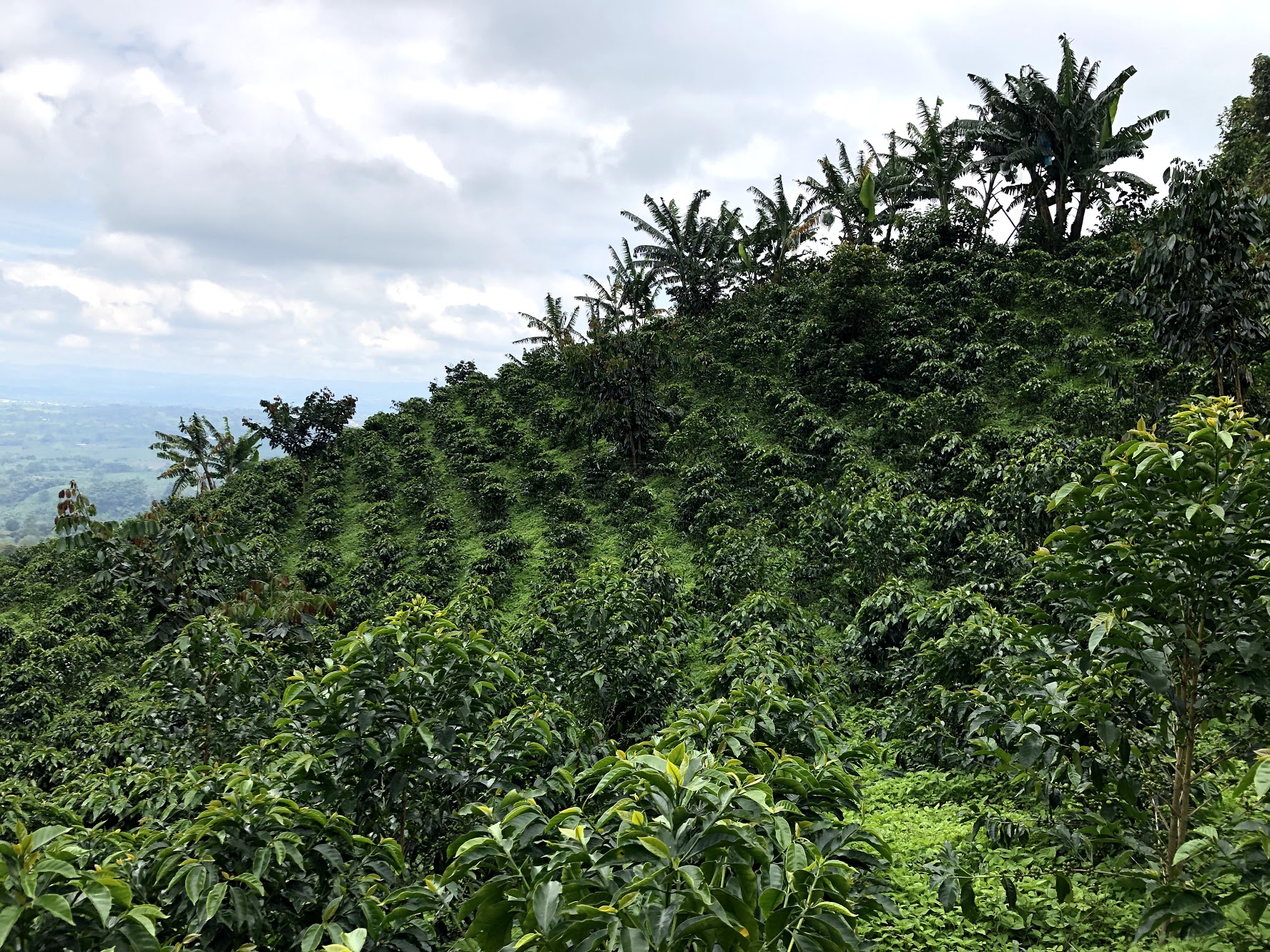
Another view of the older Tabi plot, demonstrating impeccabale farm management. 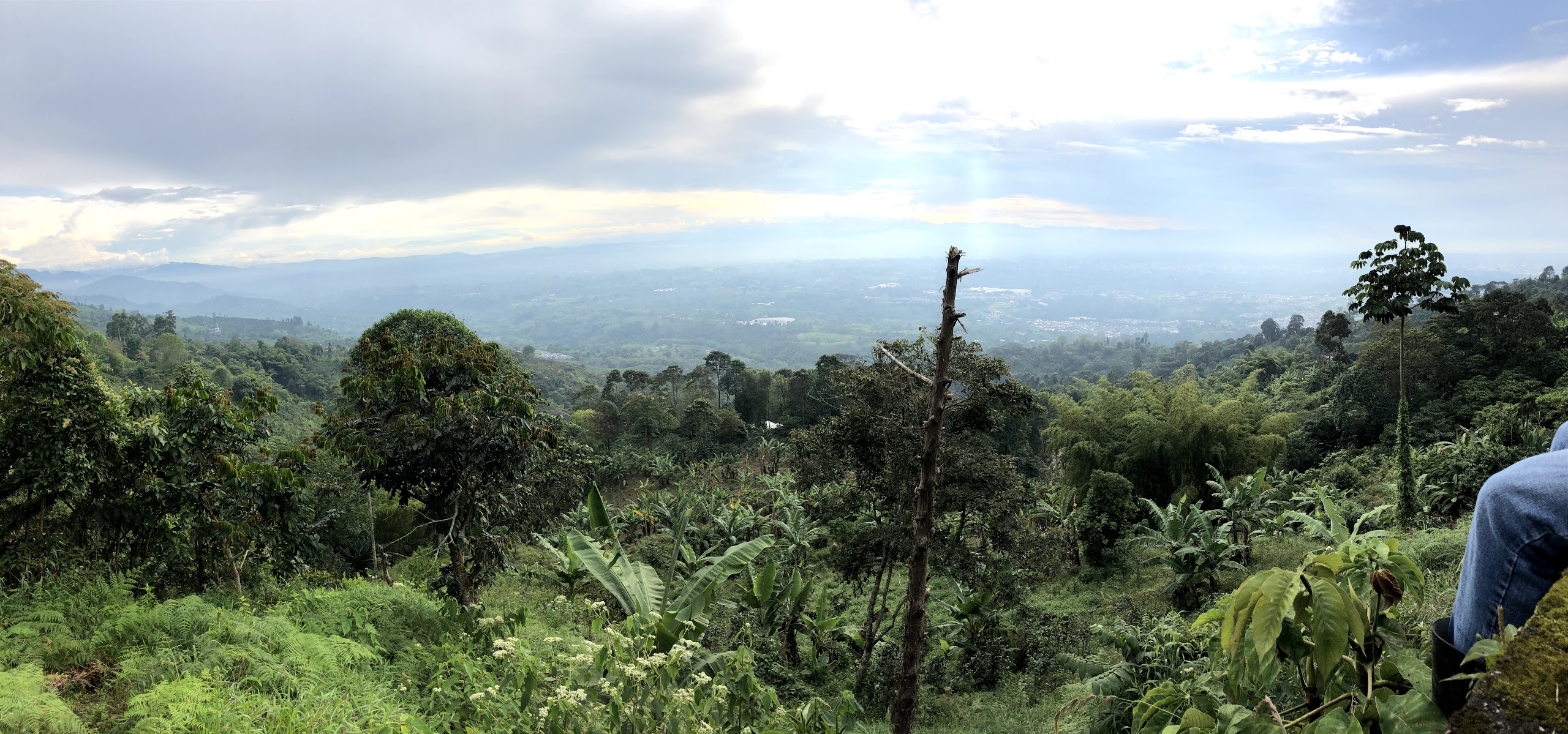
A panorama view of the greenery that surrounds the farm from a vantage point above it. 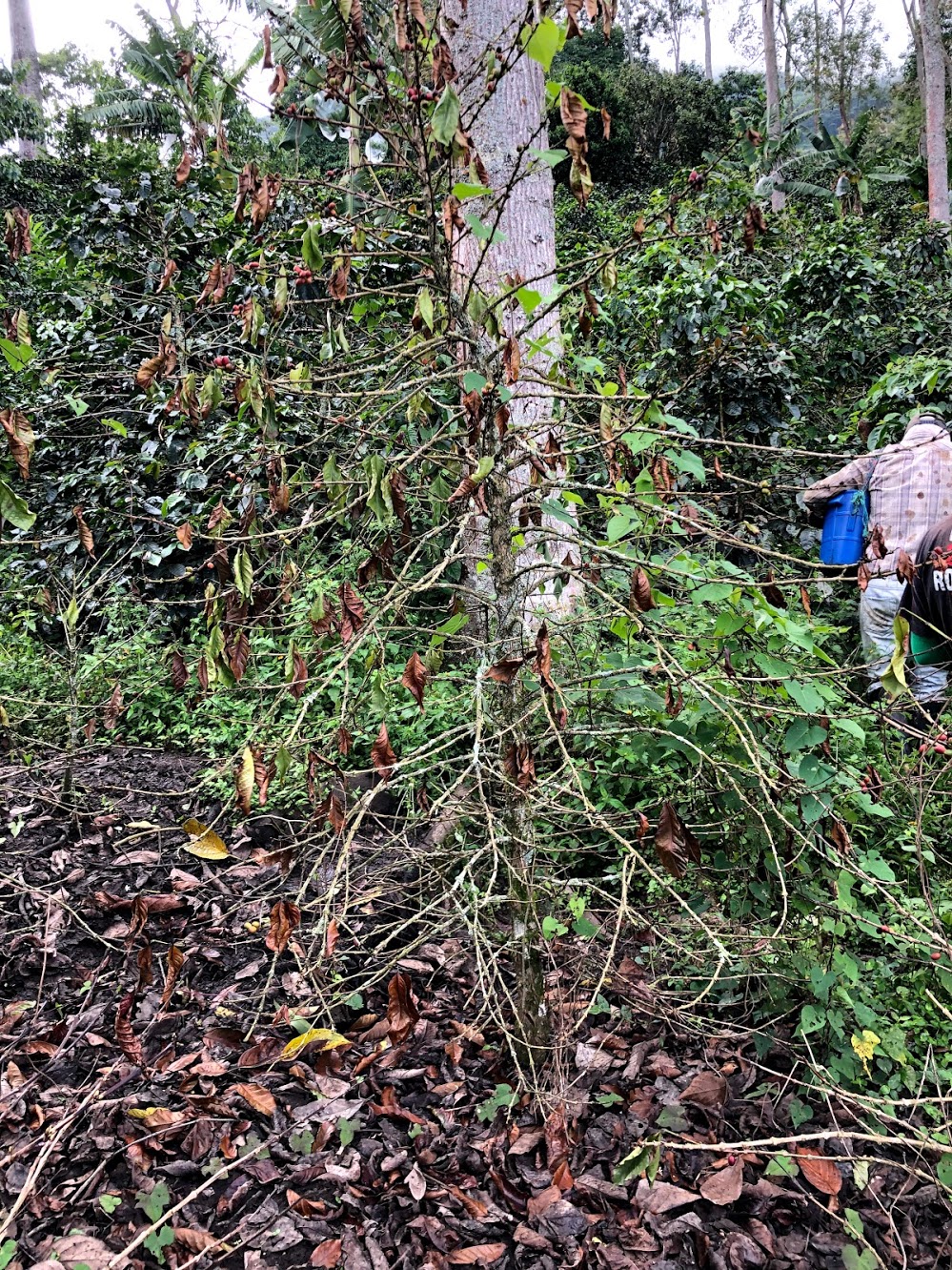
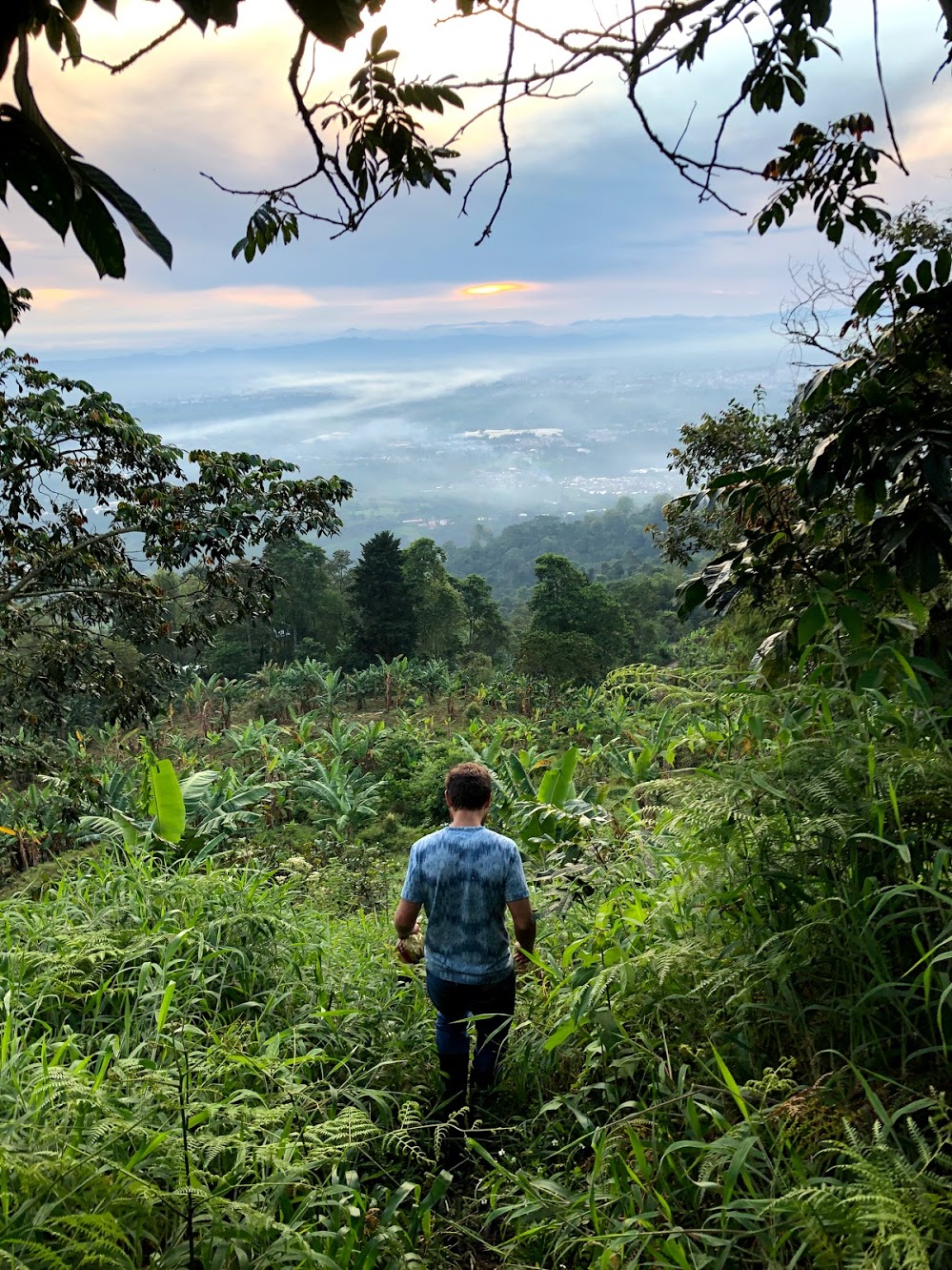
We distributed fertilizer to older lots to help prepare the soil for uprooting and new trees. 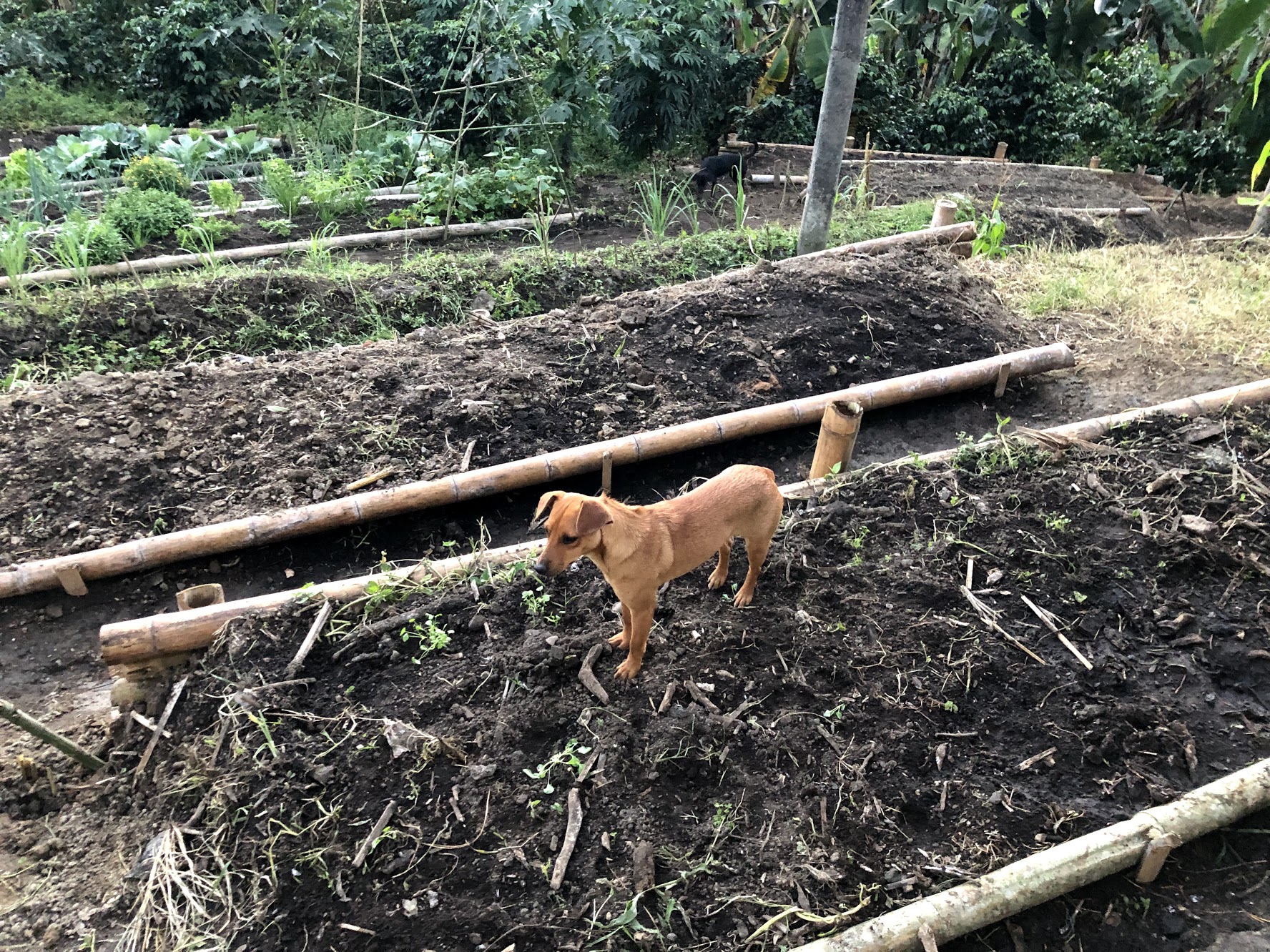
Pinina stands on the veggie garden
My Life on the Farm
What’s most exciting about the farm to me is my unprecedented opportunity to learn. I’ve spent much of my first few days getting acquainted with the many things going on around the farm, and from here I will use my understanding of the operations to experiment and explore. For example, I spent the first few mornings picking cherries with the collectors, and now I can travel around the farm to pick whatever ripe cherries are present in different varietals to evaluate their differences. A central part of my experience so far, and one I expect will continue, has been my freedom to process coffee and experiment with processing methods. Here, I’ll try to give a brief overview of what my life has been like before delving into specifics and some fun anecdotes.
A Day on the Farm
5:40: wake up (make coffee if time allows)
6:00: join workers to start work
6-8: morning work (harvesting, fertilizing, etc.)
8-8:30: breakfast
8:30-12: main work time. Used for harvesting and whatever other major task is going on for the day.
12-1: lunch
1-4: process coffee. Wash and set to dry fermenting coffees, then process new cherries and set up fermentation. Clean and dry cascara.
4-5: walk around the farm, maybe take a break
5-6: dinner
6-7: relax, watch the sunset
7-9: talk to miguel, call parents, write blog etc.
9: sleep!
My Chores
Miguel helps set a schedule of things to do. No two days on the farm are the same, so I’ve had a number of different activities, which Miguel likes to call “chores,” but I could hardly imagine thinking of them that way. So far, I’ve been mainly tasked with processing coffee as it comes in, but in the coming days I’ll have a few more different things to do. Tomorrow, I’ll process, dry, and package the cascara we’ve been working on over the past few days, cup coffee samples from farms that Raw Materials buys from (because I am now a certified Q grader!), and start inspecting other lots for signs of harvesting. Usually, I will join the workers for the bulk of the morning in whatever they do and then spend the afternoon processing coffee, but this will probably change as we finish harvesting coffee next week.
So far, I’ve gotten to spread fertilizer, pick cherries, process coffee (float, pulp, separate, ferment, wash, dry), and work on the veggie garden. Some of these tasks might change over the next days while some might stay the same, but there will always be things to do!
My Experiments
As I said, probably the most exciting thing about being here at El Fénix is getting to learn by doing. When talking about fermentation, Miguel told me that “there certainly are differences in the methods you’re asking about, but you will learn much more to process them and taste them yourself” (paraphrasing). Thus, every time a new bag of coffee comes in I’m supposed to decide exactly what to do with it, which is a pretty big responsibility! There hasn’t been a ton of coffee so far, so I will get to continue experimenting on a small scale for now.
I’ve set up two batches of experiments so far: the first is a series of four coffees that concerns fermentation, while the second is a honey vs. washed trial with the added variable of drying method. Here’s what that looks like:
| Lot 1 | Lot 2 | Lot 3 | Lot 4 | |
| Varietal | Castillo | Castillo | Castillo | Castillo |
| Harvest date | 6/24 | 6/25 | 6/24 | 6/25 |
| Cherry fermentation time | 0 hrs | 0 hrs | 24 hrs | 24 hrs |
| Pulped fermentation method | aerobic | anaerobic | aerobic | anaerobic |
| Pulped fermentation time | 20 hrs | 20 hrs | 20 hrs | 20 hrs |
| Lot 5 | Lot 6 | Lot 7 | Lot 8 | |
| Varietal | Castillo | Castillo | Castillo | Castillo |
| Harvest date | 6/25 | 6/25 | 6/25 | 6/25 |
| Processing Method | Washed | Honey | Washed | Honey |
| Drying exposure | Direct | Direct | Indirect | Indirect |
All variables not mentioned here were attempted to hold as constant as possible. I can’t wait to finish drying them, mill them and taste them!
In the first experiment, I let half of the coffee soak in the cherry overnight underwater while the other half was processed the day it was picked. Then, I attempted an aerobic fermentation (just leave it out in a bucket) and an anaerobic fermentation in a sealed bag overnight for each cherry method, resulting in 4 lots. Drying variables are fairly constant across the four lots.
In the second experiment, I wanted to taste a honey versus a control sample while measuring what sun exposure did to the drying process and subsequently cup profile. I really wasn’t planning on adding the drying variable but I had enough coffee to spread it across the drying bed directly exposed to the sun and the one beneath it, so I did!
I’ll let you know how these and other experiments come along. In the meantime, we wait for them to dry.
Some Fun Anecdotes
There are a lot of bugs! Today I saw the largest spider of my entire life and it was absolutely terrifying. Alfredo helped me out and killed it. It kind of freaked me out, though, and I remembered Miguel’s advice to always check my boots for scorpions before putting them on!

Speaking of bugs, mosquitos!!! There are a LOT of mosquitoes – so many that I was highly encouraged to leave no exposed skin when going to pick cherries. I obliged, even though it made me very hot. These were the results:

The only Emack & Bolio’s hat to ever grace Colombia, probably 
Look at all the mosquito bites around my eyebrows!
The 1 inch of face that I left exposed got demolished by mosquitos, and my nose and eyebrows had about 10 bites on them. Ouch!
Another great thing is the food. I eat extremely traditional meals with the workers three times a day, cooked by Don Eduardo. They’re filling and delicious!

Everything is cooked on a woodburning stove! 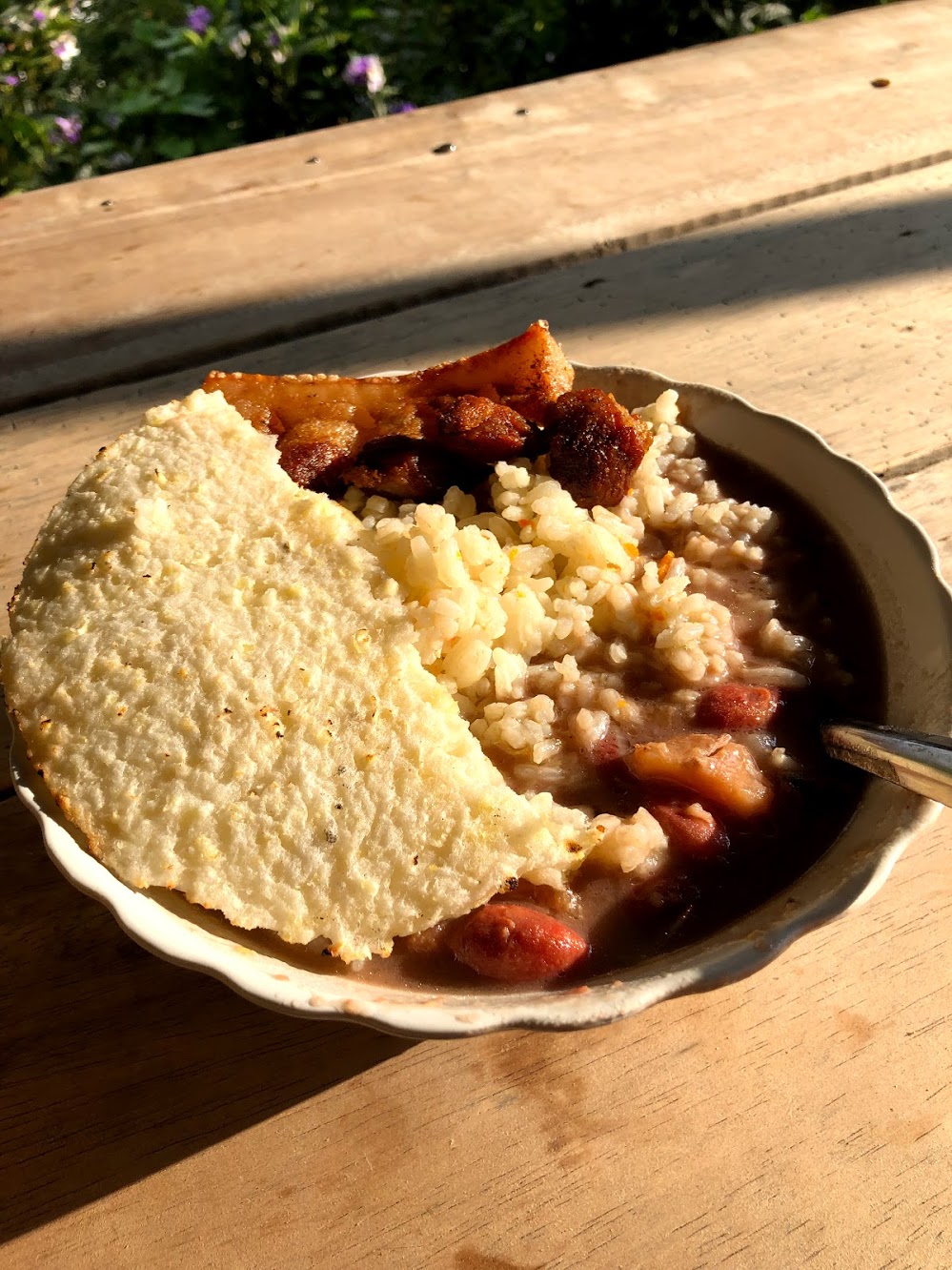
About 5/6 meals are rice and beans, sometimes with a lump of pork fat on top.
The cupping lab is one of my favorite spots on the farm because of its view. It’s a wonderful place for a morning cup of coffee!
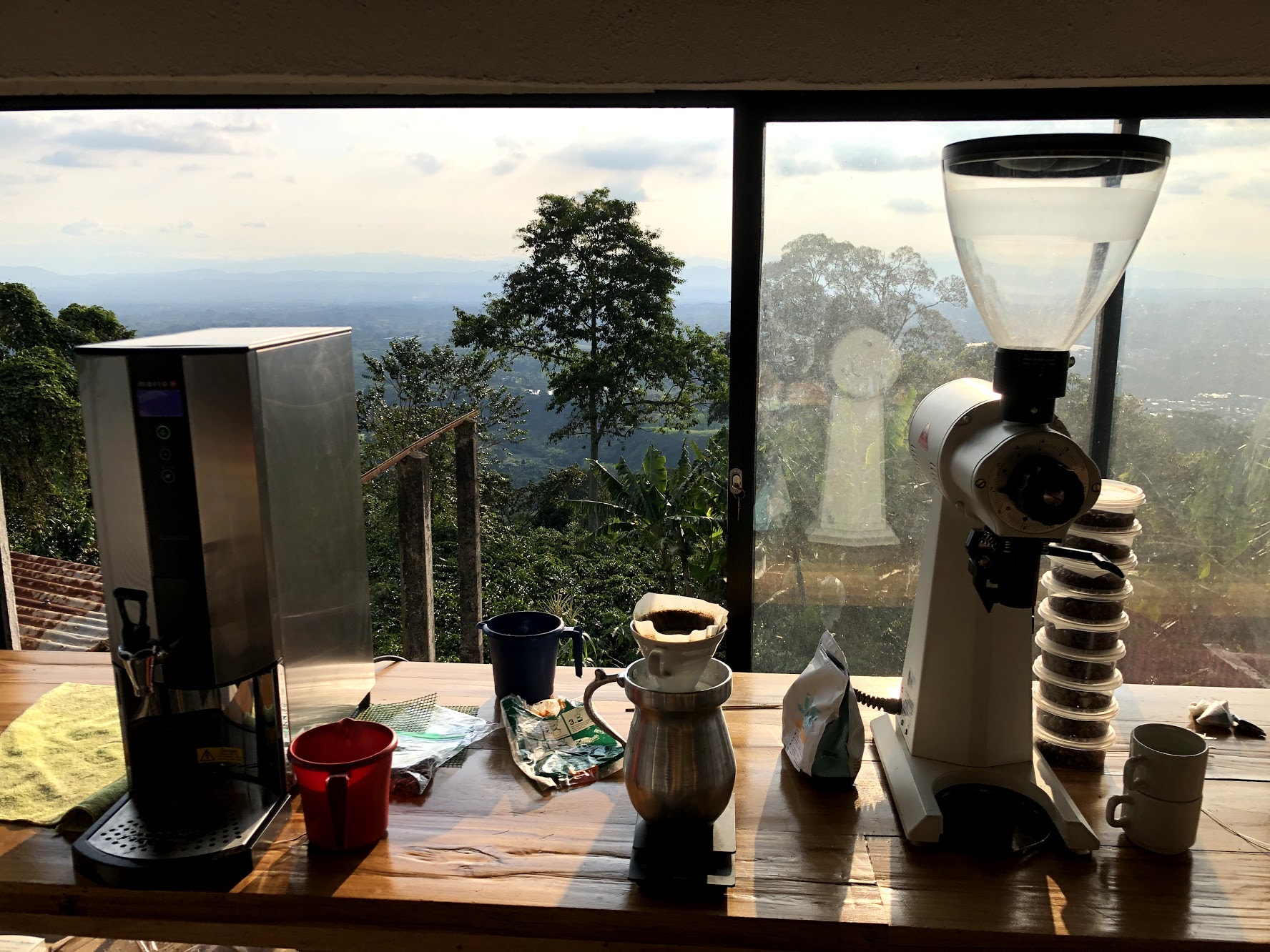
After a bit of a debacle, we got the hot water working for the shower. It comes in bursts, so if you feel the water heating up then use it while it’s warm and jump out before it burns you! I managed to get a pretty good shot from the bathroom – shower with a view!

Honestly, I’m very tempted to say the best part about El Fénix is the dogs. There are at least 5 of them, but more come through now and then. They are adorable. Gladys is the matriarch of the group – the calm, steady dog that keeps the others out of trouble. Pinina is the troublemaker – she will sit on your lap with no regard for what you are doing whatsoever, which honestly is pretty nice. The rest I’m not as friendly with yet, but they certainly bark a lot!
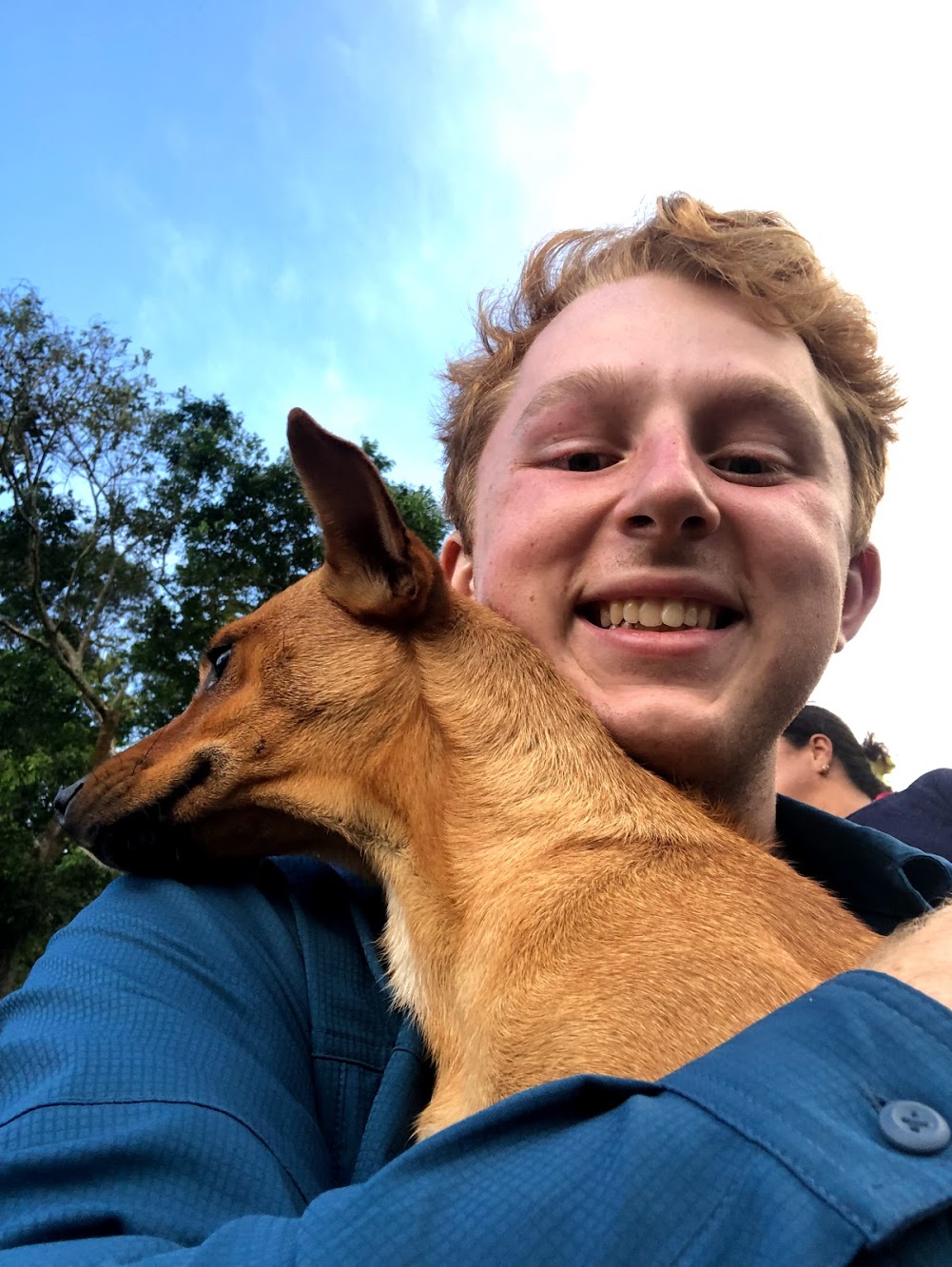
Pinina loves to snuggle! 
Gladys is so friendly 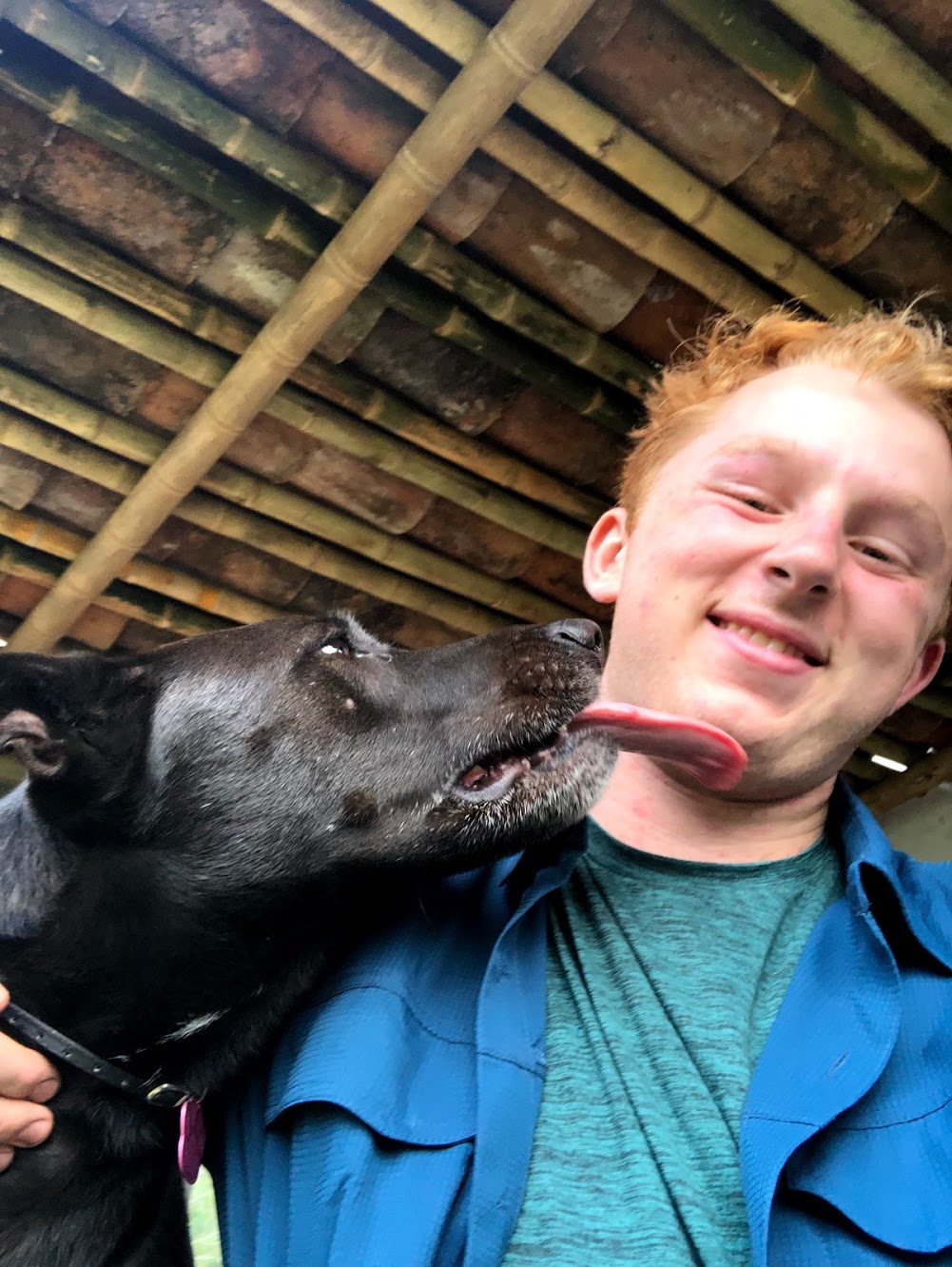
Sometimes too much! 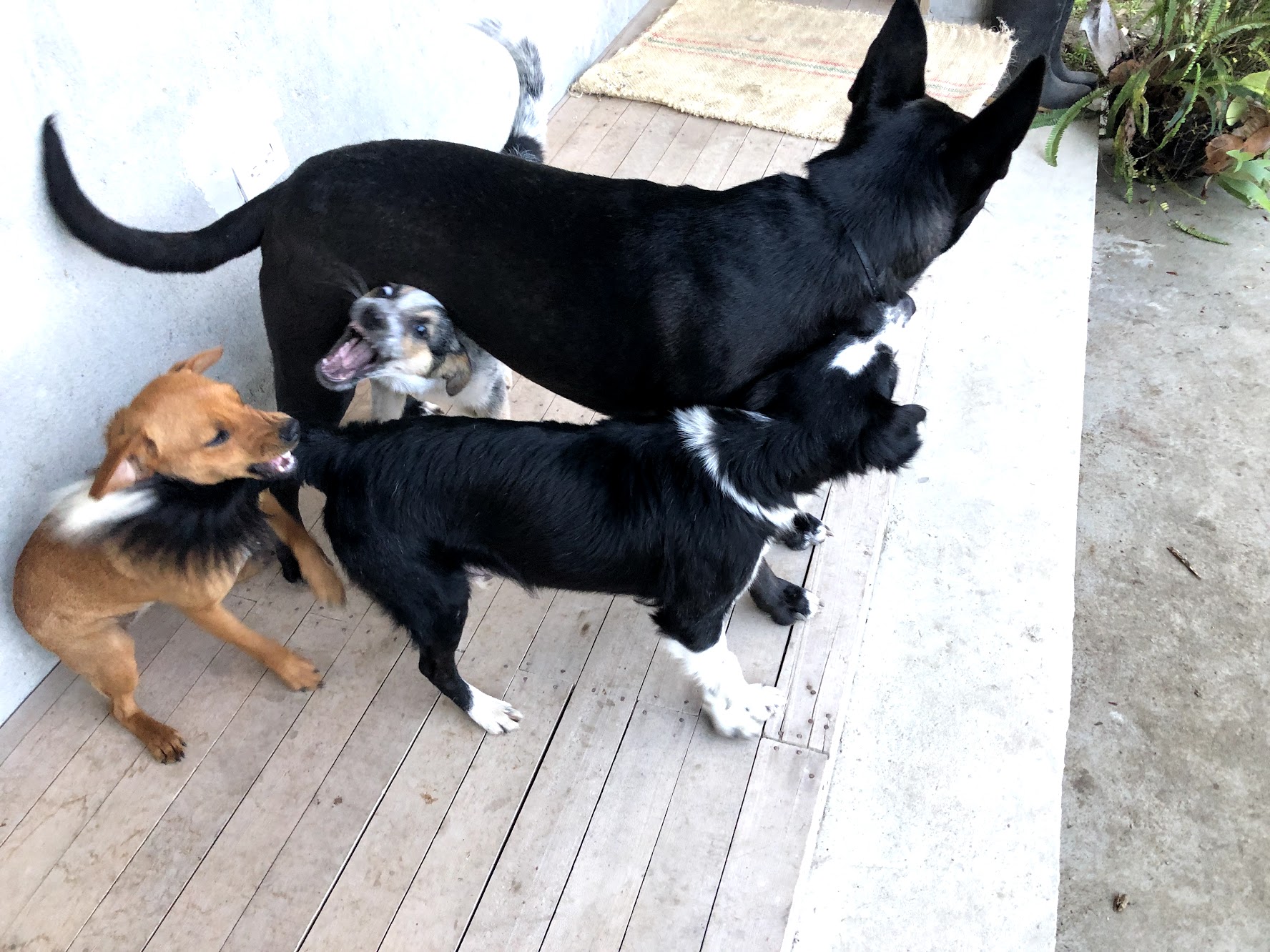
The whole rambunctious lot of them!
So to sum it up, things have been pretty incredible so far. Stay tuned for more detailed updates about Raw Materials, the company behind this, my fermentation experiments, and more on varietals and agriculture. This is really a coffee adventure!
Have a good one!
Alex
 Alex's Coffee Adventure
This is really fascinating, thank you so much for such a thorough overview. Question: do you have any hypotheses about your experiments, and which lots you expect to turn out better than others? Would be fun to see how your predictions turn out relative to your actual (Q grader legit) scores when the coffee is ready.
LikeLike
WOW! That is some serious coffee farming. Excited for how the experiments come out, and to see if you start making any mosquito artwork by leaving different parts of your skin exposed. At least you won’t get sunburned 🙂
LikeLike
The farm looks beautiful
Your face looks ouchy though
LikeLike
Miss you!
LikeLike