Today I went hiking up the Quebrada las Delicias trail and talked to someone who works in the commercial coffee industry in Colombia, so I got a good birds-eye-view of Bogotá and the coffee sector.
The hike was pretty intense! Las Delicias is advertised as a pretty easygoing, family-friendly hike that shouldn’t take more than an hour and a half round trip. It’s also supposed to let you out at a waterfall. This isn’t false advertising per se, but it doesn’t tell you the full story if you’re a young coffee adventurer.
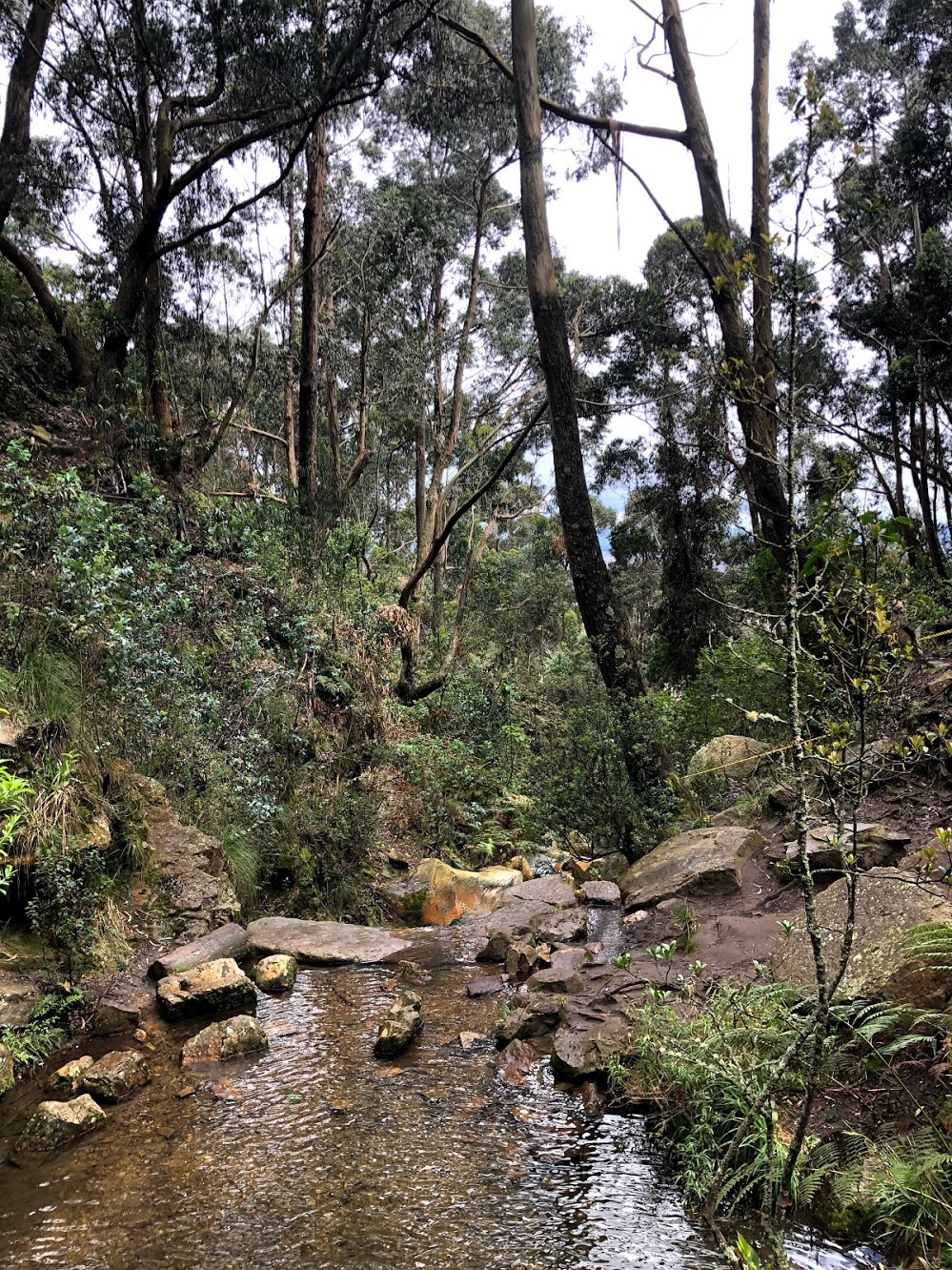
I went through the easygoing trail and got to the waterfall, and it was very beautiful. But the trail kept going! So I followed the trail up the mountain, hoping to get a bit of a view of the city. The trail gradually changed from what could generously be described as “family-friendly” to fairly technical. I had my trusty Irish Setter hiking/work boots and a backpack with some snacks and water, so I was pretty undeterred. There were one or two points where the trailheads got less obvious, so I went very slowly at these parts and took lots of pictures of the location. Luckily the trail cleared up very quickly, else I would’ve turned back.
Eventually, the trail started to get pretty steep. There was a lot of vegetation that could serve as holds and braces for the ways up and down, so it was still navigable. But just as I started to get near the summit, the trail became untenable. There were one or two steps that were basically straight verticals, and after the second one I’d decided that the view was not worth continuing.
The ending was pretty frustrating because I could see where the trail cleared up about 20 feet ahead. Those 20 feet, though, were not safe to climb, so I turned around.
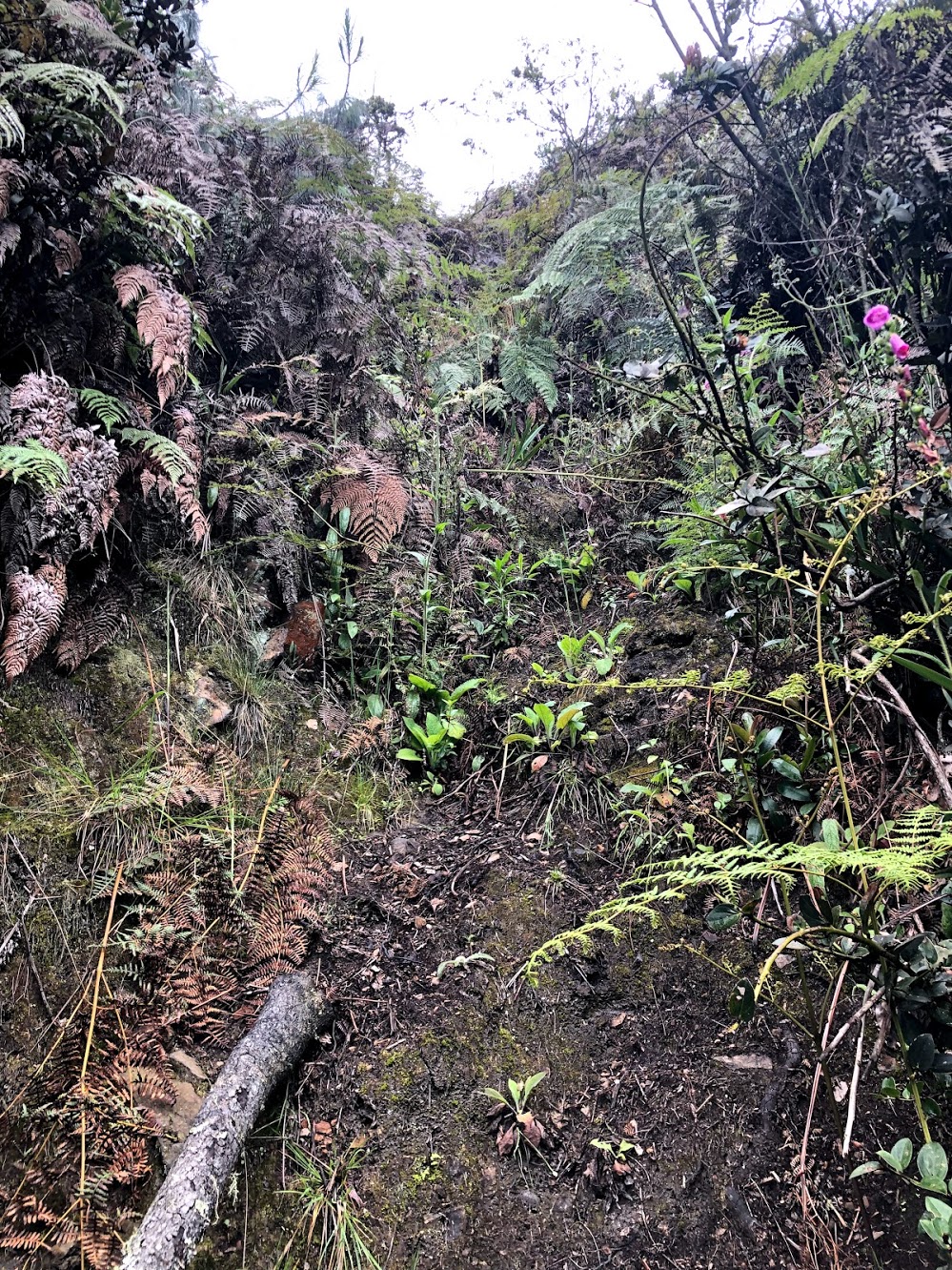
I could make out a bit of the city from the bottom of that last slope, so that view had to do for the day.
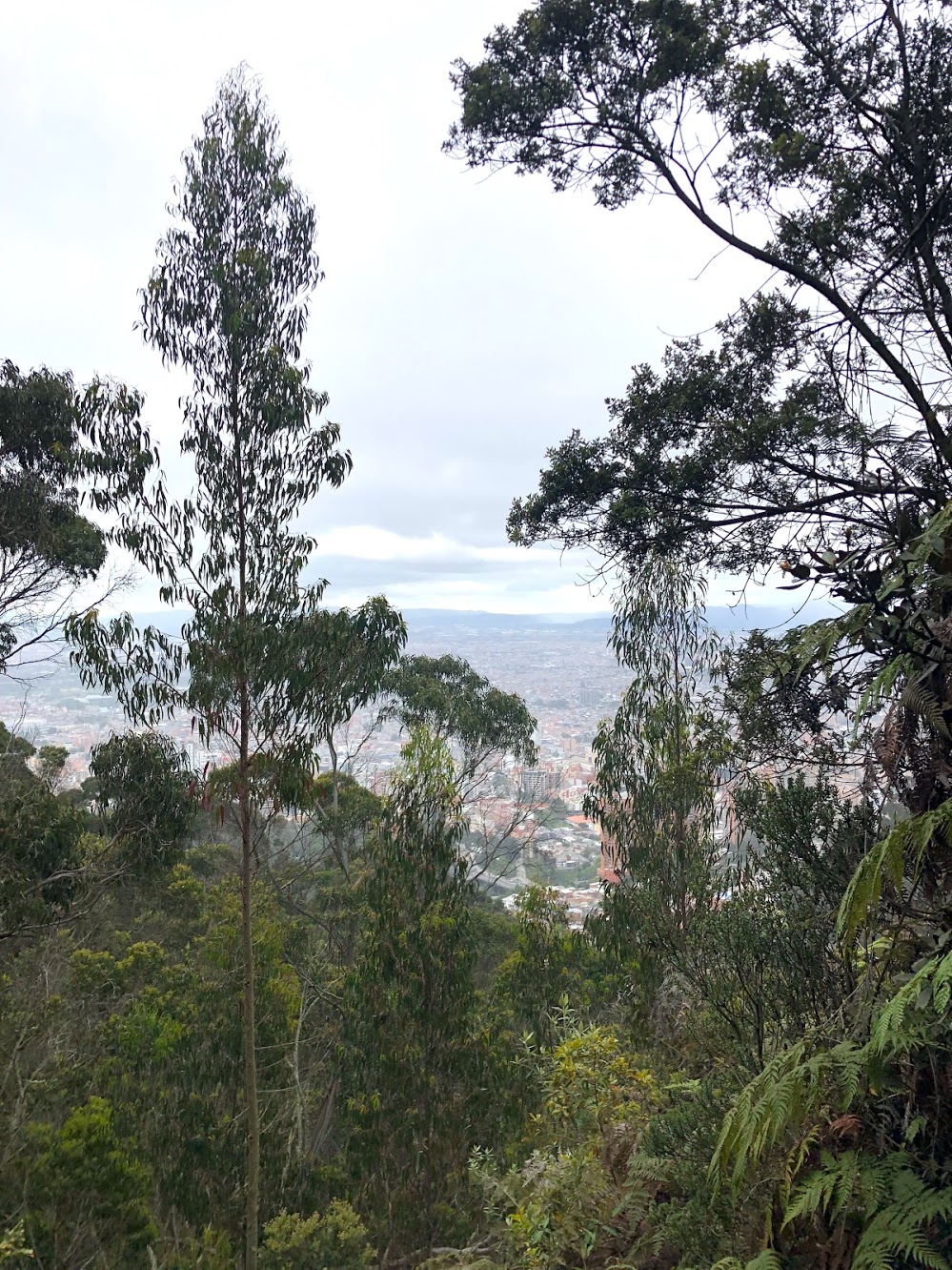
The way down was much more difficult than the way up. It’s fairly easy to climb thigh-high steps up the mountain, but going down your center of gravity is not as thrilled about it. I tried around for a couple of walking sticks, but the super high humidity and constant misting made every stick either rotten or bendy.
Ultimately, I ended up uprooting a few more saplings than I’d like to admit trying to balance while navigating my way down. Frequently, I’d just sit down on my butt and slide my feet down the steeper, slippery parts. This wasn’t much of a problem until I realized that I’d practically ruined the only pair of jeans I brought to Colombia. Oh well, battle scars!
It took me about an hour and fifteen minutes to get up and an hour and forty five minutes to get back down. Once I’d reached back to the waterfall, I had a nice rest and washed some of the dirt off my hands in the stream.
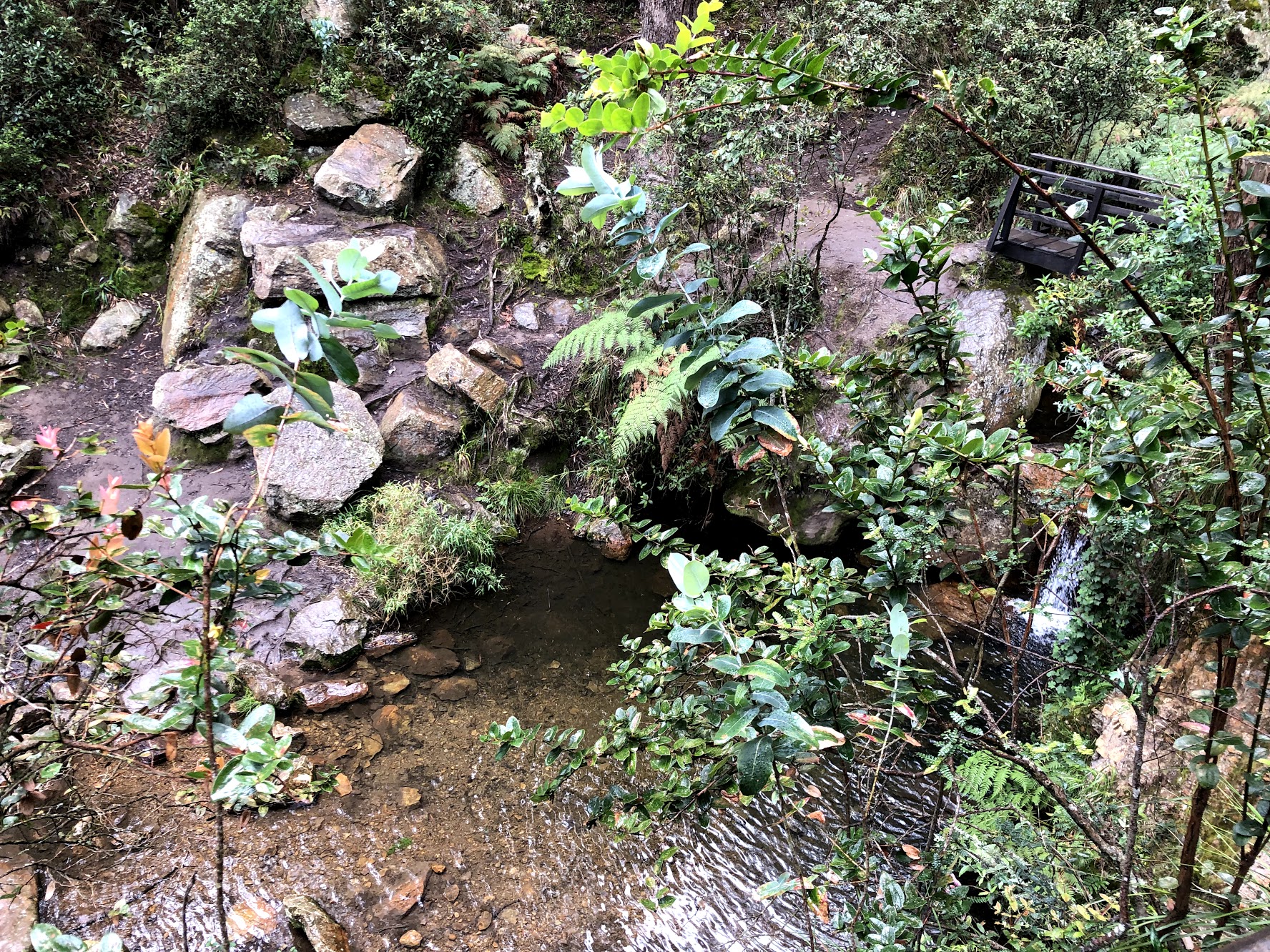
I finished my hike and got some lunch nearby, then I went back to the hotel to shower and send a few emails. Afterwards, I met back up with Julia (Devocion’s Coffee Concierge) and her roommate Oliver, who works in the commercial coffee industry for a large exporter here in Bogotá.
Oliver was (obviously) incredibly knowledgeable about the commercial sector, and I learned a lot from him. We talked a lot about the scale that his company works on. I interested to hear that there are well-established premiums for purchasing coffee at the dry mill that scores at different levels: 80-82 points may fetch price A, 82-84 price B, while 85+ would likely be sold to a specialty buyer. Furthermore, Oliver explained that farmers generally break even on the price of commercial grade coffee – that is, it’s basically just enough to cover the cost of producing it. They’re able to make money and maintain an income stream through their Excelso or Supremo grades. This certainly goes against what I’ve heard, that coffee prices right now are generally below the costs of production.
Oliver also explained some of the periodic maintenance that farmers employ on their crops, i.e. pruning and replacement. There are three levels of maintenance: full pull-up-the-roots replacement of trees, cut down to the base pruning, and cut to hip height pruning. They are done at 7, 5, and 3-year intervals, respectively. This seems to be a fairly successful educational effort by the FNC, because such pruning really does make a difference in yield and productivity, or so I’ve heard.
Another area I learned about were the differences between selling parchment coffee to a cooperative versus a commercial buyer. Cooperatives are located at dry mills managed by the community, while commercial buyers may buy parchment coffee the at the local market but mill the parchment coffee elsewhere. Commercial buyers will often pay very small premiums over coops (on the order of $1 per 60 kilo bag). Coops, though, are able to offer other benefits, including discounted prices on fertilizers in addition to discounts on coffee trees grown at their nurseries.
It was interesting hear how these kinds of economic pressures play out at small scale parchment coffee markets, with different buyers offering different incentives and premiums for growers. One of the common threads, though, was that quality is certainly rewarded by buyers, whether it be the coop or commercial players.
The company Oliver works for exports about 1700 containers a year, which is an insane scale to think about. A single container can fit about 275 60-kilo bags of coffee in it, which means Oliver’s exporter is sending out about 28 million kilos of coffee a year. That’s insane! What’s crazier, he assured me, is that they process just a fraction of the scale of Colombia’s largest exporters like Expocafe.
At that scale, it’s very difficult to see through the logistics to the farm. Even still, every bean that goes out was processed by a Colombian coffee farmer, and every bean has a story to it. Often those stories will get lost, and especially so when the coffee is mixed into a large, commercial quality blend. But I can’t help but feel humbled to think of all of the growers and producers who work to fill a single container, let alone the many thousands that Colombia sends out every year.
Signing off for another day. Who knows what tomorrow might bring!
Alex
 Alex's Coffee Adventure
Nice view on the hike! What happened to the REI boots?
Interesting to learn about the coop vs commercial economics. And the pricing differences based on quality. How big is the cost delta for those three quality bands?
LikeLike