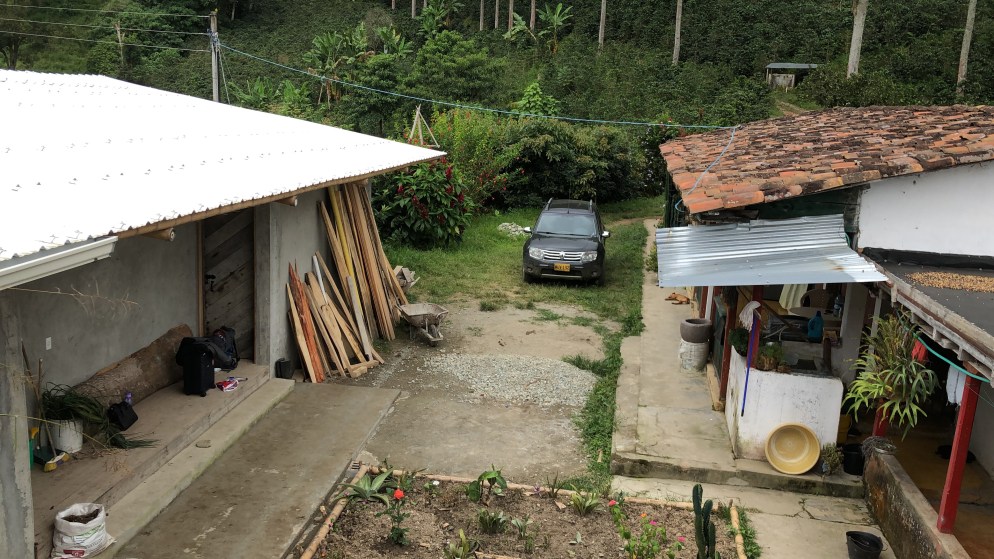
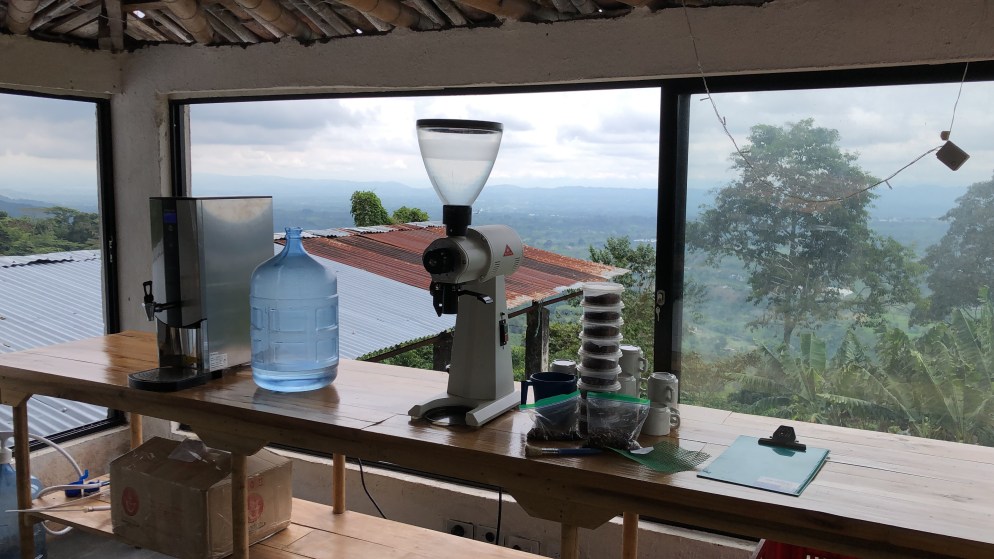
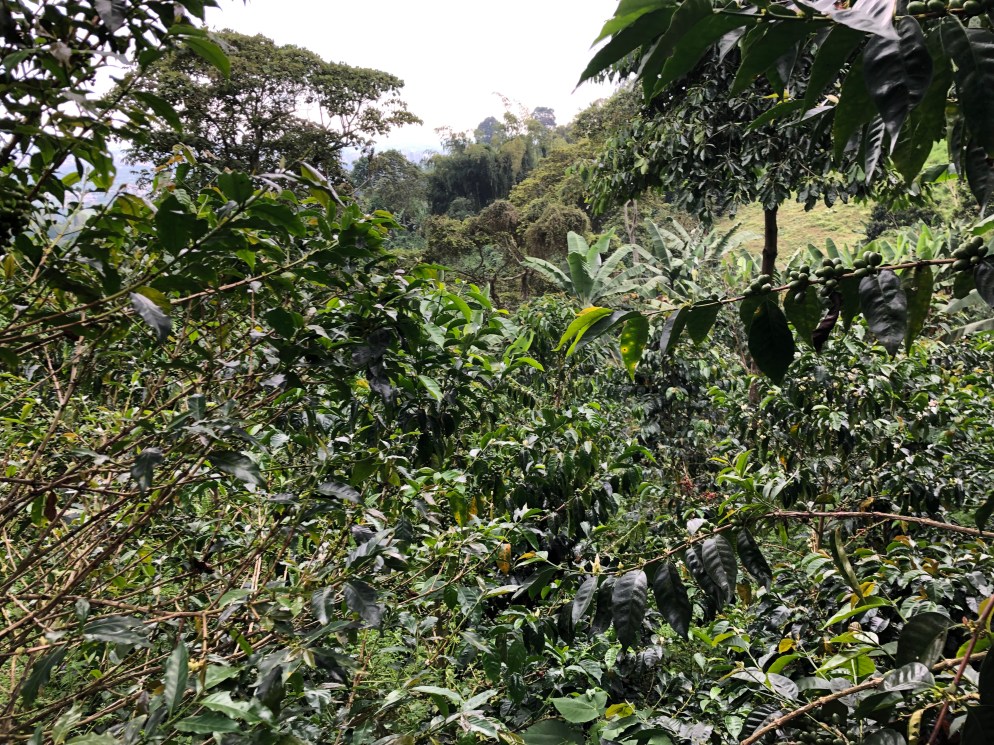
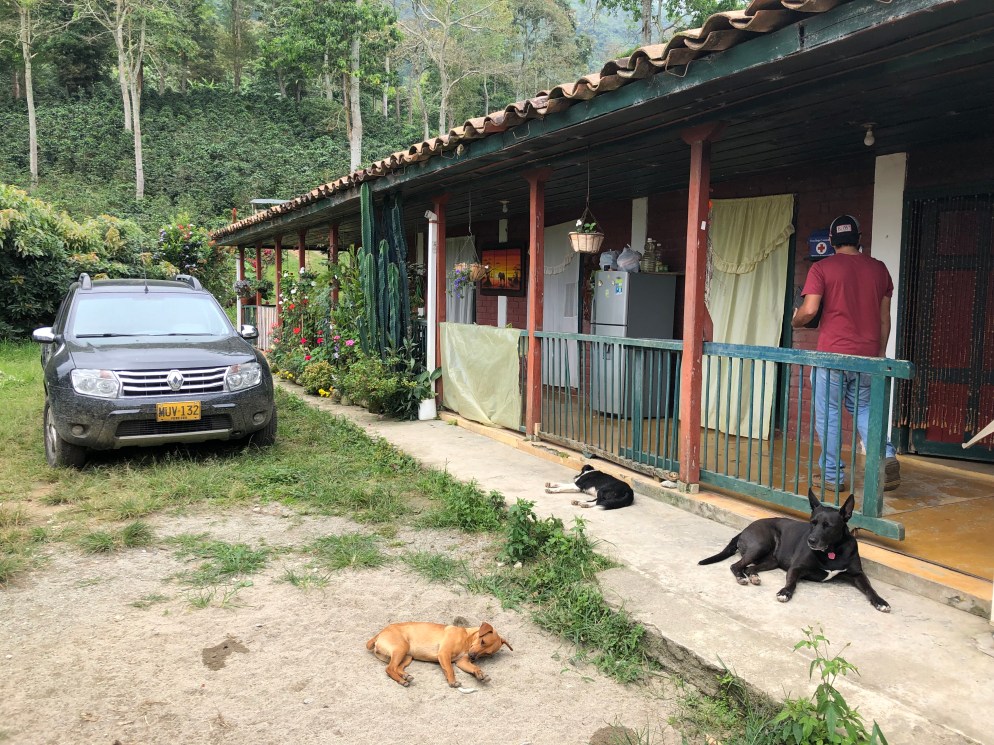
Today I arrived to El Fénix, a coffee farm and cooperative in Calarca, Quindio Colombia where I’ll be spending my next five weeks. I am thrilled to be here and today made me so excited for what’s to come this summer.
I have a bit more of a sense of what I’ll be doing over these 5 weeks, and my responsibilities will include:
Agricultural work, like
Picking cherries (I start tomorrow at 6am!)
Weeding trees
Fertilizing
Pruning
Planting new trees
Coffee production, including:
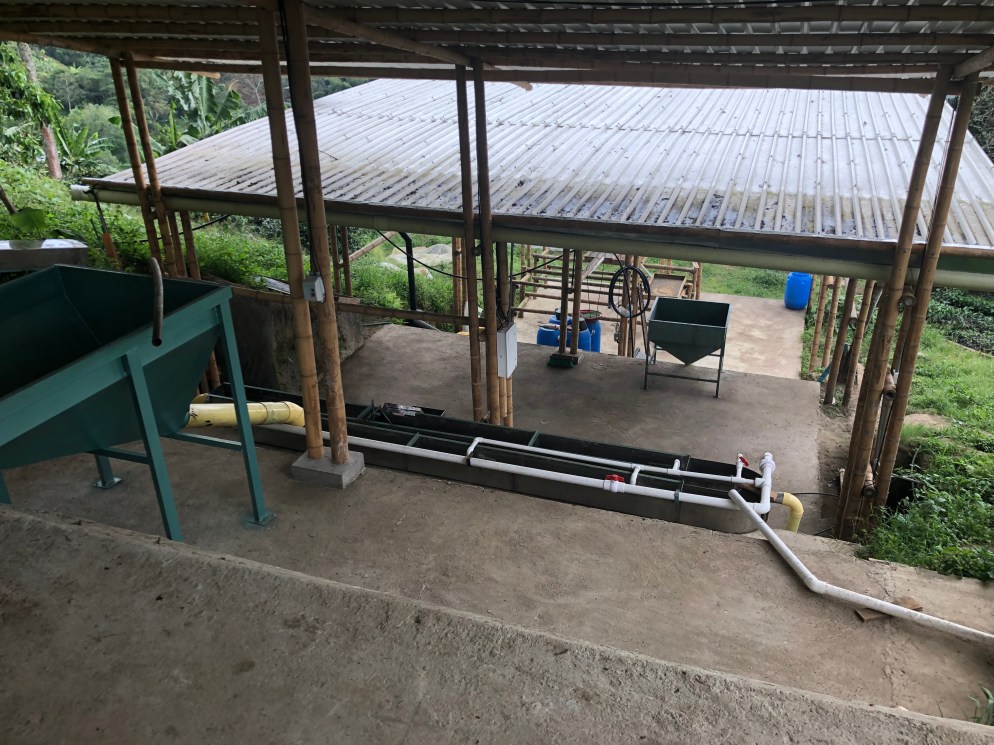
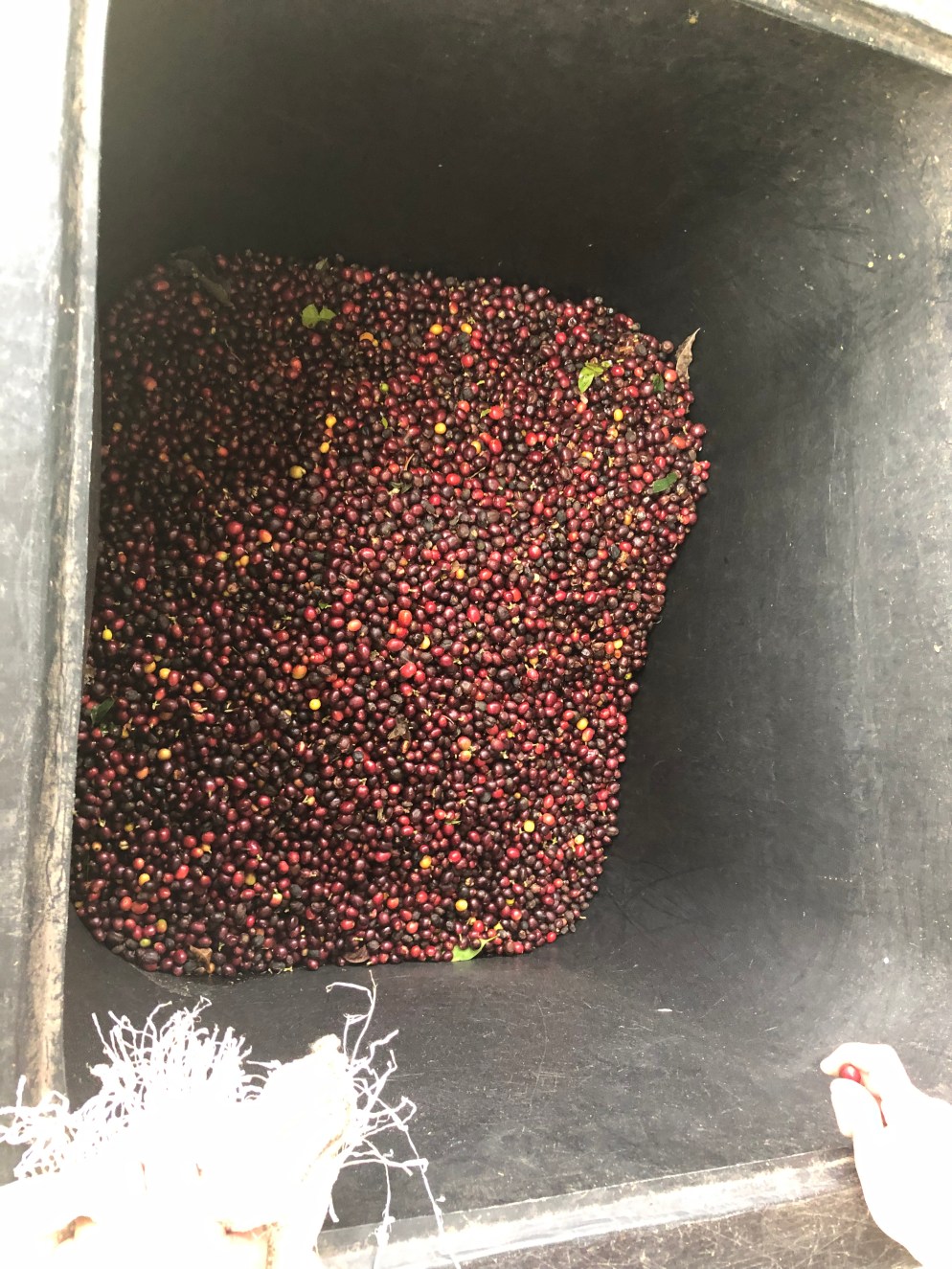
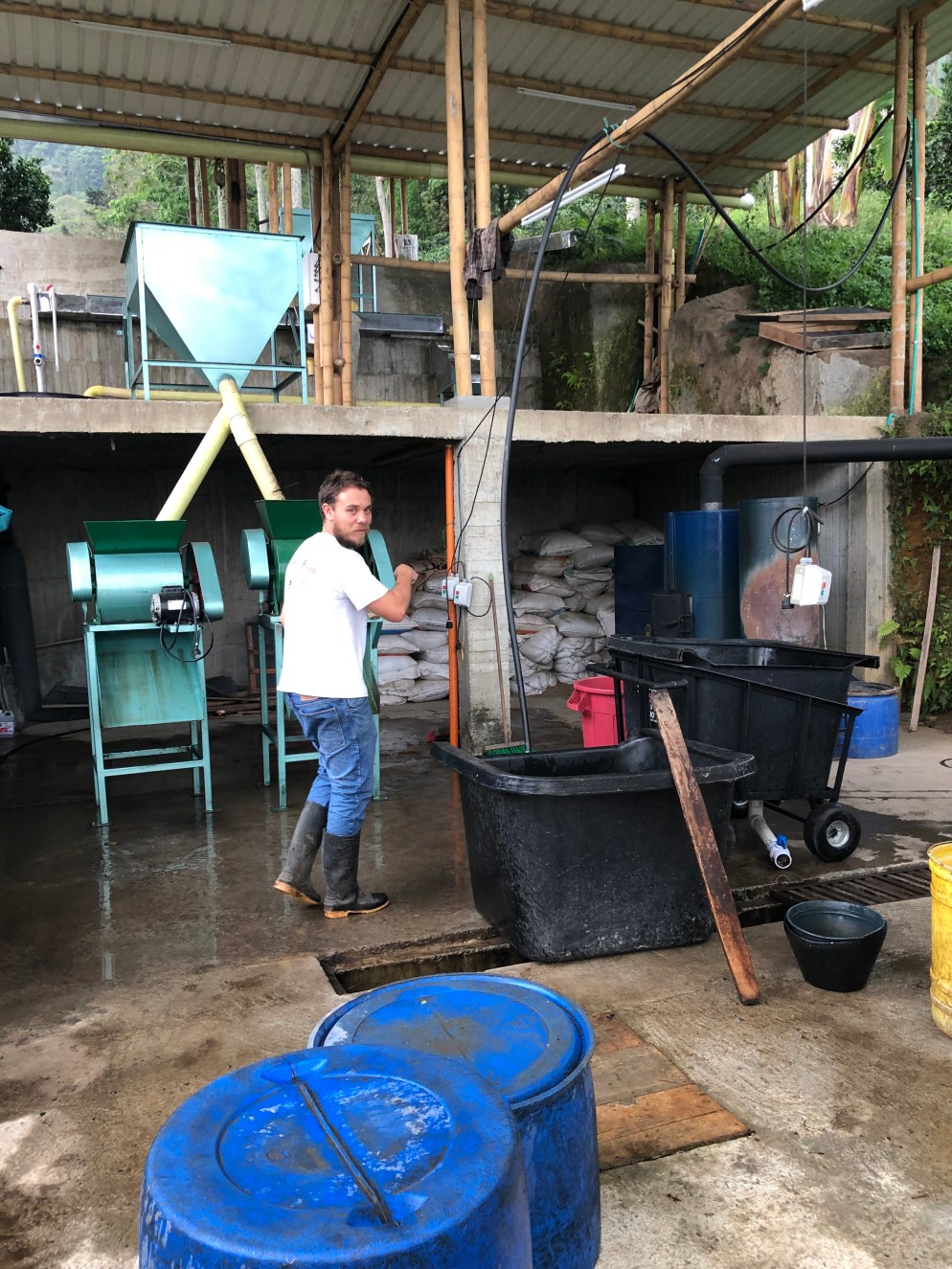
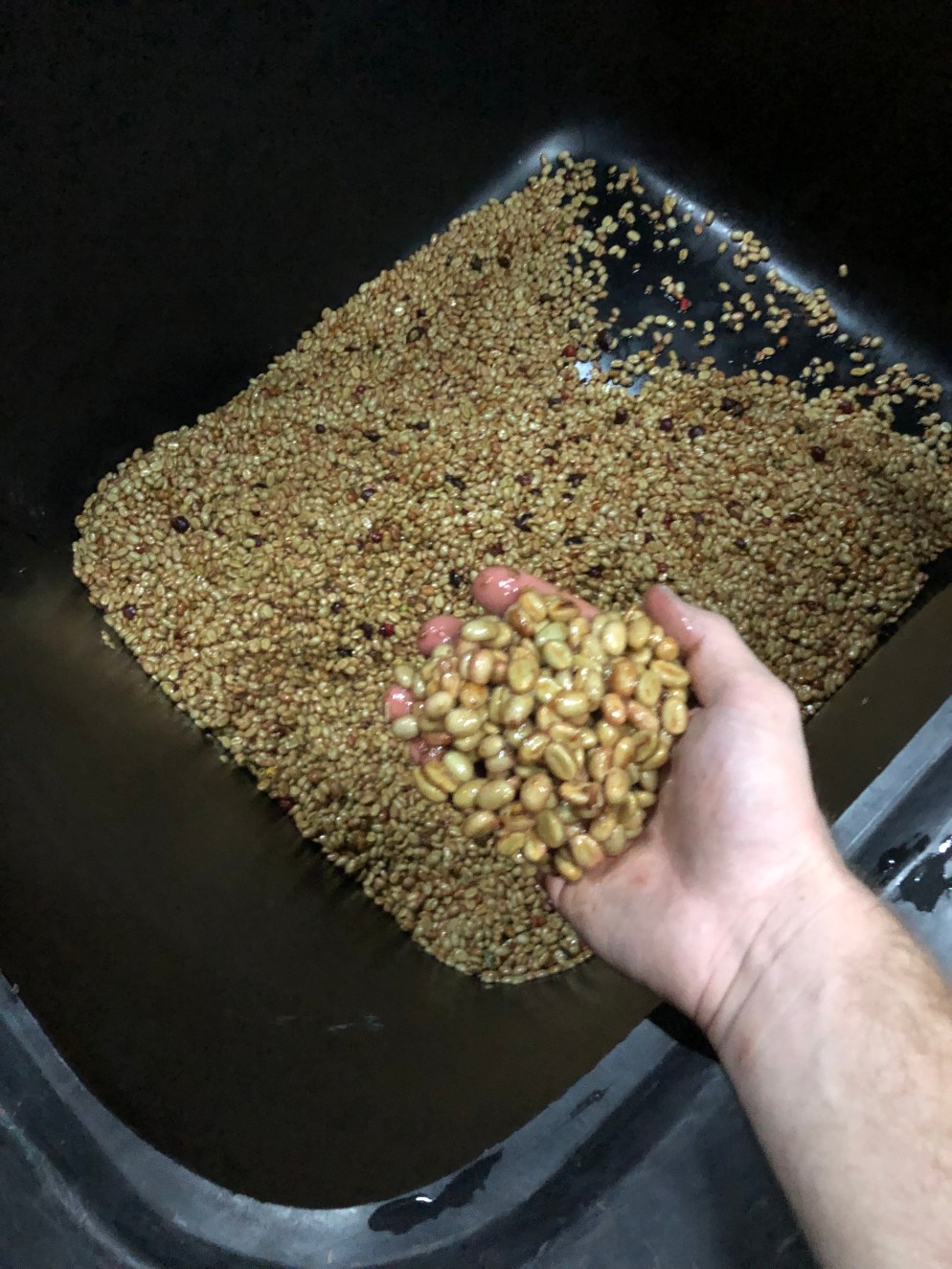
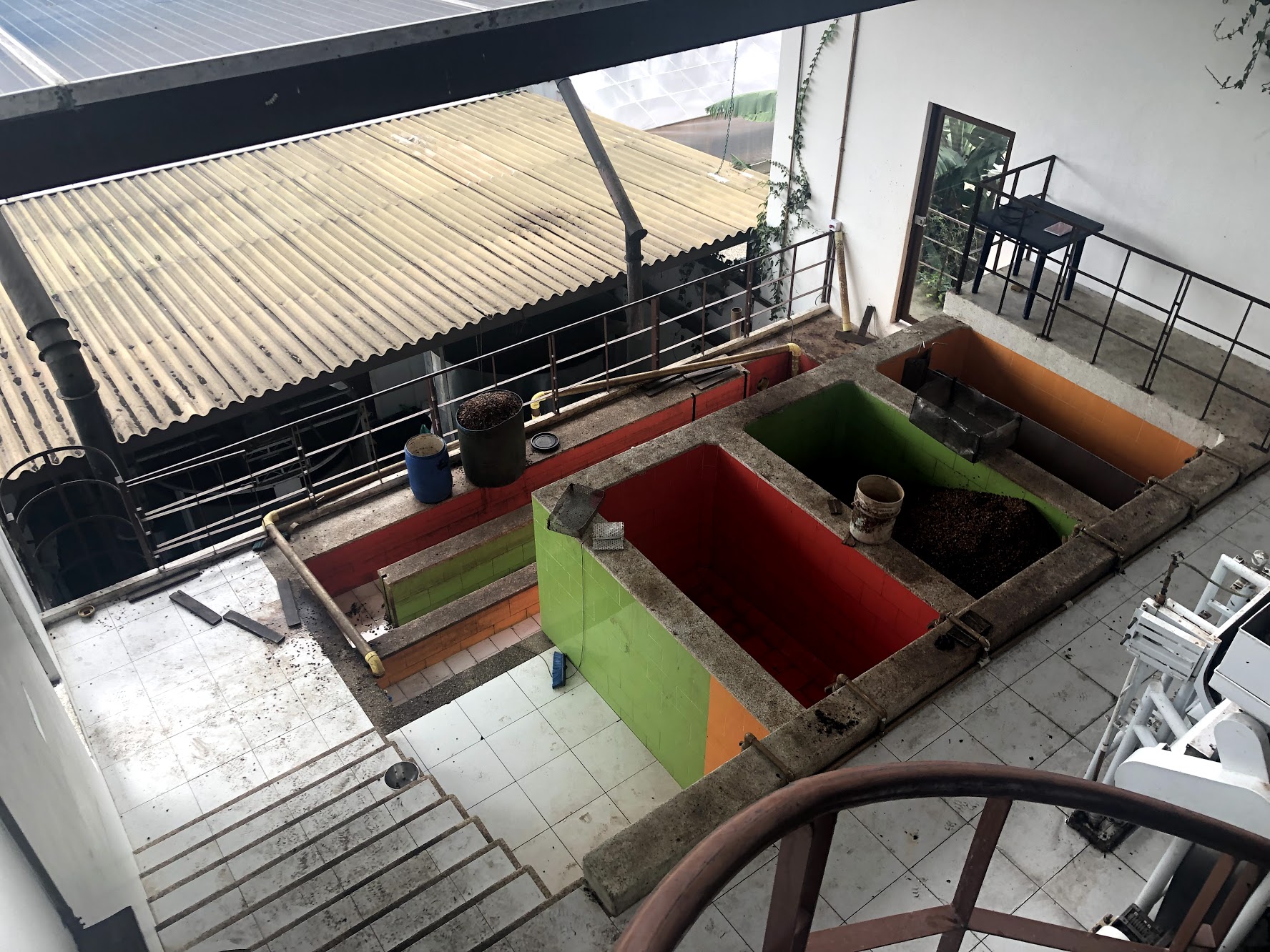
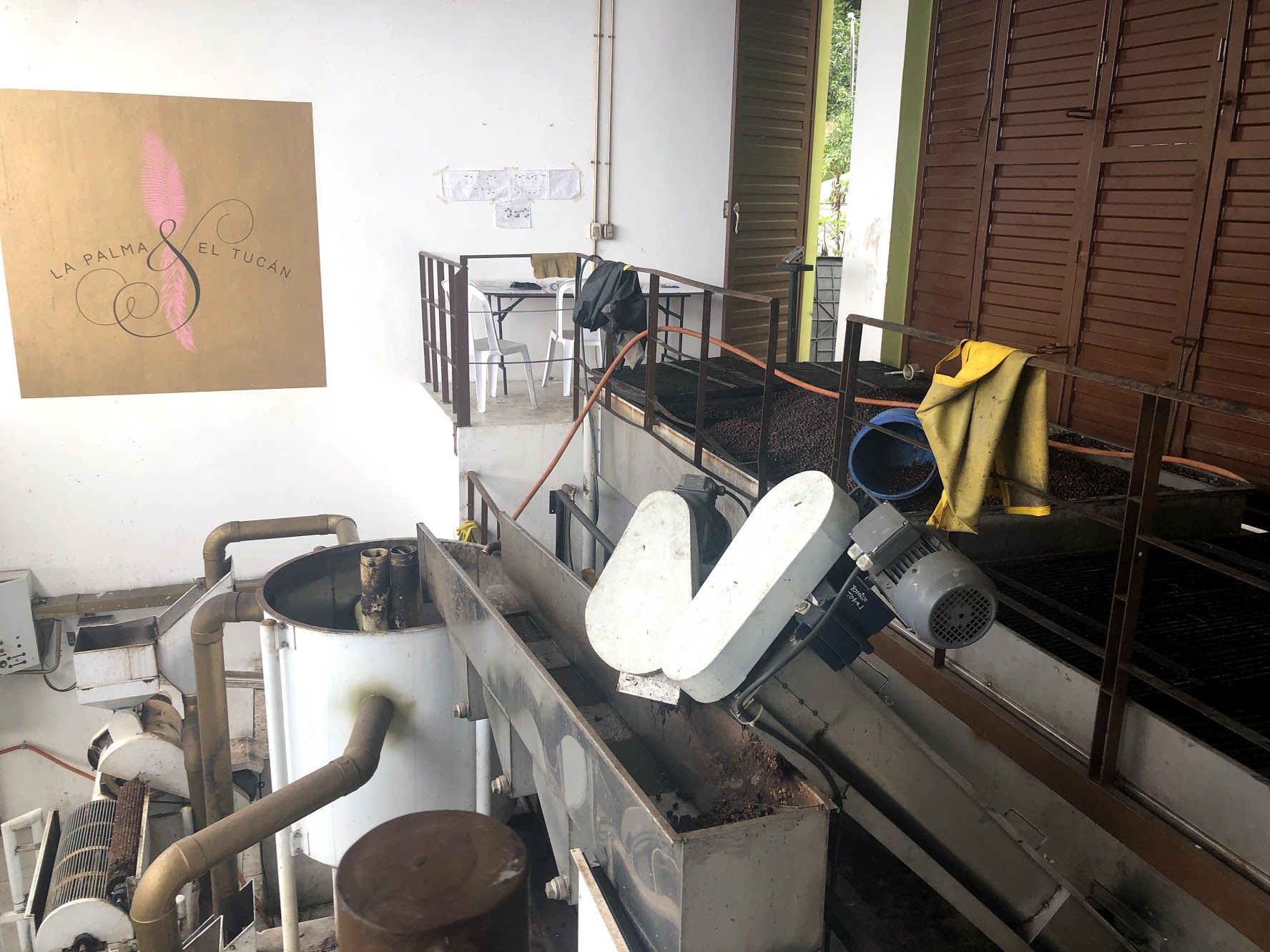
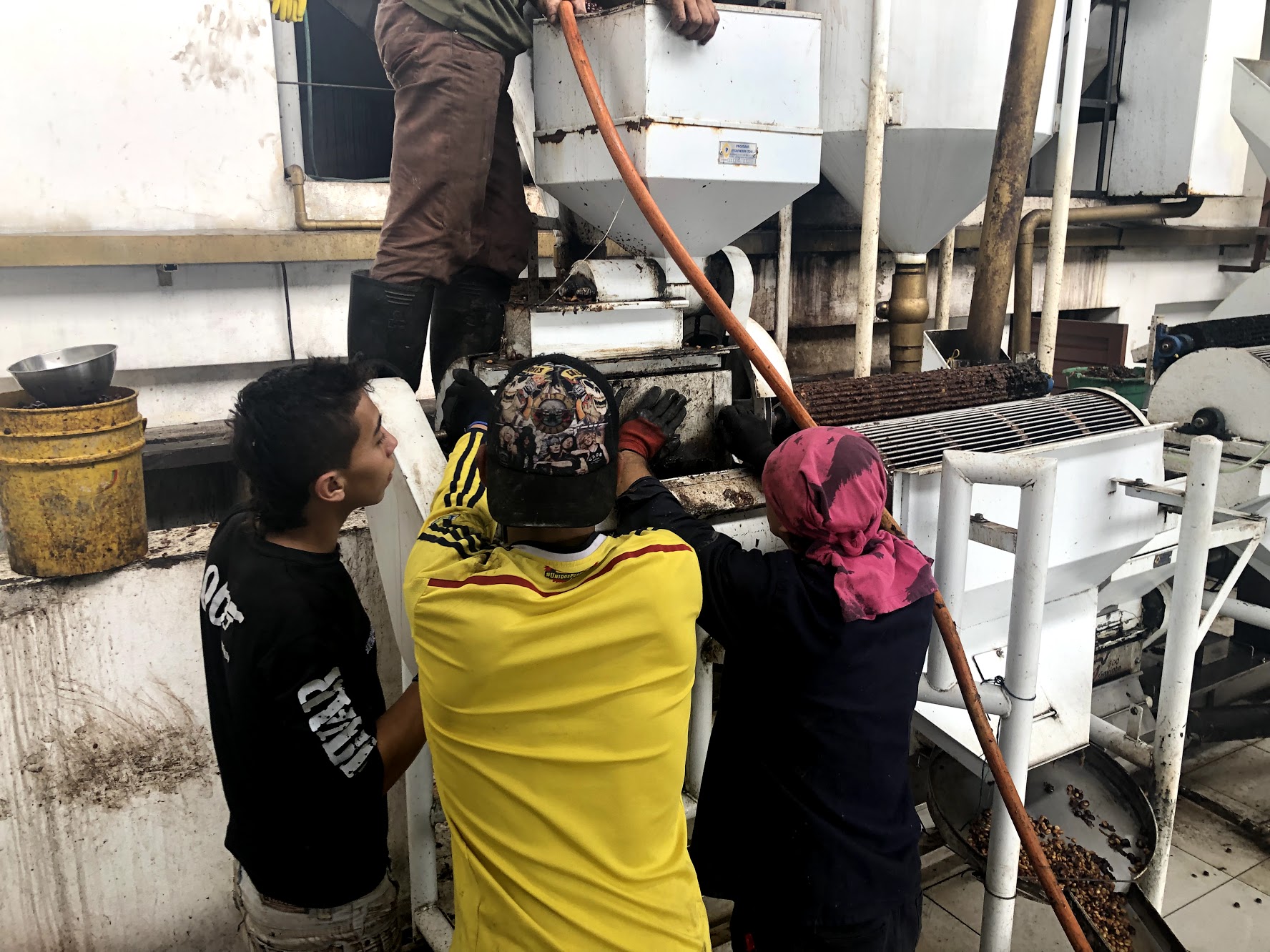
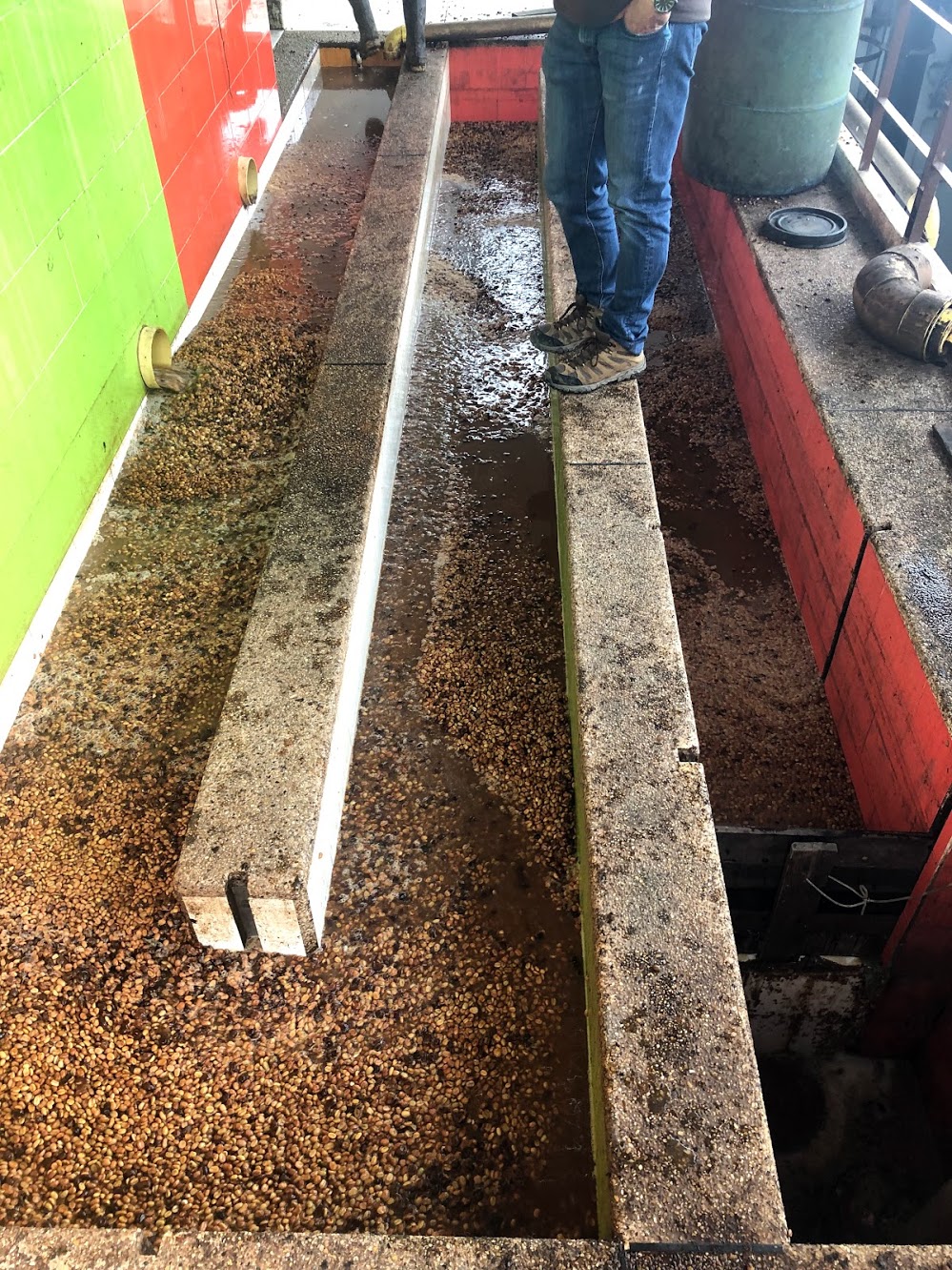
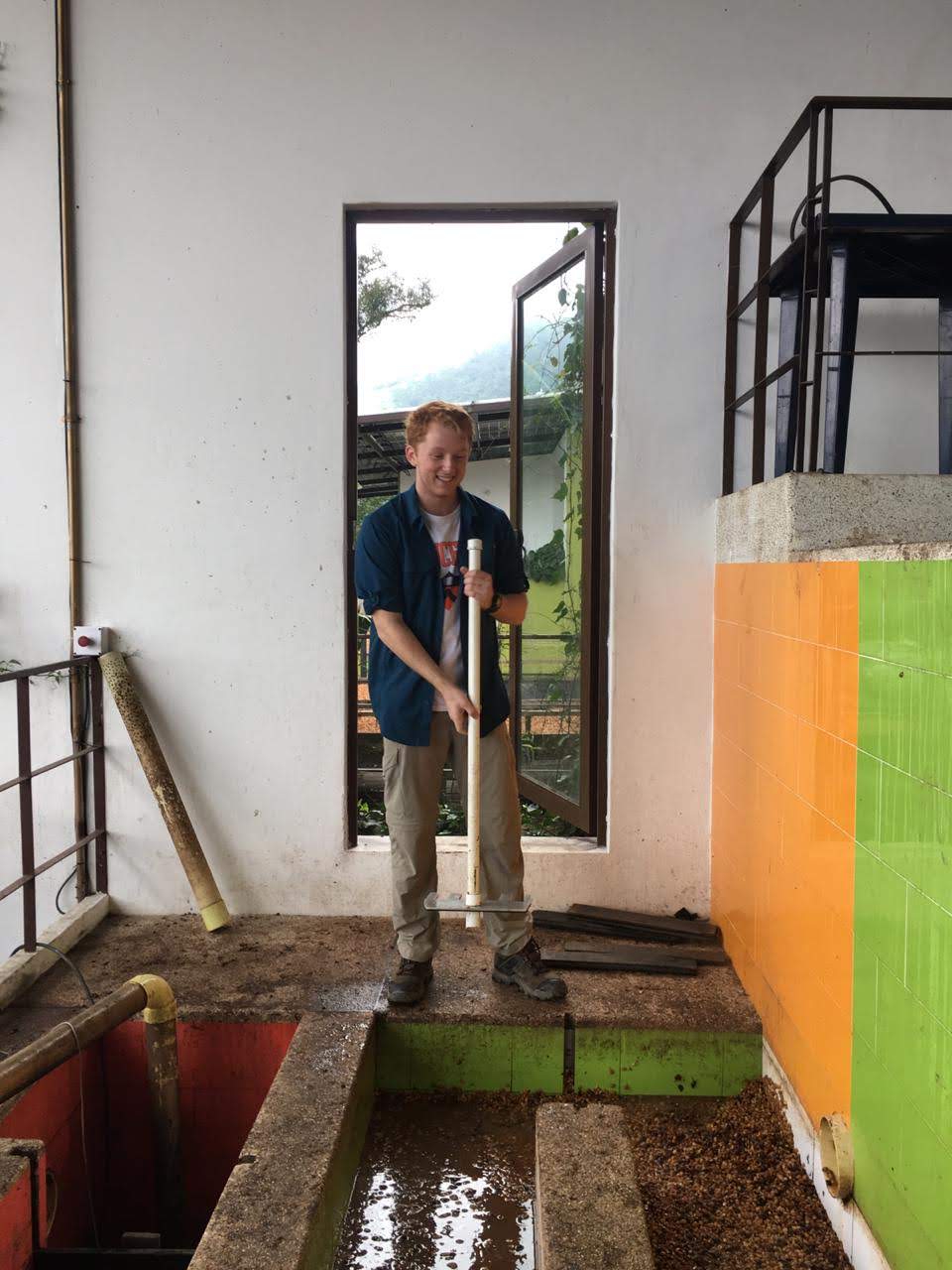
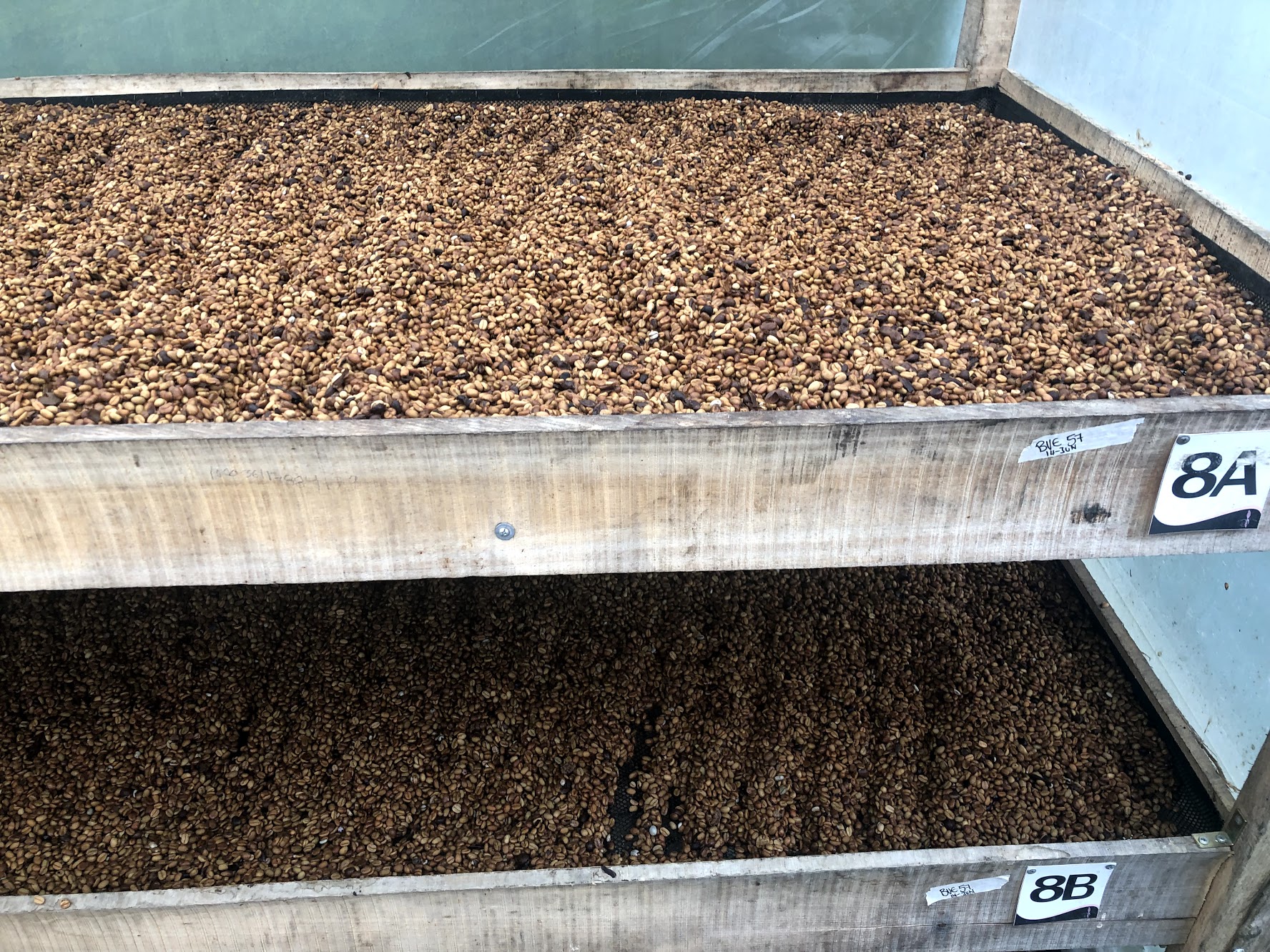
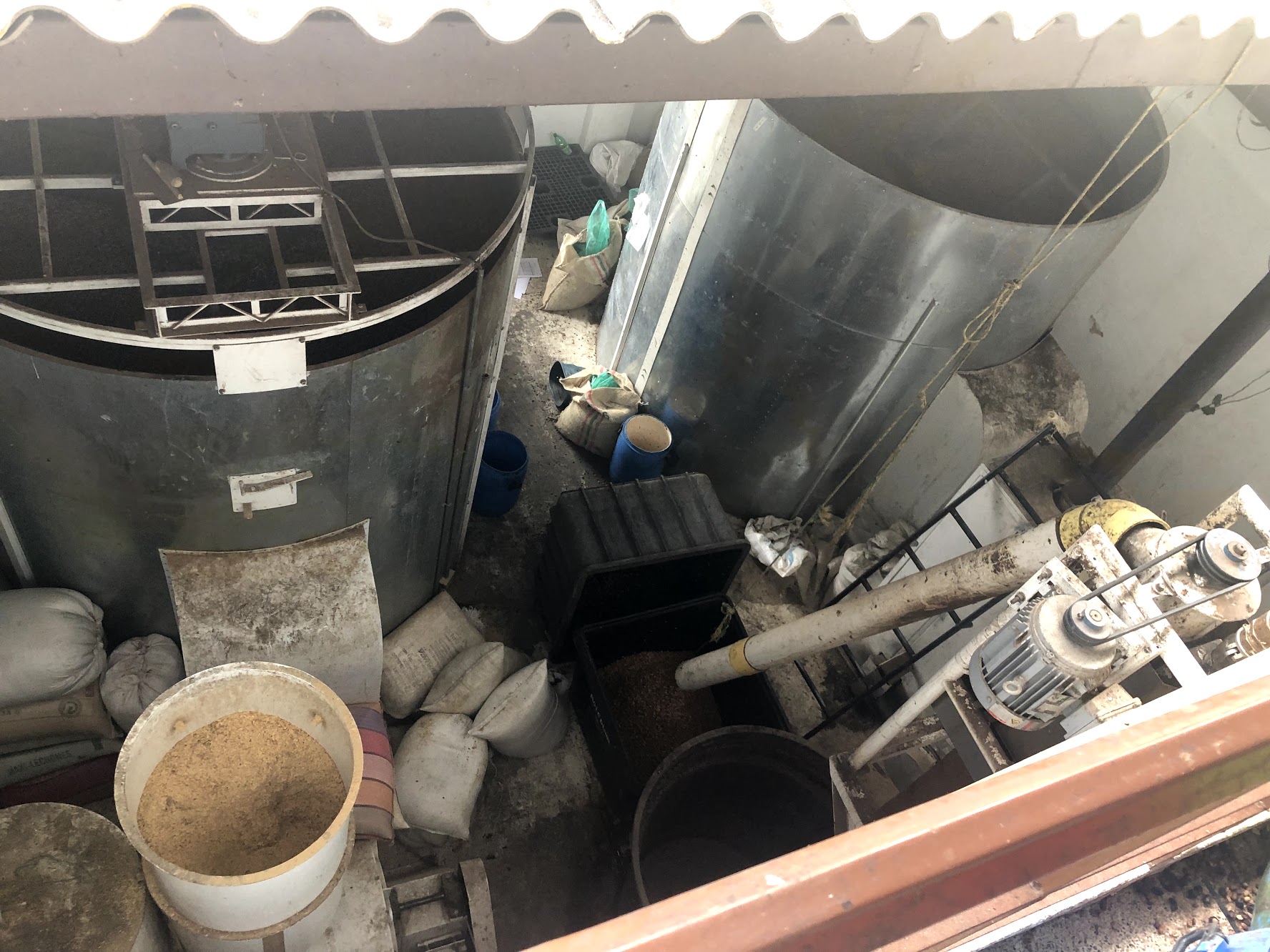
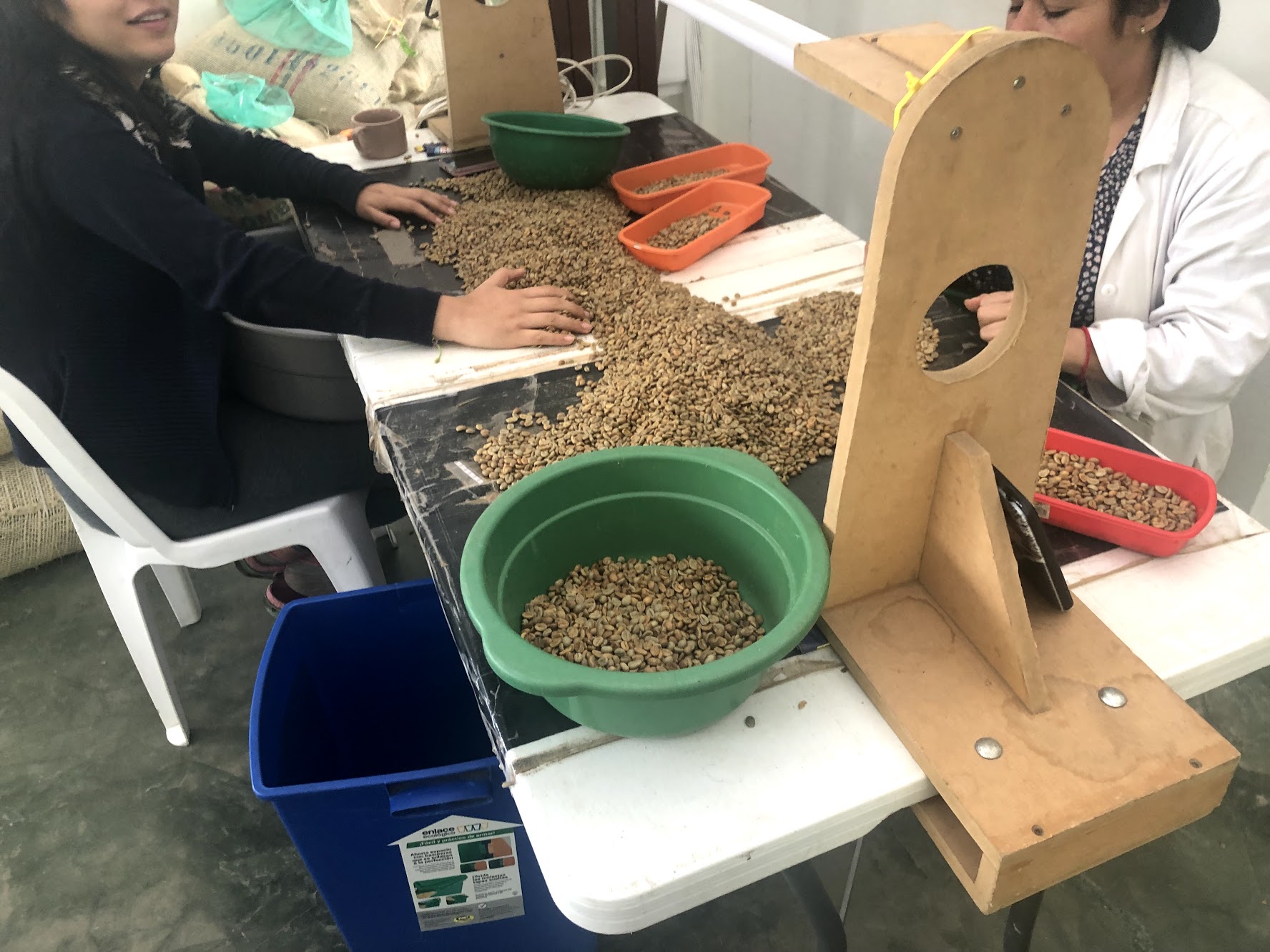
Processing cherries (I did some of this today, check out the pics below!)
Coffee fermentation (lots of blog posts on this to come)
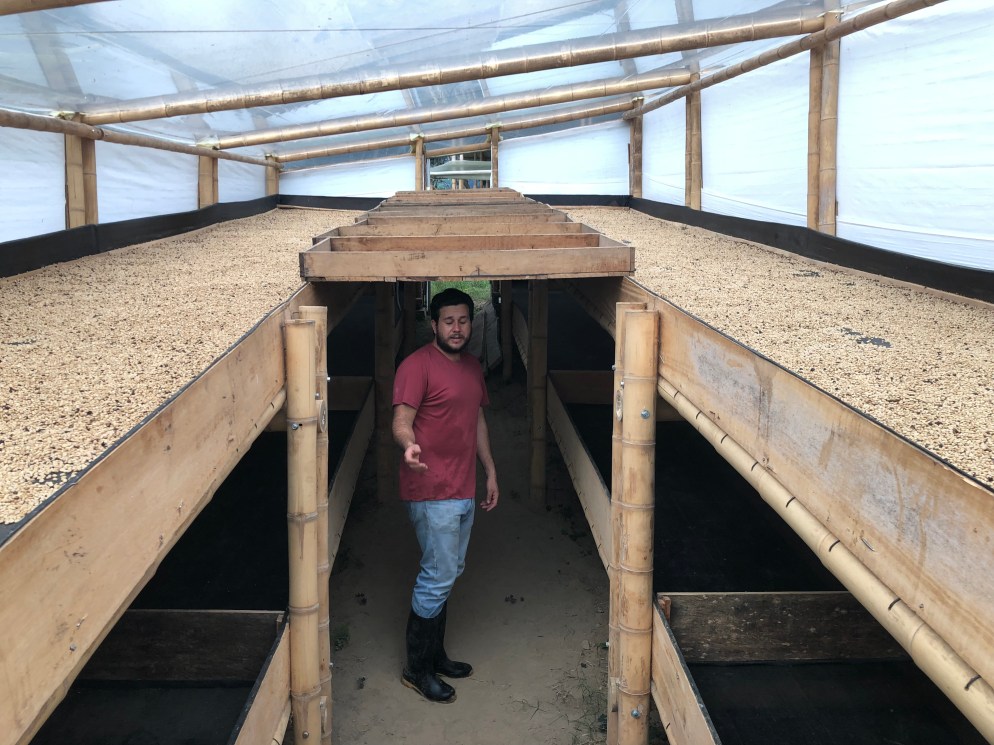
Drying coffees
Producing cascara (dried coffee cherry used for tea)
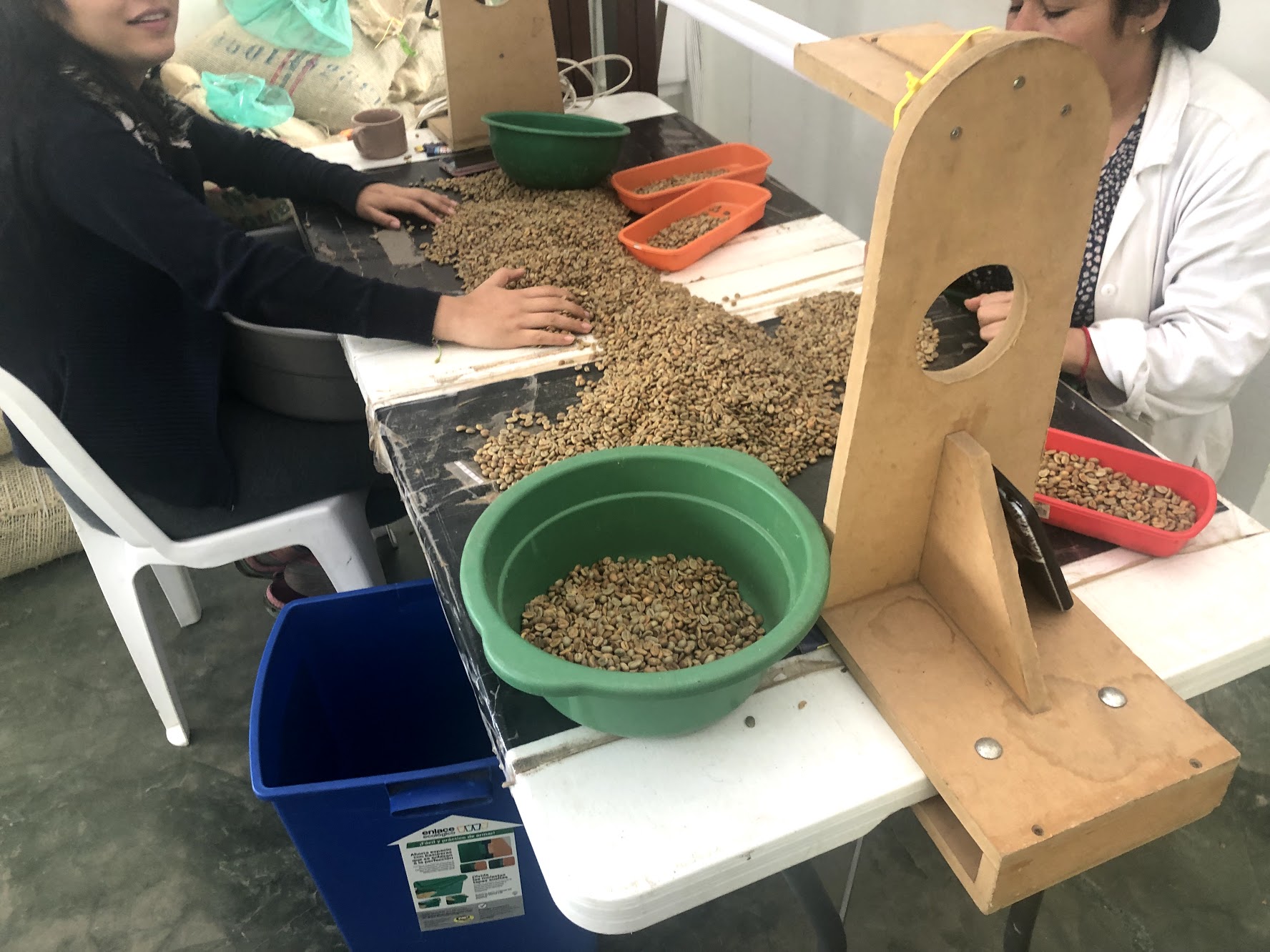
Sorting and grading for quality
Building new projects and improving existing ones, like:
Working on the organic vegetable garden (today I planted a bunch of corn!)
Building a water treatment system for pulp-ey coffee water runoff so it doesn’t kill trees
Building a composting pit and worm farm
And getting to do some other incredible educational stuff, like:
Touring and understanding the Colombian coffee association buying system
Visiting nearby towns and coffee cooperatives
Roasting samples
Learning about dry mill grading
Watching first-hand how exporting contracts are drafted and agreed to
It’s going to be absolutely incredible. My hosts are Miguel and Alejandro Fajardo, brothers who are currently running the farm. Miguel runs the Colombia branch of Raw Materials Coffee, which has grown to include specialty exporting systems in four countries. I highly encourage you to check out their website. So far they can export about 17 containers worth of specialty coffee in a year paying a guaranteed above-market (and above fair trade) price of 100,000 pesos per 60 kilos of parchment coffee, so long as it ends up meeting their quality standards.
I’ll write a lot about what Raw Materials does in the coming days as well, but for now I just can’t wait for this incredible opportunity. I have 5 full weeks to immerse myself in the mechanics, agronomy, economics and (perhaps most importantly) labor of coffee production, and I couldn’t be more excited.
Miguel and Alejandro have already proven themselves incredibly gracious hosts, and Miguel has assured me that I am here to learn and that I’m going to learn as much as I can. For now, I’m going to be learning mostly by following coffee workers (harvesters/producers) and mimicking what they do, but I’ll go on to get to experiment with some of the coffee and tour around the coffee region of Quindio.
Ok, so it’s going to be awesome. I’ll write much more about what it’s like here and daily life soon, but for now I just wanted to write down all the incredible things to come.
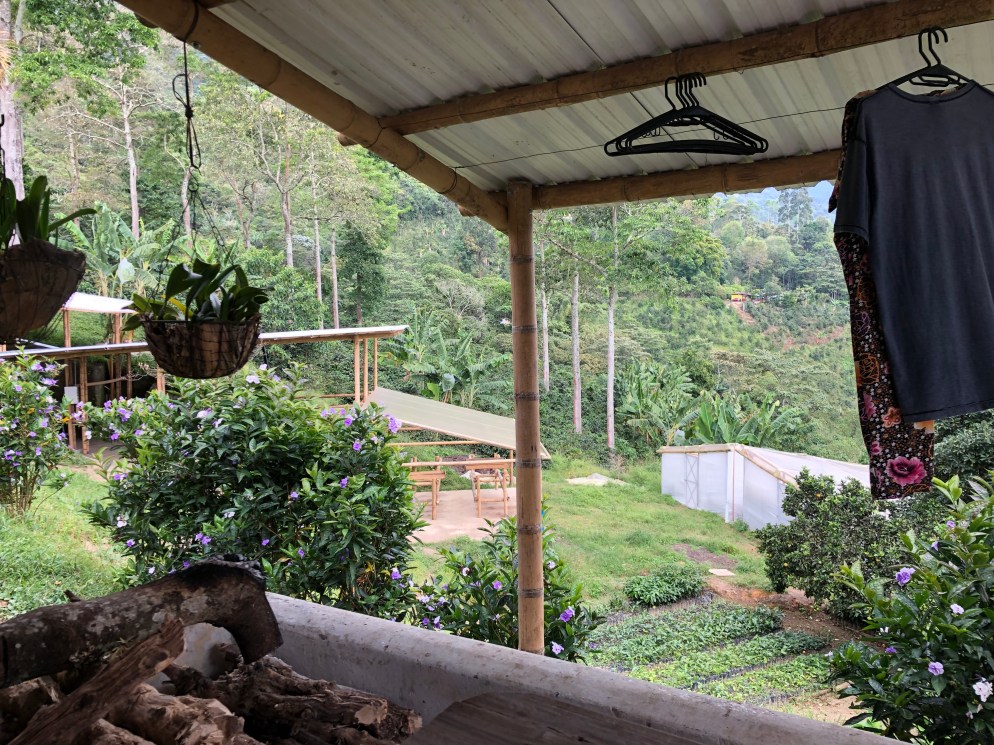
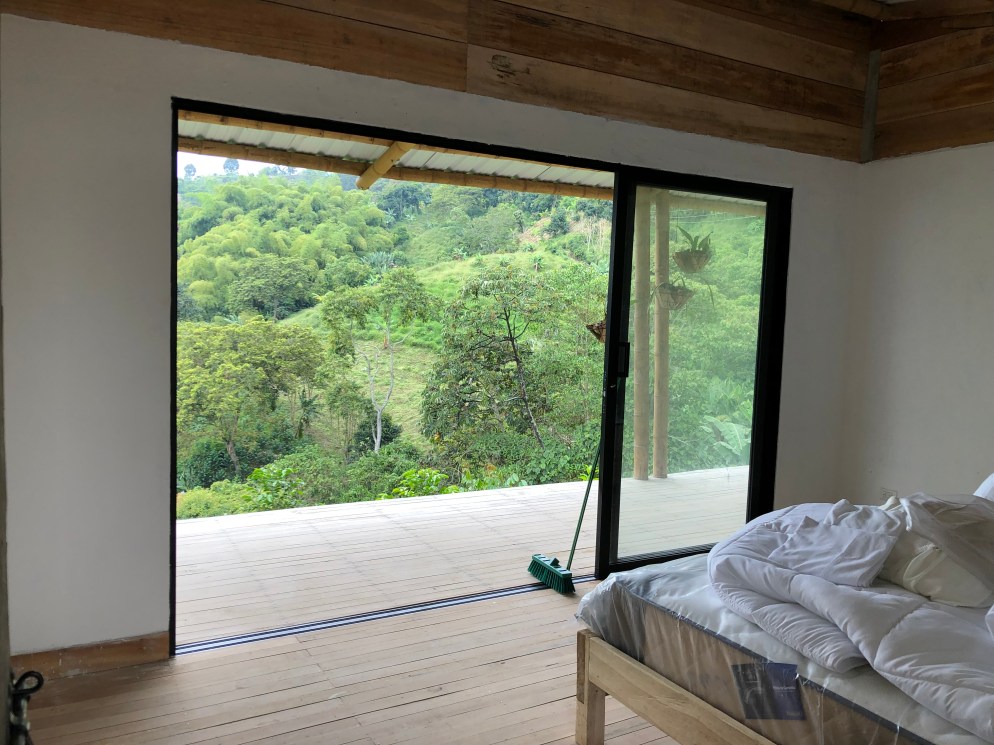
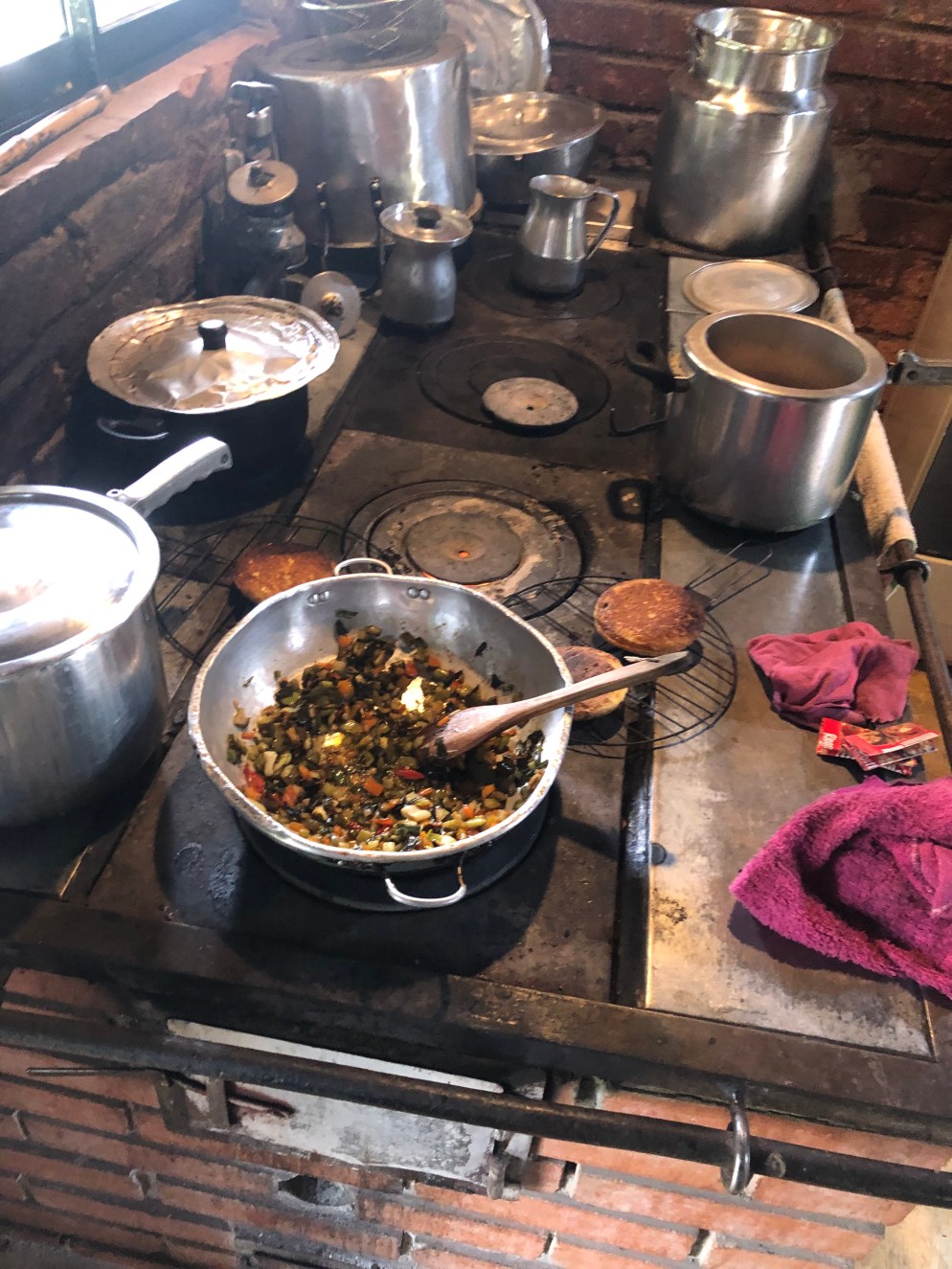
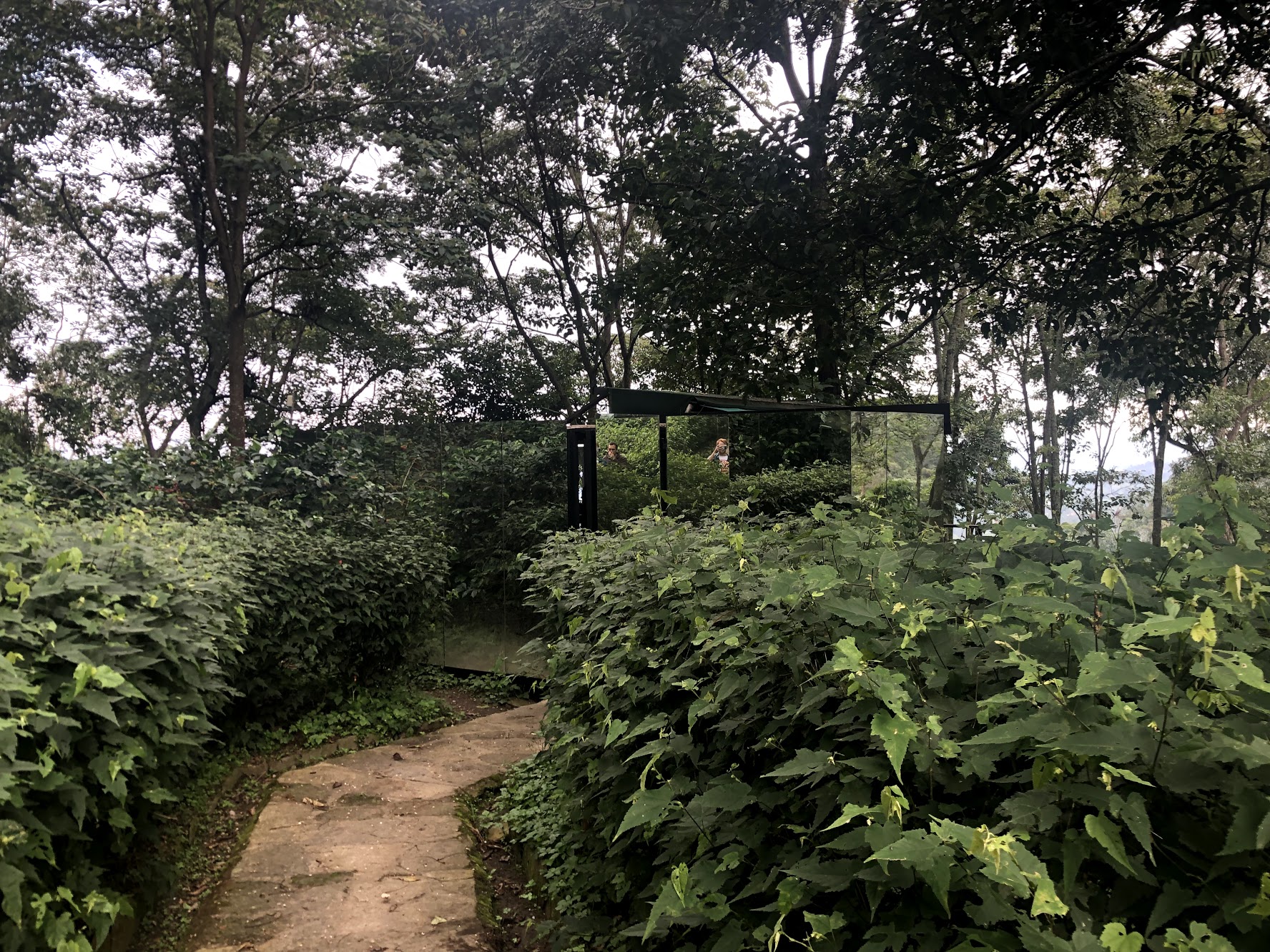
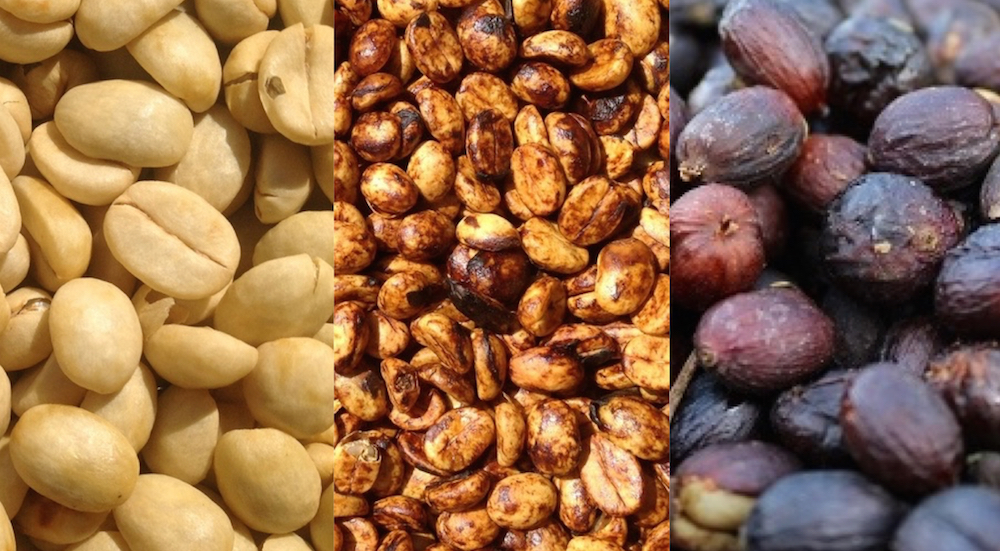
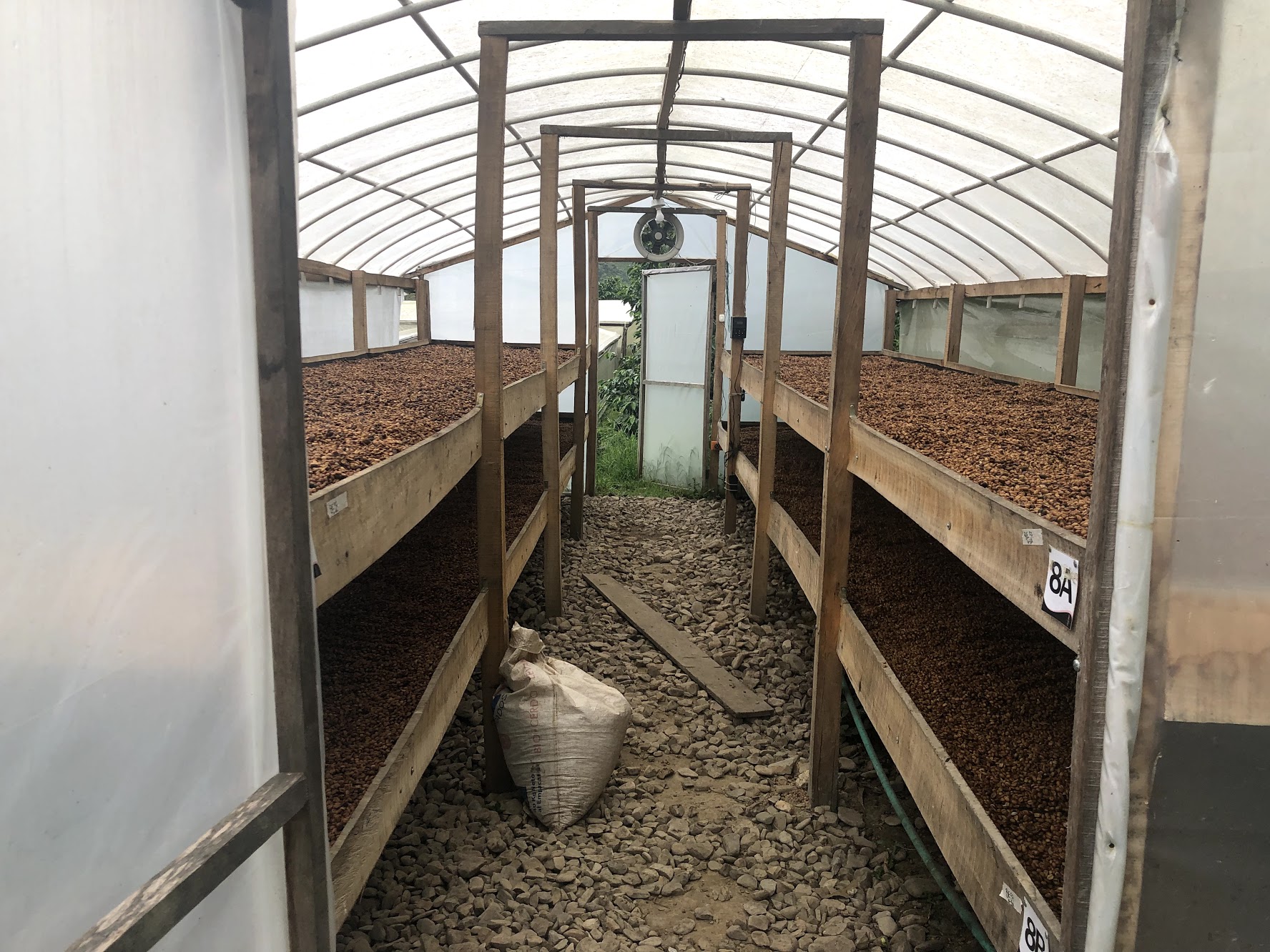
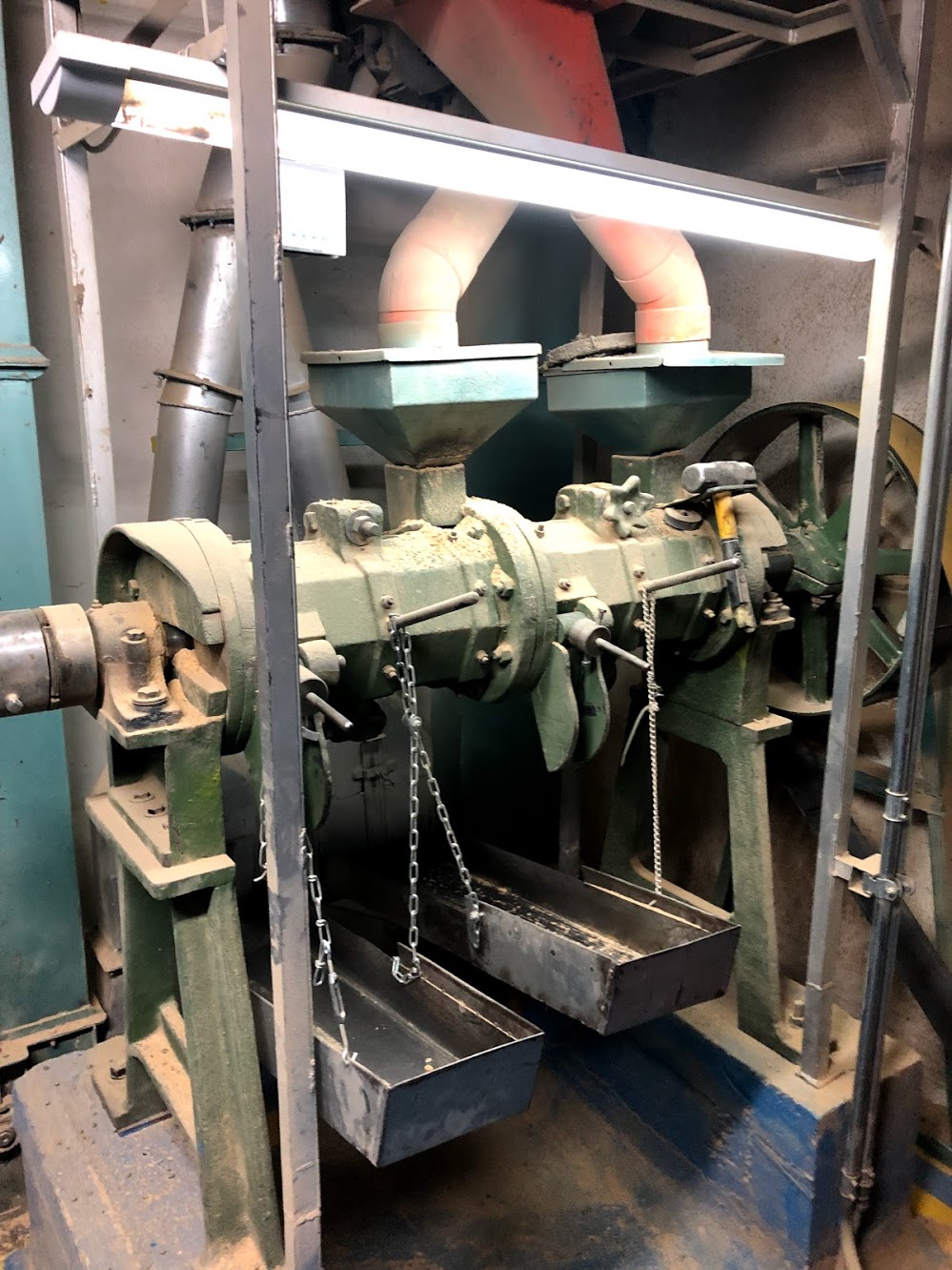
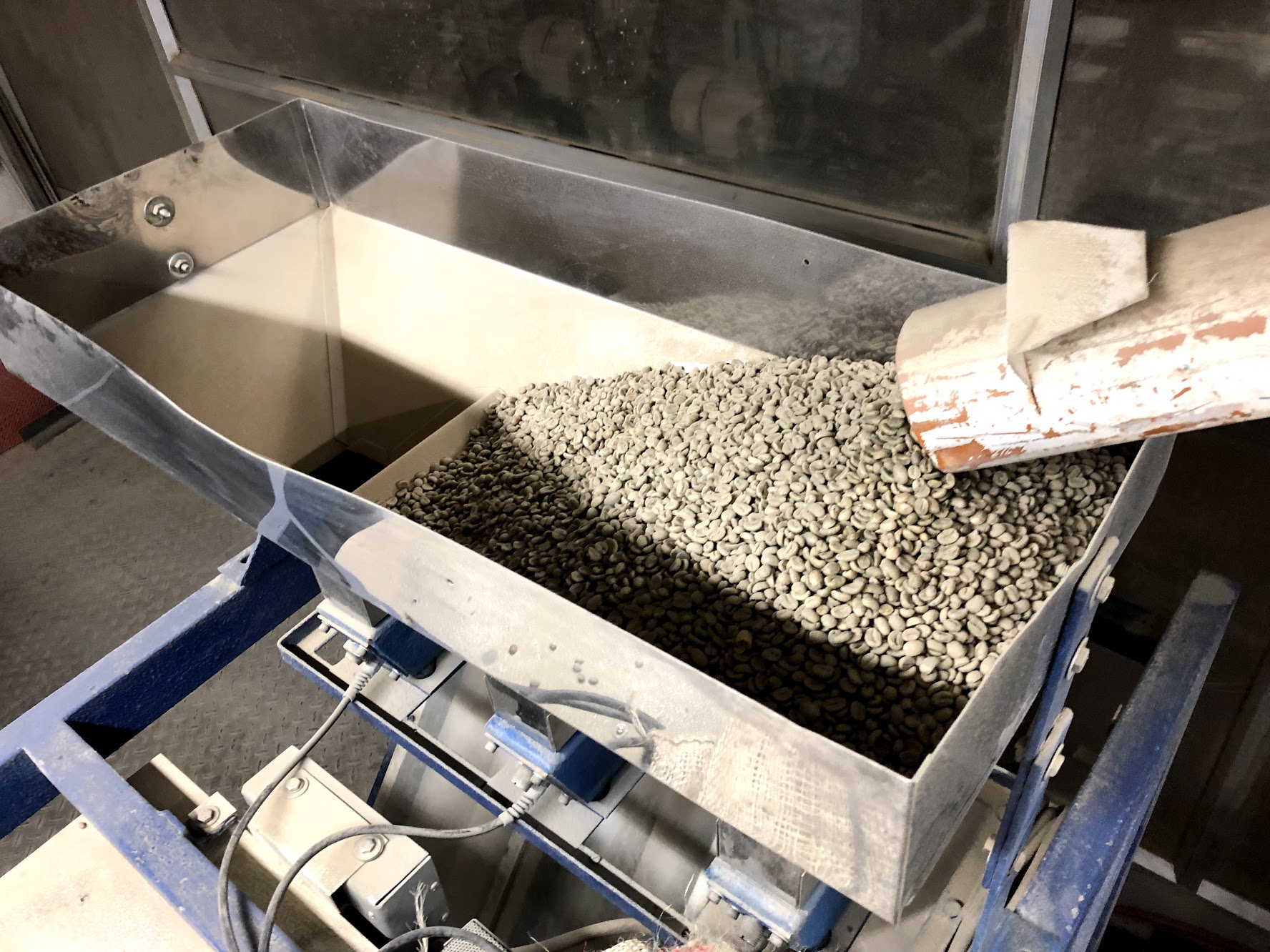
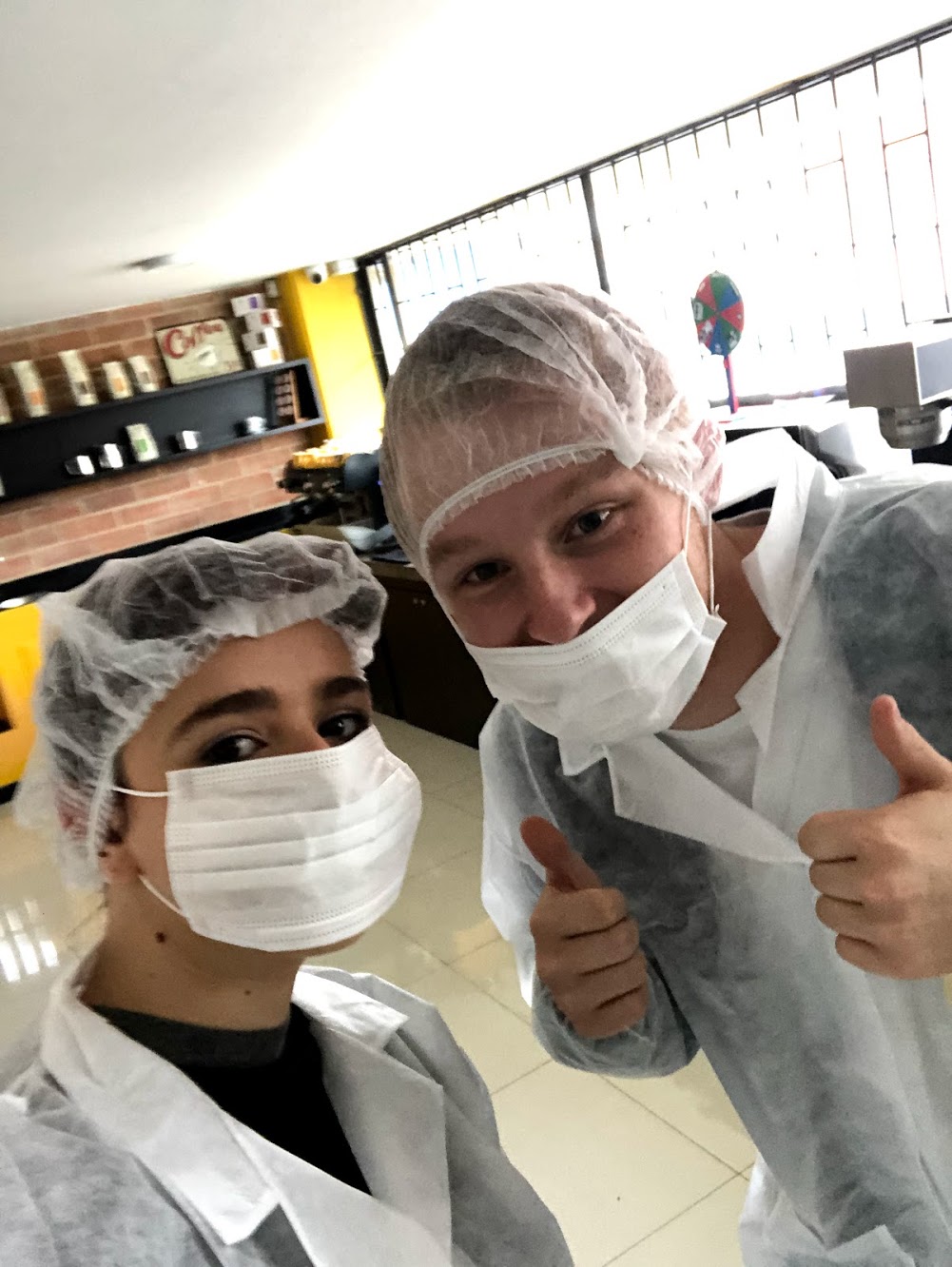
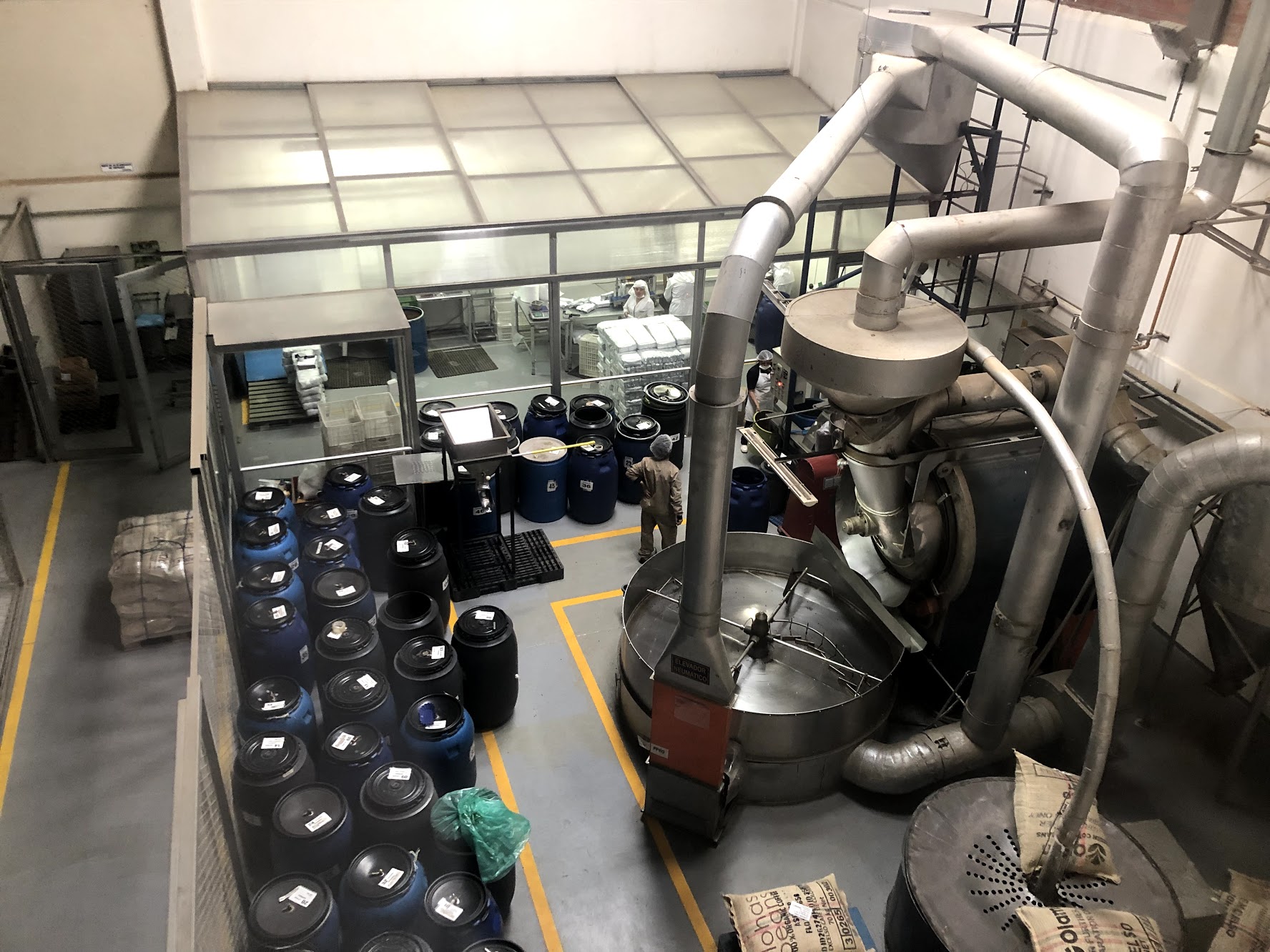
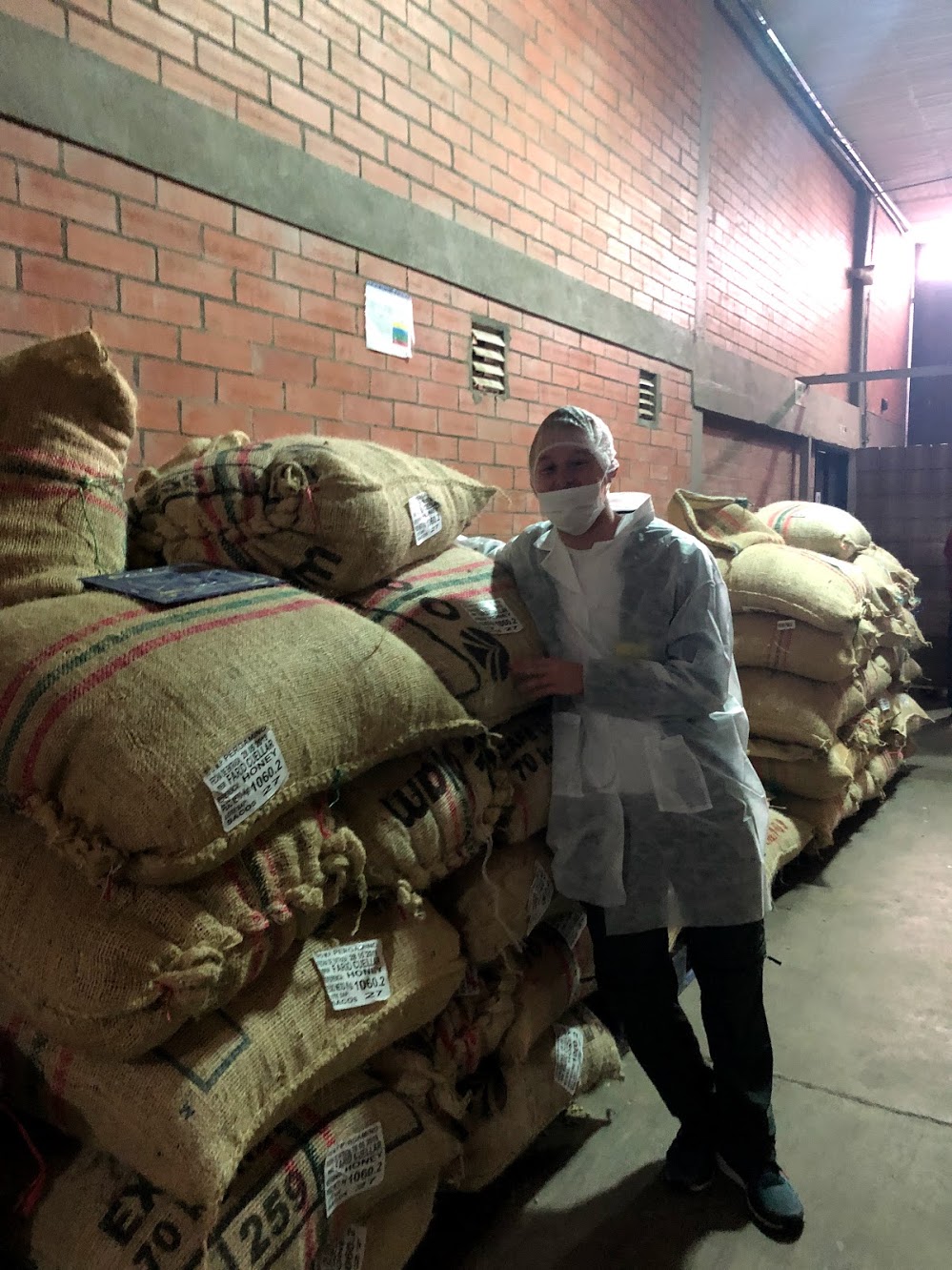
Here are some pictures:
Wow it actually took 17 minutes for those pictures to upload. I’m blogging from my phone (on 3 bars of 3G) because we don’t have WiFi here yet, but WiFi is supposed to be installed this week which is exciting. Biggest bummer so far: I won’t get to watch the Democratic primary debate tomorrow night.
I have to be up at 5:30 to start picking coffee cherries, so it’s bedtime for me! There are many many incredible blog posts to come very soon and I can’t wait to share them with you.
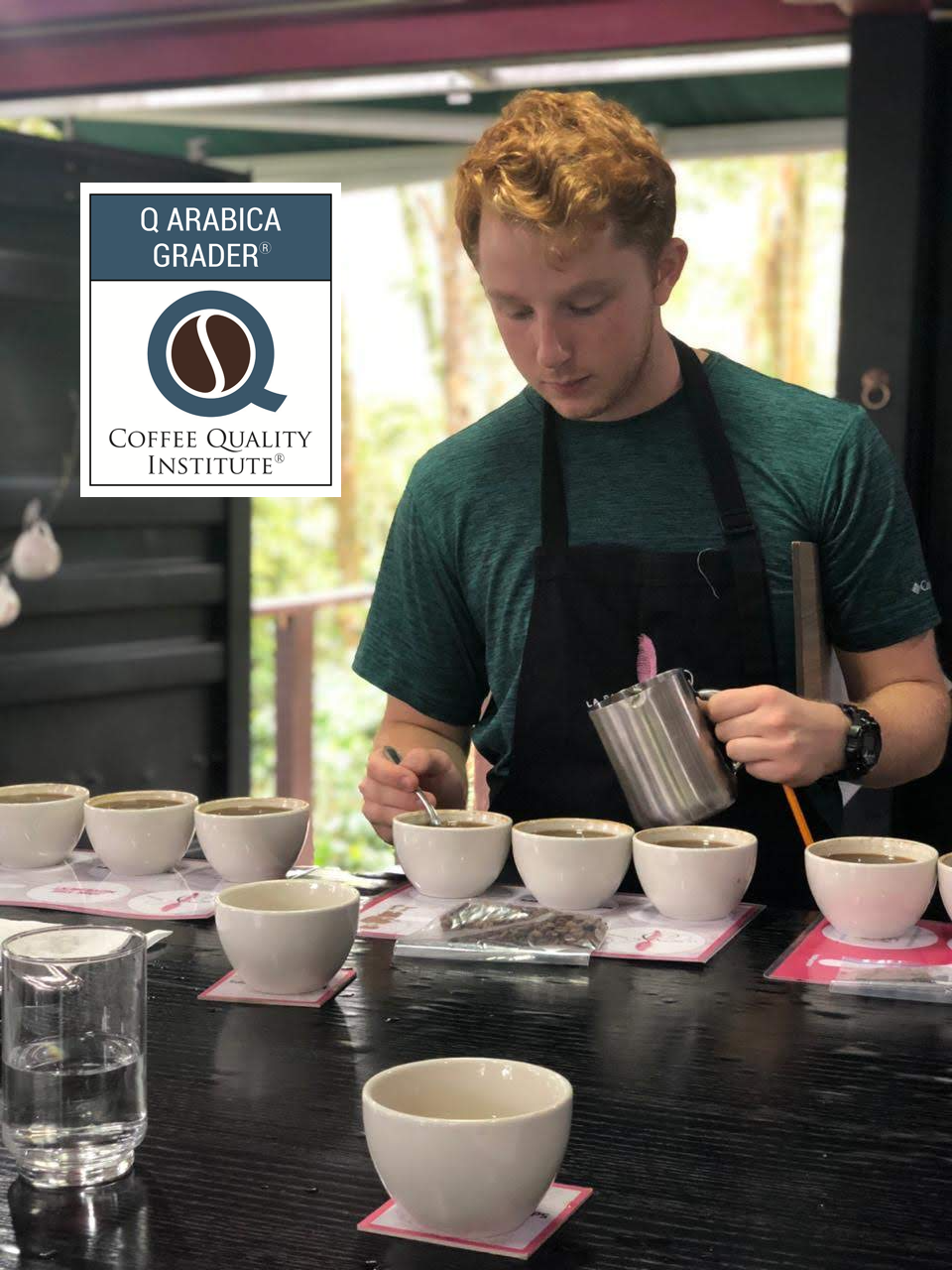
What a rollercoaster. I’ll get my certificate online in a few days, but as of now I am officially a Q Arabica Grader!
You’re supposed to put this on your business card, but I figured the blog works too
How it Went Down
I didn’t post yesterday, so there’s a bit of a story to today’s test. After my Q in Williamsburg, VA from June 3-9, I looked for other Q classes this summer to retake the washed milds triangle. Incredibly, I found that there are usually about 1 or 2 classes every year in the entire country of Colombia, and this year’s class happened to be on theweekend I’d be in Bogotá! I figured it’d be best to take the retake while I was still “fresh” even though you have a full 18 months to retake it, so I jumped at the chance.
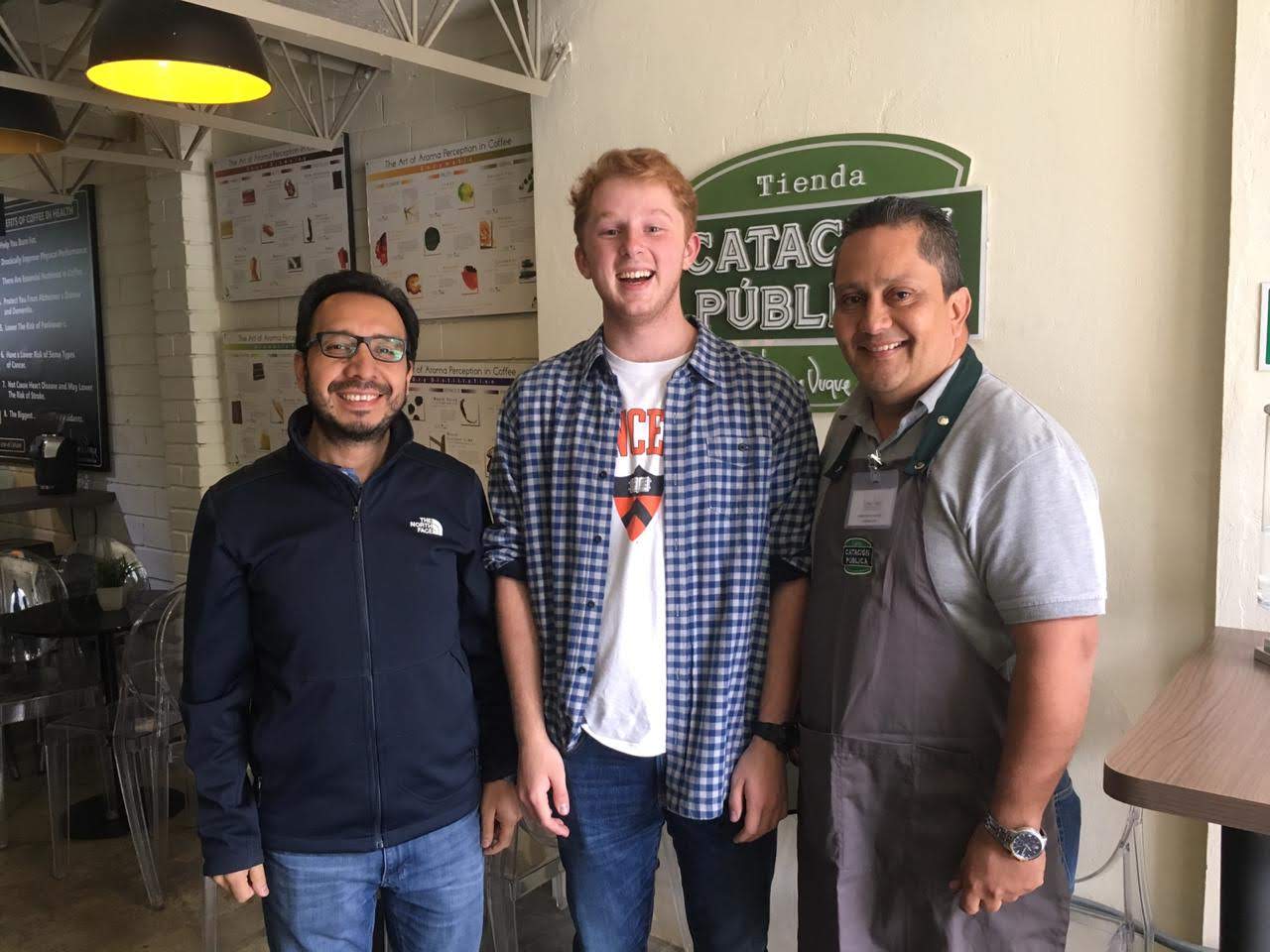
The Q was held at Catación Pública, which is an awesome specialty café in the very hip Usaqúen neighborhood of Bogotá. I contacted them when I got to Bogotá to ask about their availability and they told me I could attend. That’s when I started getting nervous.
I went to Catación Pública last week to make sure everything was set in person. I’d have to move my flight back 2 days, but the change fee was a very pleasing $13, which worked for me! One of the things I pushed for pretty hard was to get to do a practice round with them before my official retake. My instructor in Virginia has one of the laxest retake policies in the world: if you take the original test with him, he lets you retake any part of it for free (space contingent) and will let you come to the practice test before it. Most places aren’t like this, and Catación Pública was not so into this policy.
The compromise we settled on was me getting to attend a practice triangulation the day before, although it was for Asian coffees instead of the dreaded Washed Milds. This worked out OK for me, and gave me a 1-day runway to prep myself for the real test.
Yesterday’s practice was at a grueling 9am, and I needed to get all ready before the test. When I took the Q in Virginia, I brushed my teeth without toothpaste in the morning (brushed extra in the afternoon/night to make up for this) and held off on any substantial breakfasts so that my palate would be untainted going into the testing days. This turned out to be a poor strategy because my mouth would still be dry and not really “warmed up” for tasting, so yesterday I tried a new tactic.
Yesterday, I woke up at 7am, showered, and fully brushed my teeth. Then I went to a nearby coffee shop and had a generous breakfast of arepas, orange juice, 2 cups of coffee, and water – in that order. The idea was to try to fully rid my mouth of toothpaste (OJ helps with that), wake up my tastebuds (arepas), start to calibrate my mouth to coffee (the coffee), then clean it all out with lots of water. This strategy ended up working great, and when I got to the practice triangulation yesterday my mouth was all ready to go.
Today, I repeated that strategy except with considerably more anxiety.
I showed up for the 11am test at 10:45, and to my dismay they had barely started the cupping test that preceded it. The cupping took about an hour, then cleanup and a break pushed back the test I was there for to about 12:10. This wouldn’t have been so bad, except I was sitting outside the exam room (which has a big glass wall) nervously watching them all taste the coffees I was about to triangulate for an hour and a half. It was time for my secret weapon: my Johnny Cash playlist.
Probably the greatest collection of sound ever created
Johnny Cash, as he has many times, calmed my nerves and got me focused. When they turned on the red lights (so that you can’t see differences in the coffees), closed the shade, and called us in, I was ready to go.
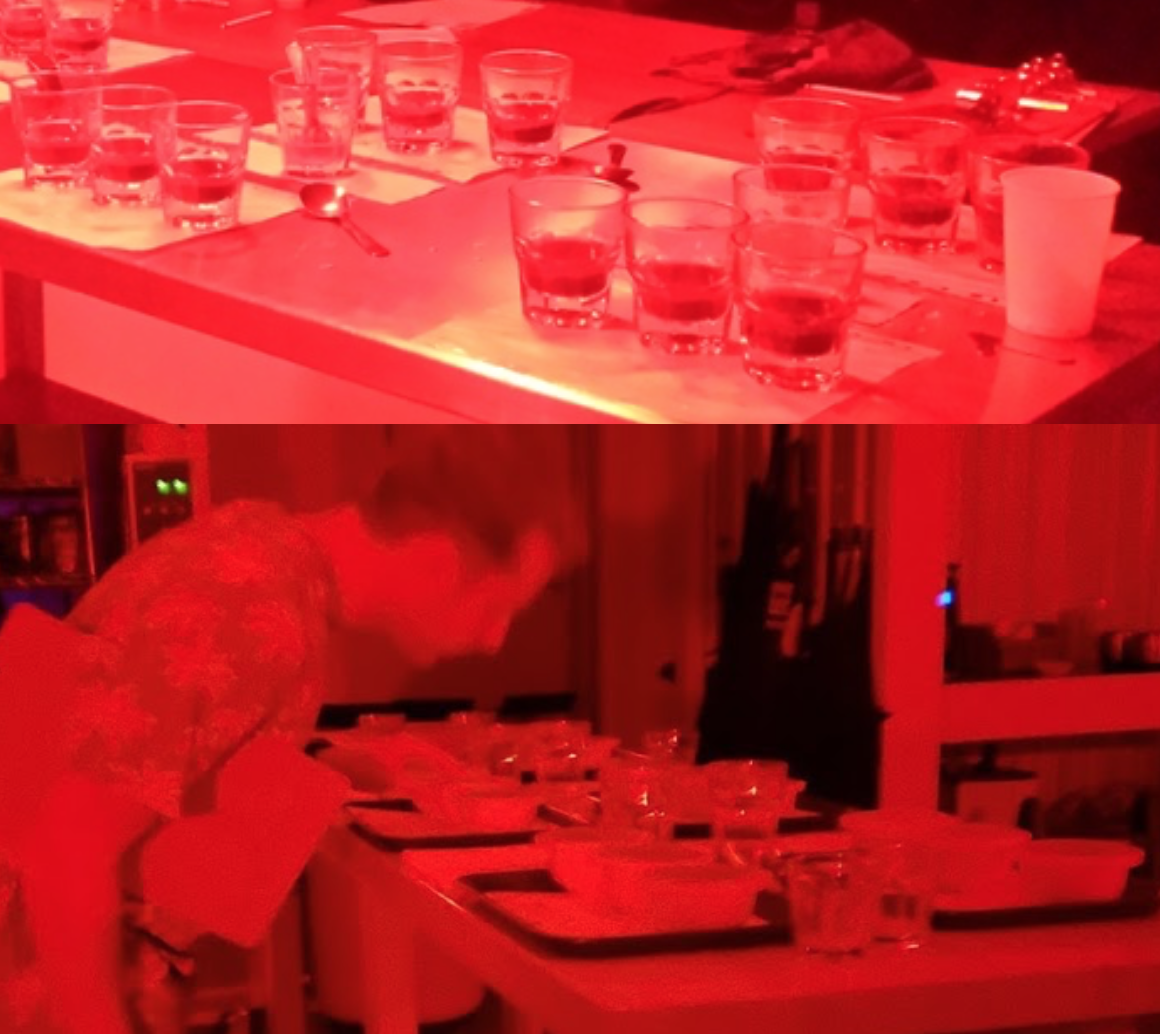
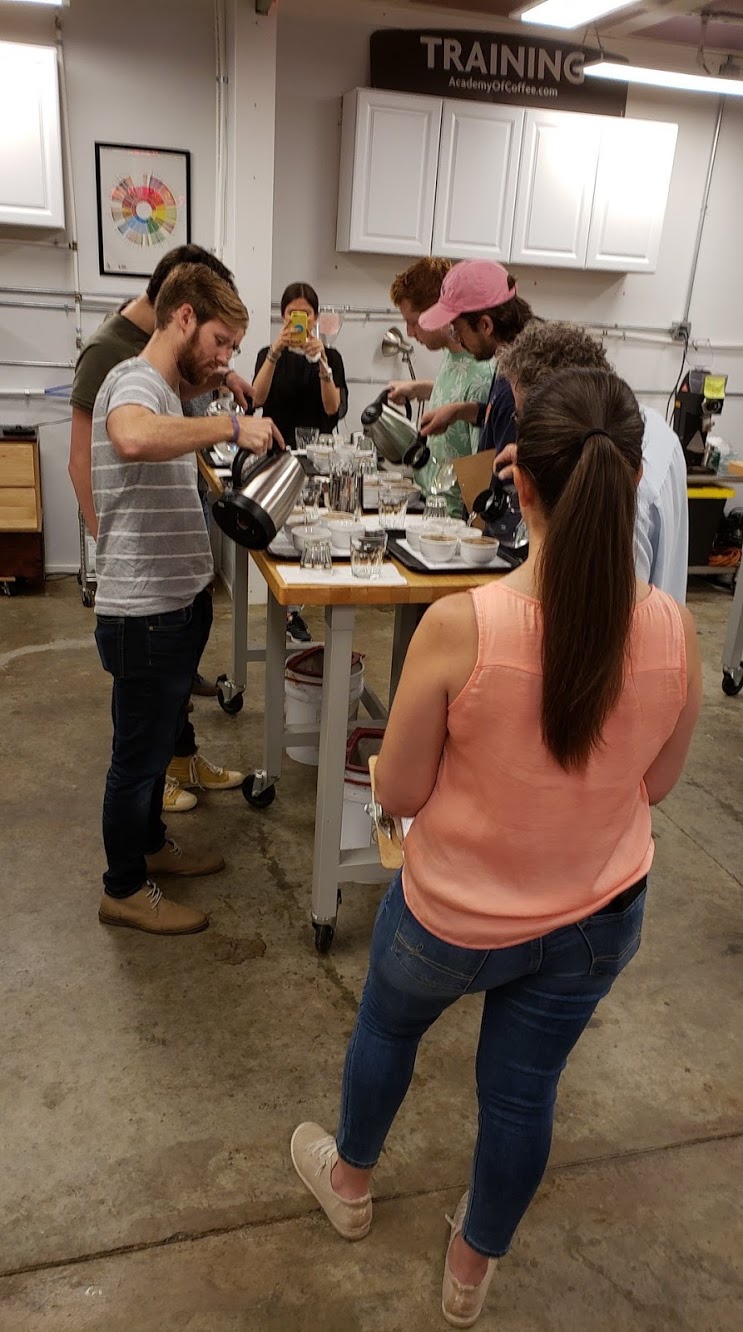
Catación Pública does the Q very similarly to where I took it in VA, with one small difference:
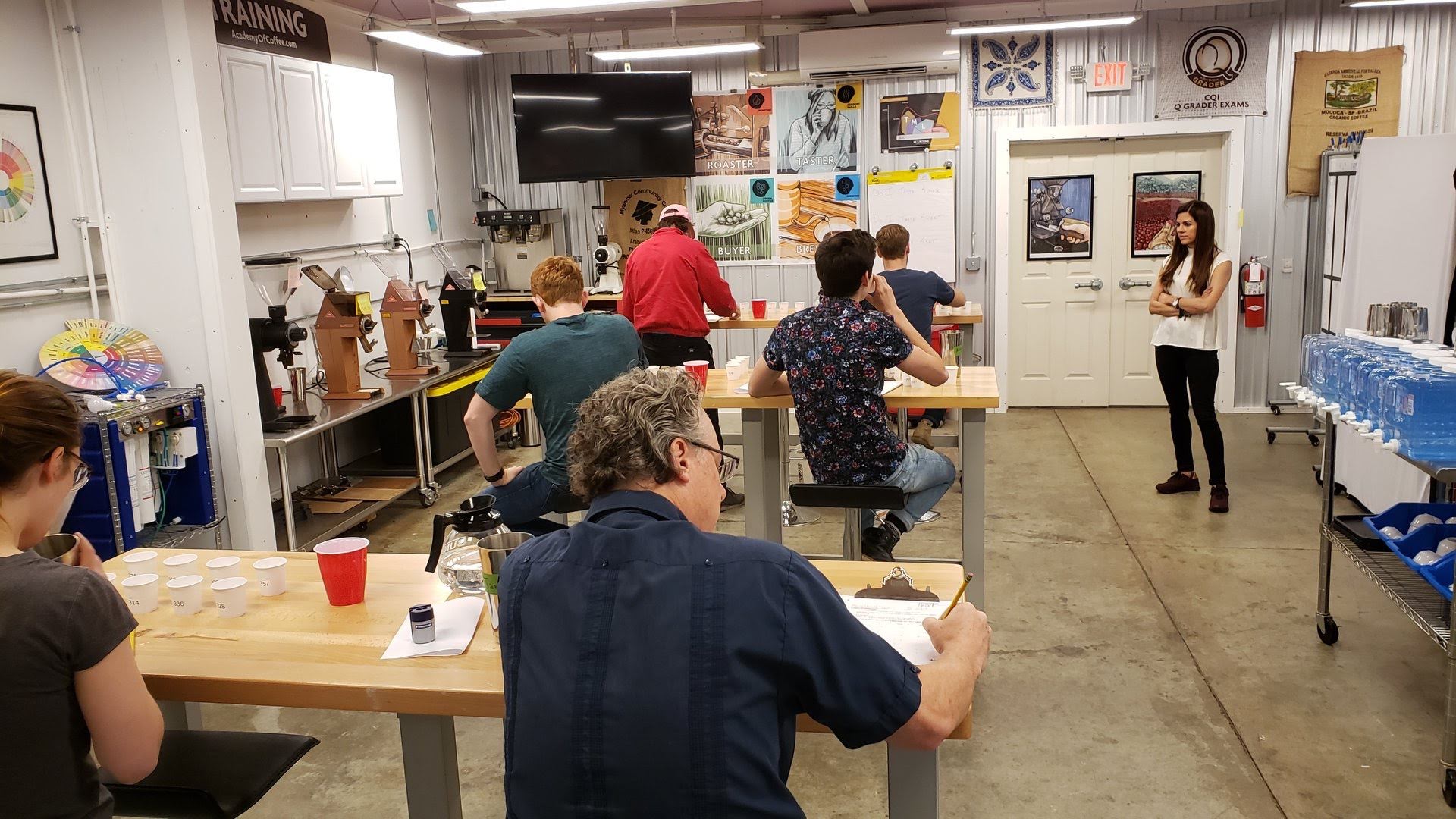
Colombia on the top, Virginia on the bottom. Can you spot the difference?
At Catación Pública, they don’t leave the lids on the cups when you’re smelling the dry coffee grounds. This isn’t a huge deal, but it lets the fragrance waft away rather quickly and makes it (in my opinion) a bit more difficult to isolate and smell each cup. So that was problem #1.
Problem #2 was much more significant: a very troublesome test taker. At the Q, you get people with all ranges of experience, and it isn’t always helpful to have a 10-year industry professional in your class. At Catación Pública, one of the 5 people on my triangulation table fit this mold pretty well, and he kept doing one thing (likely out of habit) that drove me crazy. He wouldn’t rinse his spoon!
There are so many problems with this. The most obvious is that it’s just gross: he went from one cup to the next sipping each cup and dipping his saliva and residue into the next cup. The much more potent problem concerns the fact that this is a triangulation, which means cross contamination will make the test impossible!! I was very peeved by this guy and it significantly distracted me during the test. I managed to block him out a bit though and try to just focus on the coffees.
The Most Stressful X Mark
As I said before, I fill out triangulation sheets with a series of X’s that help me narrow down which senses are telling me which coffee is different. One of the biggest pieces of advice you’ll get from people who’ve passed the Q and instructors is to trust your nose. Your nose is very good at smelling differences between things, so for many people the dry fragrance of the coffee grounds is the most helpful stage of the triangulation.
Yesterday in the practice round, my nose failed me for one of the three trays: dry fragrance told me one cup was different, but all 3 of my rounds of tasting told me it was a different one. I stuck with my nose and it turned out it was the other cup. Luckily, this was a practice round.
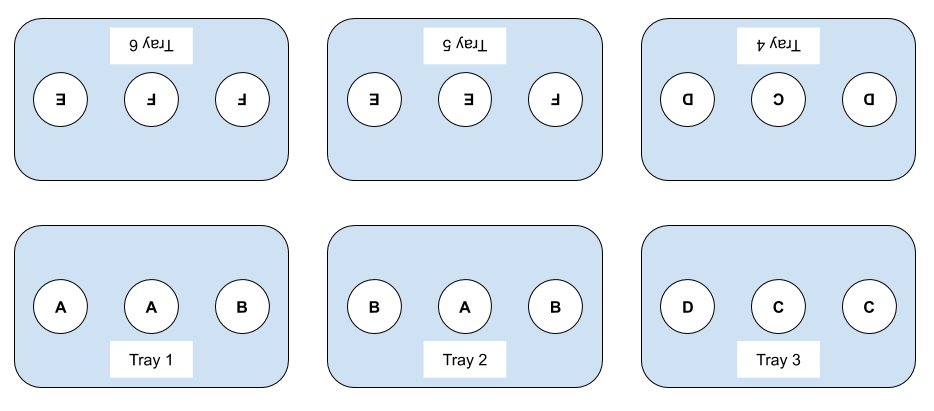
Today, my nose failed me again, but I caught it! There were 6 trays on the triangulation table, each with 3 cups. Here’s a refresher of what it may look like:
The letters correspond to coffees, so coffee A is in spots 1 and 2 on tray 1, and spot 2 on tray 2. Your job is to identify the odd cup out.
Trays 2 and 3 were dastardly. On the dry fragrance, tray 2 cup 3 was incredibly woody and bread-like, so I put a giant X and quite nearly called it a day on that tray. On tray 3, cup 3 smelled incredibly sour and fermented, so it earned another big X. I was feeling pretty good that my nose had easily solved 2 of the 6 triangles and had good guesses on the other 4, until we got to tasting.
When it came time to taste the coffees, everything went out of whack. Tray 2 Cup 3 tasted nothing like wood; it was just dry and astringent. Tray 3 cup 3 was just a standard, sweet coffee. Uhoh.
I went through tray 2 and 3 many times. Cups 2 and 3 on tray 2 were both astringent, which is a problem because I thought that cups 2 and 3 smelled very different. So I tasted that tray probably about 10 times and focused on the mouthfeel of the 3 cups. Cups 2 and 3 totally dried my mouth out, but cup 1 was a bit more sweet and had a softer body. This worried me even more, because mouthfeel has never been my most accurate triangulation sense.
Tray 3 was a different ballgame. Cup 3 tasted just fine (even though it smelled bad!) as did cup 2, but cup 1 was fruity! It tasted like guava and cantaloupe, while the others were just, fine honey-like-sweetness, mild coffees. But my nose! This was my biggest dilemma of my whole Q experience: my nose was positive it was cup 3, my mouth was positive it was cup 1. The reason you say “trust your nose” is that you can’t go back and smell the dry grounds again, but you can taste it again and convince yourself it basically tastes like anything. It took me about 20 of the 45 total minutes of the exercise, but I built up the courage to change my answer to what my mouth said.
It’s not hard to imagine, then, my disposition at the end of the exam. I was extremely nervous, and because I’d changed my answers (which you’re advised never to do!) I figured I’d likely have to retake Washed Milds Triangle for a 5th time somewhere else. Sigh. For everyone else, it wasn’t as big of a deal because they still had like 15 tests to go – I was the only one there for a retake, so this triangle alone was my make-it-or-break-it.
After the test, the instructor cleaned up and called us back into the room. He began with a speech: “I will not reveal the results now,” he explained, “because it’s incredibly important for us to focus on the next tests rather than dwell on the results of this one. This triangulation was incredibly difficult as many of the coffees tasted similar, so it will be best not to dwell on it.” (Uhoh.) “Thank you for your patience.”
“But,” he said “I am pleased to announce that Alex passed and he is now a Q grader.”
Wooooaawwwweee!!!! Everyone started clapping! I was laughing and tearing up a bit. The instructor and assistant gave me a pat on the back, and everyone shook my hand. My mouth was right!!
If you’re very lucky, you’ve had this sudden feeling of joy that fills your cheeks with a huge dopamine rush and you can’t stop grinning. The most intense one I’d ever experienced was when I was named the captain of the Roustabout color war team at Pierce Camp Birchmont when I was 14 years old, but that’s a story for another time. Since then, I’ve gotten lucky to feel that all-of-a-sudden sweep of emotion a few more times. I’m very excited to add today to that special list.
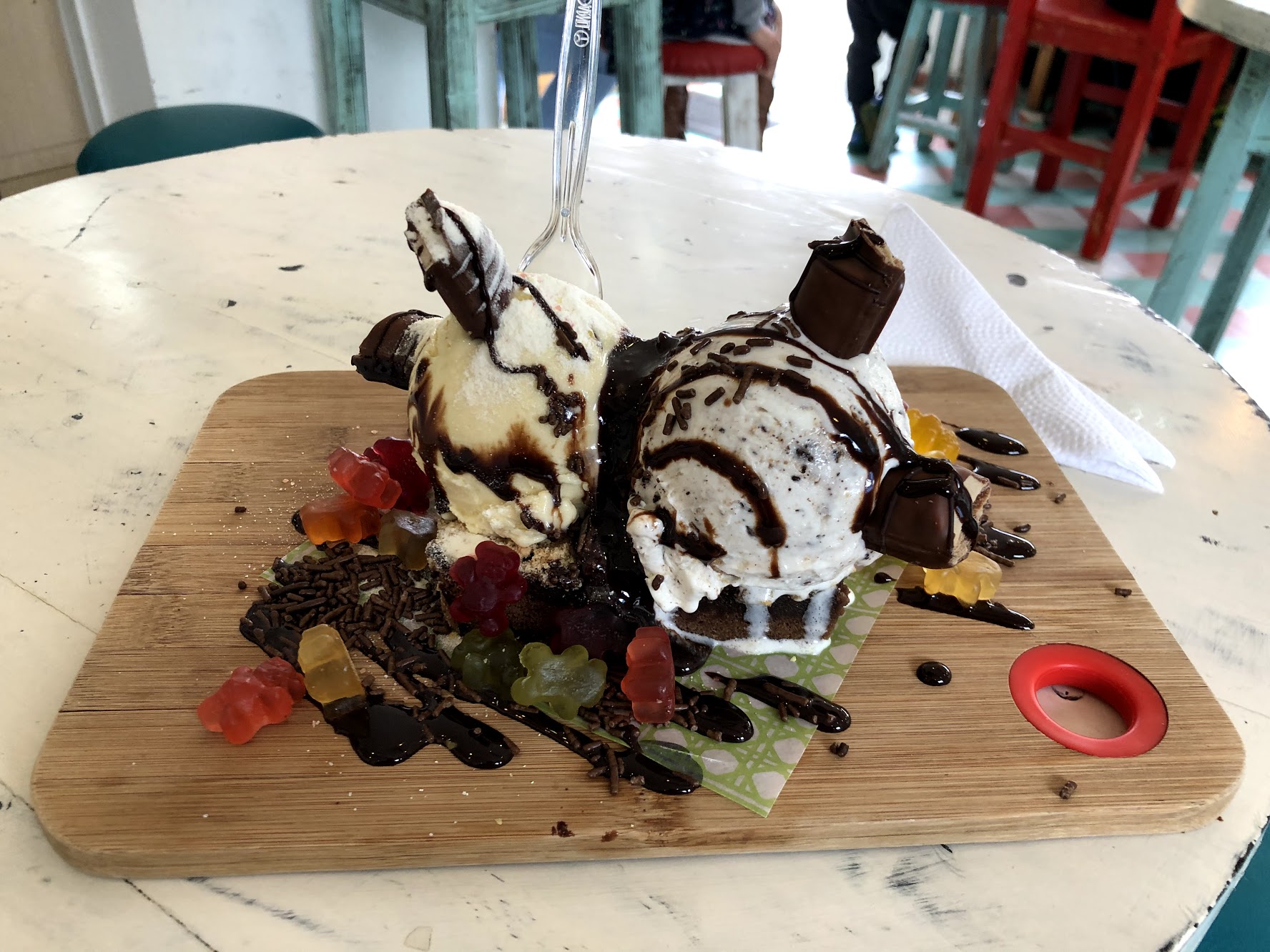
After the Q, I called my family to share the good news, and everyone was very happy for me. Then, I had an enormous ice cream sunday.
You can’t see it, but there’s also a brownie underneath the whole thing.
I was very pleased, and the ice cream was amazing. What a ride!
Some Extra Pics
In the days since the Q, I’ve gotten some pictures back of me tasting coffee and running cuppings. I feel like this blog post is a good time to share them, because I’m legit now!
Pictures from Williamsburg
The pictures from my Q class in Virginia were just posted online, so I thought I could share some of them here:
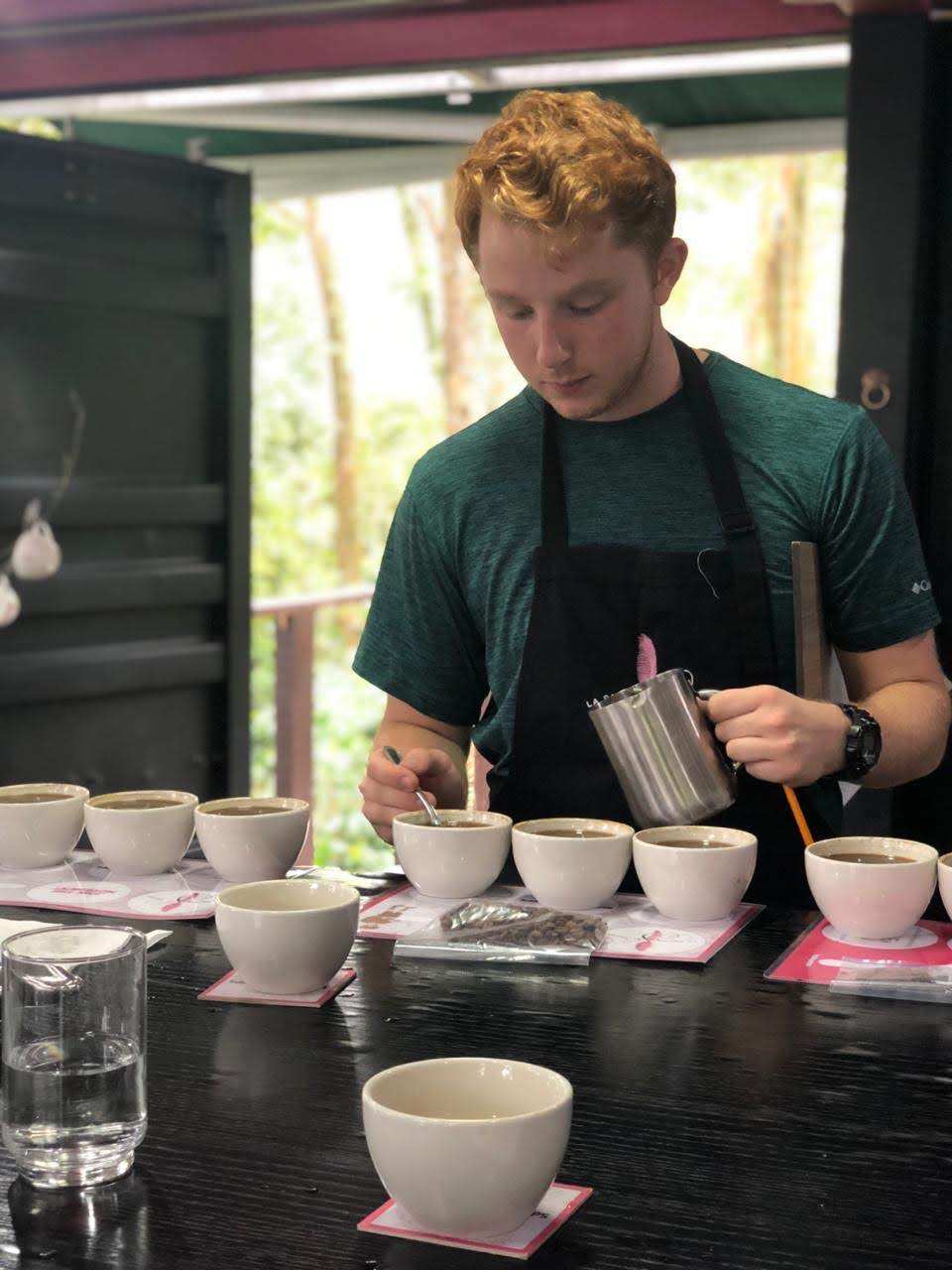
Pouring for a cupping. The table’s pretty packed, and those coffees are very important, so pouring can get kinda stressful!
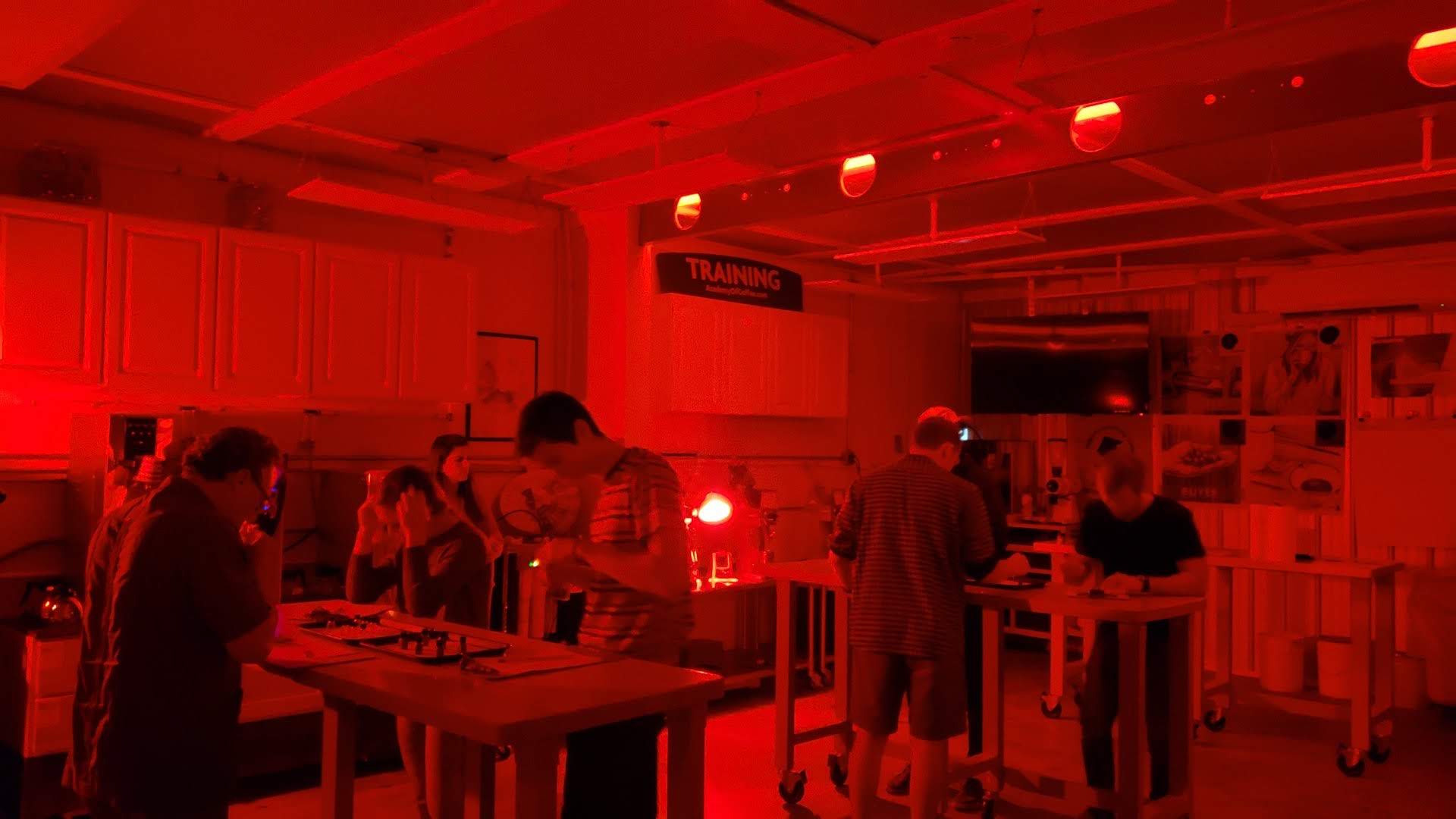
Pouring for a triangulation. Same deal, but this time with minimal lighting and if you mess up pouring you could screw up the triangle and fail everybody!
This was the last triangulation I retook in Virginia. By that point everyone had either gone home or passed, so it was just me and 18 cupping bowls. I got 6/6!
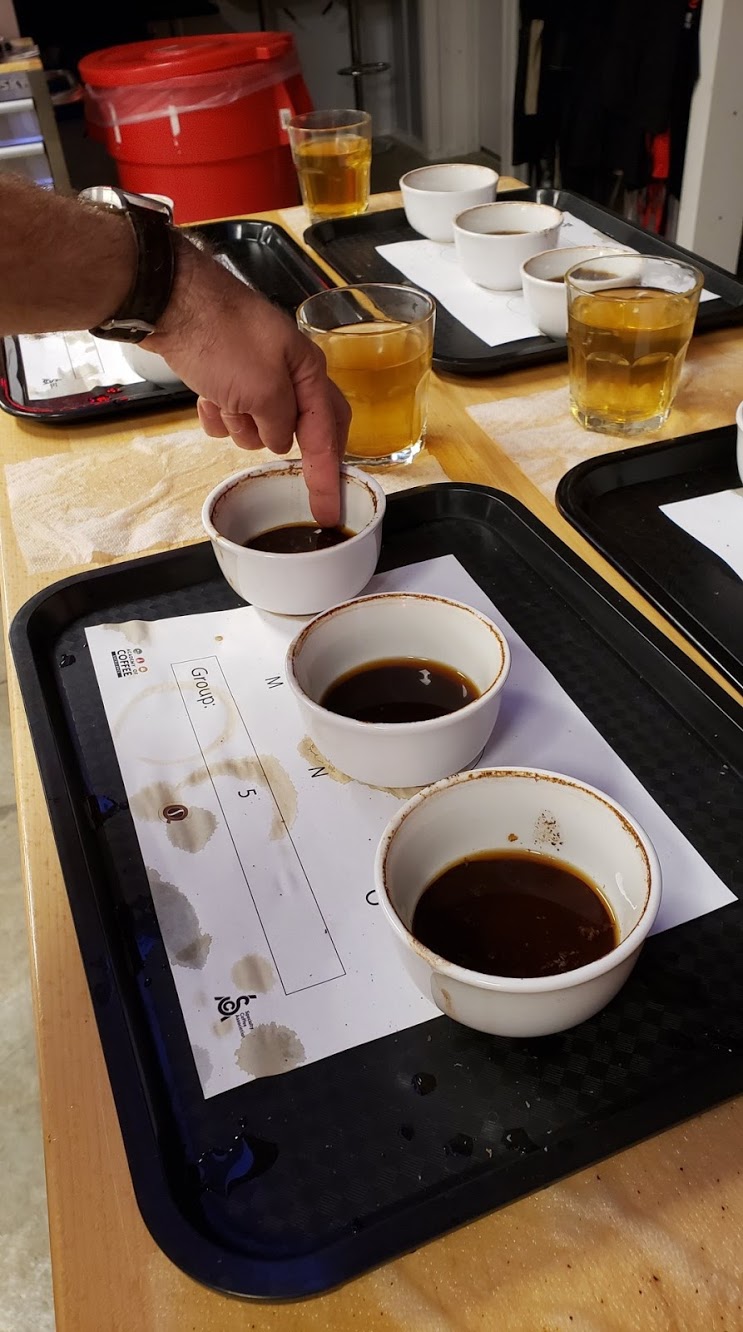
This was the state of things at the end of the Washed Milds triangulation. The finger is to point out that there’s basically no coffee left in those cups – it’s just grounds – meaning people sampled this tray a lot and had trouble with it.
Sensory skills test. 8 cups, 3 with 2 flavors and 3 with 3 flavors (sweet/sour/salt). You have to write the intensity (1/2/3) and flavors in each cup. I give this test intensity 3.
Olfactory skills, where you have to smell and identify bottles. Also done in red light so you can’t see the color of the bottle (even though they’re also taped over? go figure).
Cupping at La Palma
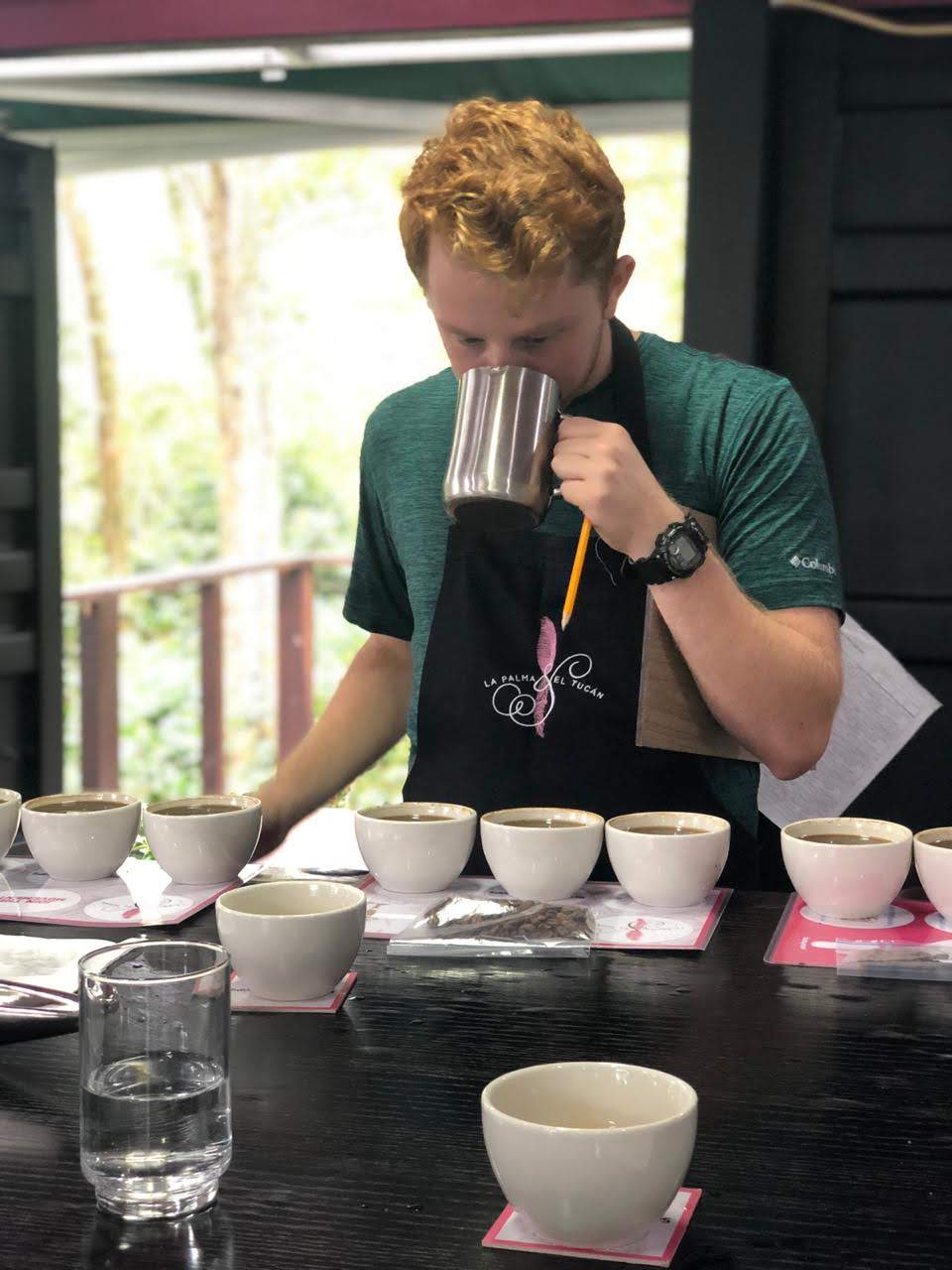
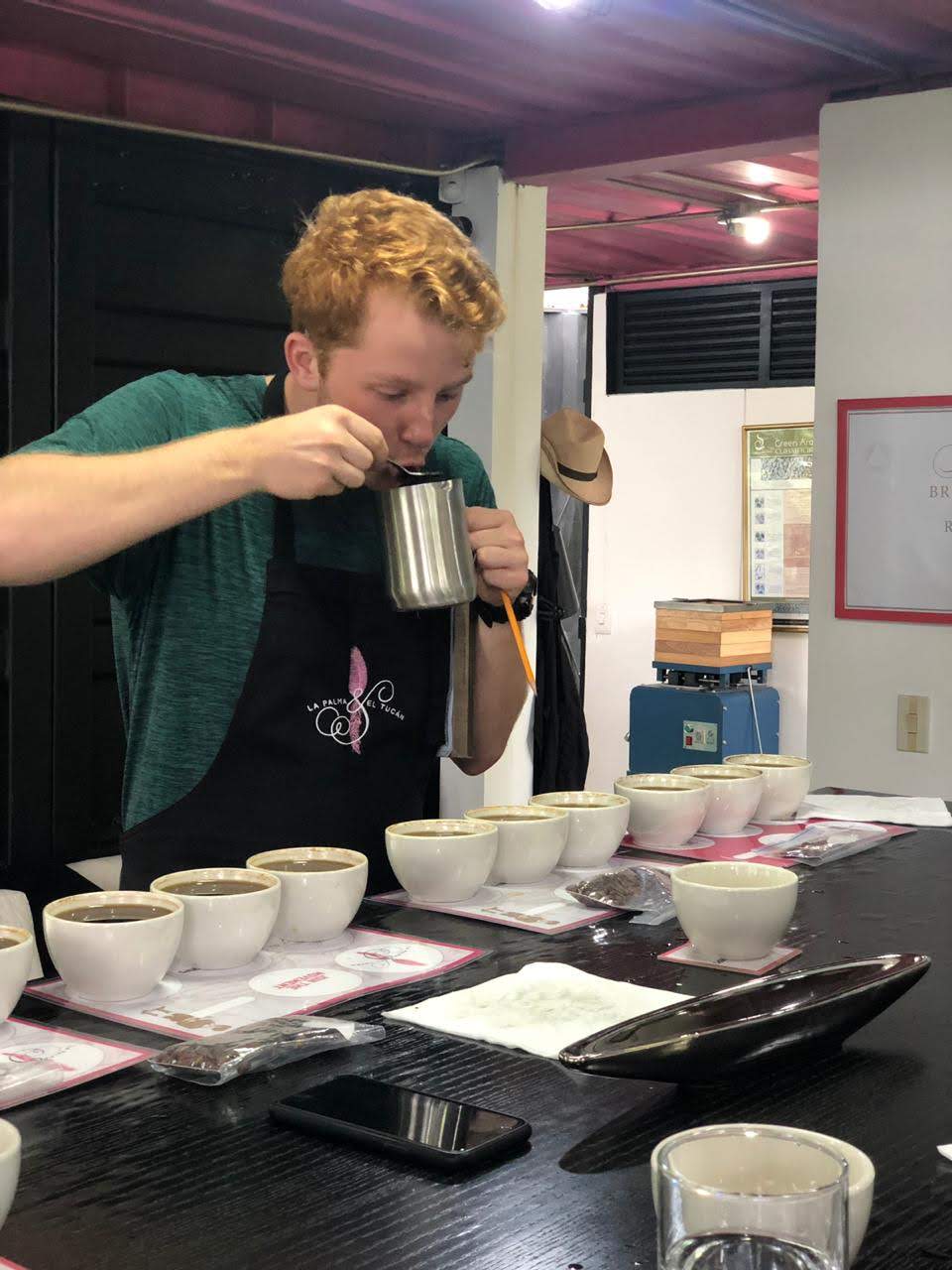
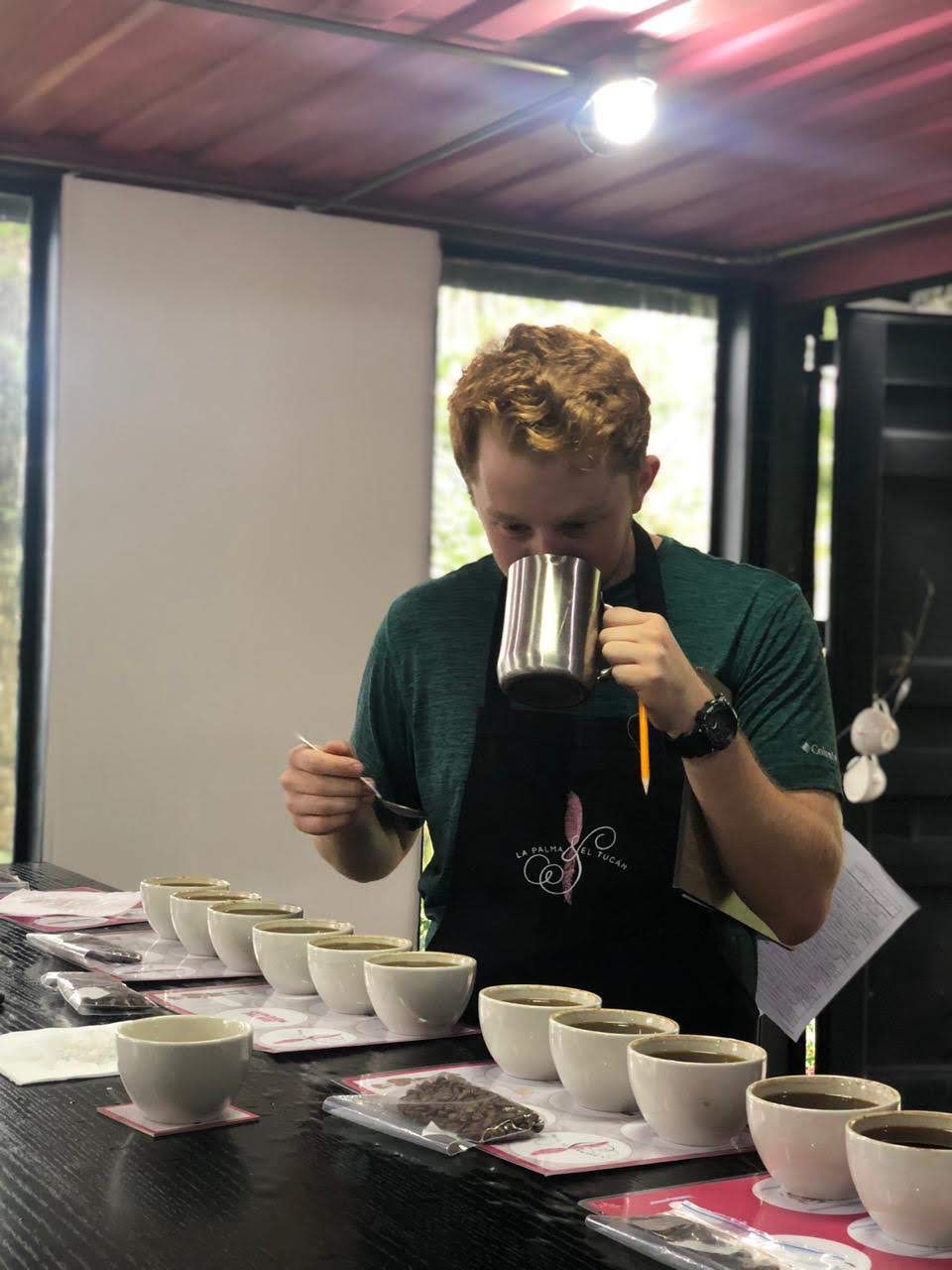
Elise, the cofounder of La Palma, was very gracious to take some pictures of me cupping for my blog. I got them a few days ago but didn’t feel like I had a good opportunity to post them, but they turned out great.
slurp slurp slurp
new prof?! Thoughts please
That’s it! Woohoo!
I’m off to El Fénix on Monday morning. In the meantime, I plan on basking in my excitement. Have a good one!
I’m coming up on the end of my time in Bogotá, so I thought I’d spend a day enjoying the city. My flight to Quindio is on Monday morning, but Friday and Saturday will be mostly spent at my Q retake (Friday I have a practice, then Saturday is the real washed milds triangle!), so I don’t have a ton of time left in this awesome city.
Today, I checked out the Botero Museum, visited a couple of coffee shops (what else!), and walked around my Park 93 neighborhood. I also had an INCREDIBLE lunch at a Cevicheria in the Zona T neighborhood.
I started my day at Colo Coffee in Zona T. You may remember Colo from Day 1, in which I tasted their fantastic honey Gesha at their Chapinero outpost that they share with Bourbon Coffee Roasters. This morning, I was just planning on getting a coffee and a pastry, but I soon noticed that they had the latest issue of Roast Magazine on one of their coffee tables, so a 10-minute stop quickly lengthened considerably.
I had heard about a few articles in this issue of Roast that I really wanted to read, but I don’t have my own subscription and the site is under a paywall. When I saw the magazine, I was super excited. I ended up reading the whole thing cover to cover, because even the advertisements intrigued me!
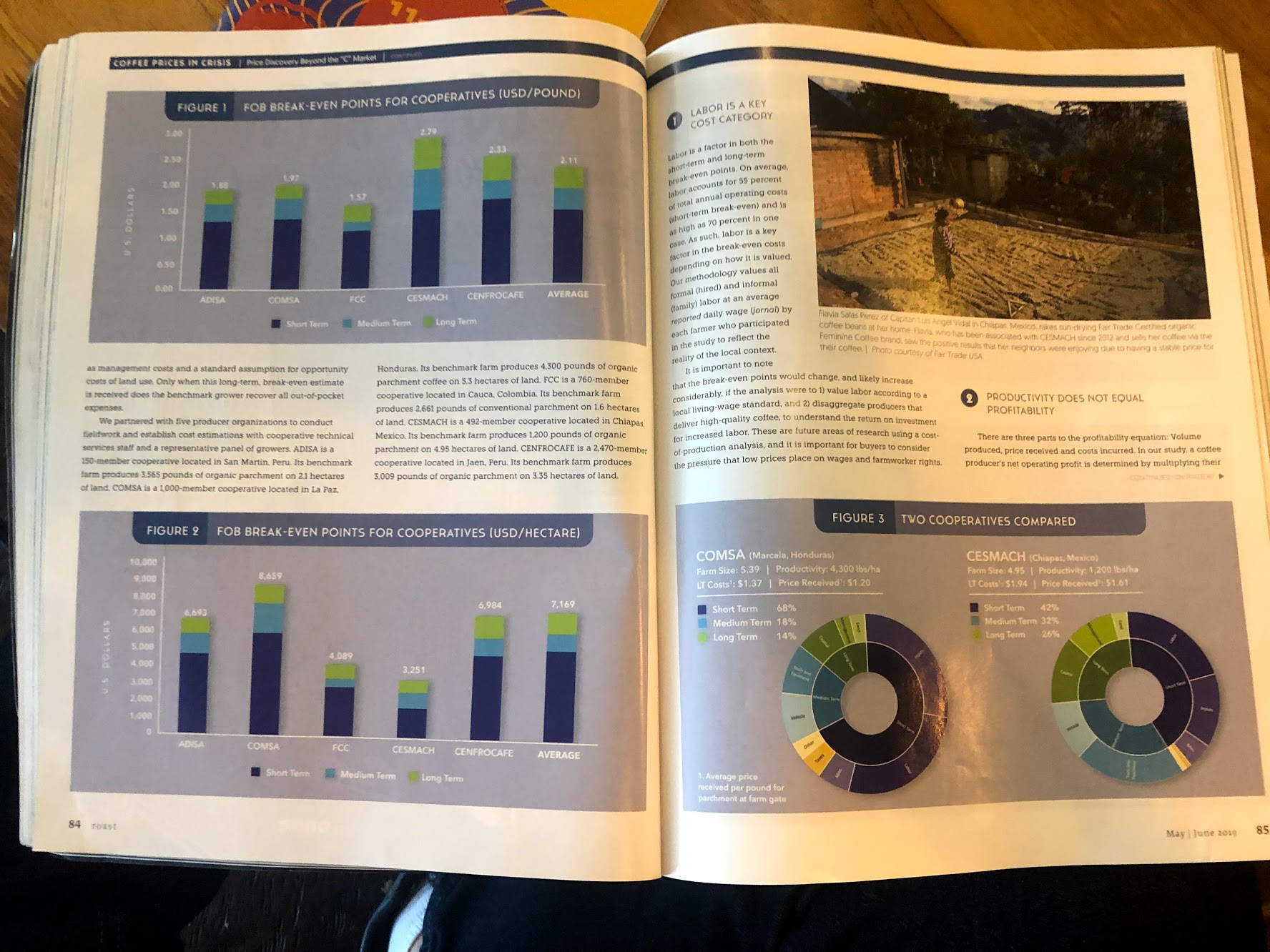
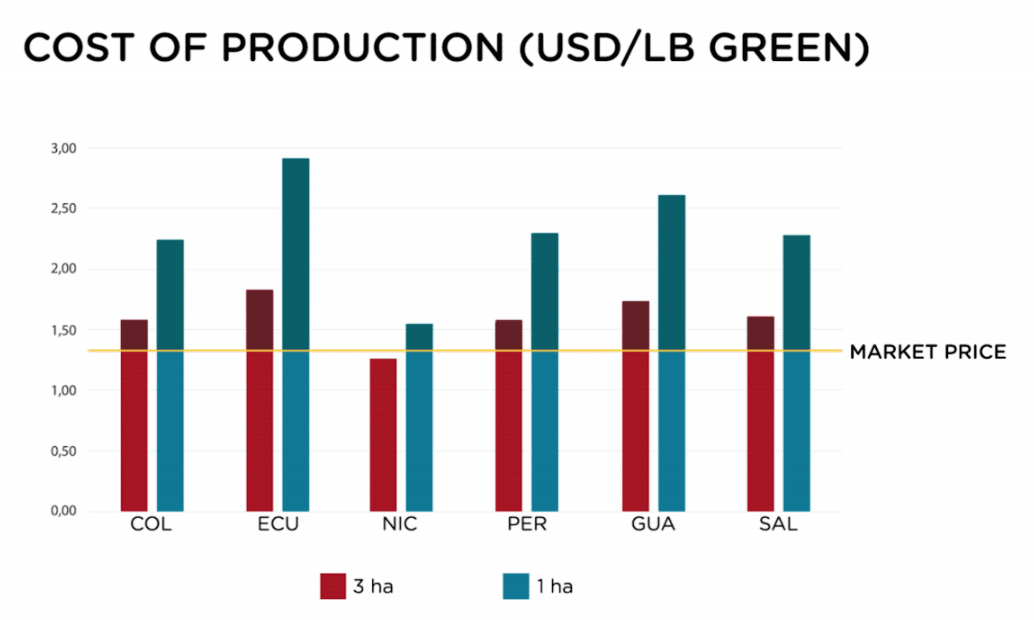
The most interesting part of the magazine by far was a survey that Fairtrade had just conducted on examining the cost of production for a number of representative coops in South American countries.
The big important summary page
Measuring cost of production has come up as a recurring theme in my talks with professionals here in Colombia. Almost no small scale farmer has a sense of what their annualized costs of production actually are, as they frequently make payments whenever they come up. For example, harvesters are paid as soon as the dried parchment is sold, equipment is repaired as soon as the old stuff fails, and fertilizer is purchased as soon as soil content shows signs of degradation. These purchasing patterns make obvious sense from a farm management perspective, but they make any sort of cost of production metric very difficult to track.
I was very interested in the analysis in Roast because it not only examined 6 different cooperatives in different countries, but it also broke down cost segments into short-term, medium-term, and long-term costs. Short term costs mostly include labor and “inputs” like fertilizers and pesticides; medium term costs include transportation, taxes, tools, and equipment; long-term costs include land and capital. (It looks like the article in this issue isn’t online yet, but they published a similar study in 2016 that I found online here.)
I ended up spending a full two hours reading the 114 pages of the magazine, but it was awesome and I loved it. I definitely feel a deeper connection to the industry after the Q, and I am excited to keep up with all of the new research coming out in the field.
Then I had my incredible aforementioned lunch at Central Cevichería. As if the ceviche wasn’t good enough by itself, there was a guy walking around with a tray of shrimp??!!!
Can you please follow me everywhere?
The food was great, and as per typical Colombian prices the meal cost about $11 in total. Yum and yum.
After the Ceviche, I headed downtown to La Candelaria to see some sights and get to the Botero Museum, which I’ve been meaning to go to since I got here. But not before one more stop at a coffee shop.
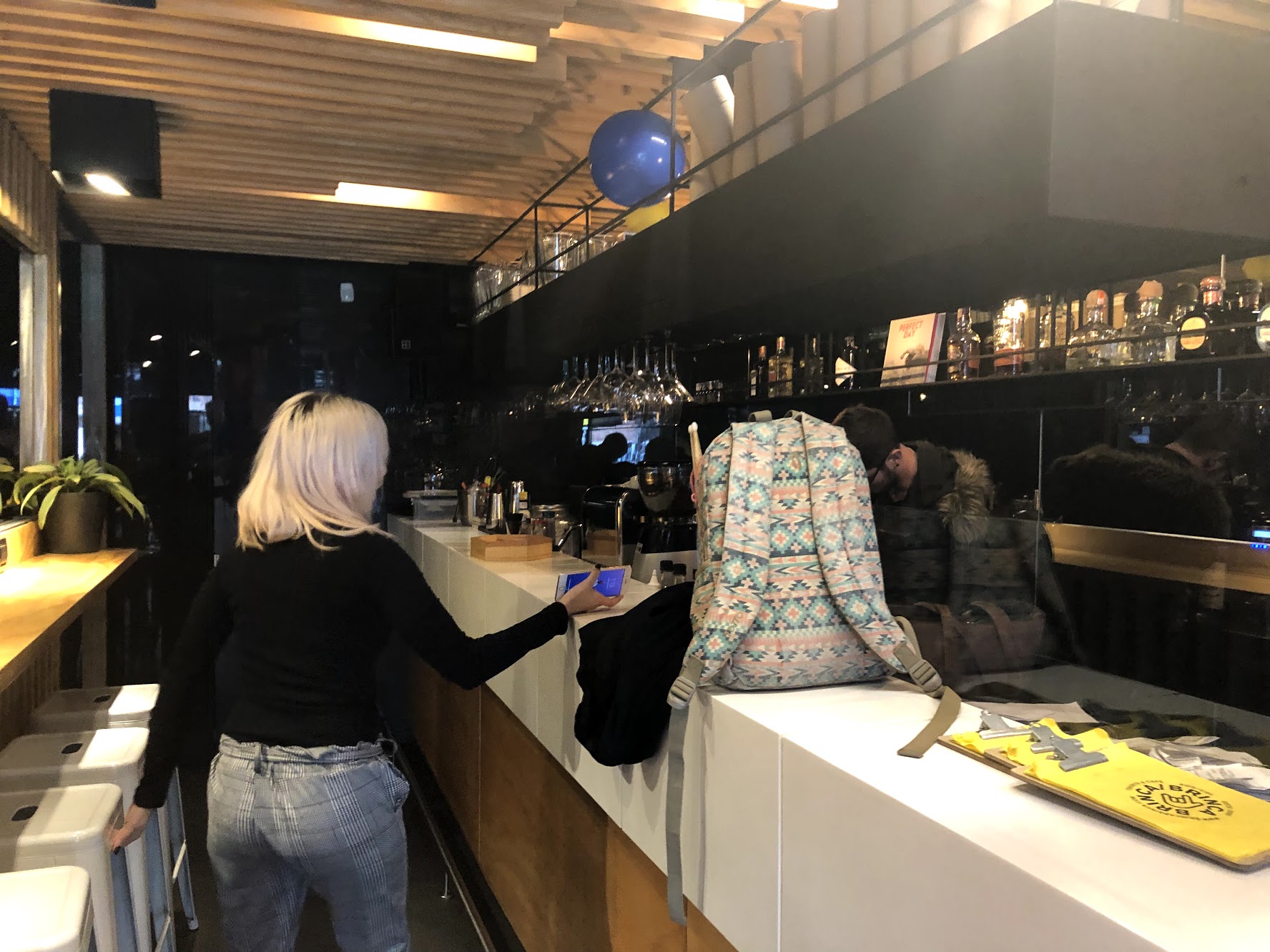
This was the weirdest coffee shop I’ve been to by far. It’s a coffee shop and designer t-shirt store run by three German expats. The bar setup includes a small espresso machine, an array of liquors, and a DJ mixing board which constantly outputs thumping techno music. The espresso was rather poor and their t-shirts were horribly overpriced (1200 pesos, or about $60 each!), yet somehow they’ve been open there since 2000. Bogotá, you never cease to amaze me.
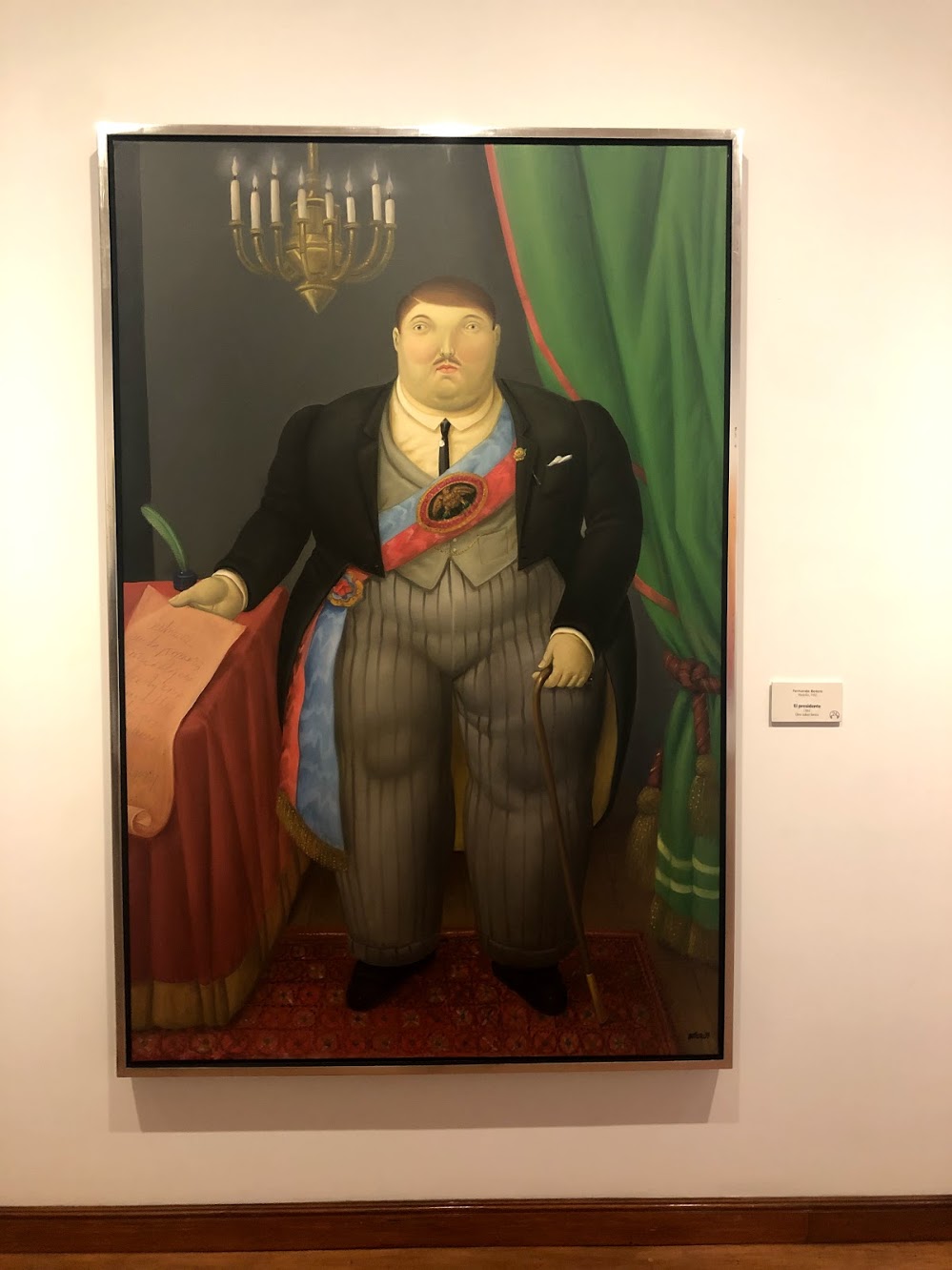
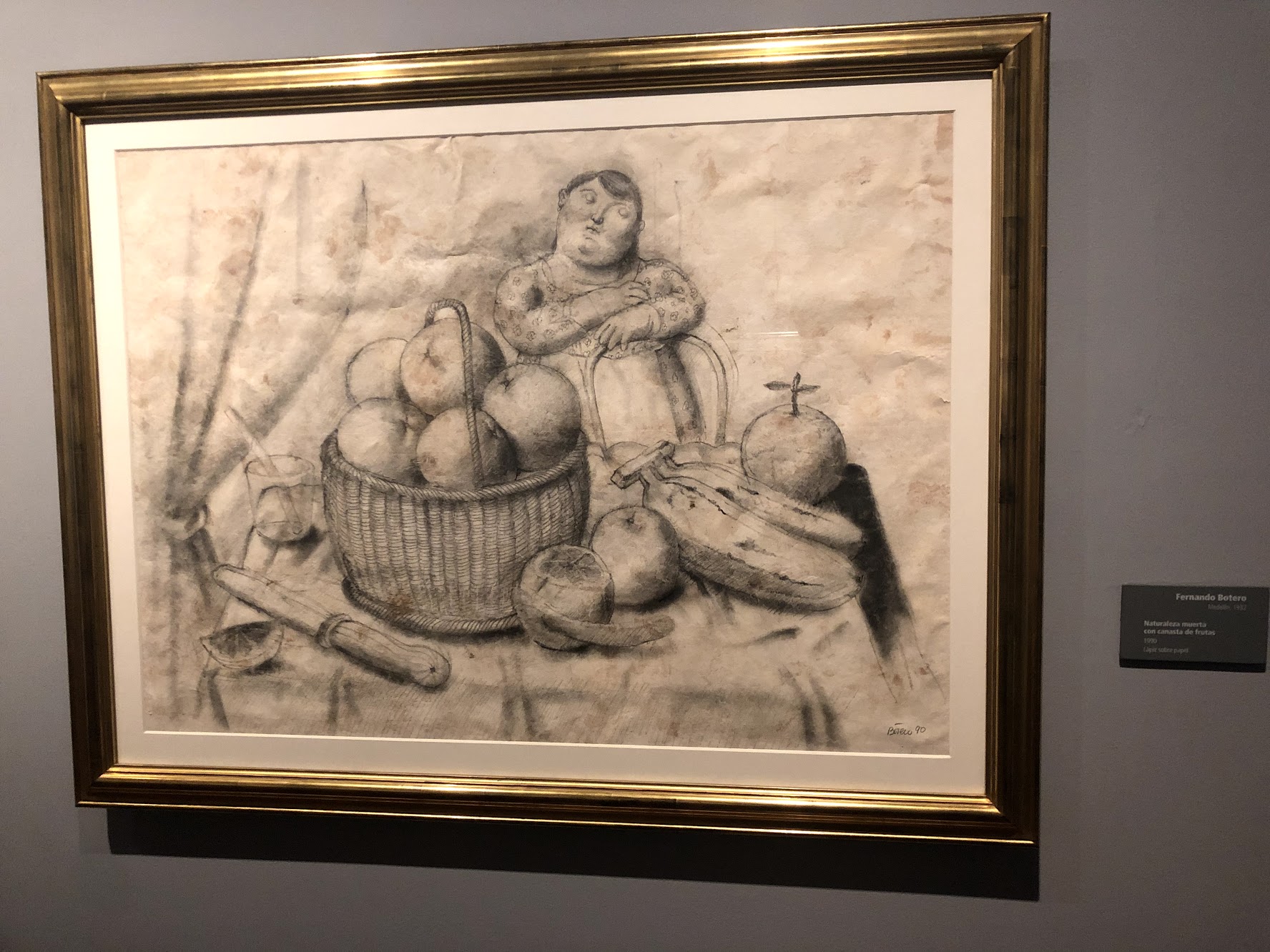
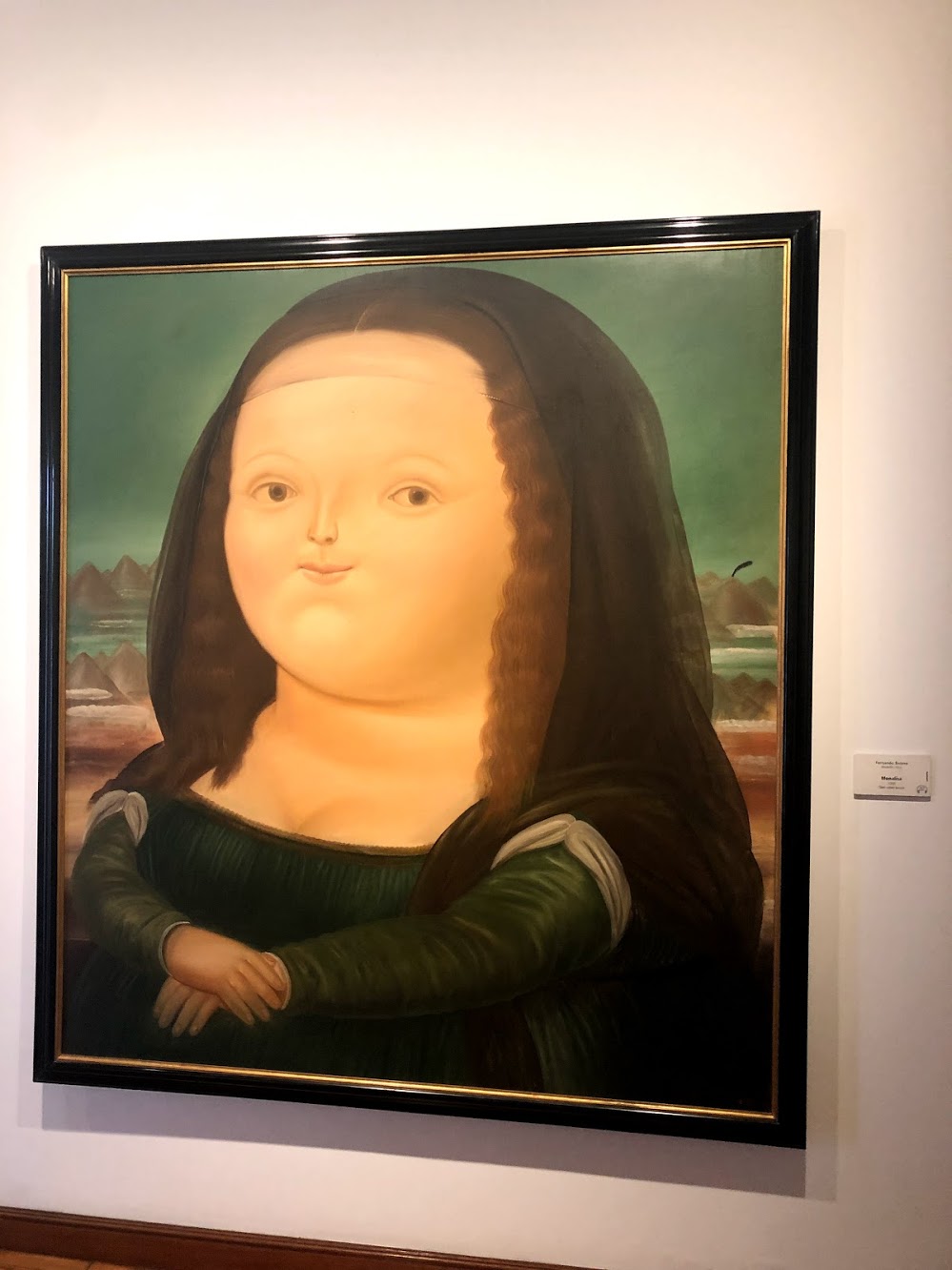
Ok, I finally got to the Botero Museum. Botero is the guy who’s famous for painting fat people, and the museum was pretty amusing.
A representative painting, this one of “el presidente.” I love the eyes.
A battered sketch from his earlier days. In this one, I liked the spacial similarity of the fruits and the woman’s head.
Botero’s famous (infamous?) “Monalisa.”
His take on Colombian guerillas
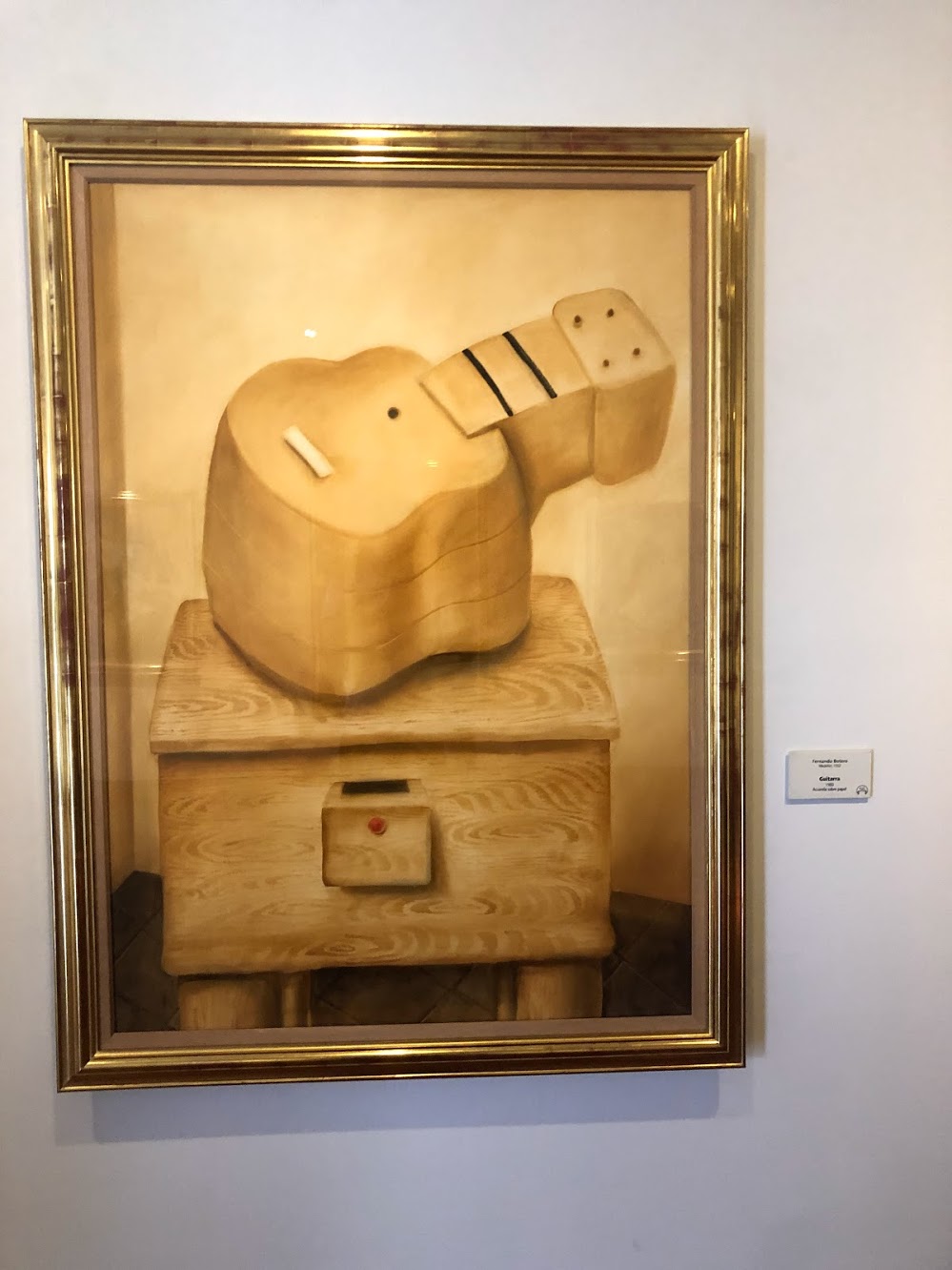
Even the guitar is chubby!
I walked around La Candelaria a bit more, because it’s such an exciting neighborhood. I got some street food snacks and just enjoyed the vibrant city.
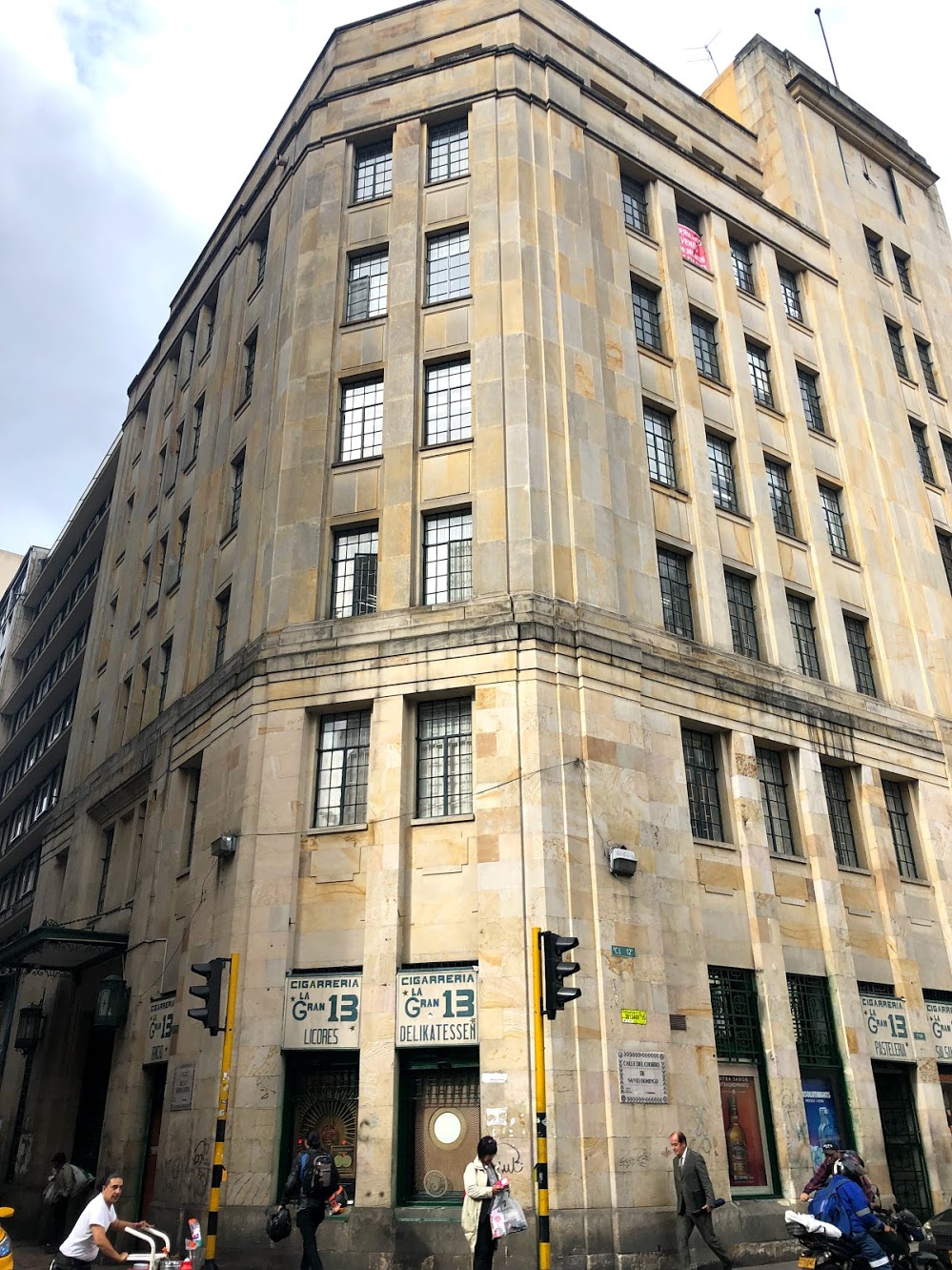
The old buildings feel incredibly authentic to me. See the signs for the store in the lobby? They look like could’ve been written in the 80’s, or the 40’s.
To end the day, I went back uptown to my homey Park 93 neighborhood and enjoyed the nice weather. I found a bookstore and browsed their English section for a bit and found something I was really excited about. I picked up a copy of Gabriel García Márquez’s One Hundred Years of Solitude, maybe the most famous book ever written in South America. Márquez is known as one of the pioneers of the “magical realism” movement in literature, which is central to Colombia’s identity, and One Hundred Years of Solitude is probably his seminal work in the genre. I’m really excited to read this book over the next few days and understand Colombia better.
Finally, I had some dinner nearby and headed home. I have an early start tomorrow: I’m taking the naturals triangle as practice before the washed milds on Saturday, and the triangle starts at 9am. Oof! Better head to bed, and I’ll report how it went tomorrow!
Have a good one! Also, let me know if you’re reading this and you like it, I feel like I’ve been shouting into the void a bit on here! (I turned off sign-in for commenting, so it should be easy to leave a comment below. Or you can just message me to say keep writing!)
Today was a bit of a slower day because I got a bunch of boring stuff done. I’m all set for my Q retake this weekend, so I had to move my flight and extend my hotel. The airline was pretty funny – first of all, you can only change tickets on the phone or in person. On the phone wouldn’t really work for me because of my lack of Spanish, so I found a storefront for Avianca nearby. When it came time to pay, I was even more amused: the change fee ended up costing a grand total of $13 USD to move from tomorrow to next Monday.
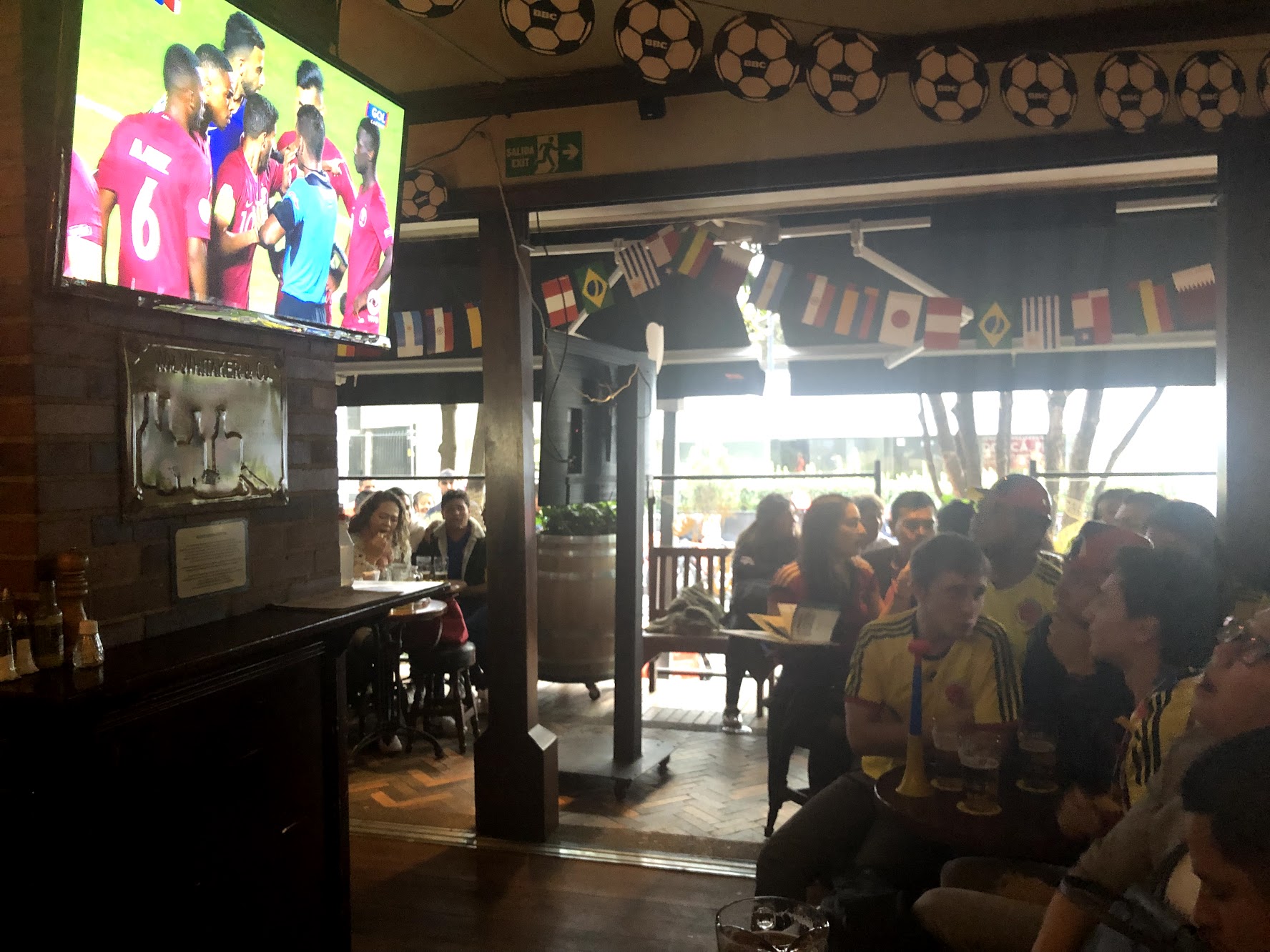
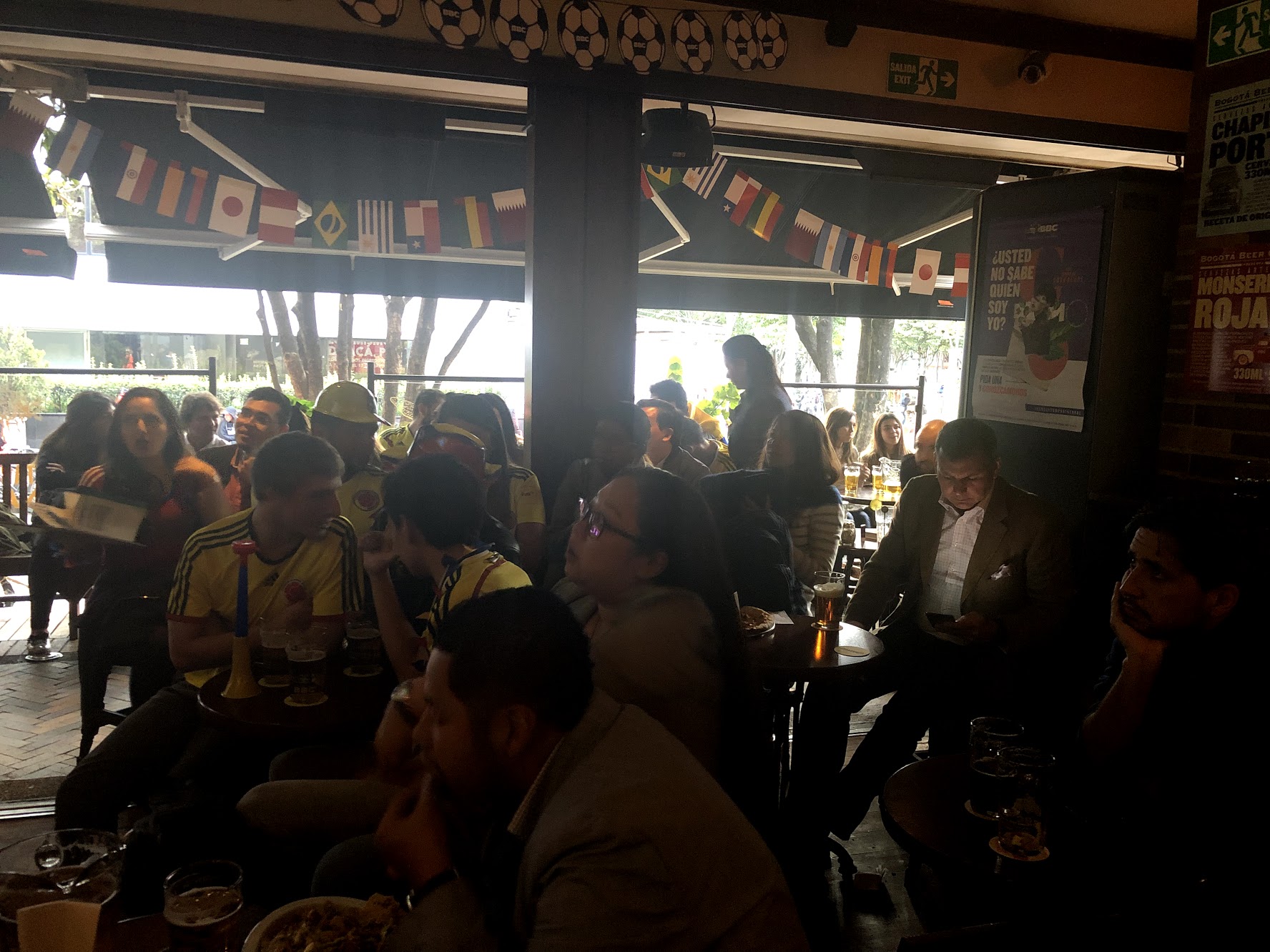
I also got a chance to refill the data on my phone and do some laundry. The most exciting thing from today, though, was very obvious if you walked around Bogotá: everyone was in their Colombia jerseys, because Colombia was playing in the Copa America today!
I went to a nearby bar to watch the game, and it was a blast. Everyone was in high spirits and Colombia won, putting them up 2-0 in the group stage so far!
Today I went hiking up the Quebrada las Delicias trail and talked to someone who works in the commercial coffee industry in Colombia, so I got a good birds-eye-view of Bogotá and the coffee sector.
The hike was pretty intense! Las Delicias is advertised as a pretty easygoing, family-friendly hike that shouldn’t take more than an hour and a half round trip. It’s also supposed to let you out at a waterfall. This isn’t false advertising per se, but it doesn’t tell you the full story if you’re a young coffee adventurer.
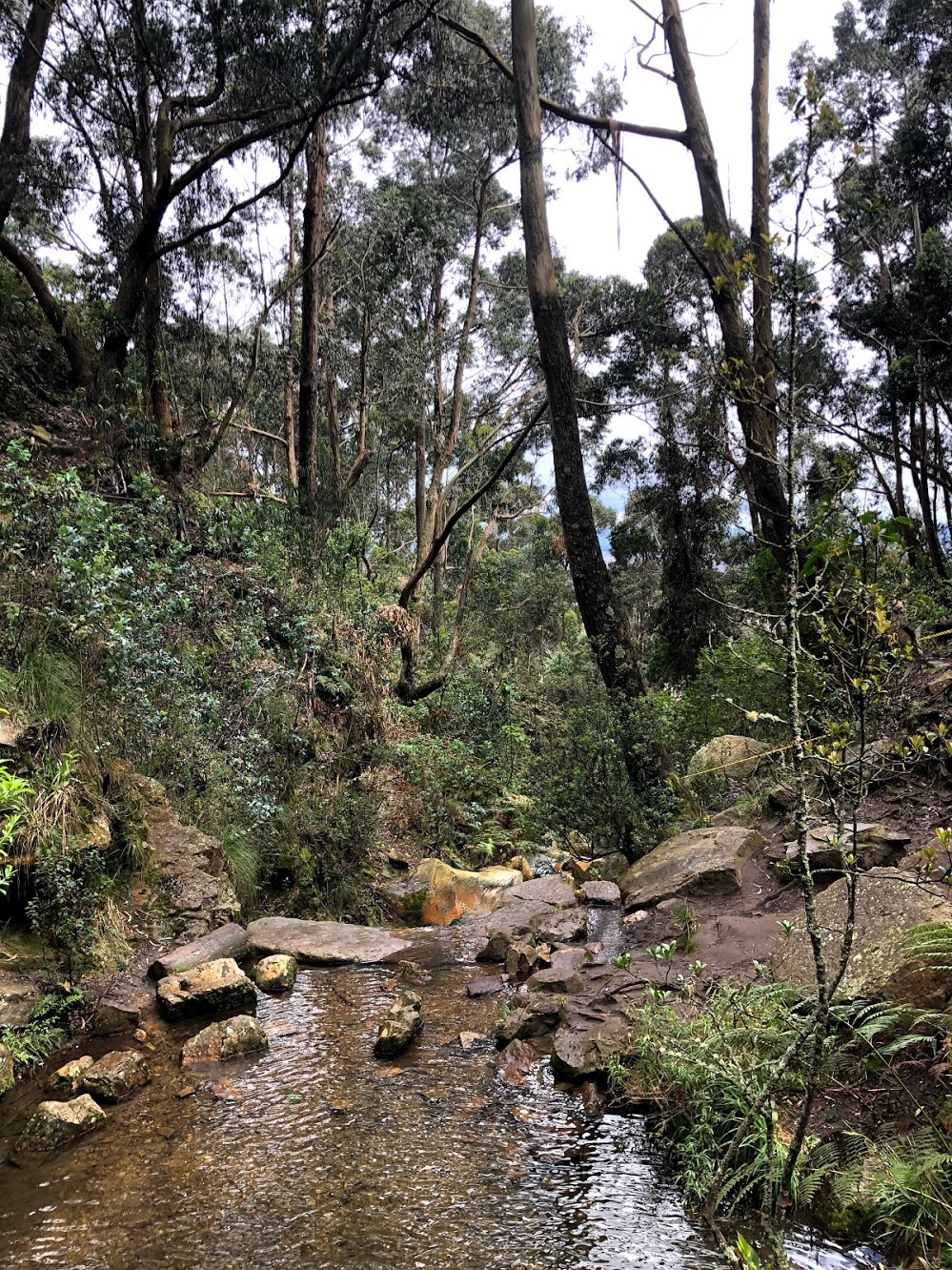
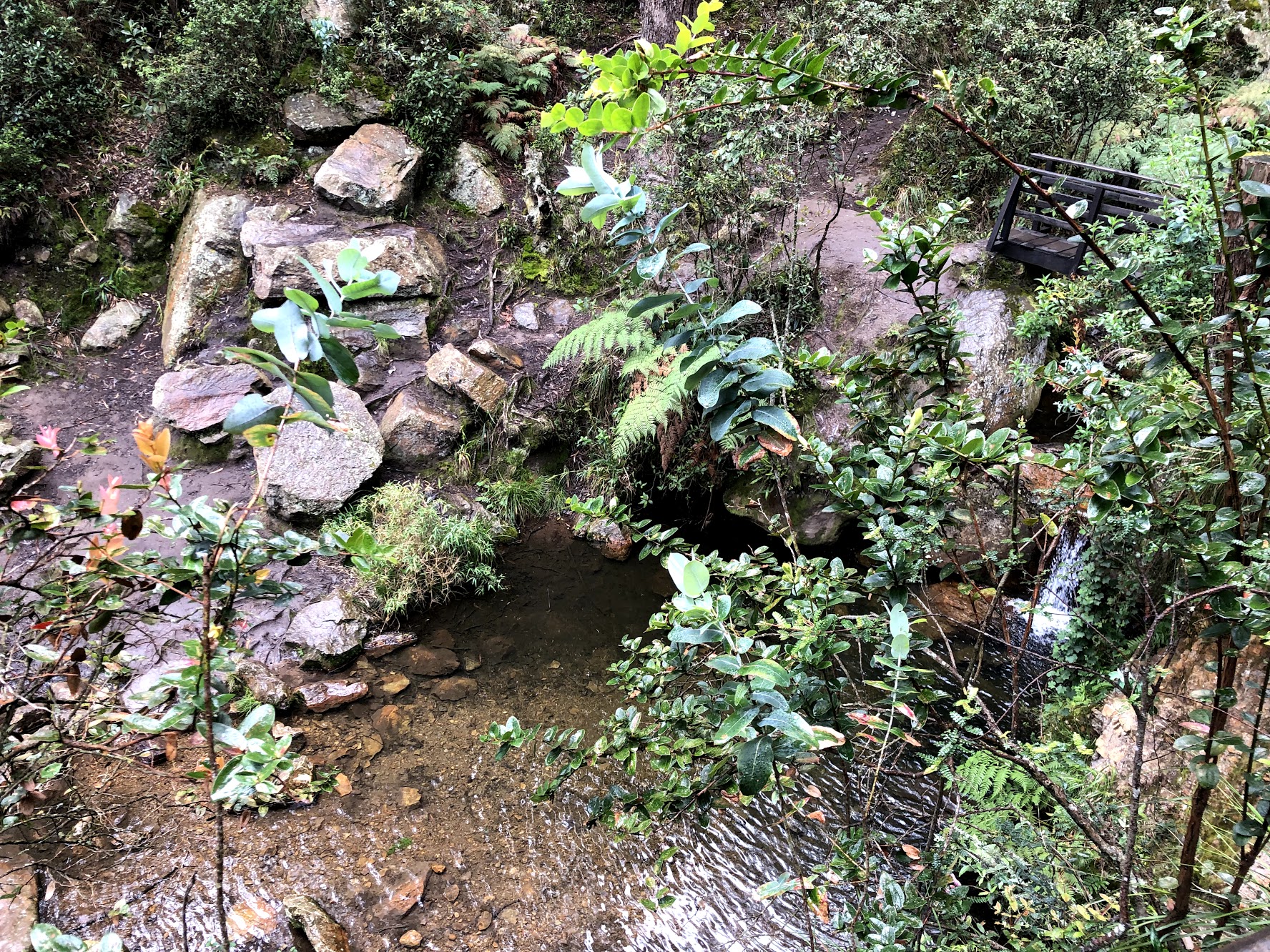
I forgot to take a picture of the waterfall, but this is a pond right next to it. I’m standing on the bridge in front of the waterfall with the waterfall behind me here.
I went through the easygoing trail and got to the waterfall, and it was very beautiful. But the trail kept going! So I followed the trail up the mountain, hoping to get a bit of a view of the city. The trail gradually changed from what could generously be described as “family-friendly” to fairly technical. I had my trusty Irish Setter hiking/work boots and a backpack with some snacks and water, so I was pretty undeterred. There were one or two points where the trailheads got less obvious, so I went very slowly at these parts and took lots of pictures of the location. Luckily the trail cleared up very quickly, else I would’ve turned back.
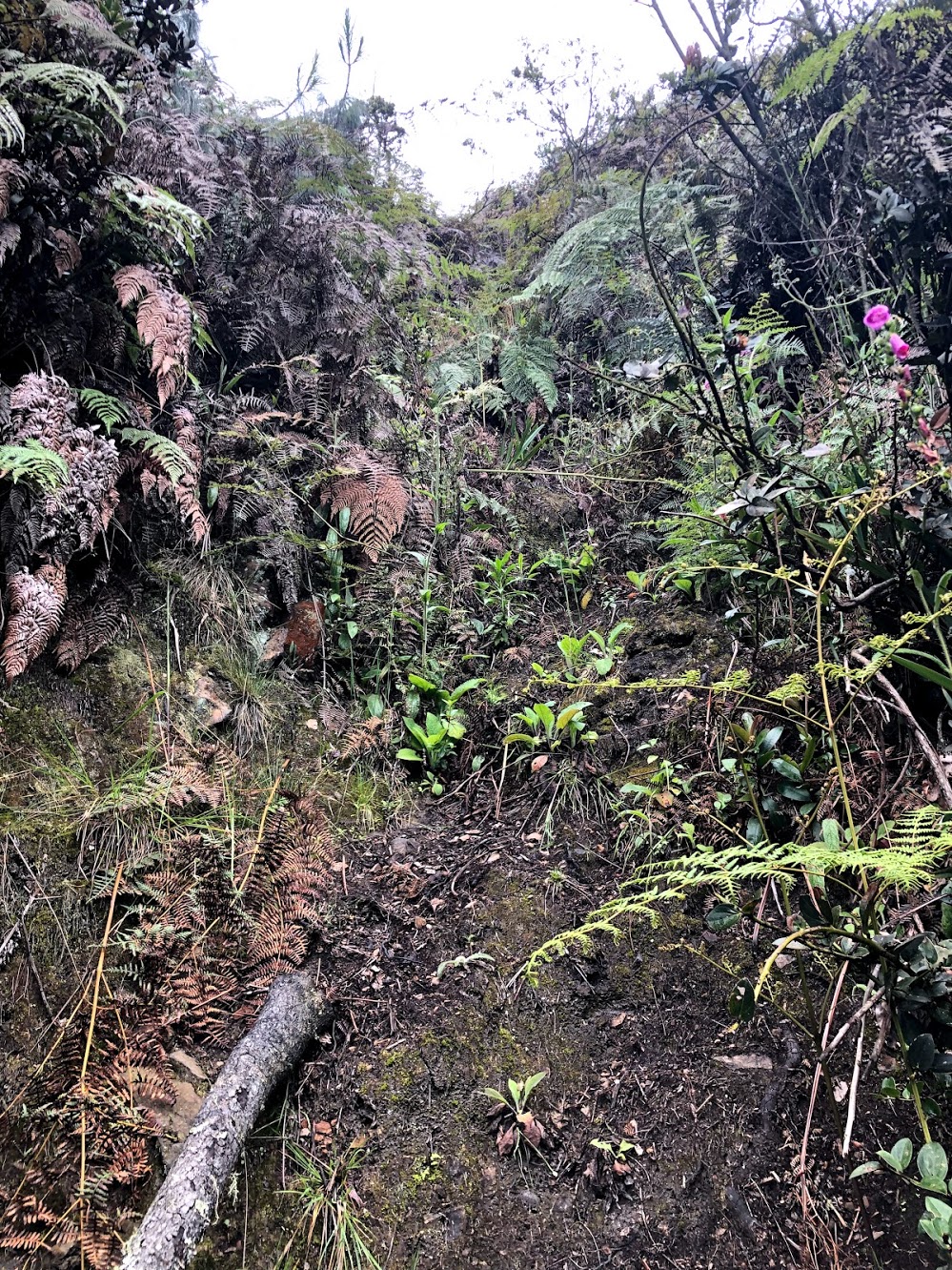
Eventually, the trail started to get pretty steep. There was a lot of vegetation that could serve as holds and braces for the ways up and down, so it was still navigable. But just as I started to get near the summit, the trail became untenable. There were one or two steps that were basically straight verticals, and after the second one I’d decided that the view was not worth continuing.
The ending was pretty frustrating because I could see where the trail cleared up about 20 feet ahead. Those 20 feet, though, were not safe to climb, so I turned around.
Staring down the last 20 feet. It’s tough to tell from this photo, but this path is at about a 60º slope. The dirt is also pretty loose, making for poor footholds. Easy choice to stay away.
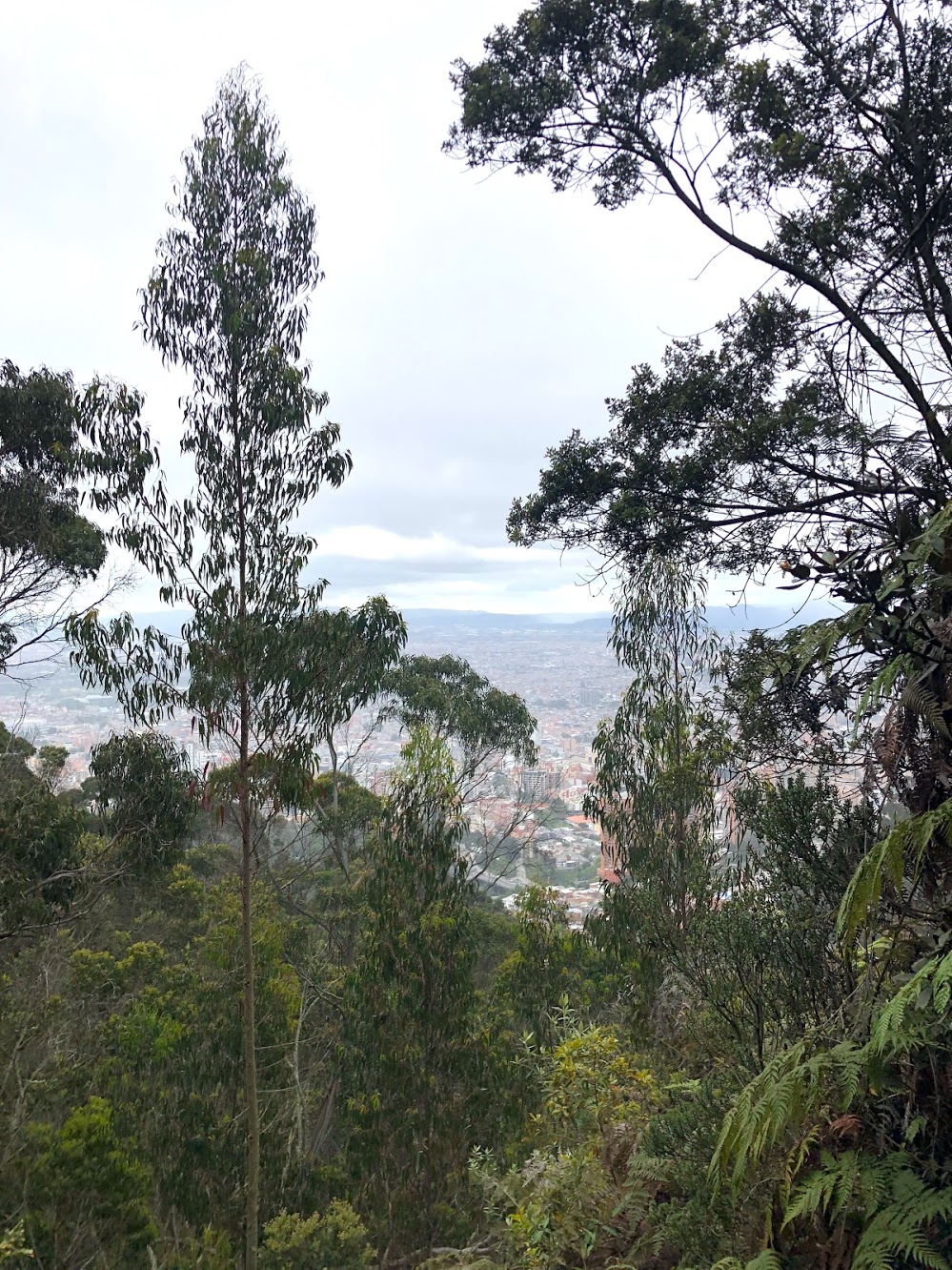
I could make out a bit of the city from the bottom of that last slope, so that view had to do for the day.
Still pretty impressive!
The way down was much more difficult than the way up. It’s fairly easy to climb thigh-high steps up the mountain, but going down your center of gravity is not as thrilled about it. I tried around for a couple of walking sticks, but the super high humidity and constant misting made every stick either rotten or bendy.
Ultimately, I ended up uprooting a few more saplings than I’d like to admit trying to balance while navigating my way down. Frequently, I’d just sit down on my butt and slide my feet down the steeper, slippery parts. This wasn’t much of a problem until I realized that I’d practically ruined the only pair of jeans I brought to Colombia. Oh well, battle scars!
It took me about an hour and fifteen minutes to get up and an hour and forty five minutes to get back down. Once I’d reached back to the waterfall, I had a nice rest and washed some of the dirt off my hands in the stream.
I finished my hike and got some lunch nearby, then I went back to the hotel to shower and send a few emails. Afterwards, I met back up with Julia (Devocion’s Coffee Concierge) and her roommate Oliver, who works in the commercial coffee industry for a large exporter here in Bogotá.
Oliver was (obviously) incredibly knowledgeable about the commercial sector, and I learned a lot from him. We talked a lot about the scale that his company works on. I interested to hear that there are well-established premiums for purchasing coffee at the dry mill that scores at different levels: 80-82 points may fetch price A, 82-84 price B, while 85+ would likely be sold to a specialty buyer. Furthermore, Oliver explained that farmers generally break even on the price of commercial grade coffee – that is, it’s basically just enough to cover the cost of producing it. They’re able to make money and maintain an income stream through their Excelso or Supremo grades. This certainly goes against what I’ve heard, that coffee prices right now are generally below the costs of production.
Oliver also explained some of the periodic maintenance that farmers employ on their crops, i.e. pruning and replacement. There are three levels of maintenance: full pull-up-the-roots replacement of trees, cut down to the base pruning, and cut to hip height pruning. They are done at 7, 5, and 3-year intervals, respectively. This seems to be a fairly successful educational effort by the FNC, because such pruning really does make a difference in yield and productivity, or so I’ve heard.
Another area I learned about were the differences between selling parchment coffee to a cooperative versus a commercial buyer. Cooperatives are located at dry mills managed by the community, while commercial buyers may buy parchment coffee the at the local market but mill the parchment coffee elsewhere. Commercial buyers will often pay very small premiums over coops (on the order of $1 per 60 kilo bag). Coops, though, are able to offer other benefits, including discounted prices on fertilizers in addition to discounts on coffee trees grown at their nurseries.
It was interesting hear how these kinds of economic pressures play out at small scale parchment coffee markets, with different buyers offering different incentives and premiums for growers. One of the common threads, though, was that quality is certainly rewarded by buyers, whether it be the coop or commercial players.
The company Oliver works for exports about 1700 containers a year, which is an insane scale to think about. A single container can fit about 275 60-kilo bags of coffee in it, which means Oliver’s exporter is sending out about 28 million kilos of coffee a year. That’s insane! What’s crazier, he assured me, is that they process just a fraction of the scale of Colombia’s largest exporters like Expocafe.
At that scale, it’s very difficult to see through the logistics to the farm. Even still, every bean that goes out was processed by a Colombian coffee farmer, and every bean has a story to it. Often those stories will get lost, and especially so when the coffee is mixed into a large, commercial quality blend. But I can’t help but feel humbled to think of all of the growers and producers who work to fill a single container, let alone the many thousands that Colombia sends out every year.
Signing off for another day. Who knows what tomorrow might bring!
Today I got to talk to Karen Attman, a local expert on the Colombian coffee scene, and it got me thinking a lot about my goals for this summer and beyond. Karen talked me through a lot of the intricacies of the Colombian market over a few cups of coffee at a couple of cool places around the city. She reminded me a bit of David Waldman, the roaster at Rojo’s in Princeton, as someone who knows everyone and is very forthcoming about their experiences.
I didn’t take many pictures today, but I did get one great shot:
Here’s a bit about what I learned, and some of the lines of thinking I’m going to try to pursue as I continue learning this summer.
Traditional Colombian Production Ends in Parchment
Traditional coffee production in Colombia follows a very specific format. Smallholder farmers will tend to their land by themselves and maybe with the help of their family. They will harvest their own beans, then pulp them a hand-crank coffee pulper. After pulping, they’ll ferment their beans in some kind of tank, barrel, or bucket to loosen the mucilage. Then they will wash off the mucilage with water and lay the parchment coffee out to dry.
This all sounds pretty similar (hopefully) to what I described two days ago, except with one big part missing: the wet mill. One of the main things I learned today is that wet mills are extremely rare in Colombia, as the vast majority of farmers pulp, ferment, wash, and dry their own coffee.
Farmers will then bring their dried parchment coffee to the local dry mill to sell it. At the dry mill, buyers will dry mill a small sample of the coffee, measure its moisture content, grade it for defects, and pass it through grading screens to measure bean size. Once the various price points are tallied up for moisture, defects, and size grade (about a 20 minute process), the dry mill buyers will purchase the coffee at the daily price set by the Coffee Growers Federation (FNC). The FNC’s prices are publicly displayed, and the FNC also guarantees that coffee will always be bought. The FNC price is pegged to the New York Commodity Exchange price for Coffee – aka the C Price – in addition to the Dollar/Peso exchange rate and the value premium for 100% Colombian.
My big misconception was that most coffees in Colombia are processed at a community wet mill. Indeed, both La Palma and El Fénix run their own wet mill for the community. These are exceptions, though, and not the rule, as I’ve learned.
Wet Mills are Contentious
Far from being a standard part of coffee production, wet mills, or beneficios as they’re called in Spanish, are actually a pretty contentious topic in Colombian coffee production. Karen mentioned that we could talk about “the pros and cons of wet mills,” and I was kind of shocked: what could be the cons of a wet mill station?
From my perspective, wet mills seemed to help everybody as they allowed each member of the supply chain to specialize in their craft. As I wrote about yesterday, wet mills allow farmers to only focus on tending to their crop and picking ripe cherries, instead of having to worry about fermentation and drying methods. I thought that they were great!
The main problem with wet mills, as it turns out, is that prices paid for coffee cherries are (quite obviously) much lower than those for parchment coffee, as the beneficio takes on some of the costs of production. Now, this wouldn’t seem to be a problem if those lower prices were offset by a larger volume of cherries, but few farmers are able to produce more coffee than they’re currently producing.
This seems to be the core issue of wet mills: coffee farmers want to take on the extra labor of processing their own coffee and earn more money for it because they have no other revenue options. If farmers were able to use the time spent on processing coffee elsewhere – say, planting more trees, planting more shade crops and increasing biodiversity, or pruning and replanting trees – this wouldn’t be a problem. But all of those things cost money.
This was quite eye-opening to me. One potential path to increase quality and specialization could be opening a beneficioand a coffee nursery to help farmers plant new trees. But this isn’t popular for another reason: the traditions and culture of growing coffee in Colombia.
Coffee Farmers are Proud of Their Crop
This hurdle to the beneficio/specialization model comes not from economics but from cultural and traditional dispositions. Coffee farmers want to process their own coffee, as it gives them ownership over the product. Once the coffee is in parchment, it really can’t get much better than it is – the dry mill, roaster, and brewer can only mess it up. (I used to say that coffee can’t get much better after the moment the cherry is picked, but La Palma shifted my perspective on what fermentation can do for coffee.) This means that a parchment coffee is the sole product of a single smallholder farmer. Such traceability is an added advantage for buyers, who can go back and buy a microlot from a single smallholder farmer that stands out on the cupping table.
Traceability is another main concern about the wet mill model. Beneficios often mix all the coffee from local producers together; just look at Sweet Maria’s listings, and you’ll find a huge list of coop names. This can disincentive picking ripe cherries or focusing on agricultural quality, if your neighbor’s crop is worse and is still fetching the same price. Of course, it isn’t necessary to mix all of the incoming coffee together in the wet mill, but it is logistically much easier.
There are New Things Everywhere
In addition to the rare examples of La Palma and El Fénix, there are a number of new beneficios throughout the country. Many of these are being financed by Nespresso; Karen told me that Nespresso is working on education efforts and quality partnerships with over 30,000 Colombian coffee farmers.
So wet mills are new, and they have their pros and cons. La Palma and El Fenix are producing some of the best-known coffee in Colombia at the moment, so it’ll be interesting to see if these standout farms influence any broader shift in the market.
Another option that I talked about with the owner of Colo Coffee is to open specialty dry mill stations. Although they’re already common, dry mills allow you to meet farmers where they are by purchasing their traditionally processed parchment coffee. One of the current areas of market inefficiency in this, I think, are poor measures of quality. Right now, moisture content, defect grading, and size are the only proxies for quality that coops (dry mills) pay for. Having proper moisture content, low defect percentages, and large beans are crucial tenets of quality coffee. But if all three of those indicators pan out well, they don’t tell you much more than that the coffee has the potential to be specialty grade. Indeed, right now if a traditional farmer wants to sell their coffee at specialty grade, they first have to sell it to the coop at the standard FNC price, then wait for a specialty buyer to pay a premium which may hopefully make it back to the farmer.
In order to truly incentivize quality, the language and understanding of quality must be better represented at the source.
Quality Coffee is Poorly Understood by Producers
The vast majority of Colombian coffee farmers have never had a cup of filtered coffee. Besides from seeming patently unjust, this lack of coffee backwards propagation to the source means farmers have no idea if their coffee is any good or not. As I said, apart from the three proxies used at the dry mill, farmers have no access to any further understanding of coffee quality.
There are certainly efforts working to address this situation. The Q Grader program itself takes square aim at this: Q Graders are randomly called upon by producing countries’ In-Country Partners (ICPs) to grade samples that they’re sent in the mail. The Q Graders assigned to the coffee must green grade it, roast it to spec, and cup it. The scoring information is then returned to the source to define the coffee as specialty grade or not. I don’t really have a sense for the scale of CQI’s grading program for ICPs, but I expect it’s very small. I’ve read about a few other places trying to introduce the language of quality at the source, but it’s very difficult to achieve this due to constraints in infrastructure, cost, trained personnel, and resources. In order to properly grade coffee at the source, you’d need:
A reasonable sample coffee roaster ($3,000+)
Coffee cupping equipment like a grinder and cupping bowls ($600+)
Water filtration good enough for cupping ($1,500+)
Dedicated, trained coffee cuppers and graders (?)
A way to involve and educate producers (?)
A long-term commitment to the region (???)
You can start to get a sense of the problems facing such efforts. That being said, dedicated feedback channels for local producers are almost certain to help improve quality and grant producers access to the specialty market. It’s difficult to estimate a cost/price ratio on projects like these, but that isn’t stopping them from popping up.
Stars Stand Out
Lastly, a core takeaway is that neighbors take notice of each others’ coffee. If one farm starts to produce top-tier specialty coffee and becomes financially rewarded for their work, neighbors will attempt to replicate that model, resulting in a generous positive feedback loop of better coffee and better prices. While this isn’t a pure instance of market competition, it is a great example of how even basic access to competitors’ financial information can help spur farmers (or really any business) to greater successes.
If a farmer can improve their practices enough to produce specialty coffee, they’ve fought half the battle. The other half is getting paid for those premiums. I’m really not sure yet how easy it is for farmers who are producing top-tier specialty coffee to get rewarded for that, especially if they are unique in their region. This seems like a really important area to investigate more: how delayed is the response between increasing quality in production and increased premiums paid for farmers? Who’s responsible for paying those premiums, at each stage up the supply chain?
All in all, I have a lot to think about. I learned a lot today and I’m looking forward to learning more throughout the summer.
I spent the last weekend at La Palma y El Tucán. To call La Palma a farm is quite the understatement; as best I can figure, it’s the future of coffee. Although it was my first time really interacting at origin with producers, even I could tell that La Palma is something special.
A view of some of La Palma’s farm, interspersed in the surrounding mountain forest of the Zipacón region.
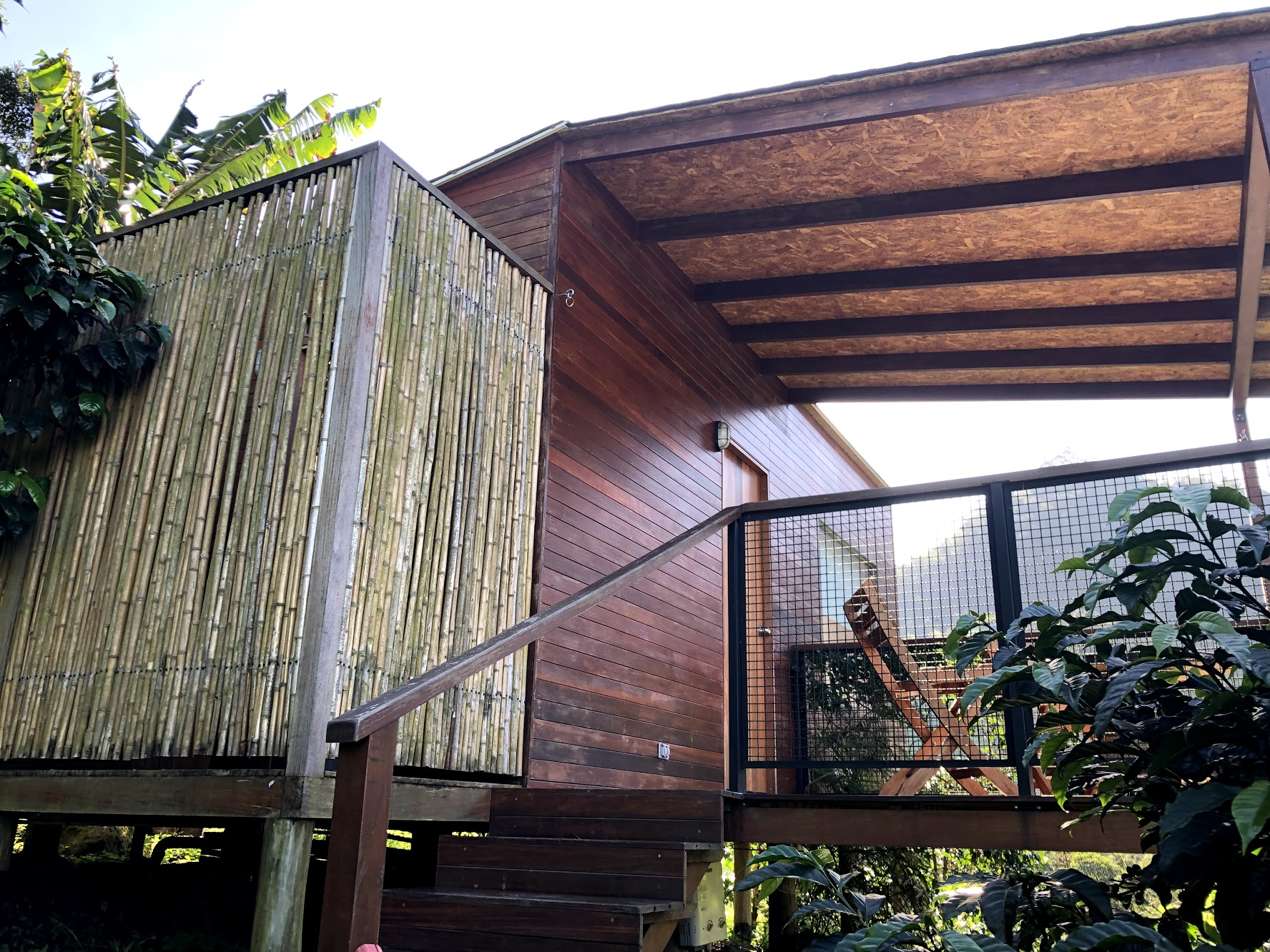
La Palma y El Tucán began as a project by Felipe Sardi and Elisa María Madriñan to “shatter the status-quo by implementing groundbreaking social, environmental and technological innovations.” They purchased a 18 hectare lot about 1.5 hours southwest of Bogota whose unique geography affords it almost 10 different micro-climate regions for growing coffee. Soon, they built a state of the art wet mill station and a number of drying beds to process coffee with. Finally, they added a boutique hotel on the farm that includes 9 beautiful cabins situated amongst the coffee trees overlooking their view of the valley ahead.
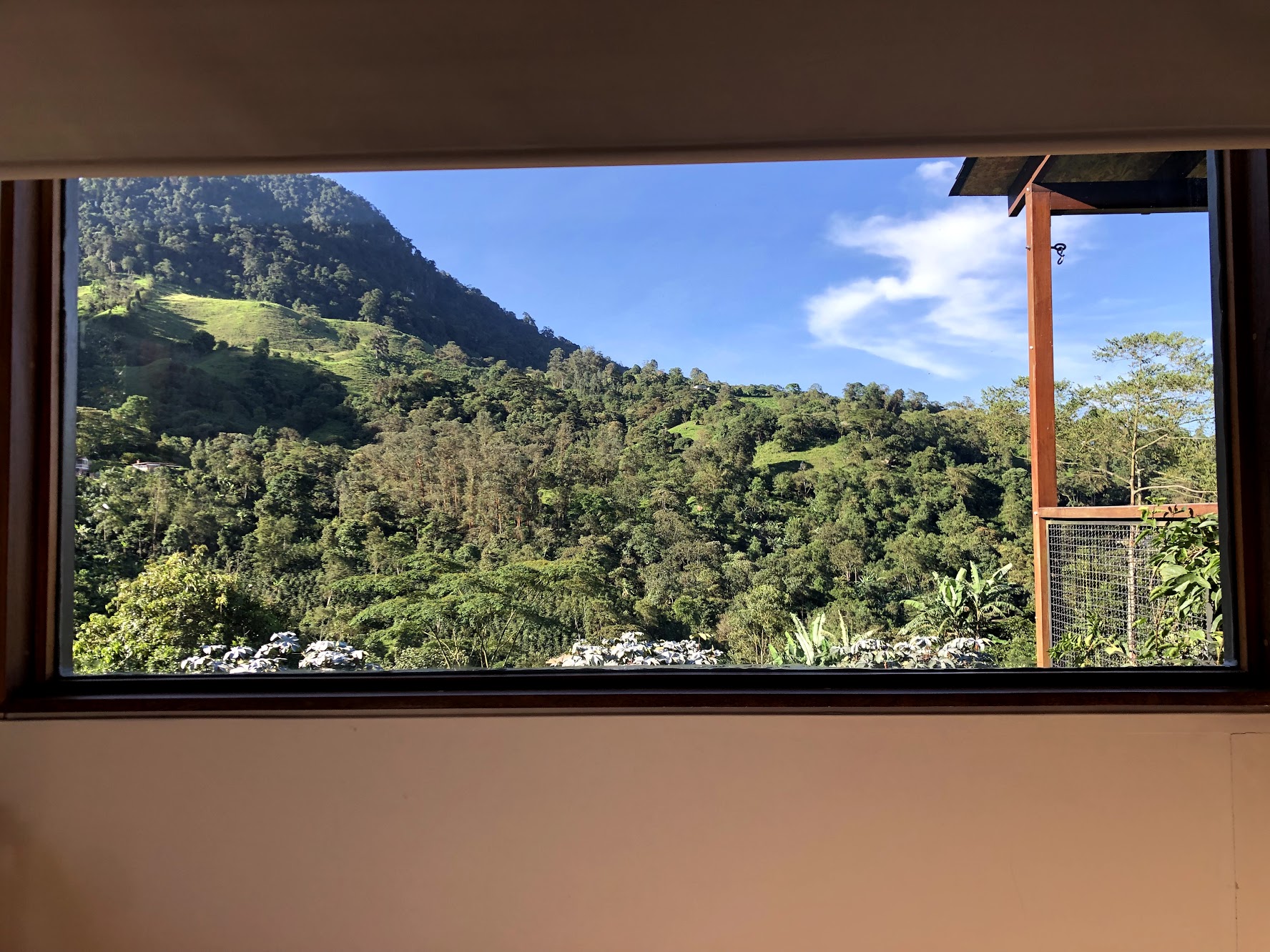
The view from my cabin – absolutely stunning.
Then, they started producing coffee. La Palma’s 18 hectares is host to a number of different rare coffee varietals, including SL-28, Moka, Gesha, Sidra, and more. Each of these require different growing conditions, which they are able to achieve through their several microclimates and agriculture practices, like planting more or fewer shade trees. The SL-28’s that were near my cabin, for instance, got a significant amount of direct sunlight, and the air around them was much less foggy than it was down the farm. The Geshas near the cupping lab, though, were heavily shaded, and are basically inside of a cloud most of the time.
The cupping lab is hidden among the trees, overlooking much of the farm
Right off the bat, it’s clear La Palma takes immense care in their agricultural practices. Successfully producing so many immensely finicky varietals is a sign of exquisite coffee farming and attention to detail, so it’s no surprise that their coffee is delicious. But the trees they care for are just the start of La Palma’s grand project of “shattering the status quo.”
“Traditional” Coffee Farming in a New Light
A core part of La Palma’s mission is to “revitalize the coffee-growing culture in our region” through partnering with local coffee growers. The status quo holds that traditional coffee farmers are largely incapable of producing specialty coffee for a number of reasons, chief among them their lack of access to exotic varietals. Most coffee producers in Colombia grow Castillo or Colombia, two genetic hybrid varietals that were bred for pest and disease resistance. (Colombia is the name of a coffee varietal, in addition to my current whereabouts; it was created by the Colombian coffee research authority.) The vast majority of coffee buyers will tell you that Colombia and Castillo are known for having poorer flavor profiles in the cup.
Tree type is only one of a number of hurdles that face traditional coffee farmers. Traditional Colombian farmers also typically mill, process, and dry their own coffee. This constitutes an enormous investment of time, space, resources, and equipment for farmers: in addition to tending to their crops, they must operate a small-scale mill, wash and ferment their own coffee, dry it, and transport it in parchment to sell.
“Juan Valdez mills, washes, and dries his own coffee, so you should too”
So far, this seems to me a the core problem of current coffee production: “farmers” and “producers” are interchangeable words, yet they refer to wildly different activities and skill sets. Coffee farmers are excellent at farming coffee. Milling, fermenting, and drying coffee, on the other hand, are a whole different ball game.
Here’s where La Palma (and El Fénix, where I’m going next week!) comes in. La Palma has constructed a large enough milling station that they can buy coffee still in the cherry from local farmers and process it themselves. In doing so, they cut out an enormous chunk of costs for coffee producers, and allow them to focus on what they do best: farming coffee.
Furthermore, by centralizing milling, fermentation, washing, and drying, La Palma can train and employ specialists whose only job is to conduct one part of the coffee production process. For example, La Palma’s “about us” webpage lists all the following roles as members of its team:
“The Dedicated Grower”
“The Obsessed Alchemist”
“The Talented Artist”
“The Experienced Technician”
“The Crazy Scientist”
“The Passionate Founders”
Such a clear delineation of roles not only cuts down costs in production by increasing efficiency; it allows each actor to become a craftsperson in their trade. This is almost certainly why La Palma is able to capitalize on something it is world renowned for: its fermentation.
The fermentation tanks at La Palma, attached to the wet mill (off to the right in this photo)
I was walking around La Palma today talking to Felipe Pinzon, the outgoing “director of experience,” or client-facing coffee guy. We had just finished a cupping and I was really impressed by the fruitiness of so many of the coffees on the table. I asked how long their fermentation usually lasts, and if it’s more towards the upper end of the 36-hour limit.
“No, closer to 100 hours for that one.”
WHAT!!!
I was absolutely dumbfounded. I had never heard of anything close to this before. This would be like if I asked you how long you baked those cookies for and you said 12 hours. It’d be like if you asked how long you caramelized those onions for and someone said 3 days. It is absolutely crazy.
Fermentation is a very complicated process that at its core involves a breakdown of sugars in the coffee cherry. To be honest, I don’t really know much about the chemistry of fermentation, but I do know this: you definitely don’t want to over-ferment them coffee! One of the defects we trained on in the Q was a ferment defect, which is when a cherry has been over-ripened or left in a fermentation tank for too long. Its tell-tale sign is an alcoholic note, like red wine or rum.
Being able to expertly control fermentation is La Palma’s secret sauce. Felipe told me that being able to stretch the fermentation times of coffee so long is one of the most important ways that La Palma is able to bring out the flavors of the coffee. It’s also one of the most difficult things for smallholder farmers to control, as they lack access to advanced instrumentation like Brix meters for sugar content or acid content measurement devices. Even if they did have such instruments, it’s incredibly difficult to control the mix of microorganisms, yeasts, and bacteria that fester in a fermentation tank.
Lessons Learned
The name “La Palma y El Tucán” comes from two endangered species that are present at La Palma: the Wax Palm and the Emerald Toucan. Ignacio, who showed me around the farm and explained much of their processing to me, told me that the name carries multiple symbolisms. First and foremost, coffee production in Colombia is slowly becoming endangered due to a number of reasons. Increasing costs of production due to unpredictable weather patterns, more susceptibility to la Broca and la Roya, and worsening soil content makes it more expensive to grow coffee. Simultaneously, increasing variability (and plummeting) in the C-Price and local buyers’ prices means farmers are earning less for their coffee. All this points to less and less motivation to maintain familial coffee farms – La Palma states that the average age of a coffee farmer in Colombia is now over 60.
The average smallholder coffee farmer is operating at a loss.
But the Wax Palm and the Emerald Toucan are important for another reason. They are symbols of Colombia’s beautiful biodiversity and agricultural potential. And crucially, they function together in a symbiotic relationship. When allowed to thrive, the Emerald Toucan spreads the seeds of the Wax Palm and helps it grow and blossom. As I saw firsthand, La Palma can help reinvigorate the historic symbolism of Colombian coffee farming through better production practices, cooperative partnerships, and specialty market access.
Today, I got to cup coffees from the neighbors of La Palma who are featured in their Neighbors & Crops program.
There were a lot of coffees on the table, so my Q skills came in handy!
We went through the first table, which featured 13 wildly different coffees. Flavor notes spanned from peach yogurt to hazelnuts to milk chocolate to kiwi fruit. As Felipe said, we got to “taste the whole rainbow” on that table. I was super impressed by the consistent quality on the table, and how many different coffees La Palma was able to produce.
And then, Felipe dropped the hammer: every single one of those 13 coffees was a Castillo grown by a traditional Colombian coffee farmer. Not a single one of those farmers owned a Brix meter or had read the SCA’s Coffee Agriculture guide, yet they all were able to produce incredible coffees. Even that peach yogurt coffee, which I scored at an 87.5 (stunningly good!), was grown in a very traditional manner by a 3rd-generation farmer.
Here is the lesson that I have learned from La Palma: specialty coffee is accessible. There are certainly hurdles to achieving it, some of which I’ve outlined here and some of which I’ll continue to write about on the blog, but no farmer is incapable of producing specialty coffee. The specialty industry hypes up the latest fad variety and processing techniques so much that anything not new must be old and lame. In doing so, we not only do a disservice to ourselves as coffee buyers, but more crucially to the hundreds of thousands of traditional farmers who deserve so much more credit than we give them.
Bits and Pieces
There was a lot more about La Palma that I wanted to say and a lot more pictures I wanted to upload that didn’t fit in the story I wanted to to write. So here they are!
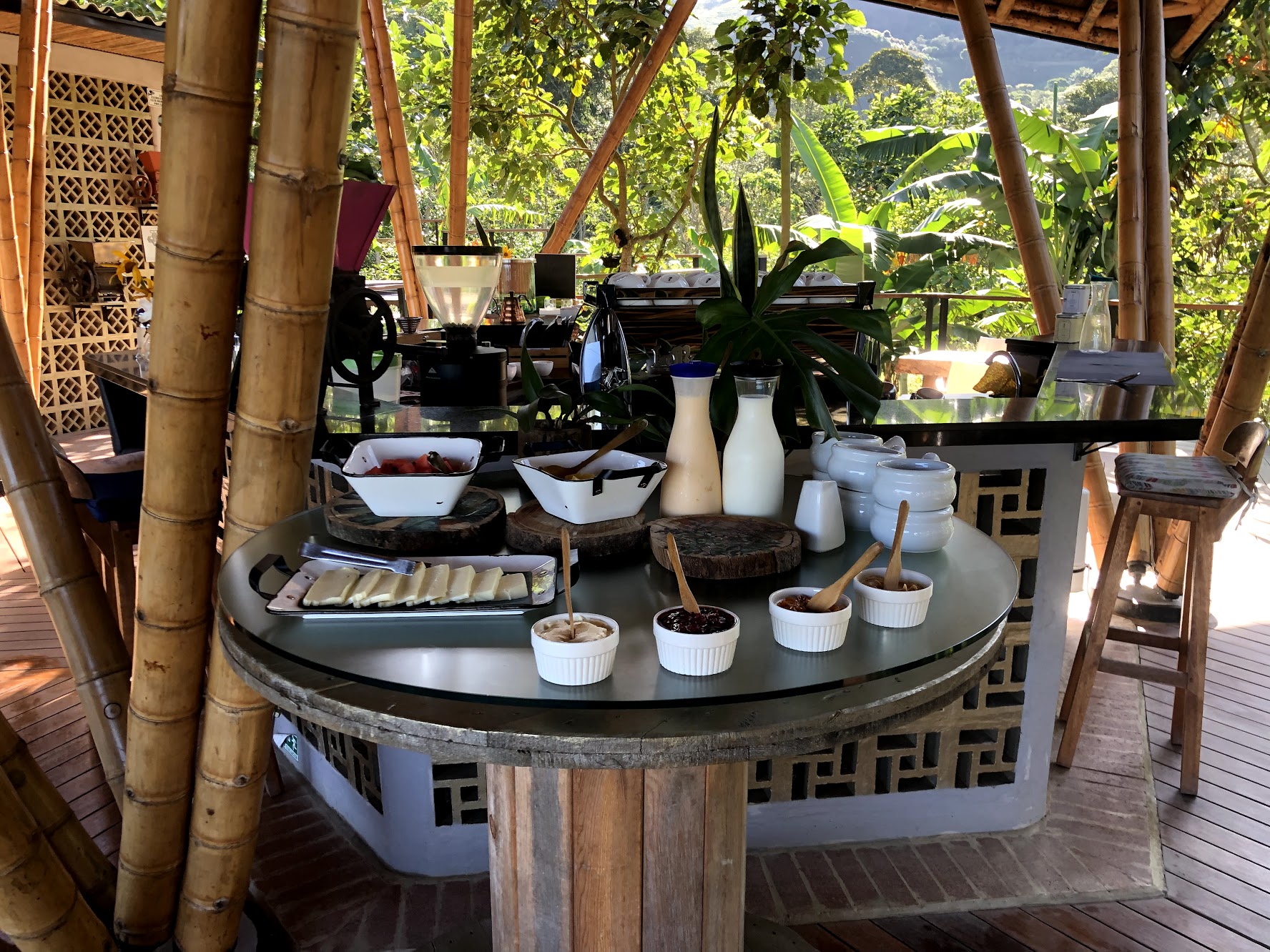
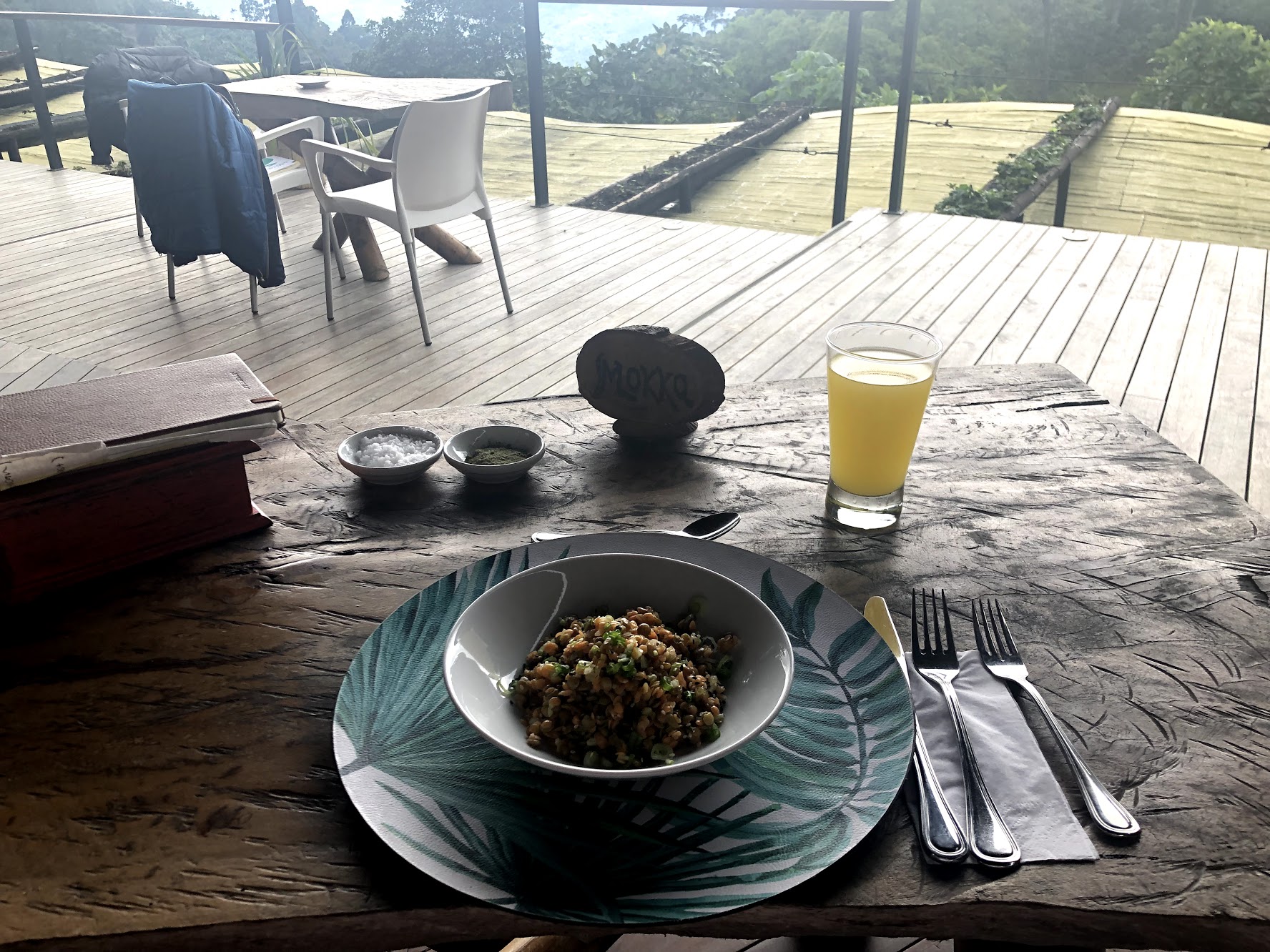
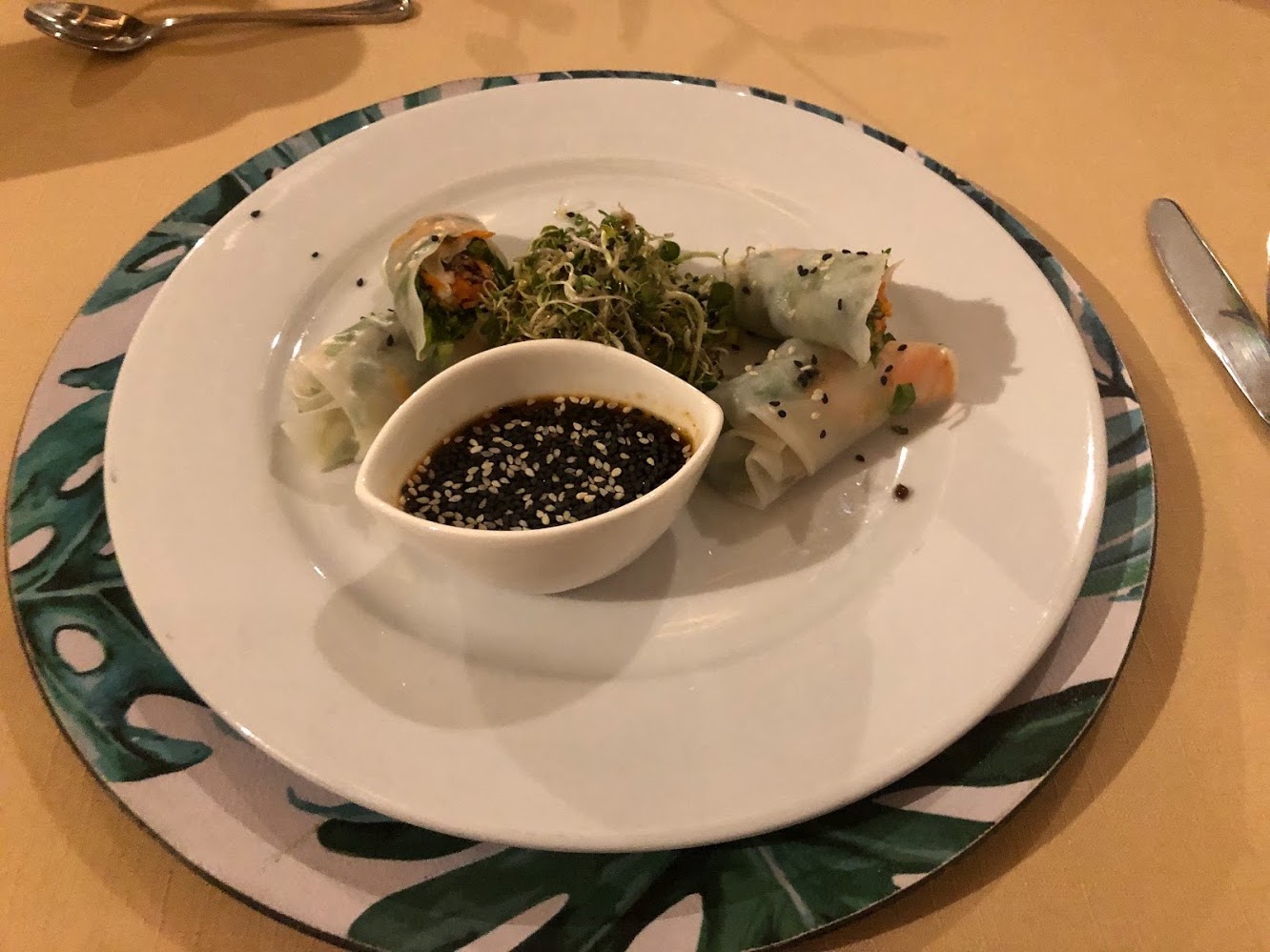
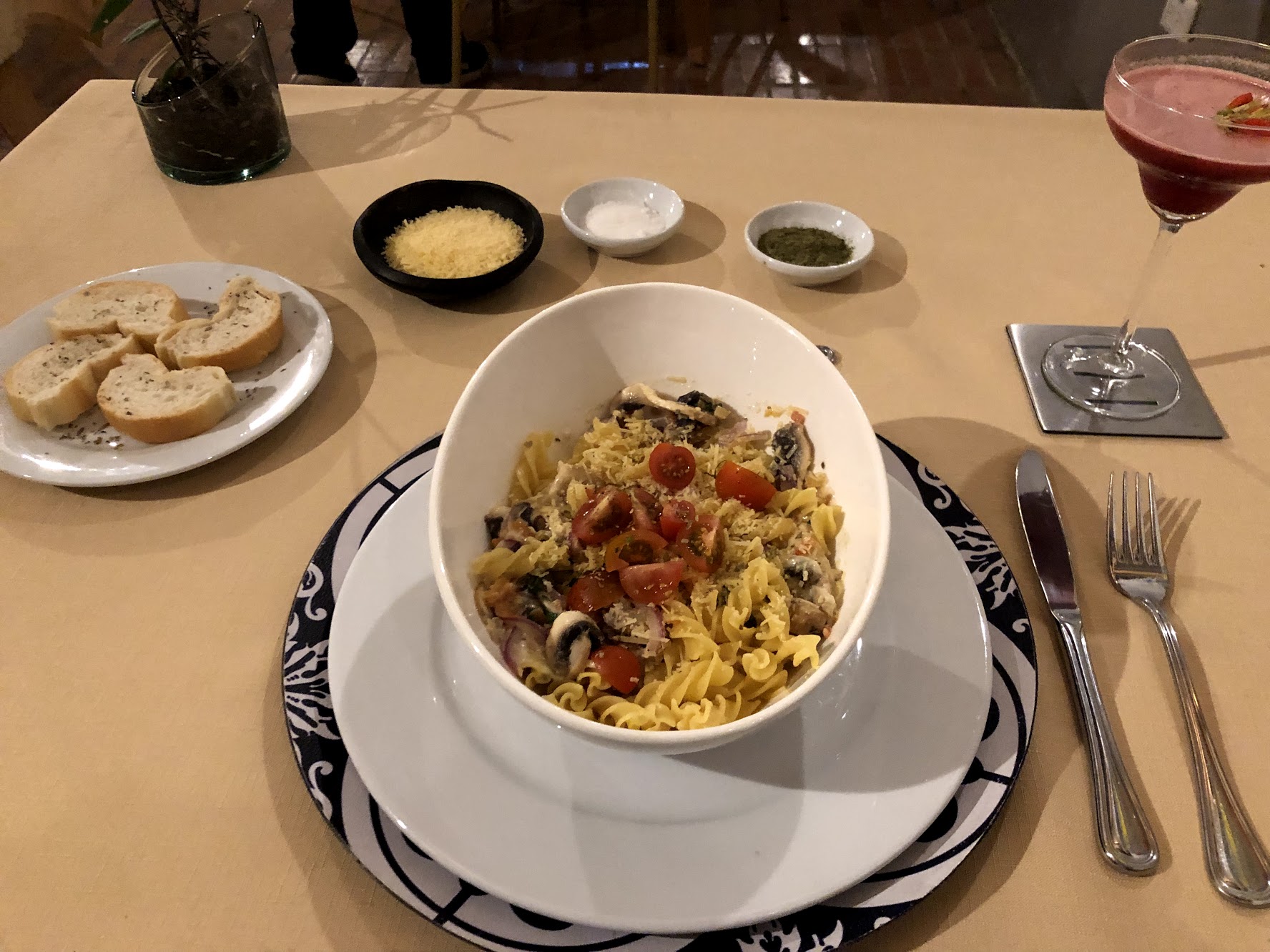
First of all, the food at La Palma is insane. Many of their ingredients are grown on their organic vegetable farm, and the chef whips up incredible vegetarian dishes from them.
Breakfast bar
Cabbage stir-fry with veggies
Lentil salad with Mango Juice
Cauliflower risotto
Fresh veggie spring rolls
Pasta with veggies
Second, the cabins are absolutely gorgeous. Not only do they have a beautiful view, but the insides are stunning and generously accommodating.
Outdoor shower and all!
Replete with hammock, of course
The view from bed
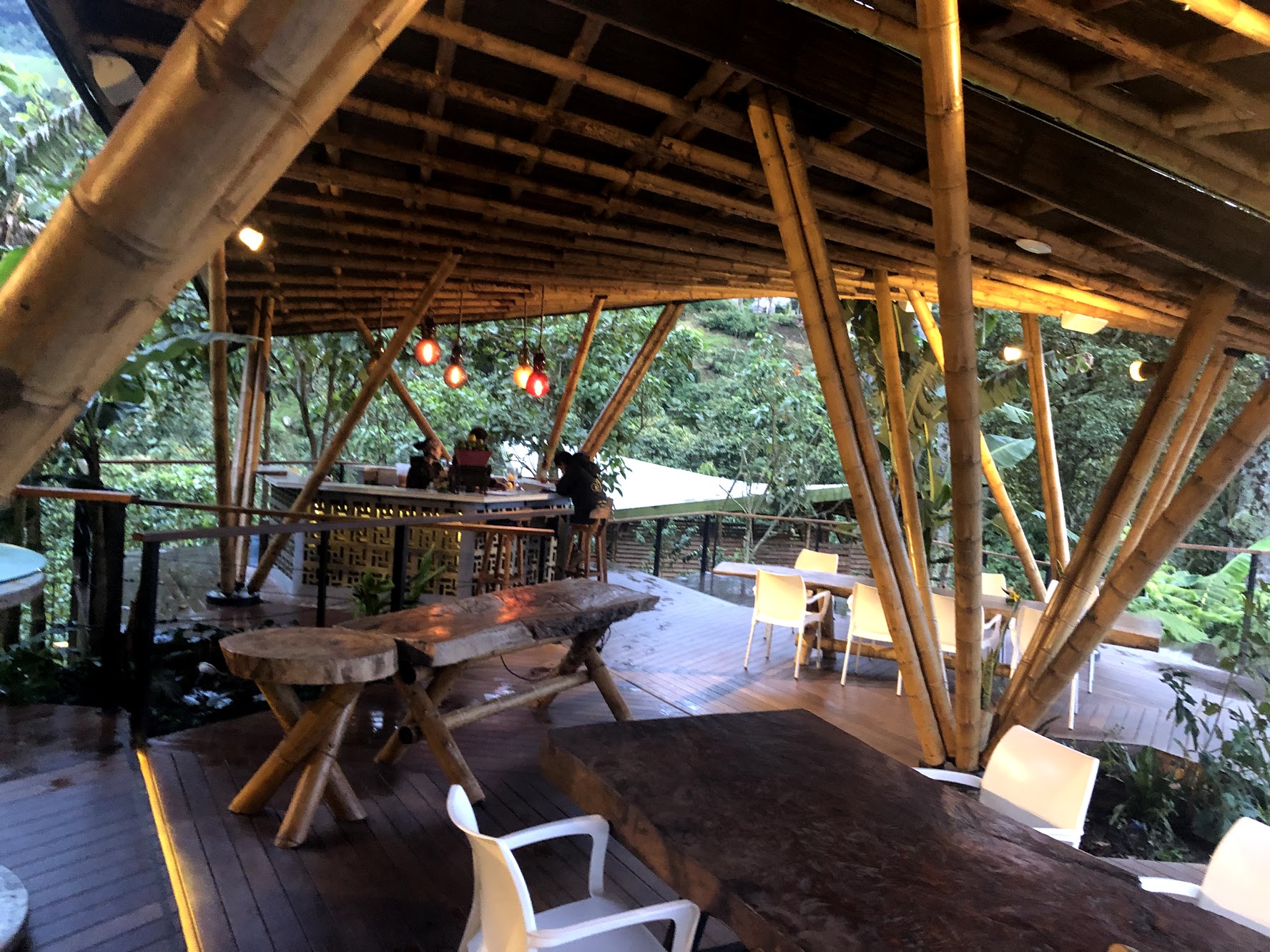
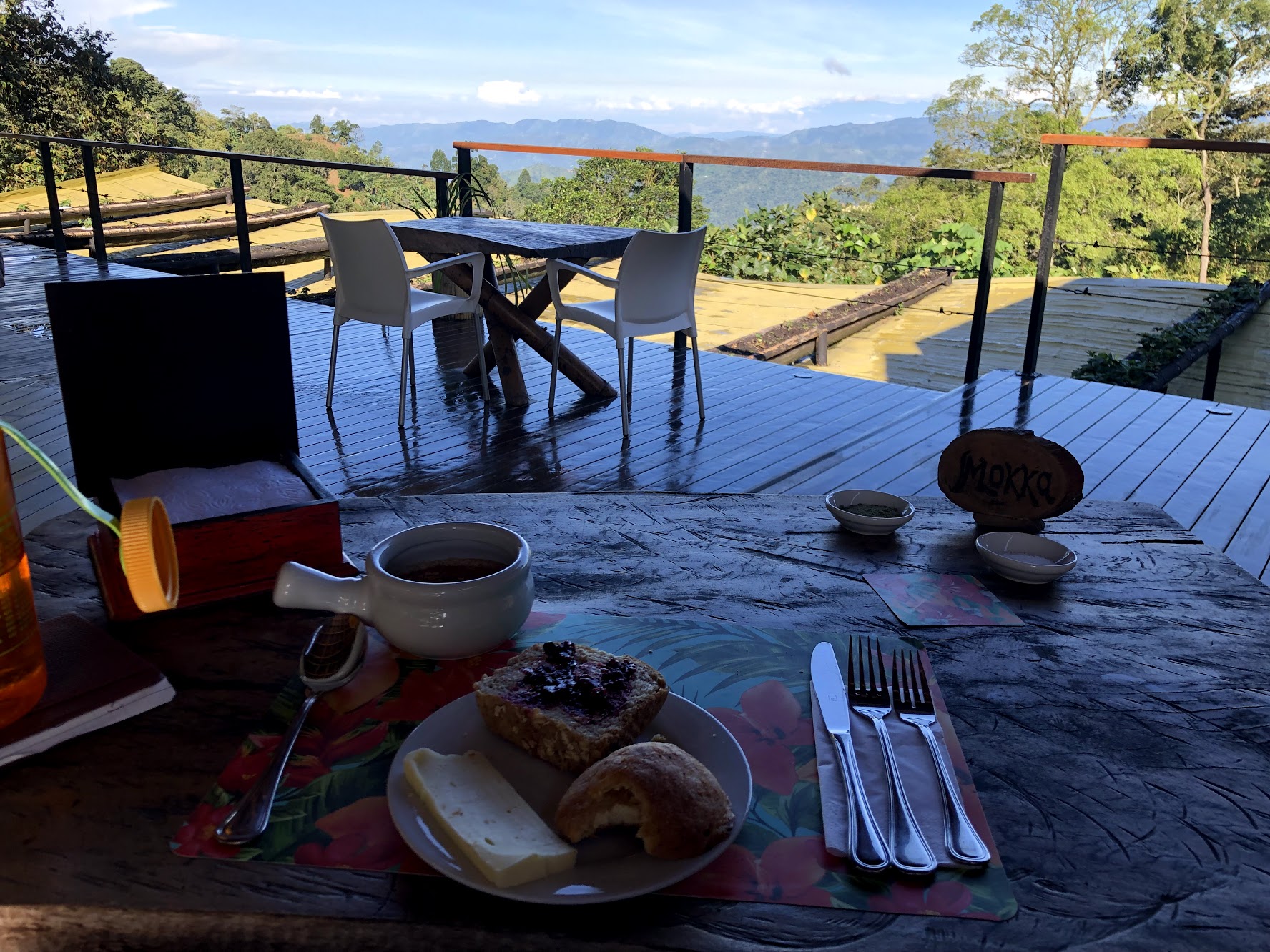
Third, the main terrace of the hotel is stunning. It has a coffee bar, a regular bar, a bunch of tables to eat or lounge at, and the kitchen. It also looks out on one of the best views I’ve ever seen.
Lastly, I had an awesome time learning about wet milling and processing from the people who do it!
The coffee comes into the wet mill on the right, where bags of cherries are emptied into the grated floor you can see on the right. They are sucked into the mill and pumped into the big cylinder which helps separates floaters (underripe cherries) from the rest of the cherries.
Here, workers adjust the burrs on the pulper to allow more cherry through for a honey processed coffee.
Washed processed coffee makes its way out of the fermentation tank for washing,
Your trusty blogger helped wash some
After washing,
Because of the low temperatures and high humidity of La Palma, drying is often finished in these big mechanical dryers, which burn parchment from the dry mill as fuel.
Finally, the coffee is sorted and graded by Olga and other sorters before being bagged for export. They told me that they can get through up to 12 75-kilo sacks in a day.
Every coffee at La Palma is cupped and graded for agricultural and processing feedback
I had an amazing weekend, and I have a lot of thoughts floating around in my head still. They’ll keep creeping out over the next few days, but in the meantime I hope you enjoyed this first look at coffee production.
Editor’s note: this post was meant to bepublished on Friday 6/14 but was delayed due to a lack of wifi!Saturday 6/15 and Sunday 6/16 will be combined into a big post on my time at La Palma.
Today marked the beginning of a new phase of the Adventure, because today I started really learning about coffee in Colombia. I toured the Devocion Plant in Bogotá all morning and talked to many wonderful people there, attended a cupping at Devocion, and went to La Palma! I’m writing this from the La Palma y El Tucan farm, which I can’t wait to tell you all about.
In this blog post, I’ll try to tell you about my time at the Devocion Plant. But first, I really want to use this post to help explain some of the coffee processing terminology that I’ll be using a lot from here on out in a kind of overview of coffee processing.
A Beginner’s Intro to Coffee Processing Terminology, as Explained by a Beginner
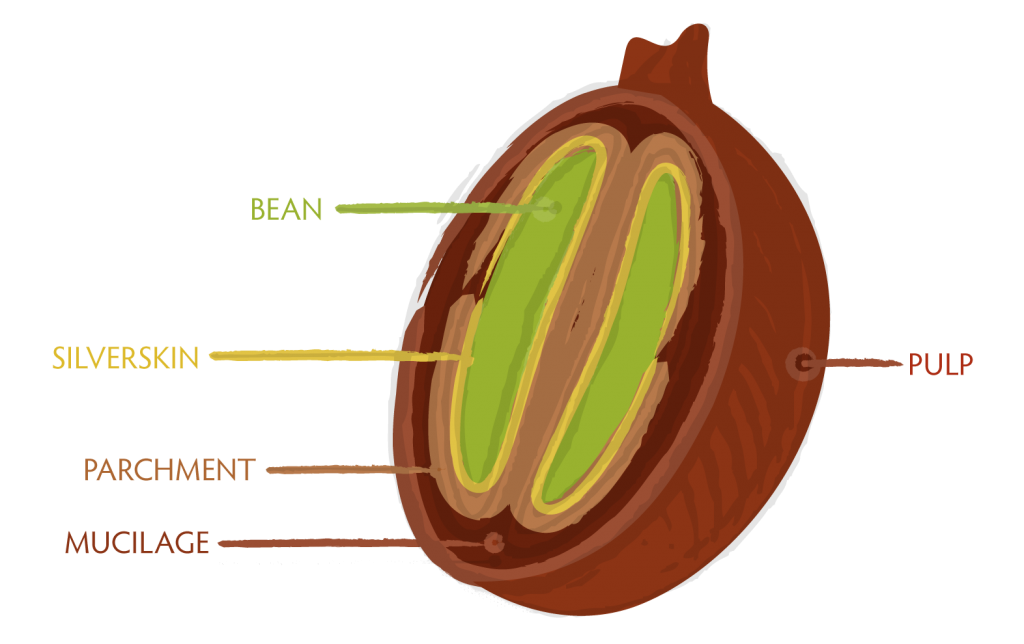
First: what is coffee processing? Coffee is a short tree (some call it a shrub) that grows cherries. Coffee cherries contain seeds, which are coated in a protective shell-like layer called parchment. Underneath the parchment is what we think of as coffee beans. But they’re not brown until you roast them!
A coffee tree with beautiful cherries growing on them! You want to pick the cherries when they’re bright red, as seen here – not yellow or purplish.
Cross-section of a coffee cherry. The “mucilage” refers to the fruit guts. Think of this as like the fruity part of a regular cherry between the skin and the pit. The “silver skin” is a very thin protective layer that adheres to the green bean, underneath the parchment.
Parchment coffee, or “pergamino” in Spanish. This is the result of the first stage of processing – the wet mill.
Green coffee, or what’s left when you remove the parchment at a dry mill.
Yum, coffee.
Ok, so there is an idea of what the coffee bean looks like. But what happens to it at each stage?
First, the coffee is harvested from the tree. You end up with these big ~100lbs sacks of red coffee cherries. At this point, you get to make your first choice about processing method: whether to bring the cherries to a wet mill or to dry them in the “natural process.”
Natural Processed Coffee
“Naturally processed” (or “dry processed”) coffee refers to coffee that is dried in the cherry. It’s laid directly onto drying beds soon after harvesting. This process adds fruity characteristics to the coffee as the bean absorbs the sugars and organic compounds present in the cherry.
One of La Palma y El Tucan’s natural drying beds. The cherries darken as they dry – these were probably 3-5 days old since picking.
Naturally processed coffees use less water to produce, and often have fruitier characteristics in the cup. This fruitiness is often less sharp and defined as the fruitiness of other processes, because differences between cherries are drawn out through the drying and obscure any singular flavor note. In general, naturally processed coffees are less homogenous in processing, but have a higher sugar content. The coffee cherries are dried until the beans inside have a moisture content of about 10-11%, at which point they’re sent to a dry mill (more on this soon).
The Wet Mill
If you choose not to naturally process your coffee, it goes to a wet mill. A wet mill is a processing station that removes some or all of the cherry from the coffee, leaving the bean in parchment. The wet milling process has several components.
First, the coffee cherries are sent through a pulper, which squeezes the cherry and shoots the beans out. The cherries run off to a compost pile or trash, while the beans collect in a tub. Then, the beans are left in the tub for 12-36 hours to ferment, either with some water in the tub or dry. This fermentation step loosens any remaining cherry mucilage, and allows the beans to absorb some of the sugars of the cherry.
One of the fermentation tubs at La Palma
After fermentation, the beans are usually washed in water to remove any remaining mucilage and leave just the cleaned parchment. This is called the “washed process.”
Washing coffee at La Palma
Washed process coffees are generally the cleanest in the cup, with well-defined, sharp flavors. Washed process coffees are also more homogenous in their flavor profile, because the washing removes any variability in absorption of cherry ripeness or sugar content. Most coffee in the world is washed, although almost all coffee from Brazil, the world’s largest coffee producing country, is naturally processed.
A Third Way: Honey Process
So we’ve talked about natural processed and washed process coffees. It turns out that there is a third way to process coffee that is becoming more and more common: the “honey” process. The honey process can be thought of as a balance between natural and washed processes, because it leaves some of the cherry mucilage intact but removes much of it.
Honey processed coffees are also sent through a wet mill, like in the washed process. However, for the honey process, you loosen the plates of the pulper to allow some of the mucilage to remain intact. The coffee is then fermented in a vat. After fermentation, the coffee may be directly transported to drying beds, skipping the washing step.
Washed vs. Honey vs. Natural coffee.
Honey processed coffees generally have more sweetness than washed coffees. You can choose how much of the cherry mucilage to leave on the coffee, resulting in different flavor profiles. One of the trickiest aspects of processing honey coffee is adequately fermenting it, because of their variability in organic compound content. Some farms use advanced scientific equipment to check the fermentation levels, although this is usually prohibitively expensive.
Drying
After processing, the coffee is left to dry. Coffee must be dried to a moisture content of 10-12% to make it shelf stable before roasting. Usually, the drying process is done via direct sunlight on patios or on raised beds. It is crucial to continually rake the coffee to ensure it dries evenly and reduce the chance of further fermentation or molding.
Coffee drying beds at La Palma y El Tucan
The Other Mill: The Dry Mill
The next step in the coffee processing story is the dry mill. The dry mill removes all remaining outer layers of the coffee until you are left with the bean and a thin layer of silver skin. After the dry mill, the coffee is ready for roasting.
The Dry Mill at Devocion’s Plant in Bogota
Natural, honey, and washed coffees can all use the same dry mill. It simply grinds off the outer layers of the bean until only green coffee remains. At Devocion, the coffee is sent through the dry mill twice to ensure no parchment remains on the bean.
Green beans coming out of the dry mill at Devocion
Sorting, Packaging, Export
After the dry mill the coffee is very close to being on its way. The last step in coffee processing is sorting, or grading the coffee. This step is crucial to specialty coffee, but is not always implemented for commercial grade coffee. Coffee sorting is usually done by hand, with individuals picking out defective looking beans one at a time from large piles of green coffee.
I got to watch Olga sort coffee today at La Palma
You may recall from the Q that there are certain tolerances for defects set by the Specialty Coffee Association for green arabica. Graders help ensure the green coffee making it to export meets these tolerances. After graders/sorters finish with the green coffee, it’s ready to be bagged and shipped!
We did it! A very basic overview of coffee processing. I’ll likely reference this blog post every now and then when I’m using obscure terminology, but hopefully you’ll have a better idea of what I’m talking about.
My Day at Devocion
I’ll keep the rest of this post to talking about my time at Devocion, then get to La Palma in the next post. Devocion was amazing! I was scheduled to meet Julia, the Coffee Concierge at Devocion Colombia at 9am. 9am is very early for me but I survived and made it on time. Julia, who luckily is from America (read: speaks English), showed me around all day and answered all the questions I could muster.
Me and Julia all suited up to go into the production part of the Plant – strict health code enforced!
We started with a tour of the whole Plant. The Devocion plant is so incredible because it has everything you could ever dream of a coffee factory having. Devocion receives coffee in parchment and they dry mill it themselves in their basement, which is very cool! This allows them to very carefully control the quality of the coffee, and immediately respond to any defects coming in on a per-bag level.
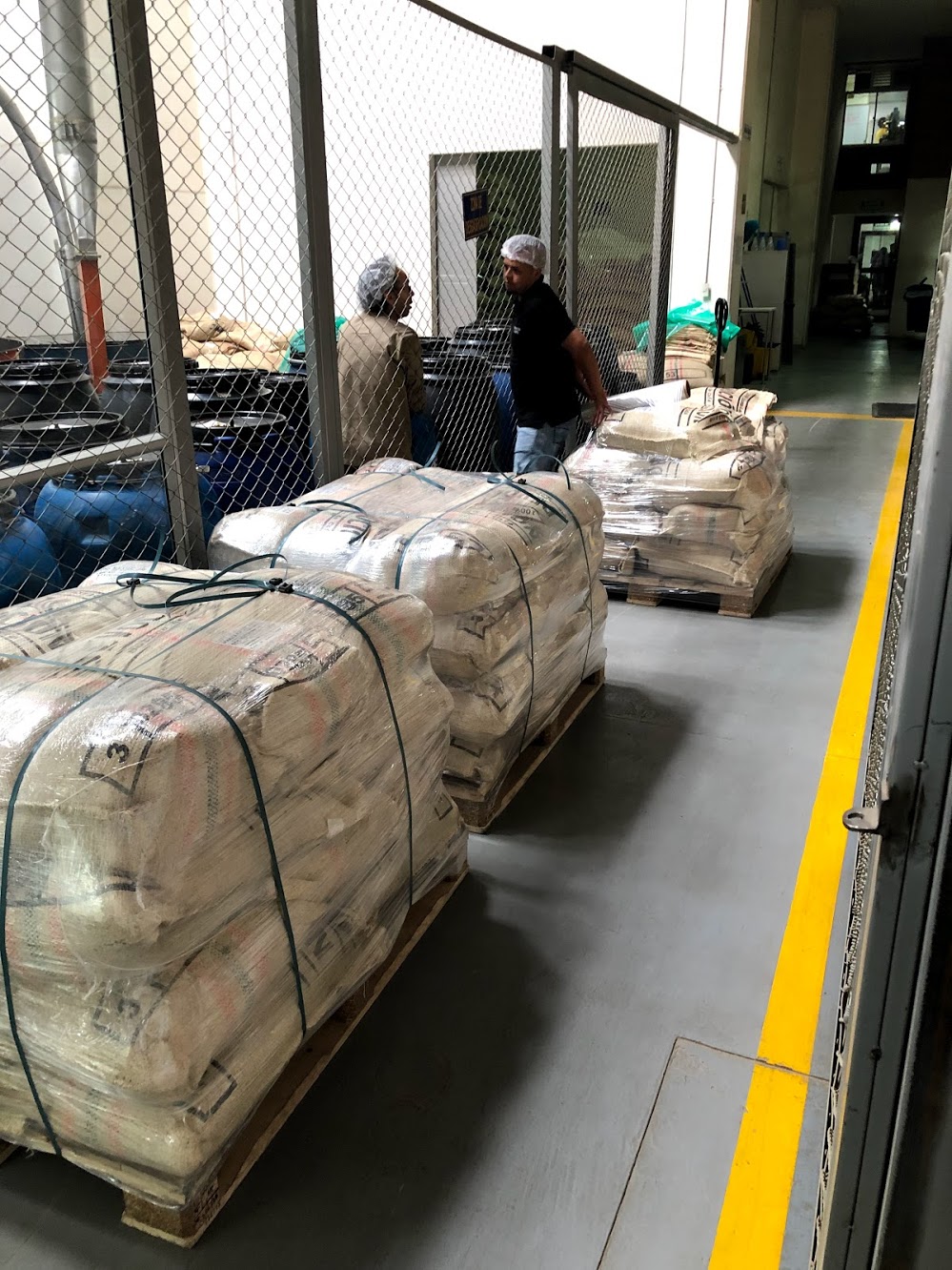
Devocion’s whole schtick is “farm to table” coffee precisely because they dry mill it themselves. The parchment essentially functions as a protective coating for green beans, so once they’re out of the parchment the green bean is exposed to the atmosphere. Devocion is able to serve coffee “from green to cup in 15 days,” which is practically unheard of in the States (but is about on par with most specialty places in Colombia, lol). To achieve this, after milling their coffee they air freight it overnight on Fedex on pallets. I’ve never heard of any other importing company doing this besides the World Coffee Roasting Championships, which is pretty cool!
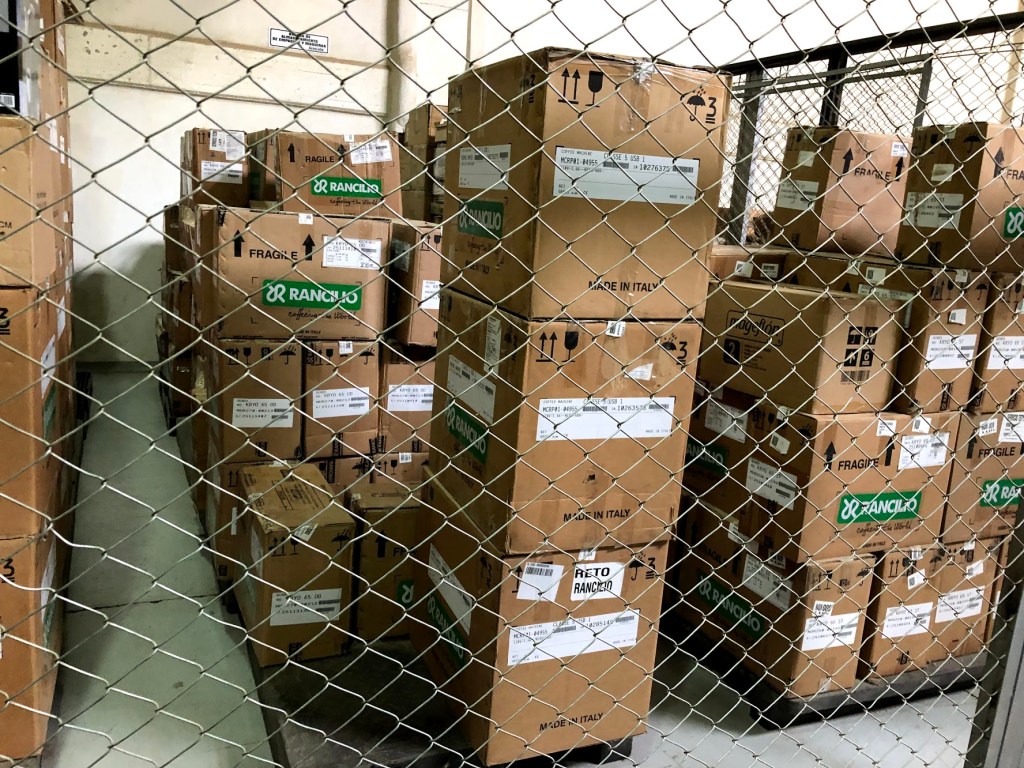
Devocion’s plant also has an enormous roaster, a packaging station, and a ton of storage for espresso machines, which they wholesale in Colombia.
An overview of the production facility. You can see the giant roaster, along with the bagging station in the back.
The parchment coffee makes its way to the dry mill, where it’s processed.
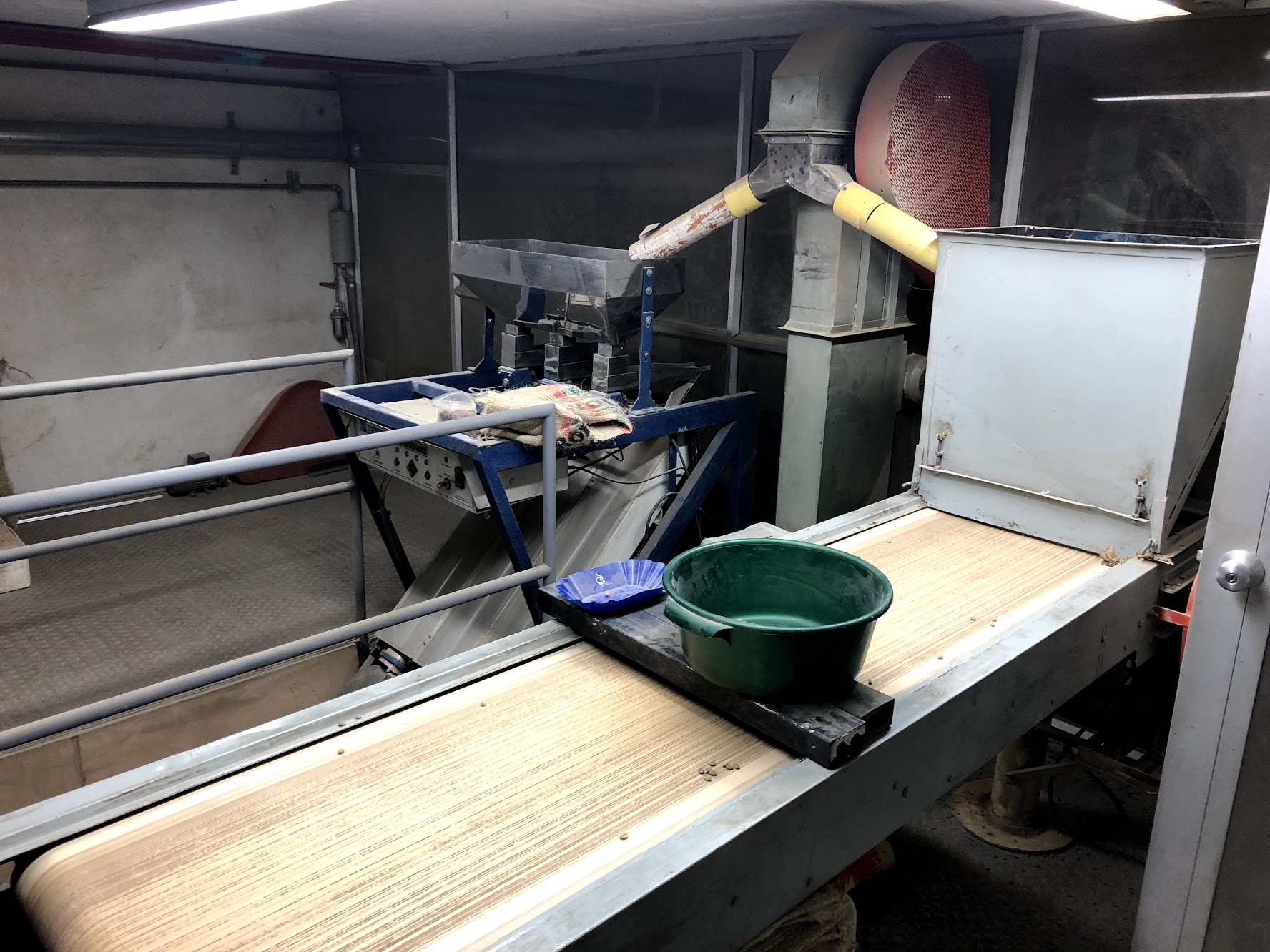
Here is Devocion’s sorting station. They have both a manual sorting conveyer belt and an optical sorting machine (left). One of the workers at Devocion told me that humans sort it better than the machine.
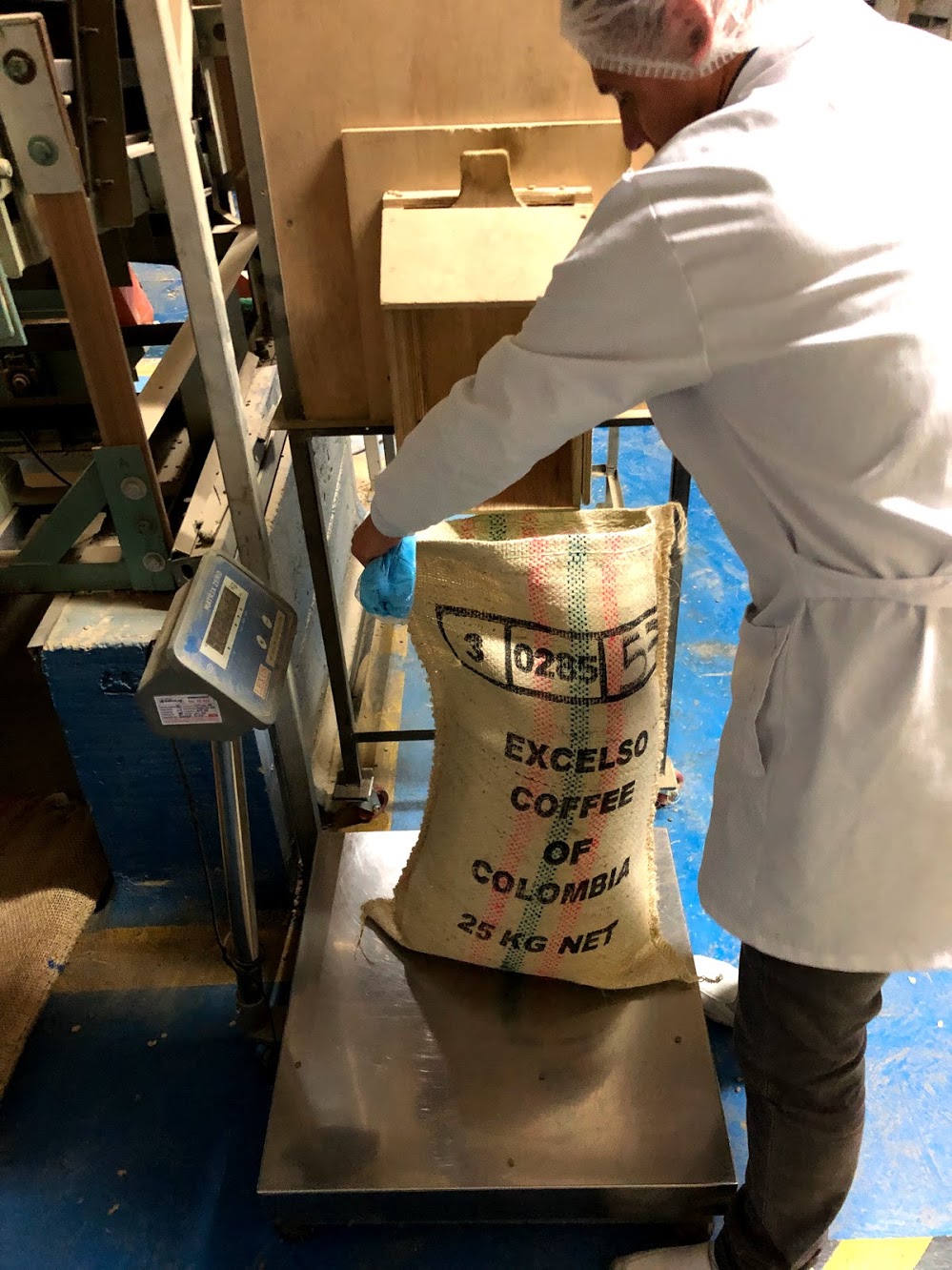
After sorting, the coffee is bagged into jute sacks. If it’s getting prepped for export, the inside of the jute is lined with airtight
Here are palettes of Devocion coffee getting ready to go to Brooklyn! I fondly recall cutting these open and laying them out.
The coffee that isn’t getting exported gets roasted on site in this mammoth roaster.
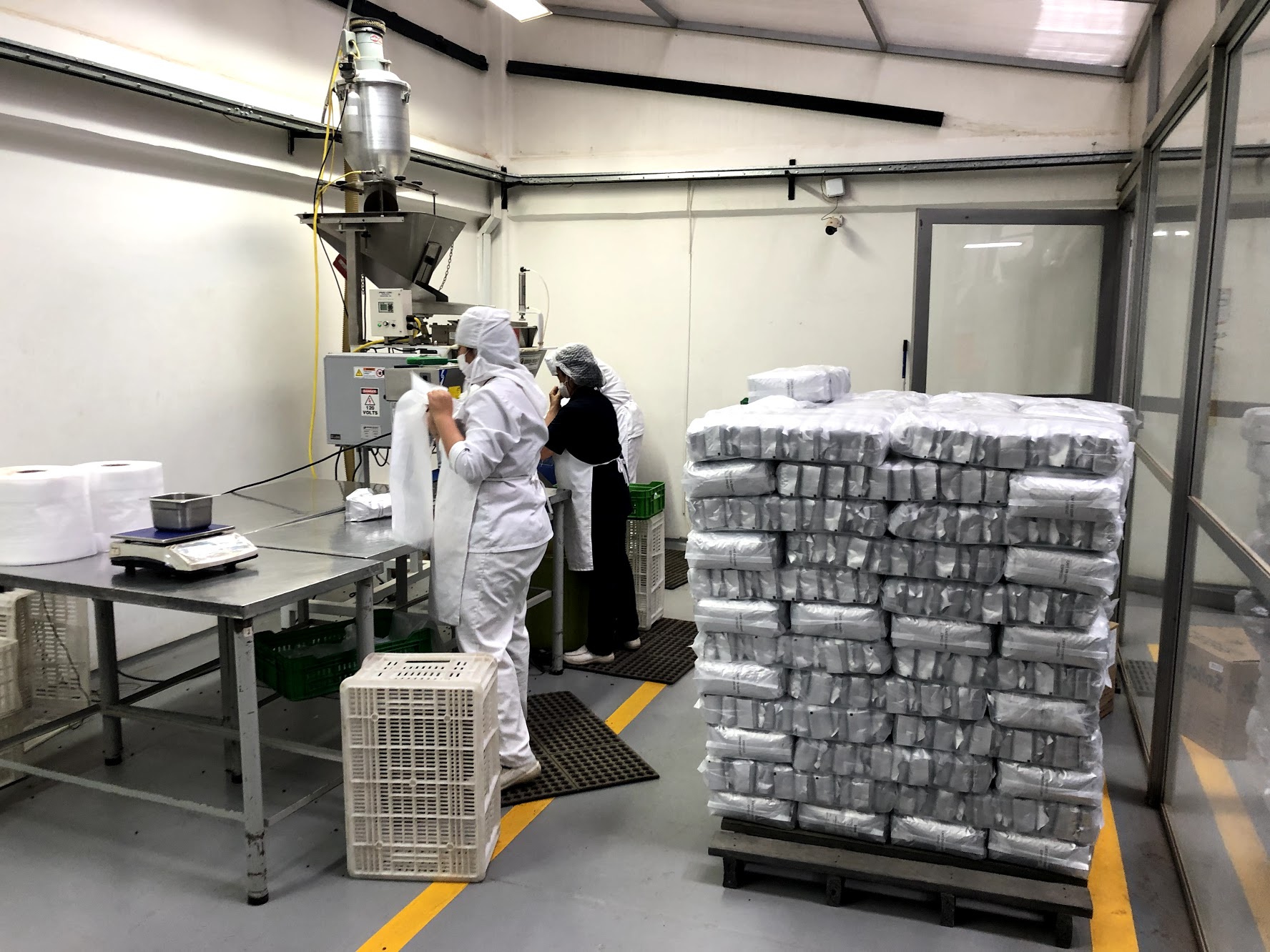
Roasted coffee is then bagged and packaged to get distributed to wholesale partners.
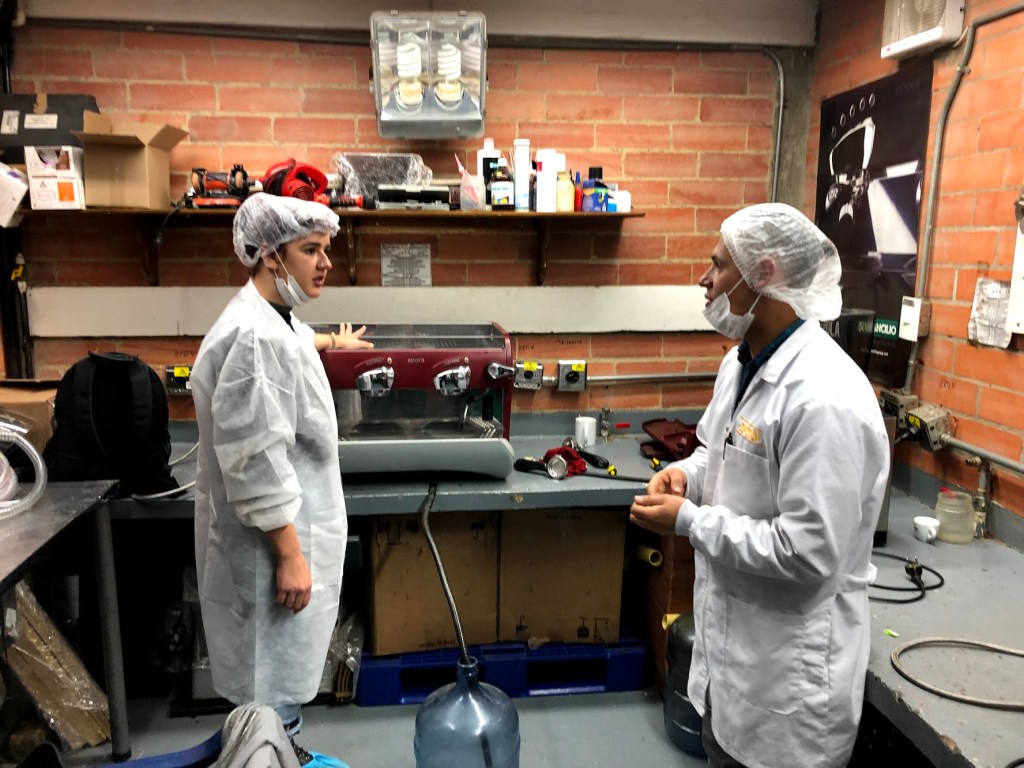
Devocion’s plant also has a couple other cool parts, like an espresso machine repair shop, an enormous stock of wholesale coffee equipment, and, of course, an impressive quality lab.
Fun espresso repair shop!
An enormous amount of wholesale parts and equipment!
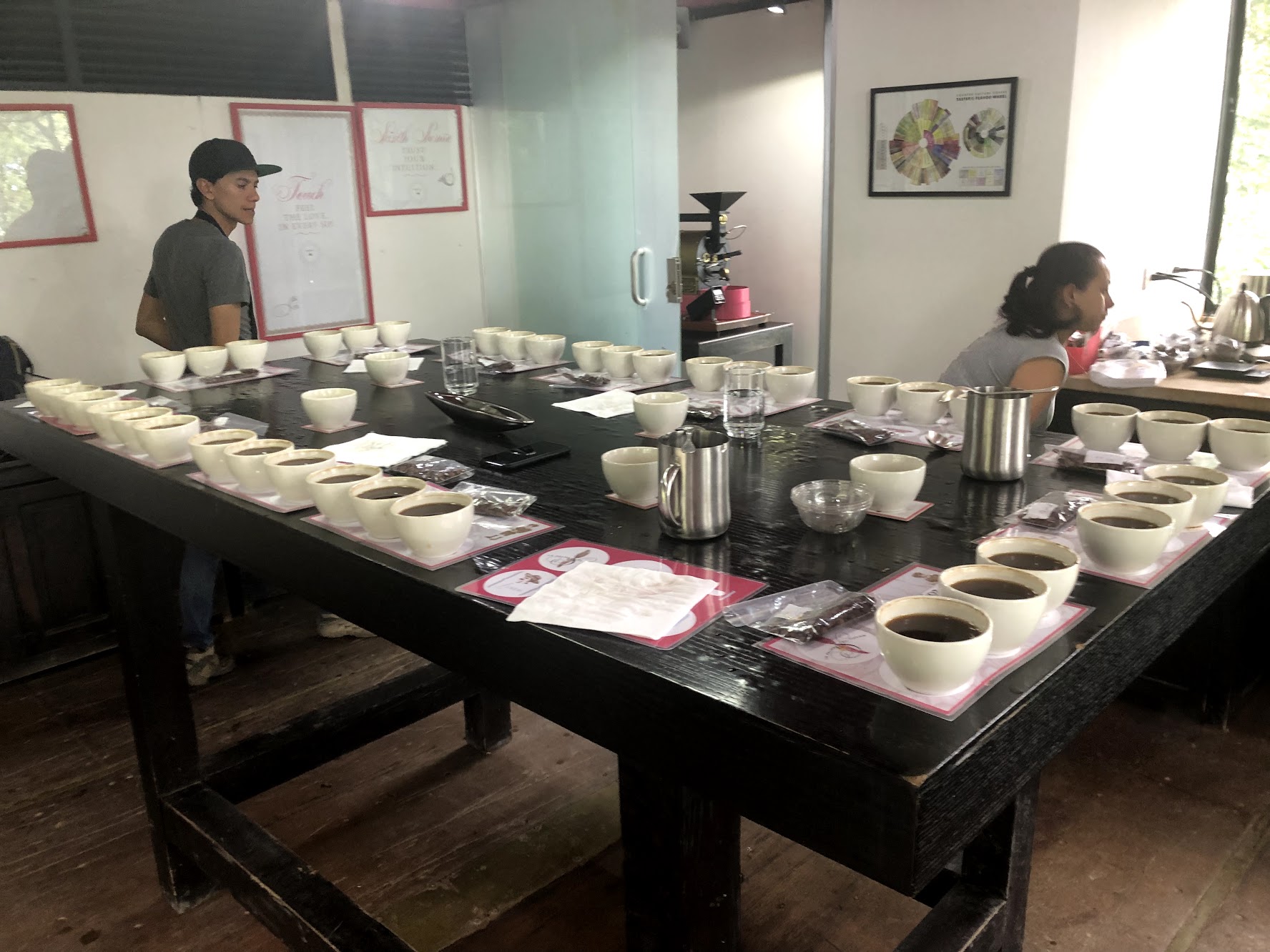
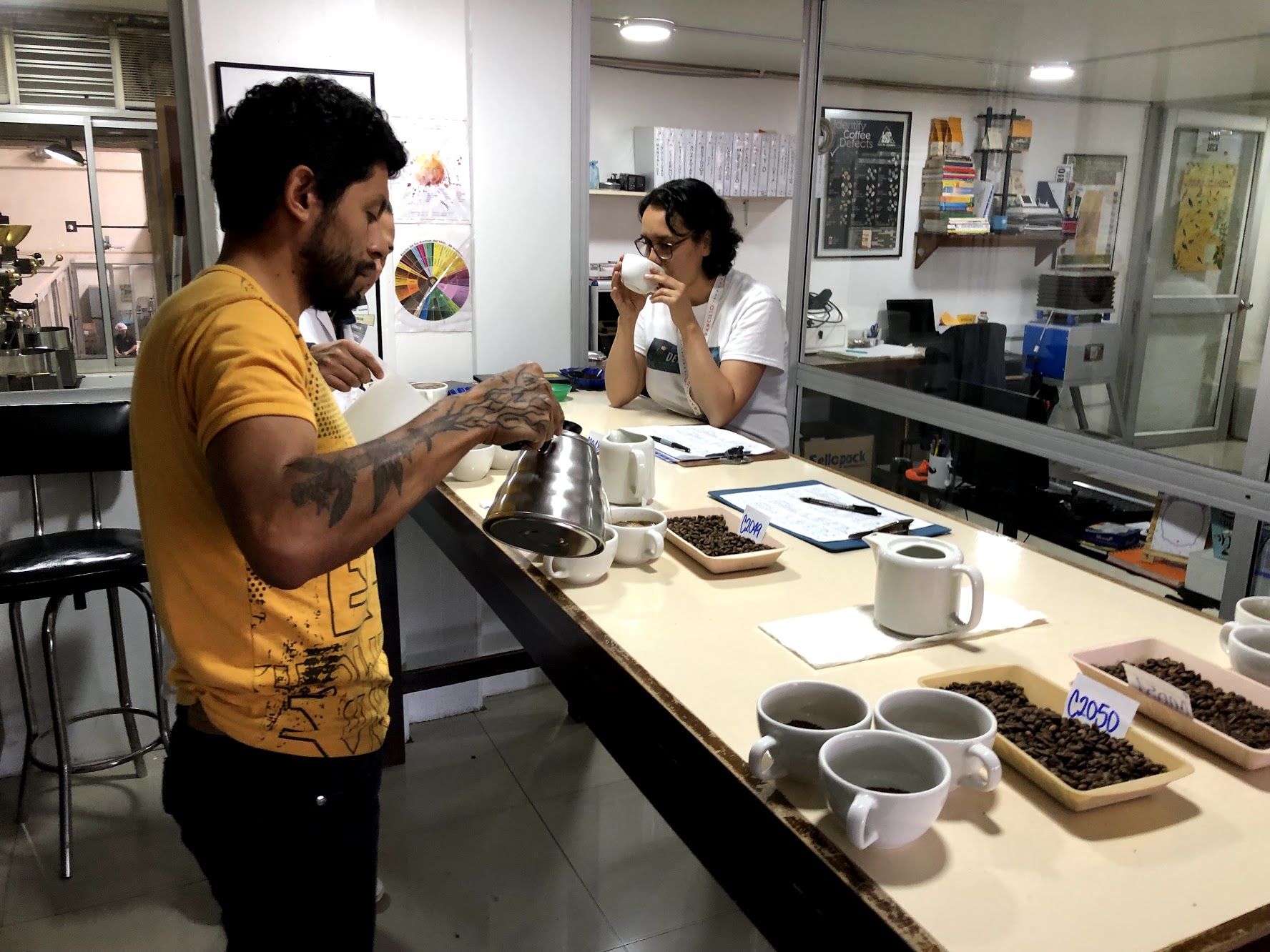
I got super lucky and they were cupping incoming coffees when I was there, and I got to partake in the cupping!
They all knew that I just finished my Q Grader course and were super impressed by it, and I think also happy to have me there. I felt really lucky to get to cup with them, but I also felt like I could actually be helpful! We went through the whole cupping as normal, and I filled out my thoughts on the 5 samples on an SCA form. My scores were pretty closely in line with the group’s consensus with some deviations that I was confident in justifying.
We went around saying scores and flavor notes for each coffee, and it’s always a blast to have everyone agree with your flavor notes. In general, we agreed on the caliber of the different coffees, although my favorite cup – I scored it 85 and it had a super impressive caramel sweetness to me – was not everyone else’s favorite. We all agreed that the 4th sample (C2050 in that picture) was awful and full of defects. The other cuppers just wrote a big X on their scoresheet and said “DO NOT BUY” next to it, which was new to me! I felt obligated to score it properly and subtract the relevant defect points, but I guess it’s probably much nicer to not drink the really bad coffee if you’re not gonna buy it anyways.
After the cupping, Julia and I talked a bit more about what Devocion is up to and their plans. It was super fun to see the company growing and progressing from the Colombian side, as I’ve only ever seen it from NYC.
All in all, I had a wonderful time at Devocion. Not only did I learn a lot about the coffee buying and milling process, production roasting on a huge scale, and supply chain management for a company growing as fast as Devocion, but I really felt like I was able to contribute at the cupping table. It was so fun to feel confident with my cupping spoon in hand and scoresheet filled out, and feel like I had something to say.
After Devocion, I went back to central Bogotá to get ready to go to La Palma. I left for La Palma this afternoon, and got here after a pretty bounce 3-hour drive. La Palma is absolutely incredible, and I am so excited to tell you all about it.
Have a great rest of your weekend, and definitely check out the post tomorrow – La Palma is crazy!
Hey everyone, the WiFi here at La Palma is down so I won’t be able to post tonight. I’ve been working on a post, though, so I should be able to have 2 for tomorrow! I figured I would still post anyways to let you (mom/Anna) know that I’m alive and everything.














 Alex's Coffee Adventure