Emerson tells us to “always do what you are afraid to do.” Thanks to the Dale family, I spent eight weeks very far outside of my comfort zone immersing myself in the world of coffee production. With no Spanish, little professional coffee tasting experience, and just the Whatsapp number of a guy who runs a coffee farm, I went off to Colombia. What I learned there has certainly changed the direction of my future.
Sunset on the cupping lab, and the summer
And what an adventure it was! The stories I gathered, I’ll tell for the rest of my life; the knowledge I gleaned I’ll carry throughout my career, and the coffee I brought back is the utmost privilege to enjoy.
I spent my last week in Bogotá traveling the city (read: drinking coffee) and thinking about what’s next. In that time, I reconnected with Andrew Hetzel, who is largely responsible for setting me up for the summer, and a few other valuable connections in the industry, to talk about the coffee industry as a whole. This time, I approached learning from these experts from a new perspective, asking not about the function of the industry, but rather its challenges and its future.
It’s clear from these discussions and more reading that I’ve done that there’s really one central problem: the coffee price crisis. I wrote earlier about how the C price has collapsed, and has been virtually stagnant since 1970 (adjusting for inflation, it’s decreased significantly). 24 million coffee farmers around the world rely on the a fair price to feed their families and live their lives, yet a single good Brazilian season can cut their annual income in half. (Brazil is responsible for about half of global production.) Even more damning to me were the stories of how profitable coffee used to be for Colombian farmers. Miguel’s grandfather’s family lived comfortably as coffee farmers in the lowlands of Quindio. This area is almost entirely devoid of coffee trees now, having been replaced by pasture for cows, plantains, or other commercial development.
Where to go From Here
After getting Q certified and learning the intimate details of coffee production, I can genuinely say that I have professional qualifications in the industry. My problem now is in being a bit overwhelmed by all of the options I have before me, unsure of what future I might embrace. It’s clear to me that I have to use the resources I have to help others, and there are millions of coffee producers across the globe entirely at the whims of macroeconomic market forces.
One of the coffee podcasts I listened to (Ric Rhinehart’s speech at the Re:Co symposium this year) had a line that left an indelible impression on me, as the speaker talked about what commodity traders’ view on the price crisis can be: “the best cure for low pries is low prices.” The implication is that as coffee prices go down and farmers abandon coffee farms, a more limited supply will drive prices up in a natural market cycle. The obvious problem with this perspective is that it is entirely devoid of humanity, in that the human cost of “farmers abandoning their farms” is several years without their only source of income for millions of people.
So, price. That’s one idea. I could try to learn more about the industry’s response to the price crisis, as more and more influential groups devote resources to it.
At the same time, I’m halfway through a physics degree at Princeton with a certificate in sustainable energy – hopefully researching solar panels or battery tech. That’s a cool idea, and I’m really excited to keep studying it, and there are lots of important jobs in that area as well!
In thinking about my future, I think it is helpful to think about branches nested from a search tree. In that case, there are two master branches that are increasingly clear: working in coffee, or working in renewable energy. Before you ask – yes, there is probably some cool way to combine them from a sustainability perspective, and who knows, this could be cool too. But what’s most exciting is how many sub-branches are nested in each career path because of the rapid pace of development and growth of both industries.
I know that I don’t just want to open a fancy cafe. First of all, I kind of have already done this at the Princeton Coffee Club. Second of all, after seeing how little of the cost of a coffee trickles back down to producers, selling expensive coffee kind of rubs me the wrong way. Of course, not every cafe is bad – in fact, many of the expensive specialty ones are the good ones that pay farmers fair prices – but there needs to be some bigger change than opening another “woke” coffee shop with paper straws.
For now, I have another exciting semester at Princeton coming up with great physics classes and a fun coffee shop to run. I’ll have lots of chances to make lots of choices, and I will do so with a newfound understanding of the challenges of the coffee industry in a global marketplace.
Signing off for now – I may post here from time to time about coffee things that I learned. Thank you so much for following along, I really hope you enjoyed these updates.
Well, I’m no longer a coffee producer. On Sunday, I finished my 5-week stint of learning about coffee production hands-on at El Fénix and returned to Bogotá for a few days before coming home.
What an incredible time! I will forever treasure the singular, seriously in-depth experience that was working on a coffee farm. And I will take away from it innumerable life lessons about the value of hard work and the persons responsible for a global supply chain. In the first draft of my application for the Dale grant this summer, I wrote of the hundreds of hands that coffee passes through before I get to drink it. For at least a few beans, my hands were among those at every stage of the process.
So far, I’ve written this blog chronologically from my perspective. For a change, and a bit of a compendium, I’ll write the rest of this post in the chronological perspective of coffee – specifically, one coffee that I worked very hard on this summer. (In the coming story, the beans that I harvested were nursed several years ago and planted about twenty months ago, but everything from the harvesting stage forward actually happened as described.)
The Saga of the Pink Bourbon
Here, I’ll tell the full story of a cup of coffee that I made, (bean to) bean to cup.
The Chapolas
The first stage in growing coffee is planting it! The first stage of planting, of course, is getting the seeds – something Miguel thankfully took care of. After receiving the dried coffee (in parchment), you plant it in a nursery for maturation. The seeds first grow in a nursery, which is essentially a large bed of fertile soil for the seeds to sprout in. Unfortunately, the only picture I have of a nursery is the one that Miguel’s dogs broke, but I’ll include one of a typical nursery as well:
You harvest the sprouted seeds from the nursery to transplant into bags, at which point the chapolas turn into colinos, or seedlings.
At this stage, it’s crucial to make sure that the soil for the colinos is nutrient-rich, free of pests, and soft. Make an indentation in the bag of soil roughly 10 cm deep and 2-3 cm in diameter for the chapola, and place the chapola in the hole. Make sure that the main root of the chapola is straight and does not bend against the bottom of the hole – if it does, you can break off the tip of the root or make the hole a little deeper.
After about 6 months of maturation, including frequent watering, the colinos are ready to plant and turn into genuine coffee trees.
Coffee Plants
Planting the coffee tree is perhaps the most important step in its lifespan. In order to ensure a long and healthy life, it’s important to first plot the layout carefully. This will help make sure that each tree has sufficient room to grow. An even layout will also be crucial for harvesters and pickers, as regularly spaced trees with enough space to walk between greatly improves picking efficiency.
After laying out the plot, the colinos are heavily watered and brought individually to each hole to plant. The holes should be about 30cm deep and 20cm square. Gently add fertilizers (such as micronutrients or calcium) and micro-organisms to the hole before planting to help the root system accept the new soil. When planting, first clear the ground surrounding the hole to make it flat and clean of grass. Then, delicately remove the bag from the colino to try to keep the cylinder of dirt (and the root system of the plant) intact. Carefully lower the exposed and moist root system into the center of the hole, level on the bottom. Make sure the tree is standing straight up, then begin to fill the hole with surrounding dirt. Press the dirt into the crevices between the hole and the colino such that the tree cannot wiggle in the hole. Finally, re-flatten the dirt surrounding the newly planted tree and remove the plastic bag to properly dispose of it.
Lowering the colino into the fertilized and prepared holeThe first tree that I planted! It’s straight up and there is a good perimeter of flat dirt surrounding it.A newly laid out plot of trees demonstrates good farm management in its clearly delineated, evenly spaced rows.Once mature, the planted rows are easy to traverse and harvest!
Maturation
Between planting and harvesting is the most boring part of coffee production. It usually takes at least two years from planting before the plant’s first harvest, but the plant does not reach full maturity (and full production) until about 5 years after planting. One of the most important things to do in this in-between time is making sure the plants have enough nutrients through fertilization, either with organic compost or chemically fixed fertilizers.
While there are pros to both, generating enough compost to use only organic fertilizer is incredibly costly and logistically challenging. Miguel estimates that it takes 12kg of compost to fertilize a tree, while it only takes about 100 grams of chemically fixed fertilizer. (Imagine carrying 12kg of dirt to each of the one or two thousand trees per hectare!) Furthermore, chemically fixed fertilizers often have micronutrients like zinc, boron, and magnesium that are hard to get in compost.
Adding fertilizer to trees is one of the easier tasks on the farm, as you can quickly scoop it with your hand from a bucket to spread around.
When ready to produce fruit, the tree creates nodules along its branches which first flower before becoming cherries. Coffee blossoms are one of the most beautiful smells on earth, and I wish you could smell them as I have for the summer.
In about 6 months, these flowers become green cherries:
Finally, more than 3 years since planting in the nursery, the cherries are ready to harvest:
This is where my saga of the Pink Bourbon really begins, as I didn’t have much of a hand in planting or growing these trees. But from here on out, I was responsible for every step of production for the very small batch (femto-lot?) I ended up with. (This project was one that I wanted to say I completed in its entirety – having full ownership of harvesting, processing, roasting, and serving one coffee – but I did many other projects throughout my time on the farm. Not to worry, I did not spend 5 weeks on this tiny batch of coffee!)
Harvesting coffee cherries seems relatively straightforward: pick the ripe cherries, one might think! Unfortunately, labor incentives are often aligned such that pickers are paid by the kilogram, as this is more efficient for the farm owner, which rewards volume over quality. As such, pickers will fill buckets as quickly as they can with unripe cherries mixed in with ripe ones, resulting in poor cup quality. In fact, hand-picking in and of itself is considered crucial step in the quality control process, as machine picking, while extremely efficient, is unable to select for ripeness. El Fénix pays by the day (and quite well), which allows pickers to be more discerning in selecting for ripeness.
I spent a day alone in the Pink Bourbon lots harvesting my own batch of coffee.
The lush Pink Bourbon lots – not fully ripe yet, but enough cherries for one person to come through and pick
At the end of the day, the sacks of freshly picked cherries are dropped off at the wet mill for processing. In my opinion, this is where the real fun begins.
Trust the Process
For this small batch of Pink Bourbon, I opted for the washed process with a rather short, 16-hour anaerobic fermentation time. The cherries themselves were not fermented (or at least not on purpose – some fermentation naturally happens in the bucket as you collect cherries throughout the day); instead, I fermented the parchment coffee. Before fermentation and processing can begin in earnest, though, it’s important to conduct a first round of quality control by submerging the cherries in water and removing the floaters.
Bourbon Rosado isn’t really Rosado, but “pink sells better than orange.” This is what I ended up with after a day of picking, about 4 kg of fresh cherry.The washed cherries after removing the floaters
From here, I pulped the coffee. Before and after pulping, you must thoroughly clean the pulping machine to remove fermented mucilage and other contaminates.
Pulping the fresh and beautiful Pink Bourbon
The pulper separates the bean from the cherry such that you’re left with one bucket of beans covered in the sticky mucilage of the cherry and another bucket of pulped cherry skins. At this stage, you can remove the cherry skins and dry them separately to make cascara. Pink Bourbon makes excellent cascara due to the very high sugar content in the cherry. I think it’s best to directly move the cascara to a mechanical drying machine that can immediately lock in the flavor, rather than allowing the cherry skins to dry slowly in a greenhouse or on a patio.
Drying freshly pulped cherry for cascara
Next, I was left with my bucket of parchment coffee.
There are a a number of ways to conduct anaerobic fermentation, the simplest being laying some plastic on top of a bucket to seal it from the air. For this batch, I sealed the parchment inside of a GrainPro bag and submerged it in water to help maintain a cool temperature, which slows down fermentation.
The pictured samples are significantly larger than my Pink Bourbon microlot, and in this case were fermented anaerobically in the cherry rather than in parchment. The anaerobic fermentation itself was conducted in the same manner.
After 16 hours of anaerobic and cooled fermentation I opened the bag. In coffee fermentation, the simplest way to evaluate the stage and quality of fermentation is through smell. (The most common advanced method is through pH, which is a very helpful indicator. Like the vast majority of farms, we didn’t have a pH meter.) There are a number of prominent aromas that the coffee fermentation gives off, and anaerobic fermentation allows you the perfect opportunity to capture all of them when opening the bag. The most common smells that I smelled were of malic acid and acetic acid, the latter usually indicating an extended fermentation that had gone on for a bit too long. I also frequently noticed fruity notes, especially of bananas. In fact, after the bananas we harvested began to rot and were devoured by fruit flies, I noted how similar that smell was to anaerobic fermentation of pink bourbon!
The last stage of processing before drying is washing the coffee. There are a number of complicated ways to wash coffee, but the most common is by simply stirring it in a bucket of fresh water.
At this stage, we once again remove the floating parchment. The beans that float are likely either from overripe cherries or have been damaged by insects, and taste very poor.
The coffee is fully washed once it no longer feels sticky or slimy, and instead has the smooth, somewhat grainy texture of river stones. They also make the sound of rubbing stones together once the mucilage has all been removed. Because of my short and cooled fermentation of the pink bourbon, it took me significantly longer to wash the remaining mucilage off, as it had not fully broken down.
After washing, the coffee is ready to dry. I dried my pink bourbon on a raised bed outside of the greenhouse in direct sunlight.
The near section of parchment is the pink bourbon – that’s all I ended up with!
You may also manually remove some of the cherry skins that made it into the dried coffee. In the SCA’s green coffee defect categorization, a single cherry pod disqualifies a coffee from earning the specialty grade. However, the dry mill frequently removes such defects automatically, so it isn’t a critical step.
The wet mill after finishing processing – everything is cleaned thoroughly.
Knowing when the coffee has finished drying can be done in one of two ways: through a grain moisture content measuring device, or intuitively by hand. The moisture measurement devices are frequently found at mills and purchasing locations, to make sure that coffee coming in is within the desired humidity range of 10-12%. However, few farms have access to such equipment; thus, producers have a few methods to tell if the coffee is dry by hand.
Measuring moisture content of samples at Raw Material’s Armenia office – the measurement device is on the right in this picture
The simplest is by visual inspection. After removing the parchment, dried coffee will have a light green color with a papery, slightly peeling layer of silver skin. Coffee that is not yet fully dry will appear darker in color, slightly swollen, and with a less visible silver skin.
My preferred method was by biting it! Dry coffee is extremely hard and will hurt your teeth if you try to eat it. Coffee at above 15% humidity, though, will be fairly easy to bite all the way through.
Pergamino
After finished drying, the coffee is officially en pergamino and ready to be sold at the local market. All coffee selling in Colombia happens in pergamino, or parchment, whereas other countries have different systems. In east Africa, for example, producers will often bring their coffee to washing stations (wet mills) where it is sold in the cherry.
Coffee is transported in 70kg jute bags, and specialty coffee is almost lined with a GrainPro liner to stabilize humidity and prevent the coffee from tasting like jute. In parchment, the bags only weigh about 40kg, because the parchment skin takes up a lot of space and is mostly air.
The coffee is then brought in to a dry mill, which not only removes the parchment but often also has an integrated QC system like a color sorter to remove defective coffee or a staff of highly trained hand-pickers who manually remove defects.
My pink bourbon didn’t quite fill a 70kg GrainPro, though. Instead, I put it in a plastic shopping bag to bring to Armenia and mill on a micro-mill.
#12 – that’s me!The micro mill that I used for the pink bourbonThe milled pink bourbon, still warm from friction in the micro mill
Because my coffee wasn’t quite enough to pass through a color sorter, I hand sorted it to remove any defects. My Q training came in handy!
After about 4 weeks of harvesting, processing, and drying, my coffee was “finished,” or ready for export. I siphoned off a small amount to sample roast and packaged the rest in a vacuum sealed bag to bring home!
My baby!
And I finally have about 600 grams of coffee that I am mostly responsible for.
So How Was It?
The burning question: is it any good? Unfortunately, I don’t know, because we messed up the roast! Because I only wanted to roast a very small batch, it roasted much faster than expected and ended up significantly more developed than we would’ve liked. Or, to put it bluntly, we fucking burnt it!
Inspecting the disaster. Hidden from this photograph is me crying “Miguel, we ruined it”
Dutifully, we still cupped the coffee next day to evaluate its merits.
My conclusion is here:
Unscored, with a strong note of “roast defect :(.”
Luckily, I still have the 600 grams to bring home. The next part of the process is exporting, which in this case will happen in my carry-on bag instead of a 40ft shipping container. Hopefully it goes smoothly!
The coffee tasted burnt, but I still liked it due to my extreme bias.
And thus concludes the Saga of the Pink Bourbon. My goal was to use this small batch of coffee to demonstrate just how much I’ve learned along the way – that now I can really make coffee.
I hope I get to share the coffee with you back in the states, although I have about 20 different samples that I’m bringing home in all:
Probably one of the sketchier bags to pass through airport security; we’ll see what the dogs think
For now, I’m relaxing in Bogotá for the next few days reflecting on my summer. I’m also working on reconnecting with folks in the industry I’ve met to see where I go from here.
Thanks for joining my journey as it nears its end. This isn’t the last post I’ll make here, but I think it’s a nice conclusion, so if you’re bored at this point feel free to tune out.
This is it! On Sunday the 28th, I leave Quindio for Bogotá, where I’ll be for a few days before heading home. In the four and a half weeks so far, I’ve learned more than I can hope to write down here, so I will instead use this post to tell you about some long overdue updates. Between the weekend in Filandia and Salento and my experiments’ results, I haven’t written as much about the day-to-day, which has stayed interesting!
The Last Piece of the Puzzle
So far, I’ve written about processing coffee at almost every single stage, from the harvest to floating and milling at the wet mill to fermentation, washing, and drying. I’ve also told you a bit about cupping. That leaves one big piece left: the dry mill.
The dry mill is one of the most important steps of the coffee supply chain, as it often acts as both an aggregator for producers and a crucial step in quality control. In general, dry mills tend to be the largest step up in terms of volume in the supply chain thus far; they’re often run by third parties or exporters who handle a lot of coffee. Exploring the dry mills is when you start to get a sense of the very large scale of coffee production in Colombia. Carrera 18, which is the main highway that runs through Armenia, is host to a number of these huge facilities:
“Trilladora” means dry mill; the four in red plus Almacafe and one more not listed line this road.
Miguel works with a number of dry mills, both for Raw Material and El Fénix. Last week, we got to visit the dry mill that mills El Fénix’s coffee, which is a specialized and modular operation run by Miguel’s friend from University.
Here you can see a big chunk of the milling equipment, including the thresher (box in the center-right with the yellow tube) and the gravity sorter (left).
This dry mill was efficient and quality-focused – it was easy to see why it’s the choice for many specialty producers in the region. As Miguel explained, making industrial equipment modular is a boon for specialty production, as it allows for much smaller batches and an ability to pinpoint issues in the production process. This is the same philosophy behind the wet mill at El Fénix: its modularity allows for greater experimentation and more traceability throughout processing.
This is an optical color sorter at the dry mill. It pushes single-file streams of coffee beans through a pneumatic tube, where a camera can identify individually defective beans. The defected beans are then shot with a burst of air off to the side, leaving the clean ones to pass through.
OK, I lied. There is, of course, one more crucial piece of the puzzle: roasting. Roasting is almost never done by coffee producers themselves, but Miguel has a hand in almost everything. Occasionally, Miguel is able to sell unsold coffee from Raw Material domestically in Colombia. What’s funny is that the margins on roasted coffee are so good that the company actually makes more money (per pound) from selling poorer quality coffee roasted in Colombia than it does exporting its specialty lots!
On Monday, we toured the roasting facility that Miguel worked with. It was cool to see a kind of all-in-one facility that contained a very small-scale dry mill, a sorting station, a roasting lab, and a cupping lab. They even had a packaging station for coffee “pillows,” or pre-packaged grounds to make pour-overs! Check it out:
Craft Beverages
In addition to being a specialty coffee guru, Miguel runs a craft brewery on the side, because why not? We got to stop by the other day, and I learned a bit about how beer is made. It certainly doesn’t smell very good, nor is the brewery a pleasant humidity and temperature, but their beer is (presumably? Princeton regulations may apply) delicious.
Barley arrives in bags
After grinding, the barley is put right away to boil
The beverage is fermented in a climate-controlled environment
Finally, it’s bottled and ready to go. You can find Continental Cerveceria all over Quindio!
Coffee Coffee Coffee
In between the day trips, we’ve been doing lots of cuppings. By my count, I’ve tasted about 60 coffees over my time here at the Fénix, and I definitely feel more confident in my cupping abilities with all of the practice.
Some scenes from the Fénix cupping lab. It gets a lot of good use, and we love tasting the coffee while overlooking that incredible view!
More Experiments, More Coffees
There was a slight uptick in picking about two weeks ago which gave us some new coffee to experiment. Miguel and I tried a natural process with two coffees that came in: the Pink Bourbon and the Gesha. (In other news, you may have just heard that a natural Gesha sold for $1,029per pound a few days ago, so we figured we’d give the whole natural Gesha thing a shot.)
Due to some fortunate weather consisting of intense and dry sunlight, these experiments dried very quickly and we were able to mill them and roast them on Monday to cup. We did the first cupping today, but I’m weary of our initial results after the discrepancy between day 1 and day 2 cuppings last time. Check out the very cool progression of the drying process for this natural that I captured:
The first two pictures were taken a mere 6 hours apart, while the next were about 1-per-day. The moisture content of the cherries would often boost back up after a humid nightfall. This wasn’t always a problem, but occasionally lead to small white spots of mold forming on the outside of the cherry skin. While still fully safe to consume, the mold hinders flavor development in the drying process.
The preliminary results from the cupping indicate that the coffees are quite good, but not groundbreaking. We attempted an extended fermentation on the natural Pink Bourbon, but as of today we didn’t find any crazy flavor notes in the coffee. That being said, it exhibited a complex sweetness and great cup cleanliness for a naturally processed coffee.
A Water Excursion
Part of the fun of living on a farm is how imminently aware you are of the basic human needs of food, water, and shelter. Many of the farmhouses down the road from us are simply brick walls with corrugated metal roofs and little more, which makes me feel very lucky to live in the new guest residence at El Fénix. We are able to grow a portion of our food in the veggie garden in the front yard of the house, and veggies always taste better when you pick them yourself.
The other day, we had a problem with our third necessity: water. The water stopped coming out of the faucets after an especially heavy rainfall, so Miguel told me to put on my rain boots and let’s go for a walk. We had to fix the water!
While I’m not a stranger to faulty water systems (looking at you, Dad), I wasn’t quite prepared for our excursion to fix the farm’s water line. We hiked out of the farm and walked up the road a bit until we got to a stream, at which point we followed a small path near the stream for a bit. Next to the path, I noticed two hoses running in the direction of the farm – this was our water supply. Eventually, we approached the crucial centerpiece: our water supply. Here it is:
A bucket! Yes, to receive water on the farm, we’ve placed a small plastic bucket underneath a rock near the stream. The rock helps protect it from rainfall above, and a small gutter running through some cracks in the stream diverts water into the bucket. The lid of the bucket is even a bit more… unique:
Two layers of mesh, the gutter, and a lid (held down by a rock) round out the water system.
We flushed the bucket out a few times to get rid of any built up dirt, then propped up the exiting waterway, which had been help up by a split piece of bamboo:
Good as new!
That seemed to do the trick. We followed the hoses back to the house, periodically checking their connection points to make sure they were clean. As we neared the house, we walked through the last piece of the jungle before the road, which had a number of coffee trees and other plant life. Two steps from the road, I reached out my hand to brace on a coffee tree by grabbing its trunk and – AAAAoooouch!!! – immediately felt a blinding pain coursing through my hand.
Uhoh. This was finally it: the dreaded gusano pollo.
Cheeky bugger
On my first day, Miguel had warned me to watch out for a big fluffy white caterpillar, because it stings. I had, for a few days, been very conscious of white bugs on the ground and wherever I saw them, but eventually forgot the advice. Finally, I was reminded of the warning as the pain shot through my hand, I yelped, and Miguel let out a knowing sigh. “Ah, shoot, it got you.”
The gusano pollo is a caterpillar covered in white bristles that sting in a similar fashion to a jellyfish. The sting is very painful, and lasts a few hours before it subsides. Wikipedia doesn’t mince words:
Yee-ouch
I put some hydrocortisone cream on it, ran it under warm water, and kind of just let it sting for a while, and I was fine. But it hurt a lot! If anything good came out of it, it was that Miguel assured me, “know you can say you are a real coffee farmer, because you have been stung by the gusano pollo.”
A few days later, another one turned up around the seedlings planting area, and a worker pointed it out to Miguel. Miguel made sure I came to see it, at which point the worker picked up the caterpillar and PROCEEDED TO PET IT!?!?!
Absolute insanity
Apparently if you go “with the grain” the stingers won’t get you, but doing this takes such a ridiculous amount of confidence (and carelessness) that I don’t quite think it’s for me. In any case, I’ve checked that off the list.
I’ll end on a happier note than the gusano pollo. There are a number of fruit trees around the farm, and my favorite is without a doubt the banana trees. Not only do they add a nice tropical vibe to the landscape, but they also produce the objectively best fruit. The other day, a tree was ripe for harvesting, and we got a literal bunch of bananas from it!
Unfortunately, if somewhat obviously, the bananas from the same bunch all ripen at the same rate. Bunches have over a hundred bananas on them, so you are often left in the predicament of having 100 ripe bananas for a 3-day window. Miguel and I delivered many of the bananas to his family members to avert this predicament, but saved enough for me to have my favorite snack in the world: a peanut butter banana.
If that doesn’t leave a good taste in your mouth, nothing will.
I’ll do my best to make the most of my last few days here. It’s 10 more days until I’m back stateside, so to all my friends and family: I absolutely cannot wait to see you and share my coffee!
In the meantime, I have some more coffee to process. See you soon!
This past weekend was my second-to-last in Quindio, so I spent it exploring some nearby coffee towns. I spent one night in Filandia and one in Salento; both are small coffee towns nestled into hills in northern Quindio, although Salento is better known.
Miguel dropped me off at the Filandia access road off the side of the highway Friday afternoon, and told me to wave down the next bus going to Filandia that I saw and hop on. So I did! The 20 minute ride cost $2,000 COP, which is about 60 cents USD.
The bus to Filandia – perfectly safe, if a little snug!
I arrived in Filandia and checked into my hostel, which is one of the better-known ones in the town and is also run by a family friend of Miguel and Alejandro’s. In Filandia, I opted to get a private room for about $20 instead of a bunk for $10, as I was looking to get a long night of sleep off the farm. The hostel and the room were welcoming and comfortable, and I really enjoyed my room!
A full sized bed! Fresh towels! Such luxuries
I spent Friday afternoon getting to know Filandia. The first stop was lunch at Helena Adentro, Alejandro’s restaurant. I soon learned that Helena Adentro is not just a local Colombian restaurant, but is in fact an internationally renowned eatery with “the best food in Colombia,” according to one travel blog I found. Impressive stuff! And the restaurant absolutely lived up to the hype:
Indeed, every crevice was as instagrammable as the reviews assured. The food was also spectacular – I started with fried pork and fresh cheese balls, at the recommendation of the waiter, then treated myself to a delicious smoked hummus and veggie bowl.
I walked off the huge lunch with my signature activity in every new place I visit: trying every coffee shop I can find. I usually start the process with as much research as I can do online – first a google maps search, then reading local travel blogs, then finding some coffee websites, then clicking through images and reviews on google to find out where my first stop will be. After I find one or two places I’m excited about, I head to them, have some coffee, and ask for more coffee recommendations. The process generally snowballs until I’ve had too much caffeine, which happened both Friday and Saturday. (Pro tip: bananas can help neutralize excessive caffeine exposure. Great for me, an avid banana lover)
I had some very nice coffee around town, although the best cups were from Azahar, a roaster whose flagship store I’d already visited in Bogotá.
How’s that for coffee with a view?
While the coffee at Cultivar Cafe (on the left with the crazy view) was the best, the most exciting moment of the tour was when I found a very familiar machine:
Hello, old friend!
The roaster at MOCAFE was the same old FZ-94 from way back in my days at Dalton Coffee Roasters, which was quite the surprise. I chatted in some limited spanish with the guy running the cafe there before having a nice cup of coffee.
After a cool dinner at a local Colombian-asian fusion place called TukTuk (the restaurant that Alejandro recommended to me after Helena), I walked around town some more and had a very long night’s sleep.
The next morning, I got up to see the view from the Filandia Mirador (which means lookout or viewpoint), but was thwarted for the first time in my life for arriving too early in the morning. I was hungry for breakfast so I didn’t stick around to wait for the mirador to open, but it looked cool from the bottom:
I’m sure the view would’ve been nice from up there!
Saturday, July 20th is Independence Day in Colombia, although the celebrations are a little less intense than our July 4th. Filandia had a fun parade, which also helped explain the marching bands practicing outside my window Friday night. I walked around to a number of the local artisanal shops and had some lunch before heading off to Salento. In all, Filandia was a beautiful quaint coffee town that I thoroughly enjoyed.
Salento, the Coffee Town
My next stop was Salento, a coffee town in the northeast part of the Quindio valley. Salento is well-known through travel guides and backpacking blogs as the quintessential Colombian coffee town. This notoriety brings with it pros and cons. On the one hand, the local economy has boomed and struggling coffee farmers have had unprecedented access to tourism money. On the other hand, the main streets are lined with cheap souvenir stores and almost every other building is a hostel or hotel.
Maybe this isn’t a totally fair take – I’ve been mostly living near Calarca, which has hardly a gringo in sight. In fact, Salento lives up to its hype as a culturally distinctive and picturesque town in the Colombian country side, replete with opportunities to learn about coffee and enjoy natural scenery.
Getting to Salento was my first adventure. Transportation between the towns is “easy,” at least by Colombian standards. There is a jeep that leaves every hour from the town square. And when I say “jeep,” I really mean it – the main method of inter-municipality transportation in the countryside is antique jeeps that can handle the potholes and dirt roads:
I didn’t get a good picture from the outside, but this is the dashboard of my jeep from Filandia to Salento. The fuel gauge is permanently stuck in the “empty” position, and there’s quite a bit of hotwiring going on underneath the steering wheel.
I got a seat in the back with eight others, but I was not as lucky the next day…
When I arrived in Salento, the first thing I did was, well, can you guess? Yes, more coffee. I found a small espresso bar near where my jeep dropped me off and got an Affogato, which is espresso with ice cream. Then I proceeded down the main street and stopped into three coffee shops that seemed good, two of which I’d read about beforehand. Amped up on coffee, I made my way back to the hostel, dropped my stuff off, and explored the town a bit.
Just like every single town in Colombia, Salento (and Filandia and Calarca, literally every town) is built around a Plaza de Bolivar, or a central town square. From this plaza a a few main streets branch off, and directly on the square is the church. This very standardized layout provides a helpful way to orient yourself and a good place to go to people-watch.
One of the first things I noticed were the horses that led tourists through town. While they are very charming to look at, they unfortunately covered most streets in very poor smelling poop. But alas, tourism must prevail.
The main thing to do in Salento is to hike the nearby Cocora valley, so I went to bed early again Saturday night in order to wake up early for my hike. The hostel sold me a packed lunch and lent me a pair of rainboots, and at 7:10AM I was on my way.
The Cocora Valley
Much like Salento (and again, anywhere), the only way to get to Cocora is on a jeep. I patiently queued in the town square for a jeep, but alas, I was the 10th person for the jeep and got stuck in a less than ideal spot. A standard Colombian jeep can seat about 13 people at its maximum: 8 squeeze in to the benches, two can fit up front with the driver, and one person – me! – stands on the back!
There’s my platform!
It’s not terribly unsafe, as the jeep hardly goes above 30mph and there are a lot of handholds at the top, but it’s definitely not your standard transportation method. The worst part for me were the bugs that kept flying into my face!
Finally we arrived at the Cocora valley. The cocora valley is a large nature reserve in the northeast corner of Quindio that’s nationally (and internationally) renowned for its natural beauty. After taking a jeep in, to see the Cocora valley you typically go on a hike of the full loop, which runs about 12.5km with 1,000 meters of elevation. It’s quite the hike, but it exposes you to some beautiful sights and offers many scenic stops.
There are four main sights to see on the hike: the Wax Palm Forest, Finca la Montaña, the Acaime Hummingbird Sanctuary, and the trout farm. I chose to go the counterclockwise route, and my first stop was the Wax Palm Forest. It was absolutely breathtaking.
Wax palms are the national tree of Colombia, and for good reason: they grow to be upwards of 200 feet tall, and in the Cocora valley they’re surrounded by grass, accentuating their height even more.
Each tree is about 20 horses tall!
The wax palm forest is so important to Colombia that it’s even on their $100 bill!
Next was a gradual hike up the mountain to Finca La Montaña, which marks the highest point on the hike. At 2,900 MASL, the air up there is quite thin, making it difficult to catch your breath. Luckily, there are a number of beautiful viewpoints to stop at and take in the view, which I made frequent use of.
After Finca la Montaña, the trail descends into a more humid rainforest. This area is one of the most renowned bird-watching destinations in the world, and descriptions of species dot the paths. The next stop on the hike makes ample use of their location by putting out several bowls of sugar to attract hummingbirds, and it works like a charm.
At any given moment, you could make out about 20 hummingbirds in your field of view. They would fly in, peck some water, then tag team out to make room for the next bird. I sat there for over an hour eating lunch and watching the never ending show!
The trail follows and crisscrosses a stream on its way out before one last stop. The trail frequently crosses over the stream on bridges that do not exactly inspire confidence, but bounce only just enough to be exciting and not terrifying.
Many of the planks are loose!
Finally, I arrived at the trout farm. For some reason, the signature dish of Salento is trout, and much of it comes from this farm. I had a delicious meal of fresh trout and fried plantains before making my way out of the Cocora valley.
After the hike, I ran back to the hostel to grab my stuff and make it on a bus to Armenia. From Armenia, I transferred to Calarca, where I met Miguel at a grocery store to pick up some food for the farm.
All in all, I had a fantastic weekend visiting the Colombian coffee countryside, and picked up a few good souvenirs along the way, including new mugs for my mug collection.
I’ll try to post some more regular updates from my last week here on the farm. After this, it’s one more week in Bogotá then back to home sweet home!
Hope you enjoyed reading, and I’ll write again soon.
In order to facilitate my understanding of coffee processing, Miguel has encouraged me to experiment with different processing variables throughout my time here at El Fénix. Last week, a number of my experiments had dried enough to mill, roast, and evaluate, so on Friday we headed into Armenia to prepare the samples!
My coffee samples in parchment, ready to mil
The micro mill we used to dry mill the samples
My coffee green, ready to roast!
My samples roasted on the sample roaster!
Cupping the samples!
The term “coffee processing” essentially encompasses every action taken on coffee between the moment the coffee cherry is picked from a tree to the moment it’s sealed in a bag as unroasted green coffee (usually ready for export). As I’ve written about, there are three main methods for processing coffee: Washed, Honey, and Natural. However, within each method there are a daunting number of variables to control. In my opinion, many of the most interesting surround the fermentation process, but here is a list of as many individual variables I could think of:
Cherry handling:
Floating to remove low-density cherries (yes/no)
Cherry fermentation length (pulped immediately or allowed to ferment)
Pulping (yes/no, corresponding to honey and washed vs. natural)
Parchment handling:
Fermentation length
Fermentation style
Fermentation environment
Washing (yes/no):
Washing water quality (reused pulpy vs. clean)
Washing amount (how much mucilage do you leave on)
Floating to remove low-density parchment
Drying:
Indoor/outdoor
Shaded/direct sun
Mechanically dried (in a hot air blower) vs. sun-dried
Drying time
Turning frequency
Drying bed depth
Stabilization time
Storage and transport
Bagging (grainpro versus jute)
Climate controlled storage (yes/no)
Time between finished drying and dry milling
Even with all these, there are still many more variables in coffee processing. The variables that I chose to play around with in my first series of experiments were:
Cherry fermentation length
Parchment fermentation length
Parchment fermentation style
Honey vs. Washed processing
Direct vs. Indirect sunlight
Indoor/outdoor drying
In each experiment, I also tried to keep a control sample to measure results against. Here’s what I came up with:
1
Control
2
Anaerobic control
3
Cherry Aerobic
4
Cherry Anearobic
5
Honey Sun
6
Honey Shade
7
Wash Sun
8
Wash Shade
9
Extended Ferment 1
10.1
Extended Ferment 2.1
10.2
Extended Ferment 2.2
10.3
Extended Ferment 2.3
11.1
Extended Ferment 3.1
11.2
Extended Ferment 3.2
12
Pink bourbon harvest
13
Uncontrolled ferment
14
Tabi extended natural
15
Castillo extended natural
The names of each of these experiments roughly correspond to the variables I was testing for. Furthermore, experiments are generally grouped by a harvest date, so 1-4 were a similar trial, as were 5-8 and 9-11.2. In fact, I’ve made a full spreadsheet of all of the data on every experiment available here:
So, the moment we’ve all been waiting for: the results!
Findings
Experiment 1: Basic Fermentation Differences
#
Experiment Name
Score
Abbreviated Flavor Notes
1
Control
83.50
Panela and fruit tea; delicate body; very well balanced
2
Anaerobic control
83.25
Hints of berry-like acidity, processed sugar sweetness, very clean cup
3
Cherry Aerobic
83.25
Initially sharper acidity softens into guava, lemon tea, melon, with 2% milk mouthfeel
4
Cherry Anearobic
83.00
Meyer lemon acidity, primarily hibiscus tea flavor, honey nut cheerio sweetness and body
In this experiment I wanted to test some of the basic differences in fermentation styles. All 4 coffees were castillos harvested between 6/24 and 6/25; 1 and 2 were pulped the day of picking, while 3 and 4 were fermented in the cherry underwater overnight. 1 and 3 were fermented in parchment aerobically overnight, while 2 and 4 were sealed into a Grainpro bag and fermented anaerobically overnight.
In all, the four coffees were fairly similar: they were exceptionally bright coffees with a tea-like body and balanced sweetness. Indeed, I scored them all within half a point of each other. The control ended up being my favorite as it was a very well balanced cup of coffee, meaning its different aspects fit exceptionally well together.
While it may be difficult to generalize relative differences between these experiments to processing in general, some patterns emerged: the anaerobically fermented coffees had a bit more body than the aerobically fermented coffees, while the overnight cherry fermentation did not have a significant impact on cup profile.
Takeaway: anaerobic parchment fermentation may help add body versus aerobic, while 20 hours of cherry fermentation is not enough to contribute to major cup differences.
Experiment 2: Honey Processing and Drying Locations
Guanabana and chocolate syrup, cools into very peachy cup. Soft and delicious
This second experiment used smaller amounts of coffee that were processed identically until the washing phase. After pulping the day of and fermenting for 20 hours, half of the coffee was moved directly to two drying beds (one in the sun and one in the shade) while the other half was washed three times and placed in similar locations. The results of this experiment were apparent even before cupping, as we were able to measure the humidity of the coffees and see noticeable differences:
#
Experiment Name
Humidity (%)
5
Honey Sun
8
6
Honey Shade
10.1
7
Wash Sun
7.8
8
Wash Shade
9.2
Clearly sun drying has an appreciable impact on the rate of drying versus shade drying. The coffees were all dried in a one-bean-thick layer spread across the drying tray and stirred twice a day.
The drying differences made major changes to the roasting process: the honey sun (#5) roasted exceptionally quickly, leading to an underdeveloped and dry roast that obscured many of the flavors of the coffee.
The honey shade presented a promising sweetness as it cooled, but sharp acidity obscured its fruit notes for the majority of the tasting. Meanwhile, the washed coffees offered exceptional results, and especially so with the washed shade. The washed shade (#8) ended up being my favorite coffee of all of the experiments, due primarily to a succulent peachy note that made the coffee stand out on the table. I gave it a score of 85.75 and would happily drink it every day. Interesting to note is that coffees #1 and #8 were almost identical in processing besides shade drying for #8, implying that shade drying may have vastly improved cup quality.
The final factor to note is that these coffees were cupped only two days after dry milling, leading to a very fresh and bright taste across the board. After stabilization (which can take up to 6 months) their cup characteristics would undoubtedly change. This change may be hinted at in the flavors of the coffee as it cools during cupping, once initial acidity has subsided. Thus, I’m optimistic about the long-term potential of the honeys.
Takeaway: sun drying dramatically increases drying speed with all other factors held constant. Shade drying may allow for more sugar expression in the final cup. Honey processing does not lead to dramatic differences in fresh beans, but may add sweetness and body.
Experiment 3: Extended Fermentation
This was the experiment I was most excited for after my visit at La Palma. Unfortunately, we didn’t get the chance to try the longest fermentation times (up to 90 hours) because the parchment was not yet dry enough. I think that we’ll get to mill and cup these samples next week, though.
I’ll skip the full description of the processing and simply show you the spreadsheet entries:
What’s nice about having a control sample is that I can essentially compare any coffee to it where I only change 1 variable. In this case, the variables I played with were fermentation times for parchment, allowing up to 2 days for the mucilage to loosen. Here are the results:
Lots of tea like notes – initially black tea, then chamomile and lemon tea. Very delicate.
It worked! I got the fermentation flavor that I was looking for with sample #9, which was cooled aerobically as it fermented. To achieve this, I left the coffee in an open grainpro bag in a bucket of running water. Samples #9 and #10 tested the coffee taken out after 2 days, while 11.1 was after 70 hours and 11.2 was after 90 hours. I’m definitely interested in tasting 10, 11.1 and 11.2, when they finish drying, but already in sample #9 I could taste some characteristics of extended fermentation.
Across a number of samples I’ve cupped with Miguel now, there is a noticeable flavor note for extended fermentation which I also remember from La Palma. For me, it is reminiscent of the artificial sweetness of something like grape cough syrup (without the grossness of cough syrup, luckily). You could also say purple jolly rancher, a note I wrote down at a cupping at La Palma. And I got it in #9! (Purple jolly rancher is, without a doubt, the worst jolly rancher flavor, but it’s yummy in coffee.)
This flavor note certainly isn’t for everyone, but on the whole I think it can be a good investment because of the way coffee is bought. When buyers cup 12 samples on a cupping table, smaller differences due to terroir sometimes are not enough to convince a buyer to buy a coffee. Extended fermentation really helps the coffee stand out on the cupping table and catch cuppers’ attention.
Miguel has his own opinions on this, and he likens it to fermentation experiments in wine, which I know less about. According to Miguel, there was a period in winemaking when artificially enhanced fermentation (through addition of bacteria or yeasts) in wine lead to unique characteristics that many winemakers favored for a number of years. Soon after, though, buyers began looking more for wines that were reminiscent of their terroir rather than their fermentation. It’s certainly true that extended fermentation “paints over” most of the coffee’s other flavors, but personally I really like the characteristics that it adds. Apparently, this is generally true with Russian and Chinese coffee buyers – they love extended fermentation! I guess it may be the Ashkenazi coming out in me after all. I scored #9 at 85.5, my second favorite coffee on the table.
Notably, experiment #13 lacked the extended fermentation characteristic present in #9. This seems to suggest that controlled fermentation (through temperature and cooling) yields more reliable results than uncontrolled fermentation.
Takeaways: cooled extended fermentation can replicate the common “grape candy” flavor.
Conclusions
Miguel has frequently told me that I’m basically completing the Q Processing course while I’m here, and I’ve definitely felt that way since cupping my samples. (The CQI, which runs the Q Arabica Grader, runs a similar course for coffee production to help standardize ideas of quality. There are 3 levels: 1-generalist, 2-professional, and 3-expert. I’m probably toeing the line between 2 and 3.) It was deeply rewarding to taste the differences that single variable differences can have in otherwise the exact same coffees.
There’s another fun story which I haven’t yet told, which is the first round of cupping results. As I mentioned, the samples were incredibly fresh when we cupped them. Well, we initially cupped the coffees the day after dry milling, and I got a bit worried. Every coffee on the table was bright and lemony, with a bit of raw sugar sweetness and a very thin body. There were one or two coffees that stood out to me, but we were cupping all 10 samples blind, so I had no idea which one was which. After filling out my cupping sheets, one coffee clearly stood out: while every sample was about 81-82, this one was scoring around 85. Its slightly less astringent body and fruit undertones helped make it stand out, but I was probably biased due to the acidity of the table and overscored it a bit. Nevertheless, we turned the samples over to see the names and write down the experiment numbers, and I was hoping to see that some variable I played with made a huge impact and that I’d figured out how to improve coffee taste through processing. When I saw the numbers, though, I got very disheartened: the best sample on the table, by far, was the control! All my experiments for nothing!
As the coffees rested, the flavor profiles changed reassuringly. In fact, on the first day I could taste almost no difference due to the extended fermentation, which was very disappointing. On the second cupping, though, I got to the tray and laughed: there’s the grape candy! It worked!
My notebook from the first round – not a very exciting picture!It’s pretty cool to cup coffees that you processed!
Cupping coffees that you have processed is a totally new feeling because of all of the anticipation. You really have no idea what the coffee will taste like until you taste it, so there’s a lot of pressure on the coffee in your mind. Miguel deeply empathizes with this feeling, because he is responsible for deciding which varieties the farm has planted, which is a much bigger investment than how you’ve processed one batch! After planting 4,000 Geshas, Miguel set it all up to cup the first trials. You can imagine the enormous anticipation in tasting the first pass – especially so for Geshas, which are known to have an extremely distinctive cup profile. He hit the tray and, as he tells it, “I slurped, then… fuck, that is not a Gesha. You can imagine, how am I going to explain this to my business partners!?”
Luckily, the flavors improved as the coffees stabilized, just as with my experiments. He explains, “that’s how I learned to wait, test the water, and make sure all of your tasting variables are OK before you get too disappointed.” (The water on one of our first cupping tables had an off flavor due to being re-heated too many times, adding to the low scores across the board.)
The biggest takeaway I have from this first round of experiments is that processing really matters and the differences are noticeable. This result answers one of my core questions about coffee production: how much can producers do to influence their coffee flavors? A good amount, it turns out, and I now have a good sense of the different variables and their relative impacts.
Ed. Note: This post is a bit of a doozy, hence my delay in getting it up. I recommend getting a cup of (equitably sourced) coffee and sitting down with this for a few minutes.
I’ve alluded a couple of times to Raw Material, which is the organization behind El Fénix. Now that I’ve visited their office here in Colombia, I can expand a bit on their mission and how they work, and how they’re working to address some of the biggest problems in the coffee industry.
Raw Material is a boutique specialty coffee exporter with with projects in Colombia, Timor Leste, and Rwanda (and a future one in Burundi). Their primary mission is improve price stability at the farm level and “distribute income more equitably along the supply chain.” (From their website) The way they do this is by guaranteeing an income to producers in the form of a fixed price purchasing model. This is the core part, and something that’s quite unique: they are not something like fair trade, with a minimum price. Raw Material pays the exact same (inflation-adjusted) amount to producers, year after year. By reducing uncertainty, Raw Material can provide an economically sustainable opportunity for coffee producers.
In order to guarantee this fixed price, Raw Material sells directly to the specialty market, which is generally willing to pay a premium for better coffee and/or socially responsible coffee. However, this premium isn’t the kind of thing that customers will have to fork over boatloads of money for: Miguel has calculated that the trickle-down markup of the fixed price model for customers works out to about five cents per cup. Of course, this isn’t nothing (especially in the low margin coffee shop space which I am getting to know pretty well!) but it is an eminently reasonable price to pay.
How it Works
Coffee is purchased from producers in Colombia in parchment, the protective shell of the bean that encases it during processing, so prices for producers are listed for parchment coffee. The parchment is typically bought at Associations, which are run in partnership with the Federacion Nacional de Cafeteros de Colombia (FNC). The FNC posts a list of the daily price of parchment, which is related to the New York “C” price – the commodity exchange that coffee is traded on – and the USD/COP conversion rate.
The Price of the Day for 7/12, from the FNC website
One Carga of coffee is 125 kilos – about as much as a donkey can carry! An Arroba is 1/10 of a Carga, so there are 12.5 kilos per Arroba. Raw Materials sets a fixed price of 100,000 pesos per Arroba for parchment coffee. This is about a 25% premium over current market prices. But let’s back up a second – Raw Material’s model is a direct response to a fundamental difficulty with the coffee market, which is the volatility of the New York C Price:
Arabica coffee is traded on the New York Coffee exchange, which sets global prices. Here shown in cents/lb green. Courtesy of Investing.com
While the C price does not directly translate to the FNC’s daily price, they are closely correlated. As you can see, the C price has had some enormous spikes and dips and has generally not risen over the last 30 years. What’s most troubling about the C price is that it has very little correlation with the cost of production for the majority of coffee producers. The C price is almost entirely dependent on forecasted production of coffee in one country: Brazil. Brazil produces about 50% of the world’s arabica coffee in large commercial and mechanized farms, so any changes in Brazilian production has a huge impact on the global C price. Funnily enough, the C price is probably a much better proxy for the weather in Brazil than it is the average cost of coffee production. (Indeed, many coffee futures traders get reports every morning about weather forecasts in southern Brazil.)
Estimating the cost of production for coffee is another one of the core difficulties in creating a sustainable coffee supply chain. The SCA’s recent literature review concluded that “more research is needed” to verify claims of profitability. Roast Magazine had a good article in the last issue about cost of production broken down in a few cooperatives, which I wrote about from Bogotá. In general, though, Miguel told me that the cost of production for producers in Colombia right is roughly $76,000 COP per arroba, while the FNC’s price is about $79,000. Fortunately, the price at the moment can at least cover basic costs of production at the moment, but coffee is clearly not a hugely profitable enterprise.
One last thing to keep in mind is the conversion from parchment prices to “Free On Board” (FOB) prices for green coffee. The first thing to consider is called the “Factor de rendimiento,” which we can simply call the yield. The yield tells you how many kg of parchment coffee will yield 70kg of Excelso grade export coffee. Uniform Good Quality (UGQ) excelso is at least screen size 14 (the beans are at least 14/64″ in size) and has a maximum of 12 primary defects and 60 secondary defects per 500 gram green sample. This is abbreviated UGQ 12,60. If your coffee has a lot of defects, you will need more kg of parchment coffee to yield 70kg of UGQ green. In general, 17% of the coffee’s weight is lost in the dry milling process, so you’d need about 82kg of perfect parchment to yield 70kg of excelso green. The standard yield is 92.8kg of parchment for 70kg of UGQ 12,60. As you can see on the FNC’s price chart, prices of the day are posted for this standard yield.
Figuring it Out
If the FNC is paying $79,000COP per arroba with a standard yield of 92.8, we can do some quick maths:
$79,000COP/arroba parchment * 1 arroba/12.5kg * 92.8kg parchment/70kg green = $8,378 COP/kg green. This is $2.62 per kg, or $1.18 per lb paid directly to the producer. (Next time you buy a pound of coffee at the supermarket, realize that about a dollar of that is going to the producer.)
To get to Raw Material’s FOB price, you tack on a $.30/lb export cost, which includes a 6 cent tax paid to the FNC, transportation to port, and more. Finally, Raw Material takes a 15% margin to cover operating costs, so if Raw Material was paying 79,000 COP/arroba, they would charge $1.70/lb FOB. However, Raw Material actually pays 100,000COP/arroba, so:
100,000COP/arroba * 1/12.5 * 92.8/70 = 10,605COP/kg green = $1.51USD/lb to the producer. Remember that cost of production is currently around 76,000COP/arroba, or about $1.15USD/lb green. Adding on import and overhead yields $2.08USD/lb FOB, which isn’t far off from their actual FOB price of $2.36USD/lb.
So that’s how the economics of it works! You’ll notice that $1.70 FOB is not the $1.05 FOB listed on the C market. This is because the FNC sells coffee futures contracts, usually for a better price than for shorter-term contracts. For example, it may sell contracts for this December at $1.50, even though the C price for buying coffee right now is only at about $1.05. In this way, the FNC’s daily prices are not directly linked to the C’s price of the day, but instead can somewhat insulate itself against volatility.
How’s it Going, Though?
For any social business the real question is scale. The more people you help, the better you’re doing, and scaling isn’t as easy with a double- or triple bottom-line approach. This is especially true for Raw Material, because their business model is dependent on direct connections to specialty market. Specialty roasters are willing to pay premiums for quality and for socially conscious purchasing, and Raw Material can offer both of these important traits. The offside investment, though, is in the time it takes to cultivate and maintain this personal relationship.
Last year, Raw Material exported 17 containers from Colombia. Each container can hold 275 bags of green coffee, so RM purchased and sold about 430,000lbs of parchment coffee from producers last year. This year, they’re on track to send somewhere in the mid-20s, which is a significant increase. They’ve worked with 400 total coffee farmers so far, which translates to about a 1500 person impact, including the farmers’ families. Luckily, purchasing can scale somewhat linearly, while selling might scale logarithmically for a while. The main bottleneck at the moment is almost entirely logistics: accounting for, cupping, grading, selling, and shipping coffee is a lot of work, and it requires a lot of people to work on it. At the moment it’s just Miguel and Caterina, who works with him in Armenia, in Colombia.
Cool Beans
Raw Material is a very impressive company that directly addresses some of the core deficiencies and social inequities of the coffee market. They’ve taken a novel approach that not only primarily provides economic sustainability to struggling producers but also can help roasters and purchasers better predict their future expenditures, as FOB prices are also fixed.
El Fenix has mostly grown as a side project of Miguel’s and Raw Material’s to experiment with coffee production techniques and varietals in Colombia. El Fenix can probably produce about 40 bags at the moment, which certainly isn’t very much in the scheme of things. The idea is eventually to have El Fenix producing some of the top microlots that Raw Materials sells, including esteemed Geshas, Mokas, and Wush Wush coffees that could be sold for significant premiums. At this point, though, El Fenix is still in the pretty early stages of its development and will continue to grow with investment from RM and as the trees on the farm mature.
So that’s what I’ve got for you today! I have some other very exciting news, which is that many of my samples finished drying, so I milled, roasted, and cupped them this weekend! I’ll share my preliminary findings in a post today or tomorrow.
Have a great one, and I hope you learned something!
I’m almost at the halfway point of my work at El Fénix and I’m starting to get in the groove! Over the last few days, I’ve been working on various projects around the farm and processing some more coffee.
Woodworking
I’ve always loved woodworking, and now I’m getting some chances to put that to use by building a few things around the farm. So far, I’ve built a bench, a sifter for compost, and a drying rack for coffee. We also fixed a railing around the house that holds up a fence to keep the dogs in. The tools here are limited in comparison to, say, the 3 mile island boathouse that I worked in last summer, but they get the job done!
The bench is a very nice addition because before it, the only place to sit was the picnic table next to the kitchen, which gets very buggy at night. Now the bench nicely straddles the entrances to the rooms, providing a comfortable area to take your shoes off or to hang out with the dogs!
Fits right in!
Trip on a Truck
Yesterday Fidel, a friend who bravely takes his modified pickup truck through the mountains, came by to help us finish a few errands. First, we loaded up a bunch of coffee and brought it to Miguel’s family’s house. Then, we packed 10 sacks of crushed bricks and fixed the road to the farm with them. Finally, we loaded all of the trash from the farm onto the truck for Fidel to take away. 3 trips, 3 full loads – and all before 10am!
Loading up the coffee. I feel like this is such an iconic photo of a coffee farm.Unloading at Miguel’s sister’s house. One of the spare bedrooms is the coffee warehouse!I got to see the devastated nursery where the seedling disaster happened. On the right are the bags of bricks, all of which we loaded onto the truck to fix the road with.
The road to El Fénix is in very good condition for what it is. In fact, all of the roads in the Quindio department are in excellent shape. Although the mountain road from Calarca to the farm is dirt, it has several concrete runoff lanes for streams and the steepest parts have concrete tracks (imagine if a road were paved only where the wheels go) to help cars. There is a single part of the road that’s falling apart, though, so that’s where we went to fix!
Stuck in the mud! This is the dicey part. It’s actually easier for heavier cars, so the truck made it through, but the sedan we take to the farm has had some trouble.Voilá! We covered up the muddiest parts with lots of bricks, and now it’s much more firm. I’m eager to check it out after many cars have driven over it to see how the bricks have settled.
We undertook this fixing because the day before, a maintenance crew had come to install a pipe underneath the road for drainage, so the road here would stop flooding. The only thing left to do was to fix the current mud, and hopefully we did so!
Last but not least, we loaded the truck to the top with all of the trash the farm has accumulated over the last few weeks for Fidel to take to a dump.
One heck of a truck!
Coffee Farming
Life has continued on the coffee farm. This week workers have started harvesting some of the special varietal lots, including the Pink Bourbon, Mokas, and Geshas, which means I have more coffee for experiments!
The pink bourbon cherries (which you may recall I picked myself a few days ago) are a softer orange-ish pink than regular cherries. Their main defining feature, though, is the super high sugar content of the ripe cherry. Biting into it, I immediately noticed how sugary it was. Geshas, on the other hand, have a very low natural sugar content. Instead, they are well-known for delicate, floral flavors in the cup. I have been processing them separately in extended in-cherry fermentation, first in water and now sealed in plastic bags cooled inside a bucket of water.
First of all, though, the cherries are all pretty visually distinct. This is especially true for Moka cherries, which are perhaps the most unique looking coffee cherries in the Arabica species due to their size.
It’s not incredibly obvious from this picture, but moka cherries are about the size of a pea whereas other coffee cherries are generally about the size, well, of a cherry.
In any case, here’s what my experiments look like at the moment:
Lots of bags in water!
The bags are gently sealed to allow air to escape, and they are in water to help with temperature regulation. The right large bag is the pink bourbon; the left large bag is gesha; the small bag is the little bit of moka that was picked.
In about 10 minutes, I’ll head to the wet mill to drain the bags and start drying the cherries without pulping – the natural process. We’ll see how it turns out!
That’s the scoop here from El Fénix. Either tomorrow or Friday I’ll head to the Armenia office of Raw Materials, so look out for a blog post in the next few days on their social business model and hopefully on milling some of my samples!
Life on the coffee farm has been humming along! I have been working away at all of many things to do here, so I’ll try to share some updates here. I don’t have any good unifying theme for this post, but it will hopefully read as a fun collection of stories from El Fénix.
The Hole!
As I mentioned in the last post, Alejandro and I have been working on a water filtration system for runoff water from the wet mill. The runoff water’s high acidity and dirtiness make it very unhealthy for plants and kills most coffee trees in its runoff path. Well, we’re well on our way to finishing the first of 3 filtration tanks, and today Miguel and I finished up the pipework for the intake and overflow pipes.
Before (ish). Alejandro poses with the prepped site
Halfway into digging. At this point we actually thought it was deep enough, but we soon realized it wasn’t and dug about 2x this depth.
The finished hole! Miguel is laughing at how many rocks it’s going to take to fill the hole to filter water.
The only things left to do are fill the first hole with rocks and cover it. The rocks will help capture some of the solids in the runoff and do a first cleanliness pass. After that, we’ll dig one hole for natural filtration through sand and de-acidification with water lilies and a final hole for fish and algae.
Some coffee is gone!
Miguel and I packed up 7 and a half bags of coffee that’s ready to go to the dry mill. It’s hard work because the coffee dries on raised beds in greenhouses, which get extremely hot during the day (to the point where I was drenched with sweat). Walking out of the greenhouse to the temperate 72º weather of the Andean mountains feels like entering a walk-in refrigerator – the temperature difference is that stark. After packing them, we carried them up to the warehouse to get picked up for delivery soon. The bags are about 100lbs each, and the jute sacks are not especially wieldy, so carrying them up the hill was pretty hard!
Bags of coffee in jute and sealed in Grainpro liners
The smile was for the camera, not the coffee!
Every step up the hill is a lot harder with the coffee on your back
This wasn’t the coffee that I’ve been processing – it was on the drying beds before I got here – but it was a good chance to get a feel for the final stage of coffee processing on the farm. From here, the coffee will go to a dry mill where it’s rated for quality, milled (parchment is removed), packed, then finally purchased.
A Troubled Breakfast
Alejandro had to leave for the day yesterday, so I found myself alone on the farm for the morning. It gets a bit lonely up here when you’re by yourself, so I was happy to see a worker coming later in the morning and join up with him. Breakfast, though, was quite the endeavor.
The sole method of cooking here is on a wood-fired stove, which is basically a fireplace with hot plates on top. Now, I have made many fires in my life and consider myself to be a not terrible fire maker. This stove, though, is another story, and I had a fair bit of trouble getting it going.
After a couple of tries with small twigs, newspaper, and branches (all the wood is collected from around the farm) I thought I finally had a fire going, so I put a pan on to make some eggs. I waited for the pan to heat up over the flame for a bit, then cracked my egg hoping to hear the signature sizzle. Alas, I wasn’t so lucky.
Hmm… this doesn’t look right
This was pretty disappointing, so I tried adding more wood to get the fire going but the new branches put out the flames. I started over from scratch and scrapped the egg for a new one on try #2.
Finally, I got it! My eggs ended up way overcooked and my toast was totally blackened, but I had food for breakfast. I cut up an avocado to put on the toast and called it a meal.
I mean, it definitely counts as edible.
Baby Trees
Thursday morning wasn’t just an adventure for me and my breakfast, though: Miguel also had quite the scare. Miguel tends to a nursery for coffee saplings in the backyard of his home in the nearby city of Armenia so that he can frequently check on them. The other day, Alejandro orphaned two new dogs to bring to the farm, and they had been staying at Miguel’s house. When he woke up on Thursday morning, Miguel discovered that the new dogs had entirely destroyed the nursery and all 3,000 coffee sprouts were flung across the ground!
Back on the farm on Thursday, sent me a whatsapp message letting me know that someone was coming to “drop off some stuff to the farm.” (At this point, I knew nothing about the seedling disaster.) About 10 minutes later, a guy pulls up in a motorcycle carefully holding a bag with 3 packages delicately wrapped in newspaper. In each package is about 1,000 baby coffee saplings, each no more than 4 inches tall with at most one leaf. 5 minutes later, a worker shows up on his motorcycle and asks me where the seeds are. I show him, and we proceed to plant the seedlings together for the rest of the day!
The seedlings in their protective newspaper!
First we soaked them in water
Then we had to fill a number of planter bags with soil
Then we planted them all and watered them!
Scenes from the Farm
I learned how to cook empanadas! Miguel’s girlfriend’s family came over and they’re all vegetarian so we cooked a big vegetarian barbecue. One of the main menu items were vegetarian empanadas with a rice and caramelized onion and tomato filling – they were absolutely delicious. I helped shape and cut the empanadas, which was super fun!
Not every meal is as lux, though. In fact, the majority of meals are some combination of rice, beans, and hot sauce. I’ve never been the biggest fan of beans especially, but I’ve grown to appreciate that they’re very filling here.
More rice and beans. At least it’s a great view!
I’ve also been taking some nice pictures from around the farm:
The veggie garden in the afternoon glowA view of the wet mill in the fogThe cupping lab at the golden hour
That’s all I’ve got. On the horizon are trips to coffee buying associations and dry mills, travel around Quindio, and a big blog post explainer about Raw Materials, the company that runs El Fénix.
(Editor’s note: I meant to post this yesterday but the WiFi went out. Such is life on a farm! I’ve added some more about what I did today at the bottom.)
El Fénix is right near the town of Calarca in the Quindio department, and over the weekend I got to go into town. This weekend is the culmination of the annual Quindio Coffee Festival which is held in Calarca, so there are a number of very exciting activities. Yesterday was a “Coffee Queen Pageant” and today was Desfile Yipao, which was a hilarious parade of antique Jeeps. I’ve also been working hard on my coffee experiments and have a number of exciting things coming up!
The Layout of Quindio
Quindio is Colombia’s smallest department
It’s tucked in between two of the largest lines of Andes mountains.
Quindio’s unique geography contributes to its microclimates and agricultural abilities. For example, Quindio is especially known for coffee because of its fertile mountains . In fact, the entire department is essentially one big valley.
El Fenix is located on the west side of the eastern mountain range within Quindio
Quindio has a number of cities and towns, the largest of which is the capital Armenia. Armenia has a population of about 300,000, while the town of Calarca (which is the closest town to El Fénix) has a population of 60,000.
On the middle right, Calarca is visible just above a wisp of cloud. Further up near the horizon is Armenia, while the mountains bordering the other side of Quindio are visible on the horizon.
At El Fénix, we can see almost the entire department of Quindio from the cupping lab; it’s quite a view.
Two days in Calarca
Town square is poppin’!
Calarca is a super fun town, because it’s filled with the same liveliness and spirit that I felt in Bogotá. While not huge, its very well-planned grid pattern gives it the feeling of a real city with all kinds of shops, cafés, and things to do.
My first time at Calarca was the day of my arrival last week when we stopped in town to pick up some food and run a few errands. I was still a bit tired from the plane, but I remember how to buy things, Miguel simply drove the car up to the necessary store and hollered for the clerk. For example, we drove down one street and purchased arepas from a street-side grill and a large chunk of cheese from a small food market down the block without getting out of the car. It was a new experience for me, but it made me feel like Calarcans (as I’ve been told is the local monicker) are generous and collaborative people.
The Festivals!
As I mentioned, this week was the big coffee festival. On Saturday, the streets were packed with participants in the “Coffee Queen Pageant,” which I haven’t totally figured out but was lead to believe it’s a kind of beauty pageant for women who live on coffee farms. I immediately thought of the festival in Márquez’s One Hundred Years of Solitude where Arcadio meets the “queen of the world” at a huge festival in the town of Macondo – not too far off!
The pageant meant that all the women in the town were dressed to the 9’s, while men sat around drinking beer. It was definitely a new cultural experience for me, and I couldn’t help but share in the communal excitement for the occasion.
The city was packed with attendees!
Locals crowd a coffee stand for a break in the festivities
On Sunday, we got to see the world-famous Yipao, or “Jeep-ao” – the Jeep parade!
Madness!
There were a ton of Jeeps of all different styles. Many were themed, like those that symbolize moving from one home to another in the mountains (stuff piled high), military jeeps, different agricultural themes, and artistic themes. One even had a potter making ceramic bowls on a potting wheel as the jeep drove by!
Finally, the best part of the Yipao was at the end: the wheelies!
It was amazing! And totally hilarious. There was even one Jeep that I didn’t get to record that started spinning in circles during a wheelie with people hanging off of the front and sides!
Updates from the Farm
Back here at El Fénix, everything is going well! The workers aren’t here this week, so it’s a bit quieter, but Alejandro (Miguel’s brother, who speaks English!) has moved in permanently. I have been continuing to work on my experiments and I’ve set up a few more in the meantime. Here’s a bit of a mixed bag of everything that’s happened over the last few days.
First, we had a visit from a coffee buyer this weekend! Jeff from Groundworks coffee in LA visited the farm and cupped some samples. In order to prepare for this, I cupped 19 samples by myself last week to “pre-screen” the coffee. My Q Grader came in handy!
Two full tables of 9 coffees and a whiteboard to go with it
My official scores and notes visible in the back!
We cupped the same samples with Jeff on Sunday. It was very interesting for me to see the dynamic of direct trade coffee buying firsthand, especially from the producer side. It’s a back-and-forth process, with each side constantly learning from the other. Jeff had some tips for roasting very fresh samples and advice on building a water treatment setup for the cupping lab, while Miguel explained how extended fermentation can impact the shelf-life and shipping stability of coffee.
A fun table!
While today was a great day for USA soccer, Colombia hasn’t done as well. Colombia lost the big semifinal game in the Copa America 0 (4) – 0 (5), which was a national tragedy.
I watched along with Alfredo on Don Eduardo’s TV
In other news, coffee processing and experimentation has been going great! The harvesting period for the Castillos is over, so there will be no new coffee coming from pickers every day. However, there are a few ripe cherries around the farm from trees that will be in harvest in about 3 weeks. It’s certainly not enough to pay someone to go around and pick, but for an intern to go collect one afternoon to learn from, it’s perfect!
So I spent yesterday afternoon picking Pink Bourbon, which is one of the newer varietals here, and processing it. It was so gratifying to be fully responsible for the entire process of the coffee (besides planting the tree!): I harvested it, washed it, processed it, and it’s now drying on one of the raised beds.
This tree was especially inviting. The cherries ripened faster due to the lack of leaves, which died because of an especially bad case of la Roya.
My yield for the afternoon. Instagram-worthy!
Floating and cleaning the cherries
Processed Pink Bourbons on the drying bed! (near side)
Today, I dug a big hole! Me and Alejandro are working on a water treatment system for runoff water from the wet mill. Washing coffee is a very water-intensive process, and the acids and sugars from the coffee mucilage can be very harmful for water quality. In fact, coffee processing makes water so acidic that it can kill a whole host of crops that it runs off to. We found this to be the case on the farm:
To fix this, we’re building a 3-tank water treatment system. The first will mostly hold rocks and gravel to capture solids. The second tank will have sand across the bottom, where the water comes in, and full of water lilies on top to naturally treat the water. The third tank will be host to fish and plants that will further lean the water. After the fish tank, the water will be clean enough to irrigate crops.
You can think of this as a before picture, even though it was after like 3 hours of work of moving the compost pile on top of this and clearing out vegetation.
Finally, I have a couple of fun pictures from around the farm:
My experiments on the drying patio. I turn the coffee at least once a day to ensure uniformityI bagged up a bunch of the cascara we’d been processing, and it’s ready for export!Check out this little guy on one of the pink bourbon trees!
That’s all I got. This week, I’ll plant more coffee trees, work on the water tank holes, and do whatever else comes up. I hope all is well in your life!
Have a wonderful day, and I’ll try to post again soon!
Hello, blog! It’s me, Alex! I live on a coffee farm now! I have so many exciting things to tell you all about, so I hope you’ll stick with me through this post!
The venue of my writing. A pretty wonderful spot to be.
Instead of listing all of the things that I’ve done in chronological order, I’d like to try to give you a sense of what life is like on a coffee farm. Spoiler: it is very hard work. I’ve been exhausted the last few days, and I apologize for my lack of posting, but hopefully I can make it up to you with some beautiful pictures and stories from El Fénix.
The Coffee Farm
El Fénix is a coffee farm. It has about 10 different lots of land with coffee trees on it; in total, there are several thousand coffee trees. A small dirt road accesses El Fénix from the nearby town of Calarca in the Quindio department of Colombia. The farm has a main courtyard that is surrounded by lots of coffee on all sides, along with a wet mill station and drying beds.
The courtyard houses three buildings. The oldest building contains a storage room, a house for the keeper of the farm, and a bunkroom for workers. In total, there are 7 workers and 2 contractors, while Don Eduardo and his family keep up the house and cook meals for the workers (and myself!). The smallest building, which is the only one with two stories, is much newer. The top floor of the smallest building houses probably the most beautifully situated cupping lab in the world, while the bottom floor has bathrooms for guests. The final building is a brand new structure with three large bedrooms for international guests (like coffee buyers). This is where I’m staying, along with Miguel and Alejandro.
Approaching the farm. The older house is visible on the left, while you can make out the white roof of the new guesthouse on the right. The road, like everything, is surrounded by coffee trees.
The cupping lab/bathroom building, situated between the workers’ residence in the main house (door on the left) and the newer guesthouse.
The main house, where Don Eduardo and his family live and cook meals.
The guesthouse, in its fancy new concrete and wooden finish. Well, it’s not quite a “finish” – all of the wooden flooring is waiting to be sanded and varnished sometime next week. Like everything, it’s a work in progress!
My humble bedroom. Our first task upon my arrival was to move the bedframes in (they’d just been assembled the day before I got here) and set up the mattresses. There are no lights installed where wires come out of the walls yet, but this lamp works great.
A view of the main buildings from the field. Stunning
The Equipment
As I mentioned, El Fénix also has a wet mill and drying beds for processing coffee. The wet mill is state-of-the-art – nearly brand new – and it’s a delight to work on. Currently we are on the last pass of a harvest, so the majority of the recently ripened coffee has already been processed. This works out very well for me: pickers collect about one or two 50-kilo bags of cherry a day, which is small enough that it can be processed manually and experimented with without making a big dent in the export crop.
The wet mill consists of several parts, separated into three stages. It is situated on a hill with three stepped platforms so that gravity can help move the coffee down the hill as it is processed. The first platform serves as the coffee receiving station: it has a scale for weighing bags as they come in, a section to dry bags and a lot of new bags to take out. (Coffee is collected in buckets that strap around your waste, but after one pass through the trees you can aggregate the buckets into a grain bag to make it easier to carry.) The first stage also has a large hopper to pour fresh cherries into, which feeds them into the second stage.
The second stage of the wet mill is a long channel that separates floating cherries (“floaters”) from “sinkers” with a small skimmer that pushes off the top of the water. If a coffee cherry floats, it’s a sign that the cherry is either underdeveloped/underripe or that there has been internal damage to the cherry. In this way, separating floaters from sinkers is a crucial stage to maintain quality. The sinkers collect into a hopper that feeds them down the next level, to the pulping station. The floaters are also collected in a separate bin to process them as pasilla, or low-grade coffee, and sell for domestic consumption.
The final stage of the wet mill is its most important, where coffee is pulped and then dealt with. Pulping refers to the removal of the bean from the cherry. This is accomplished with a pulper, which presses cherries against a narrow channel via a cheese-grater like turning cylinder. Out pops the bean, while the cherry is pulled through by the cylinder and deposited on the other side. It’s a wonderful device that’s been around for many years, albeit in different forms.
(N.B.: Some coffee is not pulped, and is instead dried directly in the cherry. As mentioned previously, this is called the natural process, and it can result in a fruitier, if a bit less clean-tasting, cup.)
After pulping, the processor can either lay the pulped coffee directly on the drying beds or let the coffee sit for some amount of time. Pulped coffee, as pictures and videos below demonstrate, is covered in a sticky, fruity mucilage. We refer to pulped coffee that is laid to dry as-is or after some amount of resting as “honey processed” coffee. (Catch up on this again here.)
Finally, one can pulp the coffee, let it sit (ferment!), then wash it in water to remove all of the mucilage – the washed process. This results in the cleanest parchment and subsequently the cleanest cup profile.
The equipment used to ferment, wash, and dry coffee at El Fénix is rather straightforward. Here at El Fénix, we use an array of plastic tubs to transport coffee in (some on wheels, some carried on your shoulder) in addition to a few large hoses that hang from overhead. So far, I’ve worked at the wet mill most afternoons processing coffee by myself to understand processing better, but more on this in a bit.
After fermentation and processing, the coffee is dried. As is common in Colombia, the parchment coffee is dried as much as it can via air-drying before it is transferred to a “mechanical dryer” to achieve the desired 10-12% moisture content. The mechanical dryer is simply a silo of husked coffee parchment, an oven, a big fan, and a bed that hot air blows through. We are currently using the mechanical dryer to dry the pulped cherries for cascara, which is a tea-liked drink made from dry coffee cherries. I highly recommend you seek it out and try it!
After the coffee is dried it is ready to be sold at a cooperative or dry milled and directly exported, so the last step we do at El Fénix is bagging dried parchment coffee.
An picture of the three levels of the wet mill. The freshly picked bags of coffee are just out of frame here to my left. Typically, they’re put into the hopper to run through the floating channel in the middle of the frame.
Fresh cherries from a bag. Notice the impressive ripeness – the pickers here are extremely selective in only picking the ripest cherries. I processed these without the water channel, as it was just a small amount of coffee.
First, the floating cherries (often the overripe or underripe ones) are removed. Here, a lot of dried, overripe cherries float – these will taste bad in the cup.
See the video below for pulping. After pulping, we dry the cascara in the mechanical dryer
Meanwhile, the pulped parchment coffee is slimy and sticky, covered in mucilage. It is left to ferment.
After fermenting, the parchment coffee is again floated to remove the floaters. Then the coffee is washed (by swishing it around with a big wooden plank) three times, each with fresh water. By the end, the cleaned parchment coffee has the texture of smooth stones.
After washing, the coffee is laid to dry. Here you can see one of the longer drying beds in a greenhouse that helps trap heat inside and hasten drying.
This smaller drying bed
Here you can see the three different processing methods we’ve laid out as an example (from left to right): natural, honey, and washed.
Finally, a good picture of the processing station. You can see the pulpers, some bins, and the mechanical dryer in the back. Also notice that the ground is wet, as we’ve used a lot of water to process the coffee.
I figured out how to get videos – I can upload them to youtube! Here is a nice video of the coffee pulper working its magic.
The Greenery
This is a farm and it’s very difficult to ignore that fact. The location is surrounded on all sides by the lush greenery of the Colombian Andes. There are a number of crops and types of coffee on the farm, some of which I’ll talk you through here.
The main aspect of the coffee farm is the coffee. El Fénix has five varietals of coffee planted, all of the Caffea Arabica species: Castillo, Gesha, Moka, Tabi, and Pink Bourbon. Castillo is a varietal developed by the Colombian Coffee Federation known for its slight resistance to some of the major diseases afflicting coffee trees, so it is incredibly common throughout Colombia. All of the Castillos at El Fénix are from the previous owner of the farm, and they are slowly being replaced by newer varietals. Geshas and Mokas are incredibly finicky crops that are highly susceptible to disease but also offer very favorable tasting characteristics. Tabi and Pink Bourbon are also interesting varietals that are less widespread. The Pink Bourbon has probably been the most successful crop on the farm in terms of the health of the trees planted here.
Each varietal has many different properties, including appearance and taste characteristics, each of which affect how it grows. For El Fénix, this means that there are many harvests throughout the years as each different varietal ripens. The Castillos had their peak harvest a few weeks ago and we’re now on the last phase of picking them, while the Pink Bourbons and Geshas may be ready to harvest in about 4 weeks.
Picking coffee is an extremely labor intensive task, which I’ve now learned about and have a new appreciation for. In farms that control for quality, pickers must make multiple passes through the same lots because cherries on a tree all ripen at different rates.
Additionally, an important part of coffee farming is the ecosystem that surrounds the coffee. Like wine, the longer a coffee plant takes to develop a cherry, the better it tastes. This is because (as best I understand) when cellular respiration is slowed down, the plant puts more of its nutrients into its fruits – its offspring – rather than into growing new branches or leaves. Thus, El Fénix is growing a thriving ecosystem to aid in its coffee production and to achieve self-sufficiency. The two areas of focus in this are planting shade trees (whose name is rather self-explanatory) and a vegetable garden.
El Fénix has already planted over 1000 shade trees to shelter new coffee trees from direct sunlight and will expand this number to newer lots in the coming years. The veggie garden, meanwhile, is a separate project that hopes to contribute to the social responsibility of the farm as a whole. Currently the veggie garden, which consists of four or five planters, has a variety of herbs, vegetables, and fruits. As the farm grows and hosts more visitors, Alejandro hopes to serve only food grown in and around the veggie garden.
The last part of the ecosystem of the coffee farm are the insects and diseases that can kill coffee trees. The two most common are La Broca and La Roya, or the coffee berry borer beetle and coffee leaf rust. Both are present at El Fénix, although the farm does not use artificial insecticides or fungicides to kill the pests.
A coffee tree with cherries in all stages of ripening
Streams run through the farm and provide water and nutrients to the soil. They also provide a habitat for large shade trees to grow on.
Coffee, as far as the eye can see! Notice the interspersing of shade trees and the meticulous plotting, which makes trees easier to pick and grow healthier.
A field of newly planted Tabis just after
One of the farm’s largest shade trees fell apart in a rainstorm the other day;
Here, broca climbs out of a coffee cherry I was about to pick.
A healthy gesha which will produce a full crop in a few weeks.
Another view of the older Tabi plot, demonstrating impeccabale farm management.
A panorama view of the greenery that surrounds the farm from a vantage point above it.
We distributed fertilizer to older lots to help prepare the soil for uprooting and new trees.
Pinina stands on the veggie garden
My Life on the Farm
What’s most exciting about the farm to me is my unprecedented opportunity to learn. I’ve spent much of my first few days getting acquainted with the many things going on around the farm, and from here I will use my understanding of the operations to experiment and explore. For example, I spent the first few mornings picking cherries with the collectors, and now I can travel around the farm to pick whatever ripe cherries are present in different varietals to evaluate their differences. A central part of my experience so far, and one I expect will continue, has been my freedom to process coffee and experiment with processing methods. Here, I’ll try to give a brief overview of what my life has been like before delving into specifics and some fun anecdotes.
A Day on the Farm
5:40: wake up (make coffee if time allows)
6:00: join workers to start work
6-8: morning work (harvesting, fertilizing, etc.)
8-8:30: breakfast
8:30-12: main work time. Used for harvesting and whatever other major task is going on for the day.
12-1: lunch
1-4: process coffee. Wash and set to dry fermenting coffees, then process new cherries and set up fermentation. Clean and dry cascara.
4-5: walk around the farm, maybe take a break
5-6: dinner
6-7: relax, watch the sunset
7-9: talk to miguel, call parents, write blog etc.
9: sleep!
My Chores
Miguel helps set a schedule of things to do. No two days on the farm are the same, so I’ve had a number of different activities, which Miguel likes to call “chores,” but I could hardly imagine thinking of them that way. So far, I’ve been mainly tasked with processing coffee as it comes in, but in the coming days I’ll have a few more different things to do. Tomorrow, I’ll process, dry, and package the cascara we’ve been working on over the past few days, cup coffee samples from farms that Raw Materials buys from (because I am now a certified Q grader!), and start inspecting other lots for signs of harvesting. Usually, I will join the workers for the bulk of the morning in whatever they do and then spend the afternoon processing coffee, but this will probably change as we finish harvesting coffee next week.
So far, I’ve gotten to spread fertilizer, pick cherries, process coffee (float, pulp, separate, ferment, wash, dry), and work on the veggie garden. Some of these tasks might change over the next days while some might stay the same, but there will always be things to do!
My Experiments
As I said, probably the most exciting thing about being here at El Fénix is getting to learn by doing. When talking about fermentation, Miguel told me that “there certainly are differences in the methods you’re asking about, but you will learn much more to process them and taste them yourself” (paraphrasing). Thus, every time a new bag of coffee comes in I’m supposed to decide exactly what to do with it, which is a pretty big responsibility! There hasn’t been a ton of coffee so far, so I will get to continue experimenting on a small scale for now.
I’ve set up two batches of experiments so far: the first is a series of four coffees that concerns fermentation, while the second is a honey vs. washed trial with the added variable of drying method. Here’s what that looks like:
Lot 1
Lot 2
Lot 3
Lot 4
Varietal
Castillo
Castillo
Castillo
Castillo
Harvest date
6/24
6/25
6/24
6/25
Cherry fermentation time
0 hrs
0 hrs
24 hrs
24 hrs
Pulped fermentation method
aerobic
anaerobic
aerobic
anaerobic
Pulped fermentation time
20 hrs
20 hrs
20 hrs
20 hrs
Lot 5
Lot 6
Lot 7
Lot 8
Varietal
Castillo
Castillo
Castillo
Castillo
Harvest date
6/25
6/25
6/25
6/25
Processing Method
Washed
Honey
Washed
Honey
Drying exposure
Direct
Direct
Indirect
Indirect
All variables not mentioned here were attempted to hold as constant as possible. I can’t wait to finish drying them, mill them and taste them!
In the first experiment, I let half of the coffee soak in the cherry overnight underwater while the other half was processed the day it was picked. Then, I attempted an aerobic fermentation (just leave it out in a bucket) and an anaerobic fermentation in a sealed bag overnight for each cherry method, resulting in 4 lots. Drying variables are fairly constant across the four lots.
In the second experiment, I wanted to taste a honey versus a control sample while measuring what sun exposure did to the drying process and subsequently cup profile. I really wasn’t planning on adding the drying variable but I had enough coffee to spread it across the drying bed directly exposed to the sun and the one beneath it, so I did!
I’ll let you know how these and other experiments come along. In the meantime, we wait for them to dry.
Some Fun Anecdotes
There are a lot of bugs! Today I saw the largest spider of my entire life and it was absolutely terrifying. Alfredo helped me out and killed it. It kind of freaked me out, though, and I remembered Miguel’s advice to always check my boots for scorpions before putting them on!
gives me the shivers!
Speaking of bugs, mosquitos!!! There are a LOT of mosquitoes – so many that I was highly encouraged to leave no exposed skin when going to pick cherries. I obliged, even though it made me very hot. These were the results:
The only Emack & Bolio’s hat to ever grace Colombia, probably
Look at all the mosquito bites around my eyebrows!
The 1 inch of face that I left exposed got demolished by mosquitos, and my nose and eyebrows had about 10 bites on them. Ouch!
Another great thing is the food. I eat extremely traditional meals with the workers three times a day, cooked by Don Eduardo. They’re filling and delicious!
Everything is cooked on a woodburning stove!
About 5/6 meals are rice and beans, sometimes with a lump of pork fat on top.
The cupping lab is one of my favorite spots on the farm because of its view. It’s a wonderful place for a morning cup of coffee!
After a bit of a debacle, we got the hot water working for the shower. It comes in bursts, so if you feel the water heating up then use it while it’s warm and jump out before it burns you! I managed to get a pretty good shot from the bathroom – shower with a view!
My travel sized Garnier Fructis is making its last hurrah. It’s organic soap that Alejandro makes from Aloe plants from here on out.
Honestly, I’m very tempted to say the best part about El Fénix is the dogs. There are at least 5 of them, but more come through now and then. They are adorable. Gladys is the matriarch of the group – the calm, steady dog that keeps the others out of trouble. Pinina is the troublemaker – she will sit on your lap with no regard for what you are doing whatsoever, which honestly is pretty nice. The rest I’m not as friendly with yet, but they certainly bark a lot!
Pinina loves to snuggle!
Gladys is so friendly
Sometimes too much!
The whole rambunctious lot of them!
So to sum it up, things have been pretty incredible so far. Stay tuned for more detailed updates about Raw Materials, the company behind this, my fermentation experiments, and more on varietals and agriculture. This is really a coffee adventure!
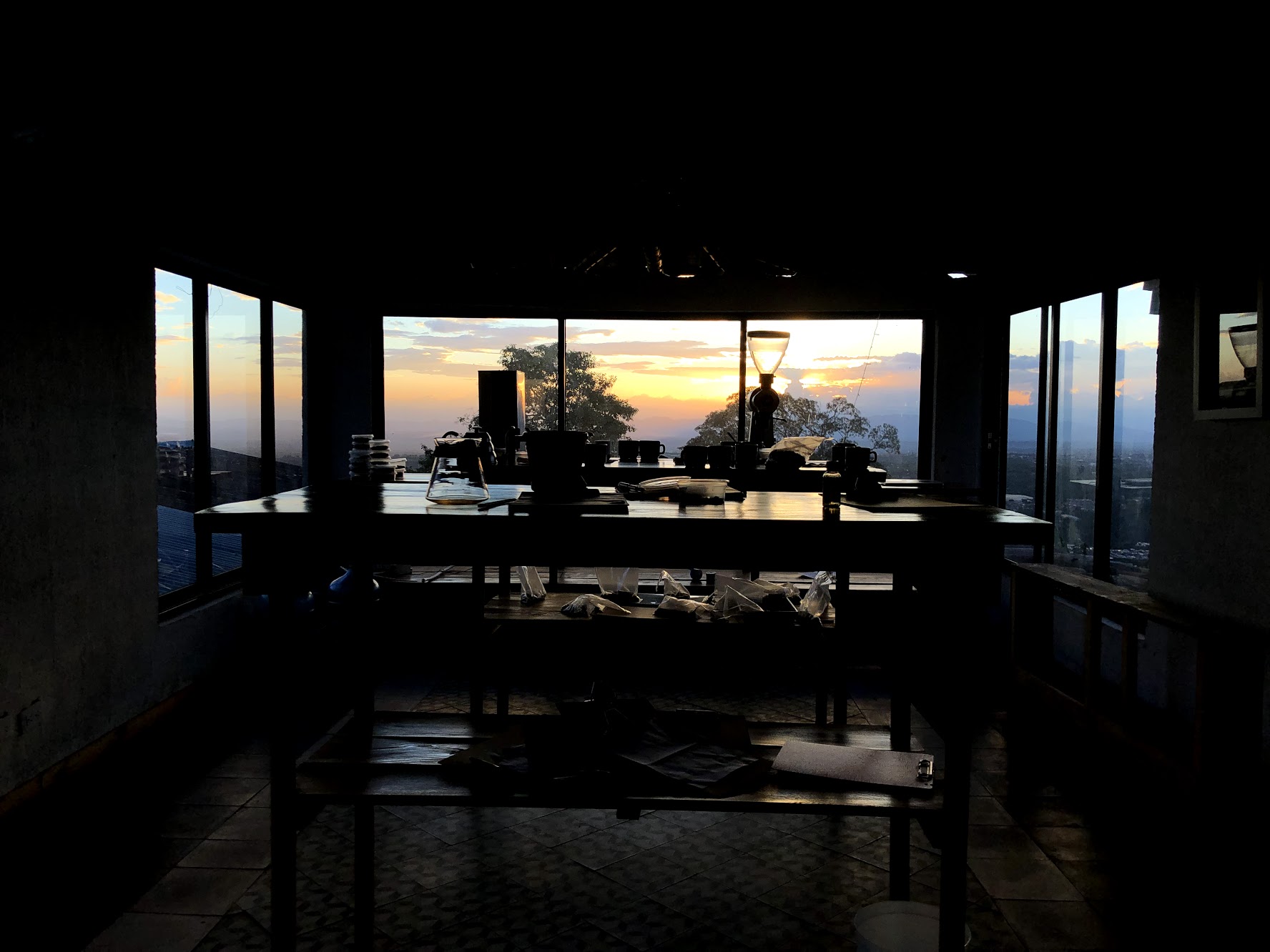
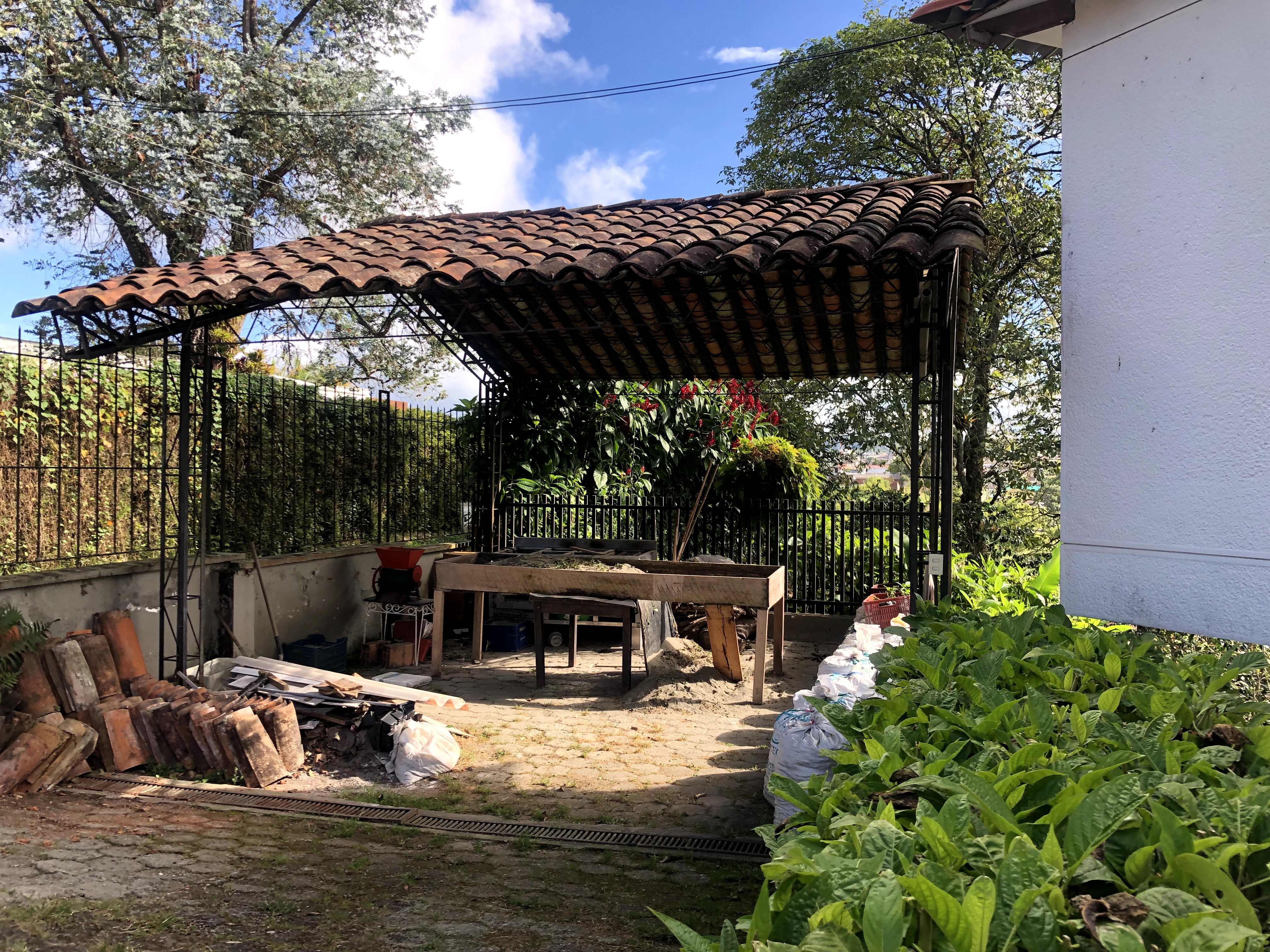
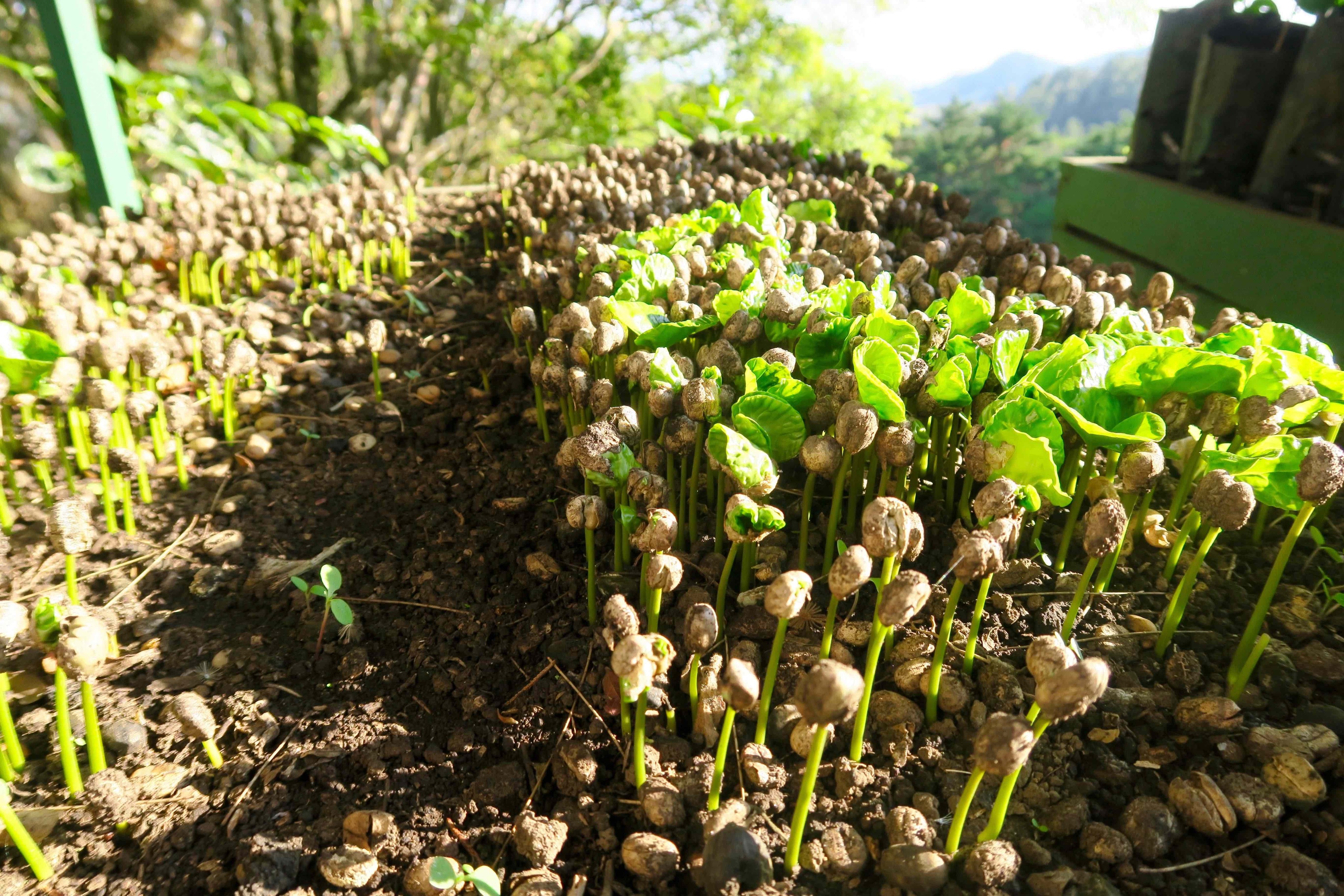
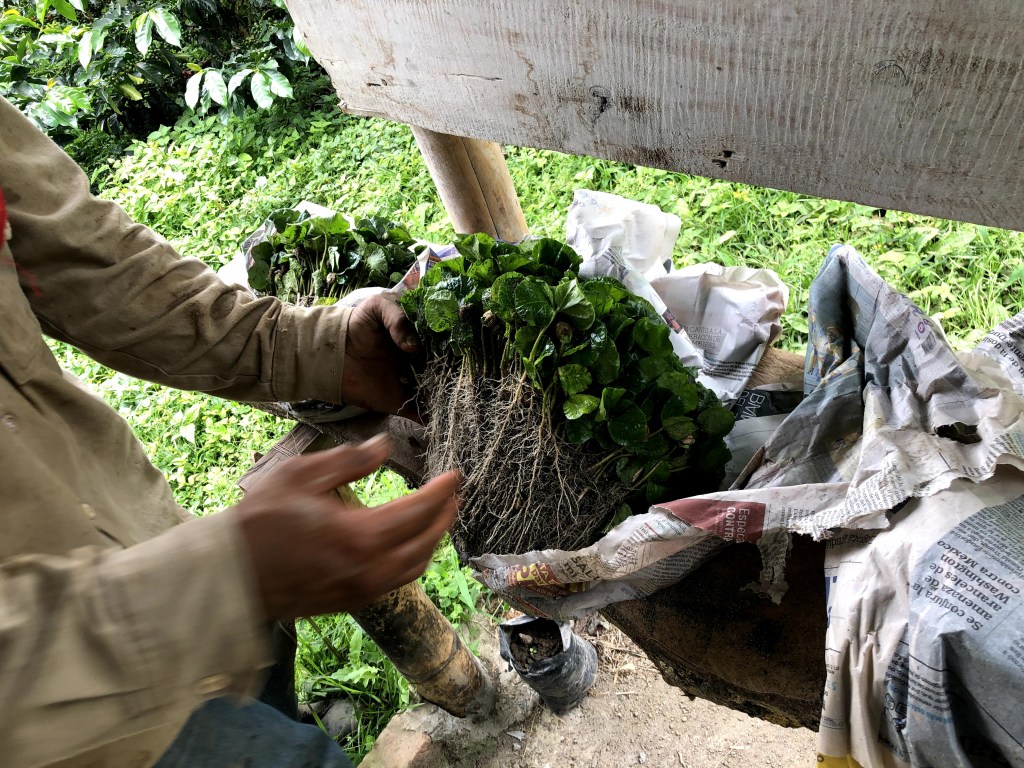


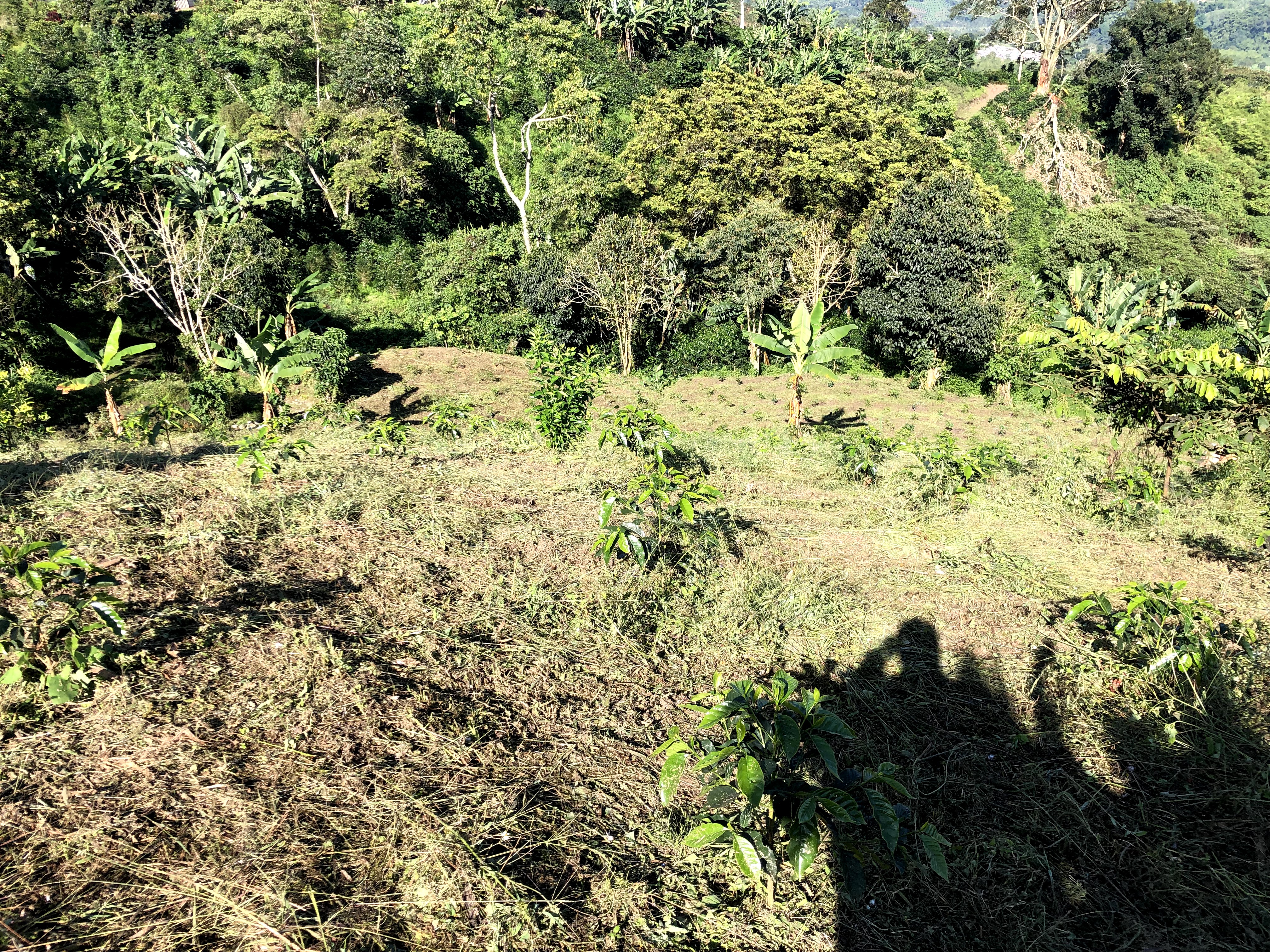


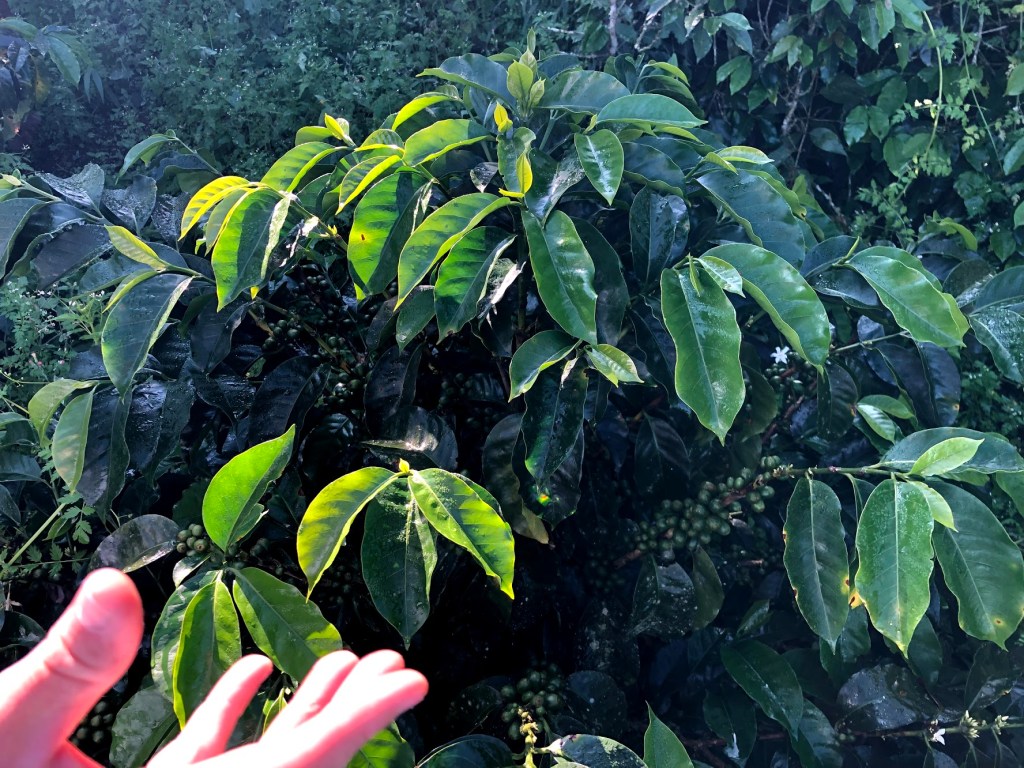

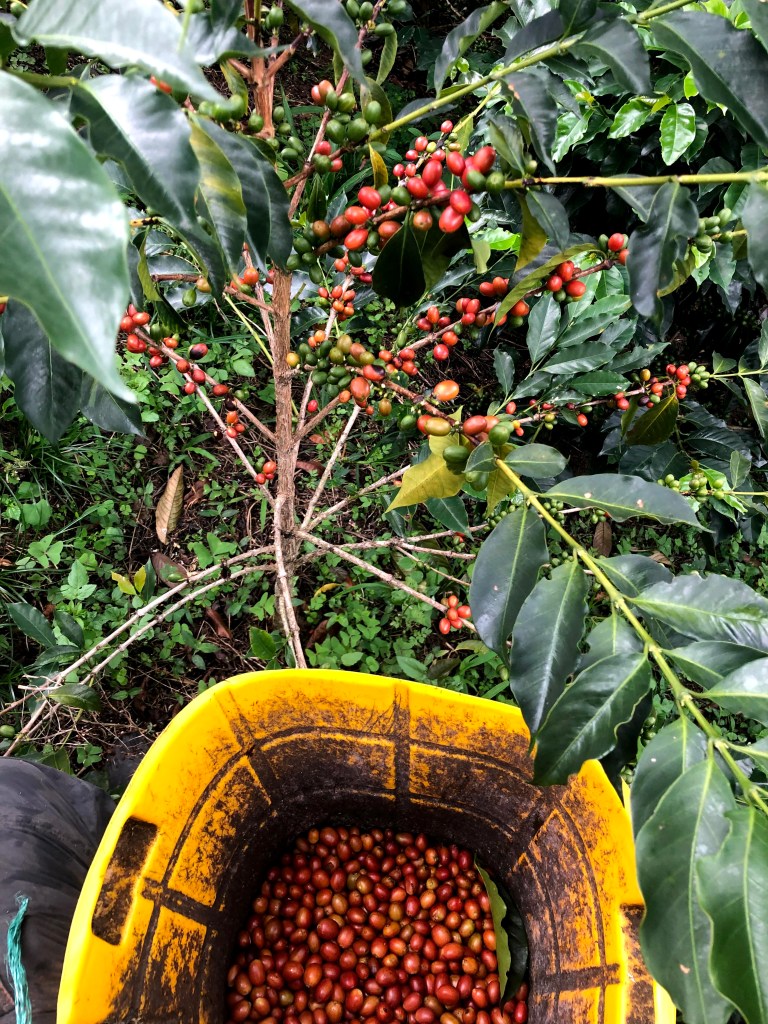


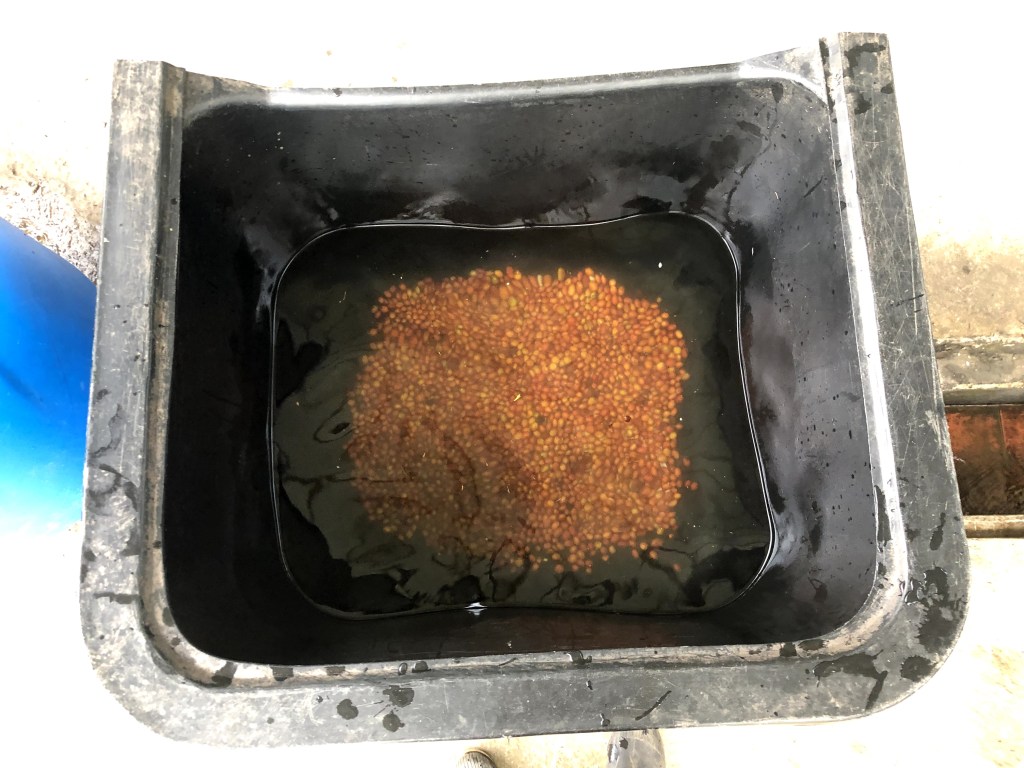
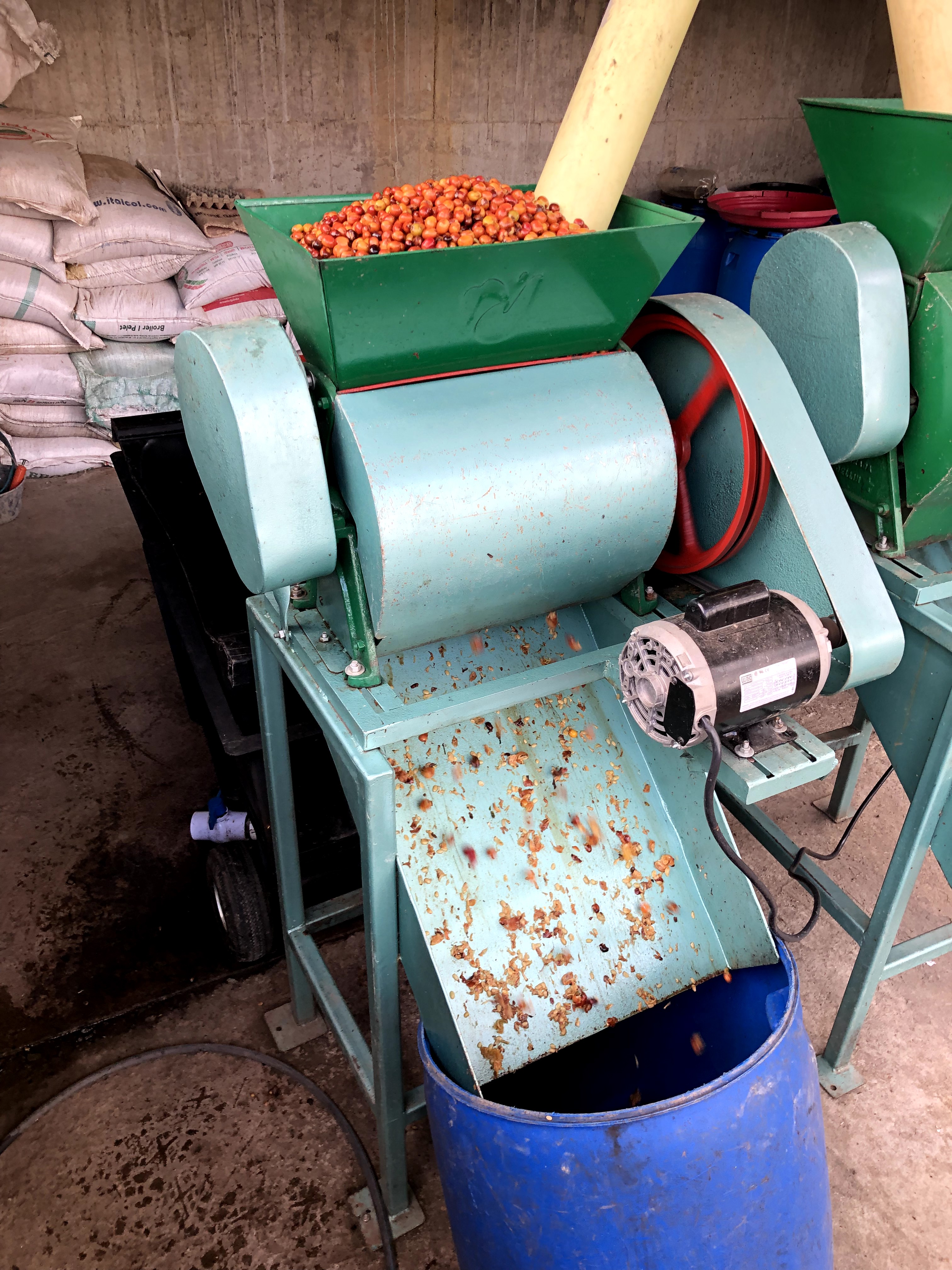
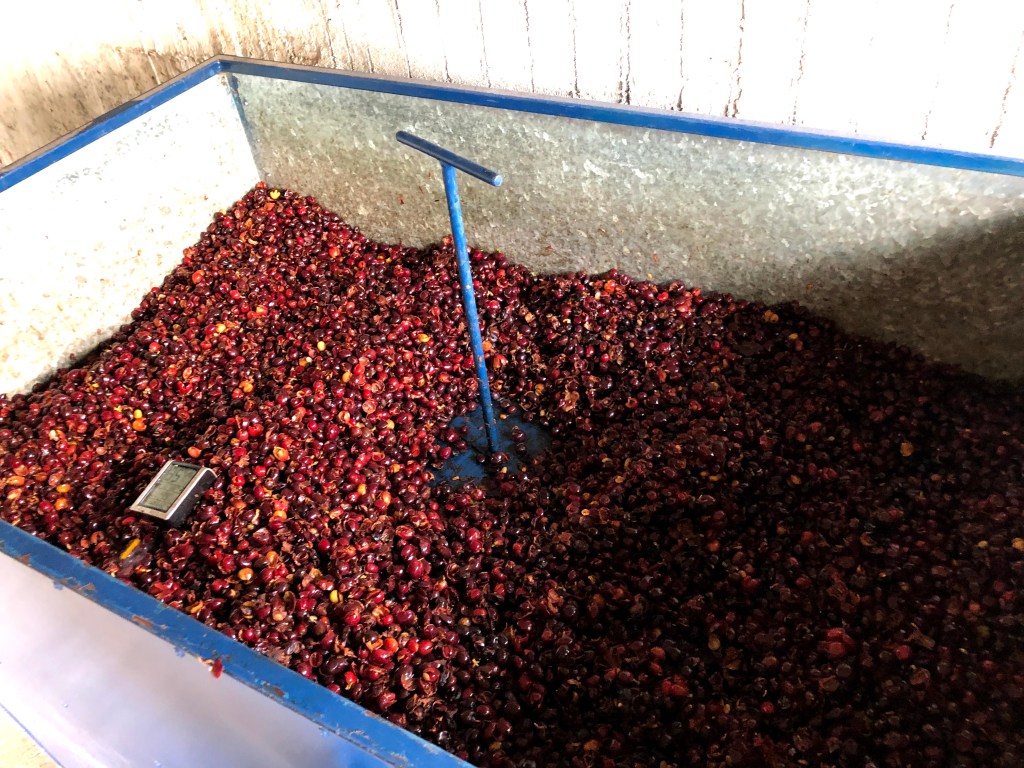


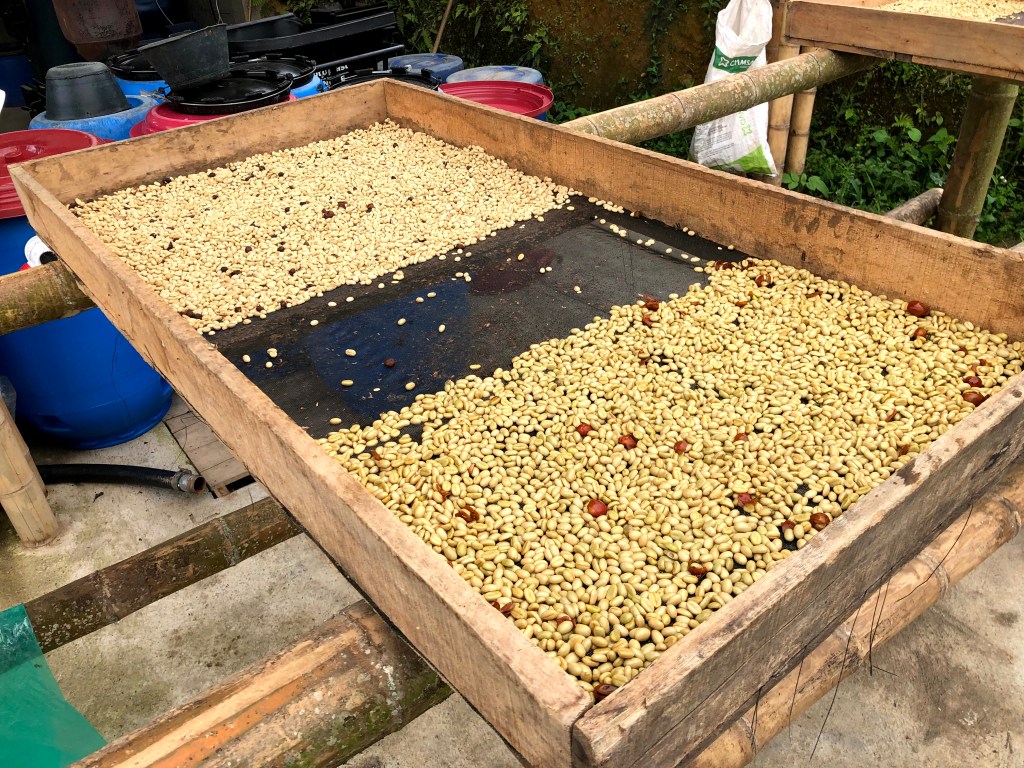
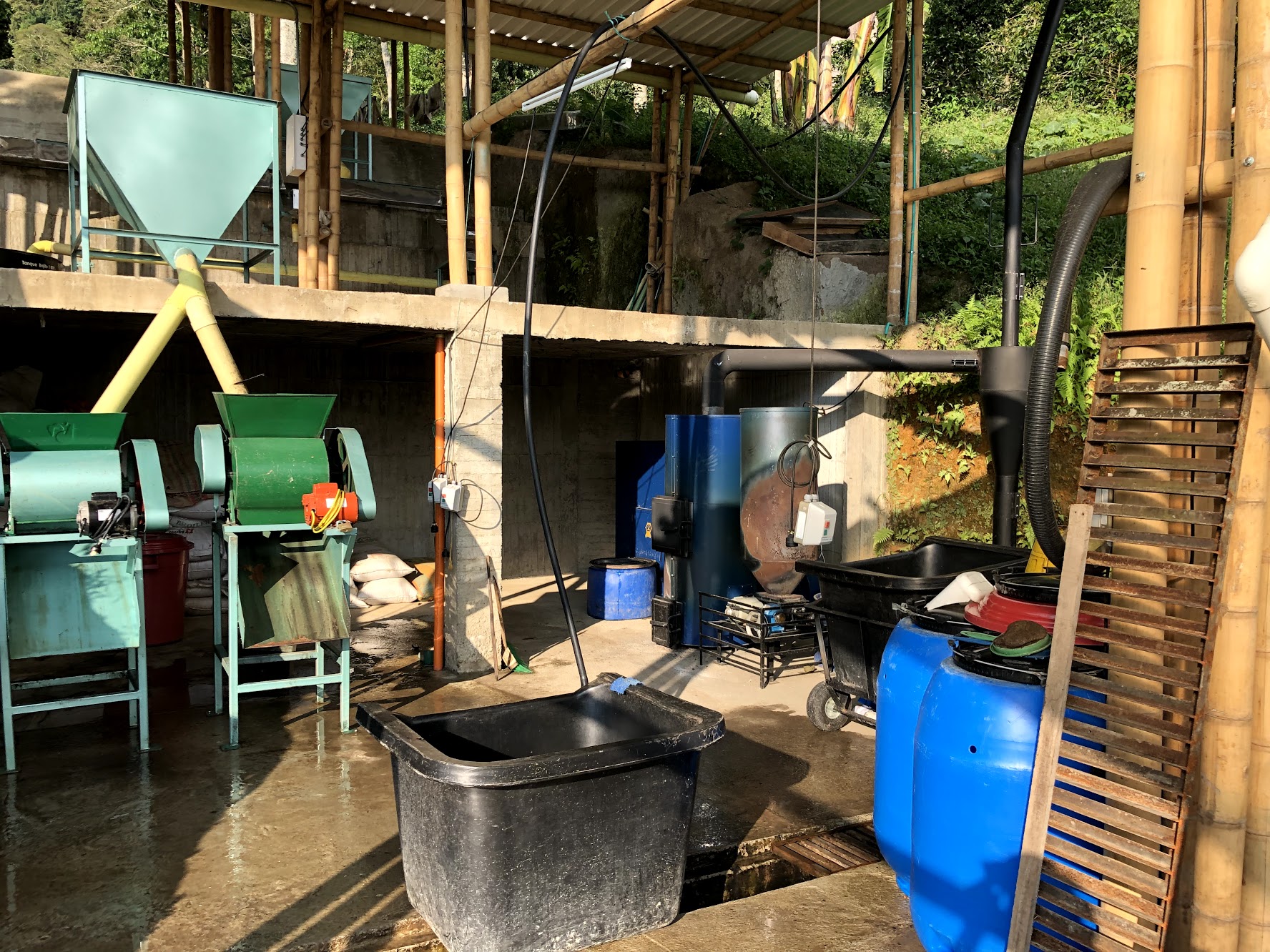
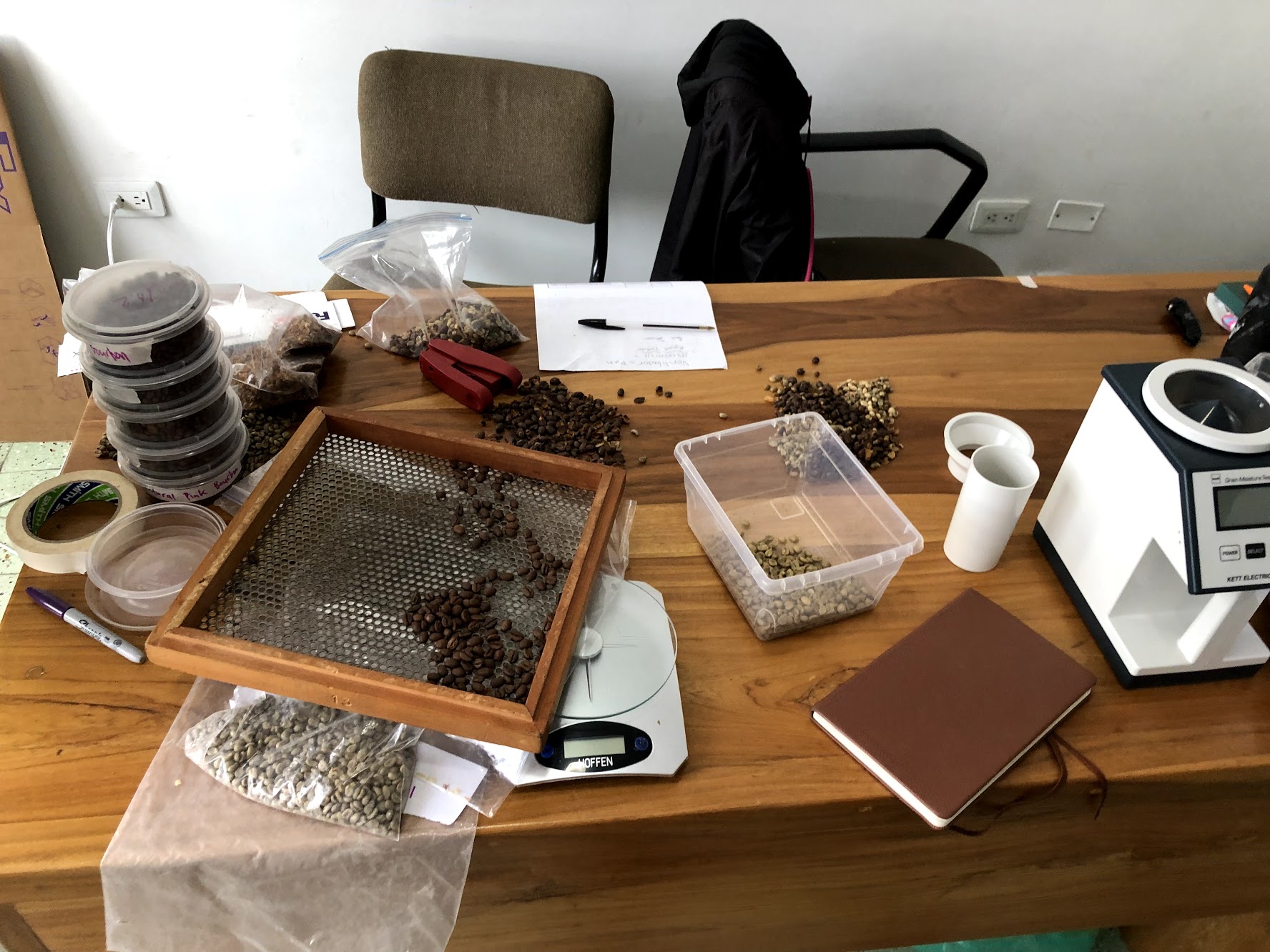


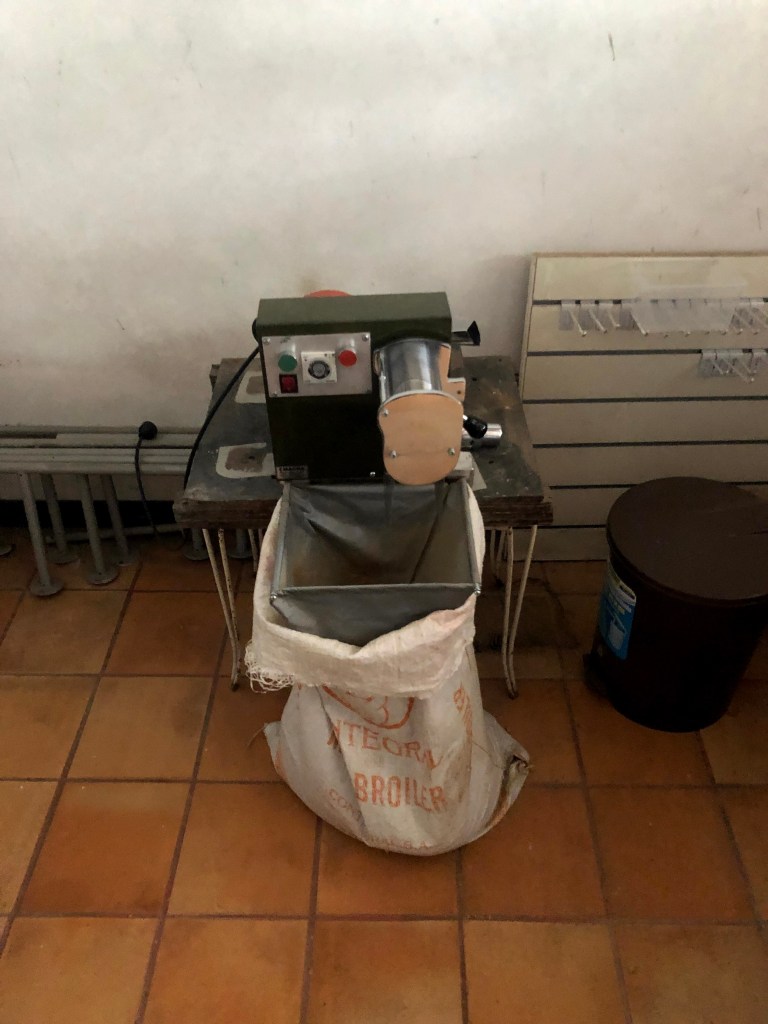


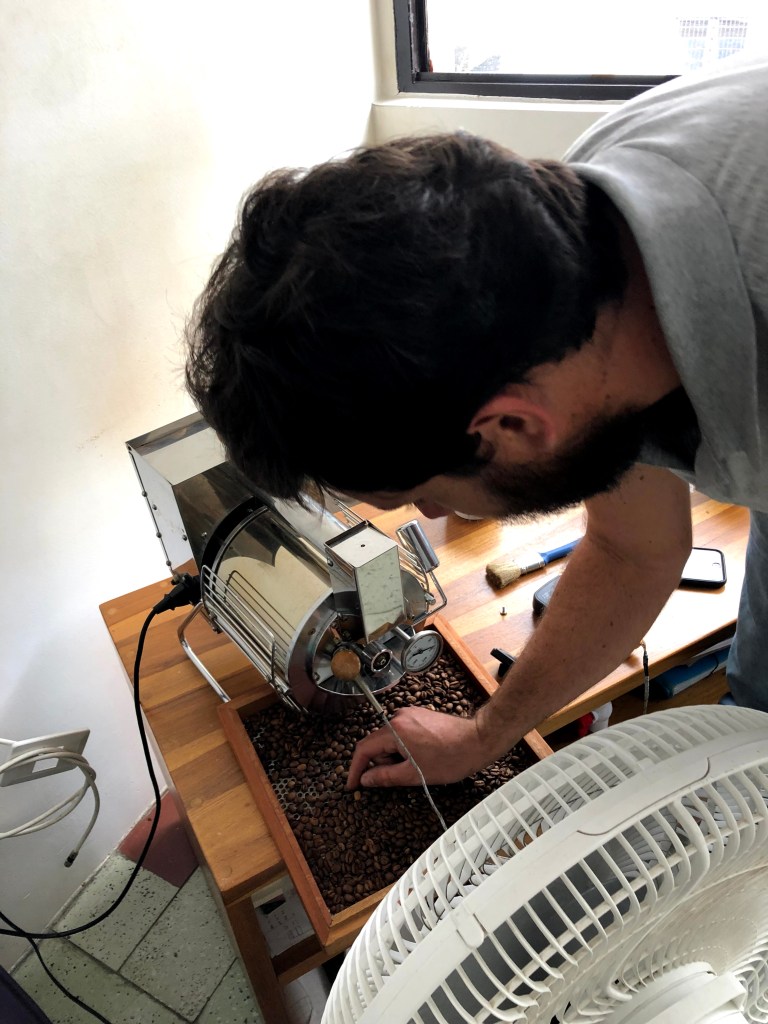

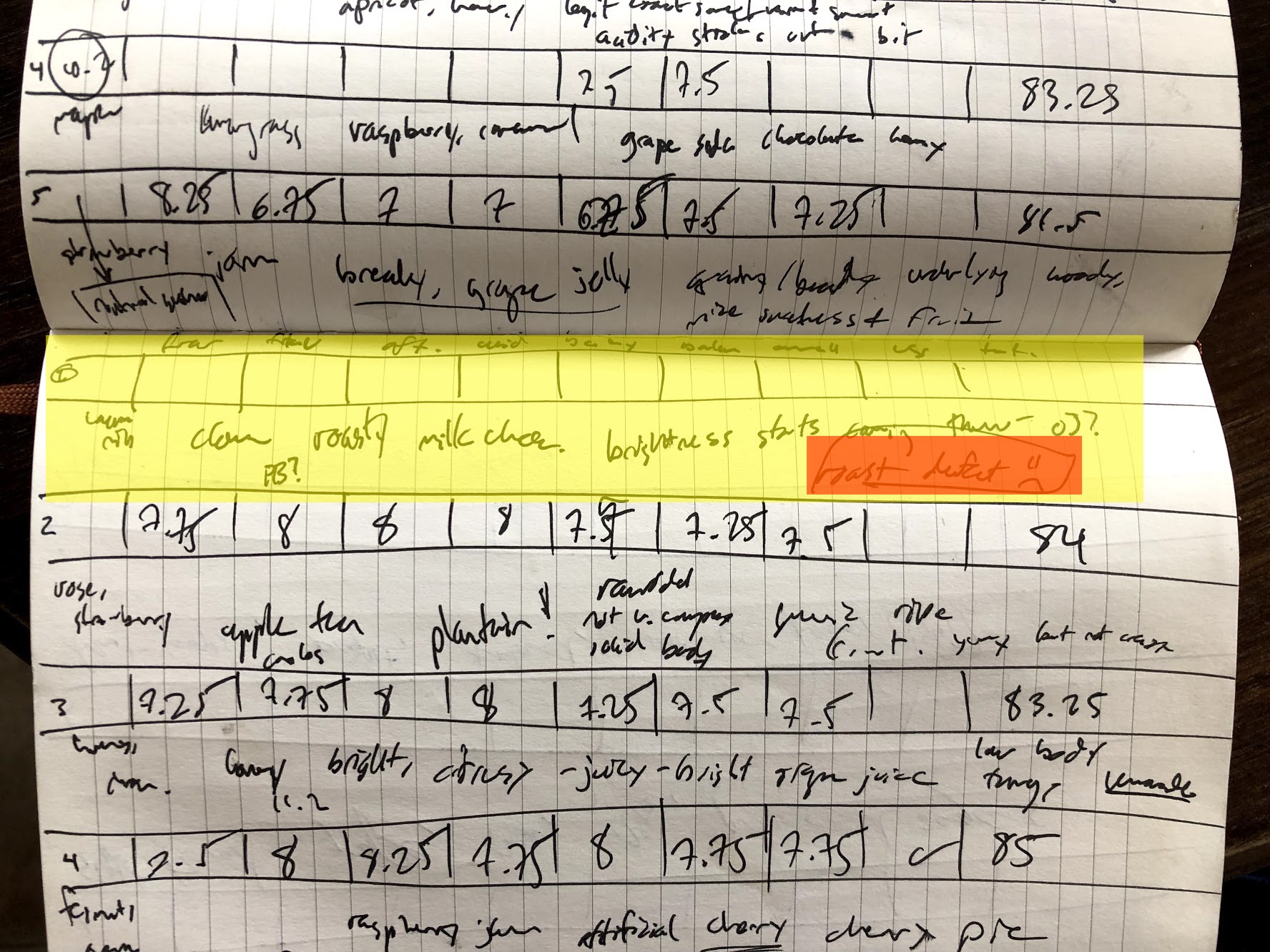
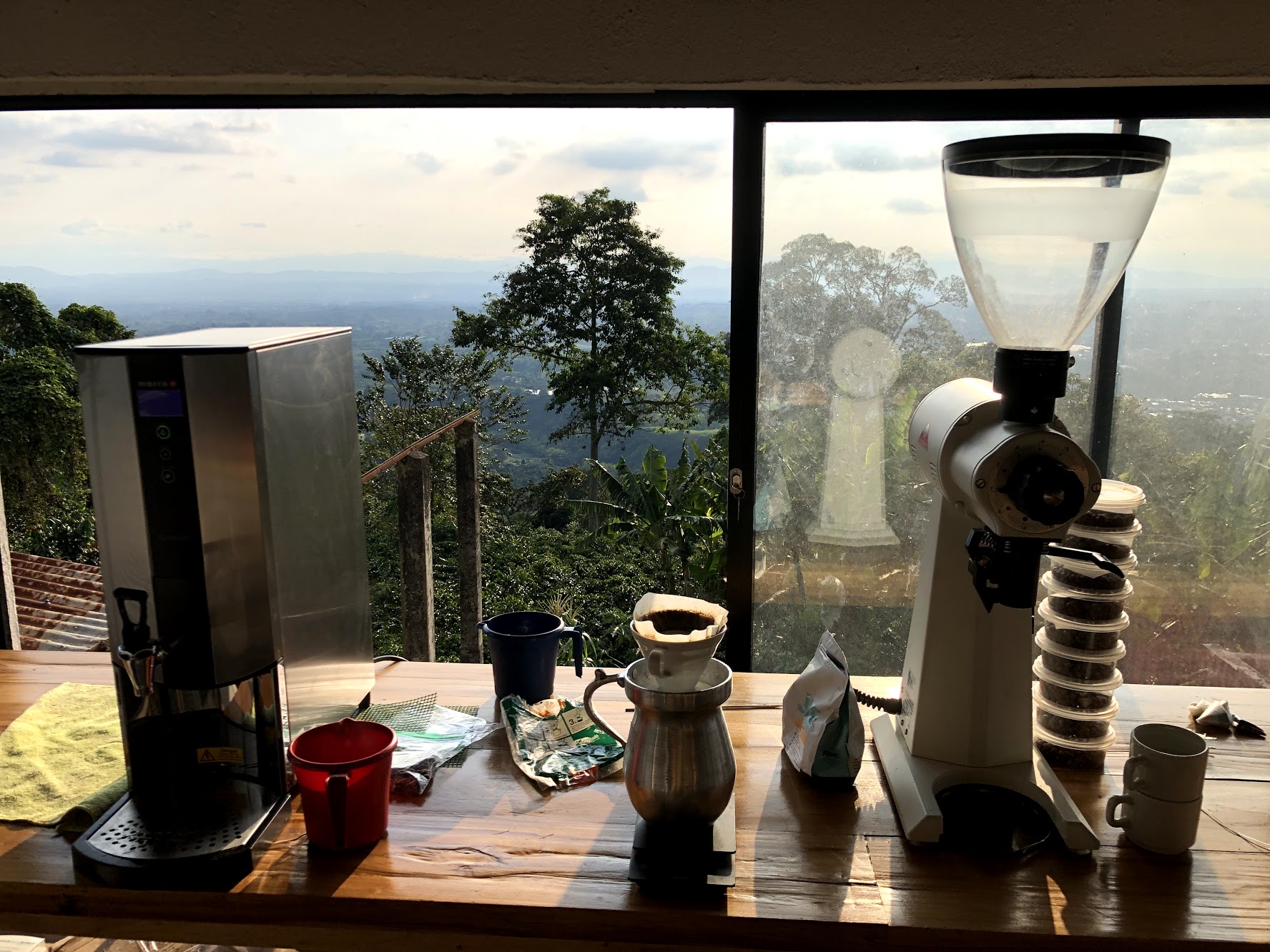

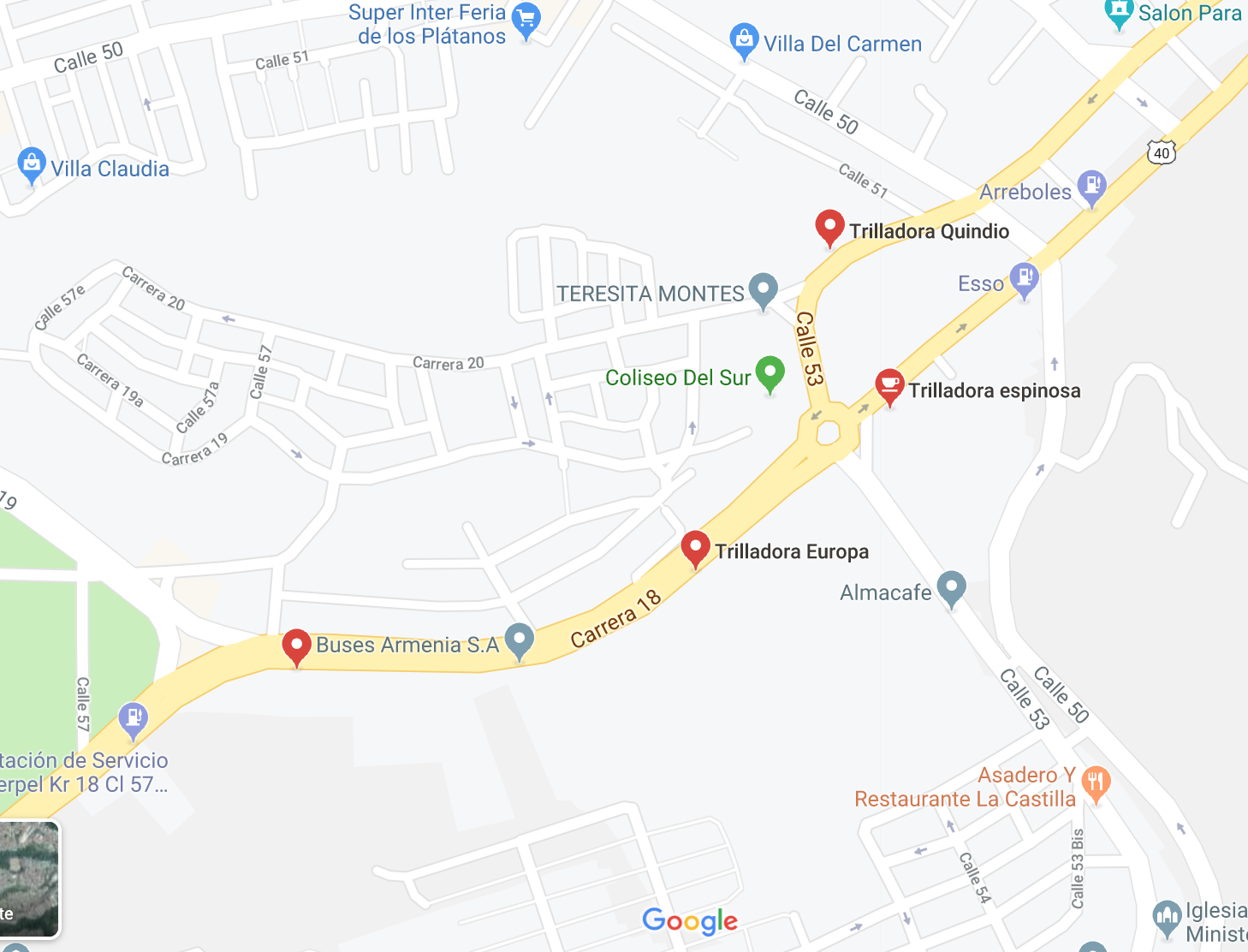

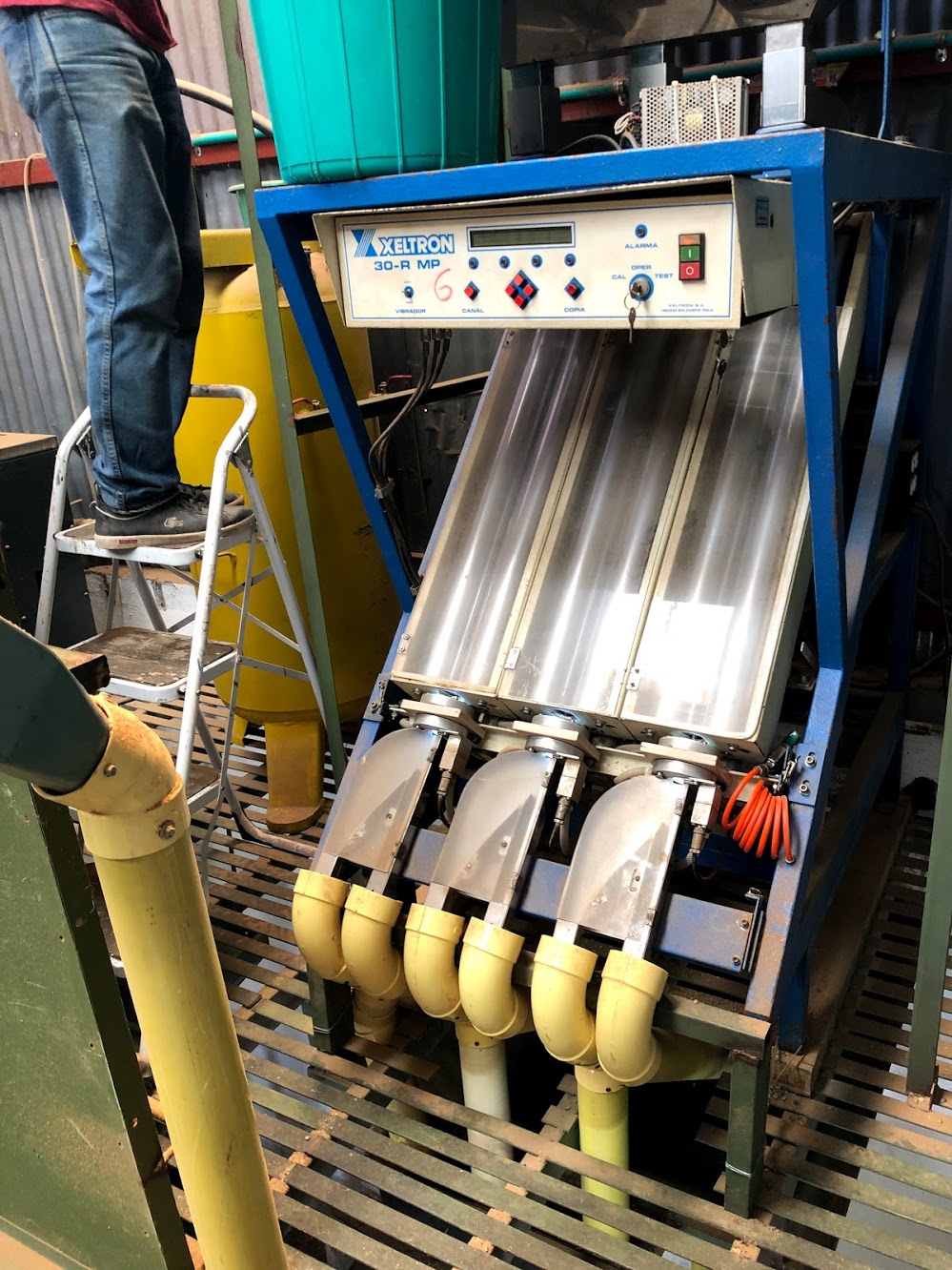
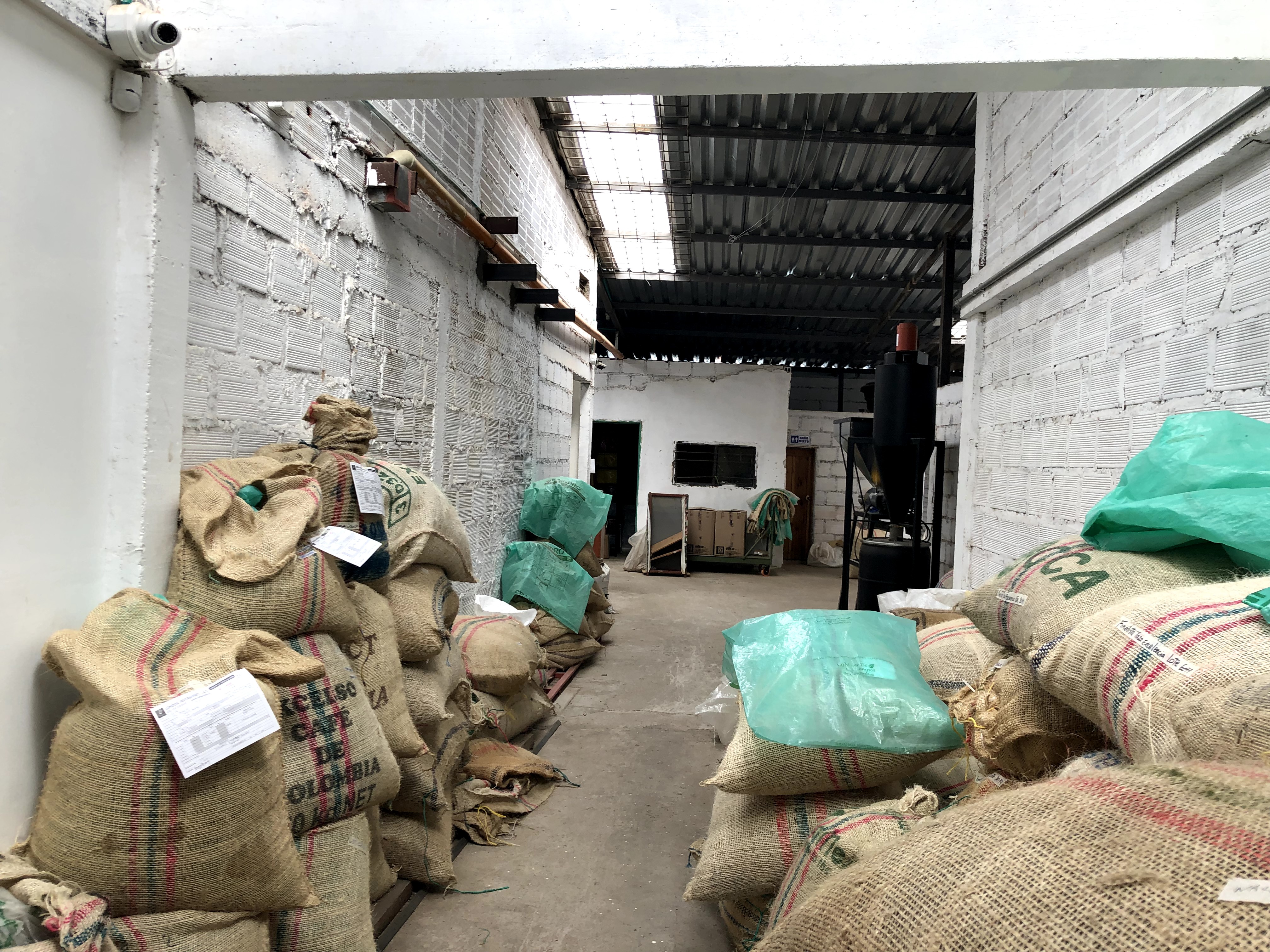


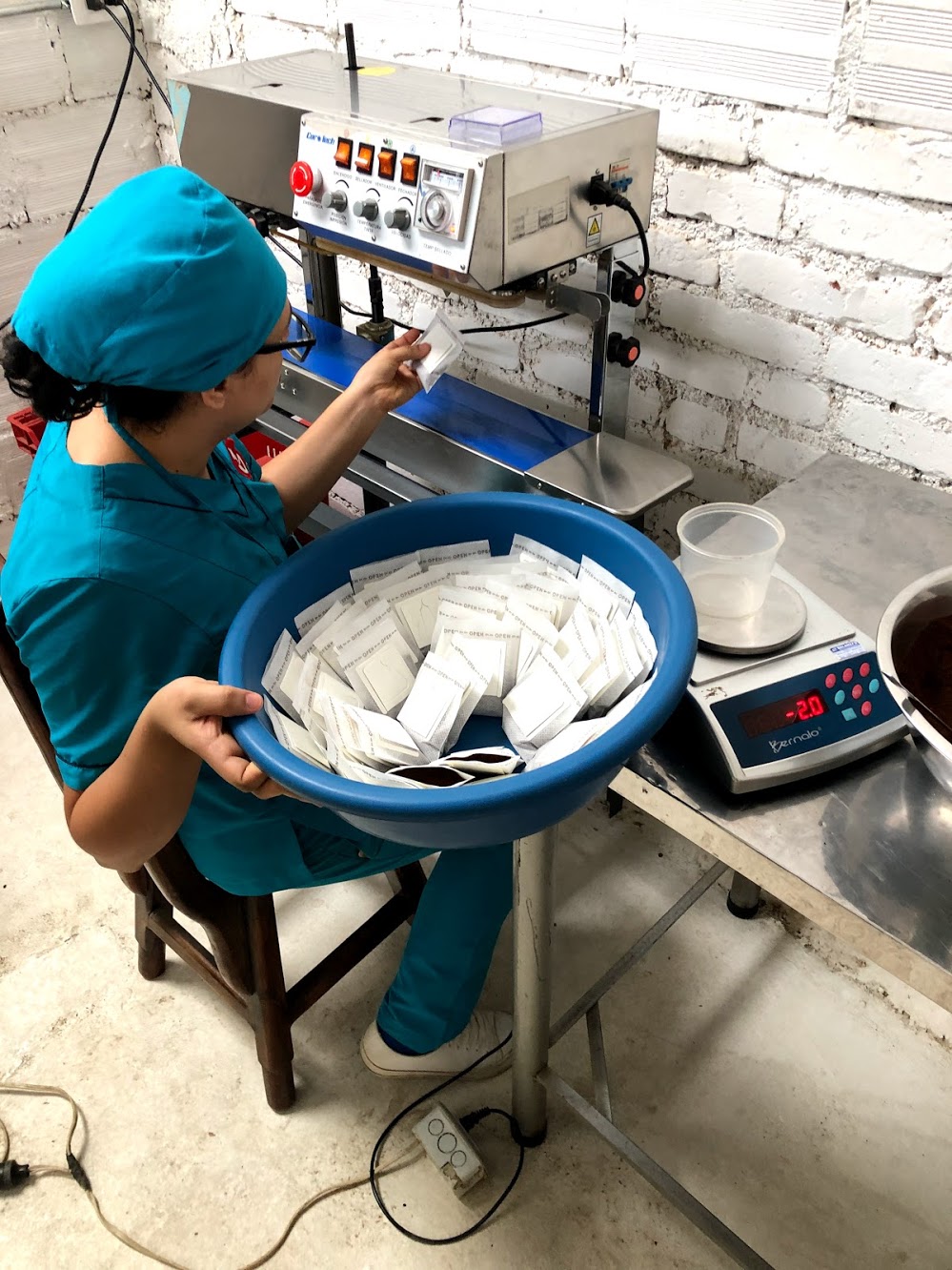

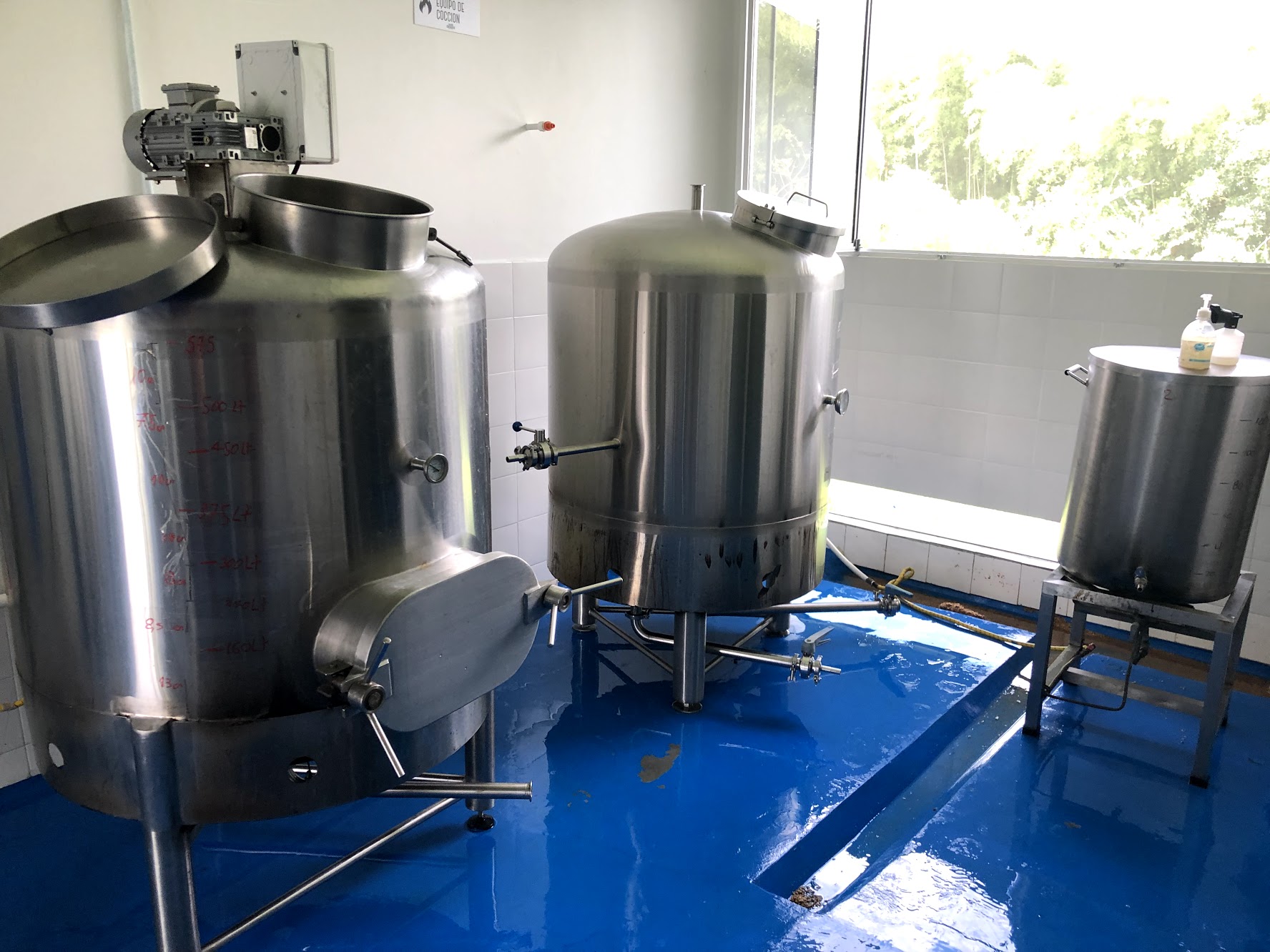
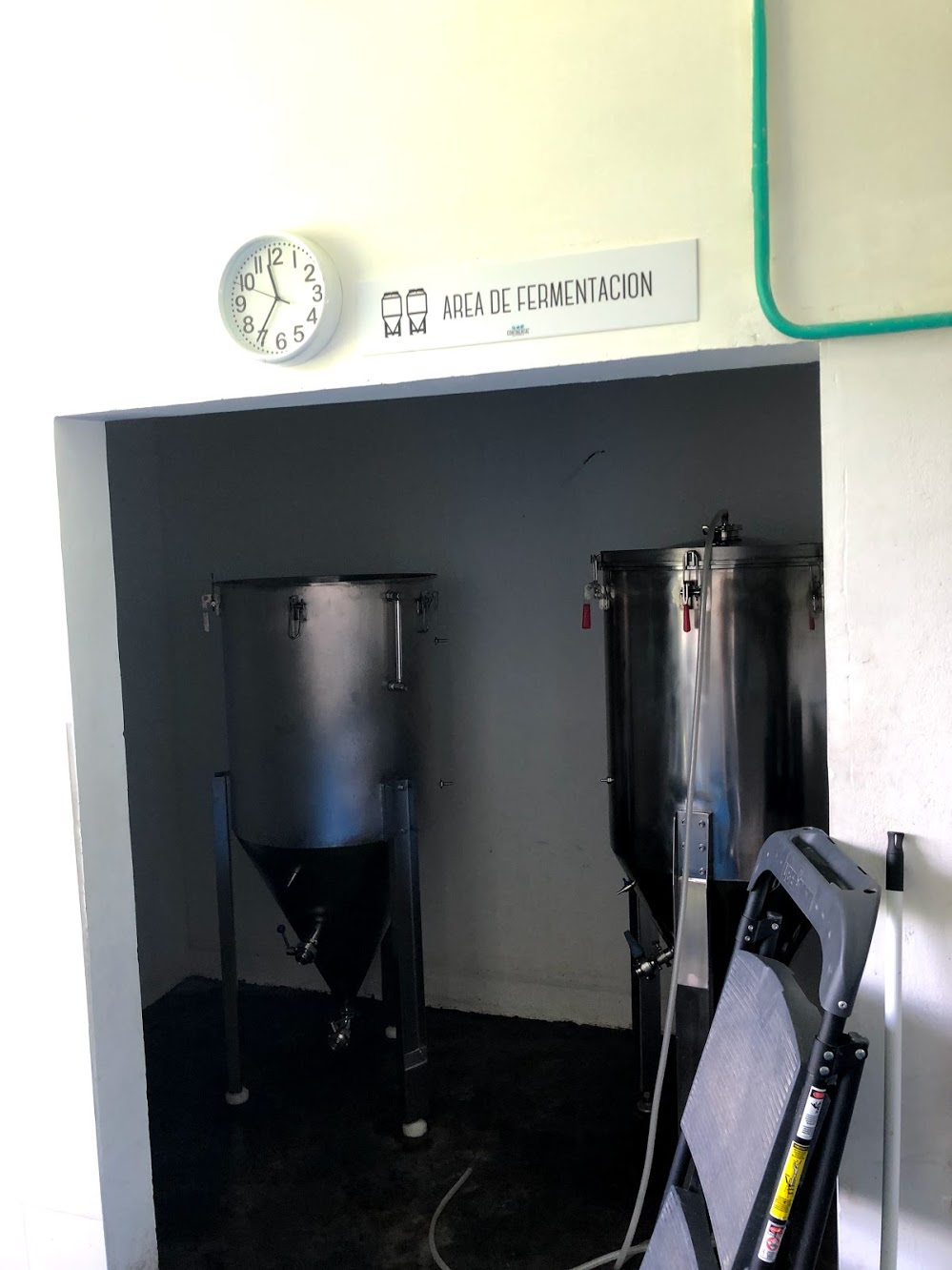
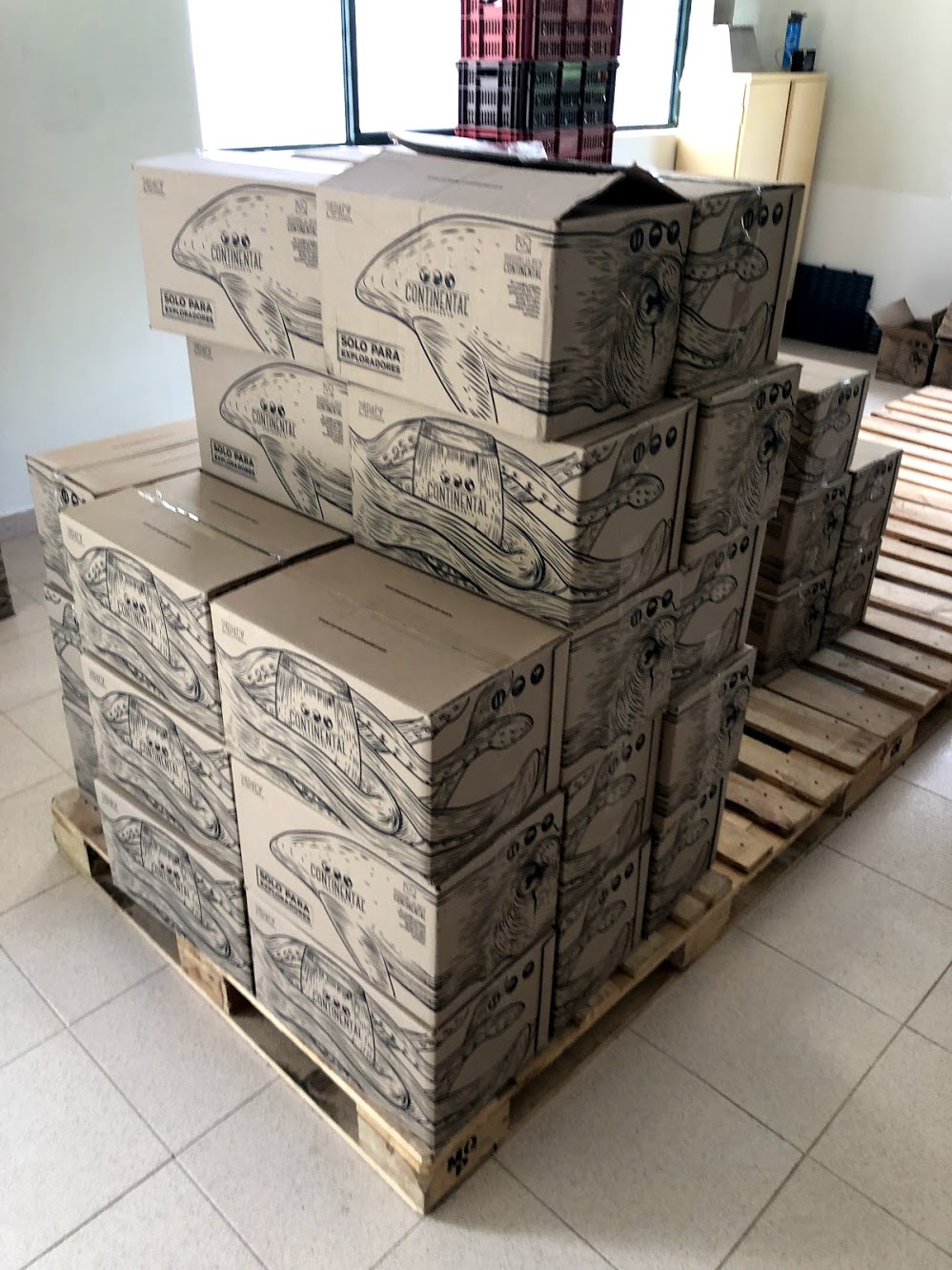
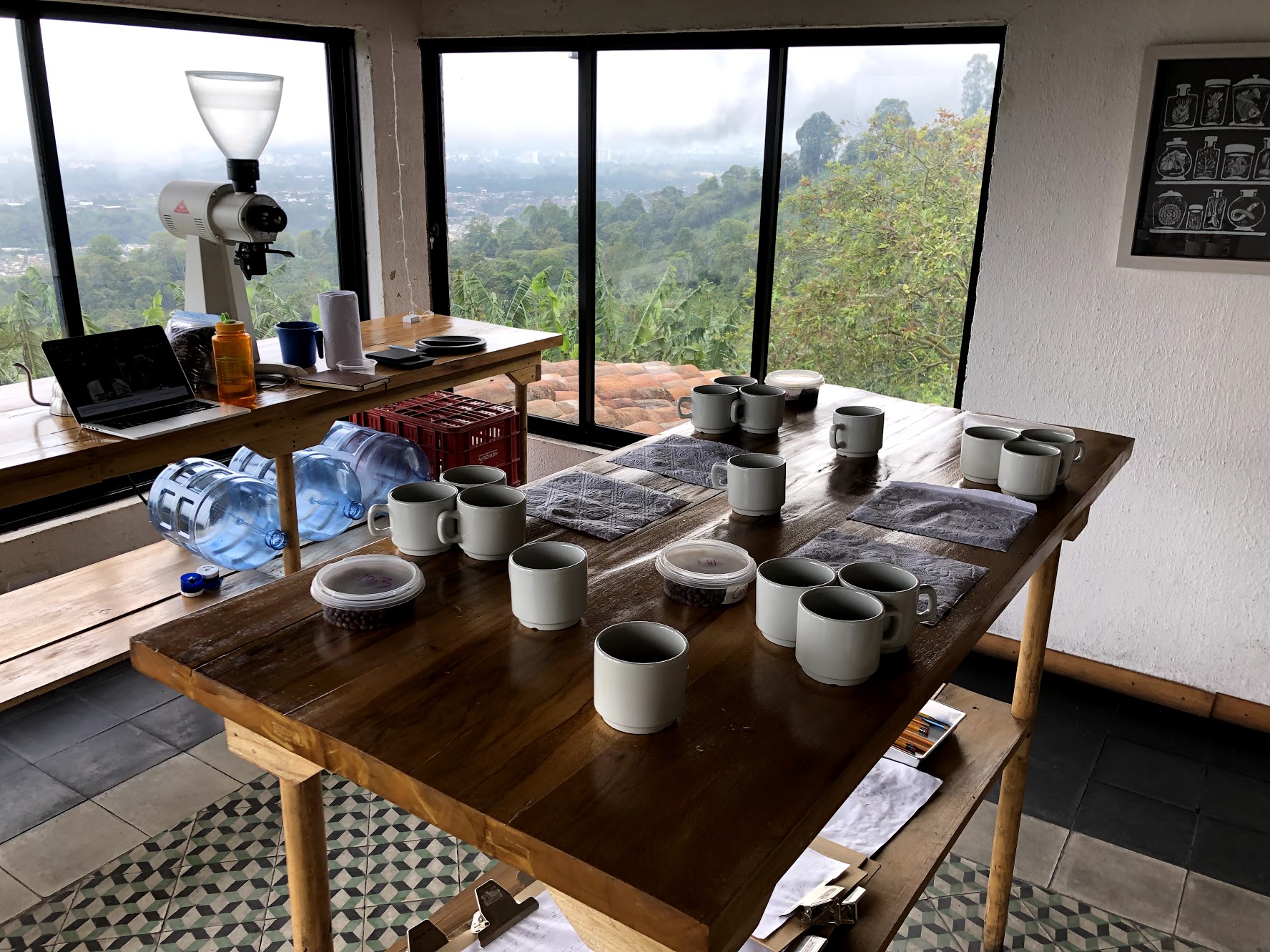
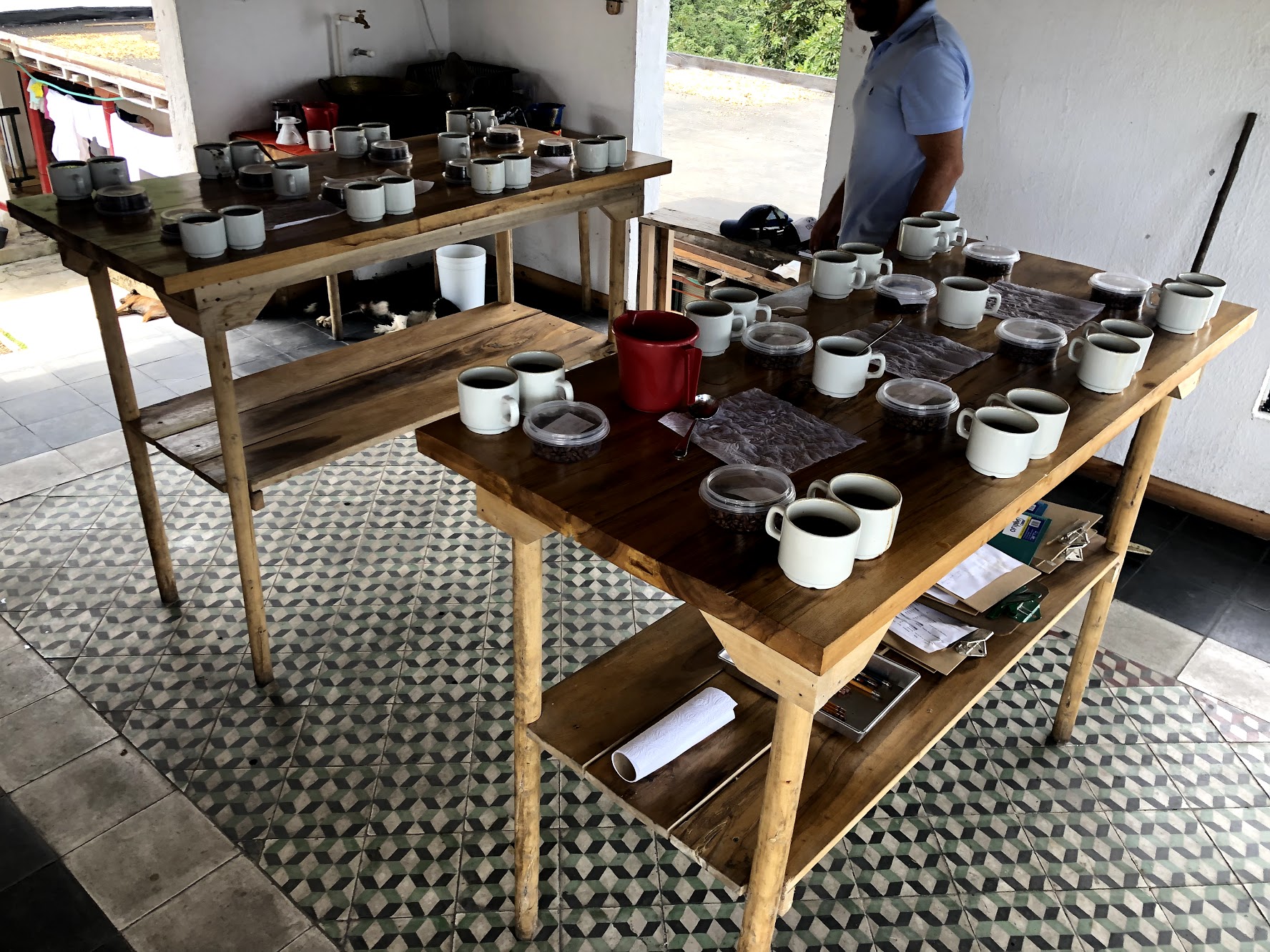
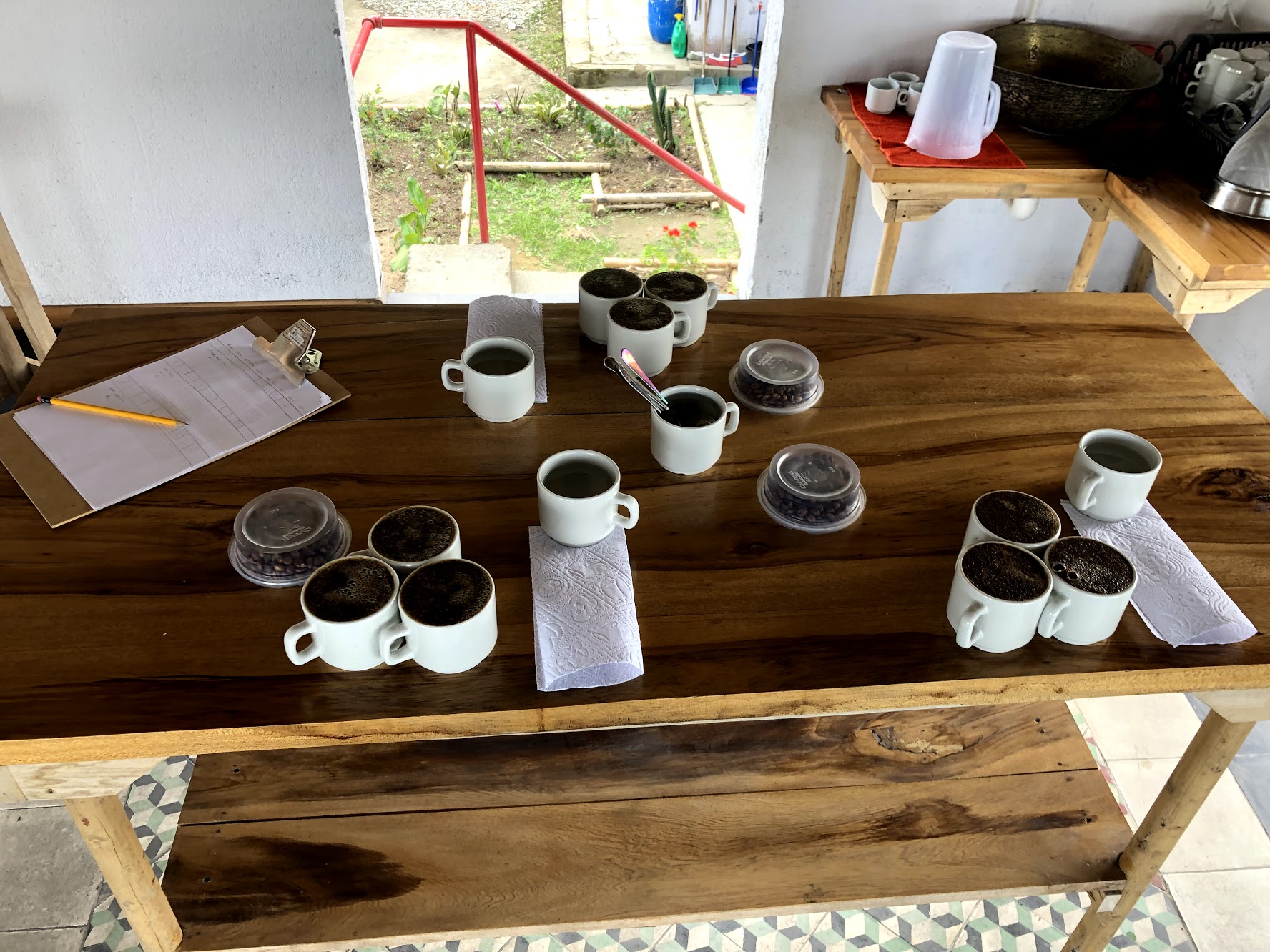
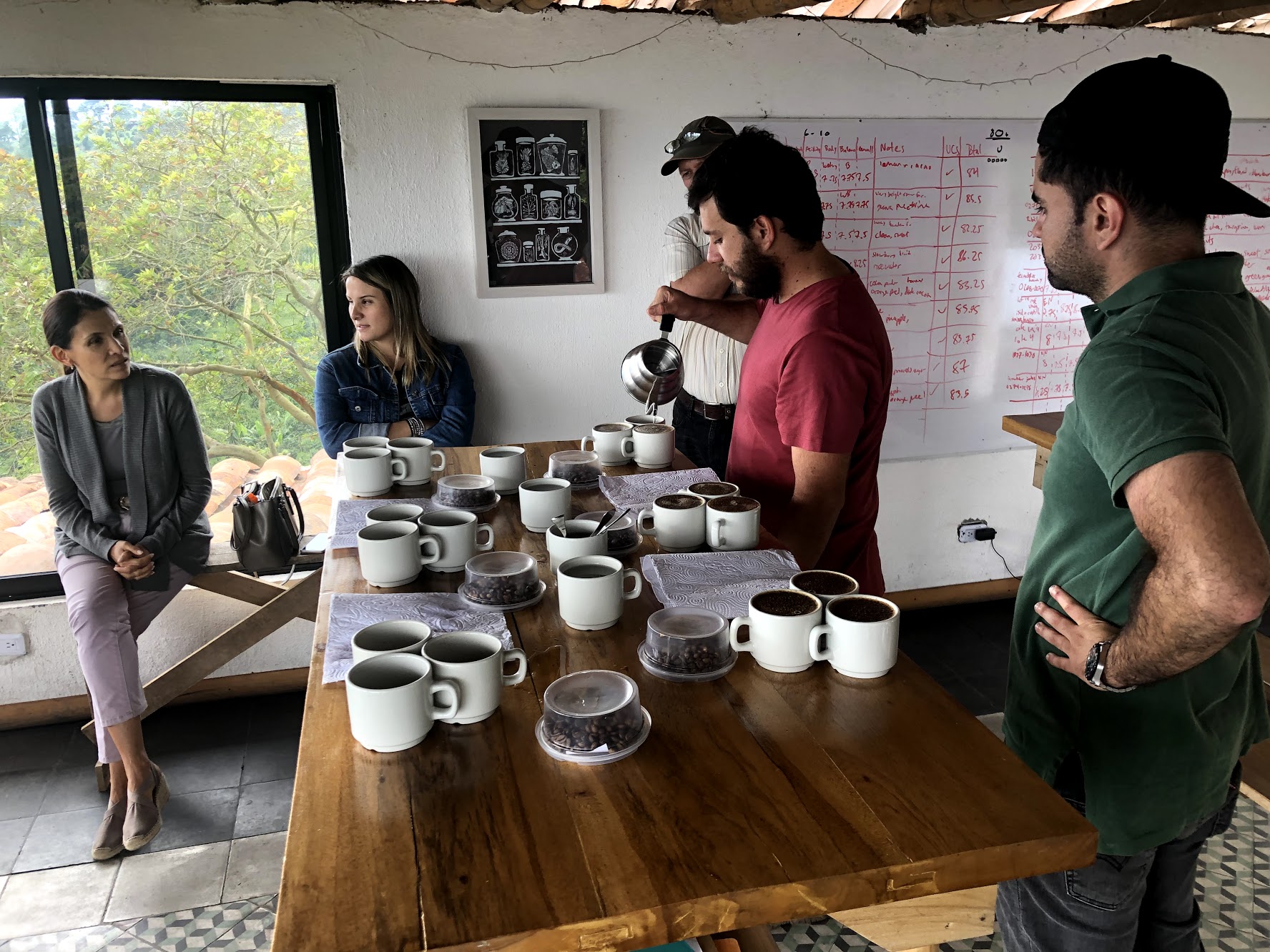

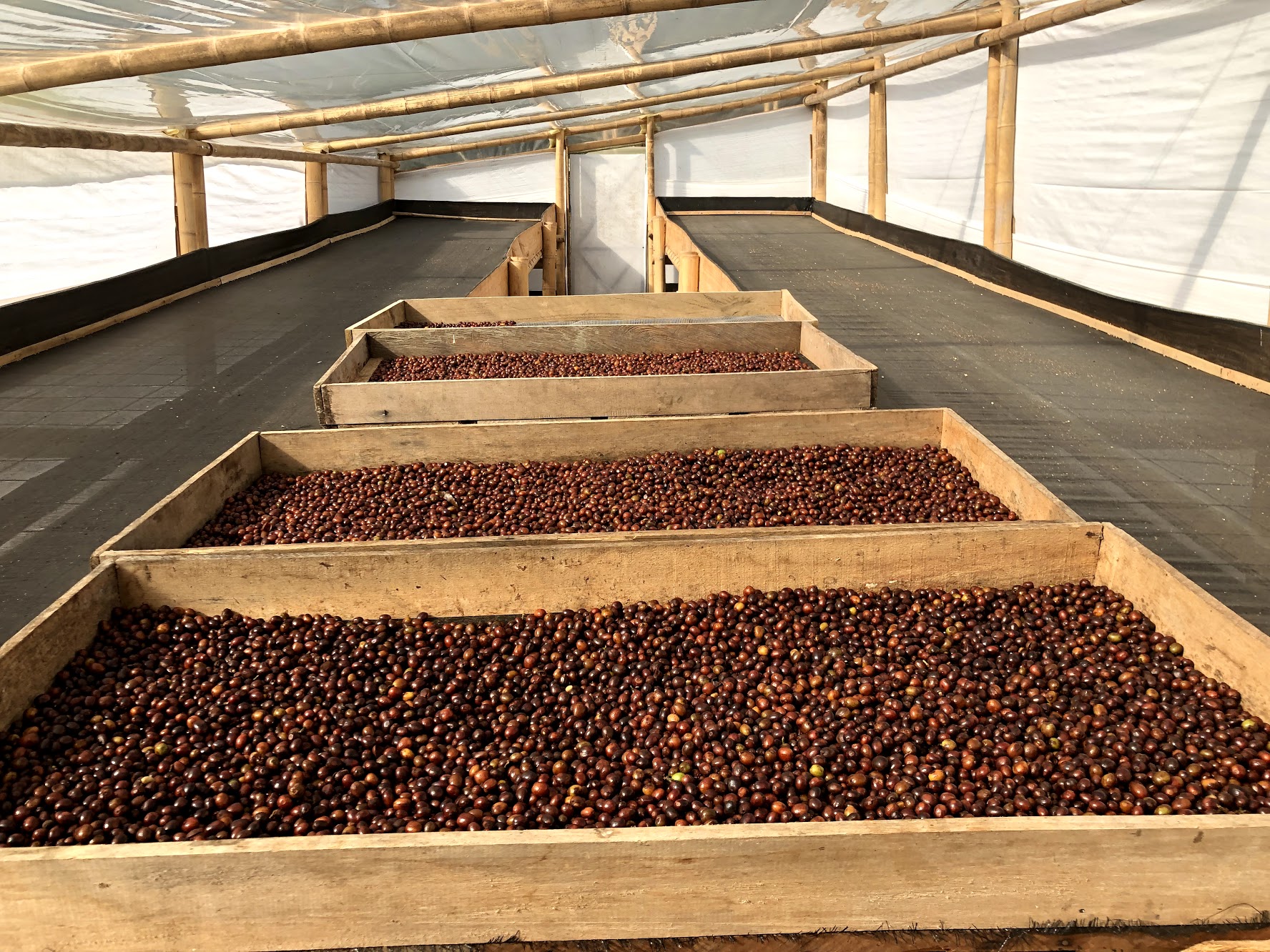
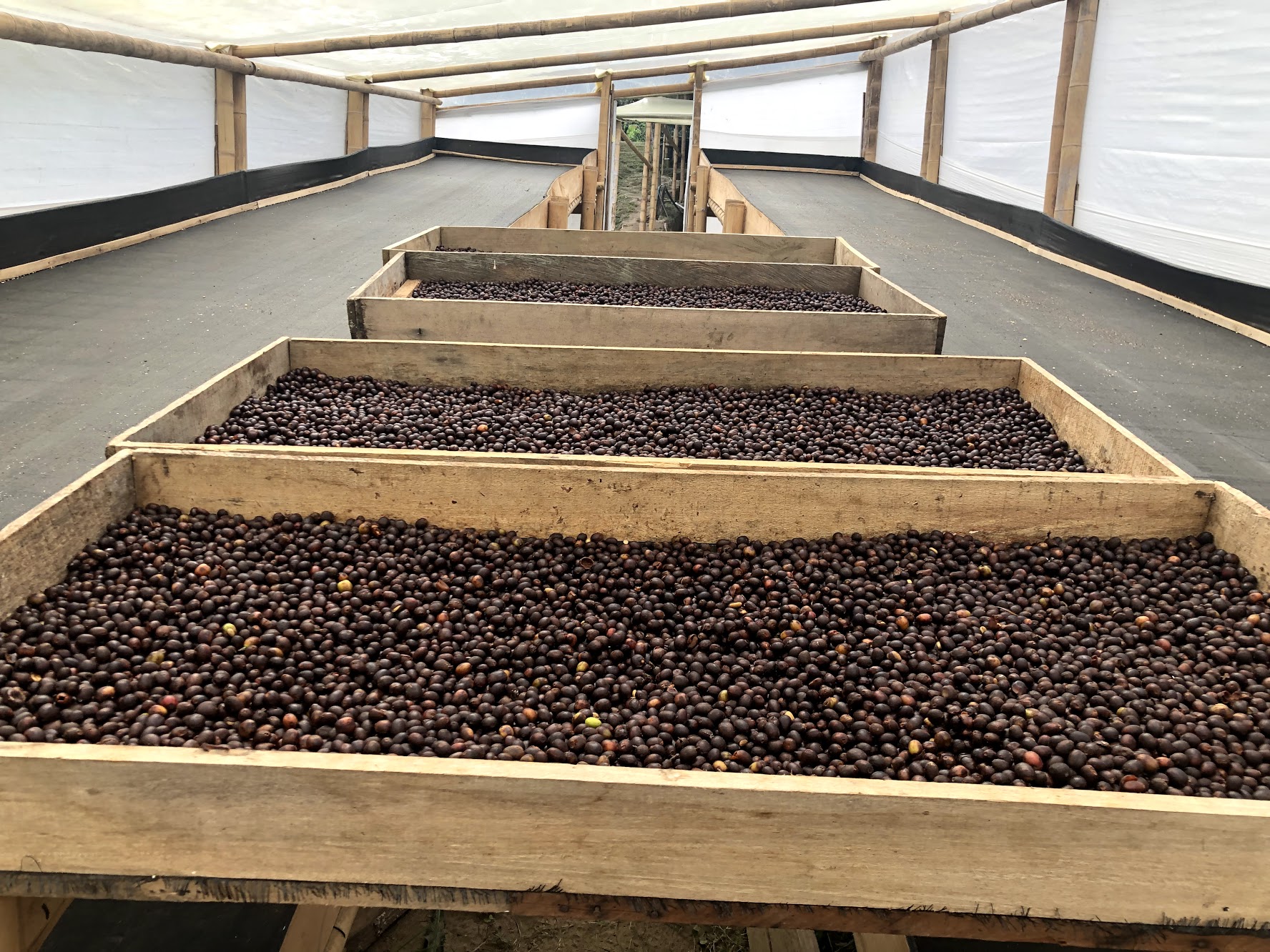
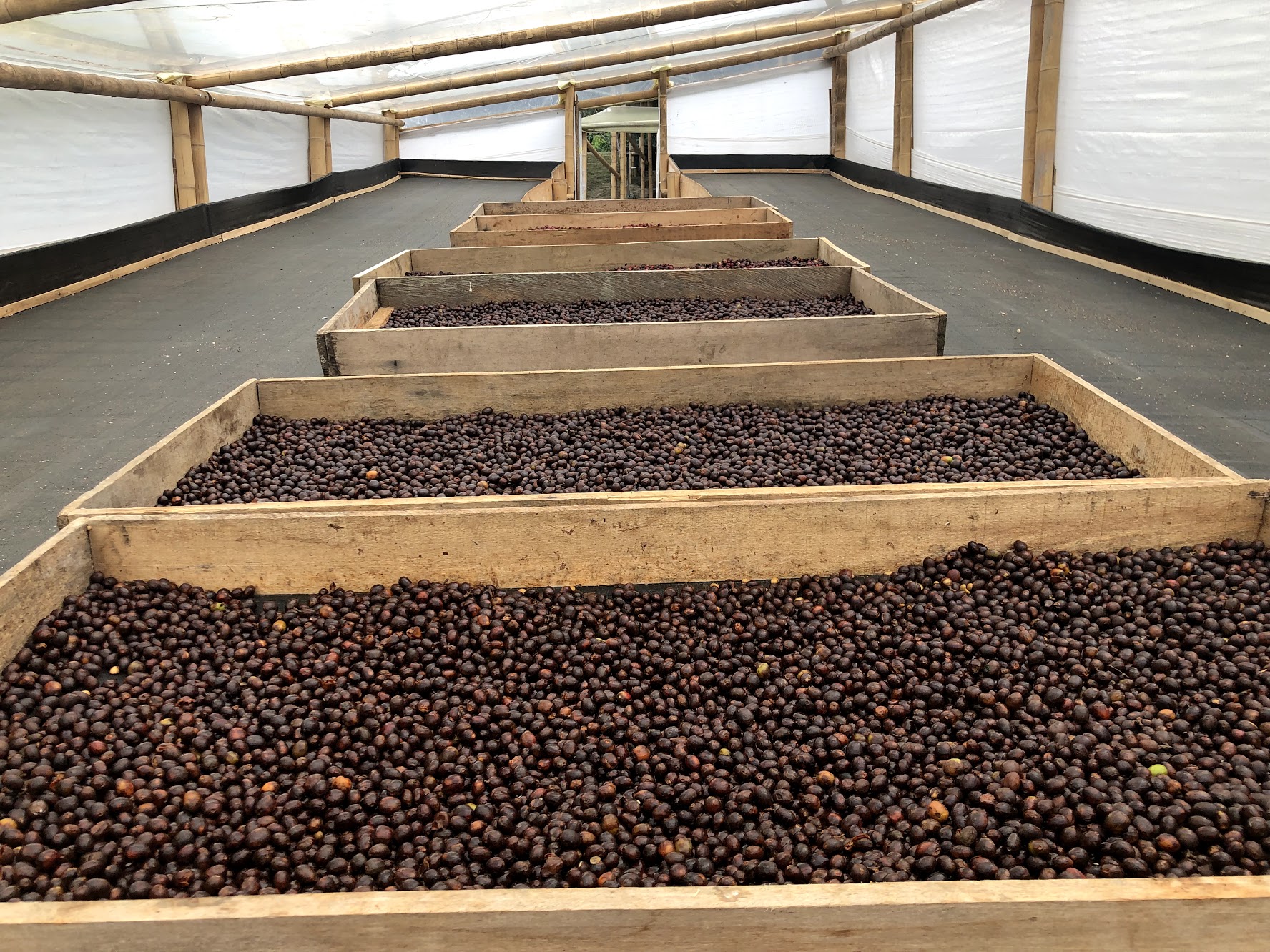
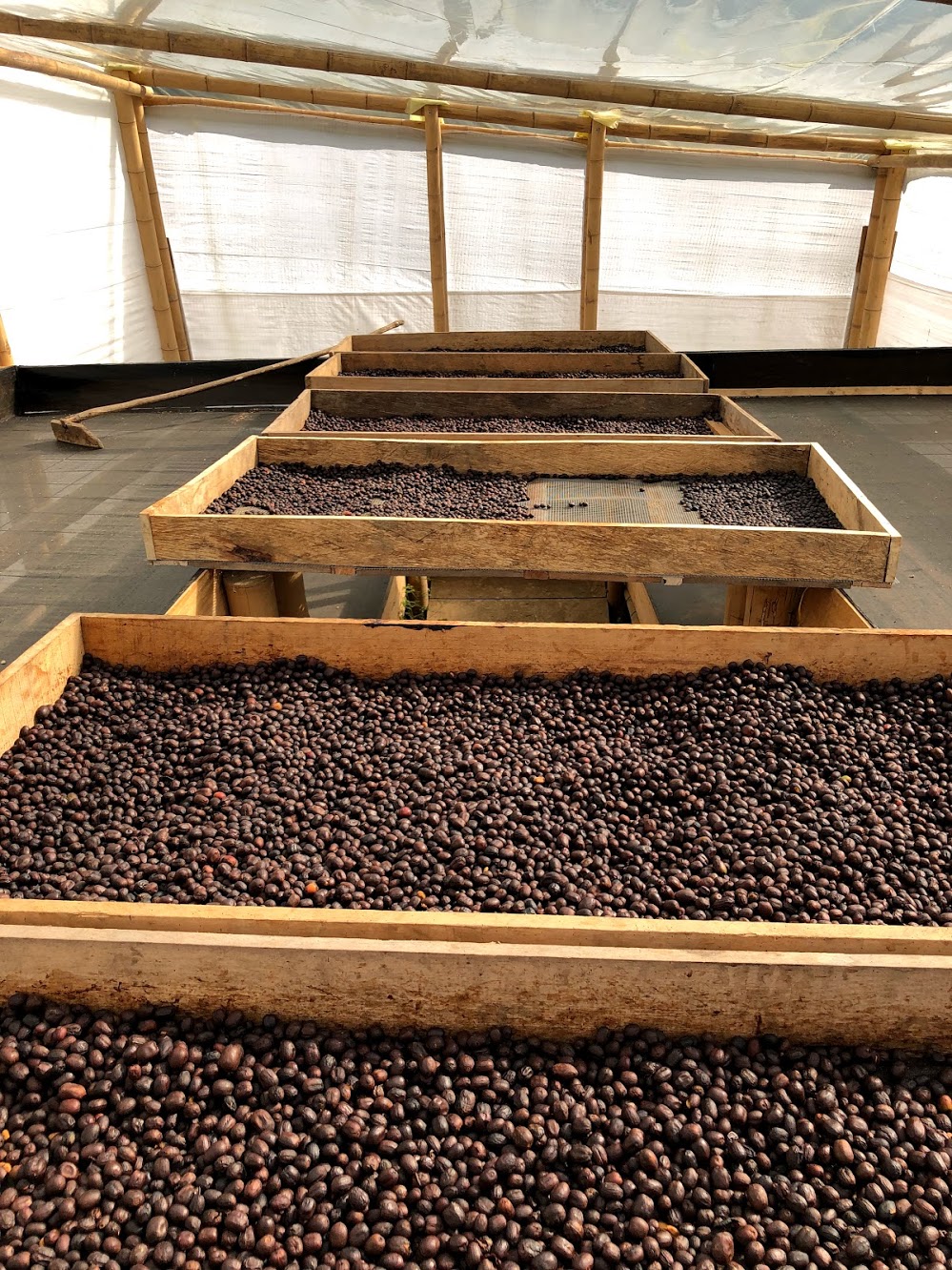
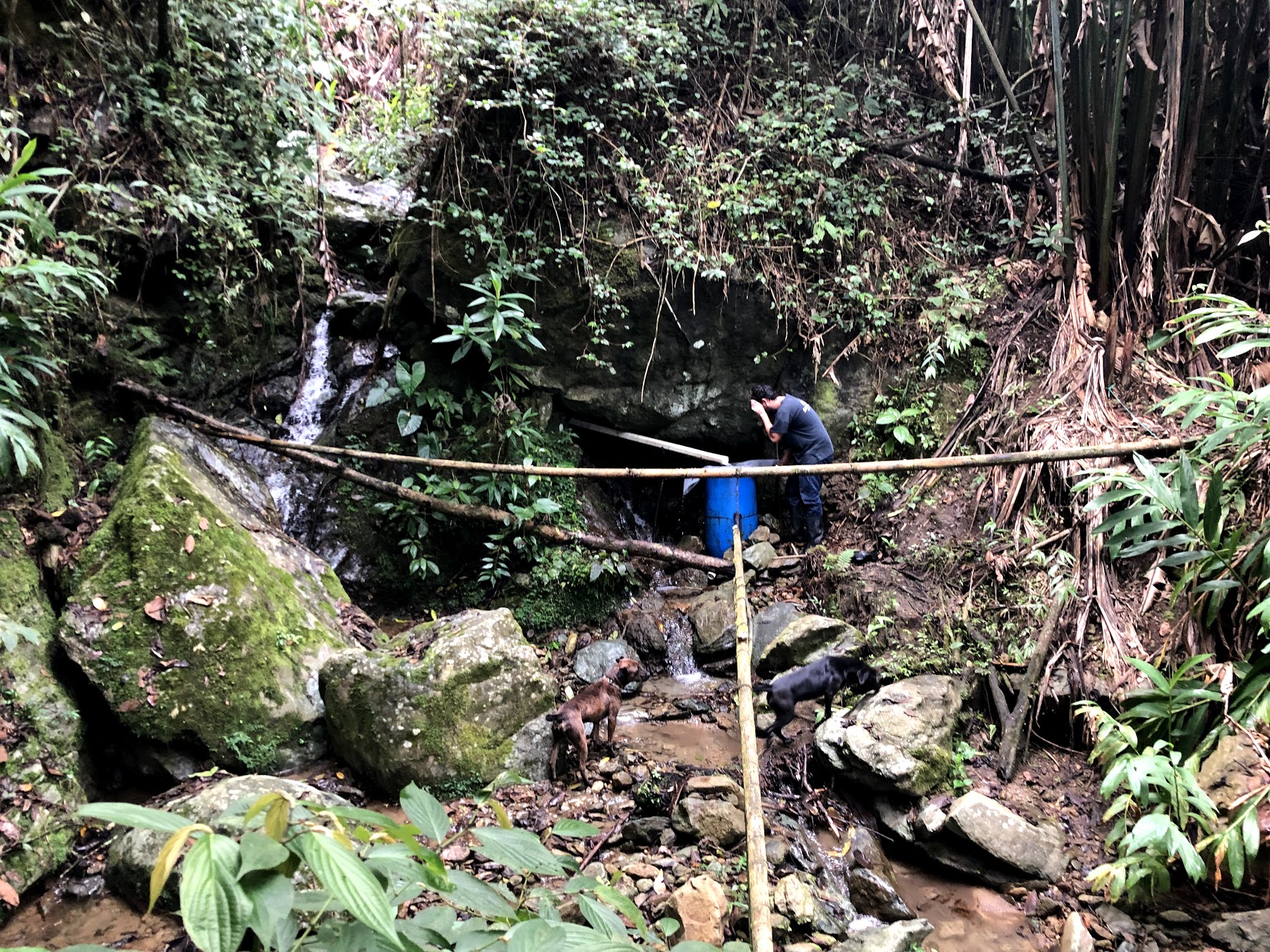
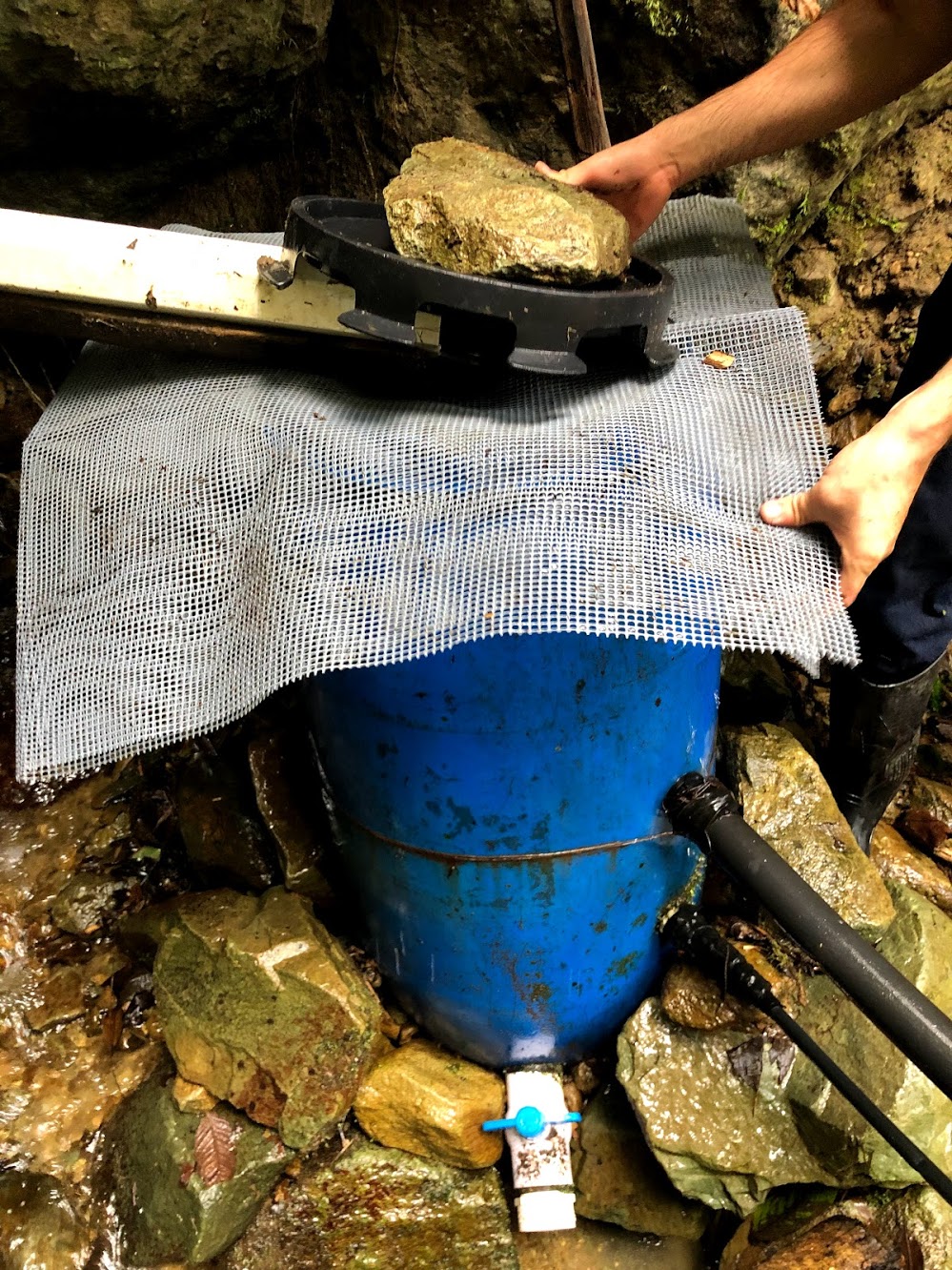
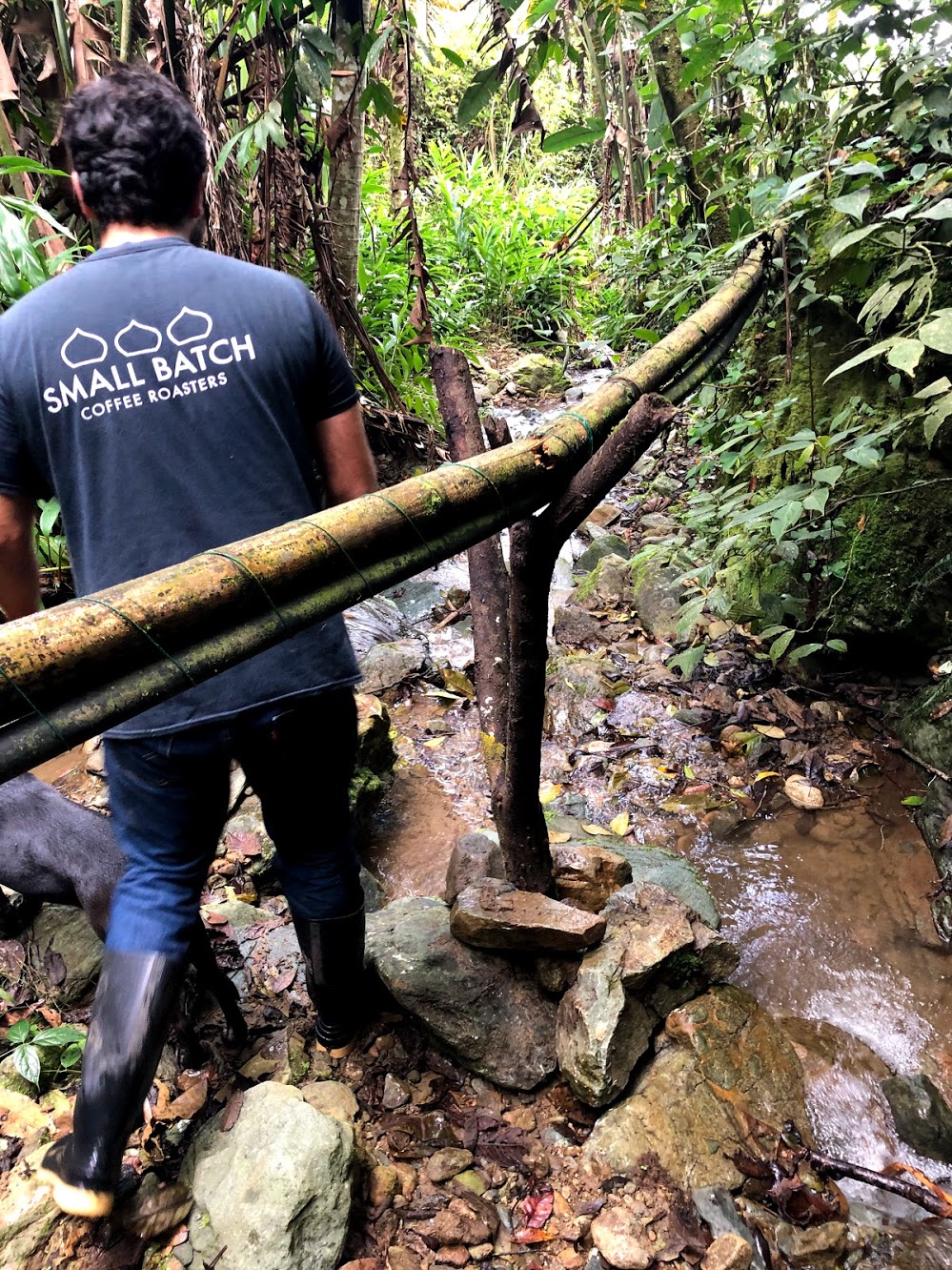
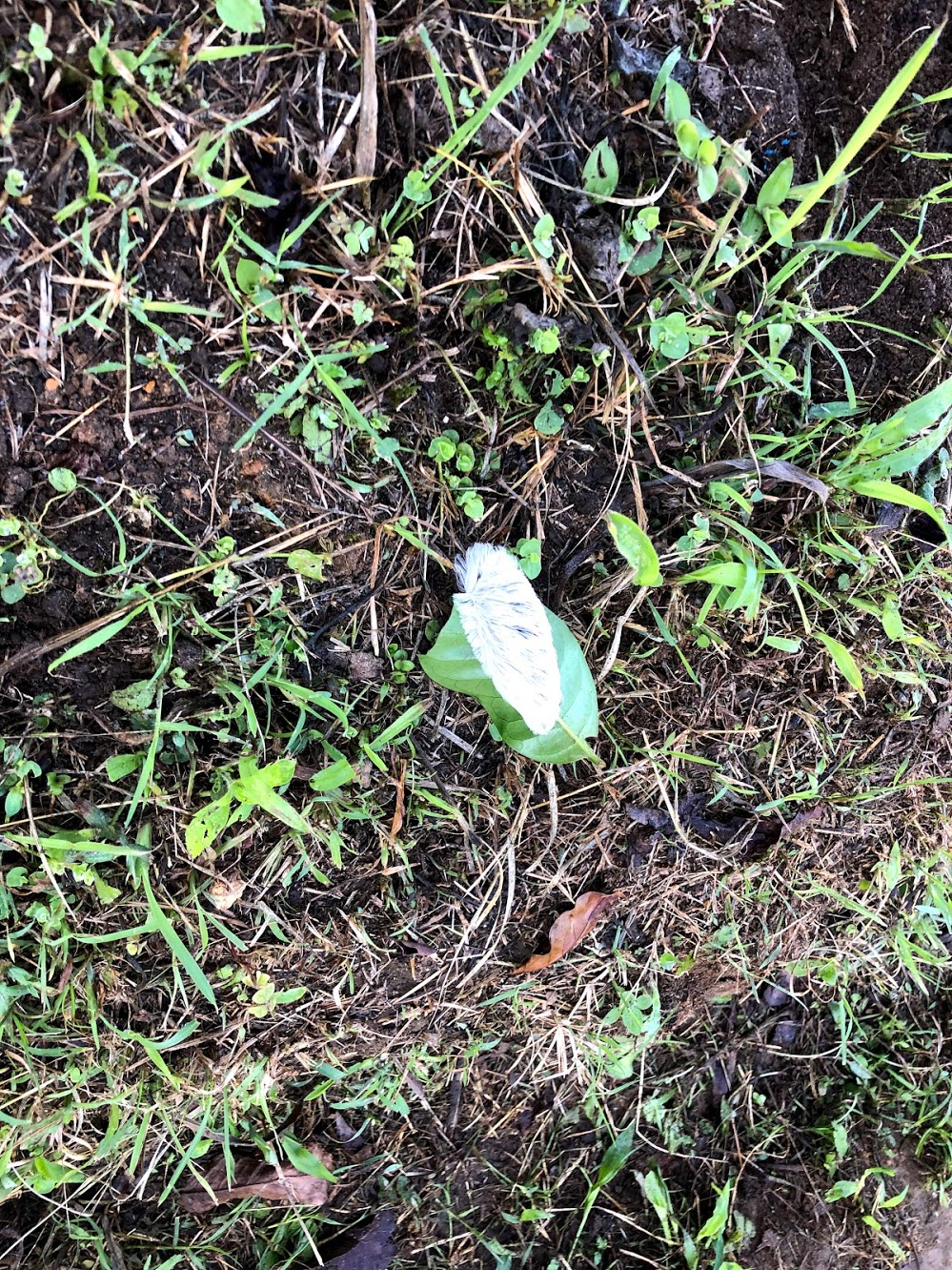

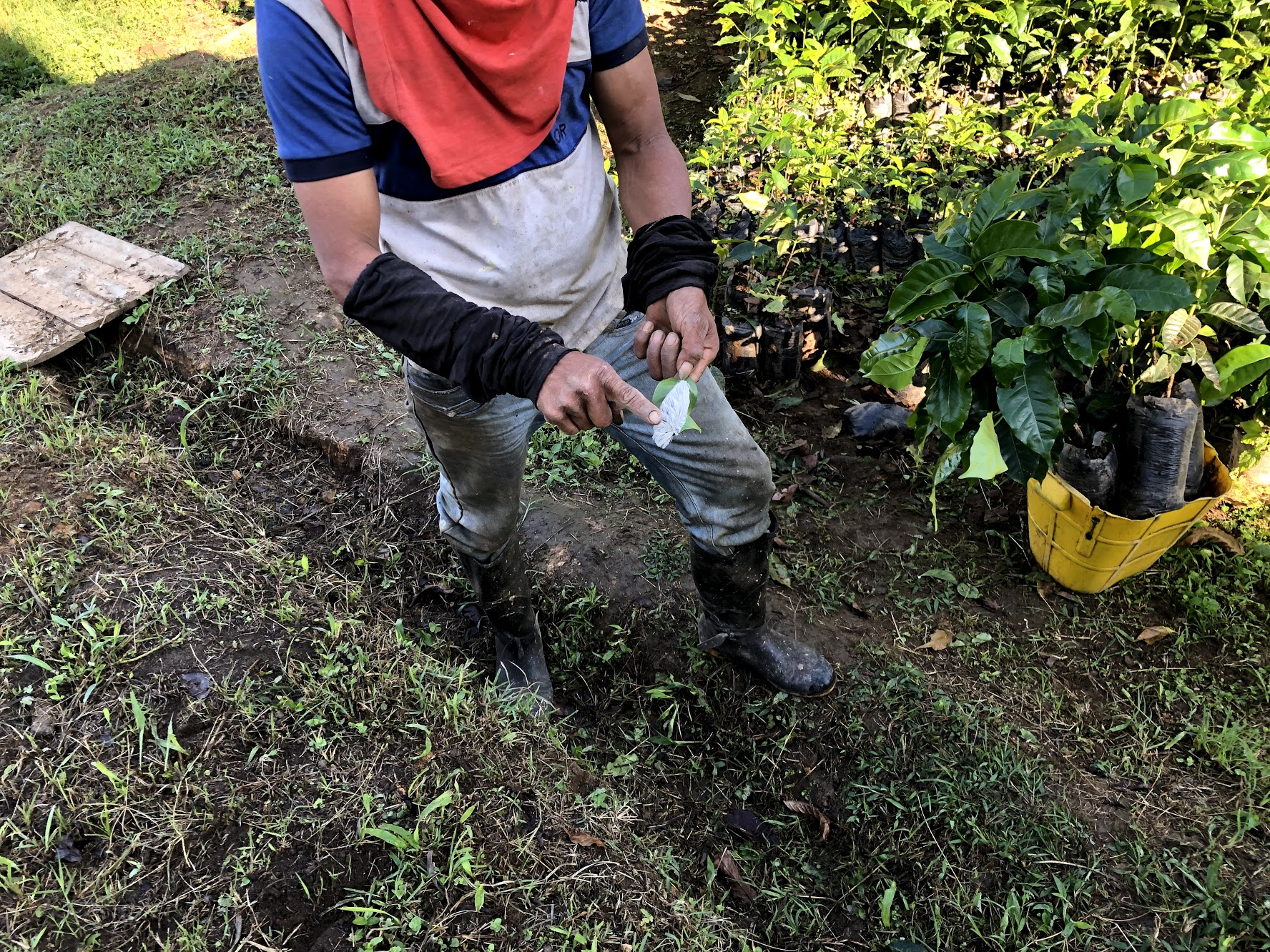
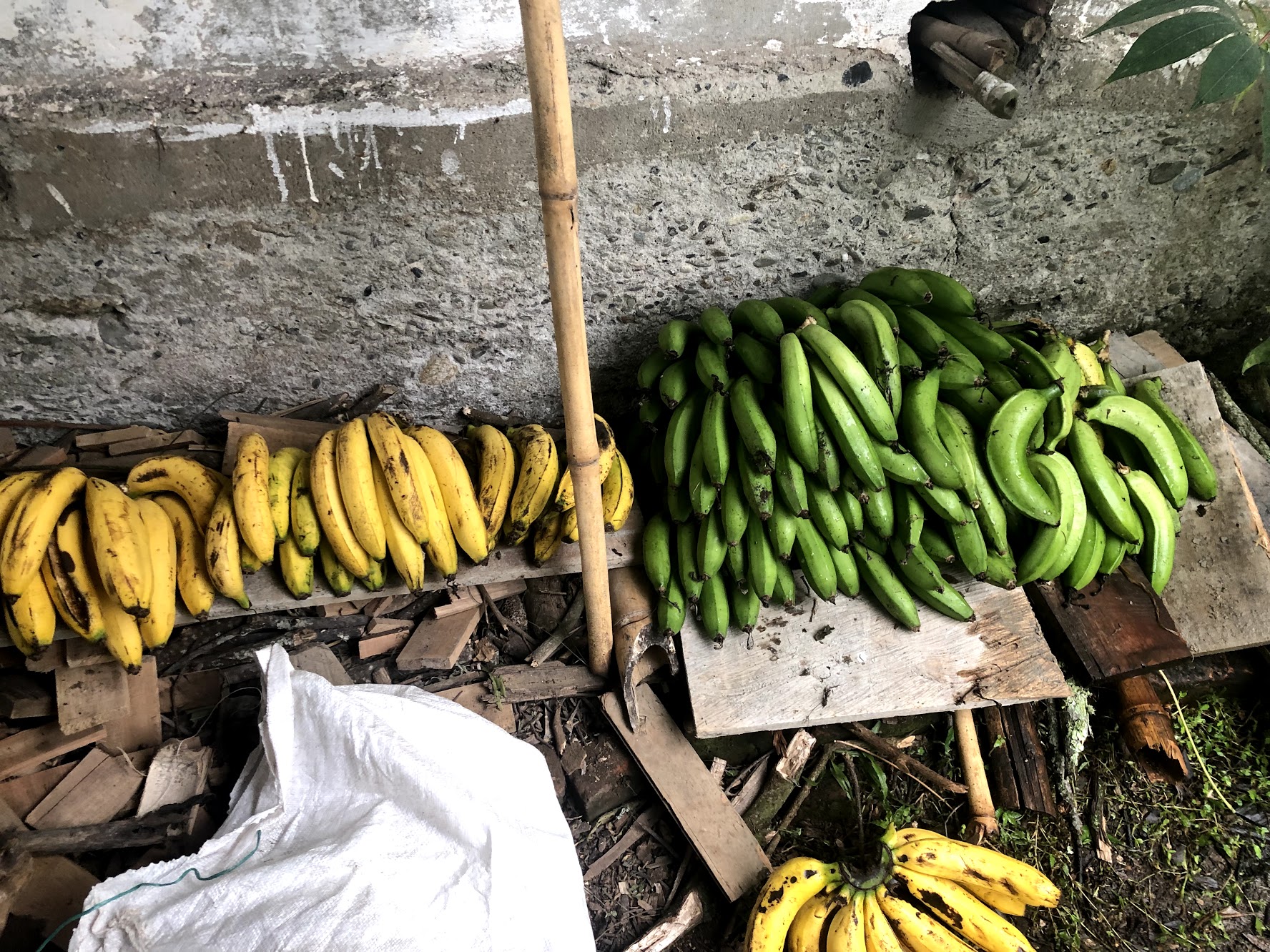
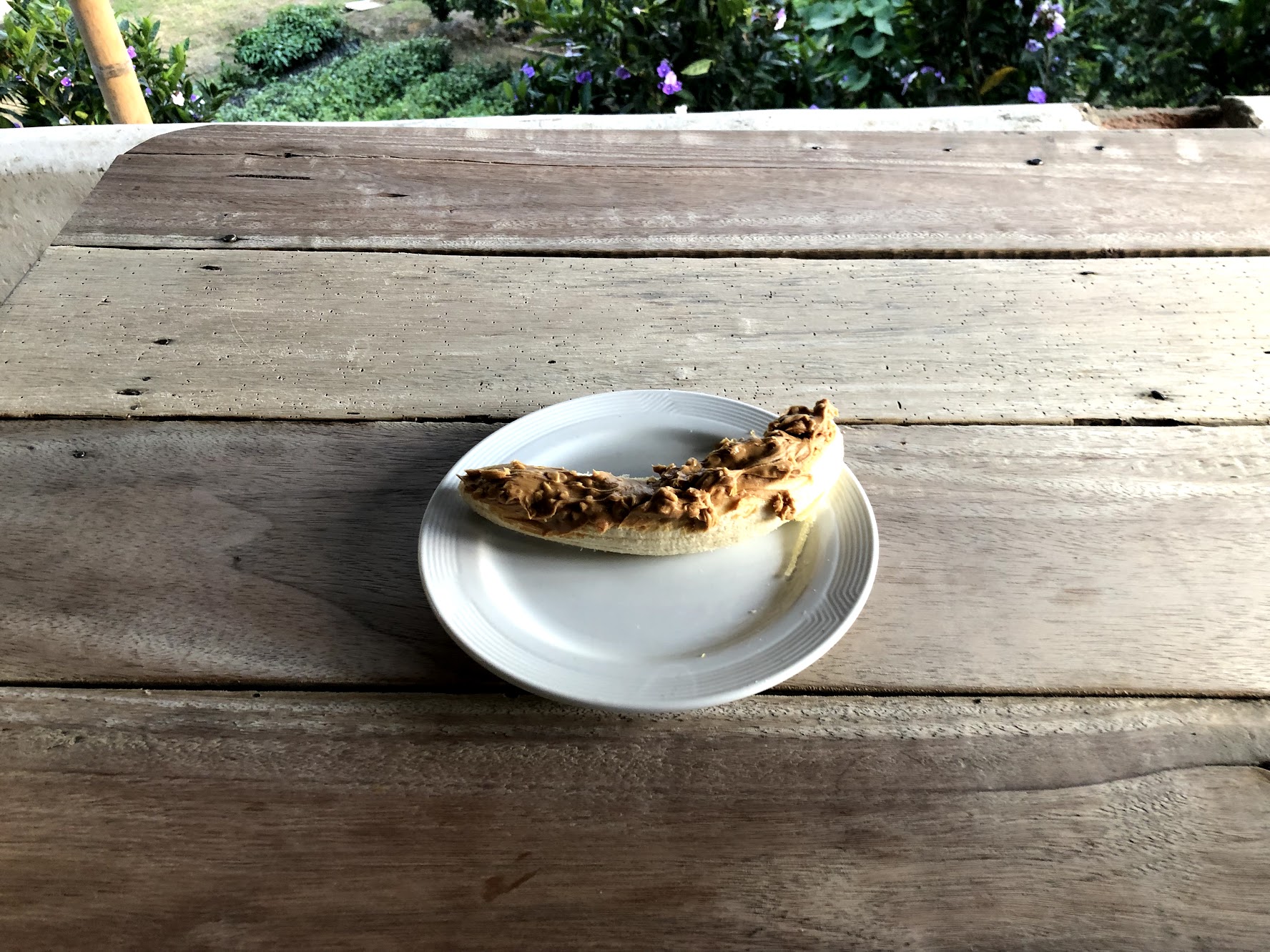
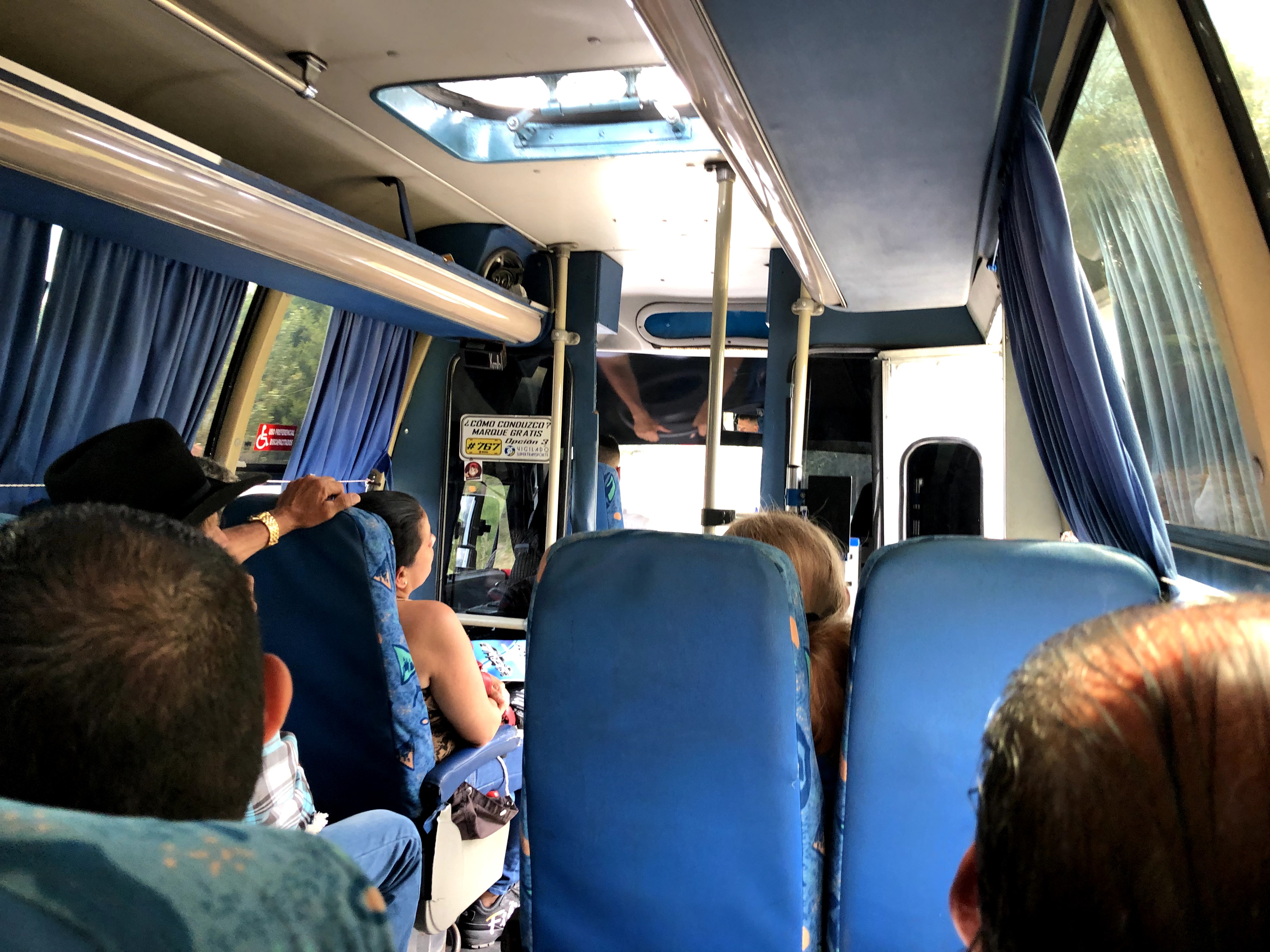

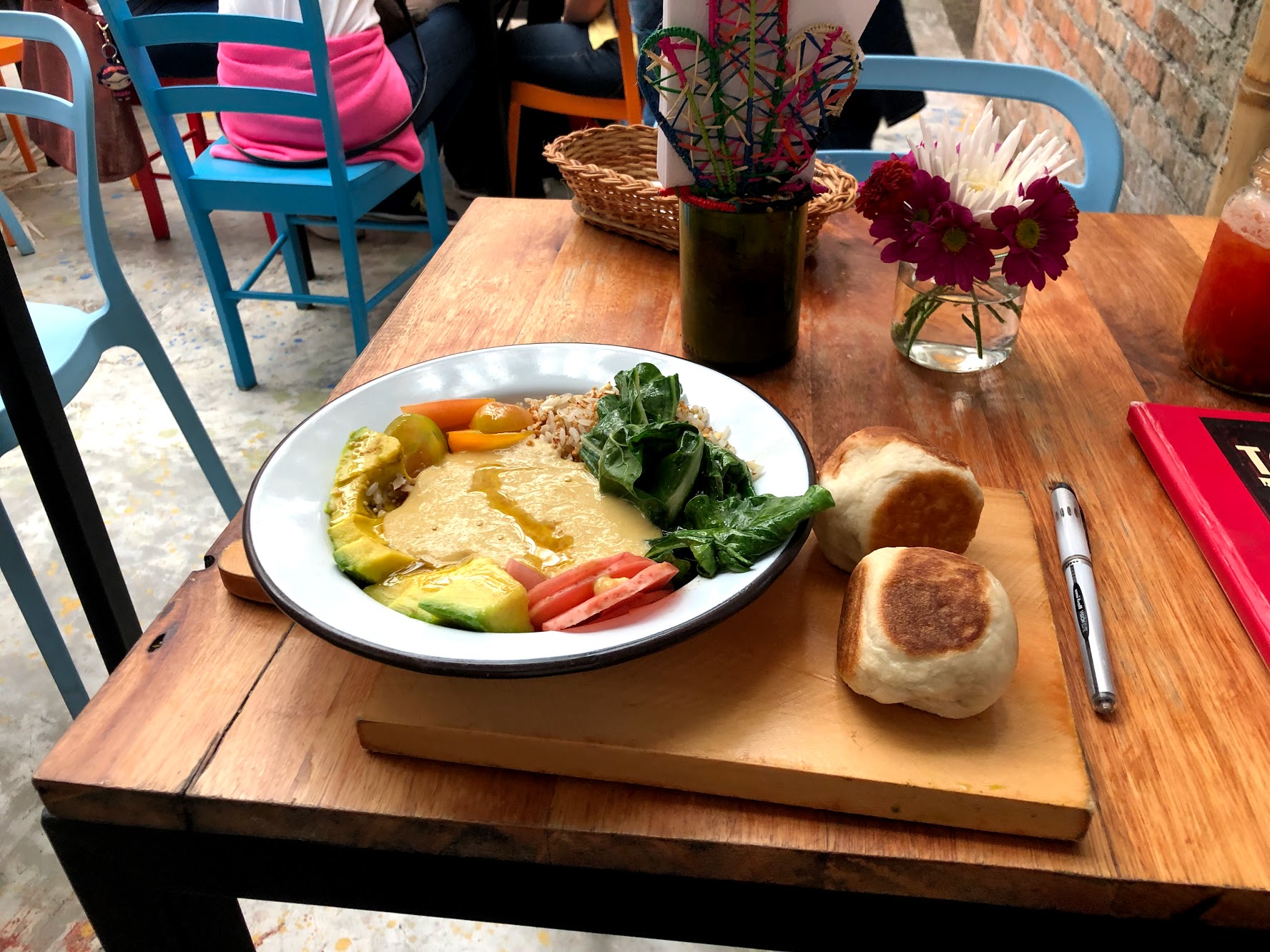
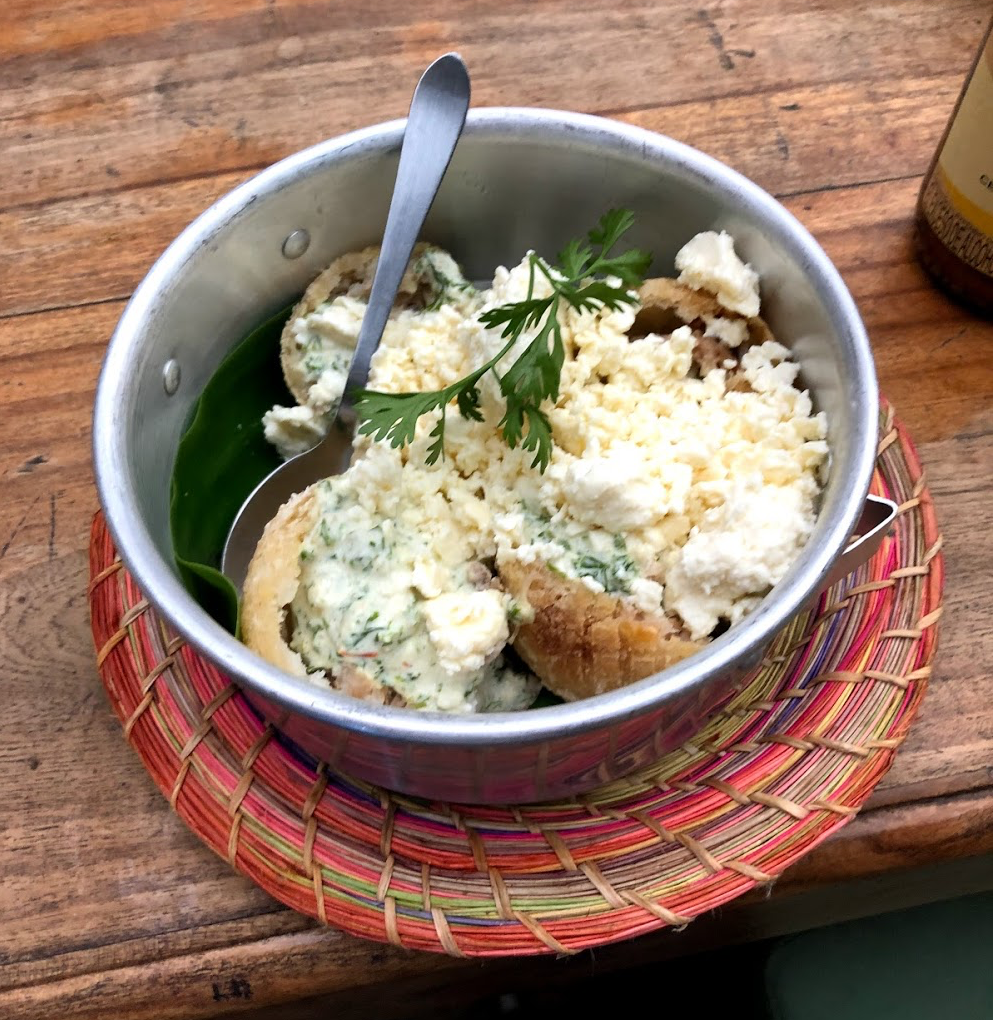

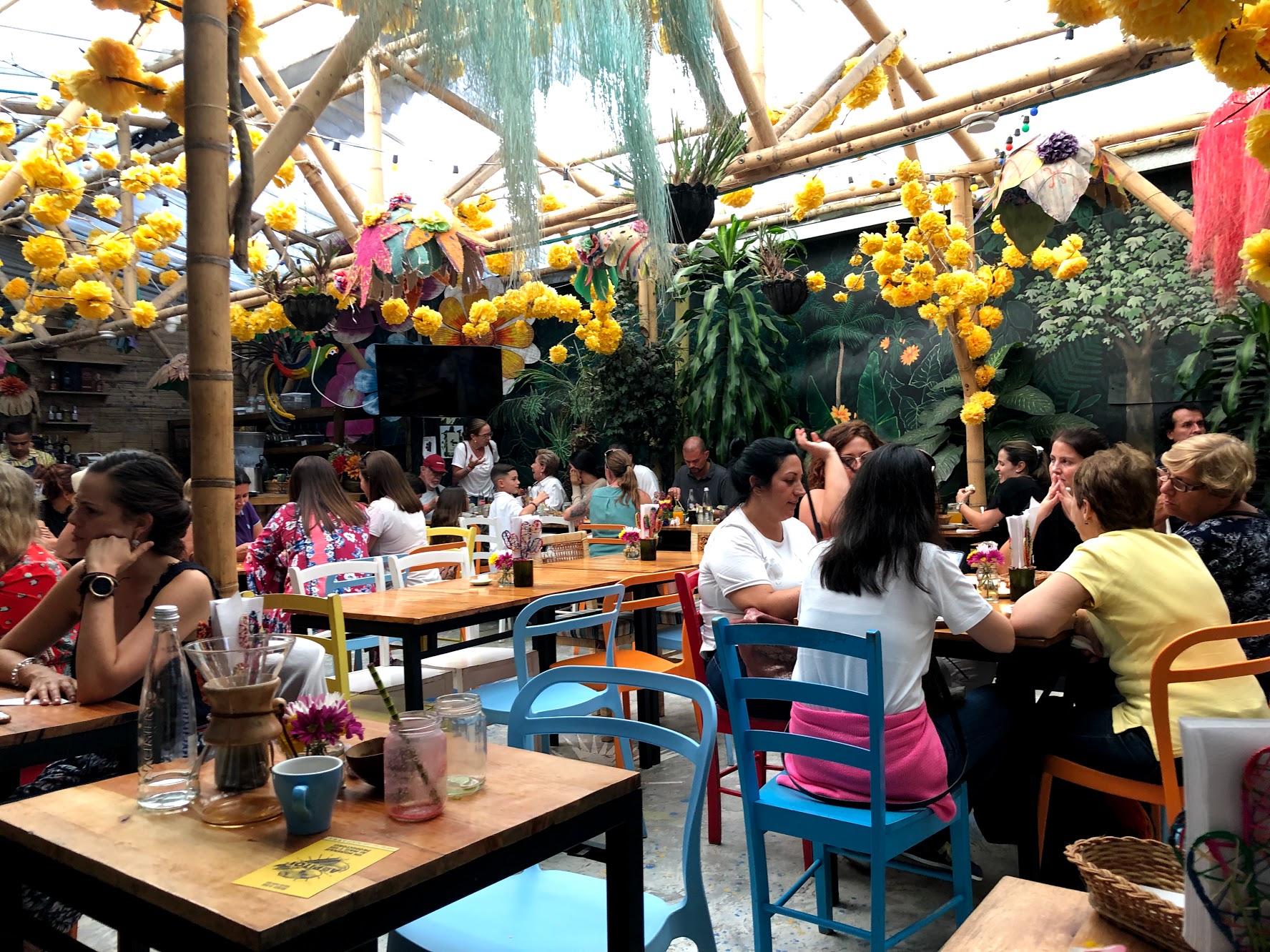
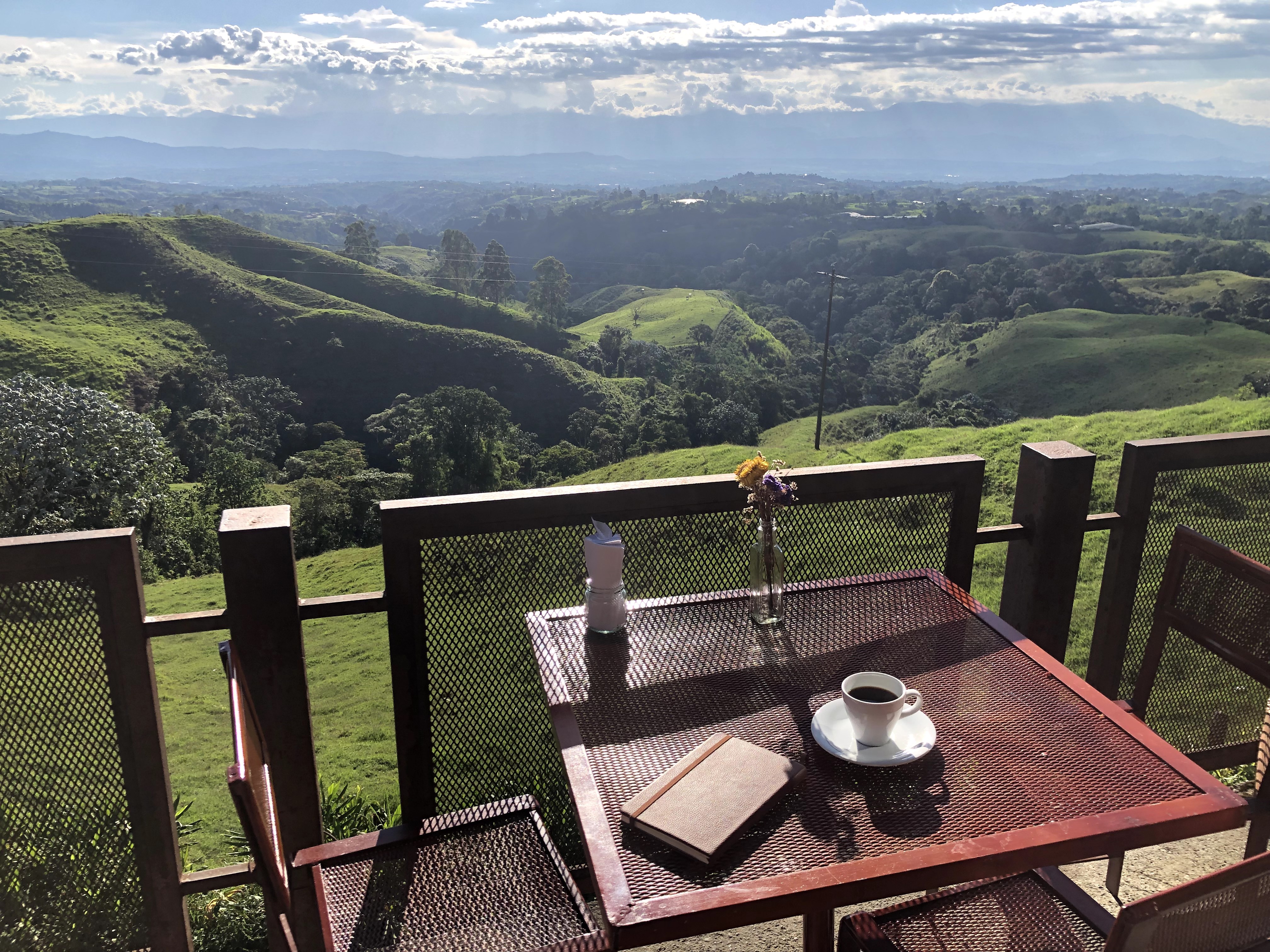
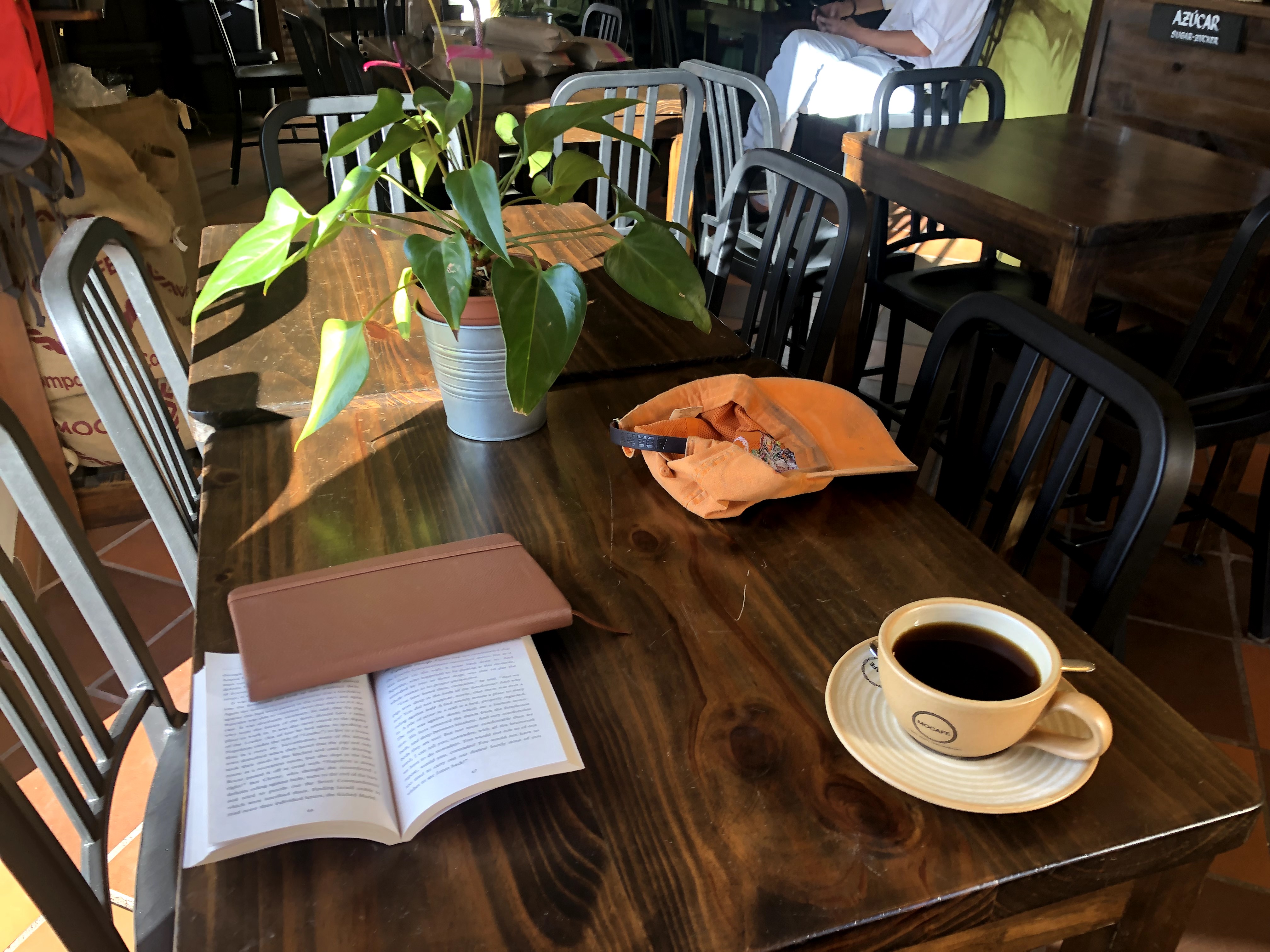


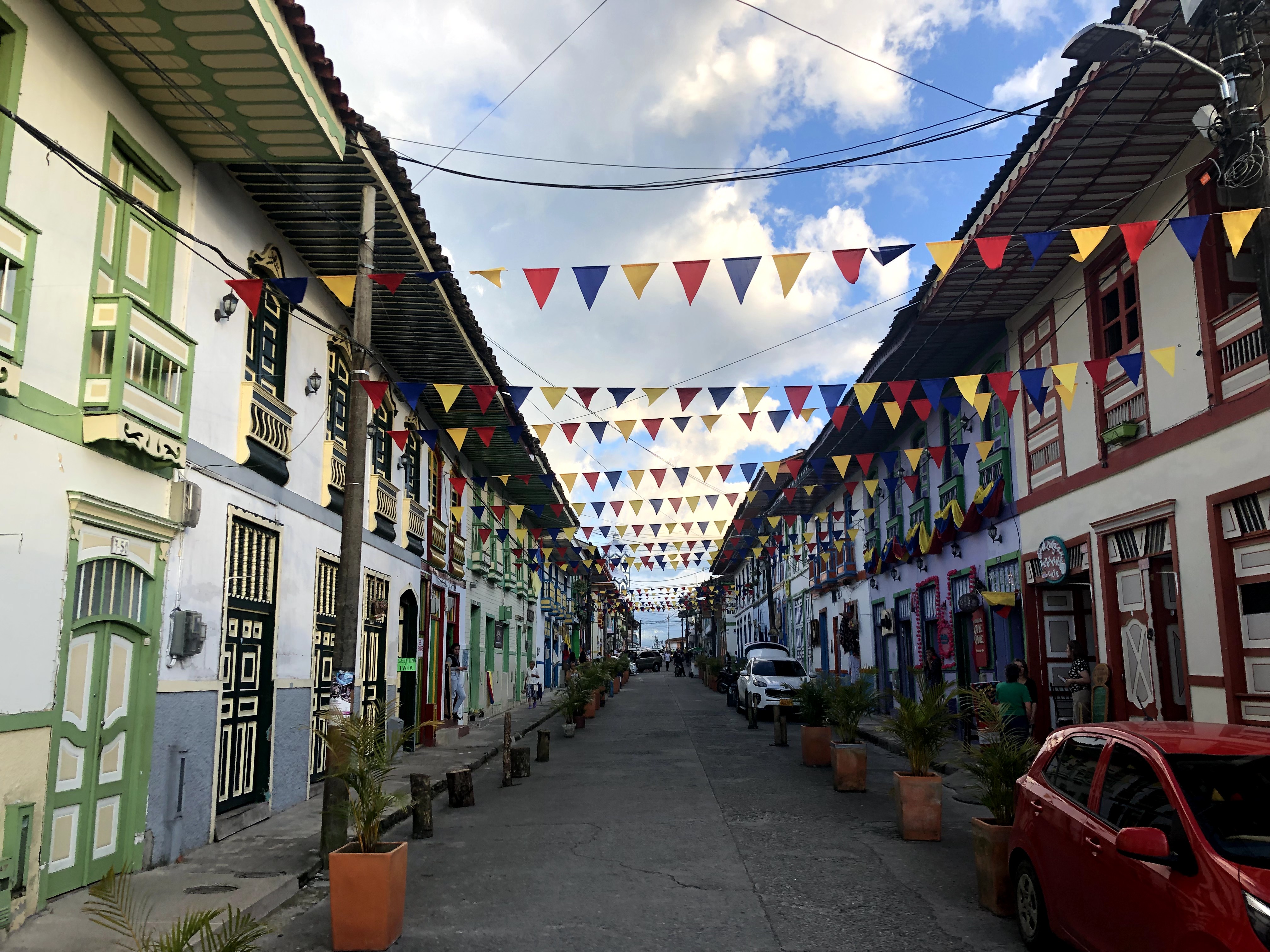
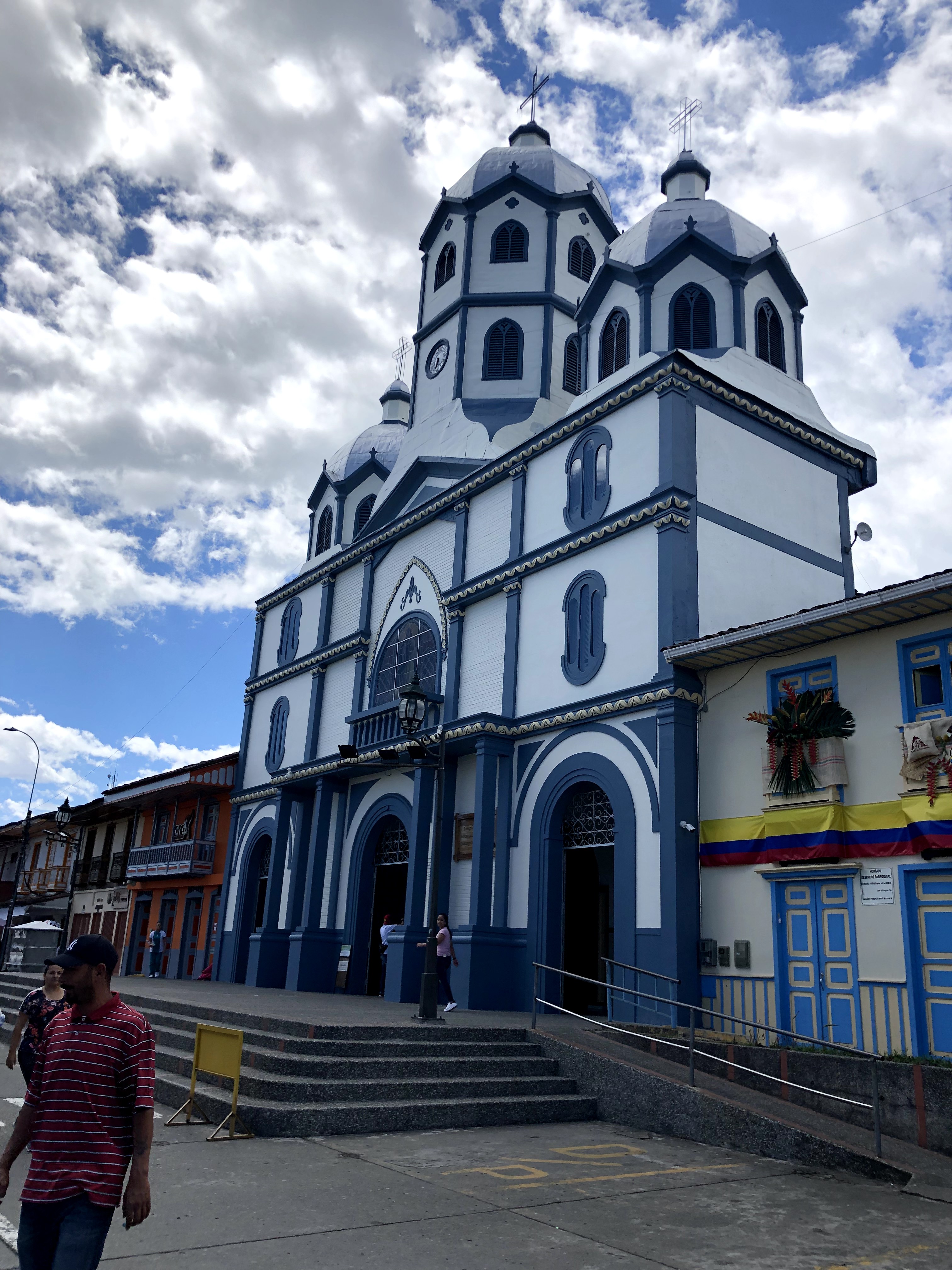


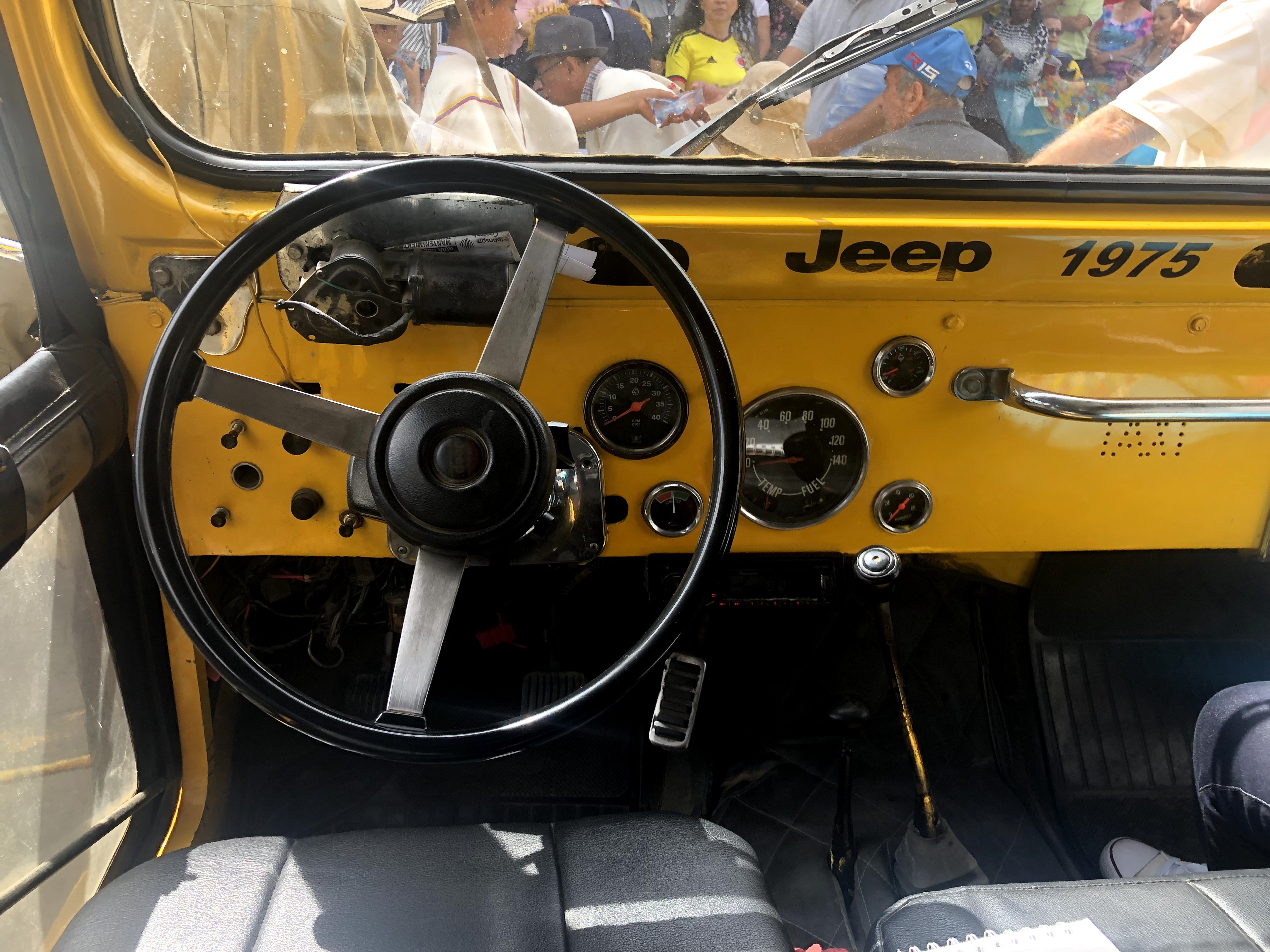
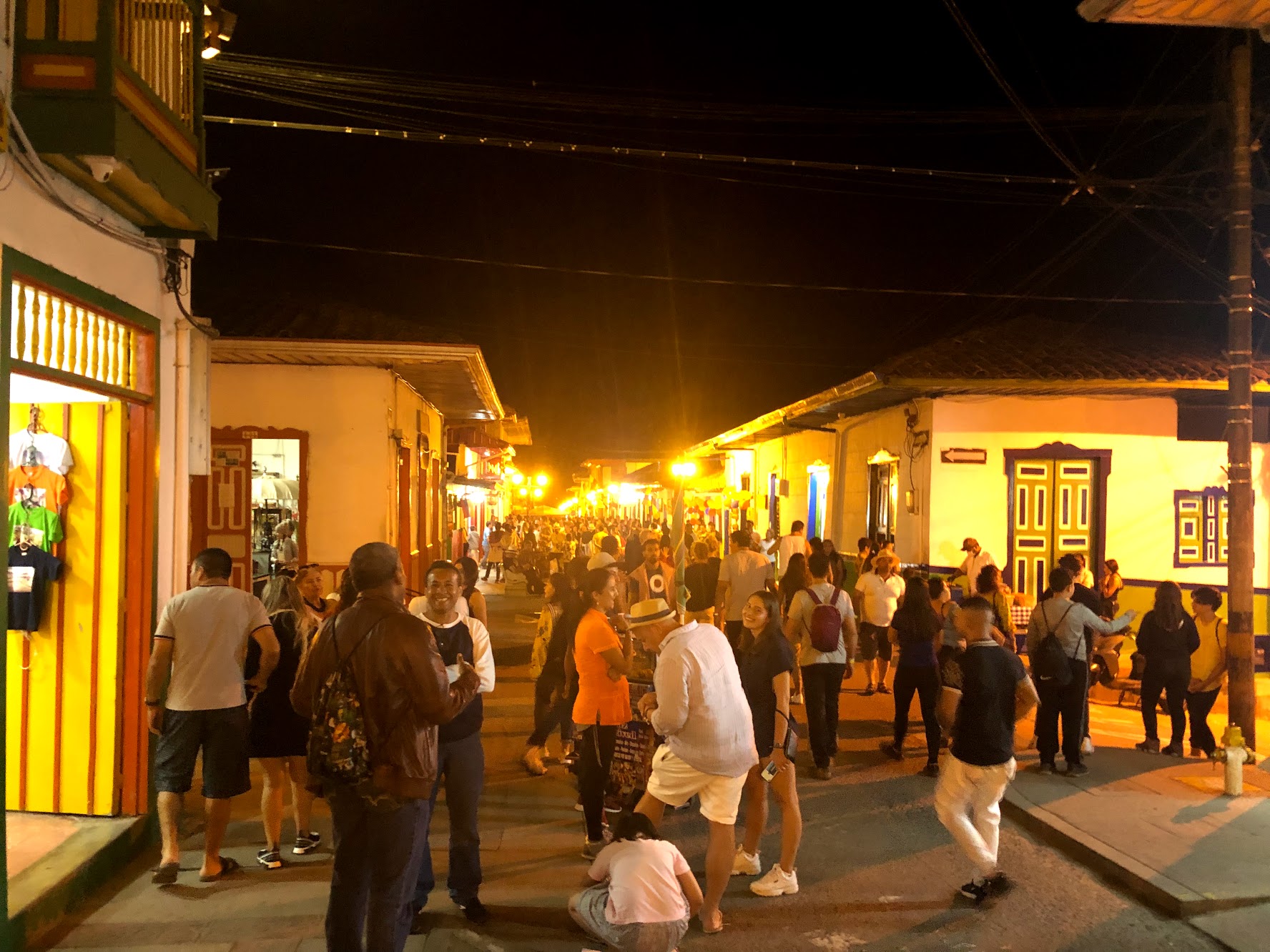


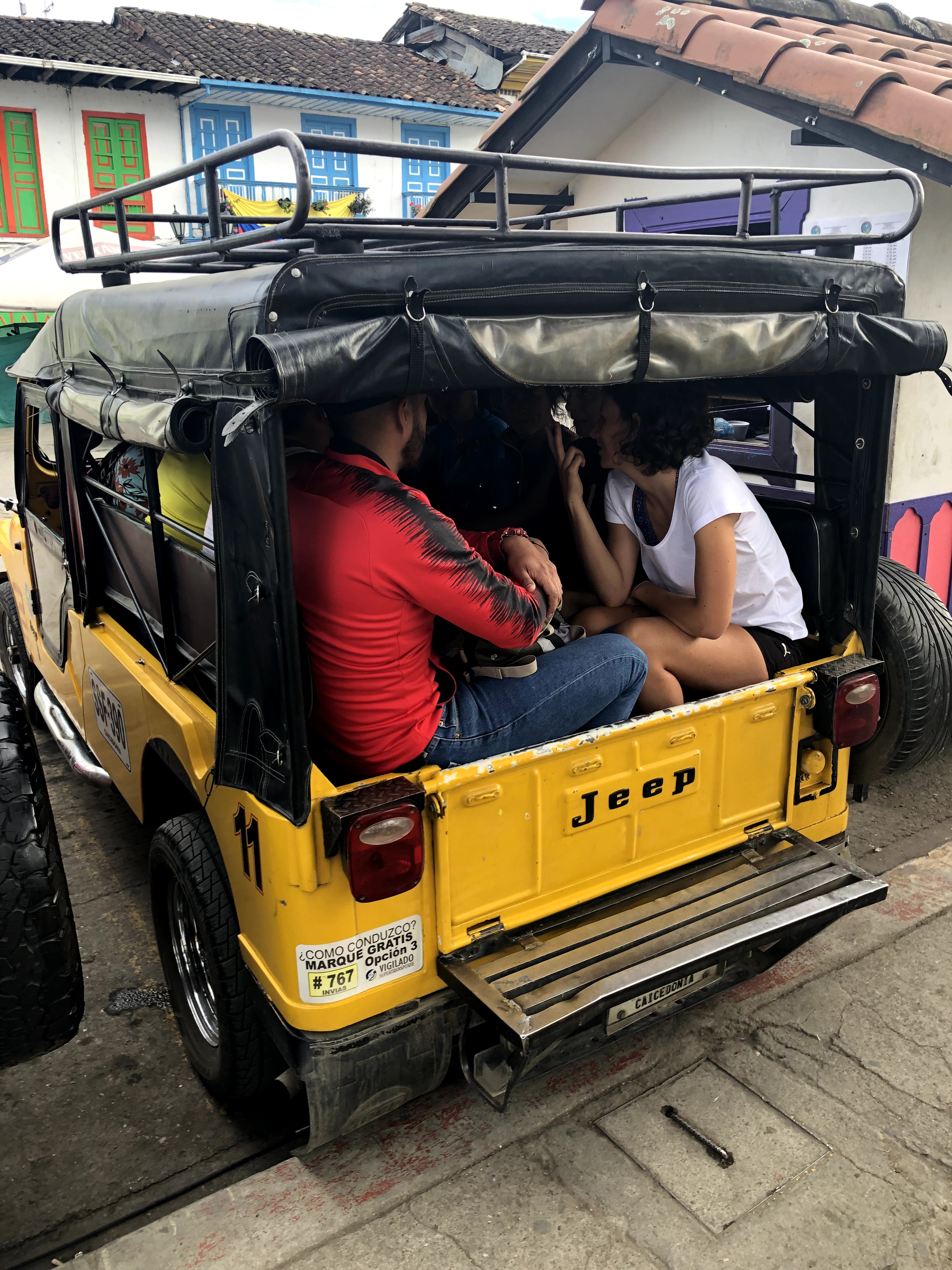
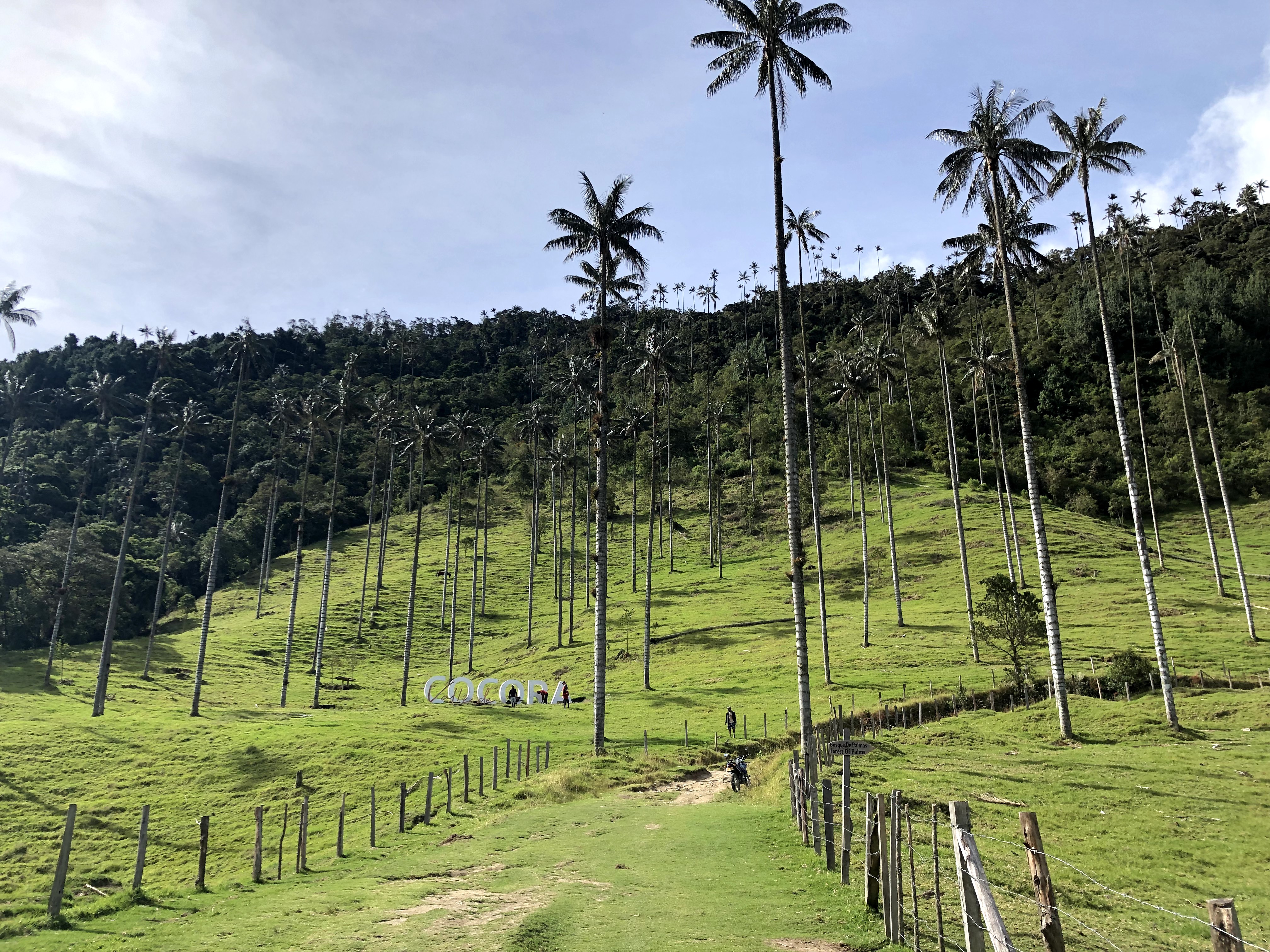

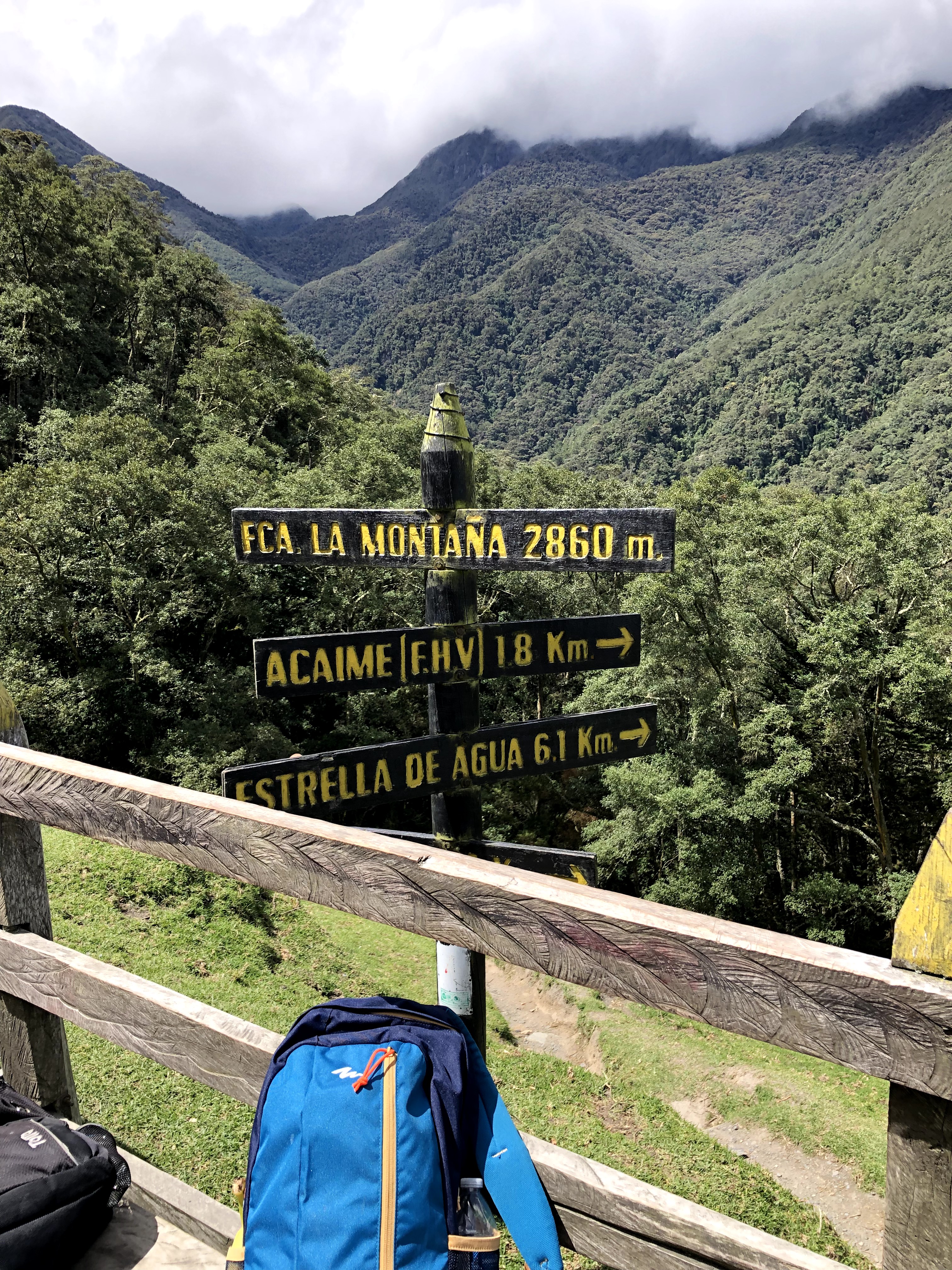
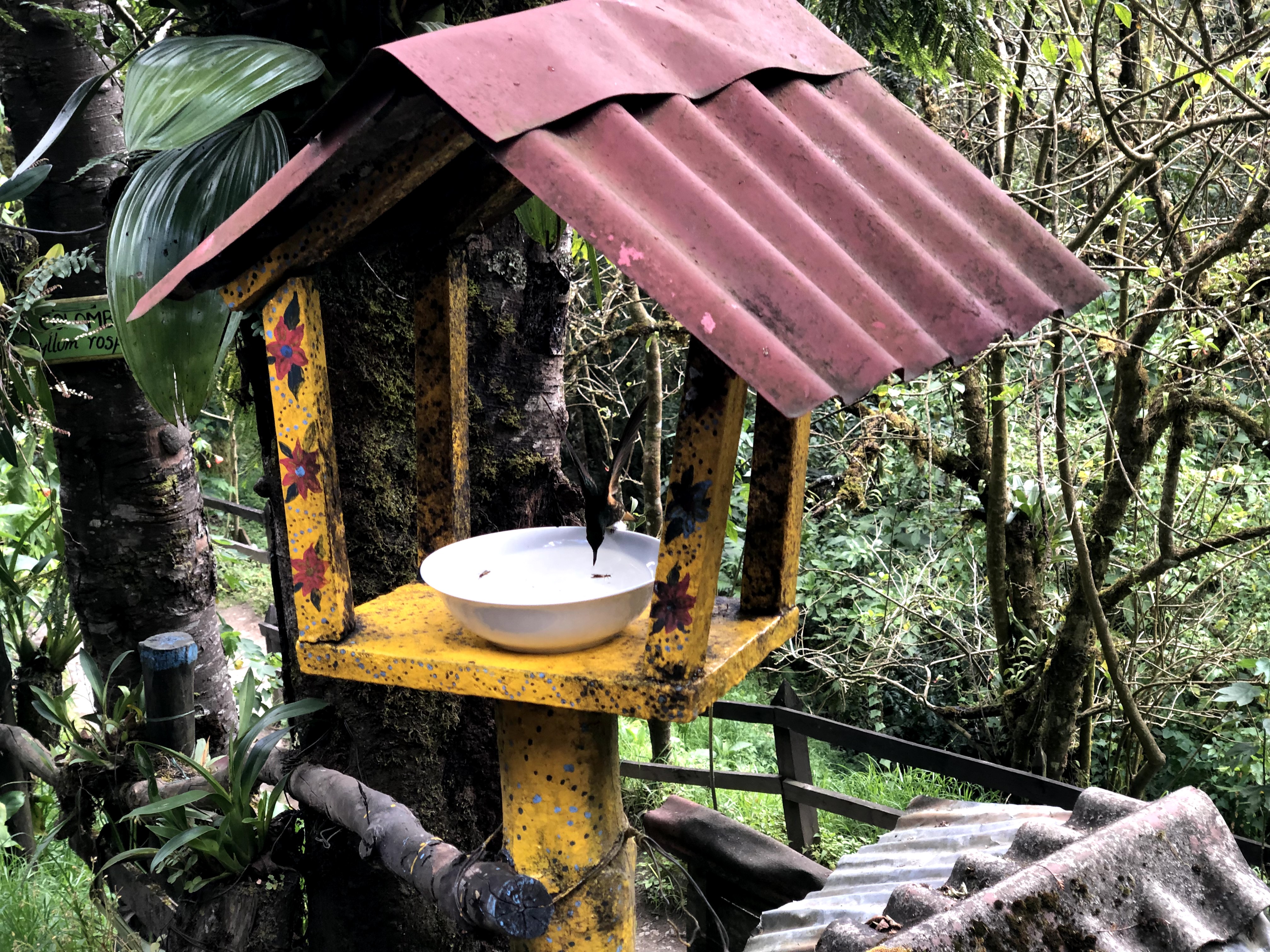
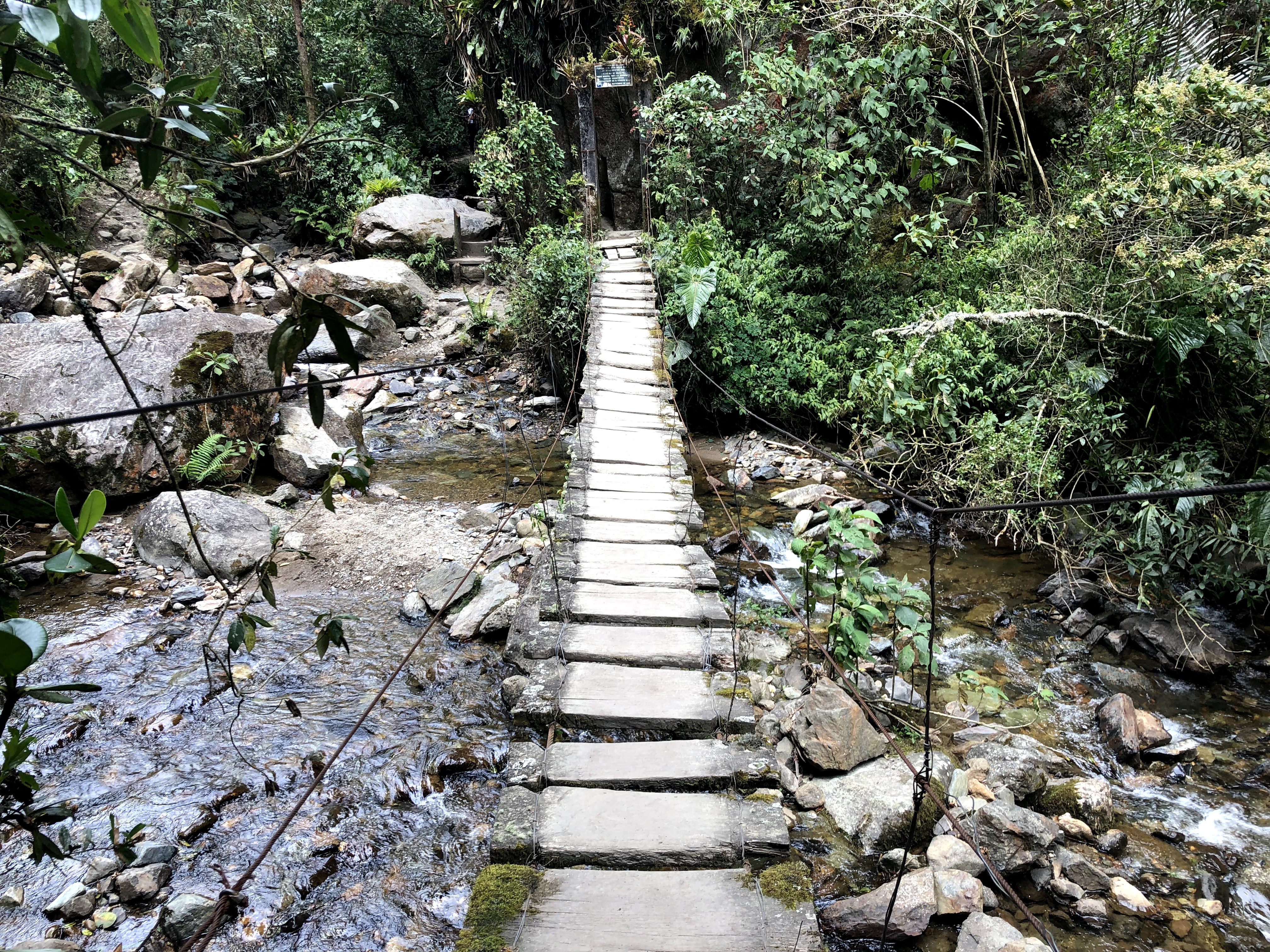

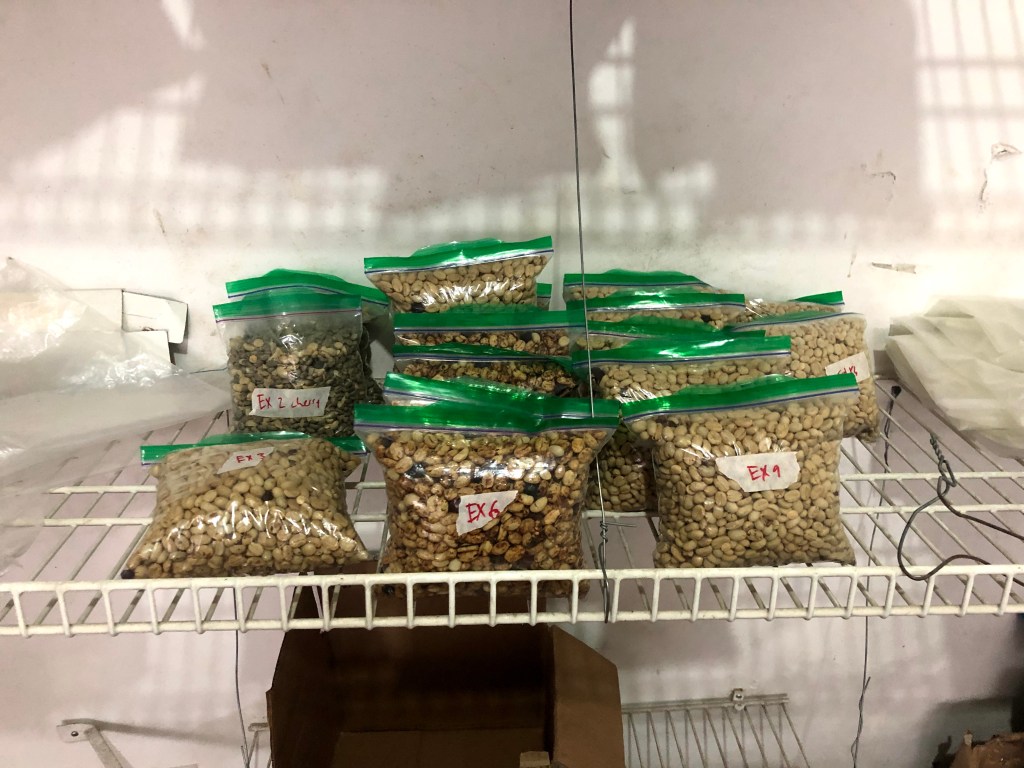


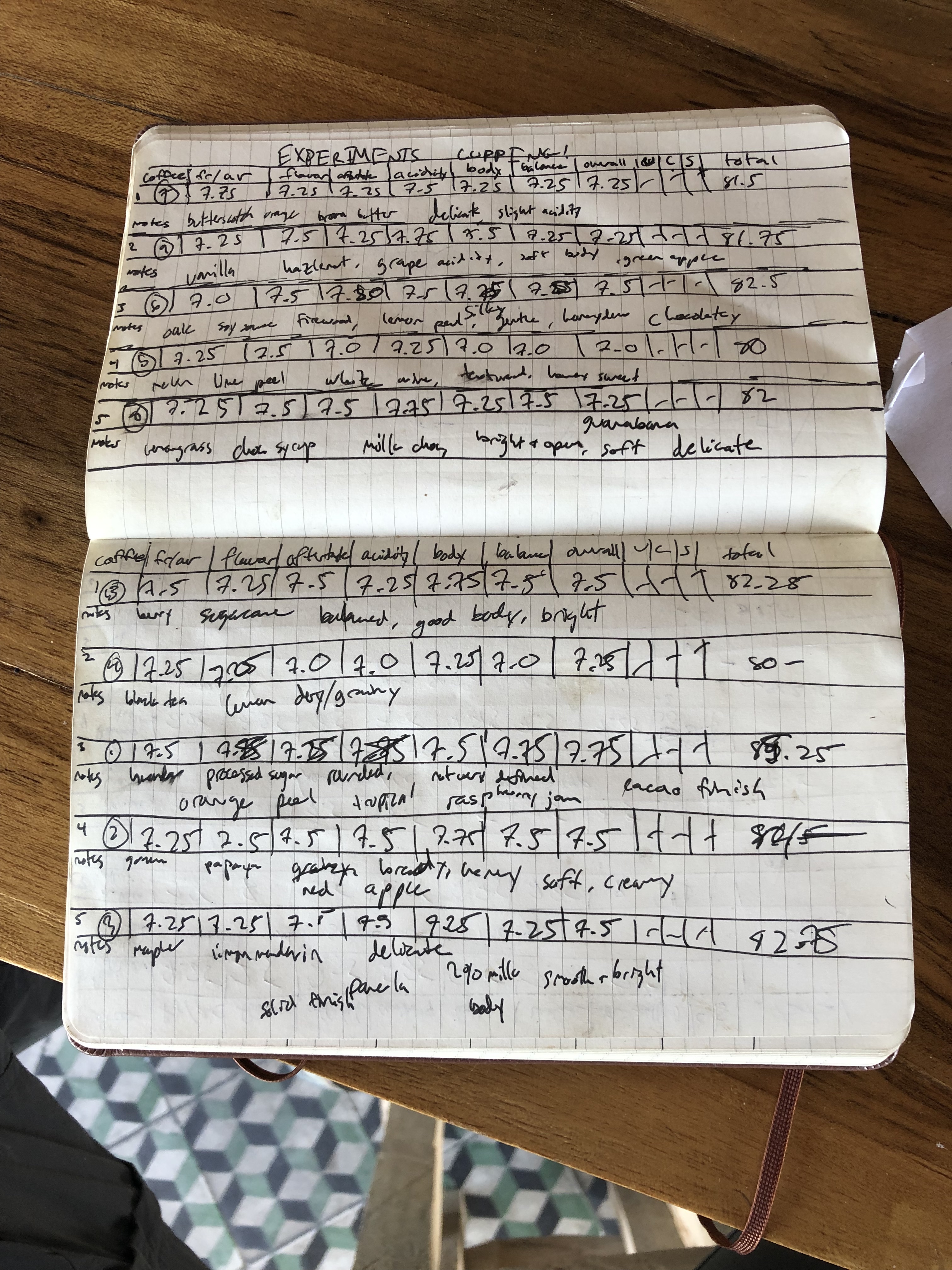


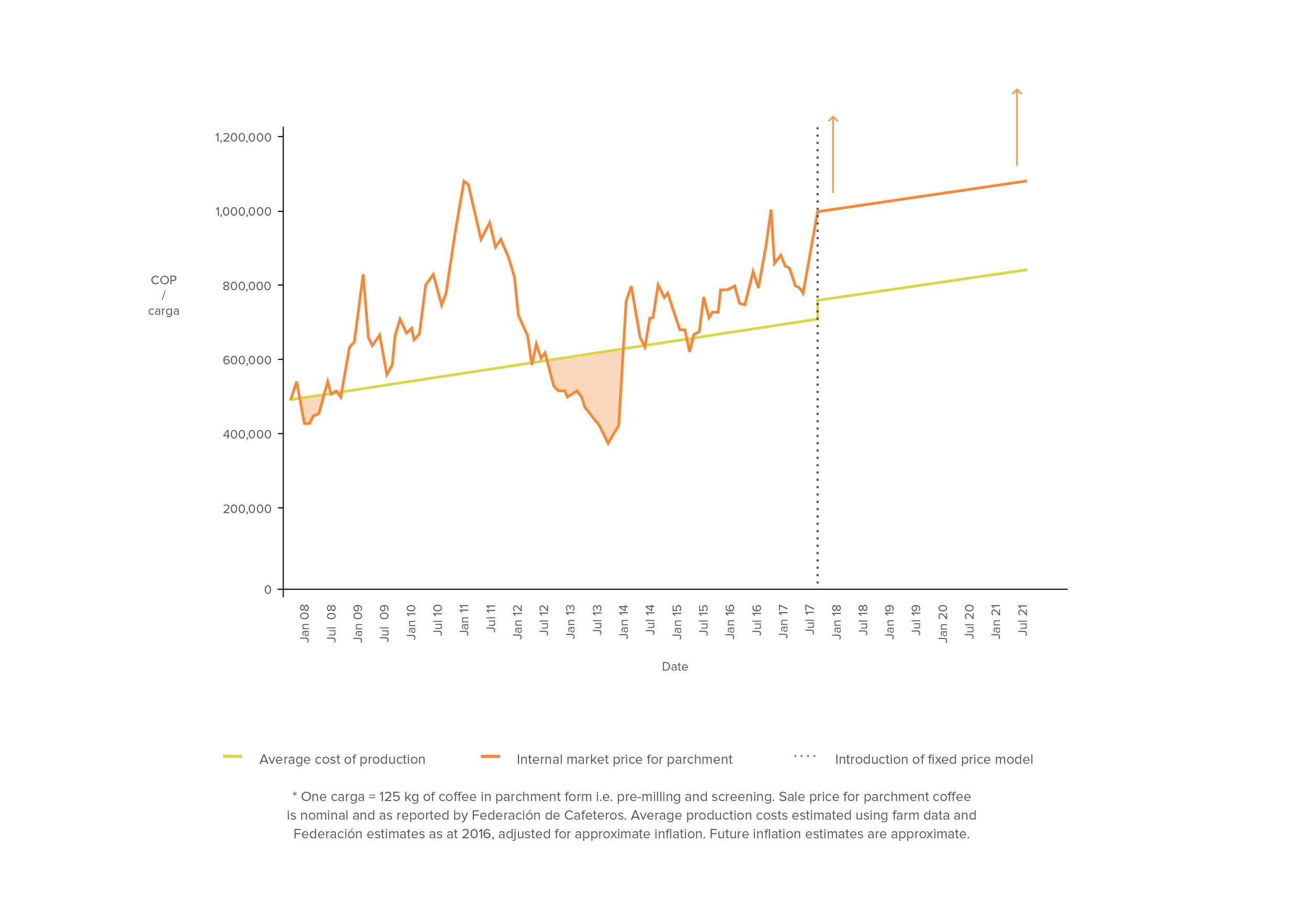


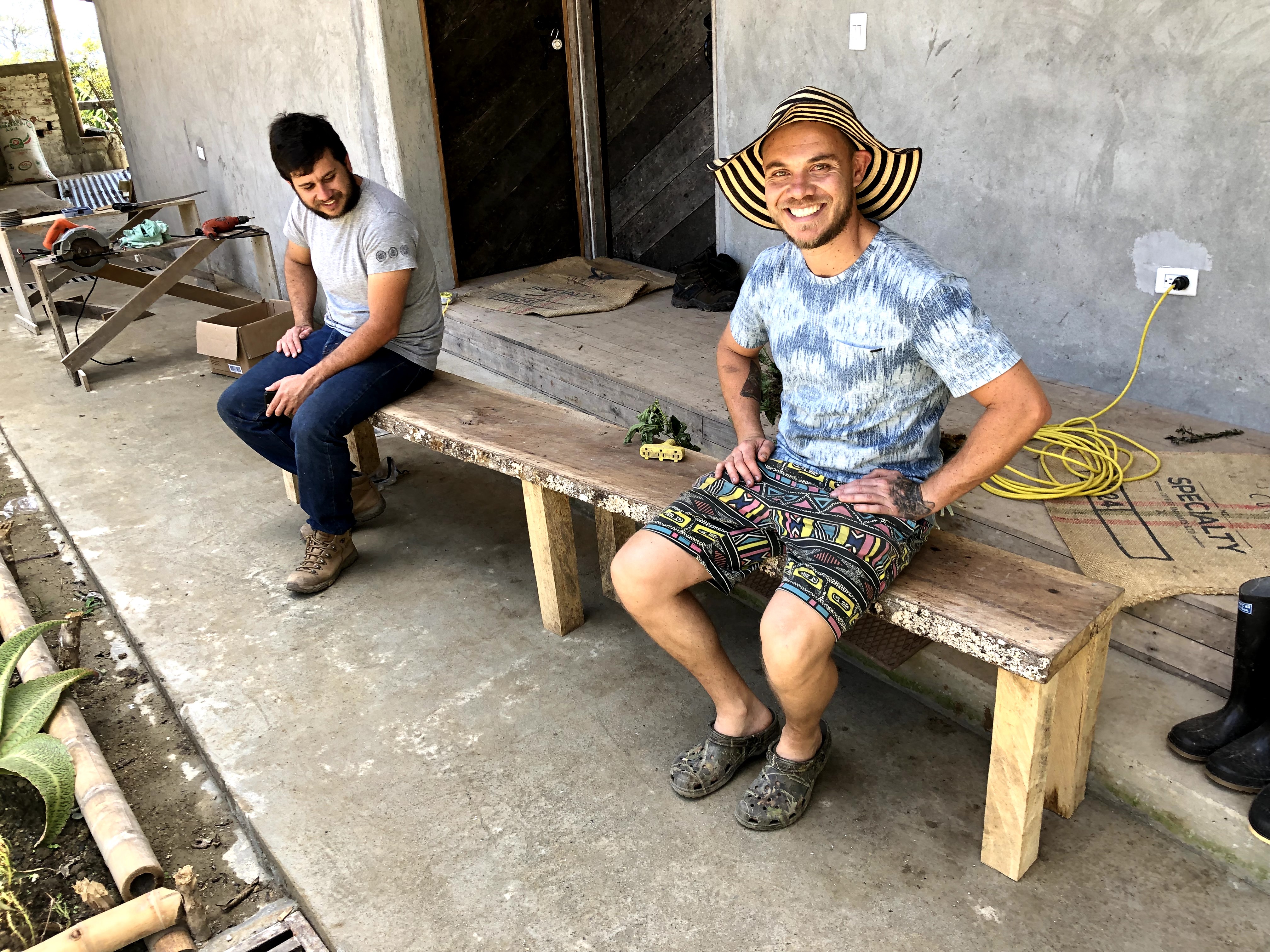
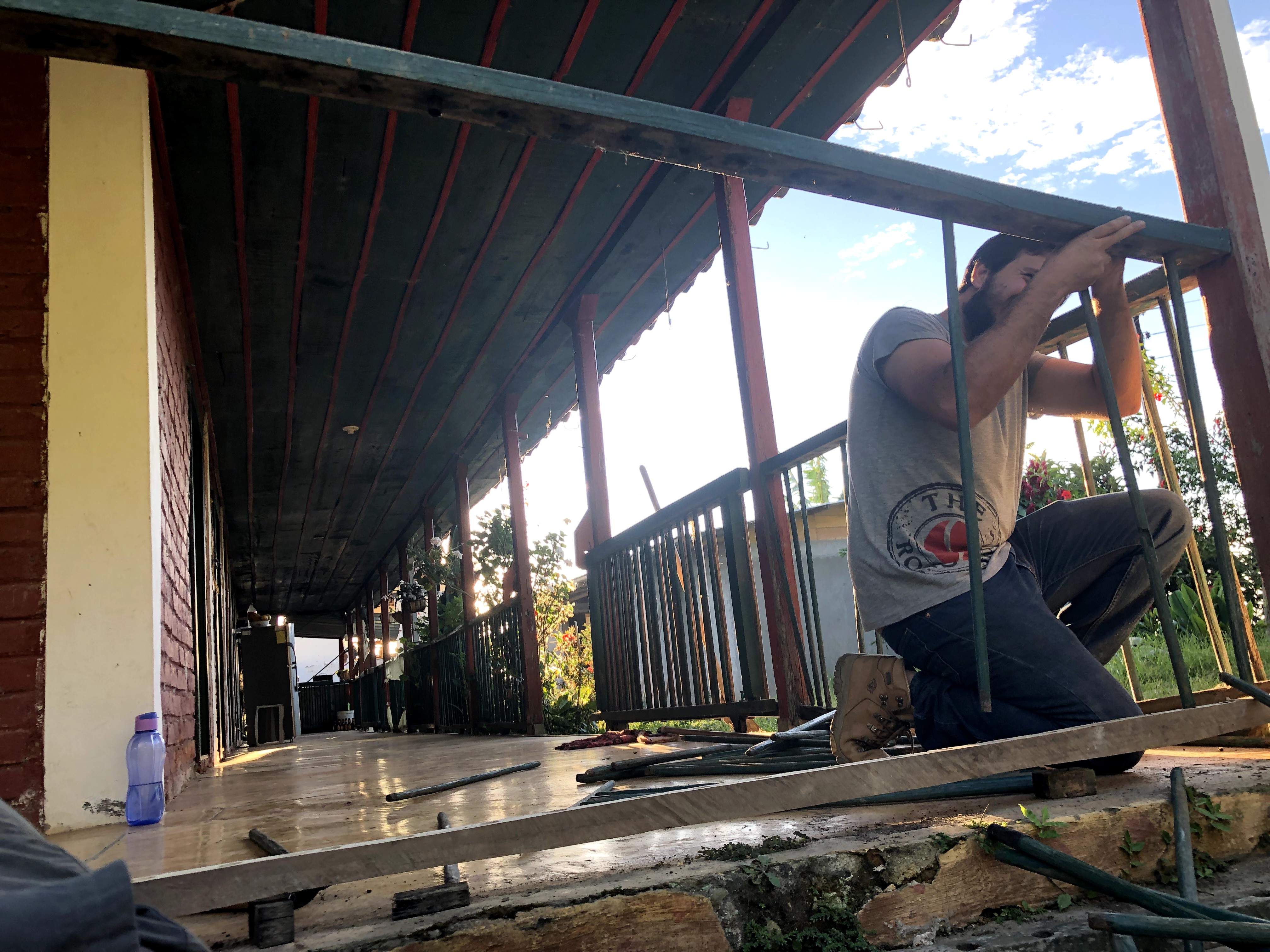
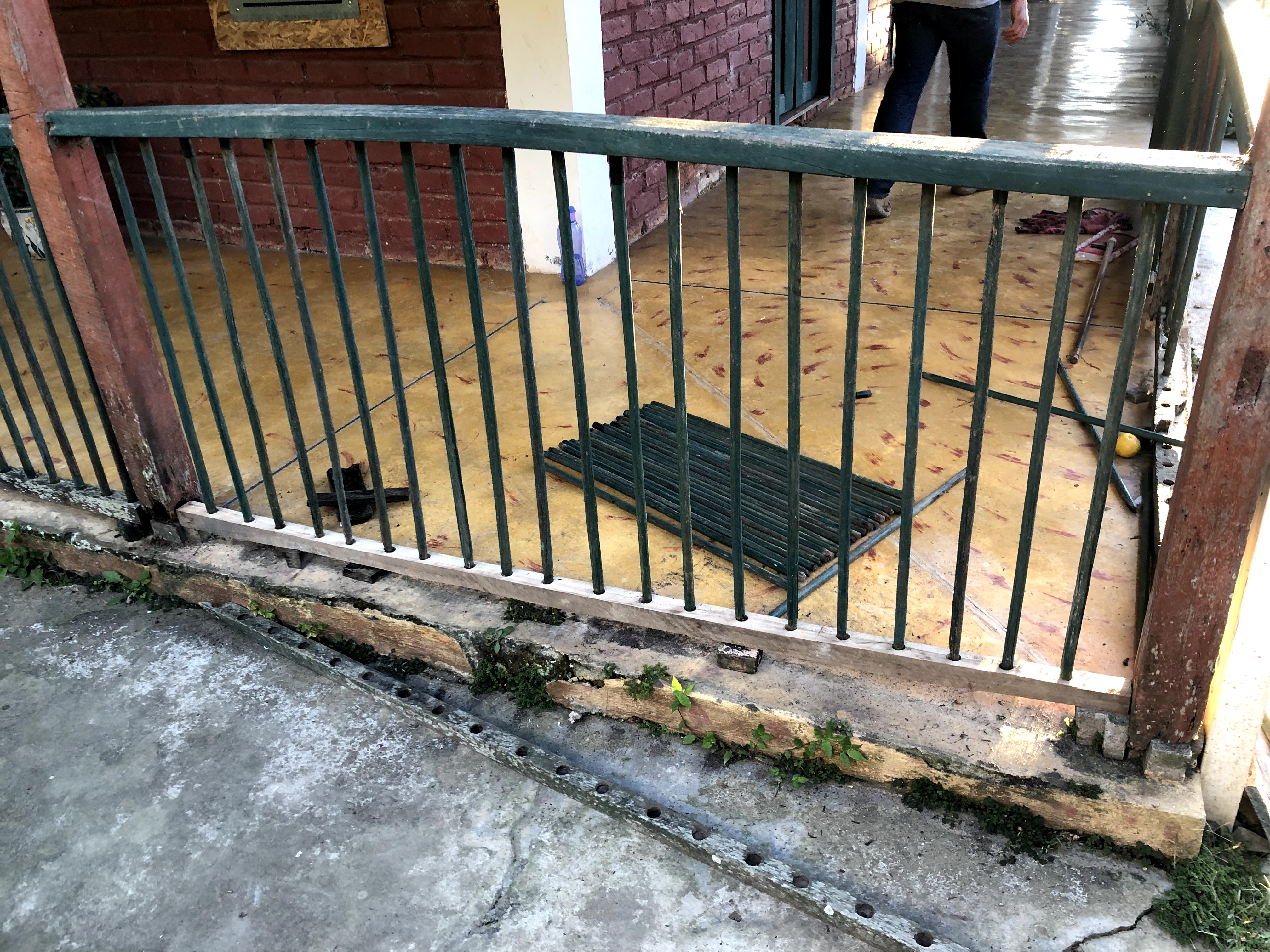
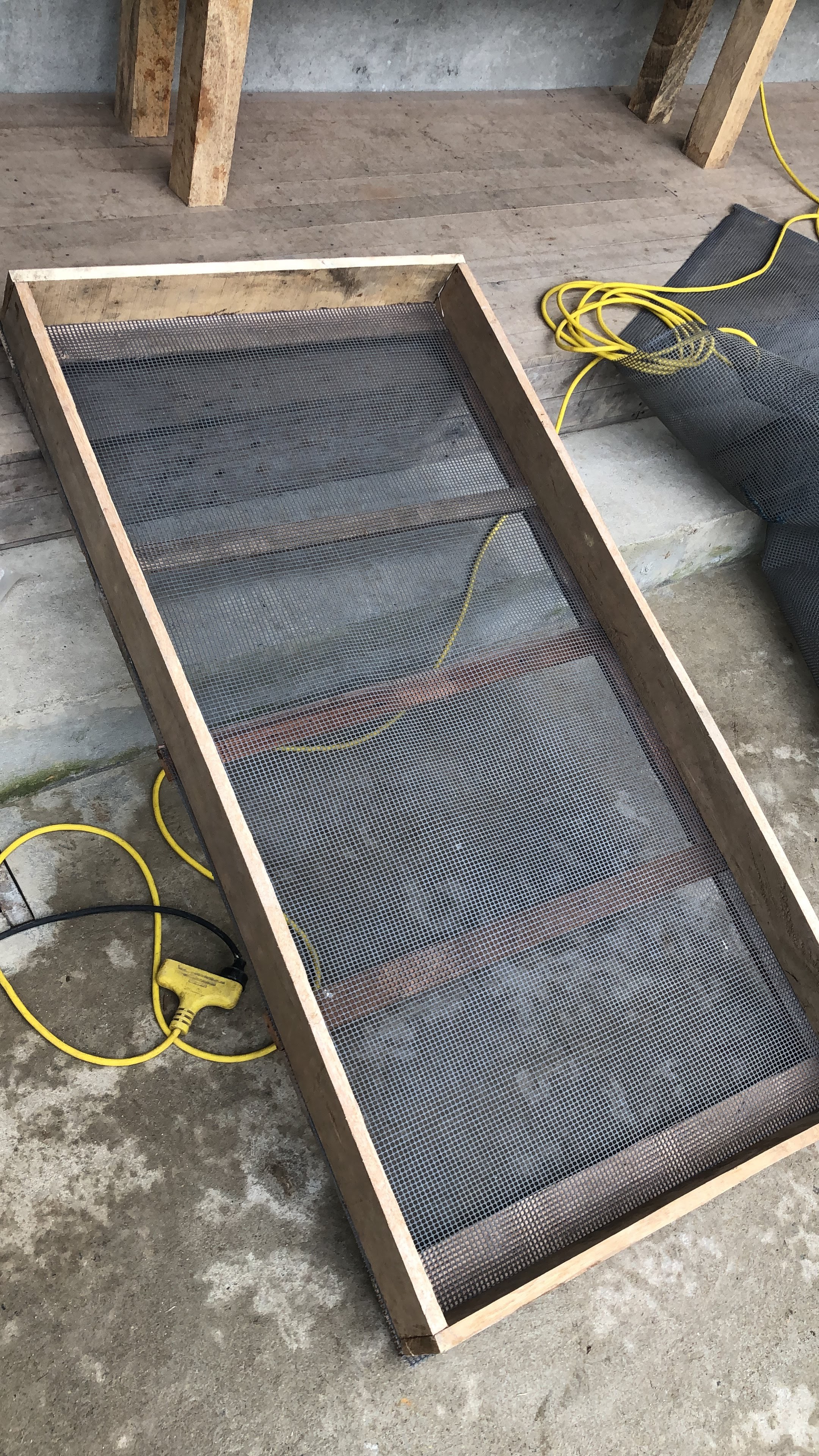

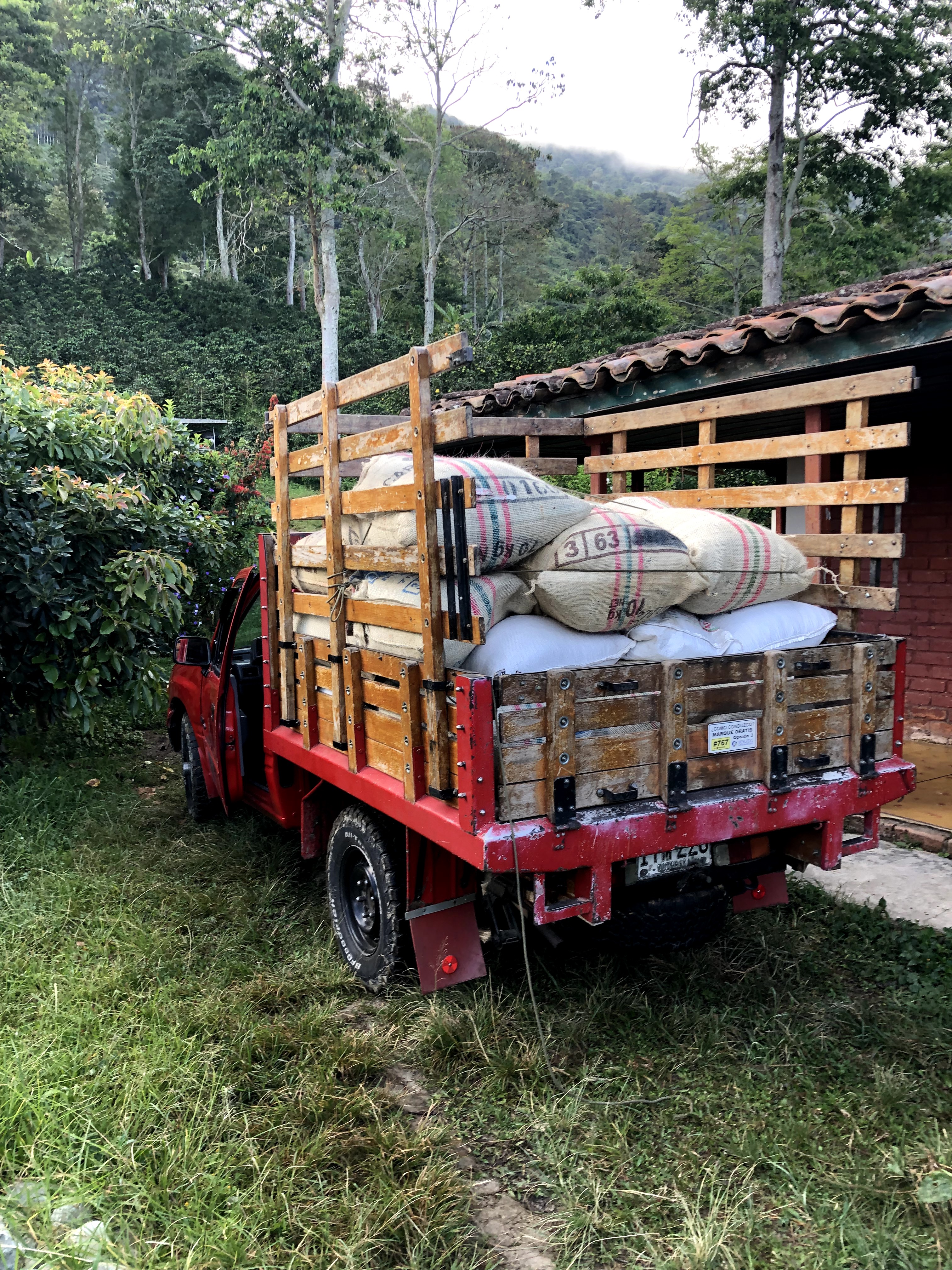
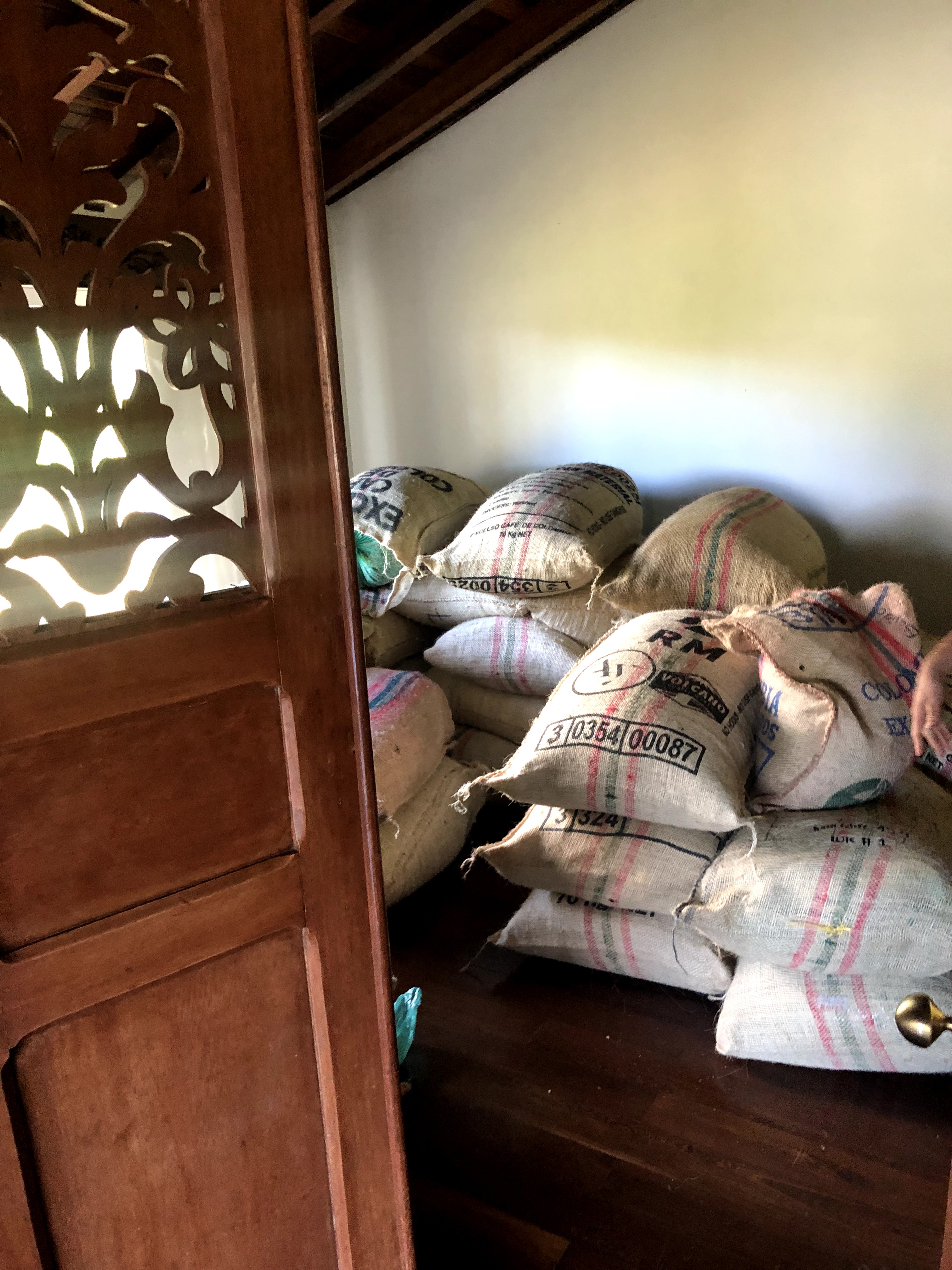

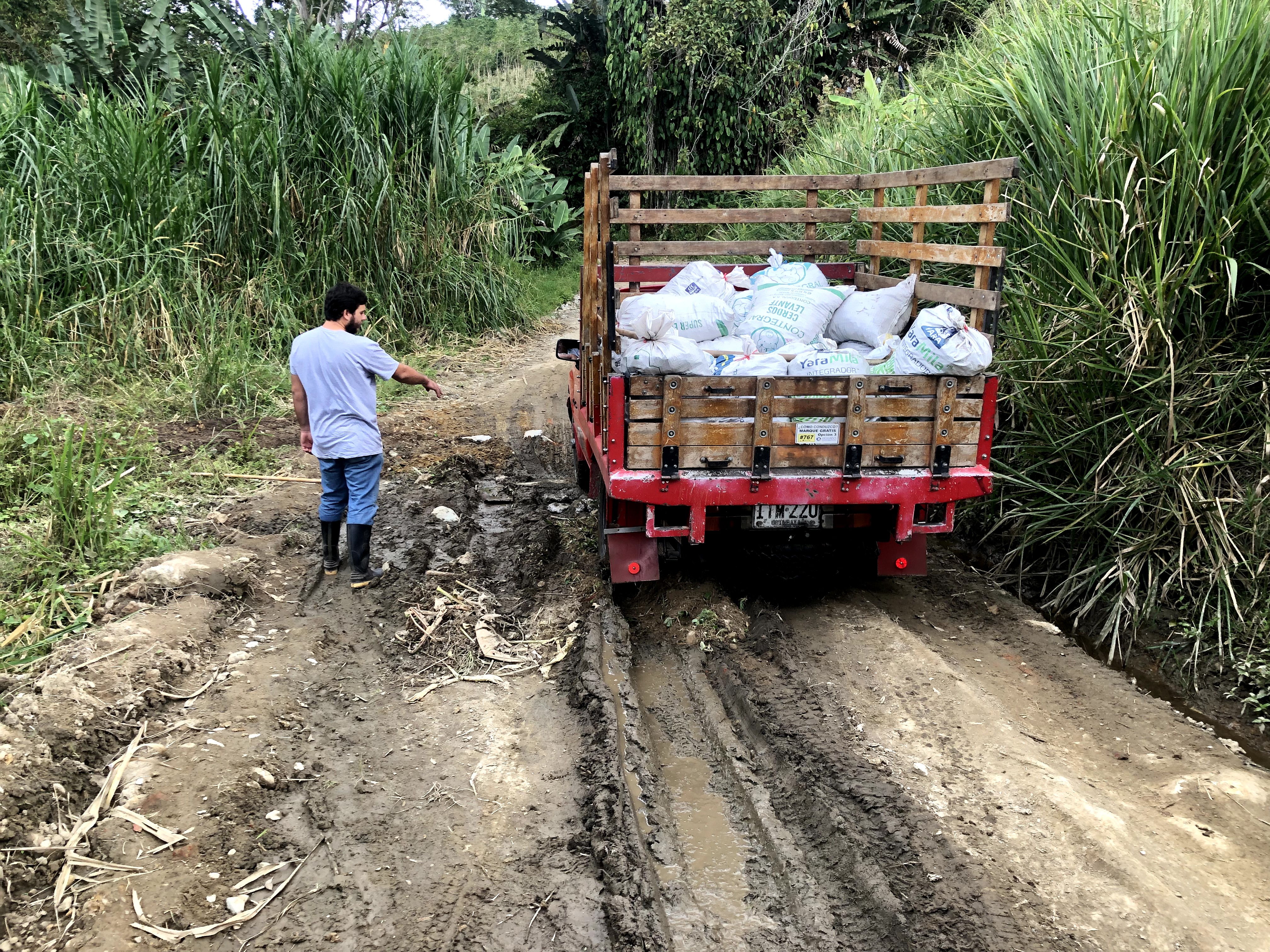
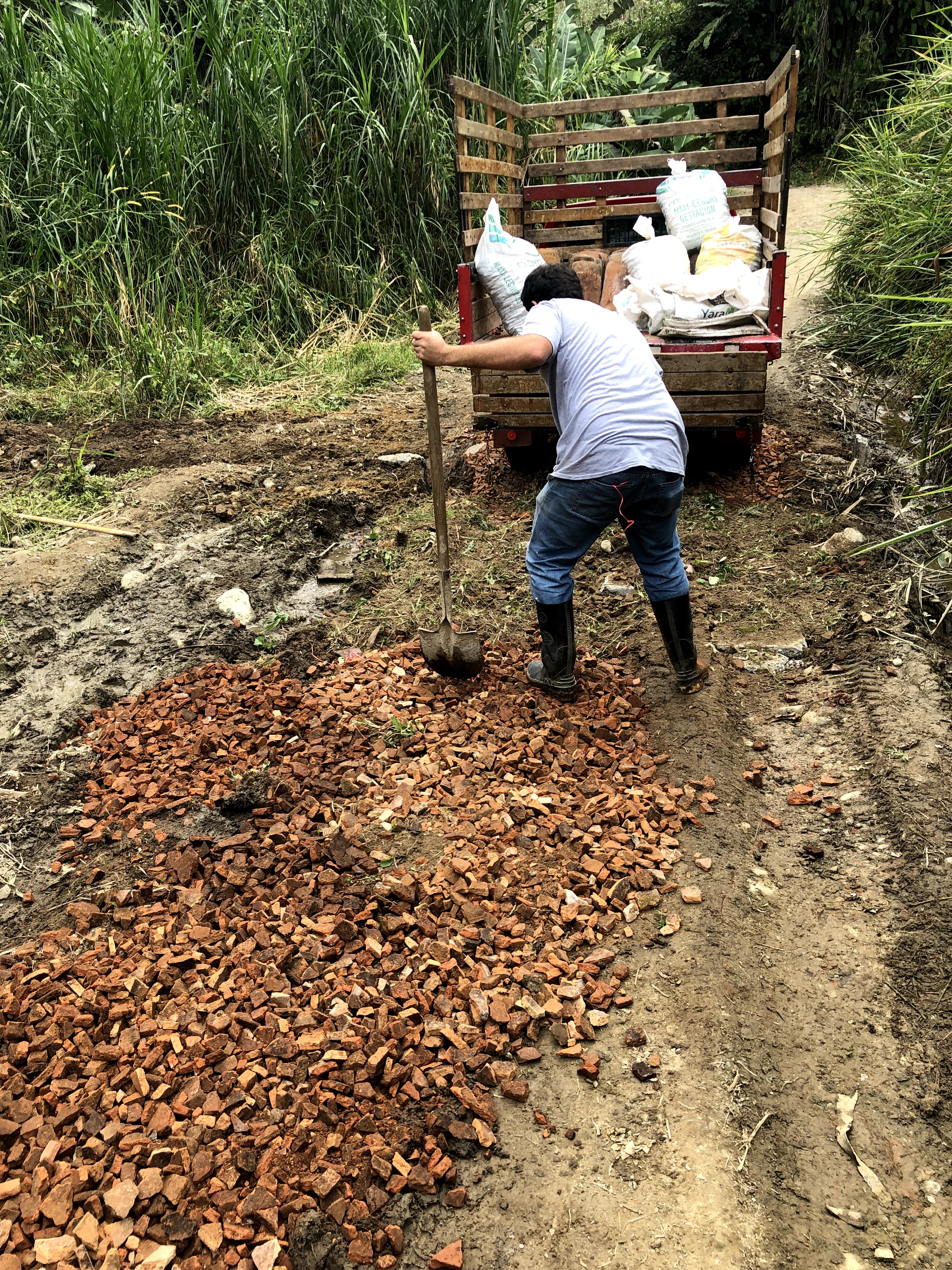
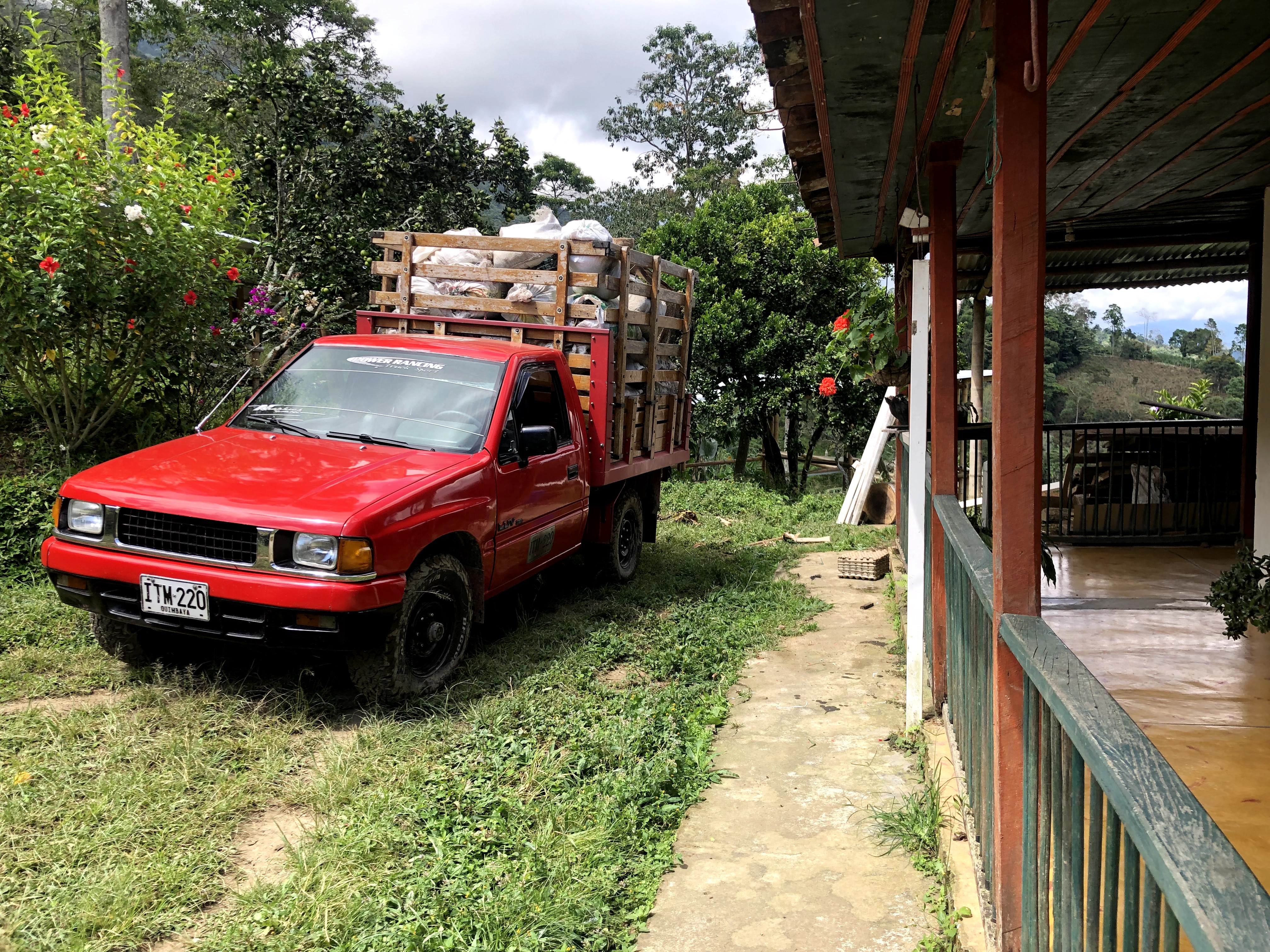


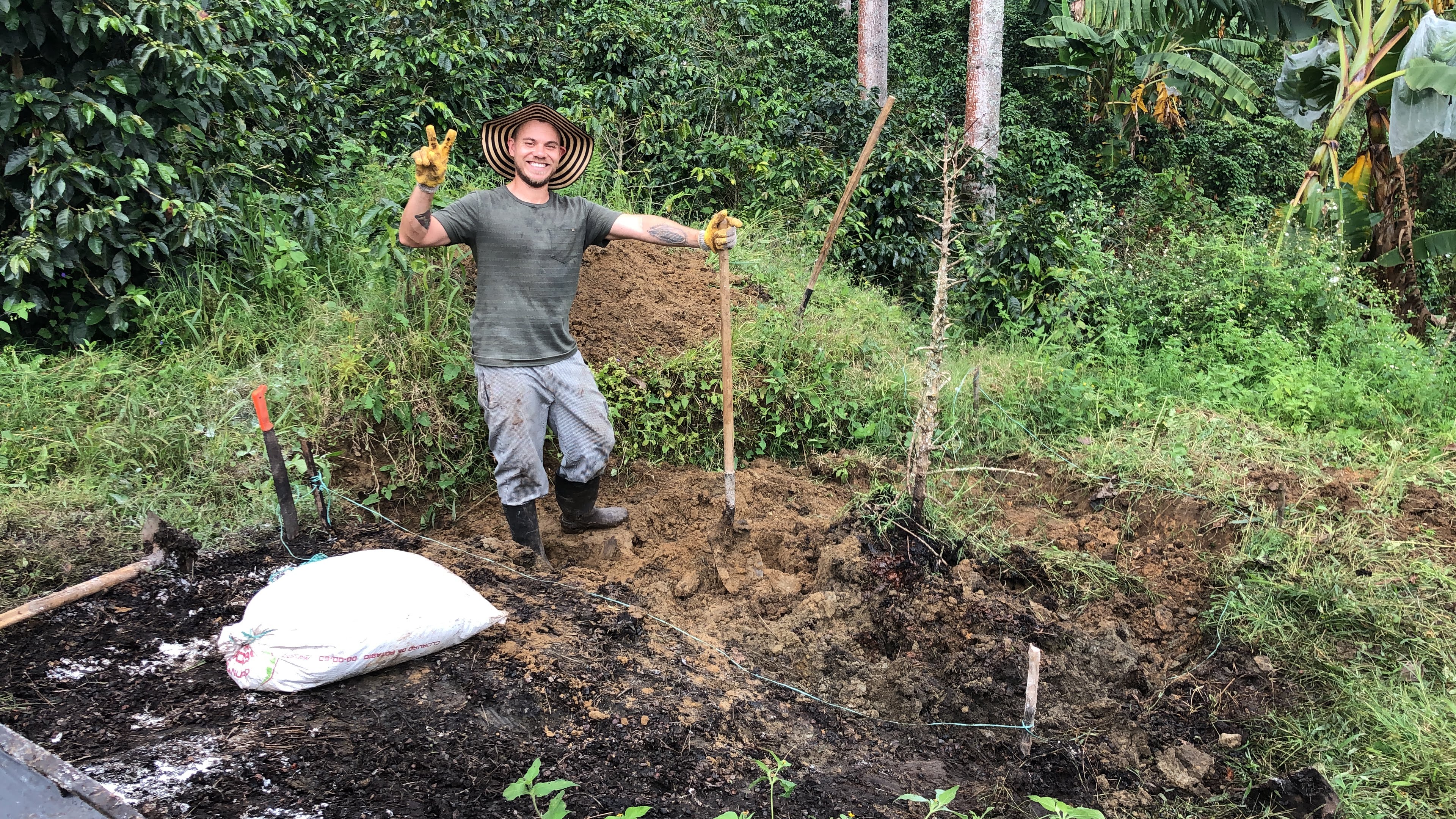
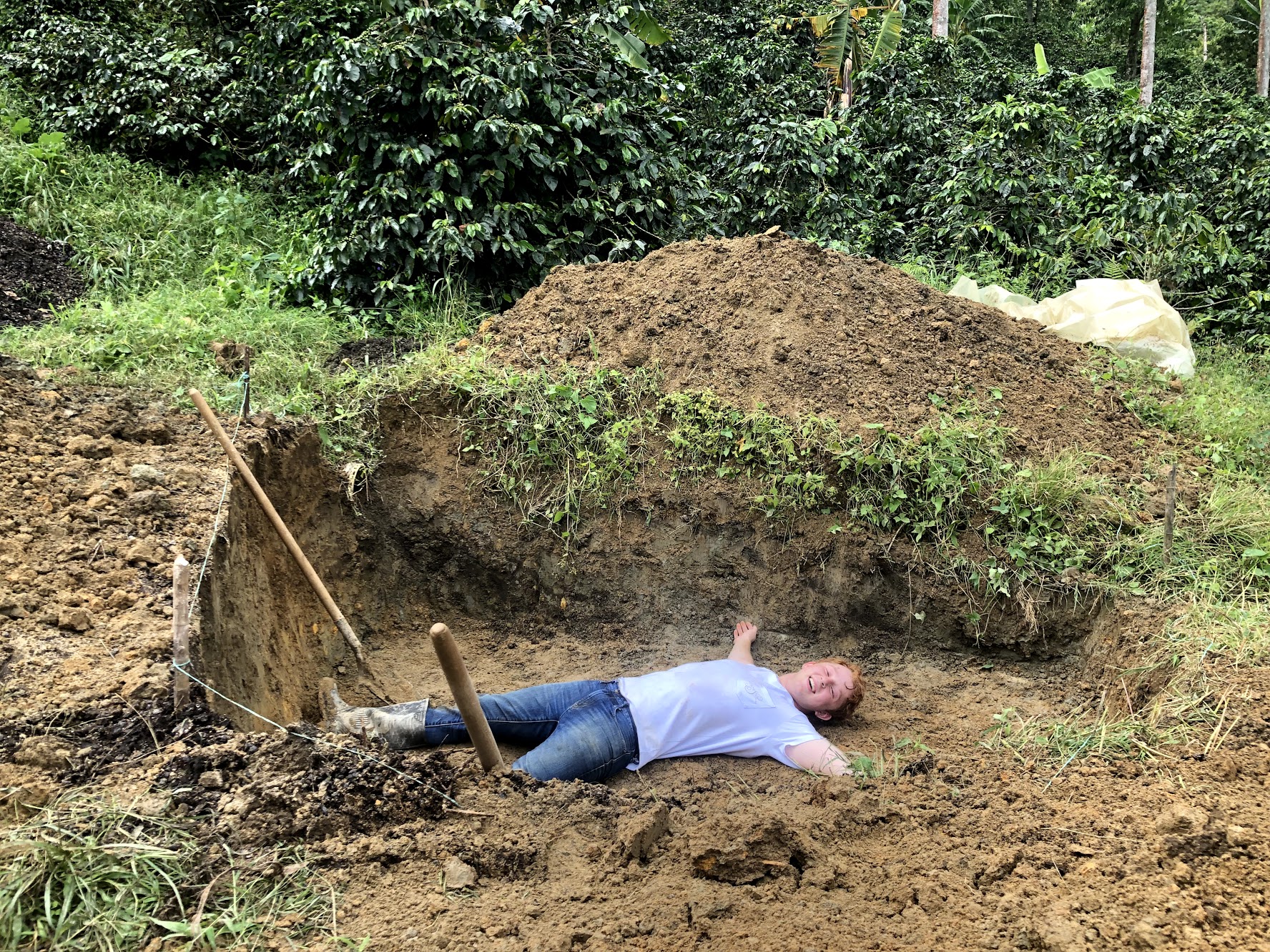
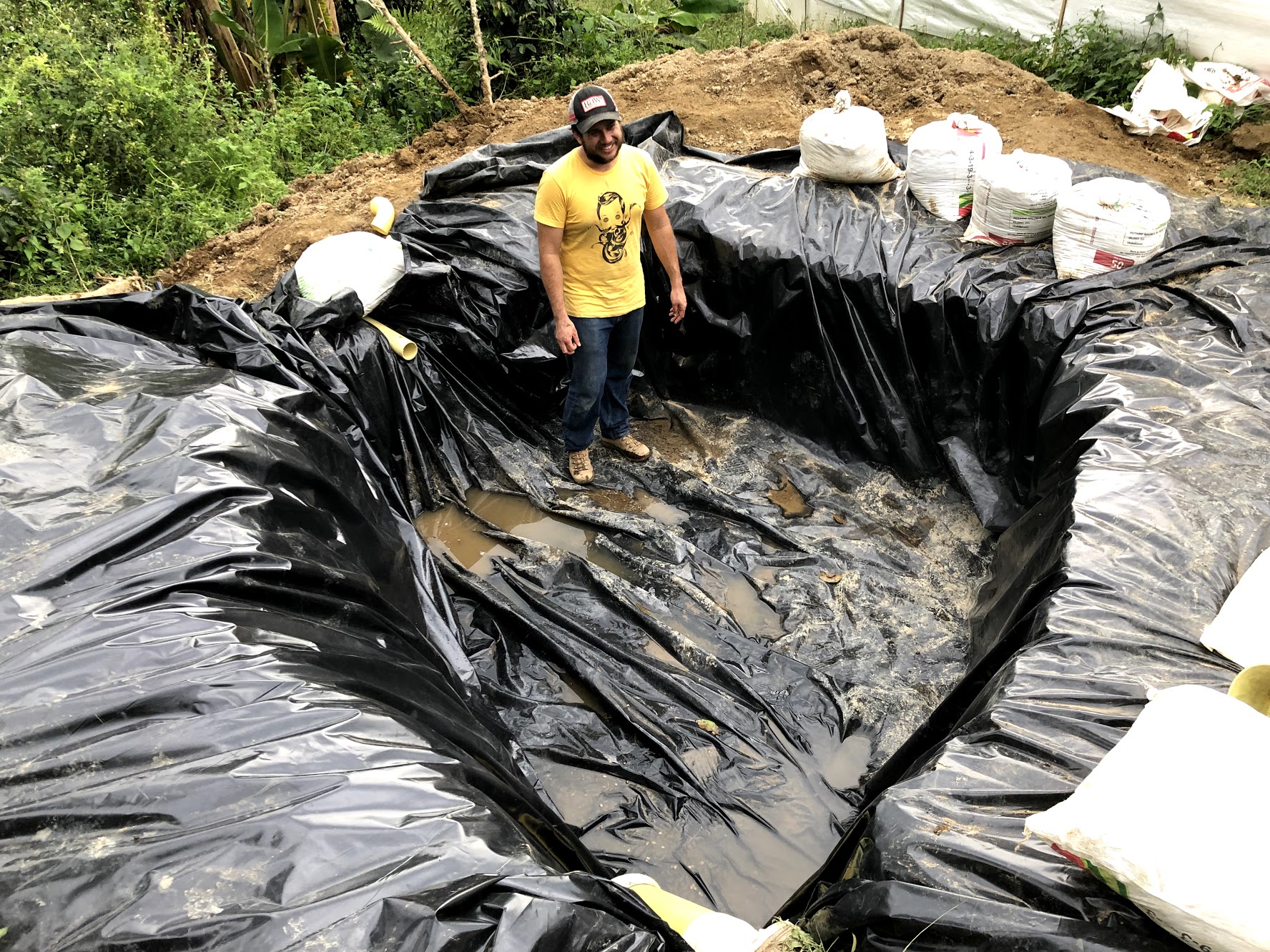
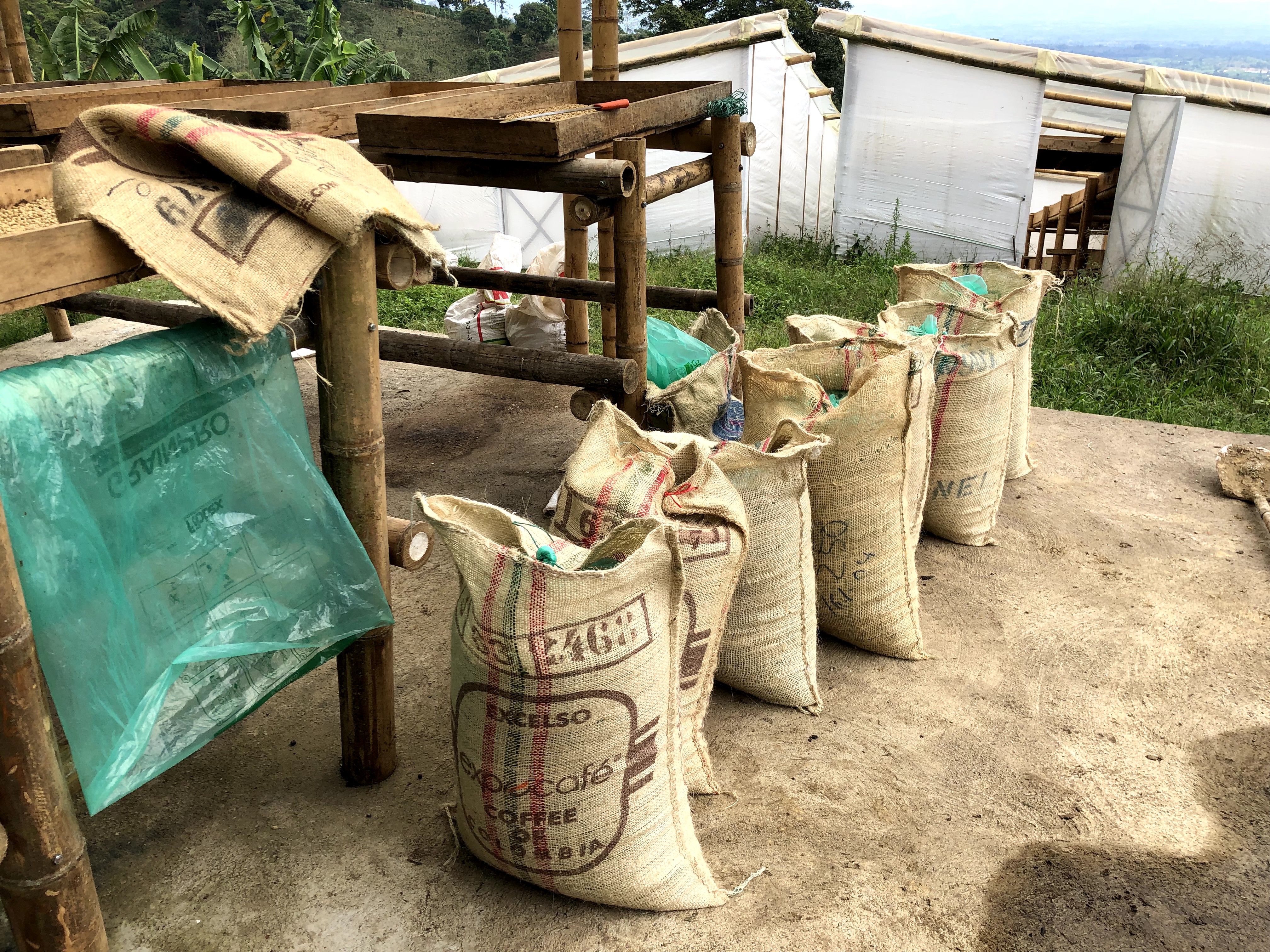
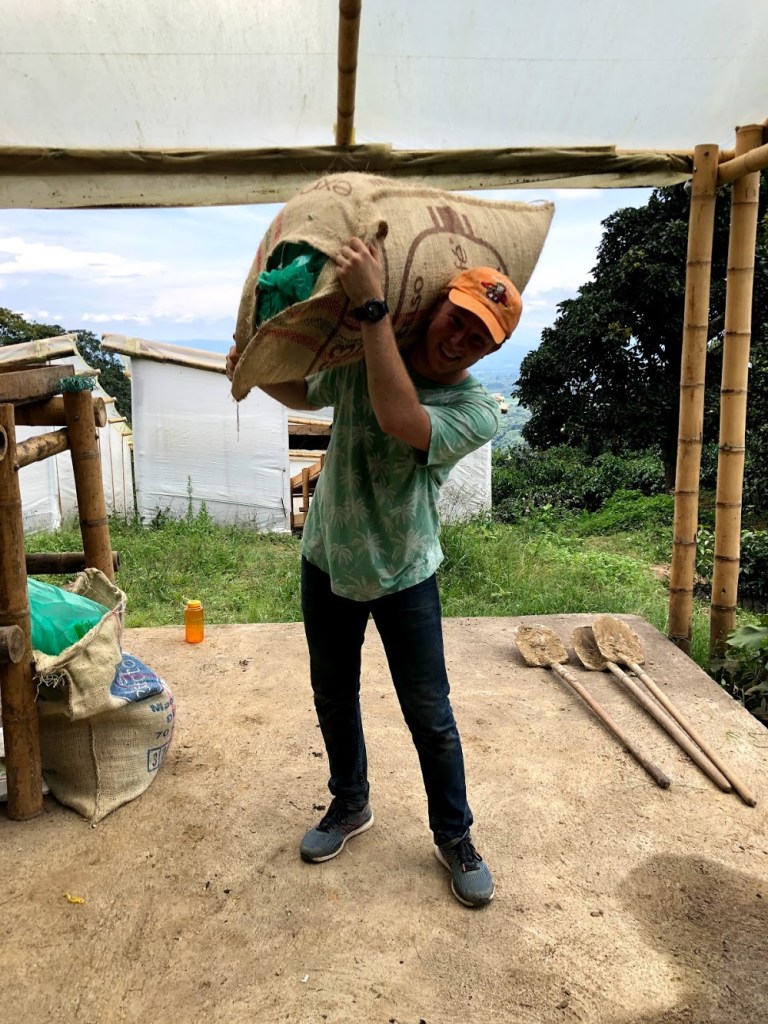

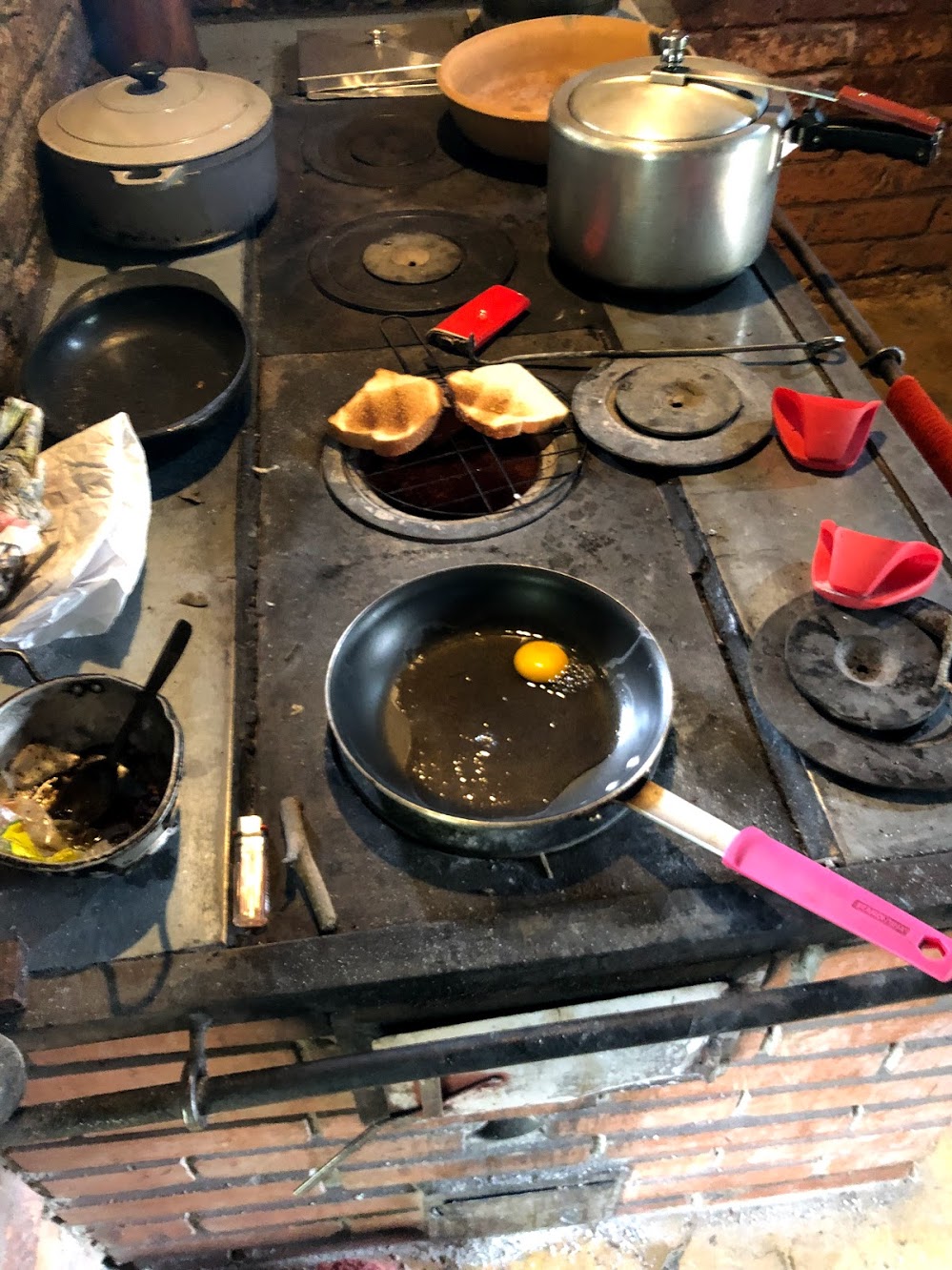
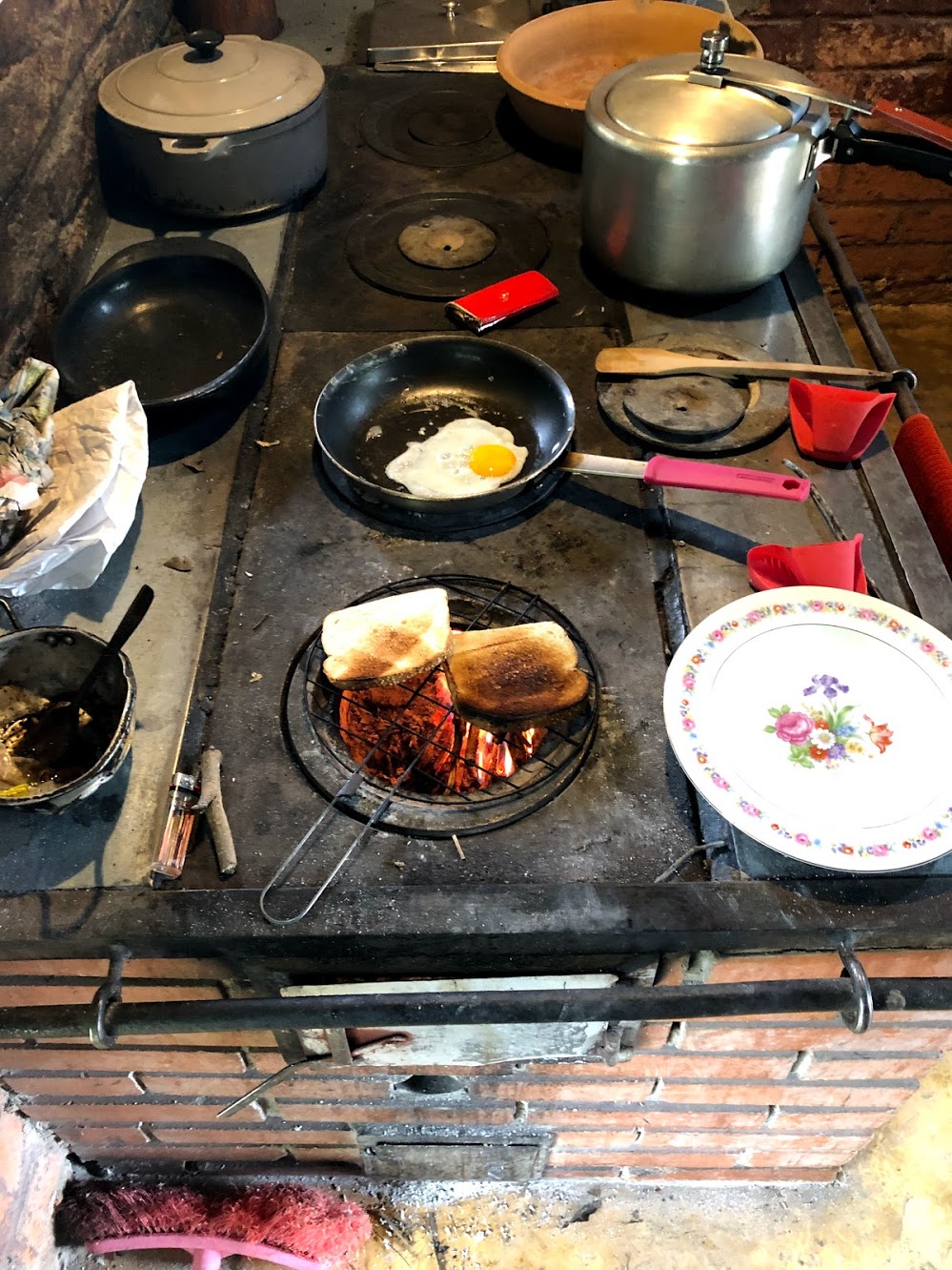
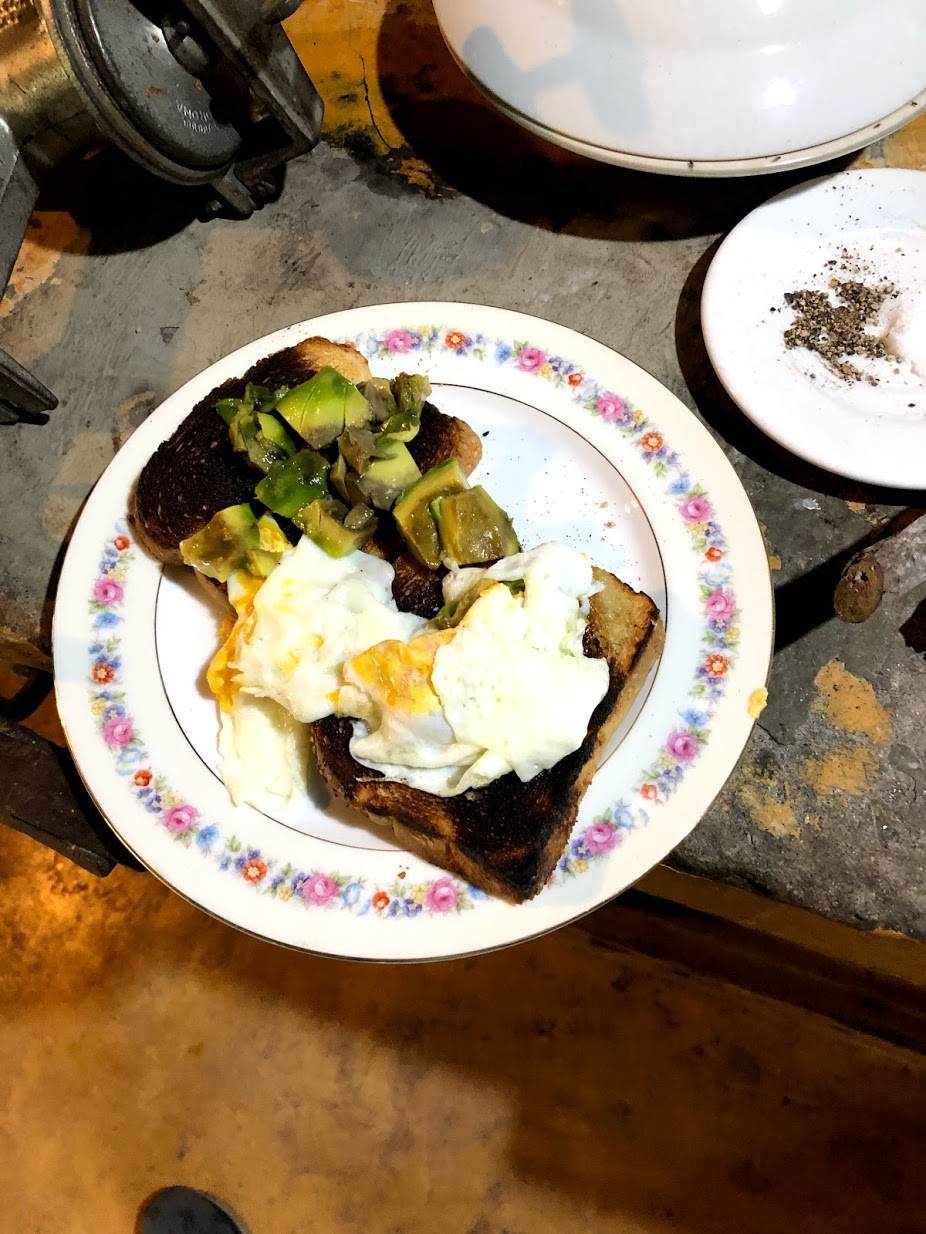
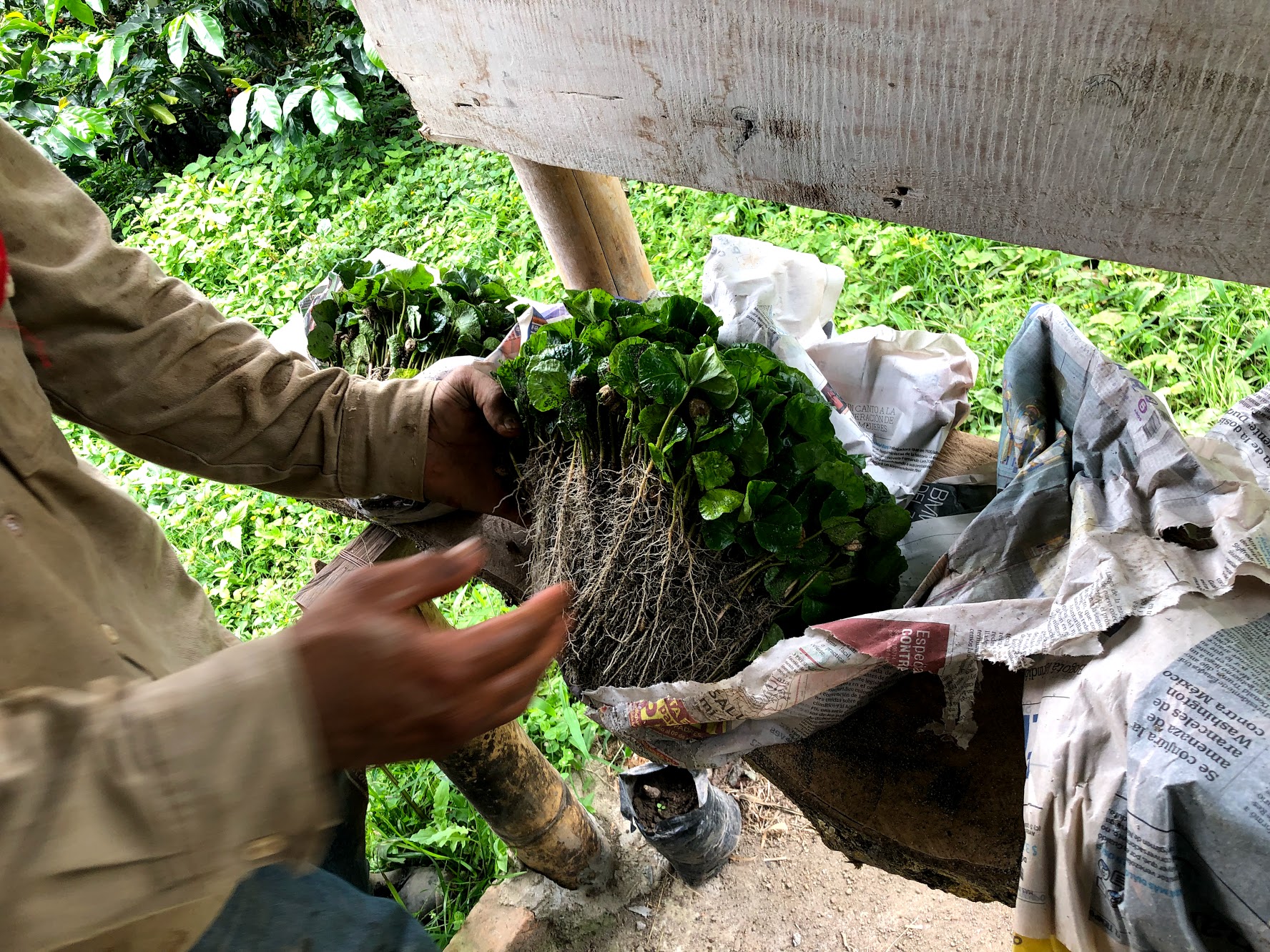
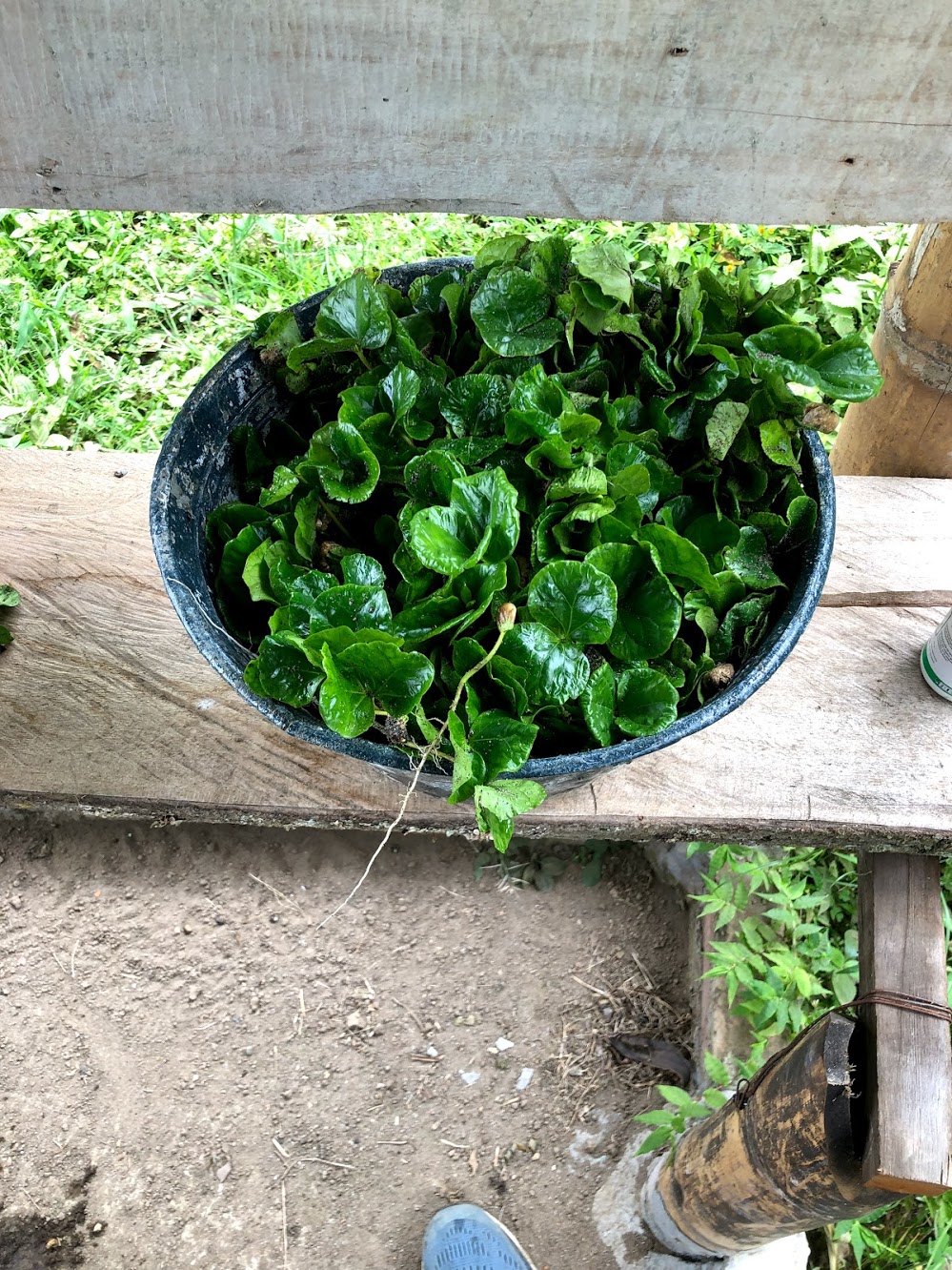
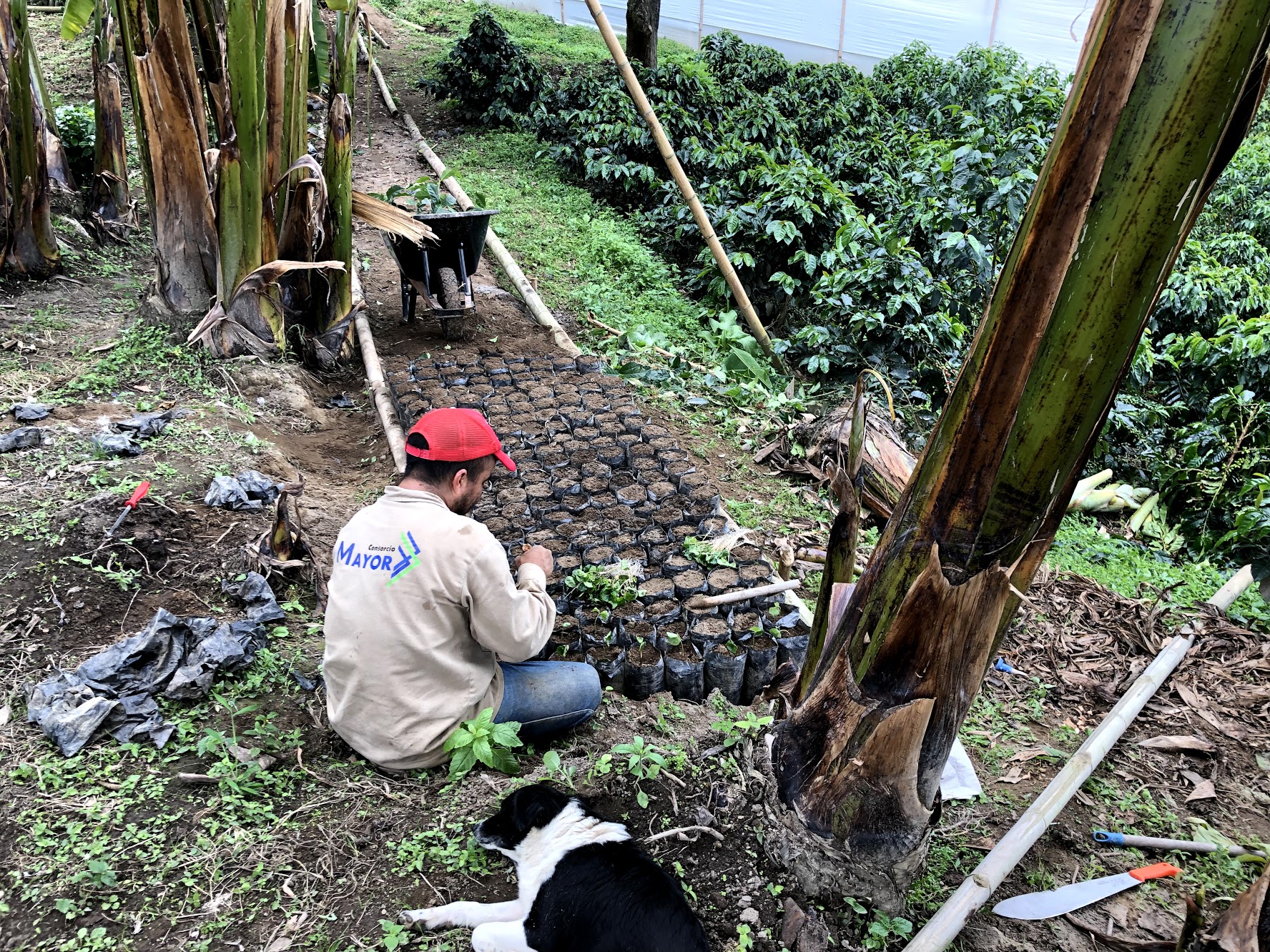


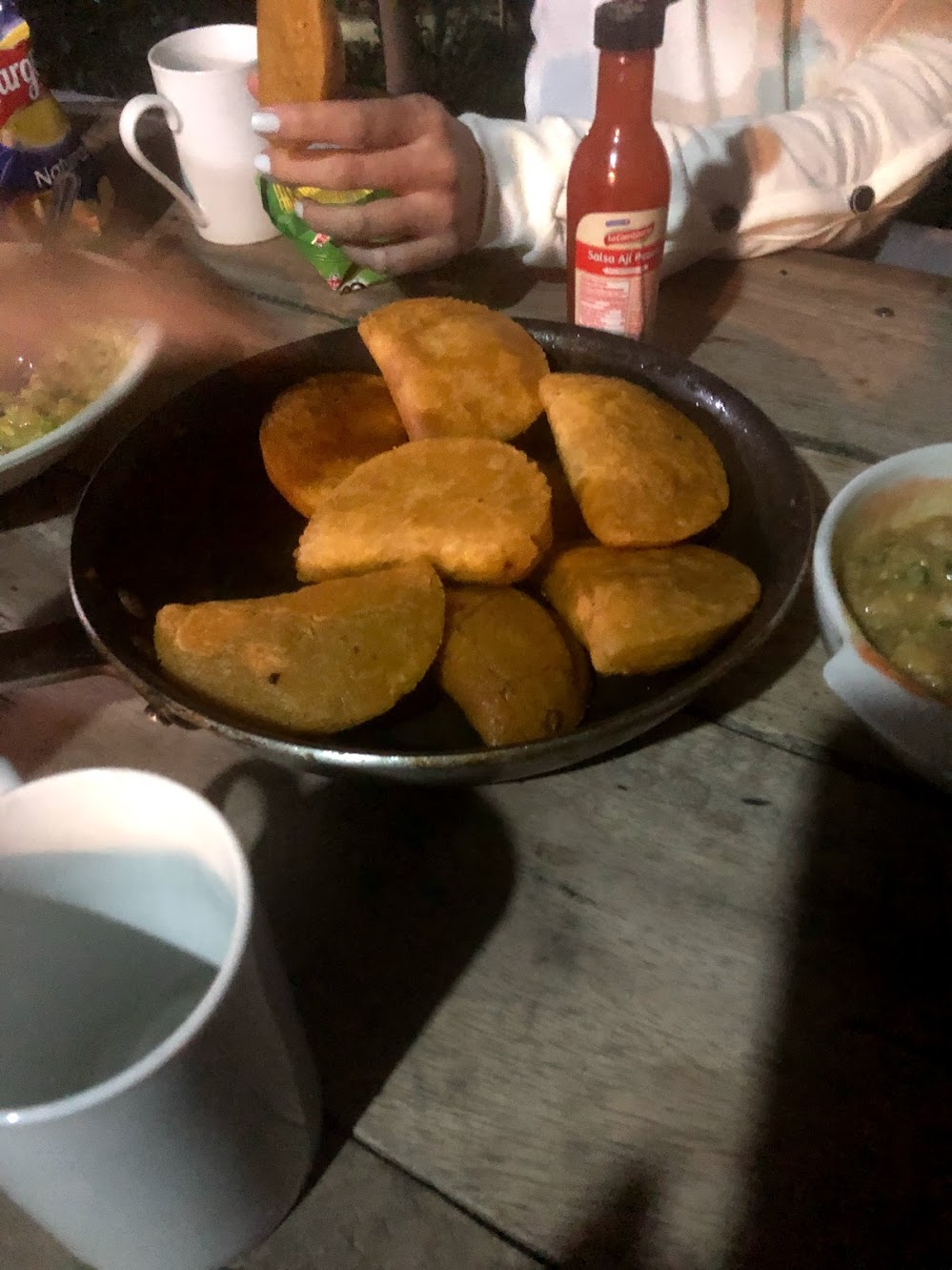
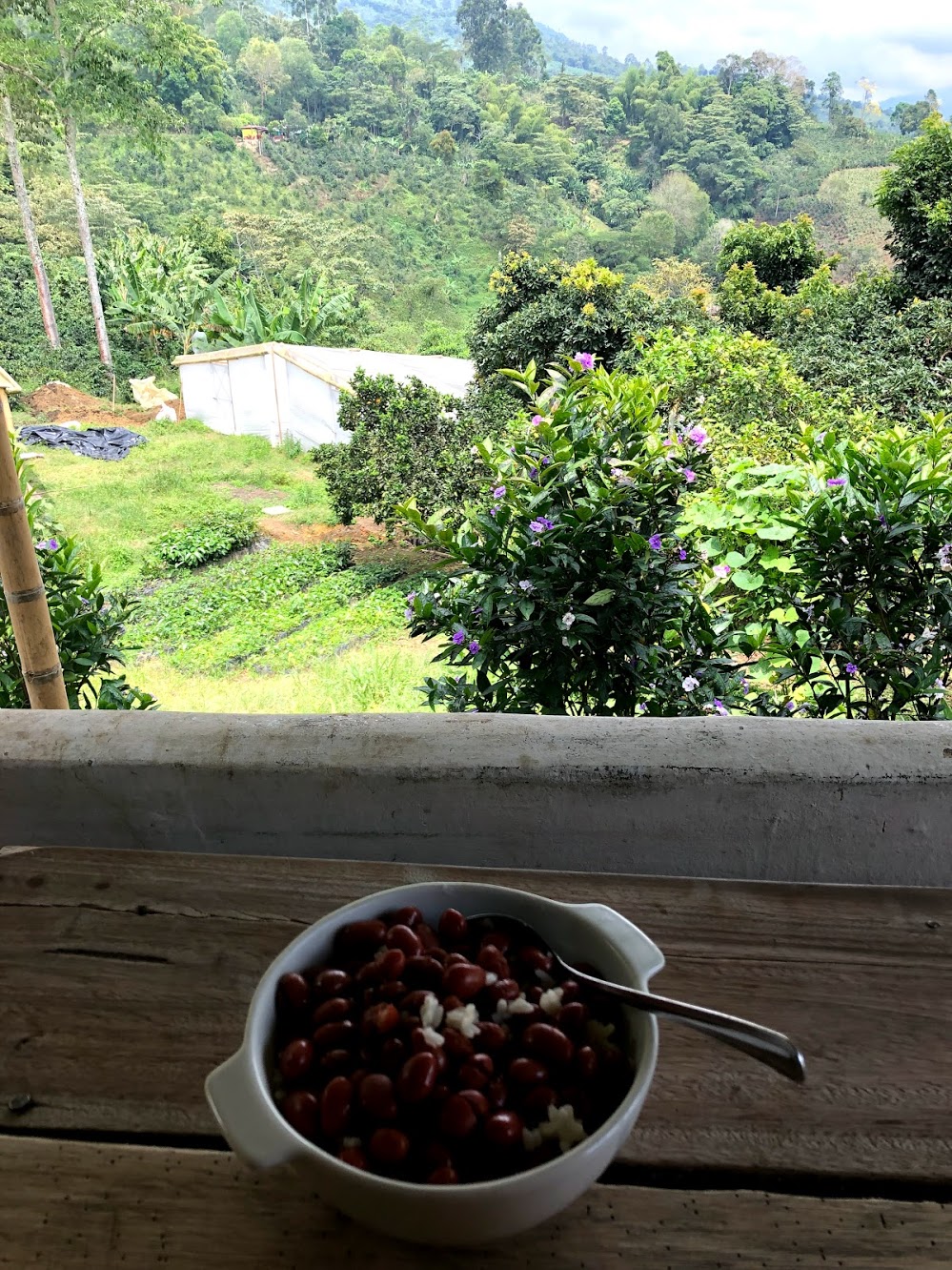
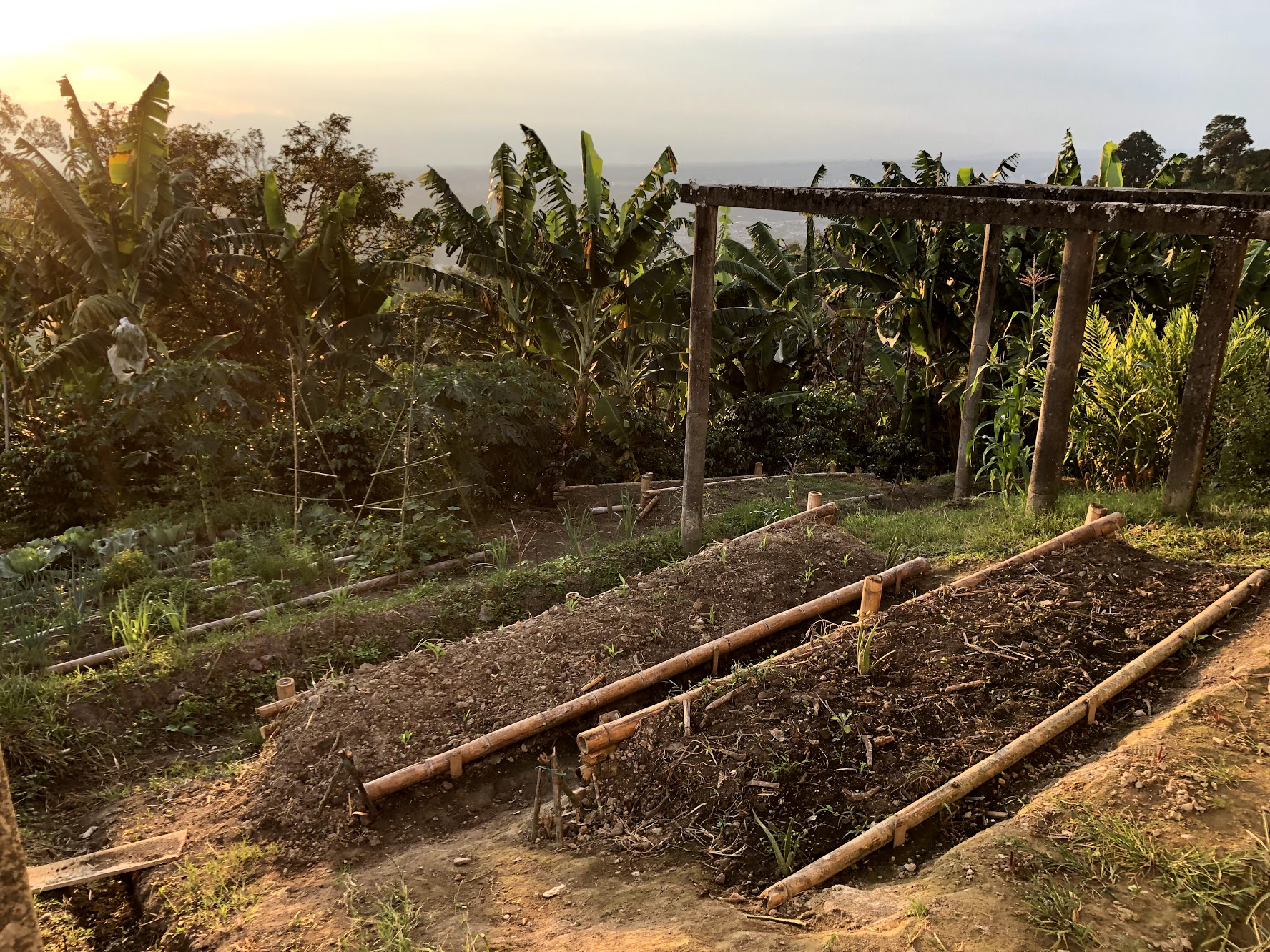

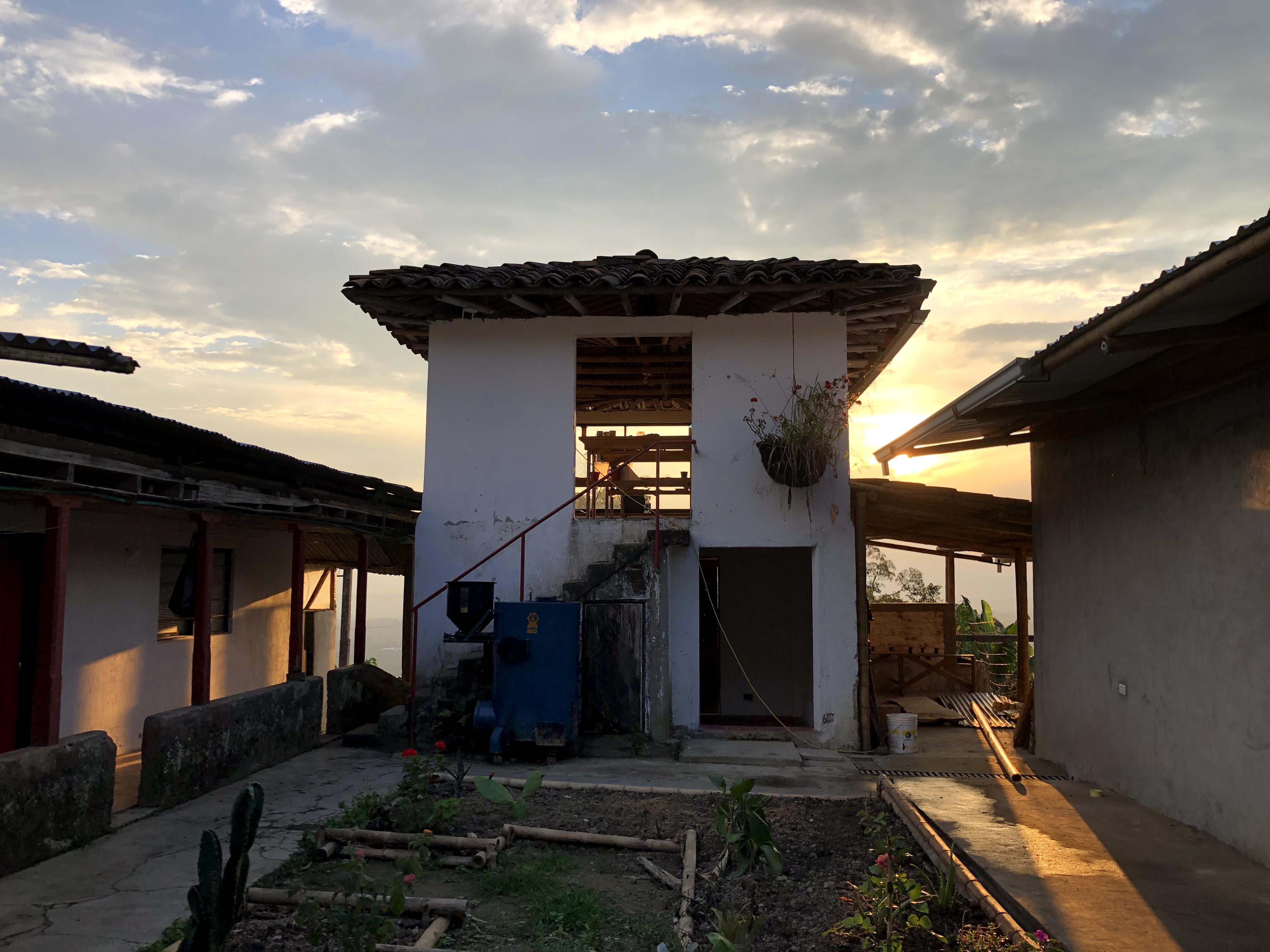
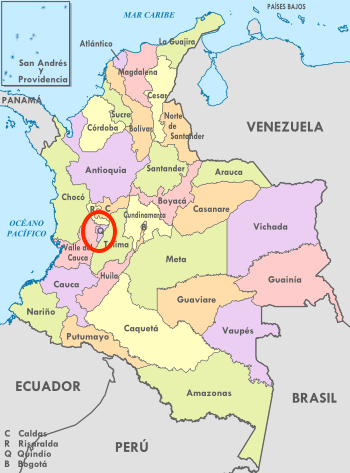
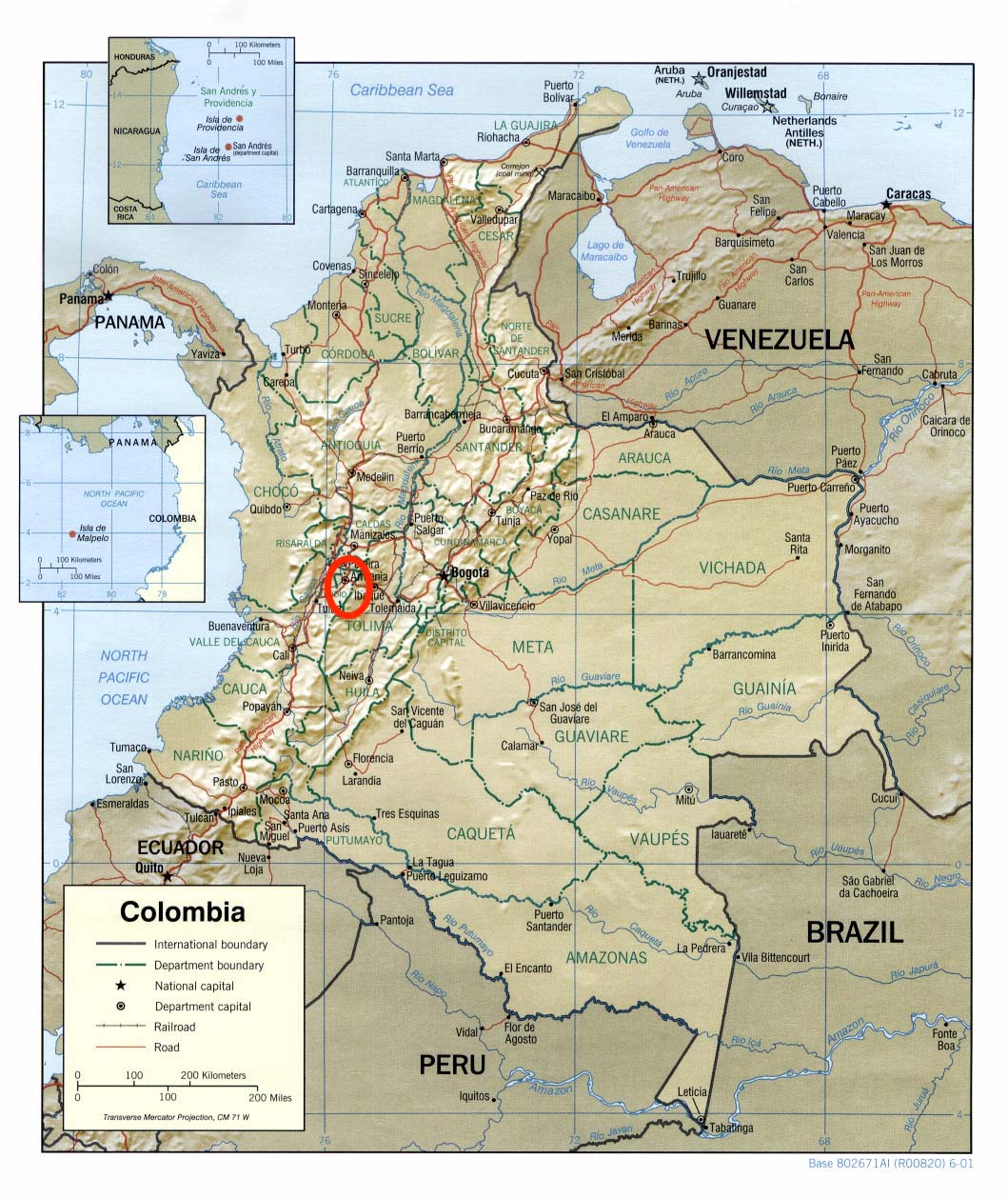

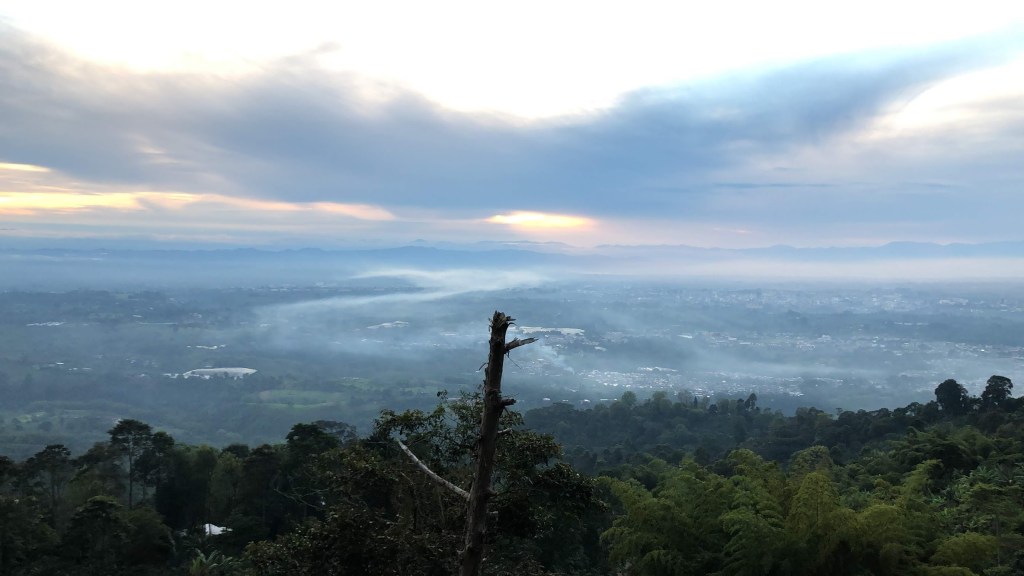
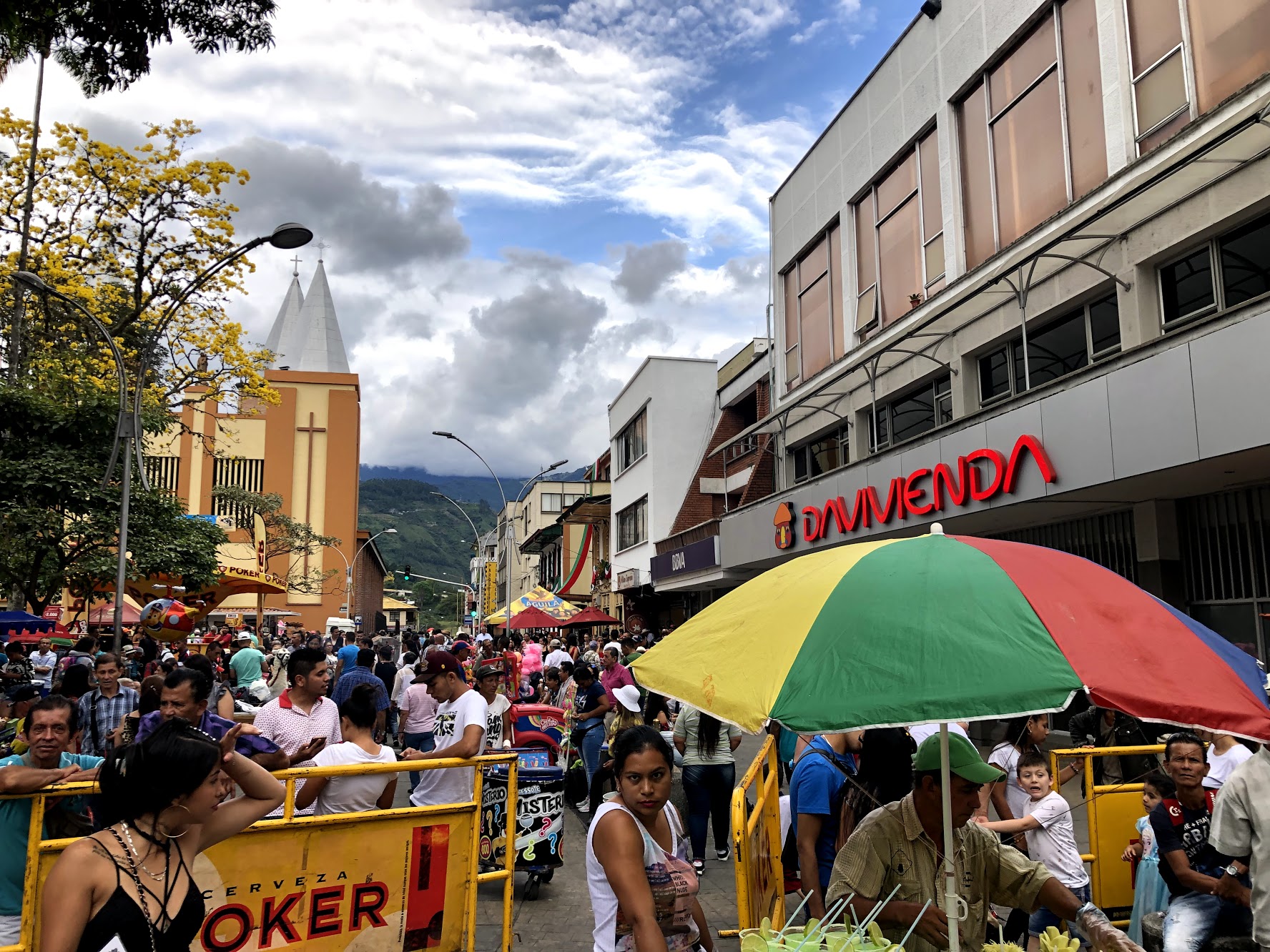
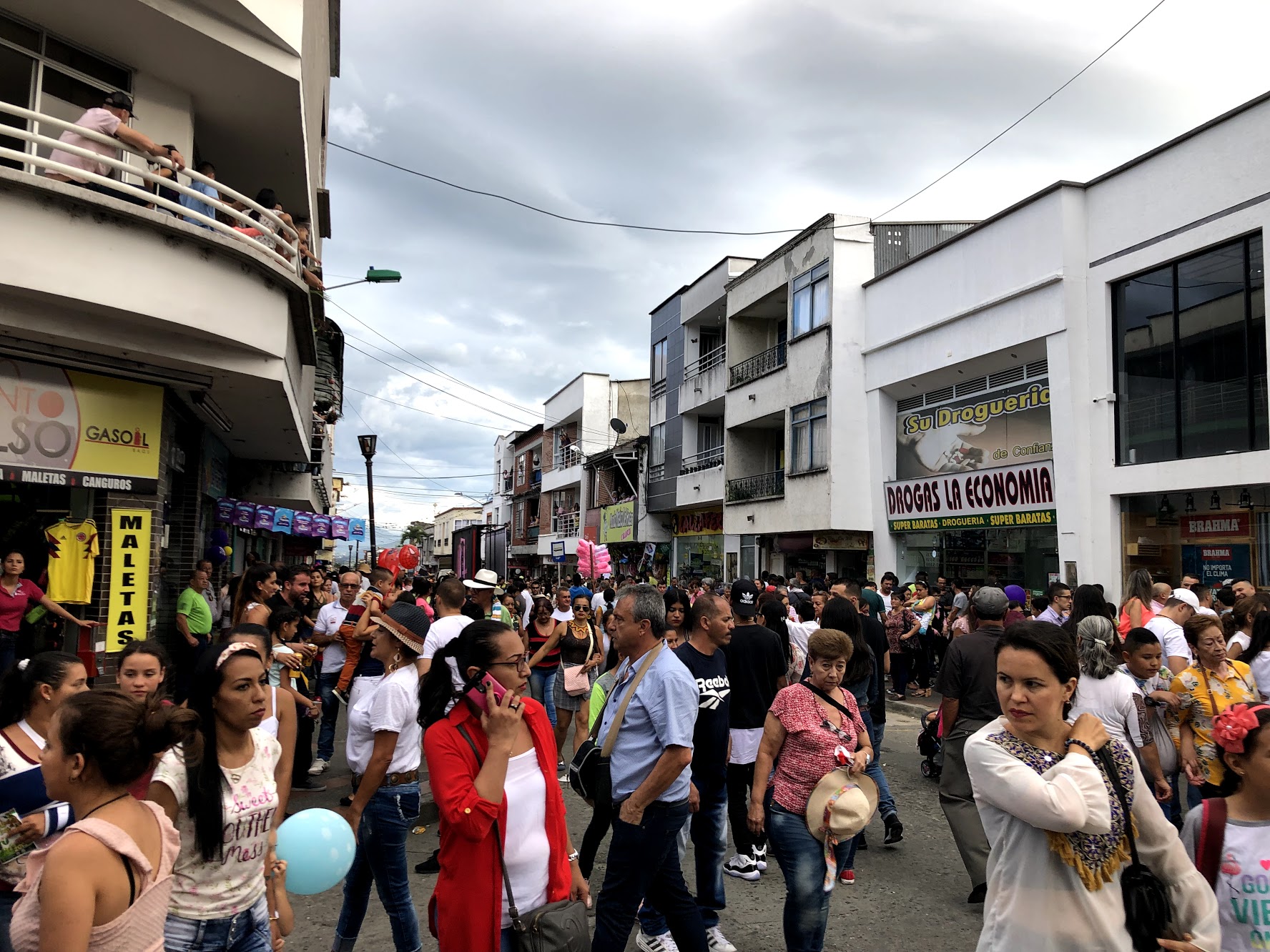
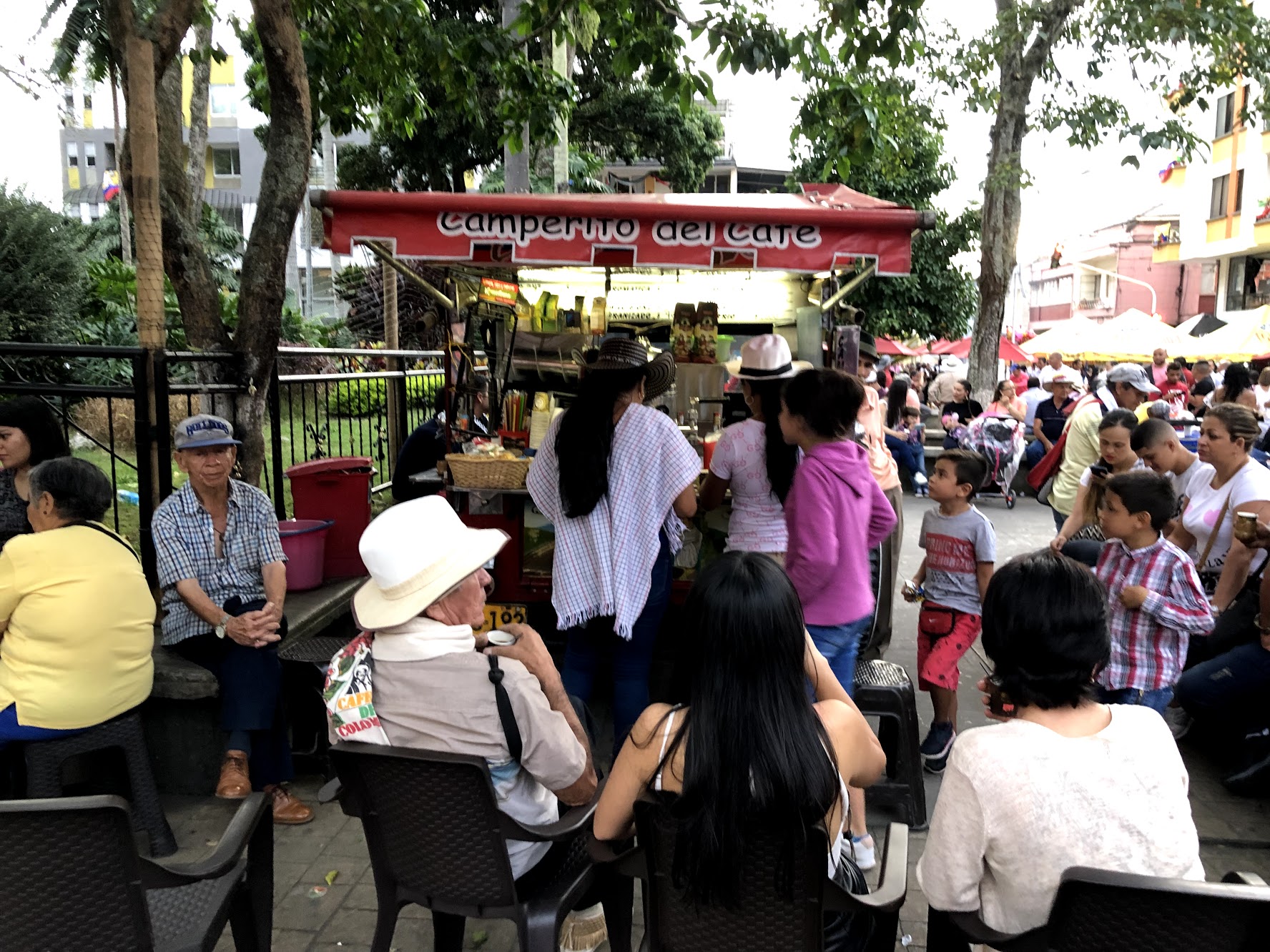
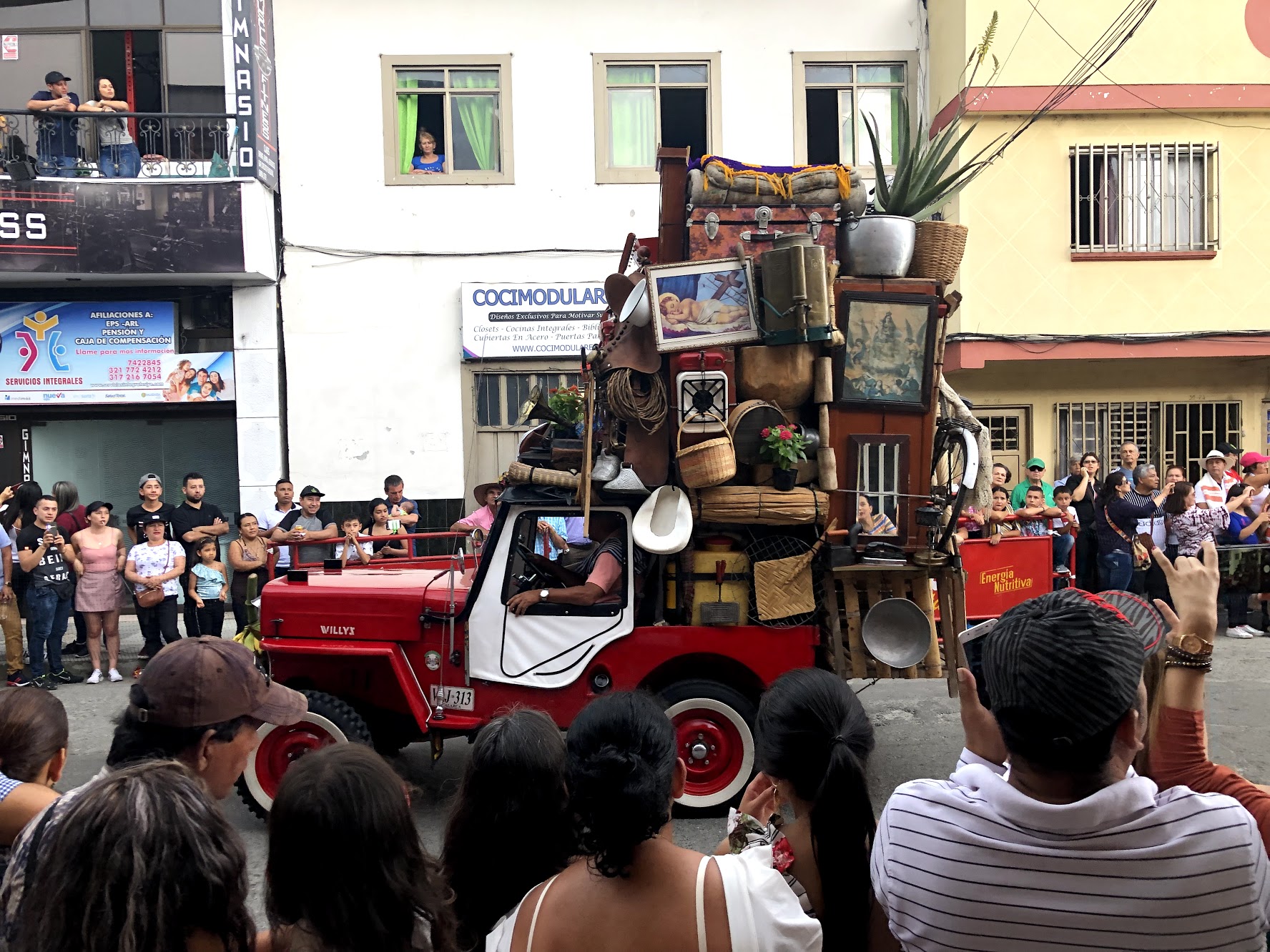
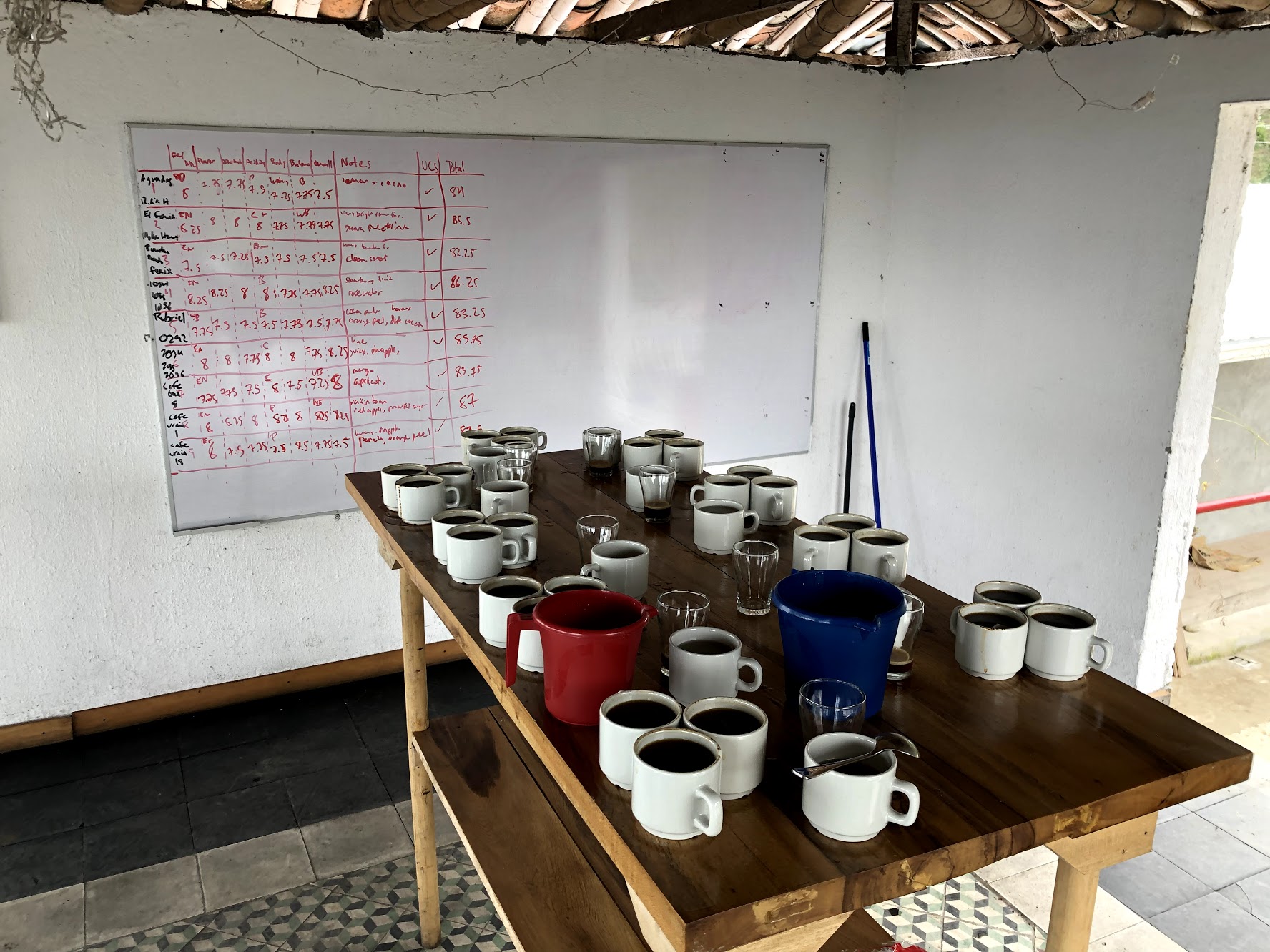
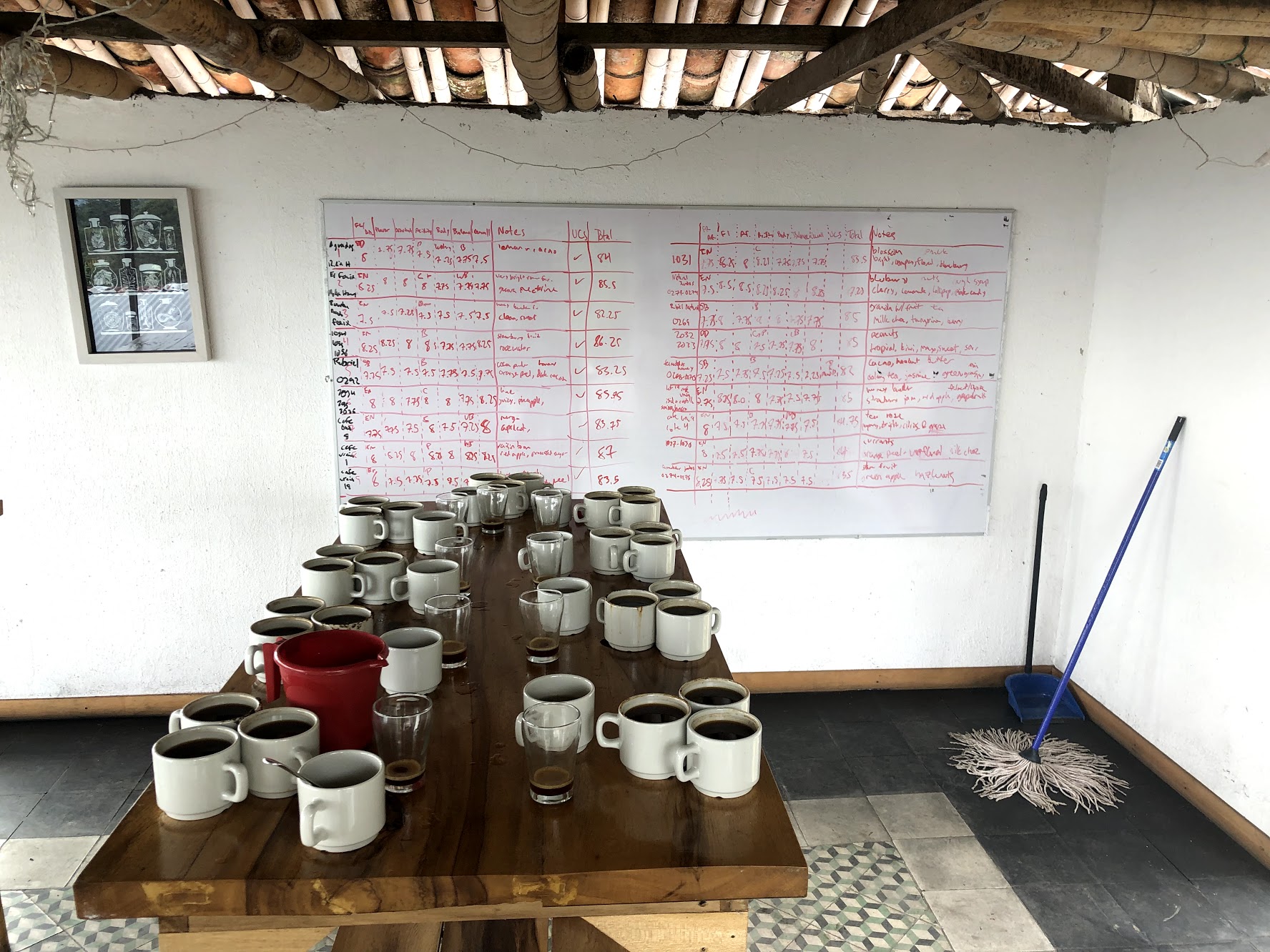

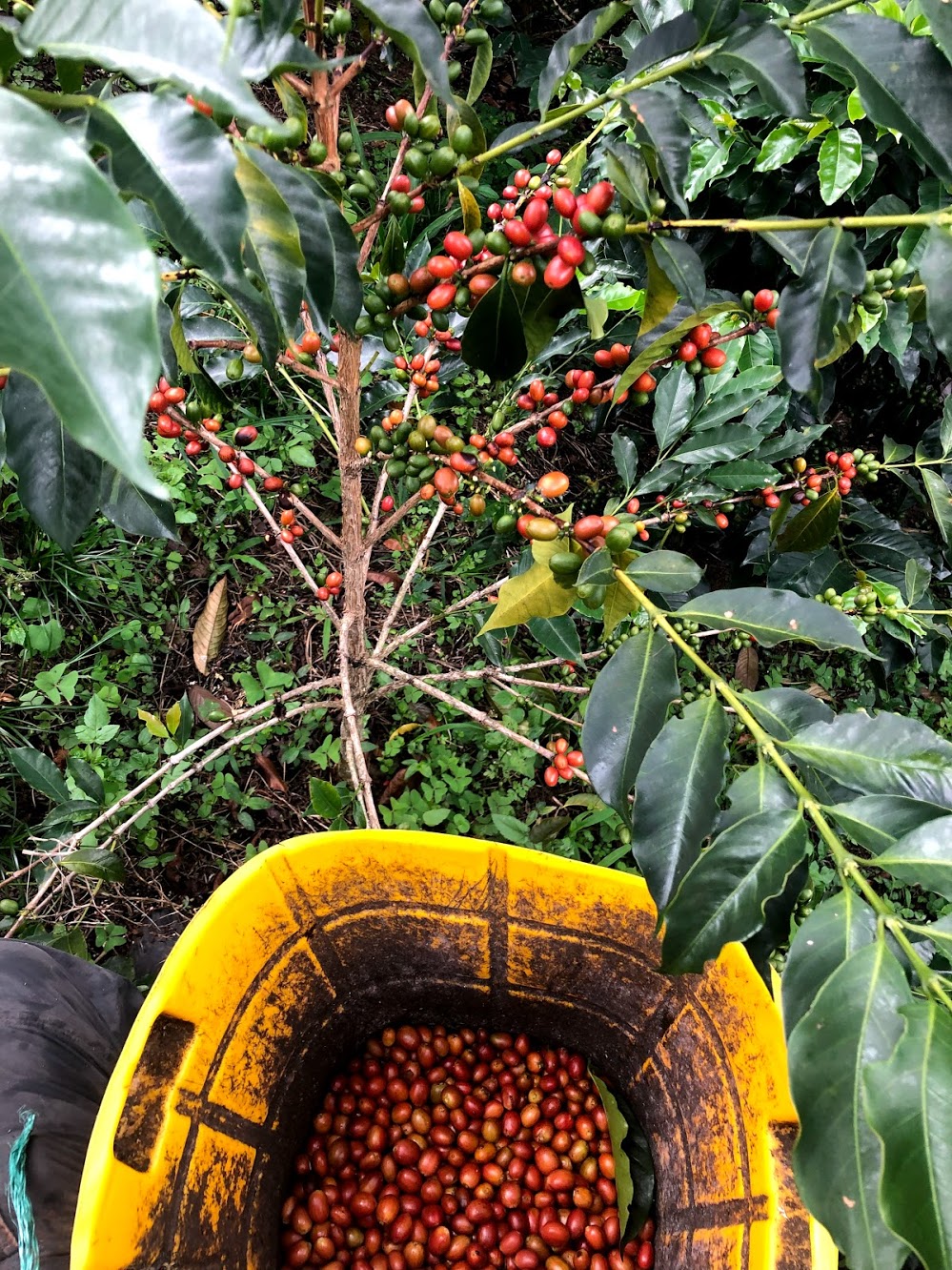
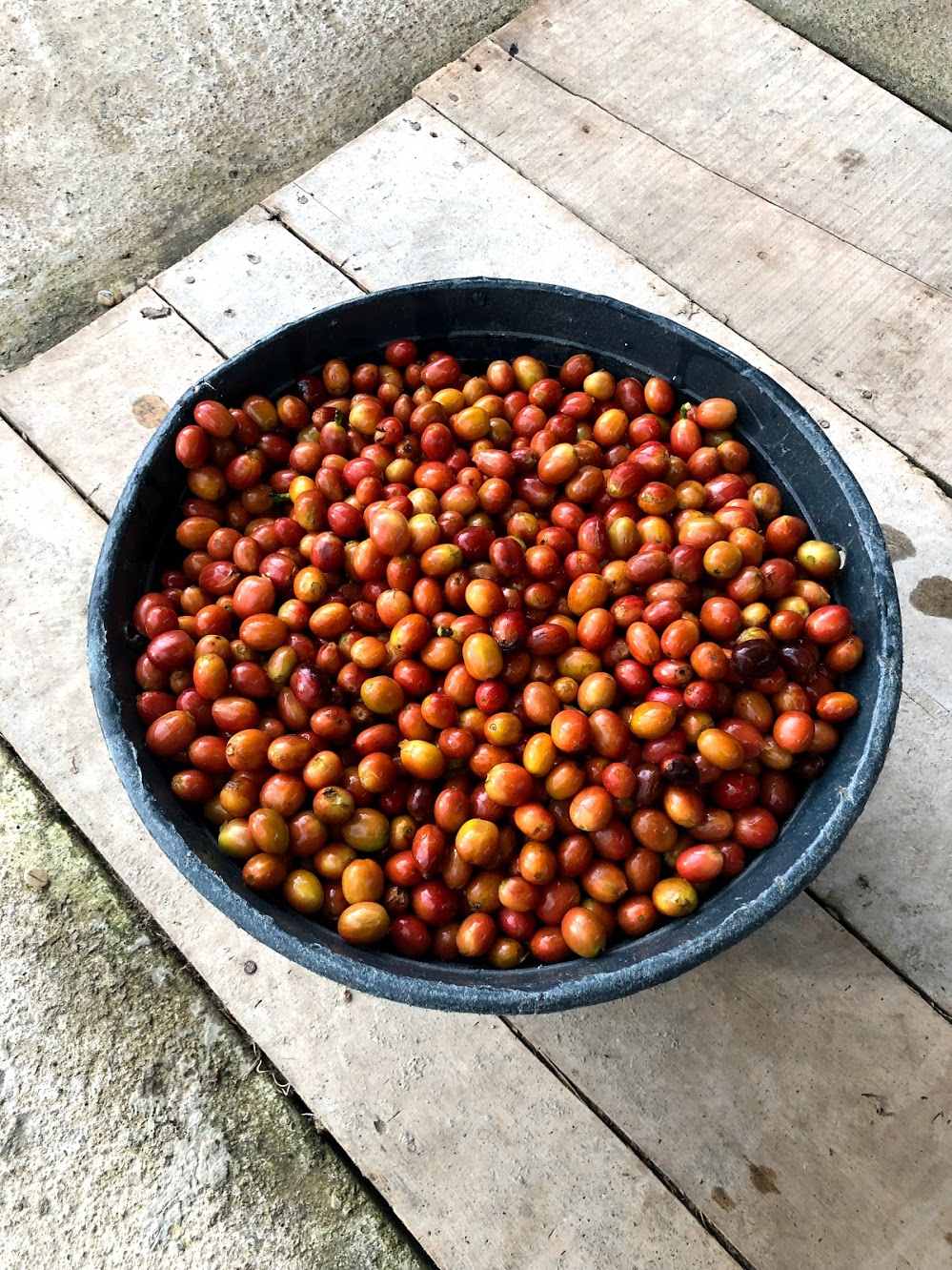
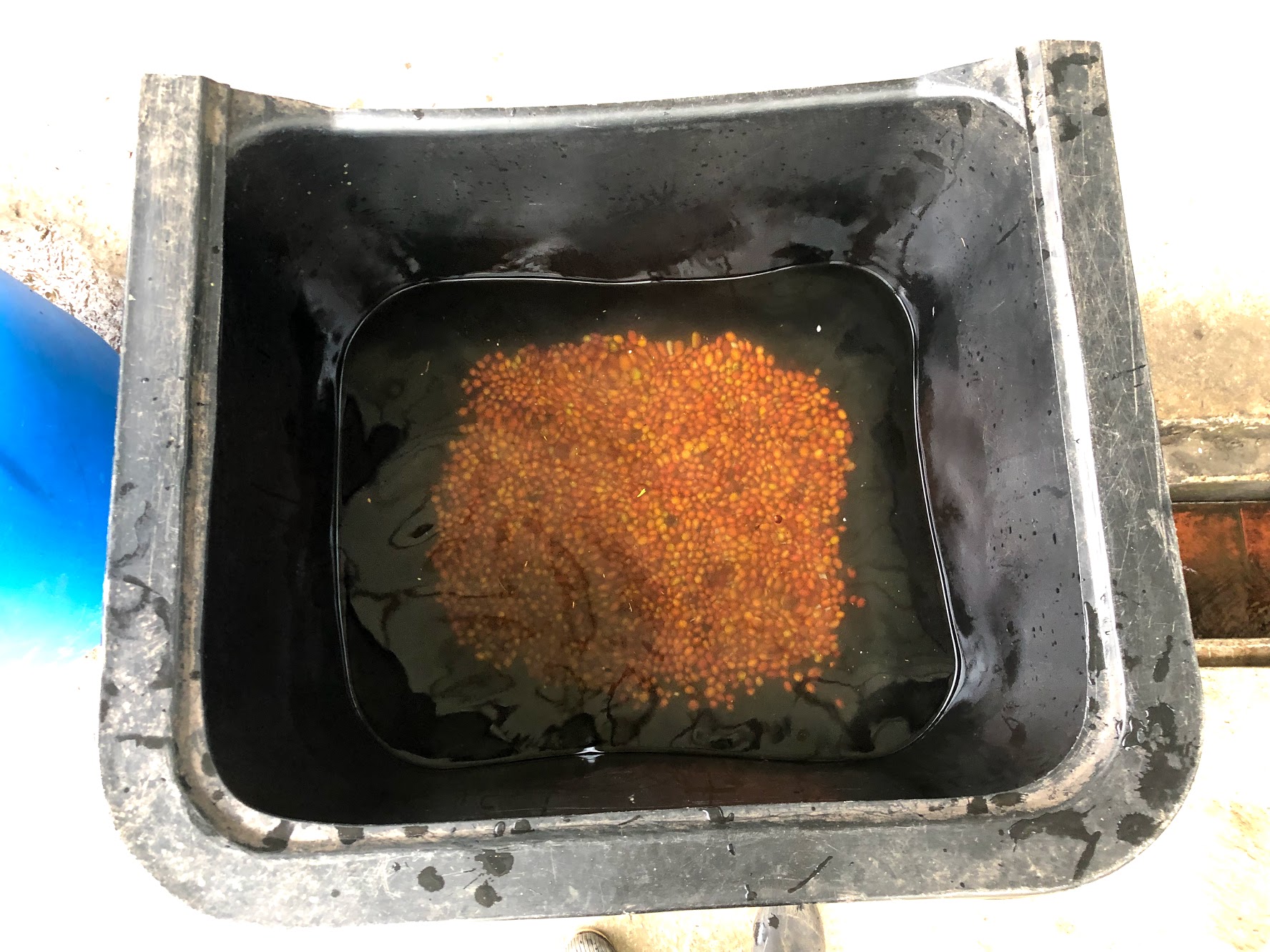
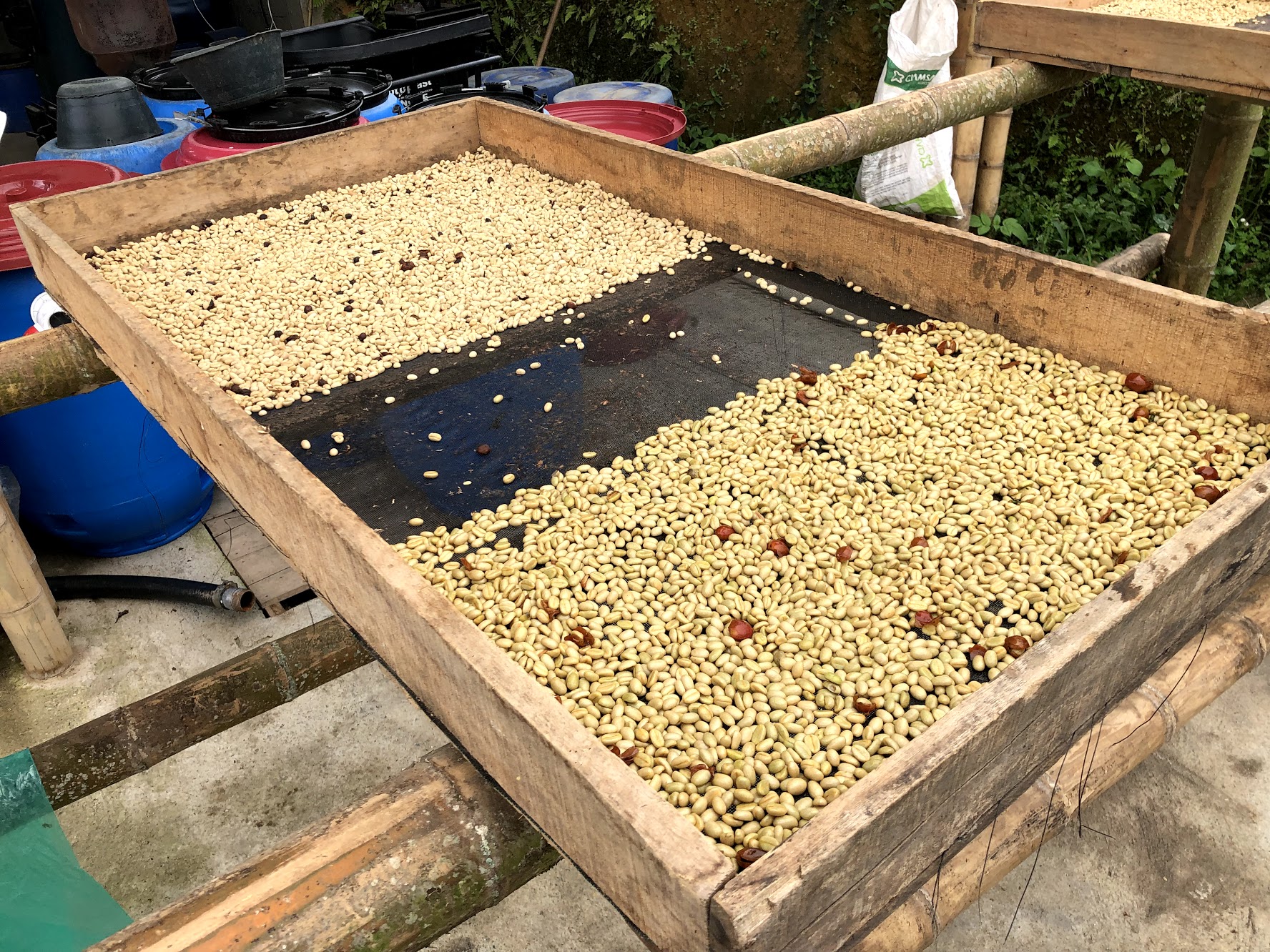
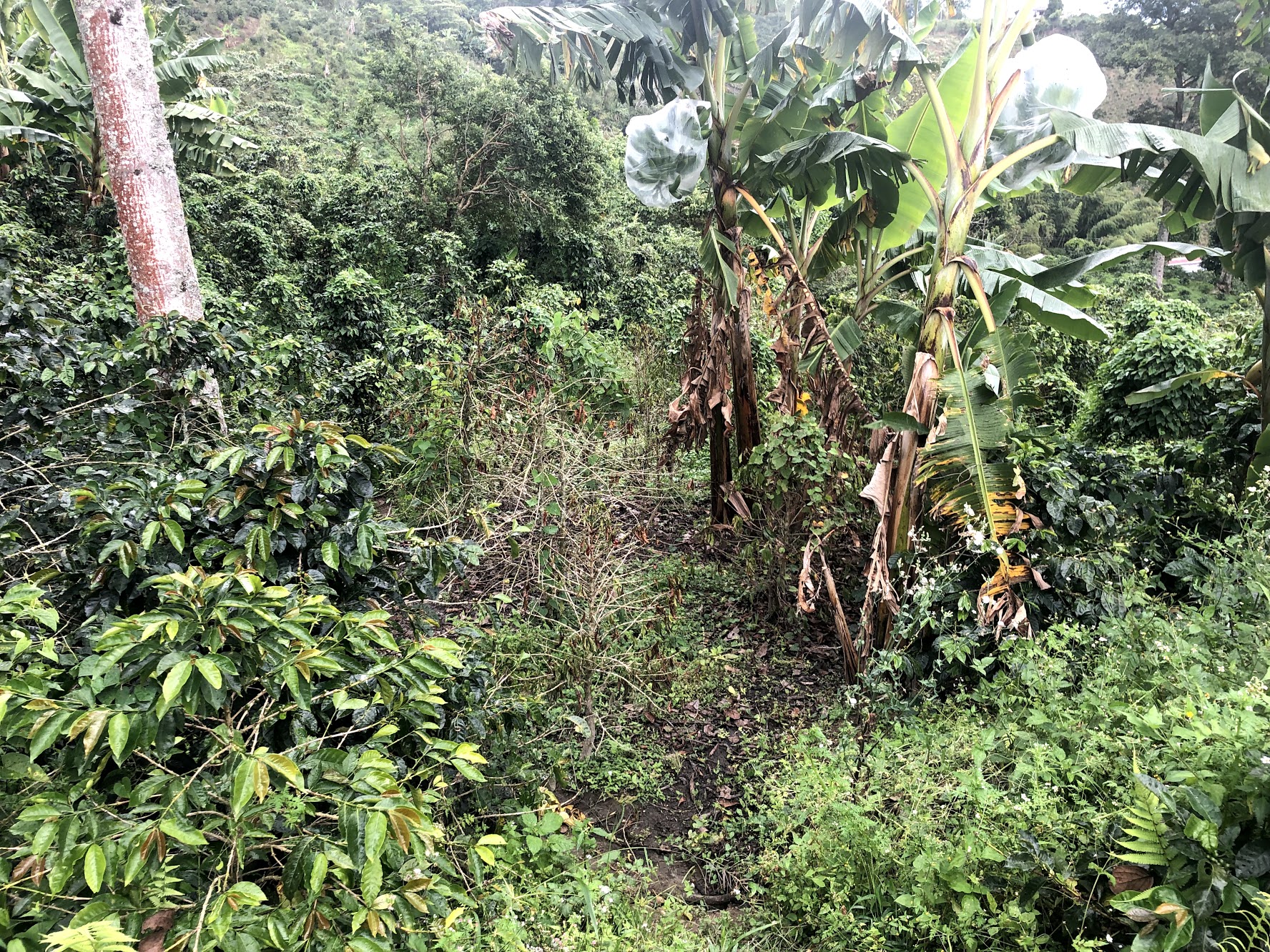

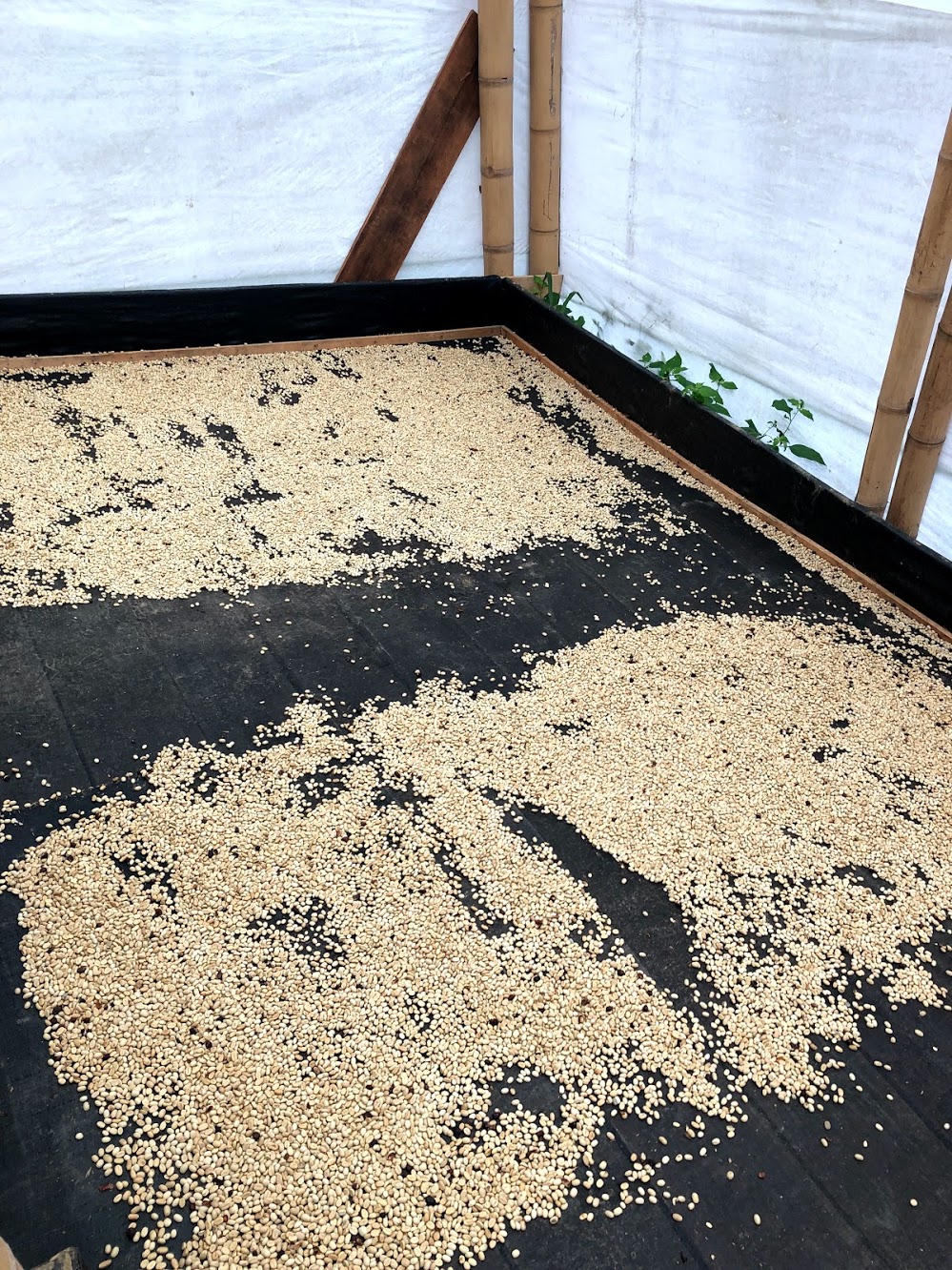

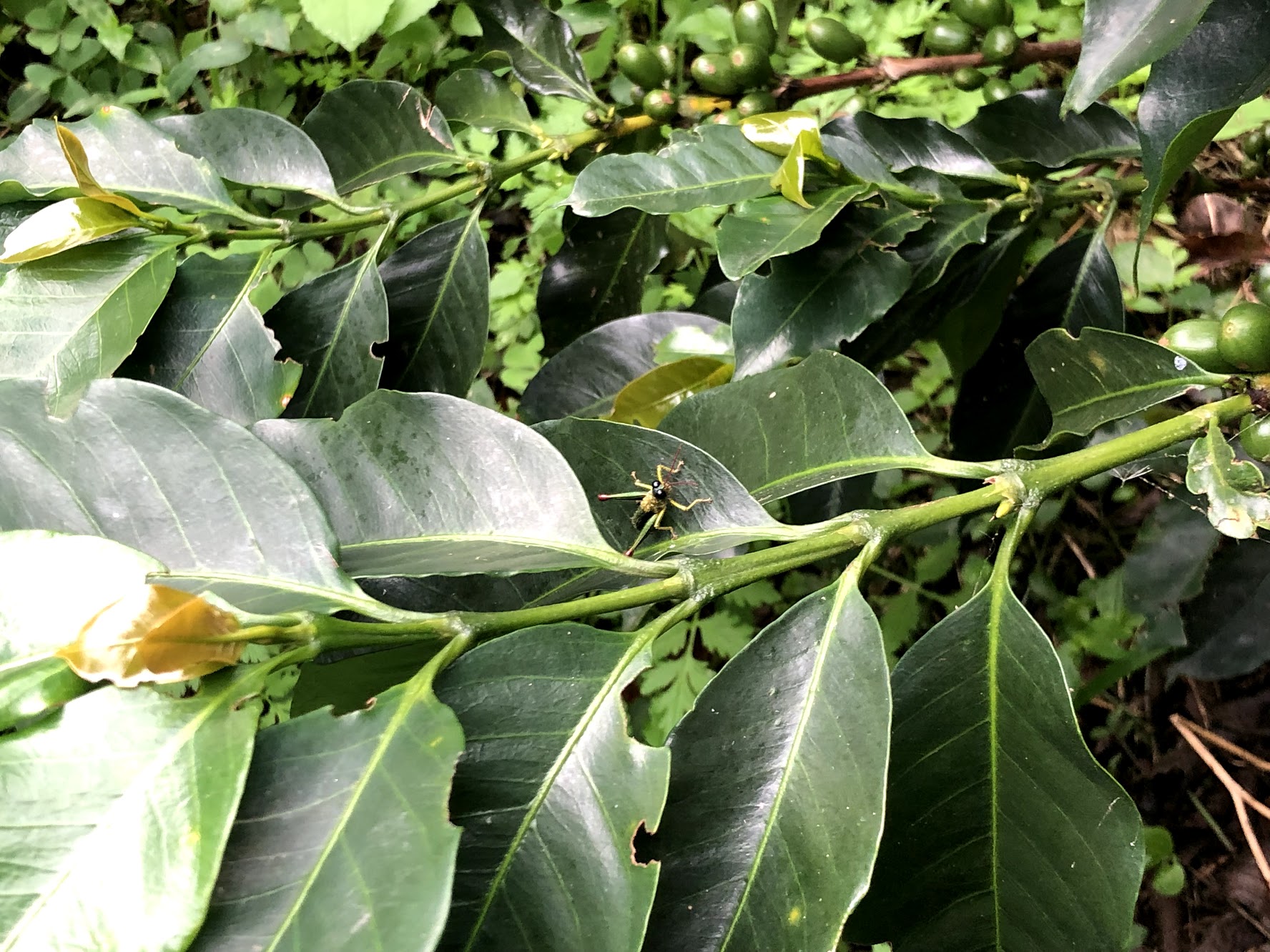
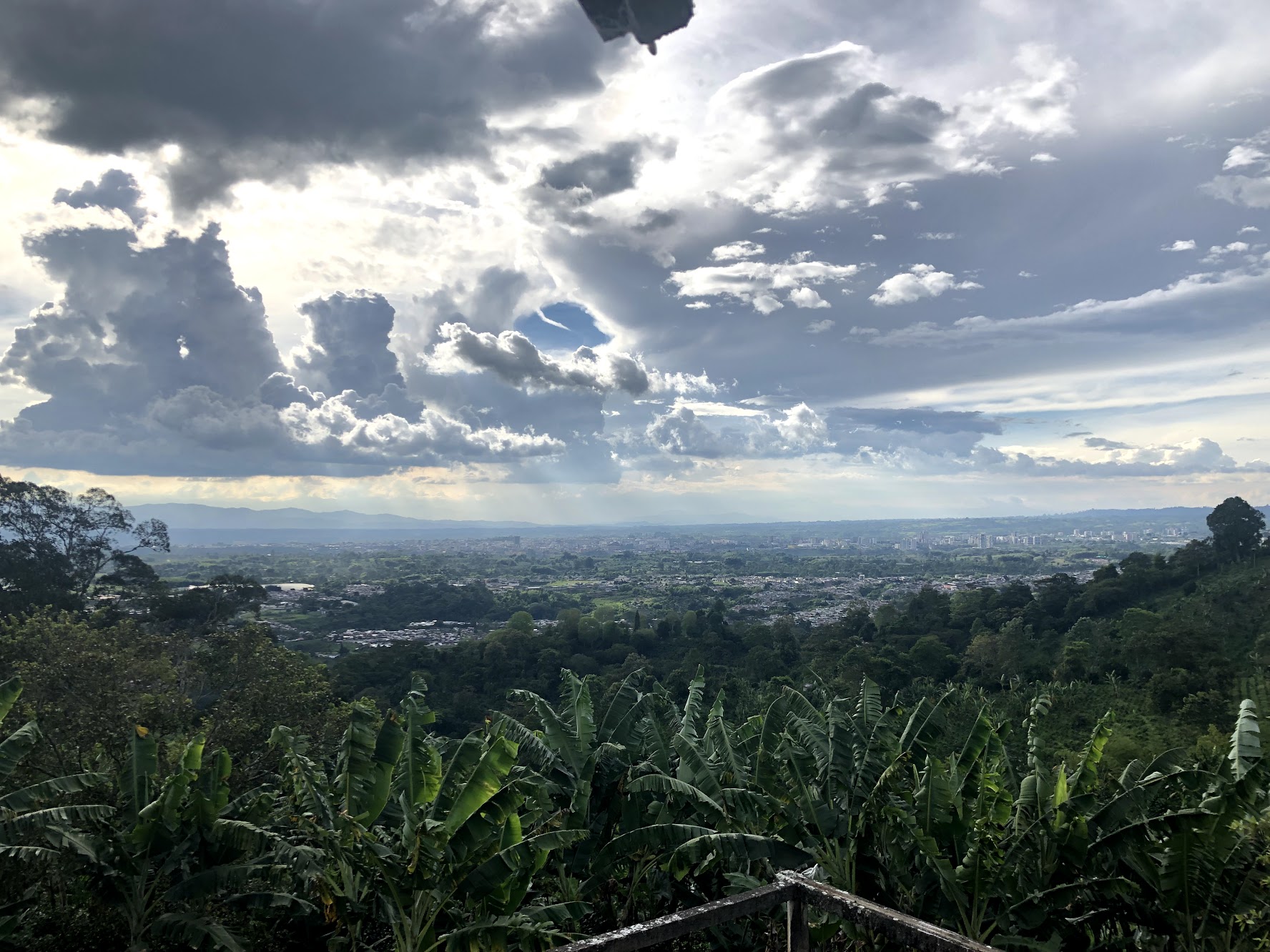
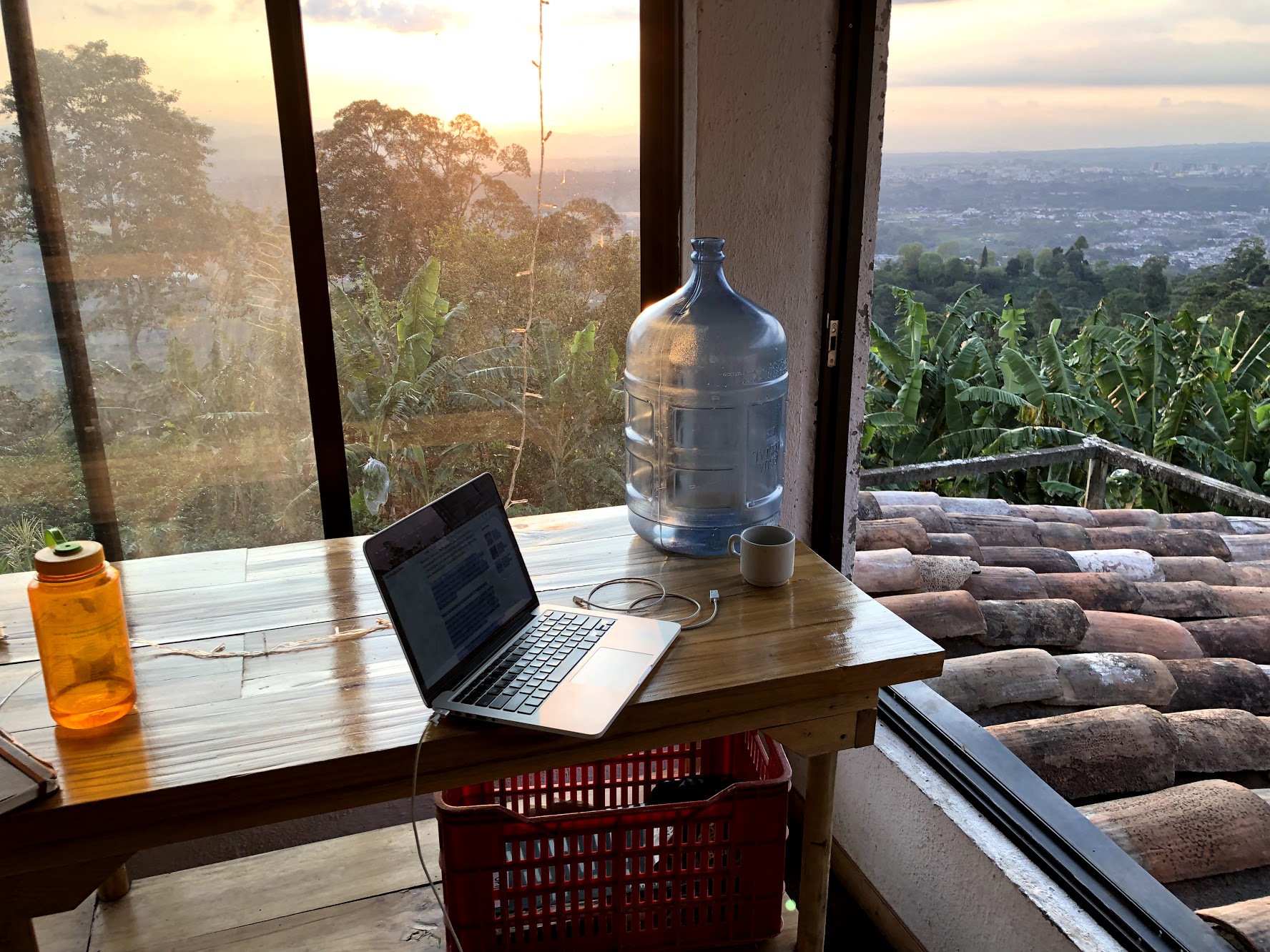
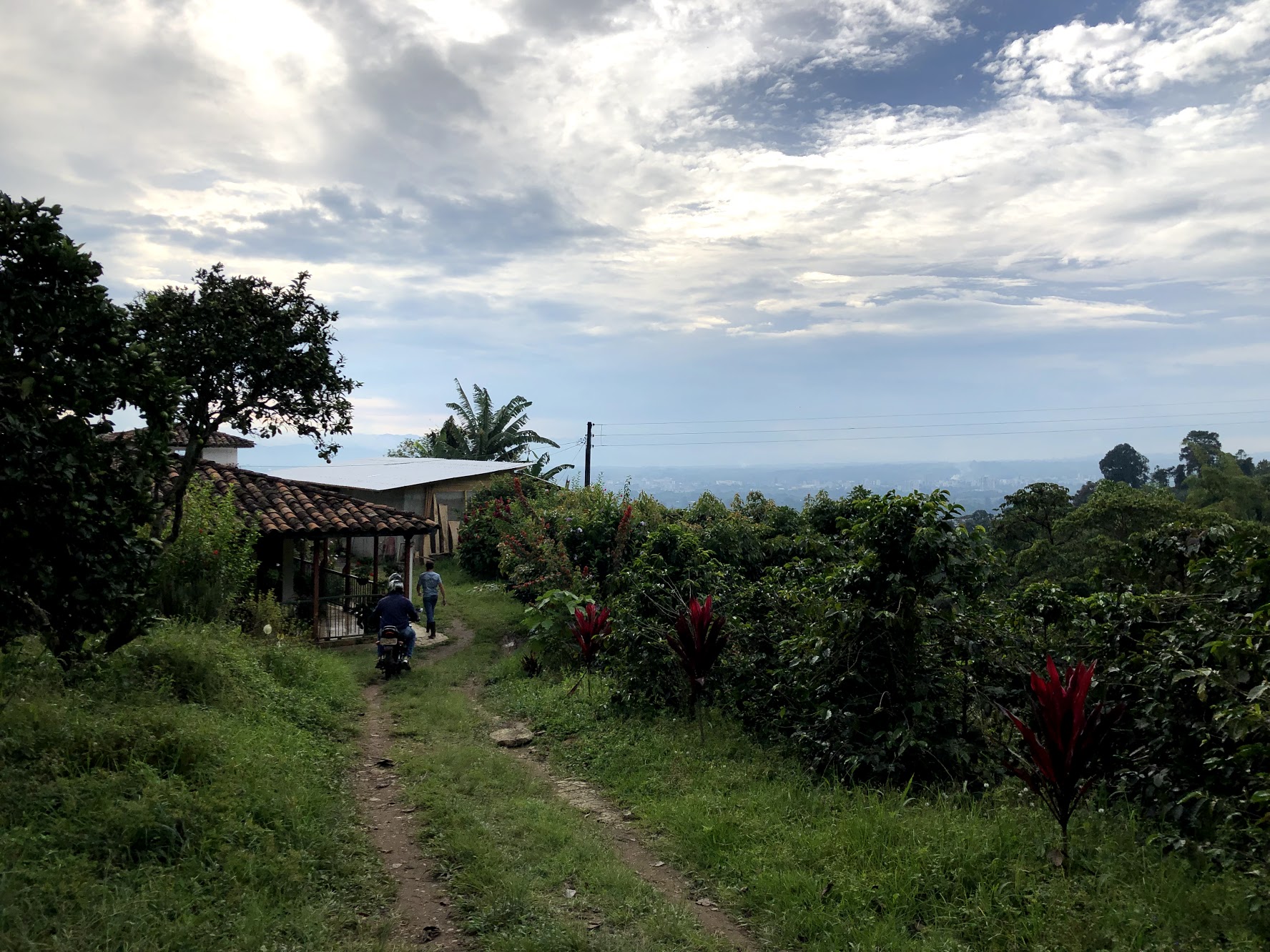
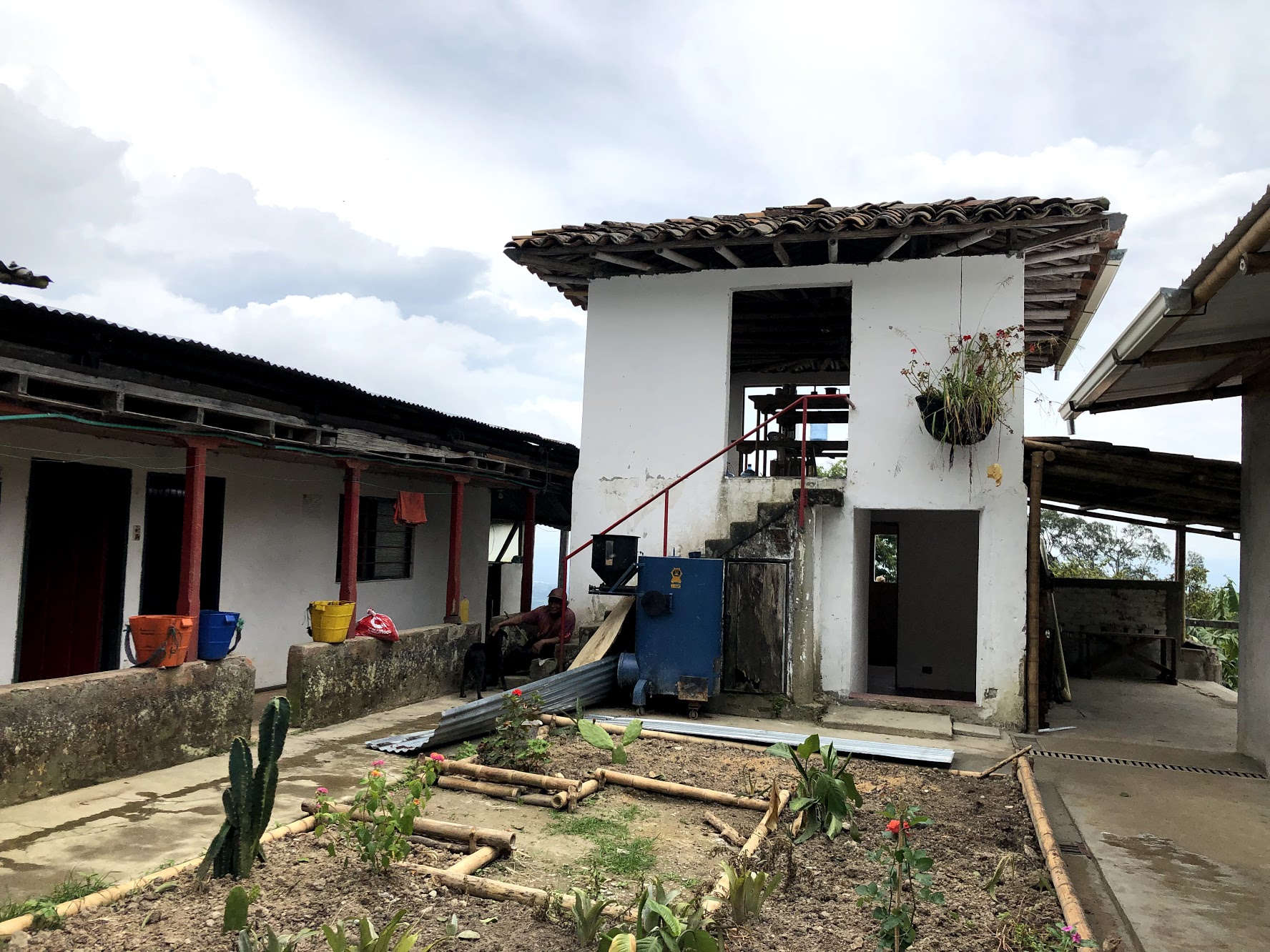
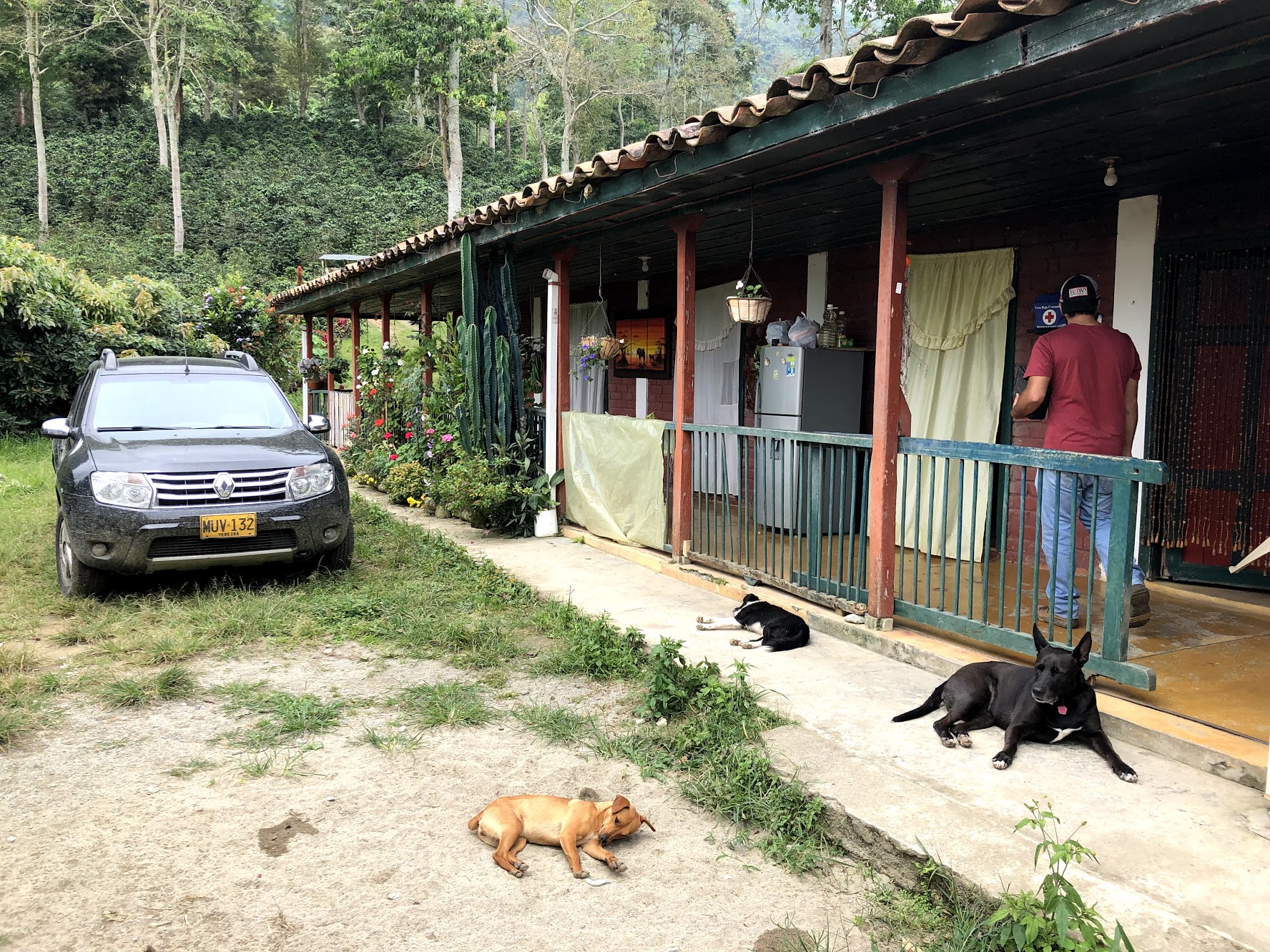
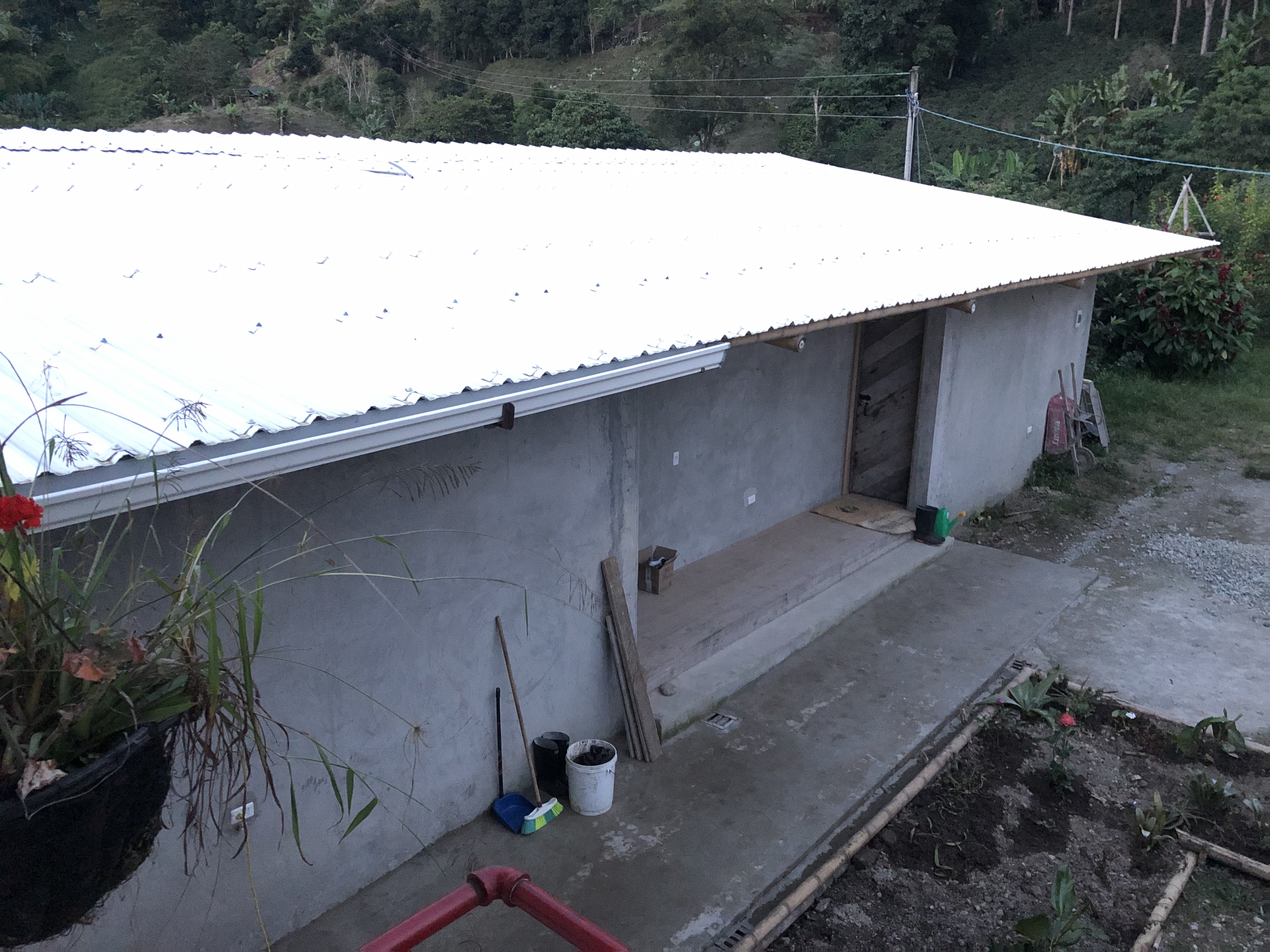
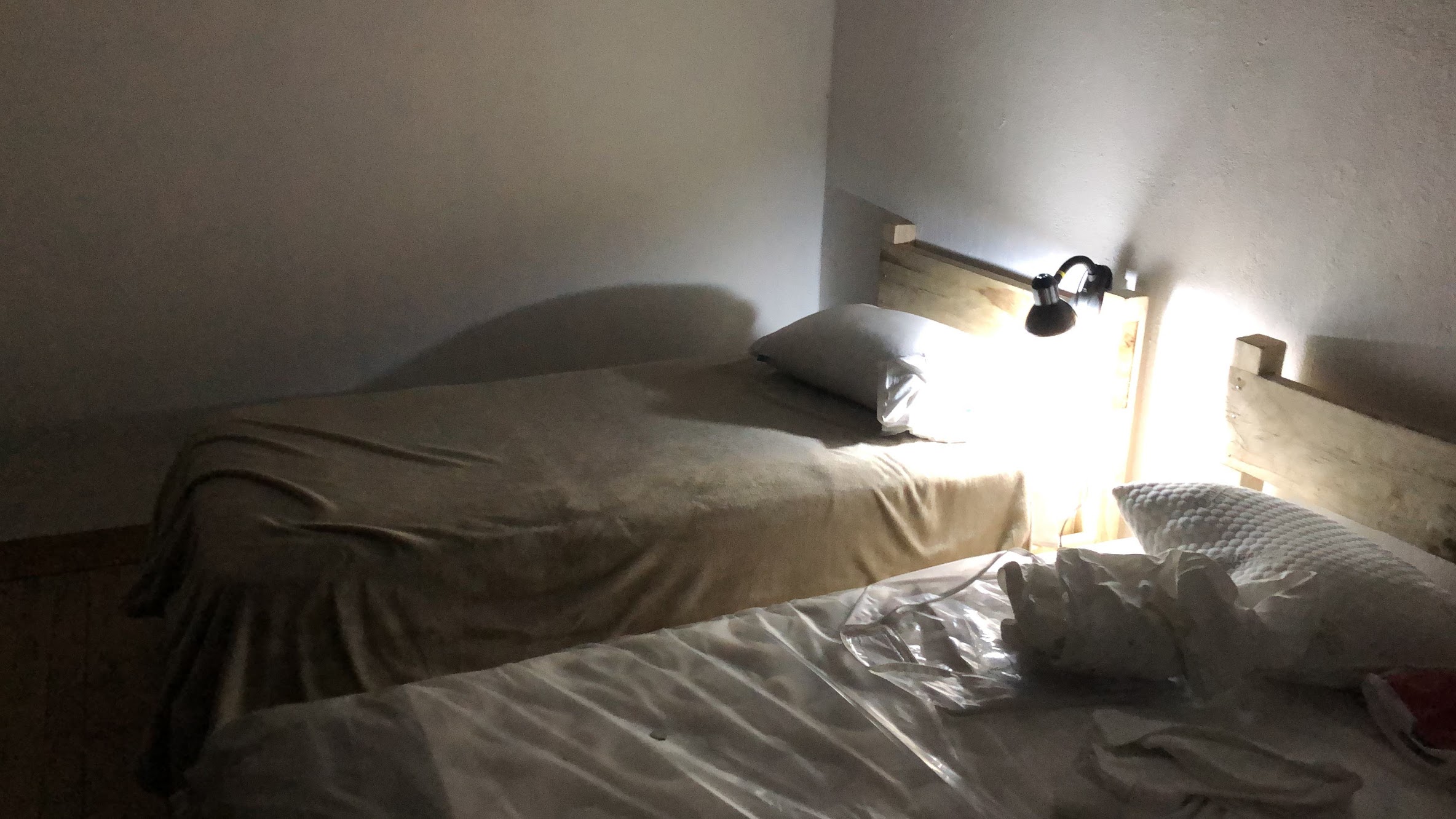
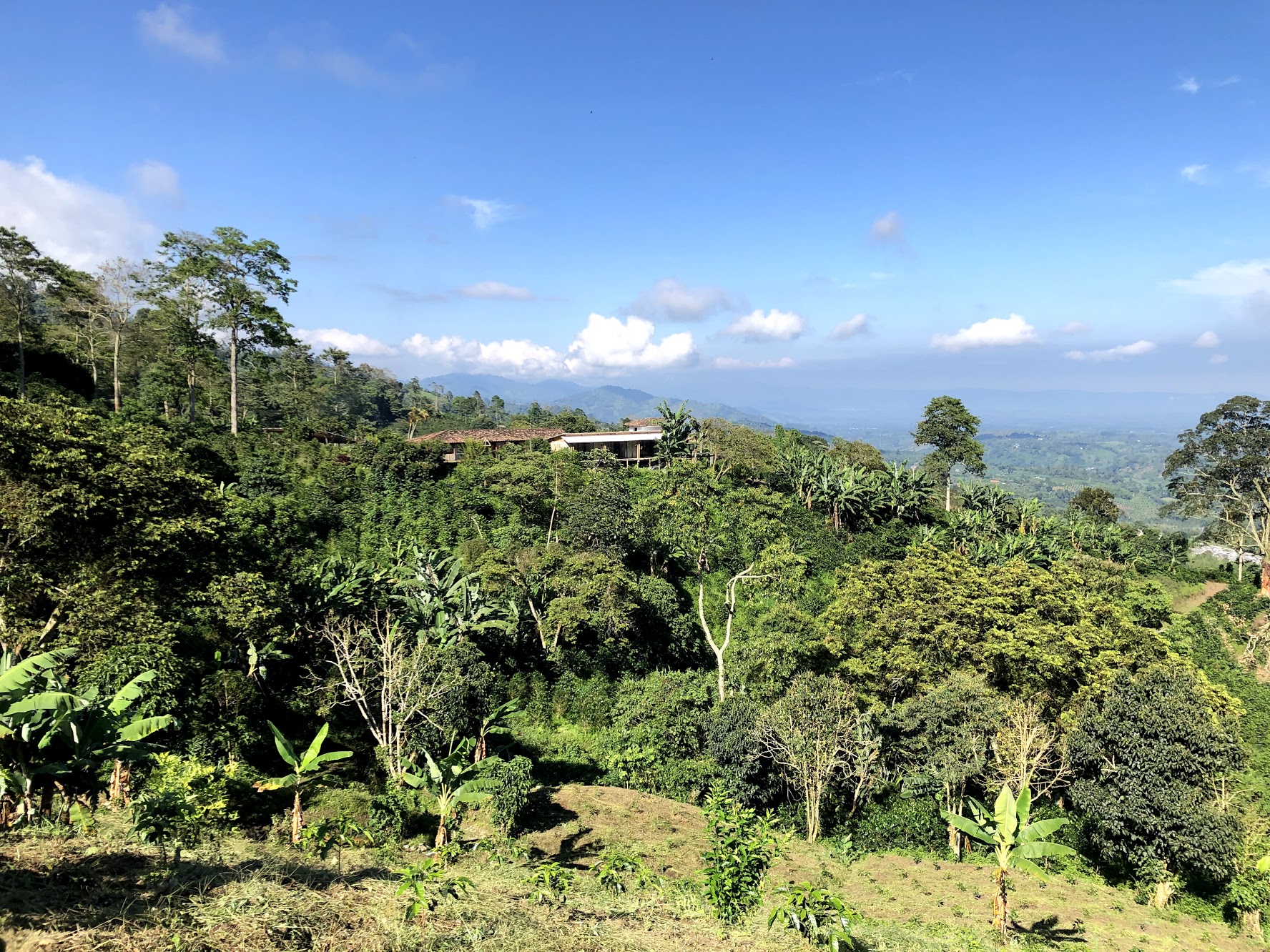
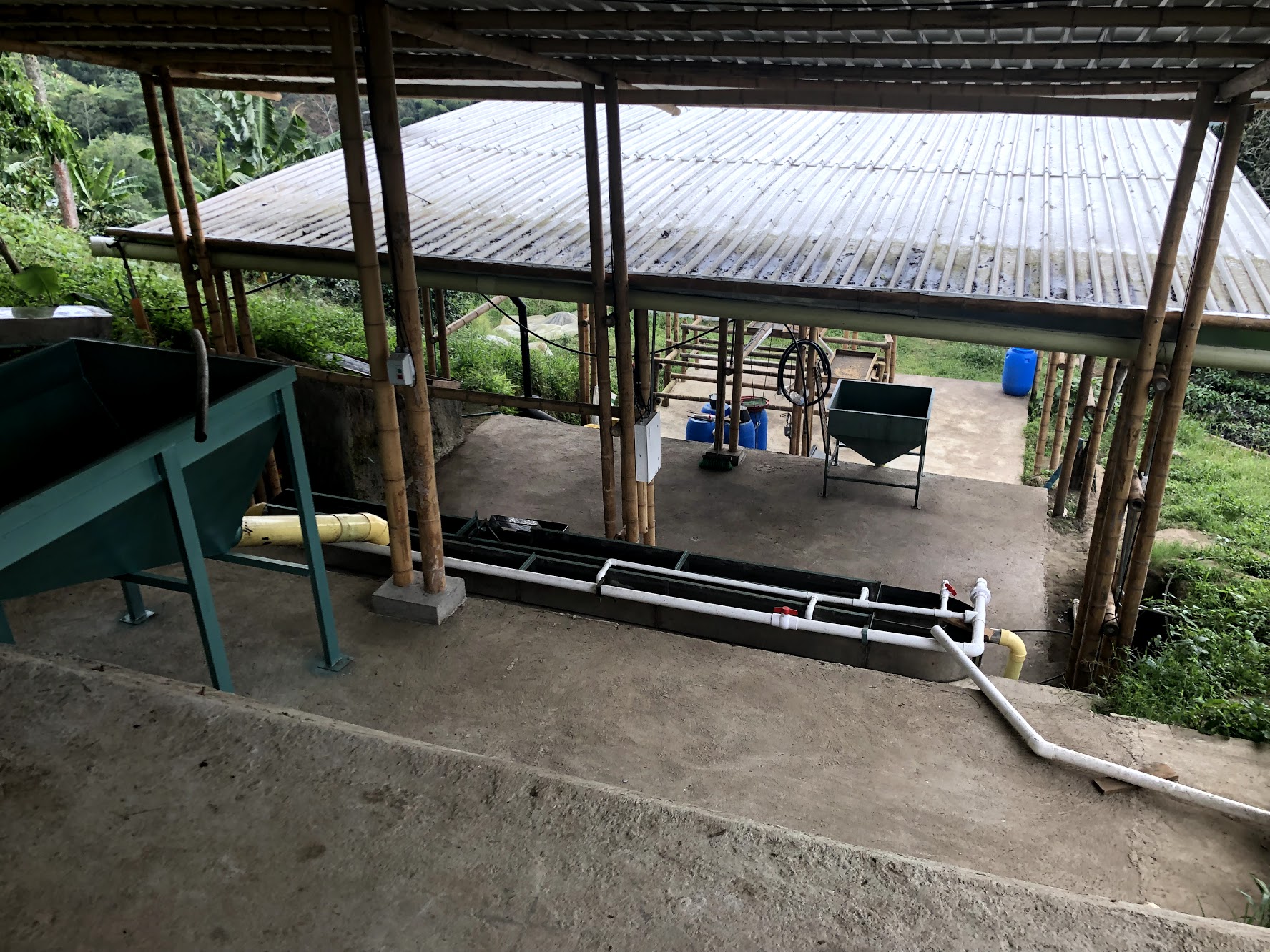

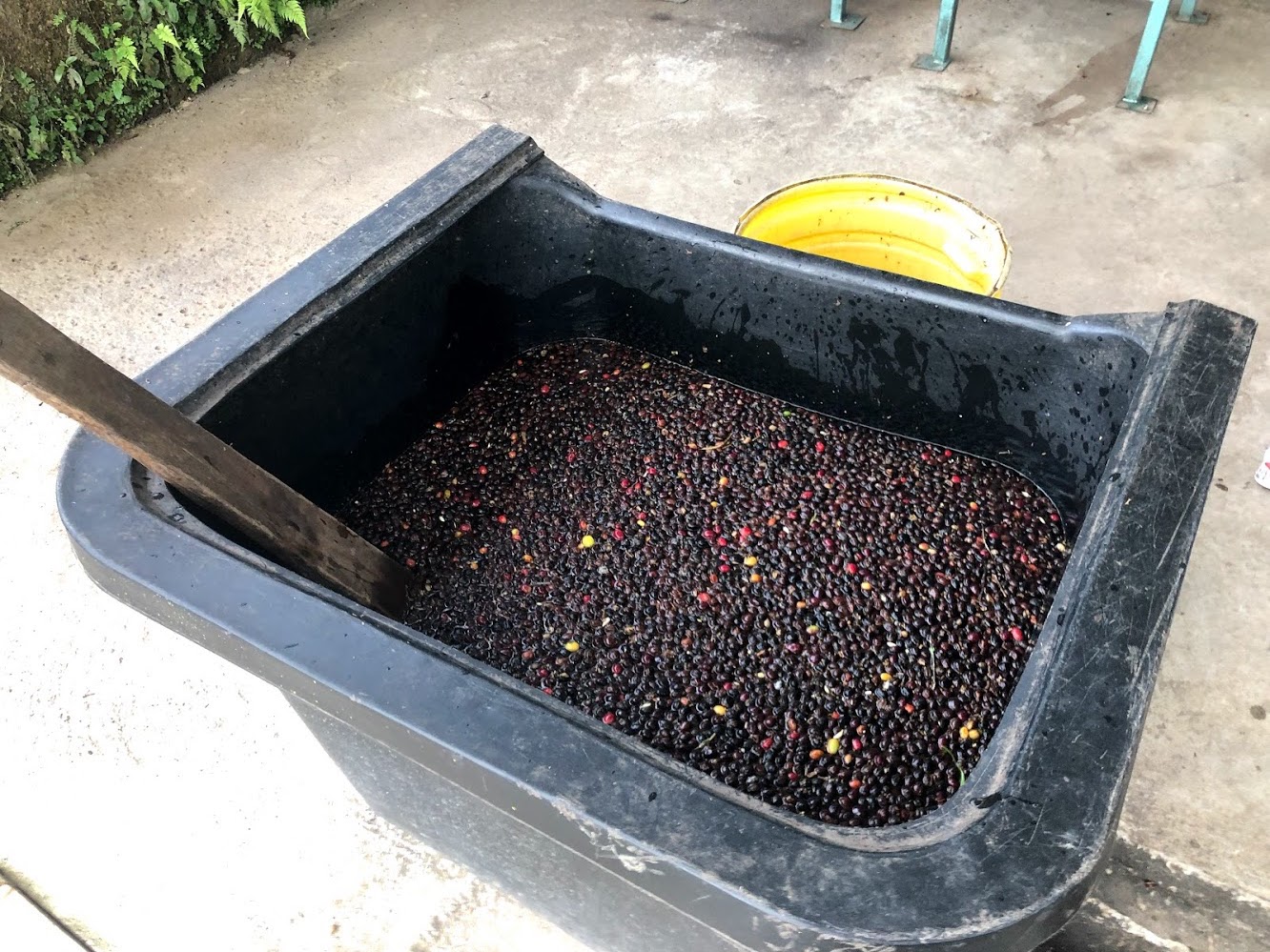
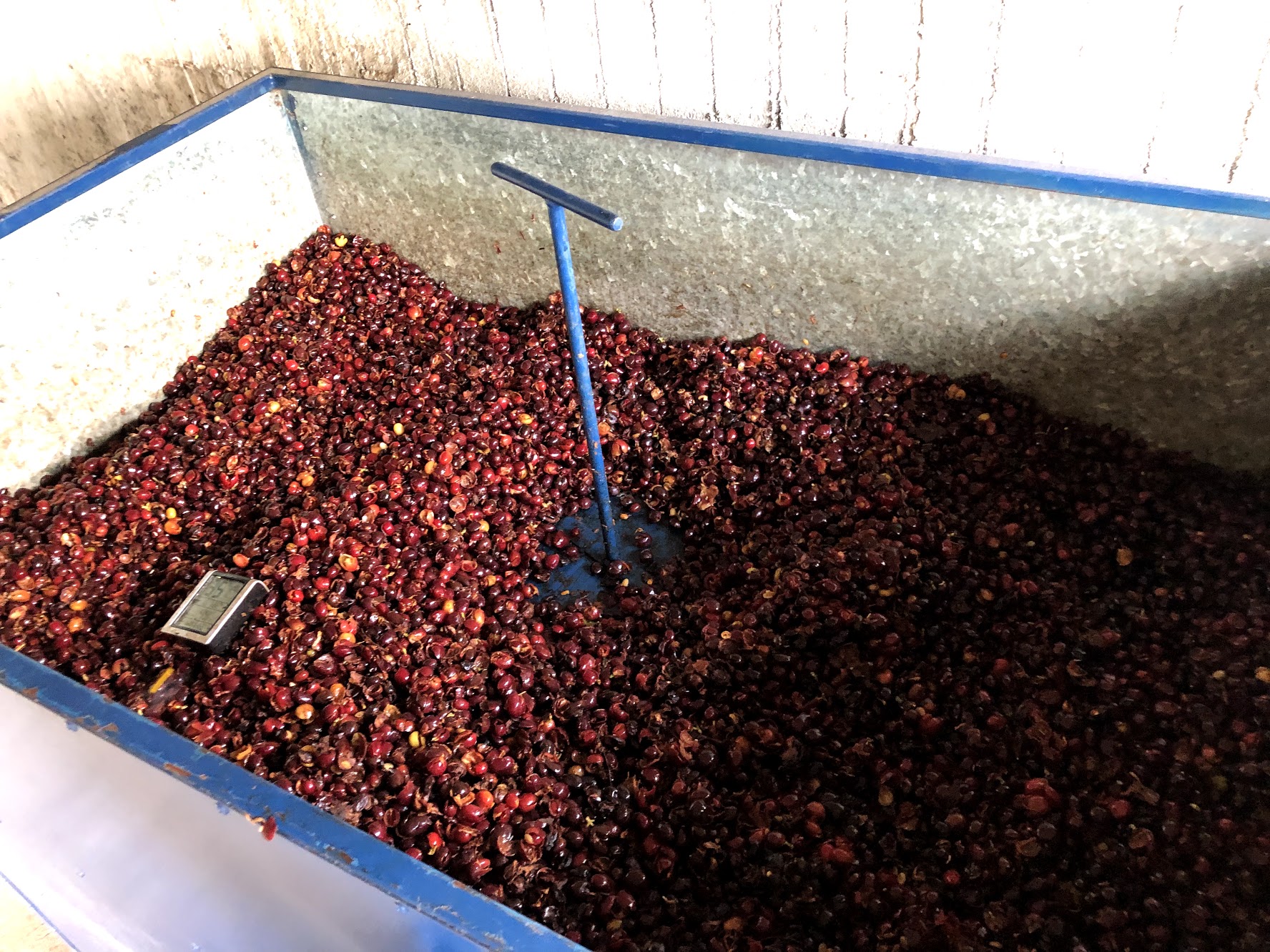
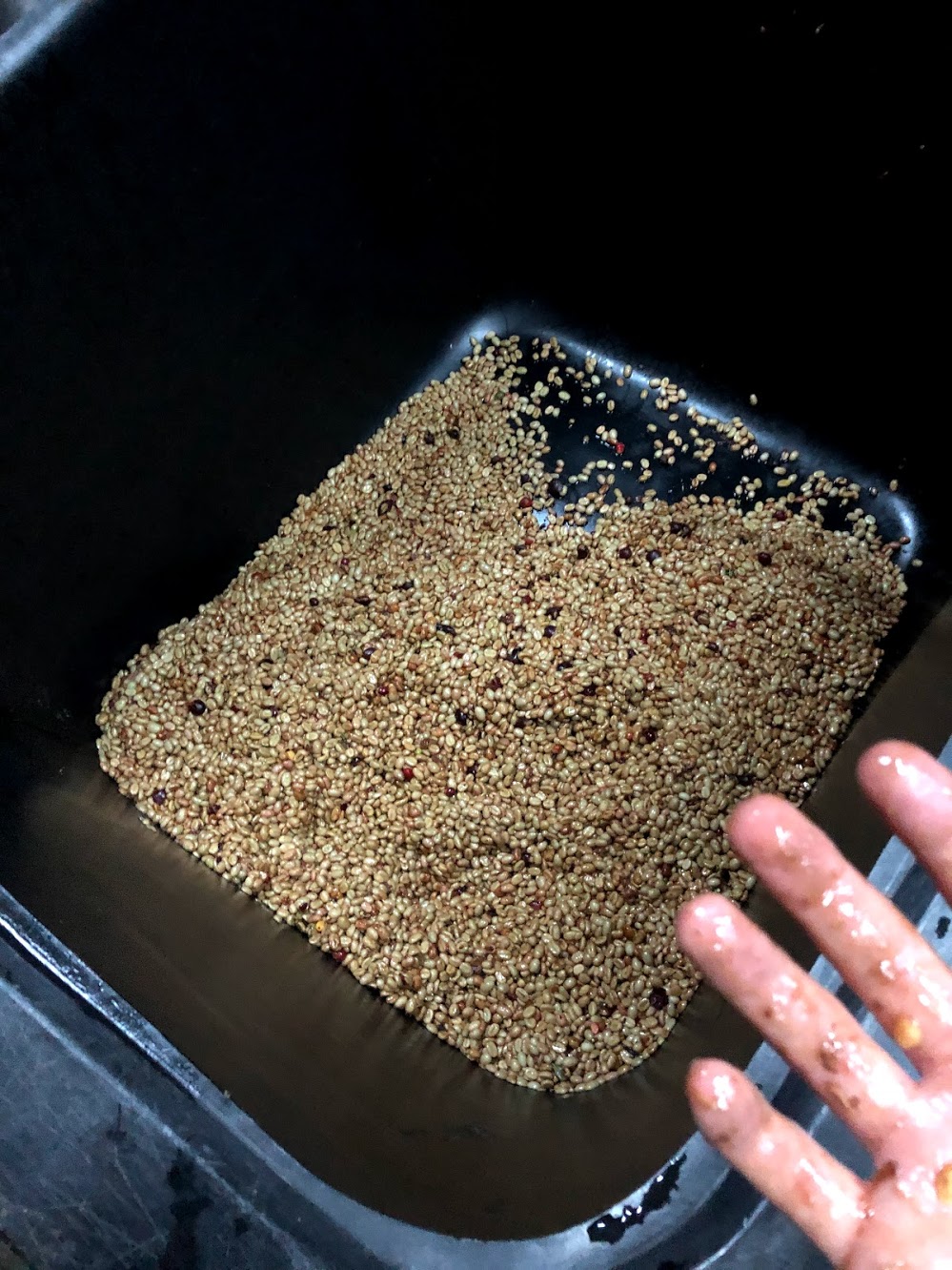
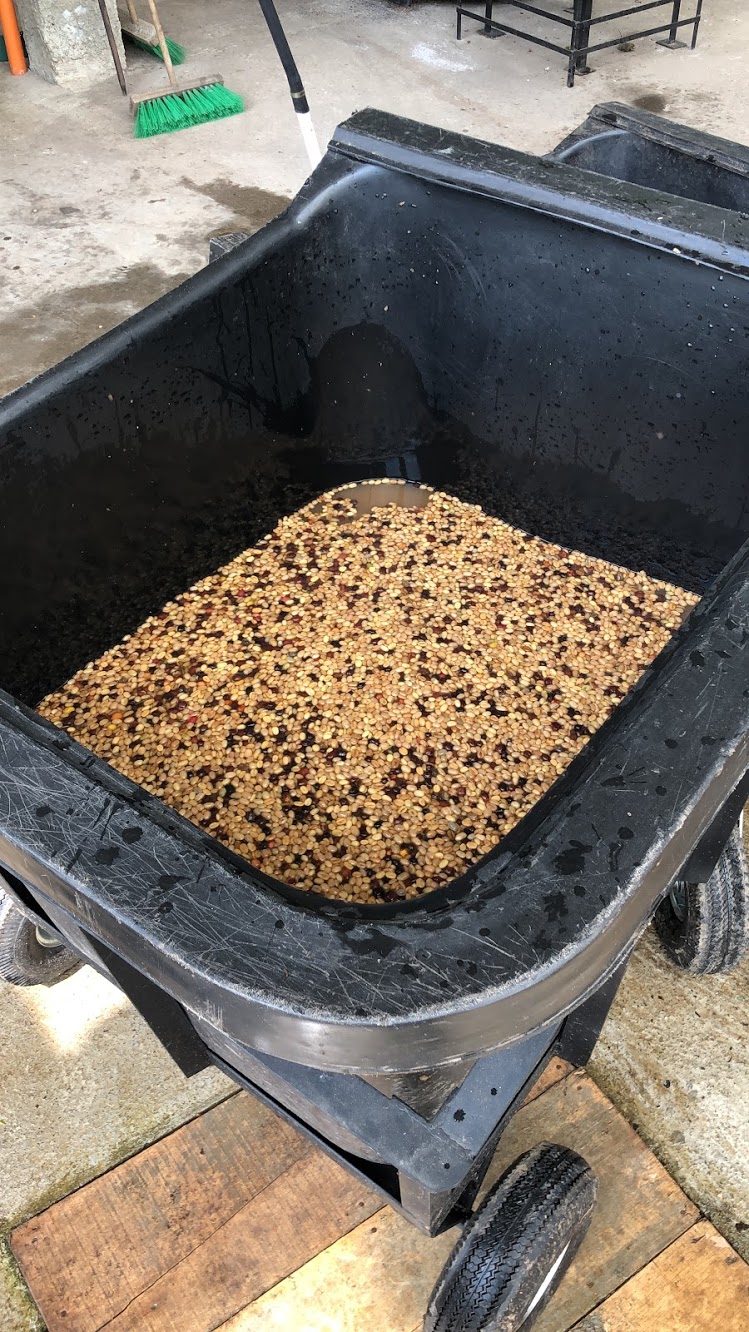


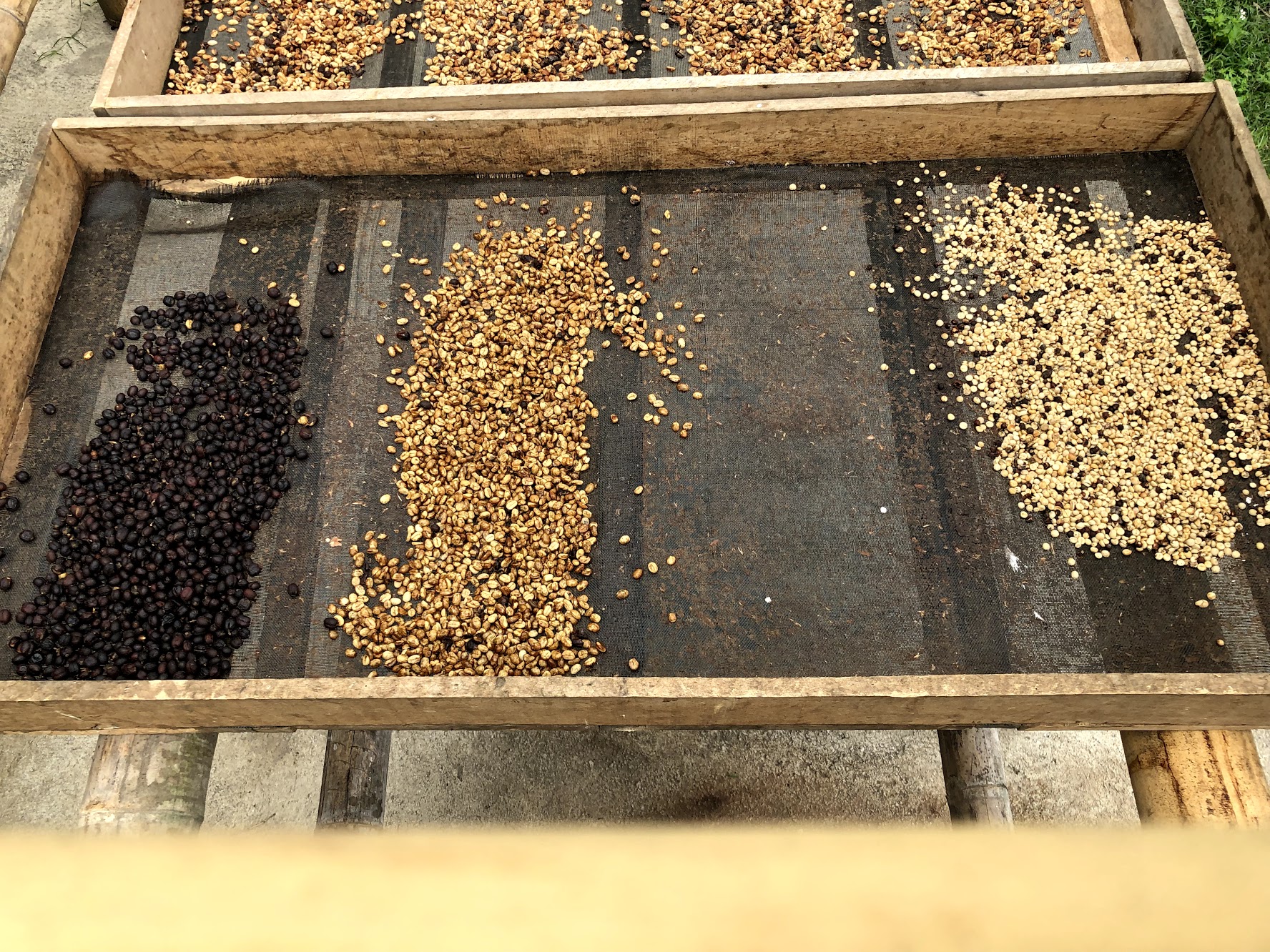
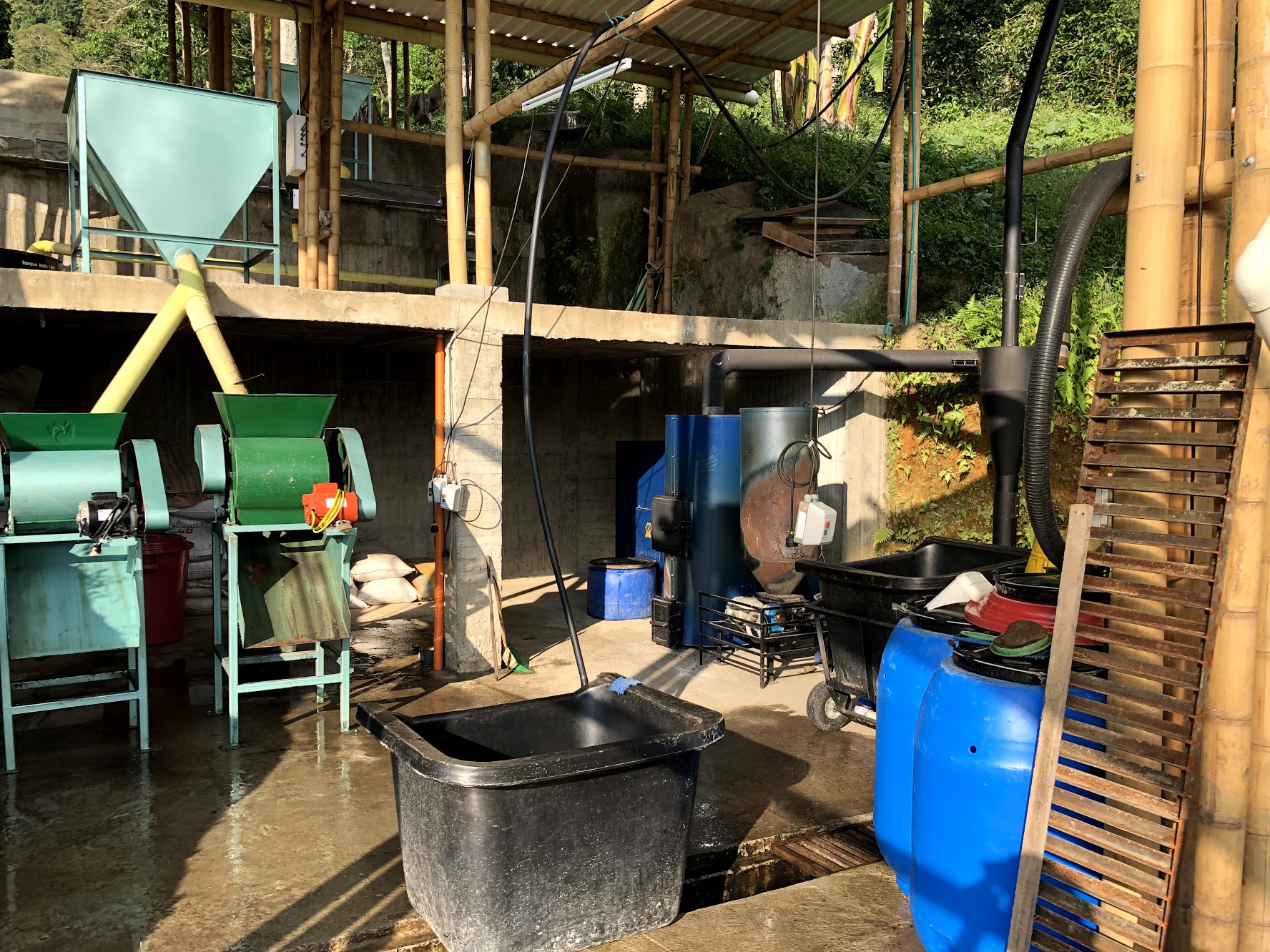
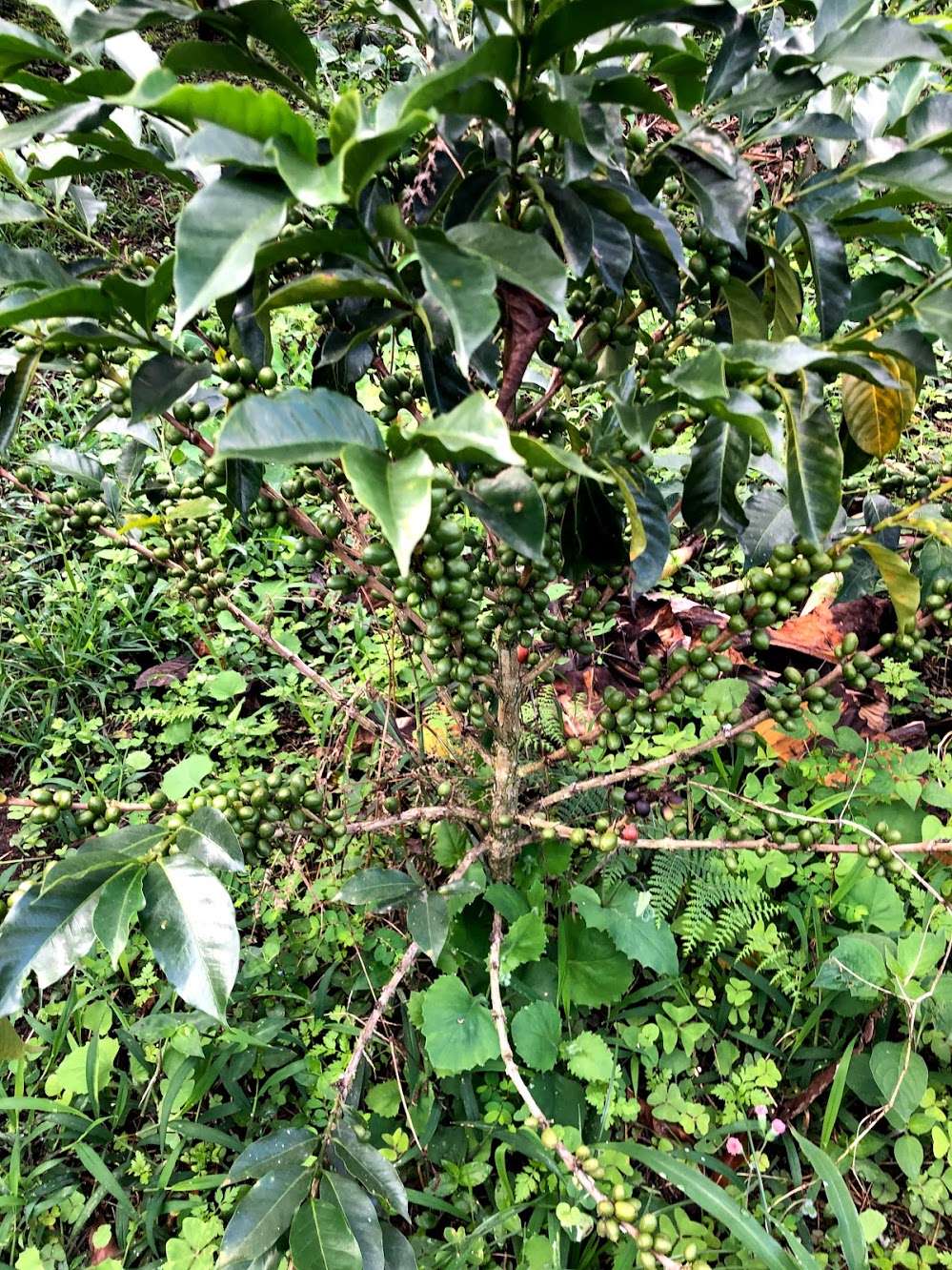
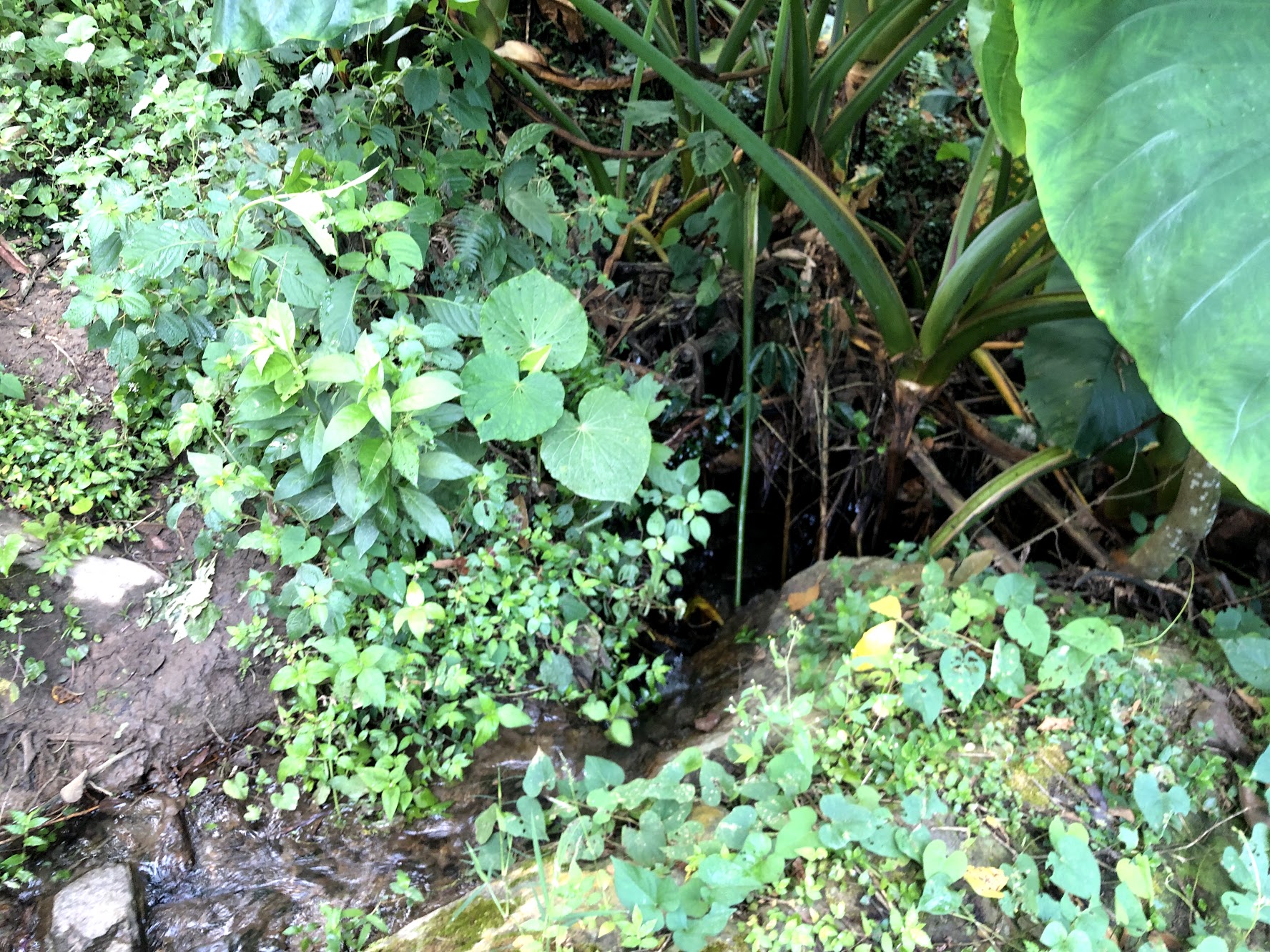
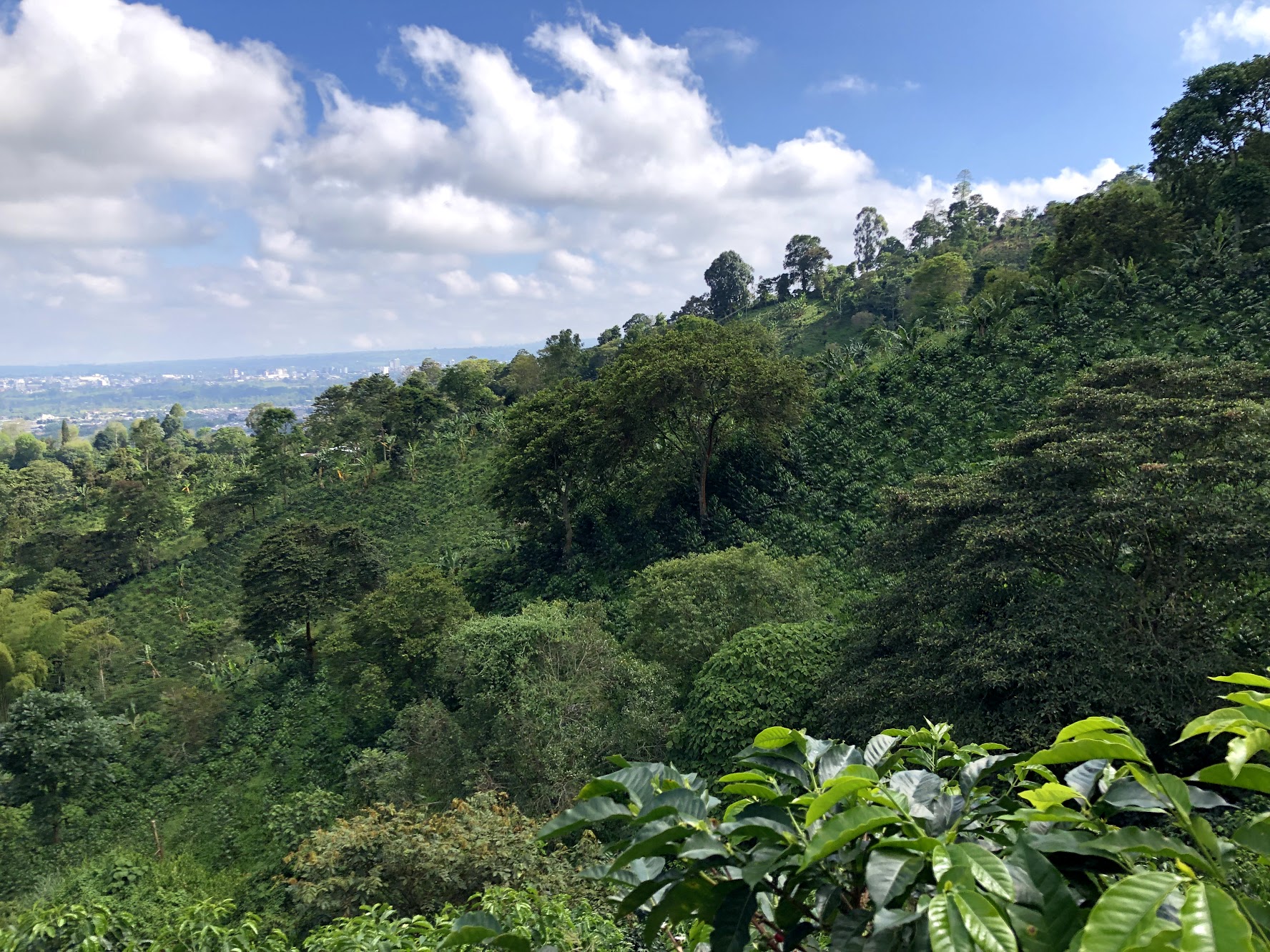
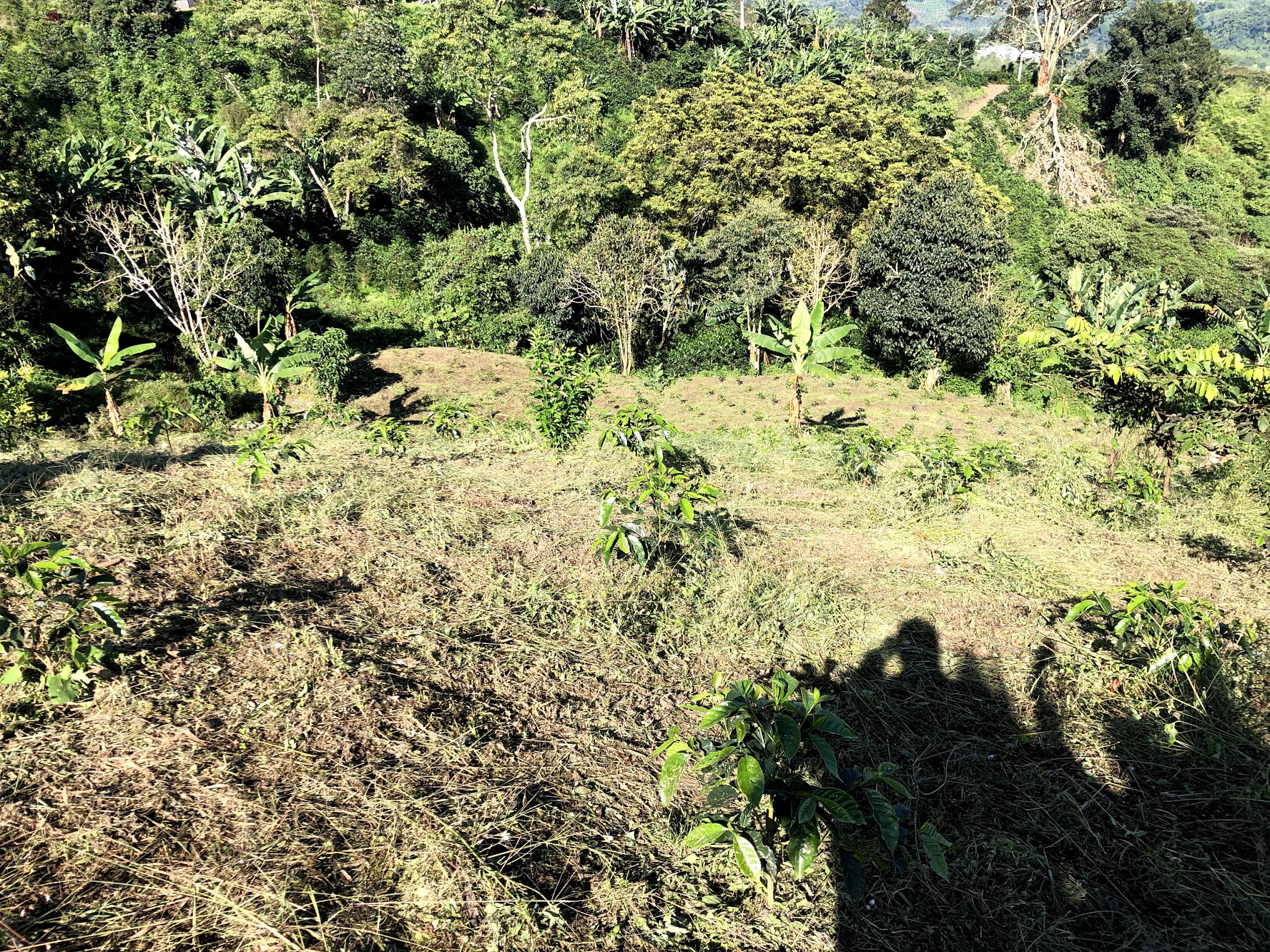
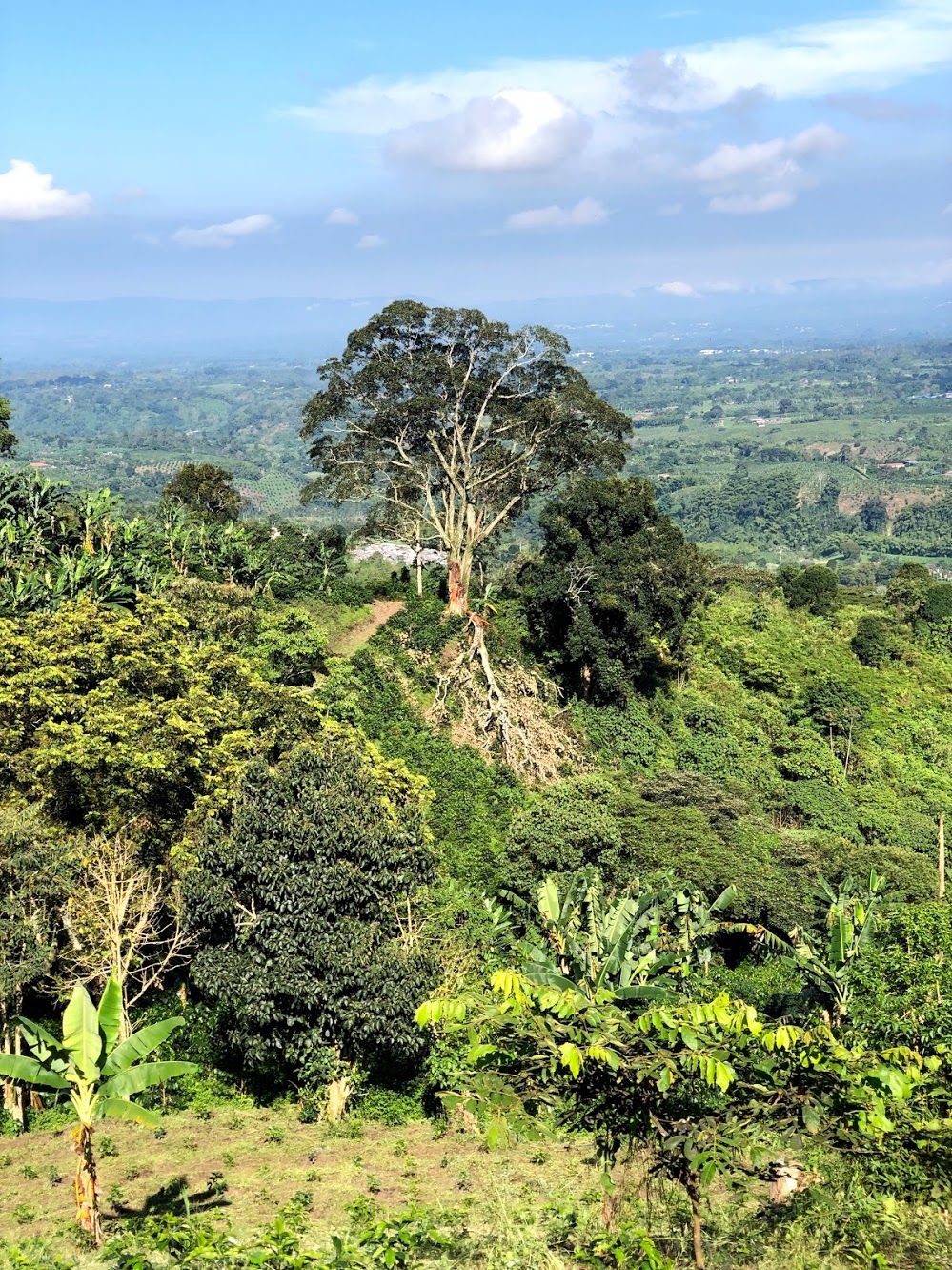
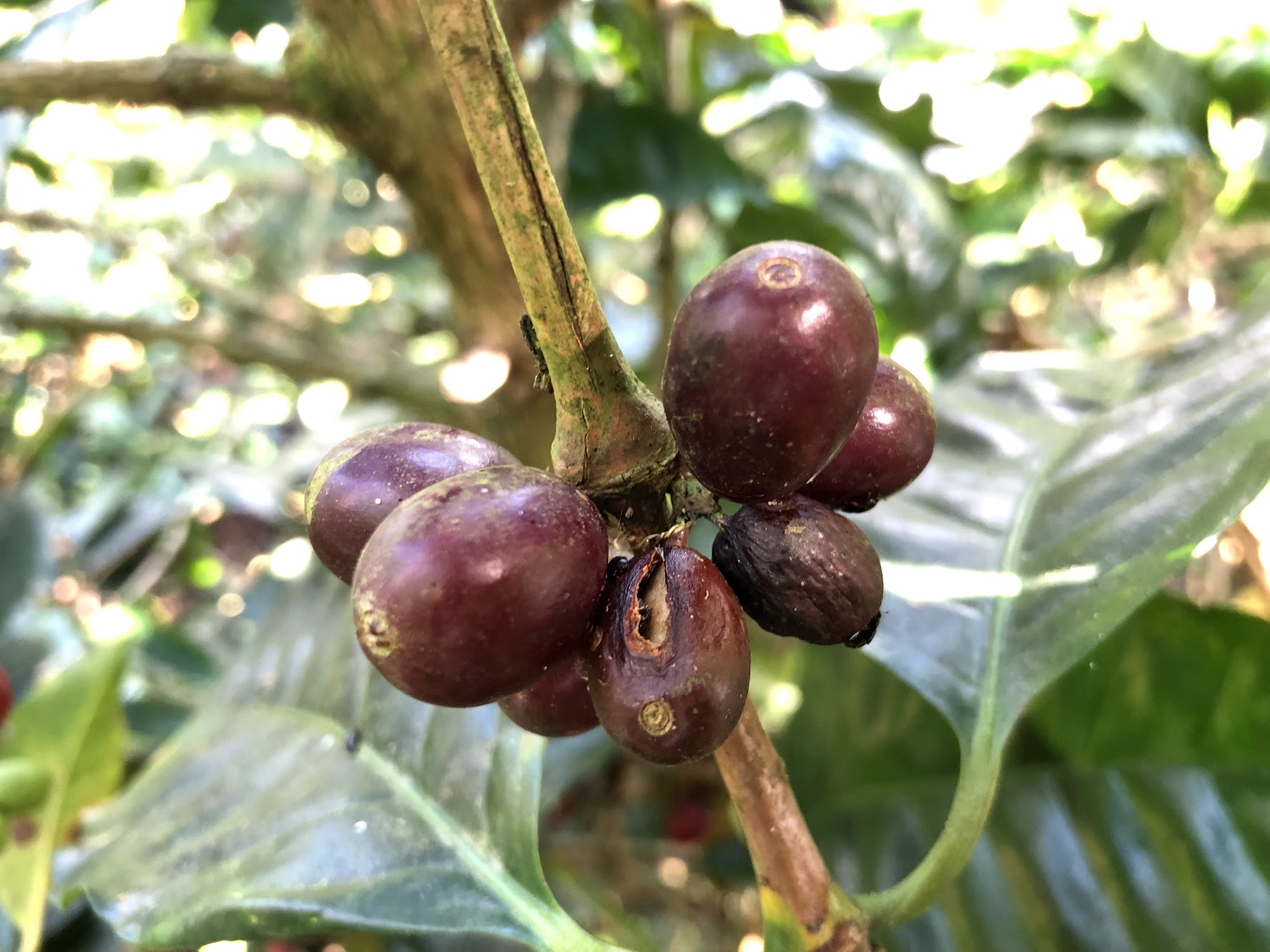

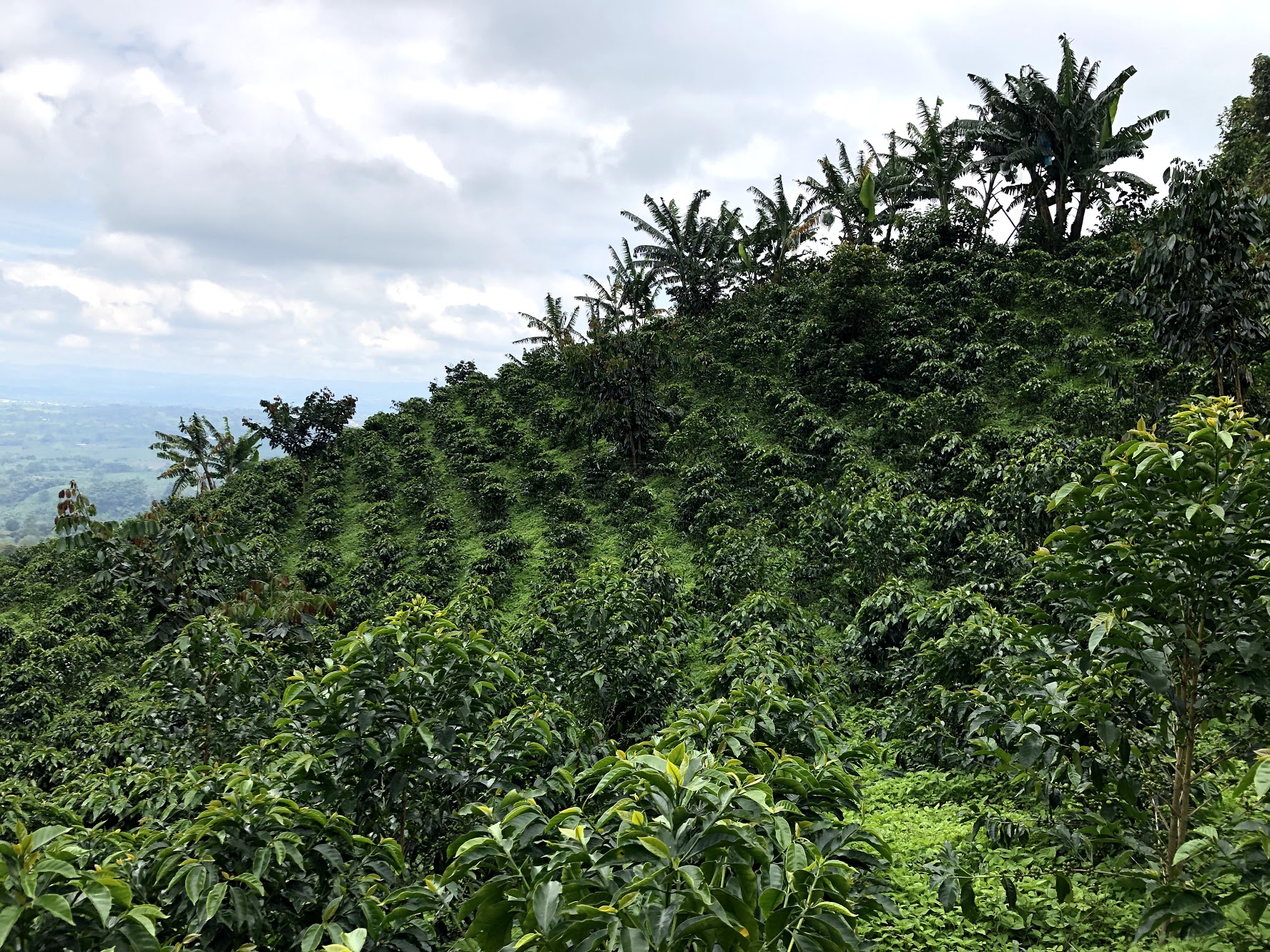
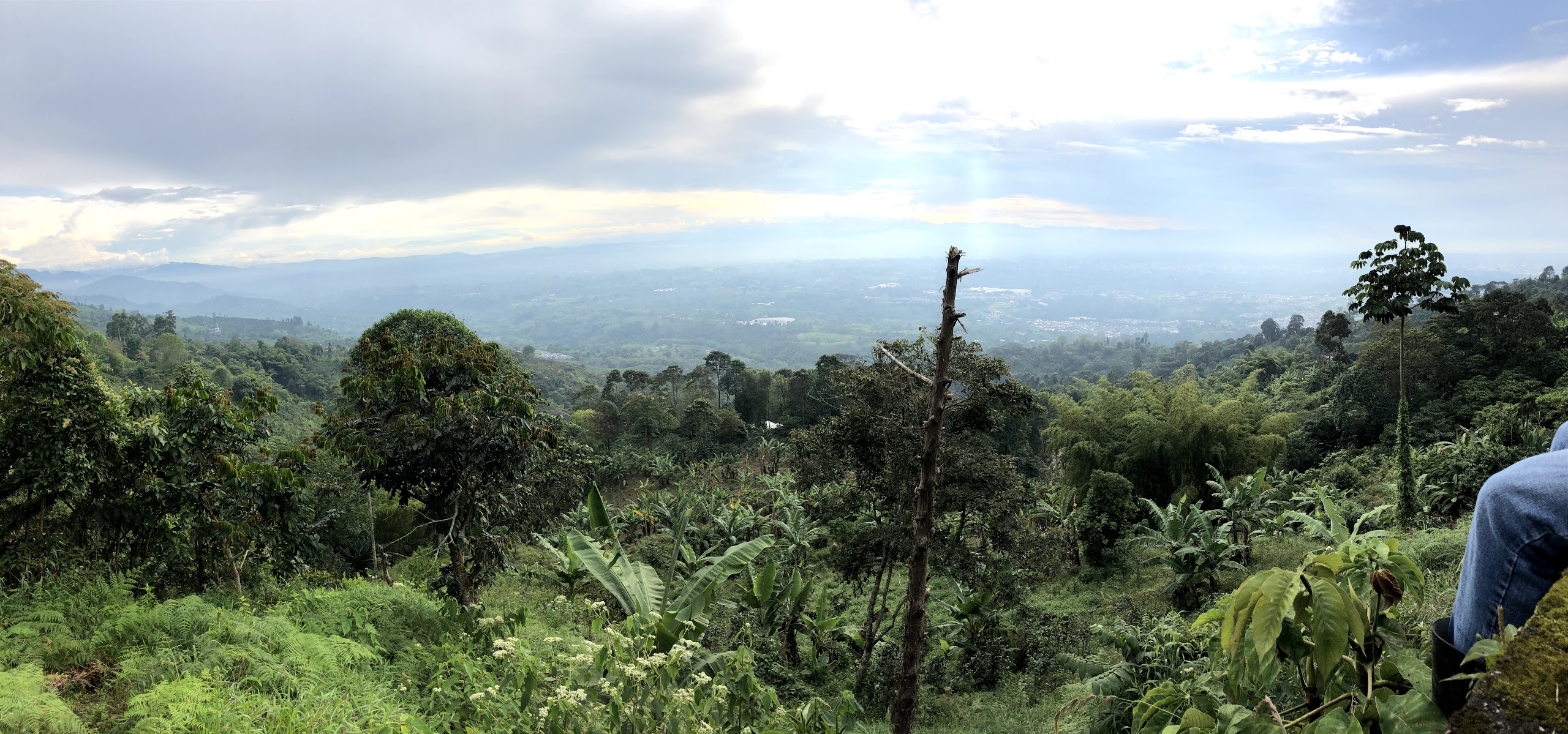
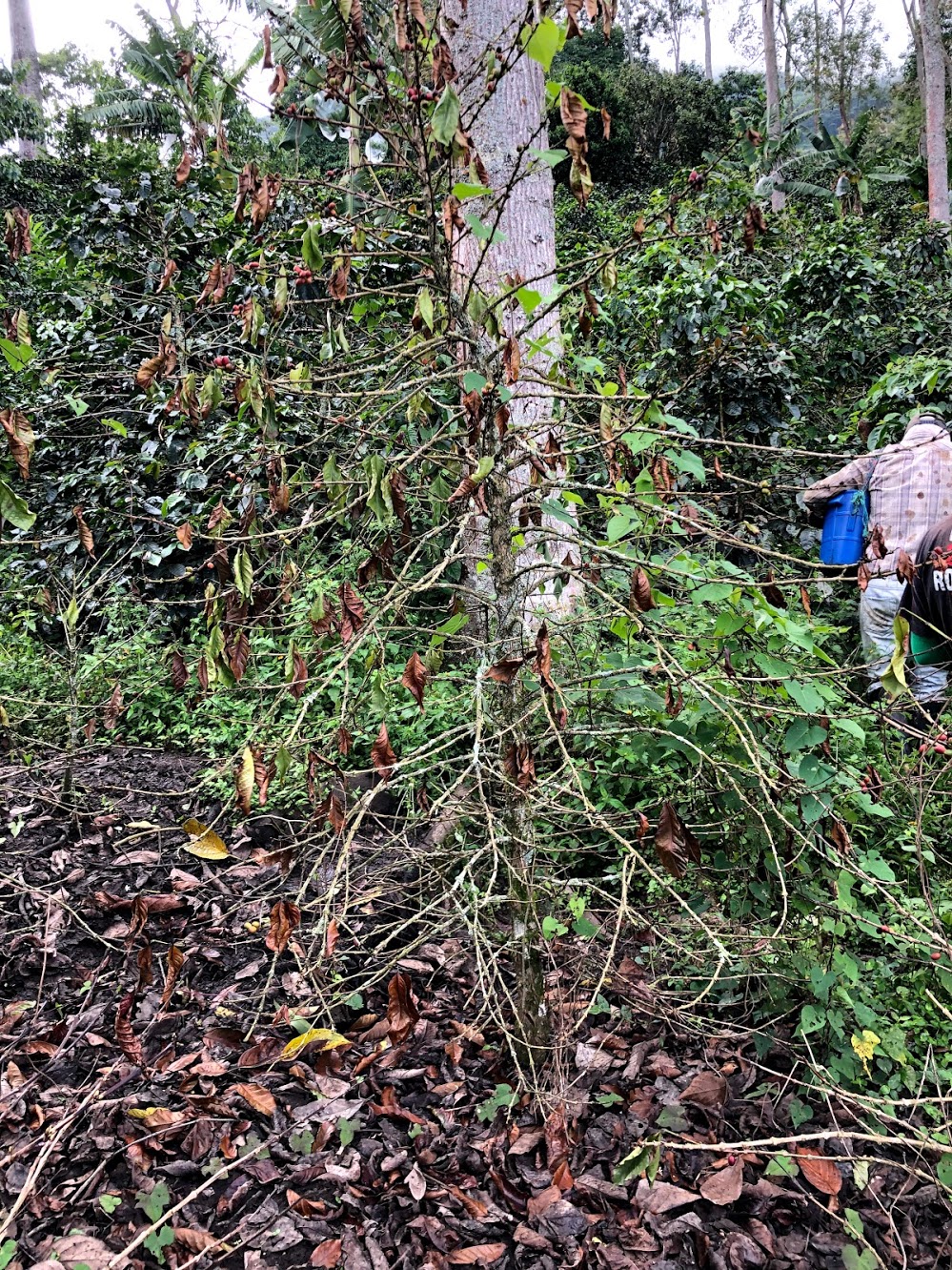
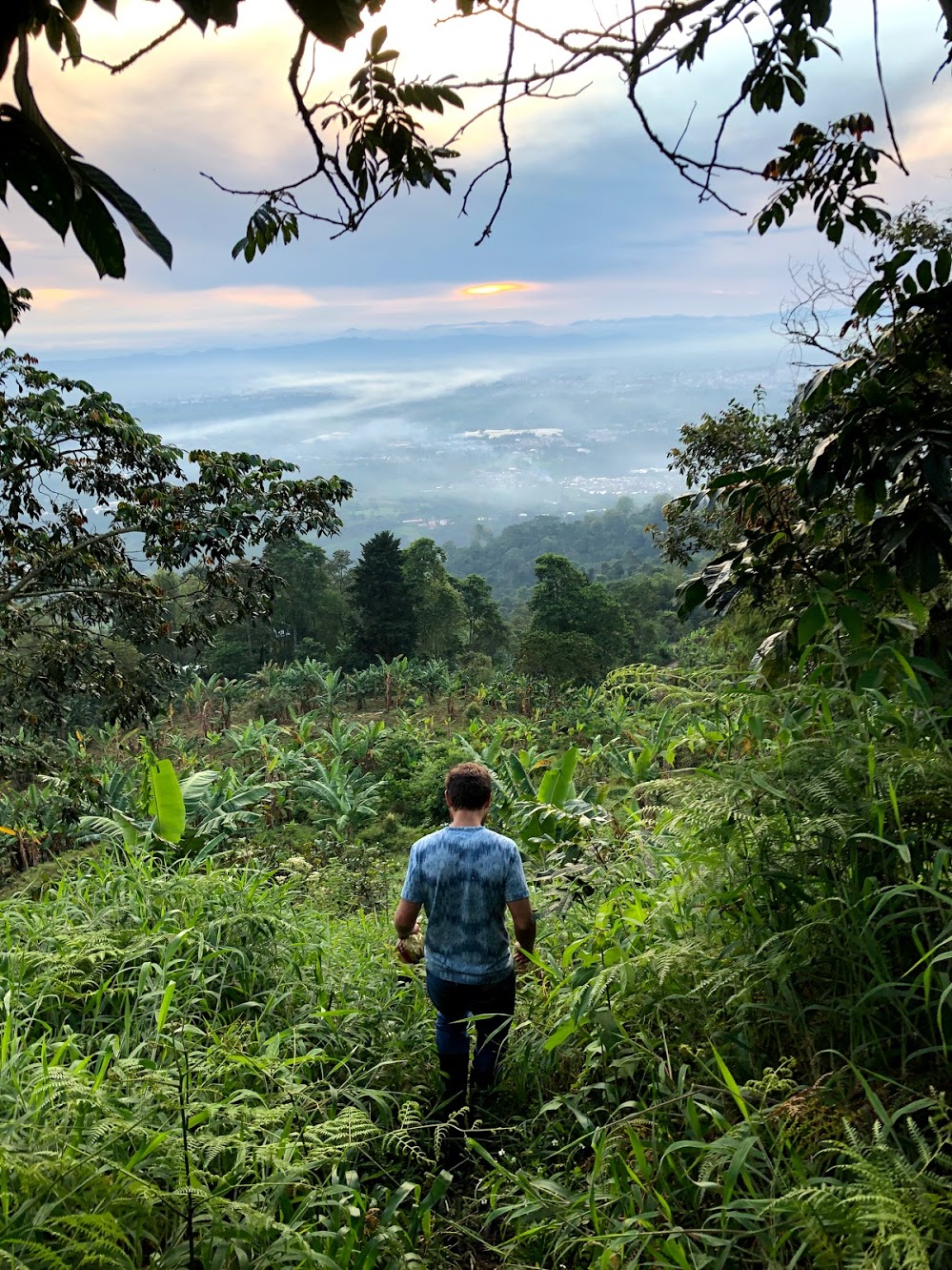
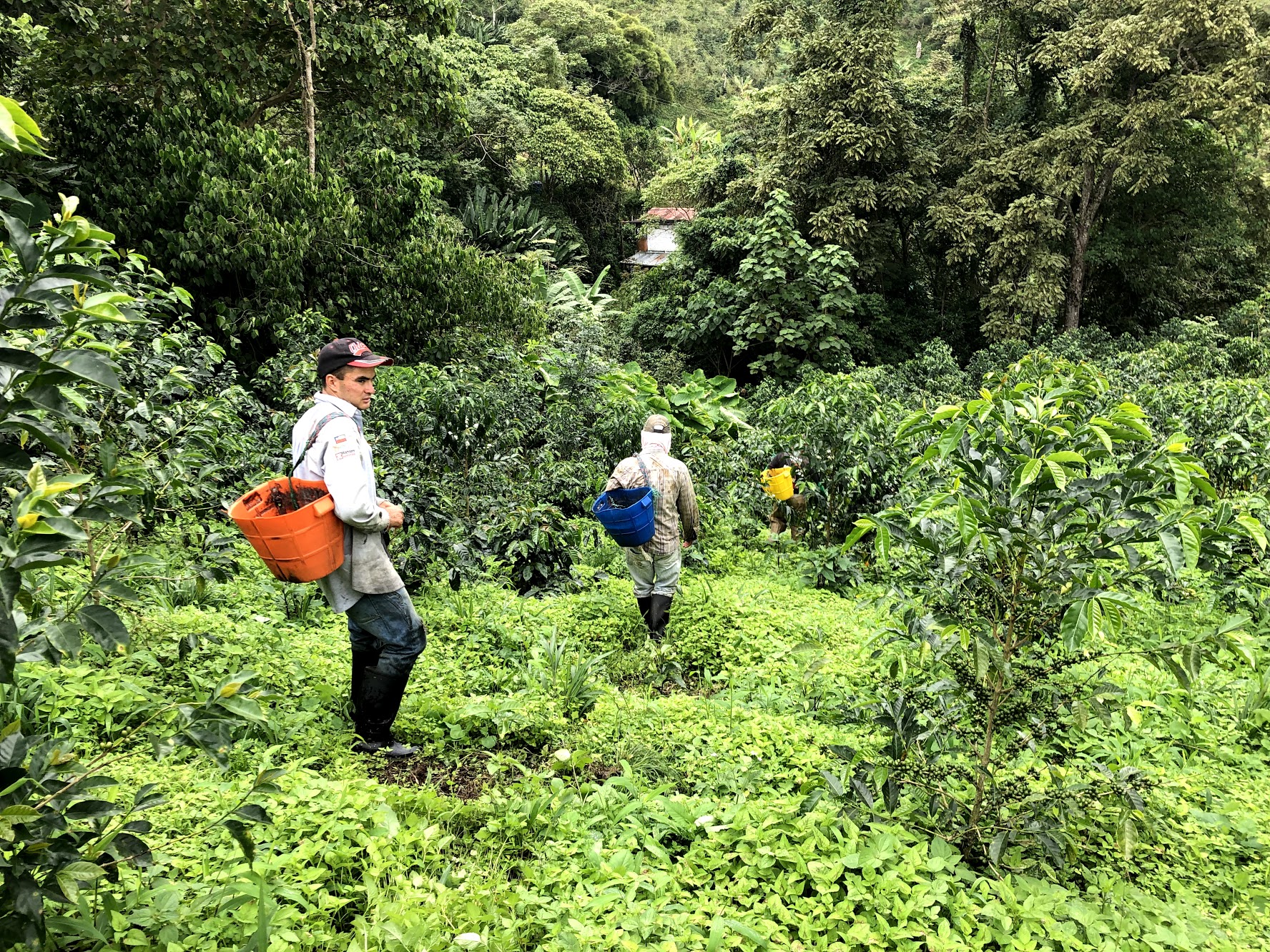
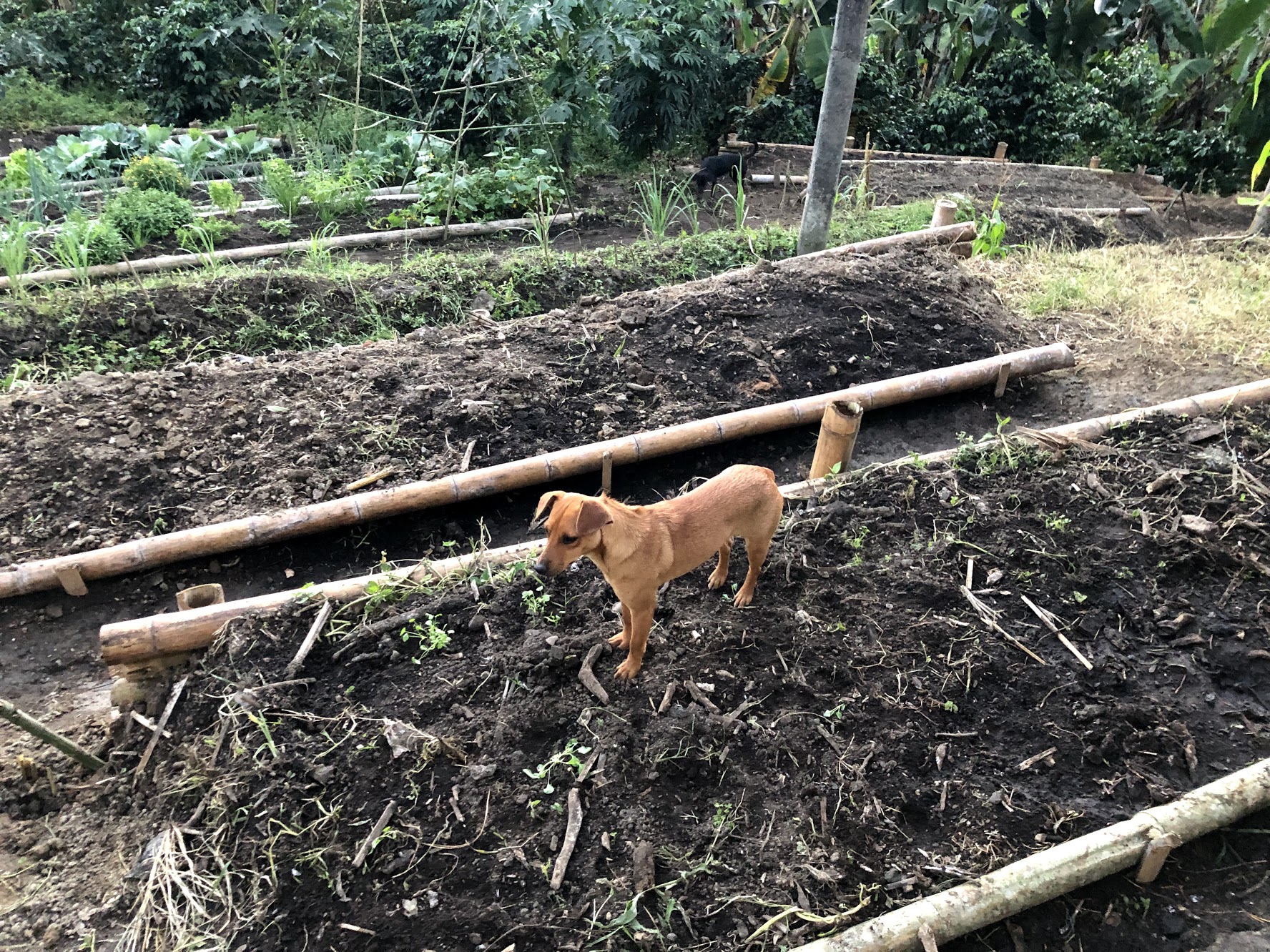




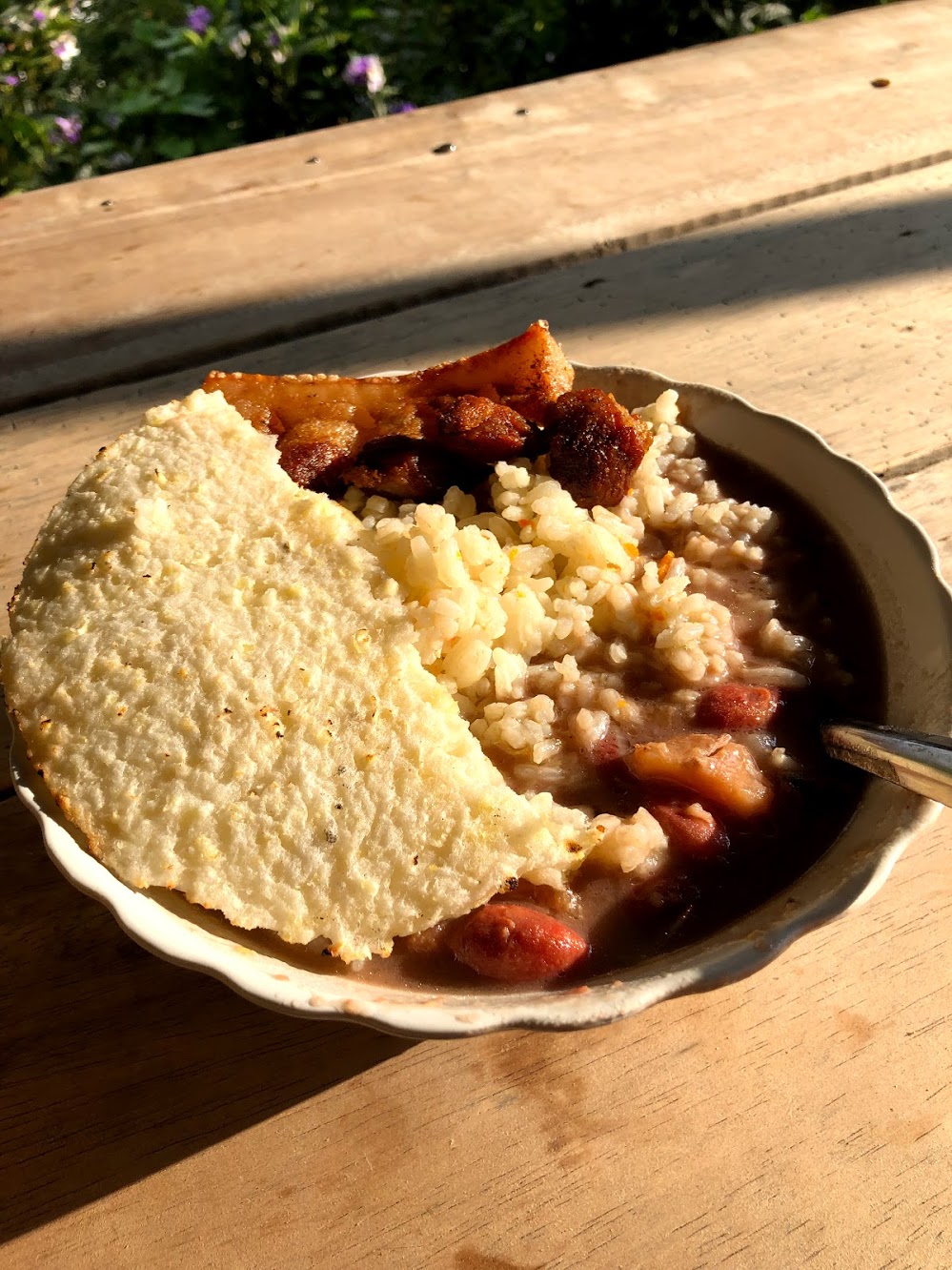
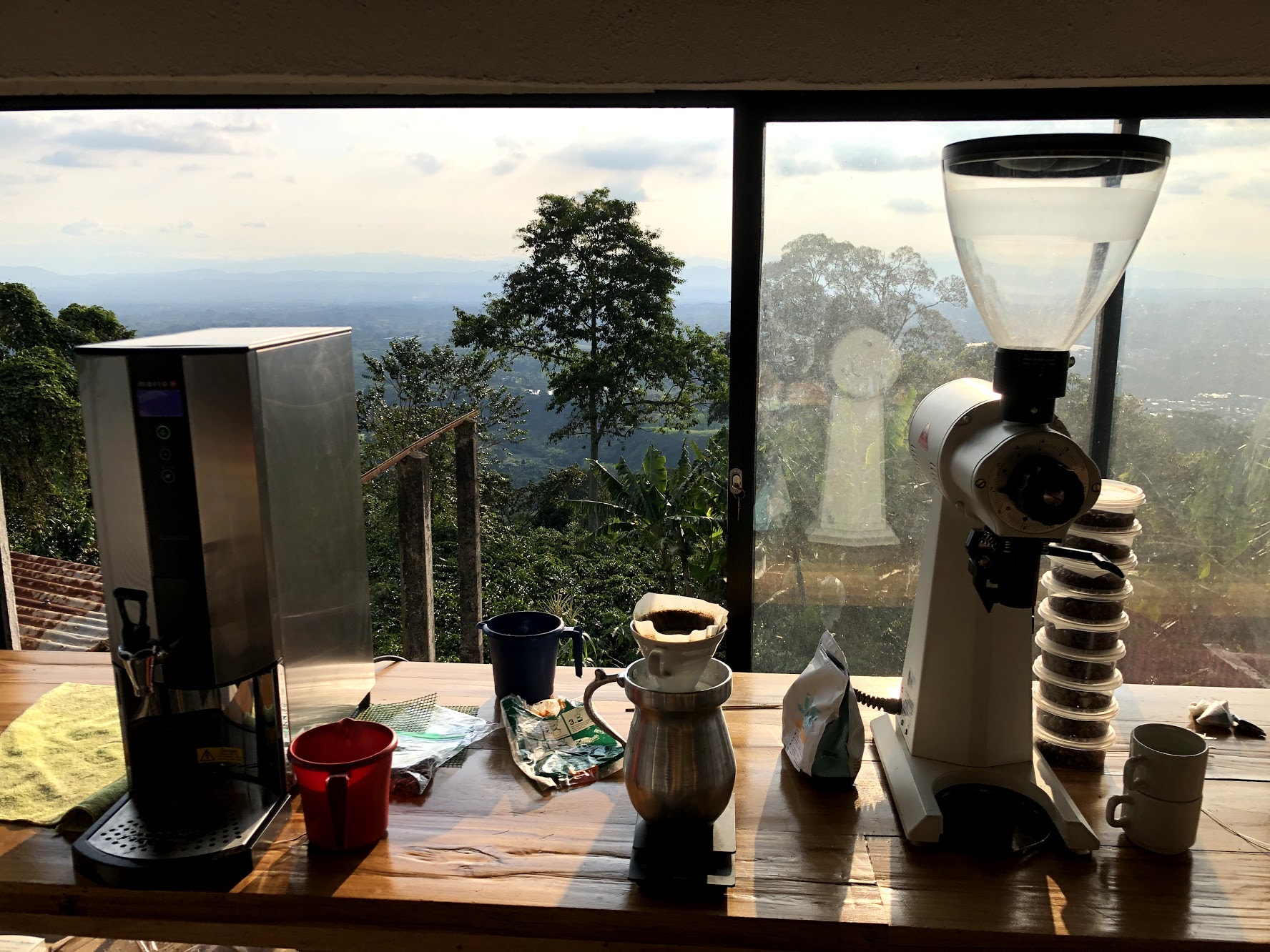

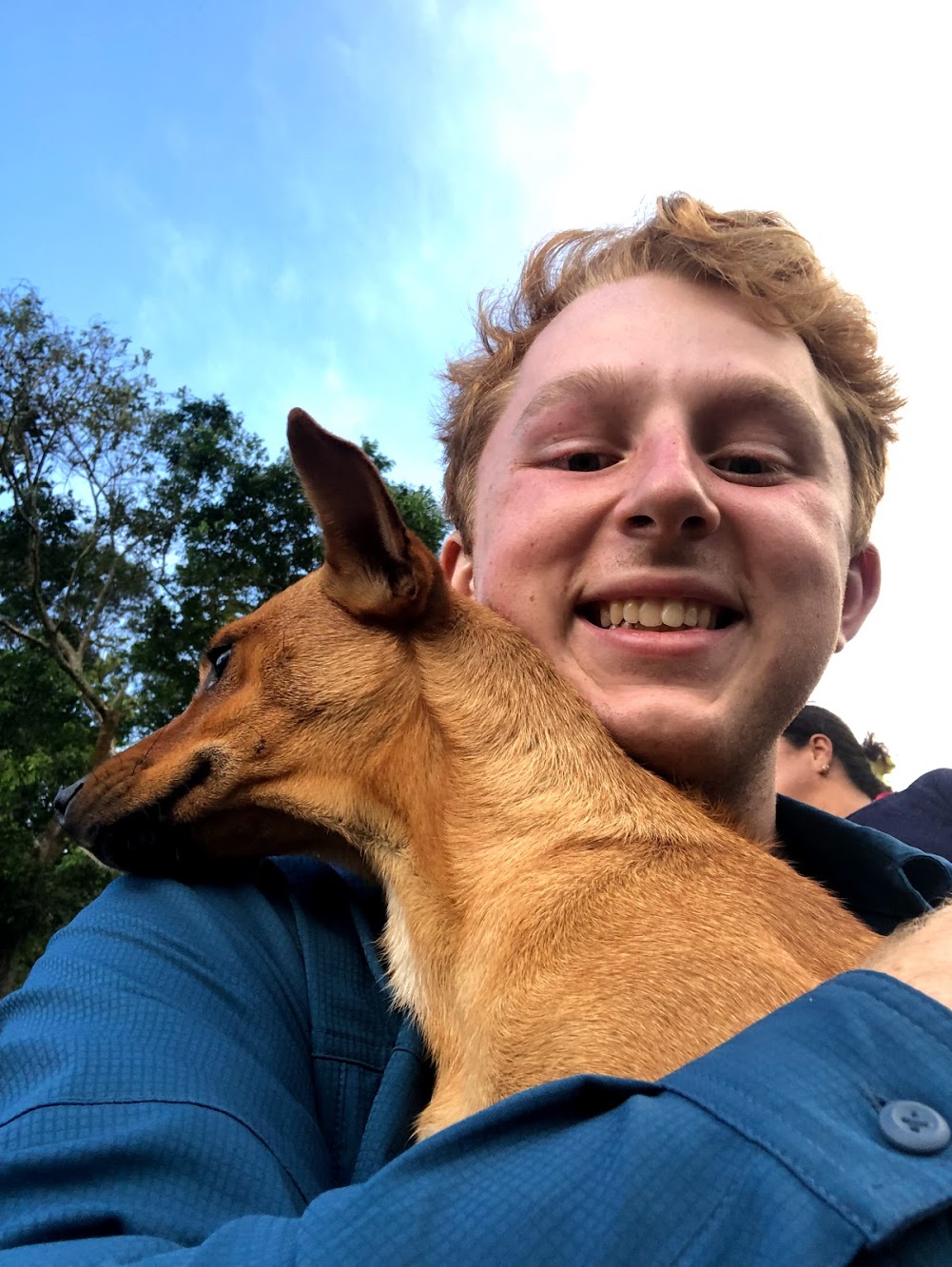

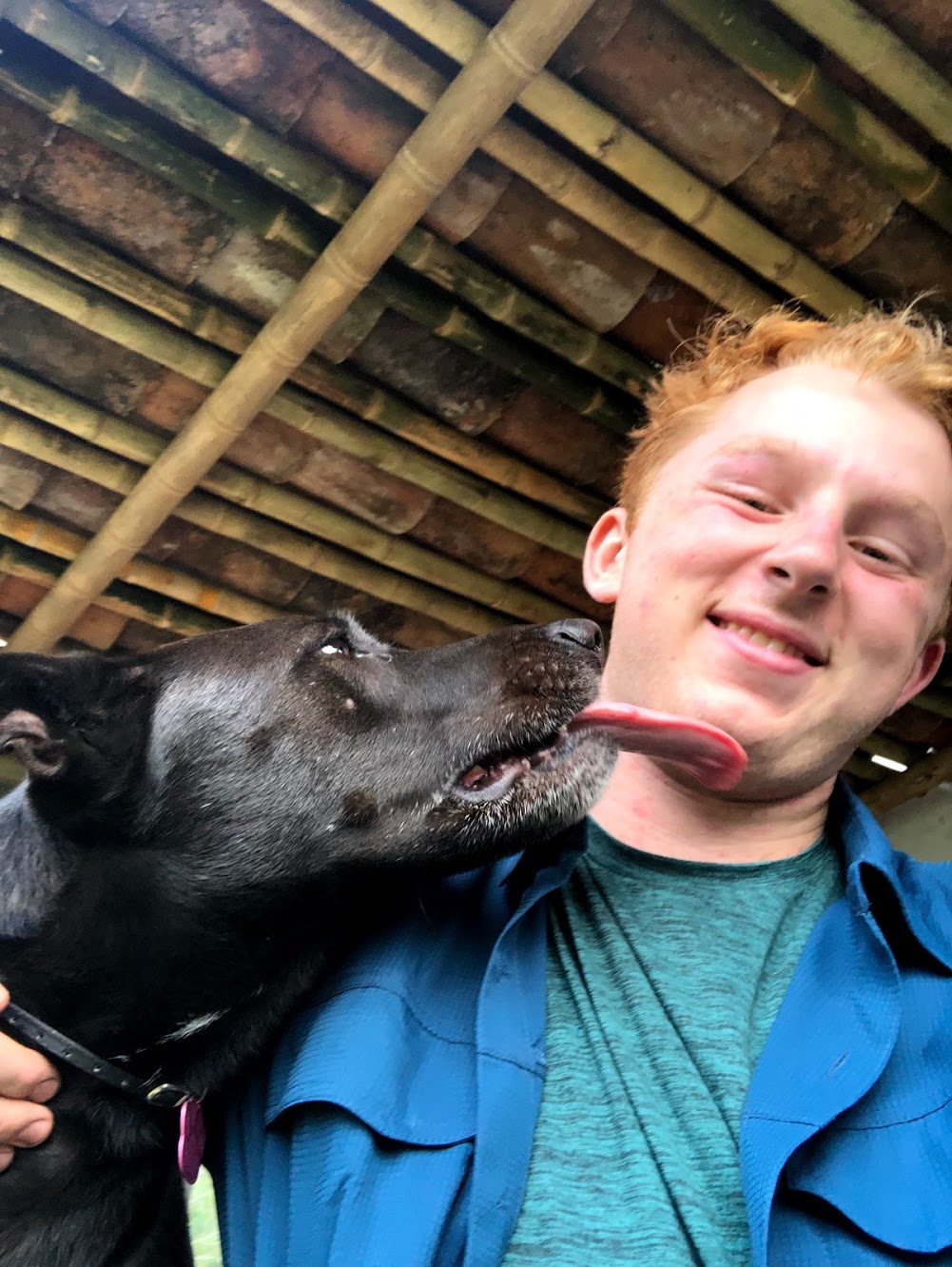
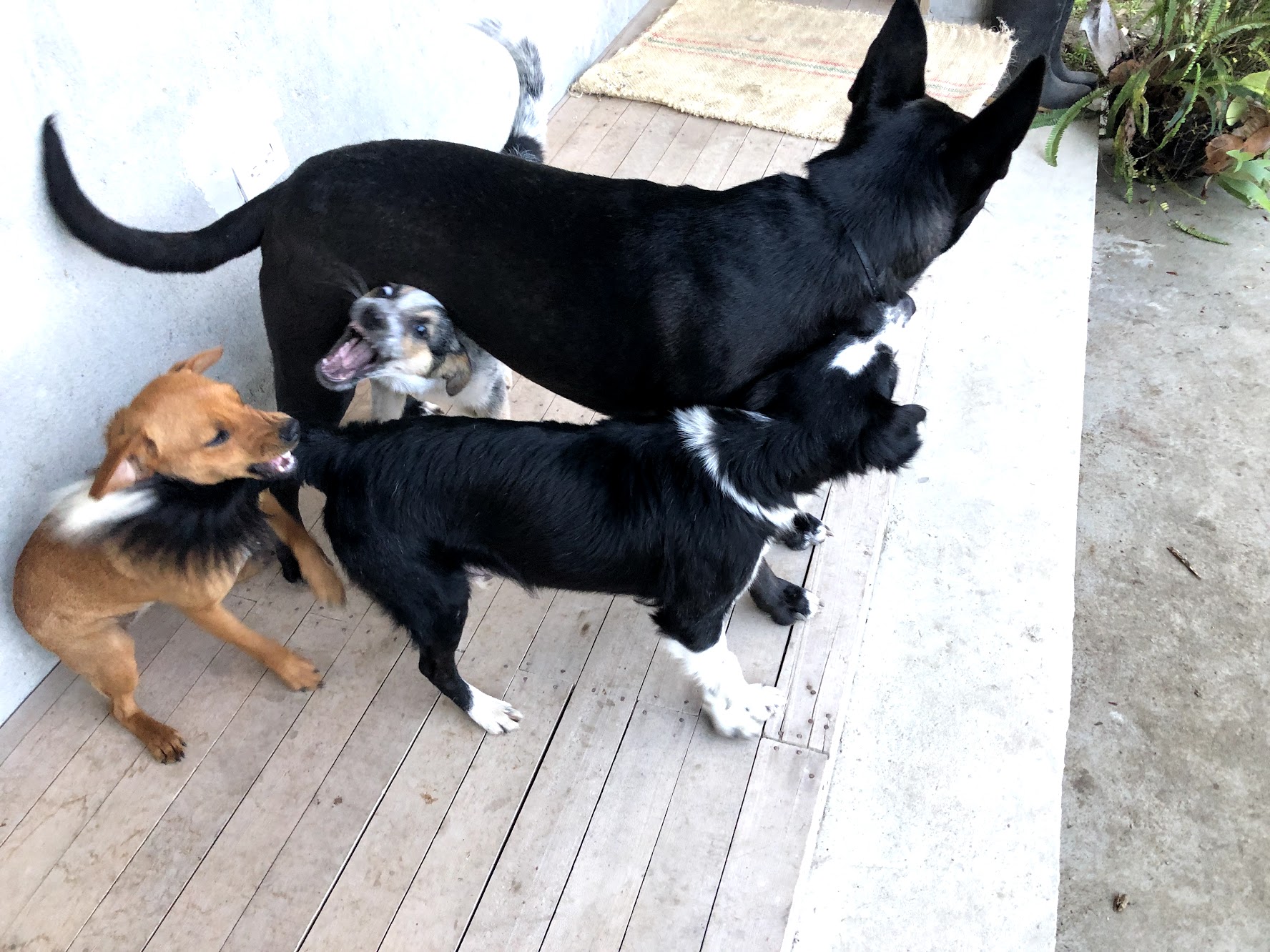
 Alex's Coffee Adventure