This is it! On Sunday the 28th, I leave Quindio for Bogotá, where I’ll be for a few days before heading home. In the four and a half weeks so far, I’ve learned more than I can hope to write down here, so I will instead use this post to tell you about some long overdue updates. Between the weekend in Filandia and Salento and my experiments’ results, I haven’t written as much about the day-to-day, which has stayed interesting!
The Last Piece of the Puzzle
So far, I’ve written about processing coffee at almost every single stage, from the harvest to floating and milling at the wet mill to fermentation, washing, and drying. I’ve also told you a bit about cupping. That leaves one big piece left: the dry mill.
The dry mill is one of the most important steps of the coffee supply chain, as it often acts as both an aggregator for producers and a crucial step in quality control. In general, dry mills tend to be the largest step up in terms of volume in the supply chain thus far; they’re often run by third parties or exporters who handle a lot of coffee. Exploring the dry mills is when you start to get a sense of the very large scale of coffee production in Colombia. Carrera 18, which is the main highway that runs through Armenia, is host to a number of these huge facilities:
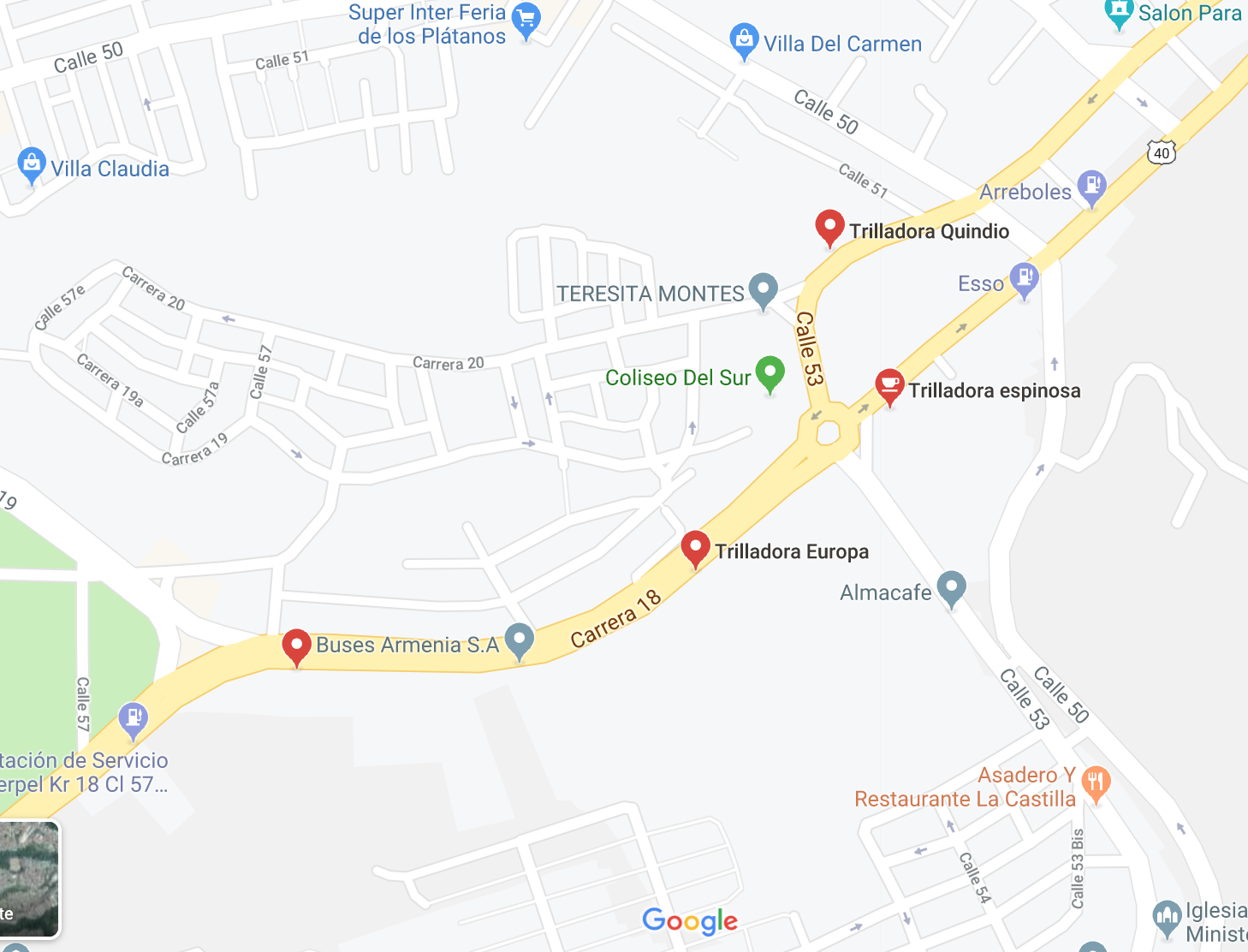
Miguel works with a number of dry mills, both for Raw Material and El Fénix. Last week, we got to visit the dry mill that mills El Fénix’s coffee, which is a specialized and modular operation run by Miguel’s friend from University.

This dry mill was efficient and quality-focused – it was easy to see why it’s the choice for many specialty producers in the region. As Miguel explained, making industrial equipment modular is a boon for specialty production, as it allows for much smaller batches and an ability to pinpoint issues in the production process. This is the same philosophy behind the wet mill at El Fénix: its modularity allows for greater experimentation and more traceability throughout processing.
OK, I lied. There is, of course, one more crucial piece of the puzzle: roasting. Roasting is almost never done by coffee producers themselves, but Miguel has a hand in almost everything. Occasionally, Miguel is able to sell unsold coffee from Raw Material domestically in Colombia. What’s funny is that the margins on roasted coffee are so good that the company actually makes more money (per pound) from selling poorer quality coffee roasted in Colombia than it does exporting its specialty lots!
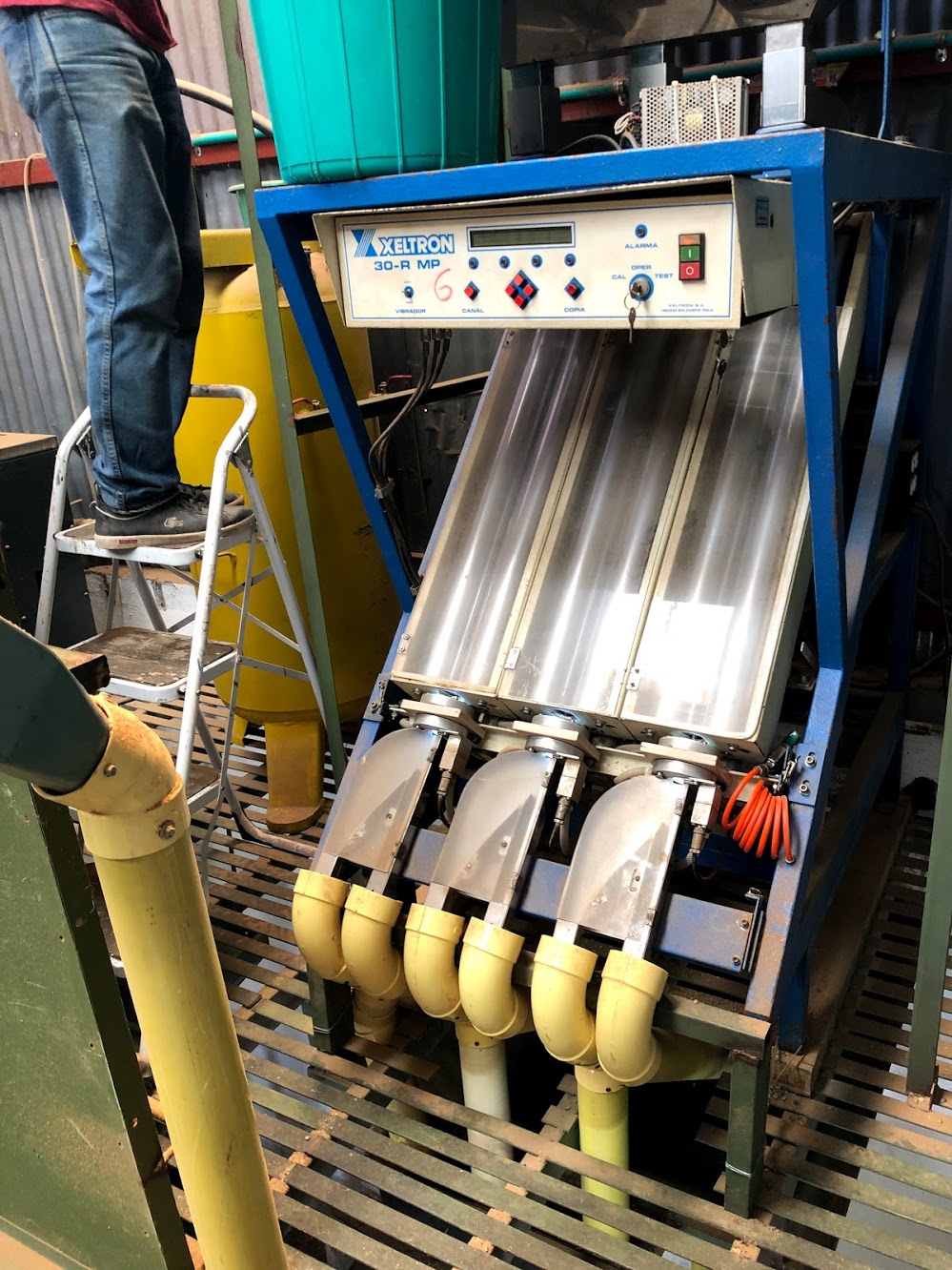
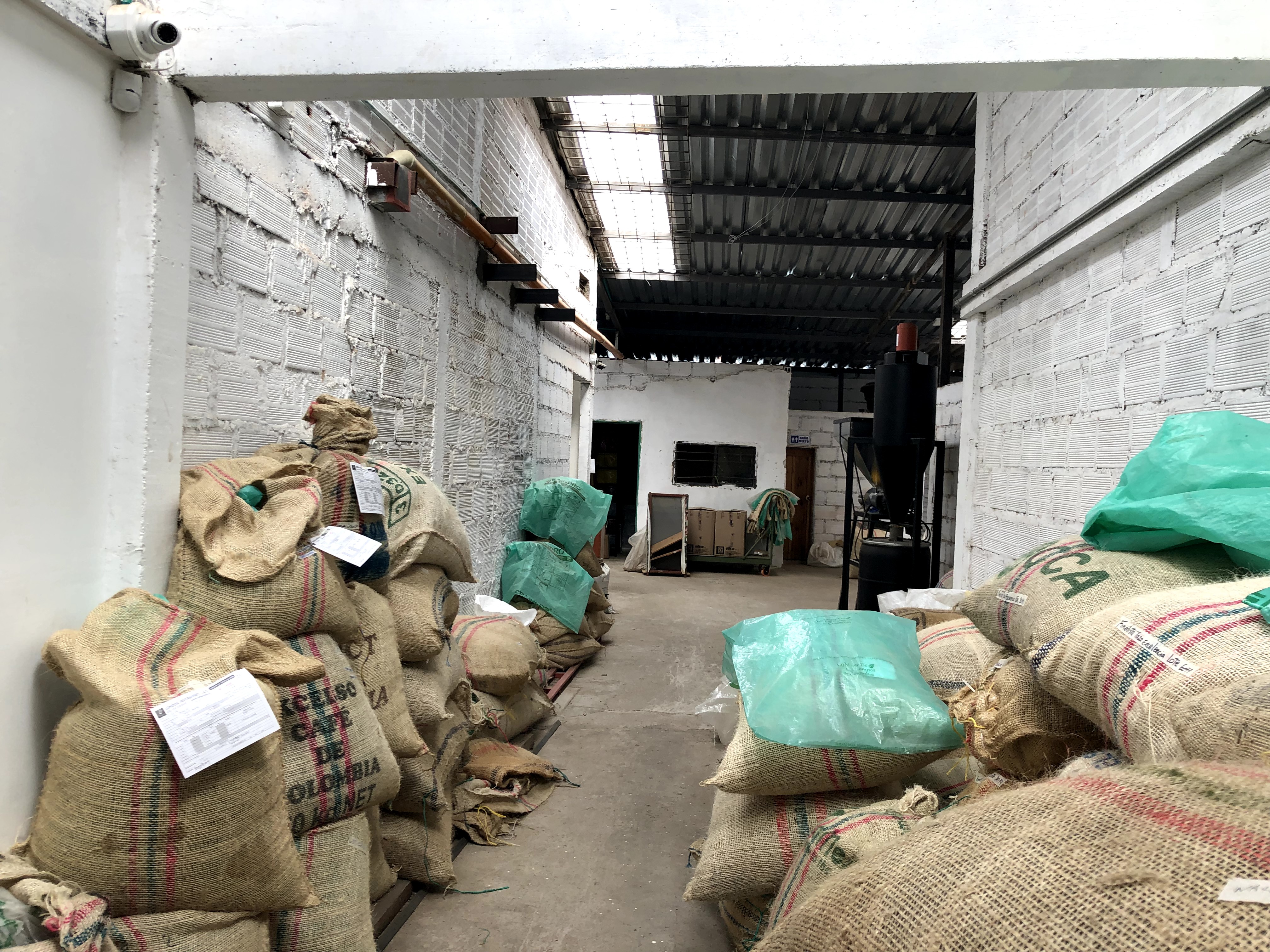
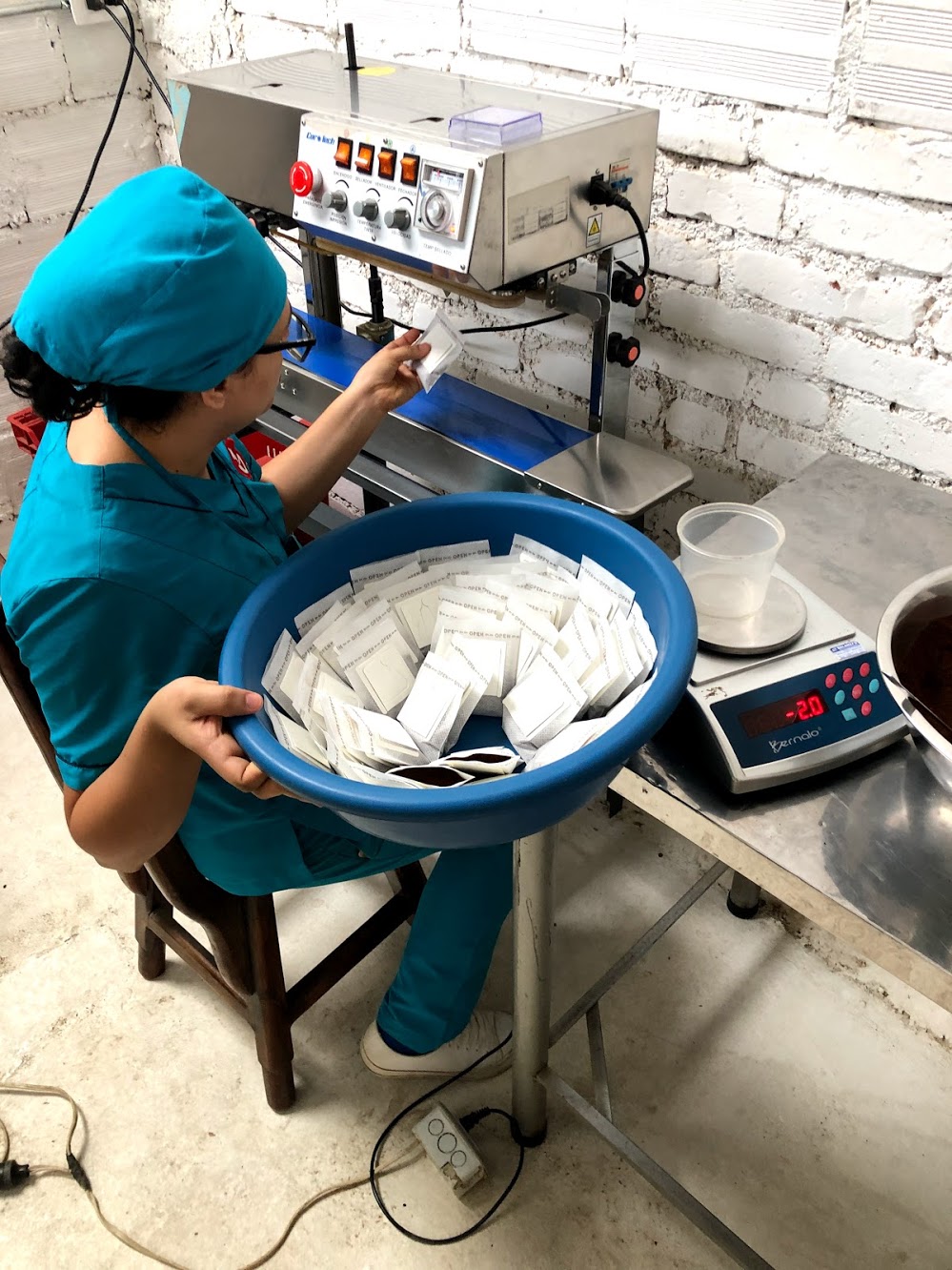
On Monday, we toured the roasting facility that Miguel worked with. It was cool to see a kind of all-in-one facility that contained a very small-scale dry mill, a sorting station, a roasting lab, and a cupping lab. They even had a packaging station for coffee “pillows,” or pre-packaged grounds to make pour-overs! Check it out:


Craft Beverages
In addition to being a specialty coffee guru, Miguel runs a craft brewery on the side, because why not? We got to stop by the other day, and I learned a bit about how beer is made. It certainly doesn’t smell very good, nor is the brewery a pleasant humidity and temperature, but their beer is (presumably? Princeton regulations may apply) delicious.

Barley arrives in bags 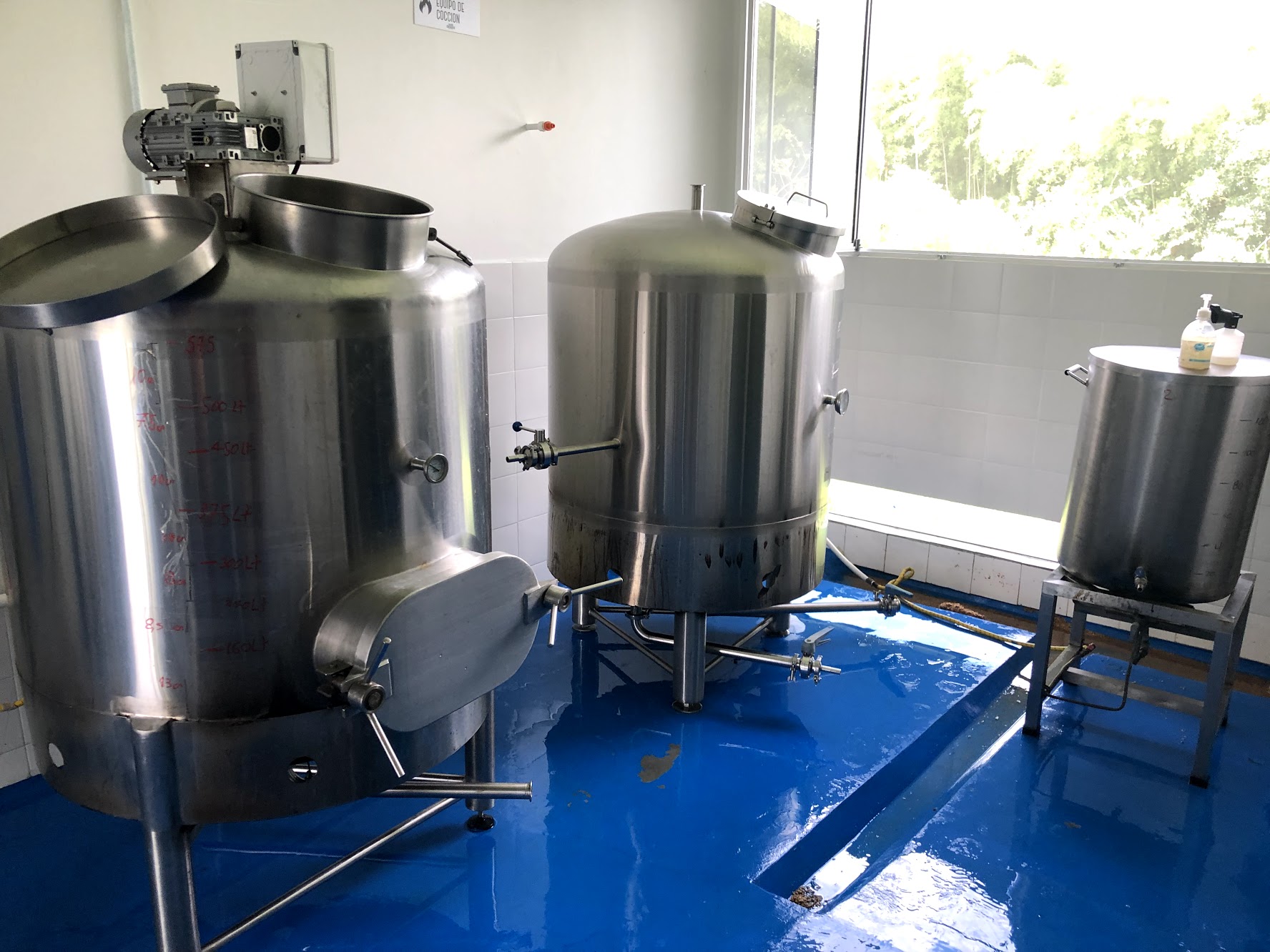
After grinding, the barley is put right away to boil 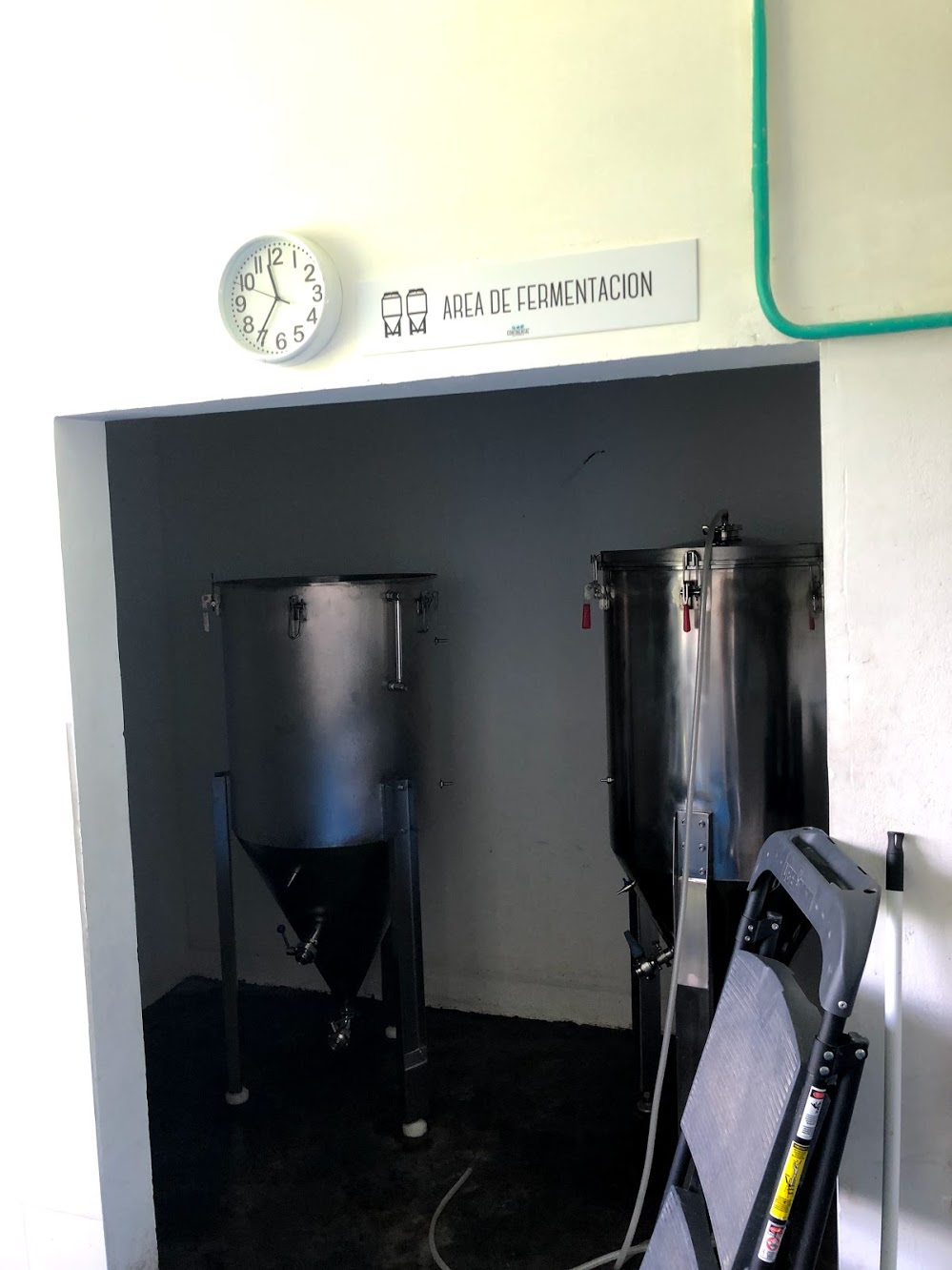
The beverage is fermented in a climate-controlled environment 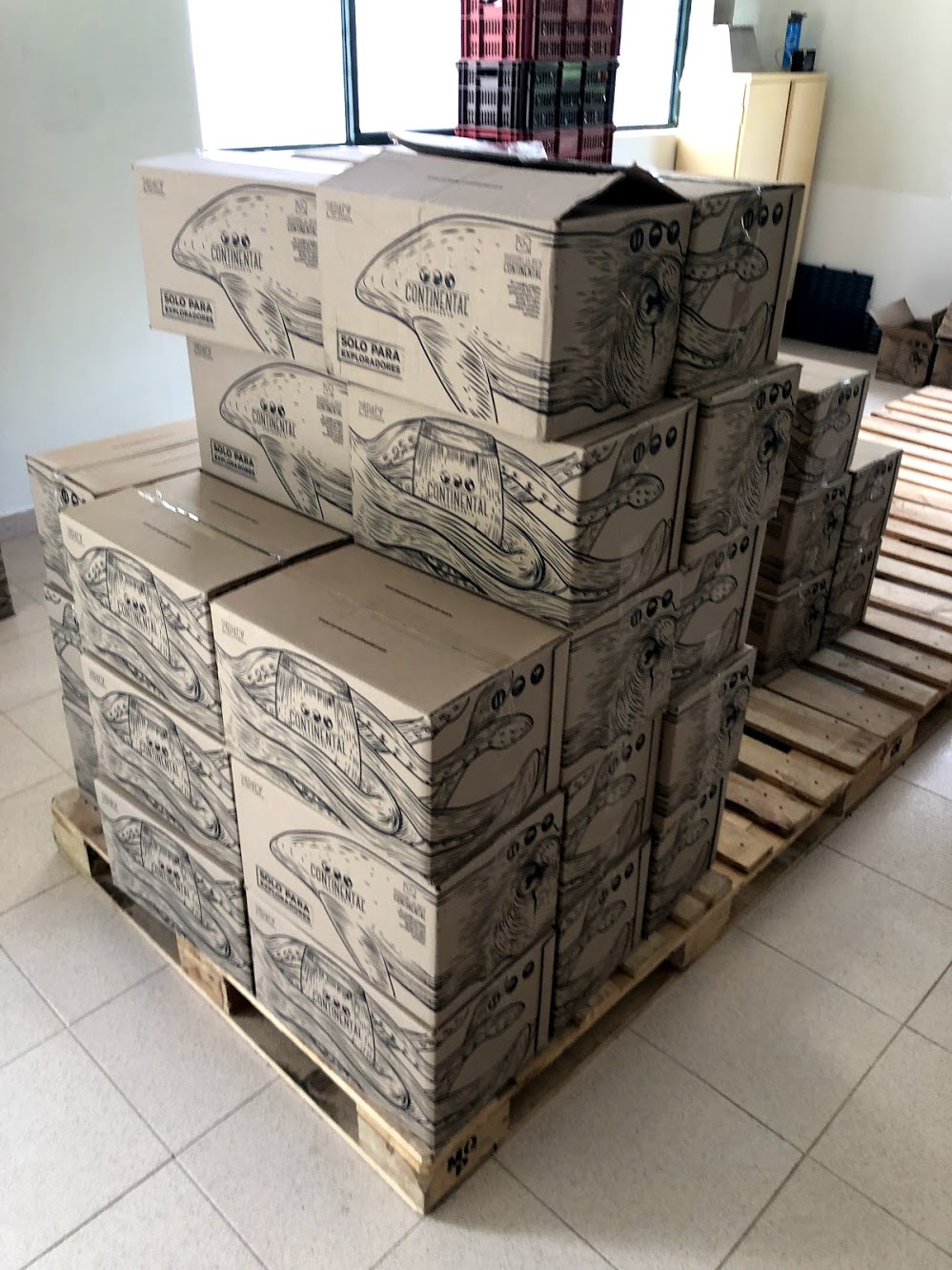
Finally, it’s bottled and ready to go. You can find Continental Cerveceria all over Quindio!
Coffee Coffee Coffee
In between the day trips, we’ve been doing lots of cuppings. By my count, I’ve tasted about 60 coffees over my time here at the Fénix, and I definitely feel more confident in my cupping abilities with all of the practice.
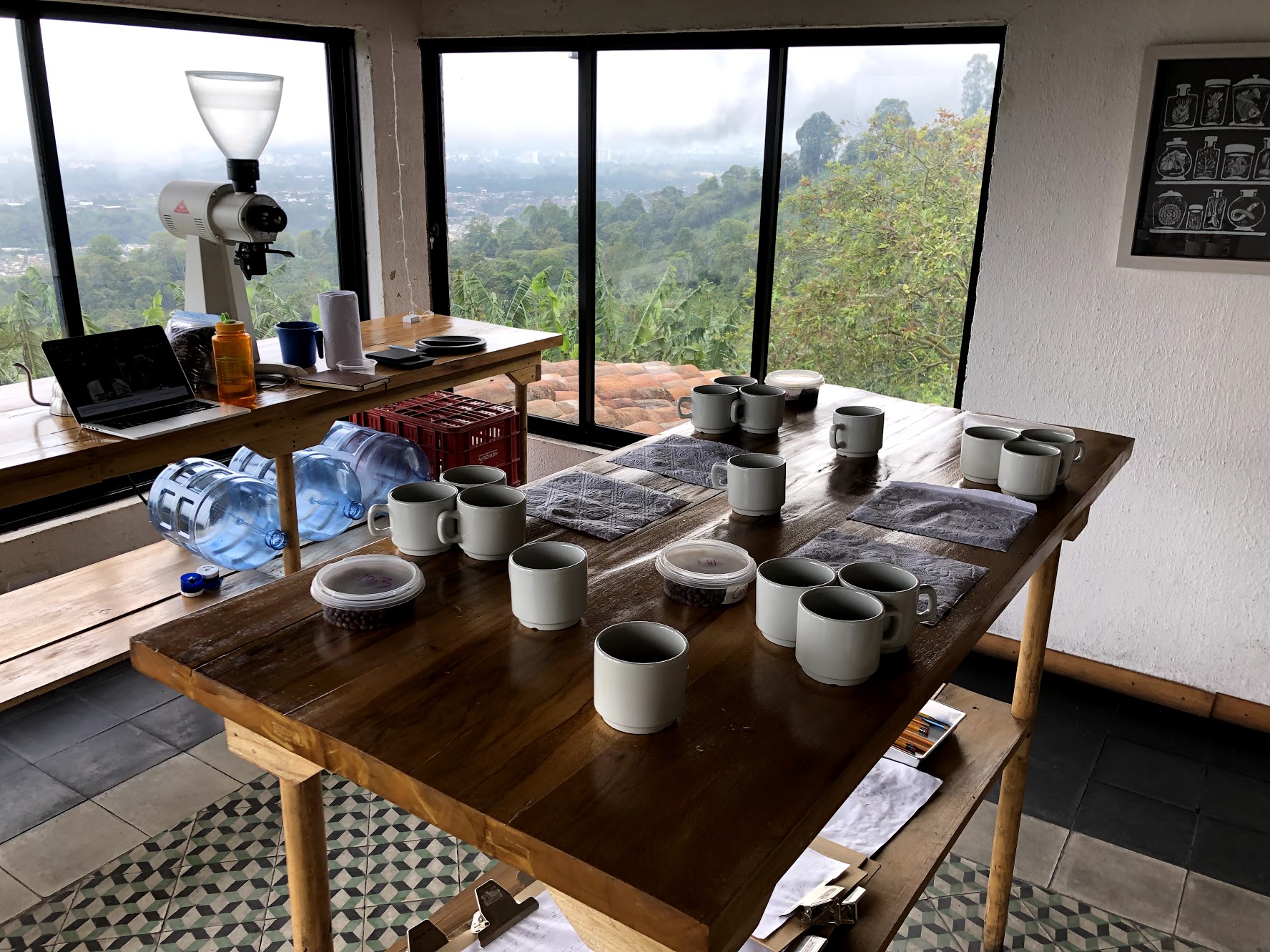
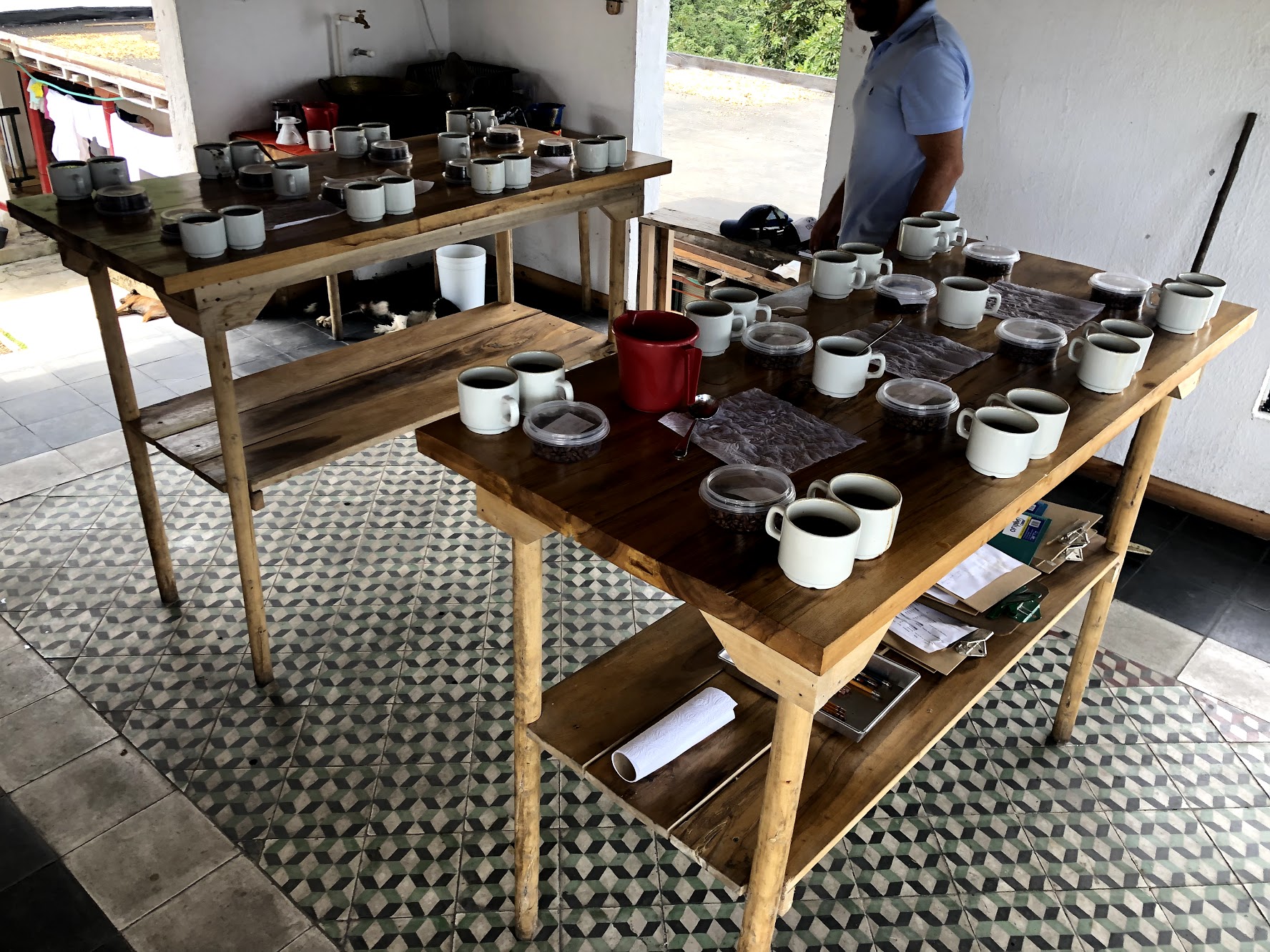
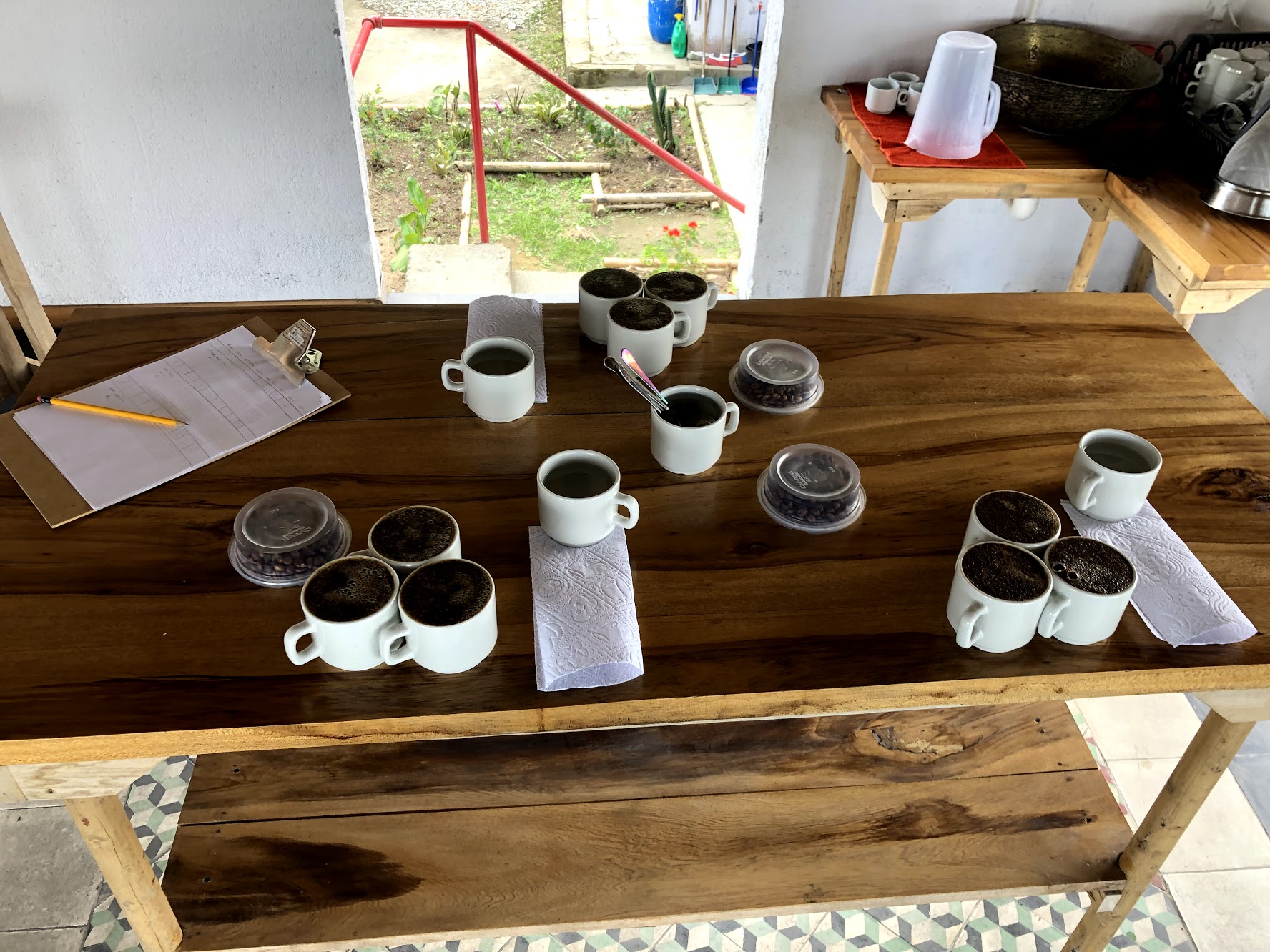
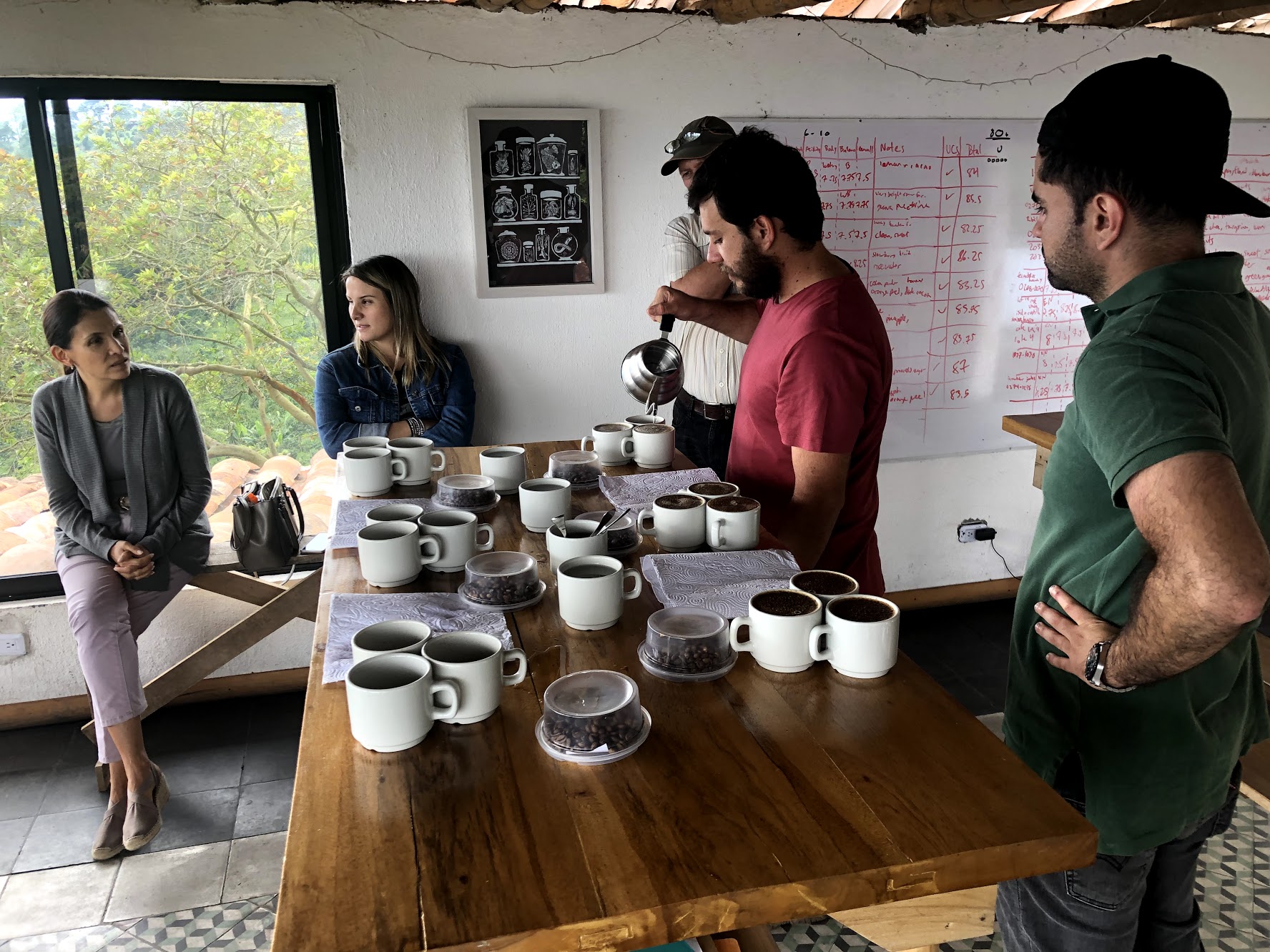
Some scenes from the Fénix cupping lab. It gets a lot of good use, and we love tasting the coffee while overlooking that incredible view!
More Experiments, More Coffees
There was a slight uptick in picking about two weeks ago which gave us some new coffee to experiment. Miguel and I tried a natural process with two coffees that came in: the Pink Bourbon and the Gesha. (In other news, you may have just heard that a natural Gesha sold for $1,029 per pound a few days ago, so we figured we’d give the whole natural Gesha thing a shot.)
Due to some fortunate weather consisting of intense and dry sunlight, these experiments dried very quickly and we were able to mill them and roast them on Monday to cup. We did the first cupping today, but I’m weary of our initial results after the discrepancy between day 1 and day 2 cuppings last time. Check out the very cool progression of the drying process for this natural that I captured:

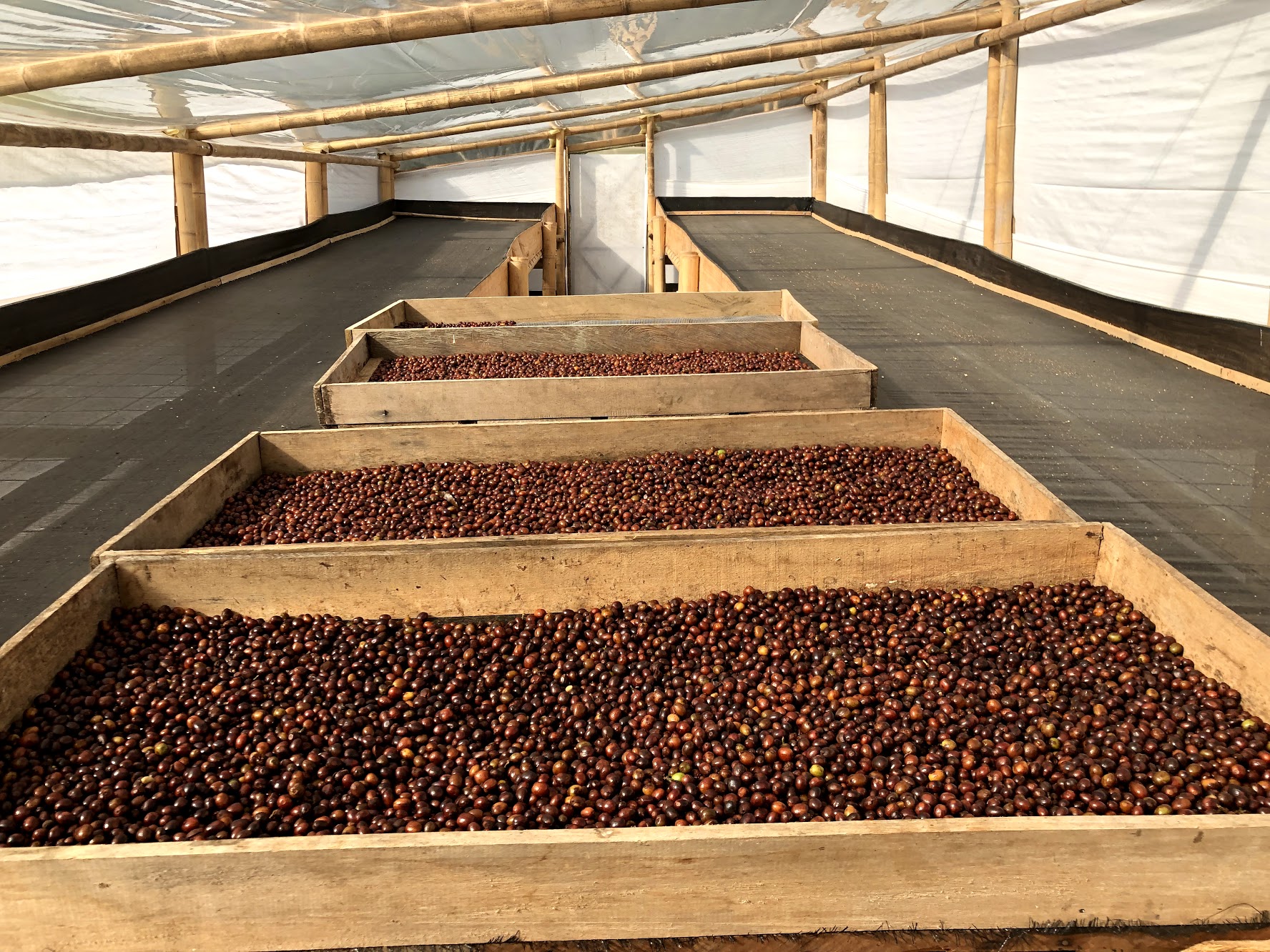
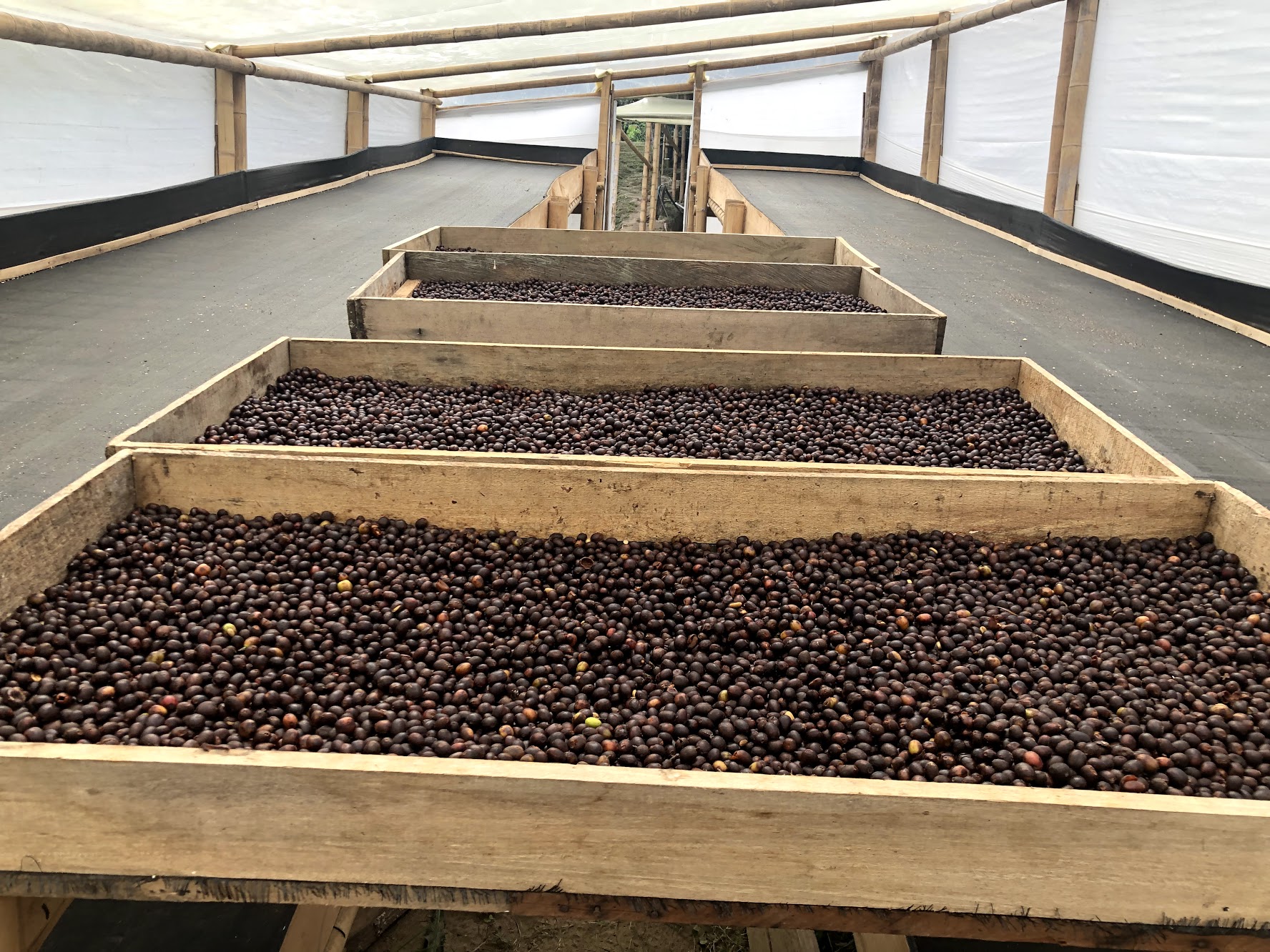
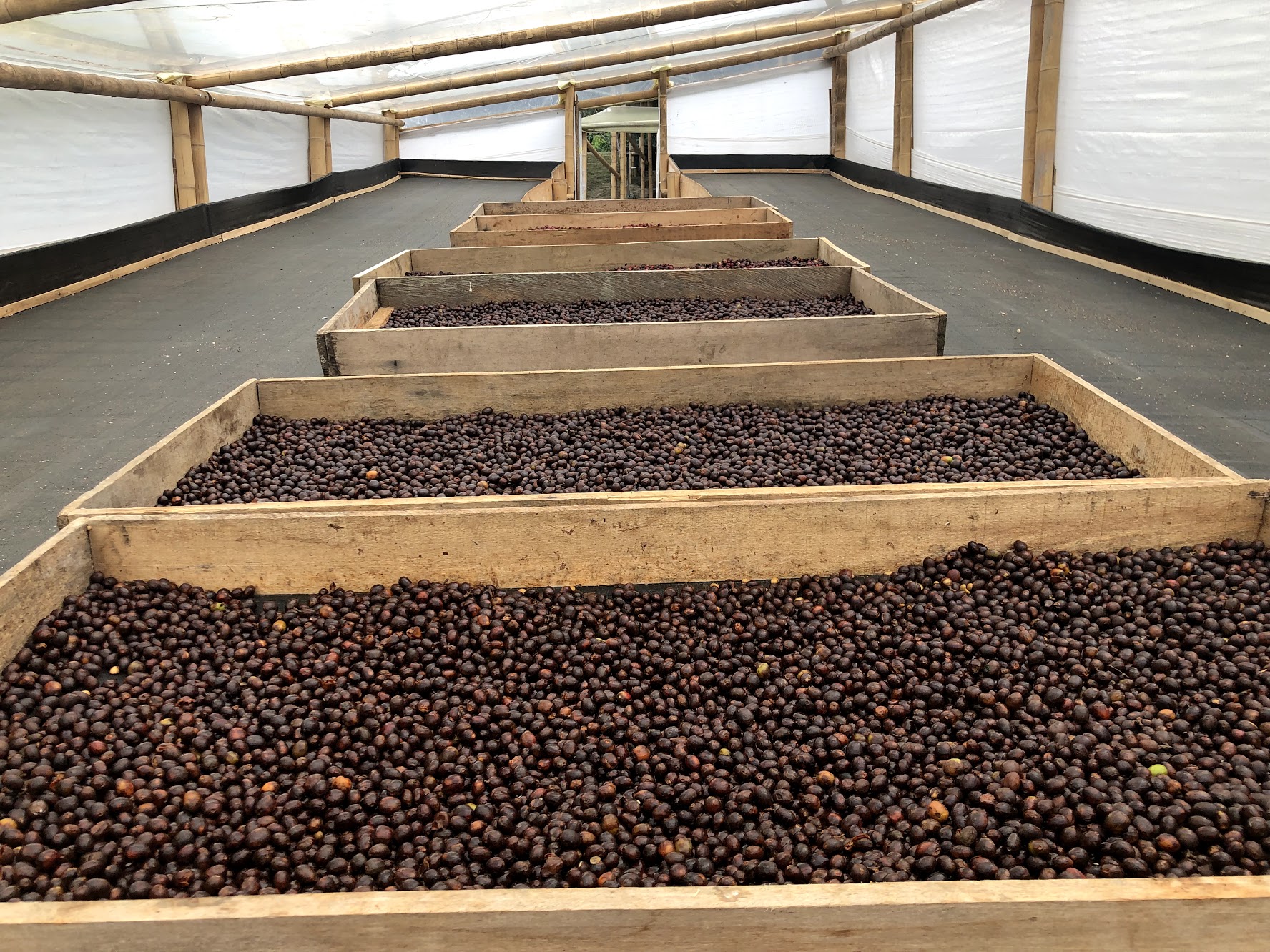
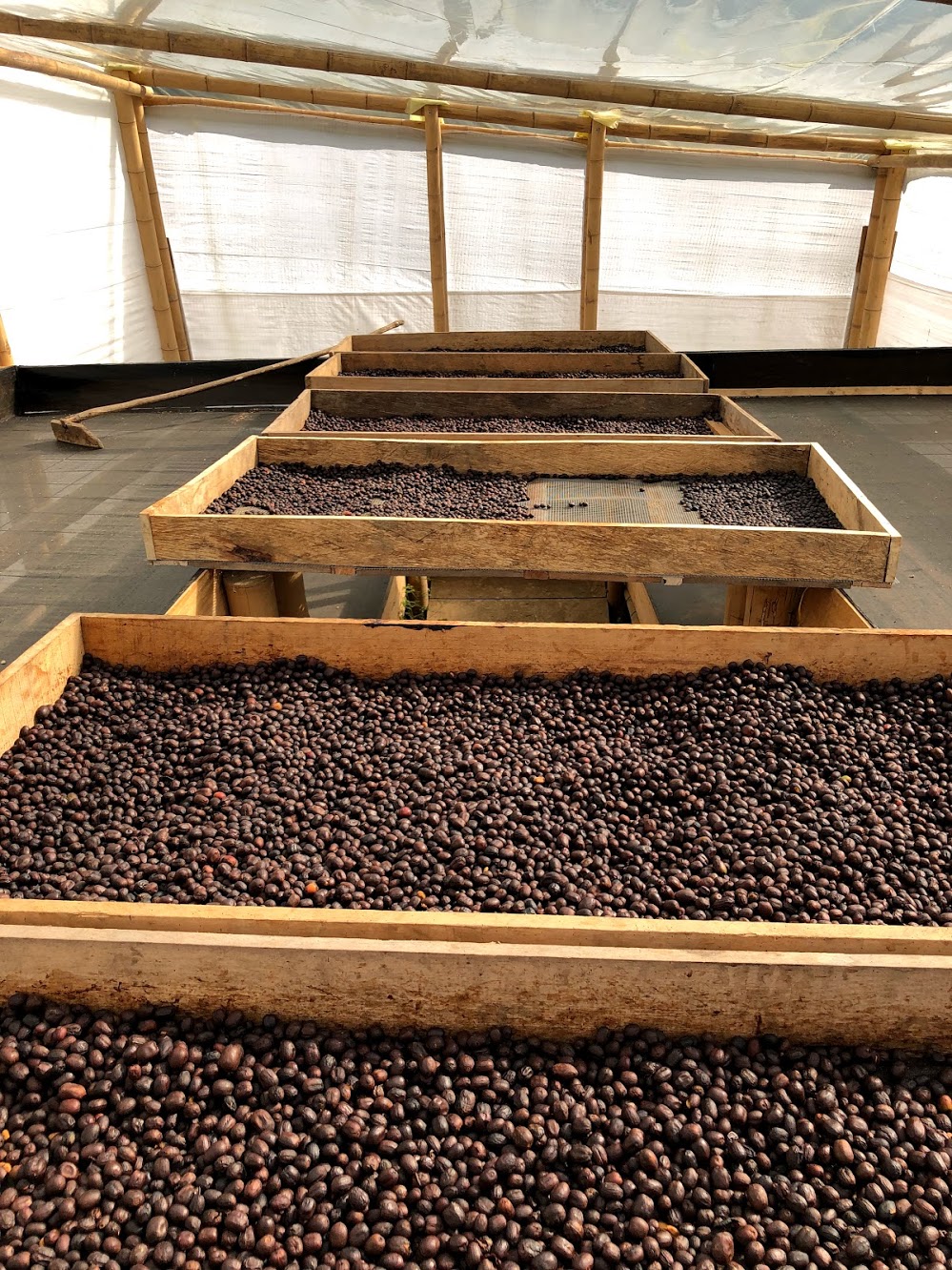
The first two pictures were taken a mere 6 hours apart, while the next were about 1-per-day. The moisture content of the cherries would often boost back up after a humid nightfall. This wasn’t always a problem, but occasionally lead to small white spots of mold forming on the outside of the cherry skin. While still fully safe to consume, the mold hinders flavor development in the drying process.
The preliminary results from the cupping indicate that the coffees are quite good, but not groundbreaking. We attempted an extended fermentation on the natural Pink Bourbon, but as of today we didn’t find any crazy flavor notes in the coffee. That being said, it exhibited a complex sweetness and great cup cleanliness for a naturally processed coffee.
A Water Excursion
Part of the fun of living on a farm is how imminently aware you are of the basic human needs of food, water, and shelter. Many of the farmhouses down the road from us are simply brick walls with corrugated metal roofs and little more, which makes me feel very lucky to live in the new guest residence at El Fénix. We are able to grow a portion of our food in the veggie garden in the front yard of the house, and veggies always taste better when you pick them yourself.
The other day, we had a problem with our third necessity: water. The water stopped coming out of the faucets after an especially heavy rainfall, so Miguel told me to put on my rain boots and let’s go for a walk. We had to fix the water!
While I’m not a stranger to faulty water systems (looking at you, Dad), I wasn’t quite prepared for our excursion to fix the farm’s water line. We hiked out of the farm and walked up the road a bit until we got to a stream, at which point we followed a small path near the stream for a bit. Next to the path, I noticed two hoses running in the direction of the farm – this was our water supply. Eventually, we approached the crucial centerpiece: our water supply. Here it is:
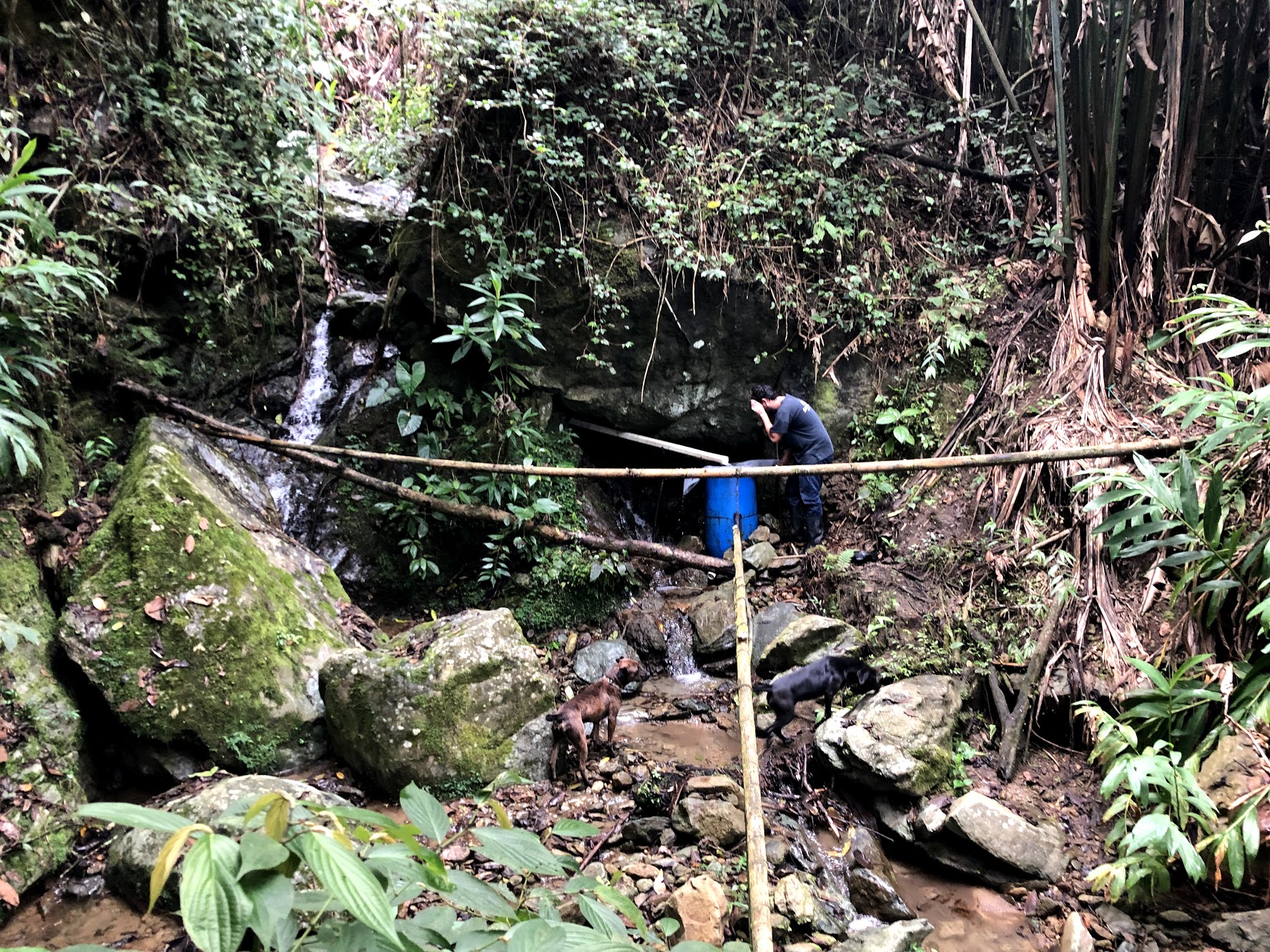
A bucket! Yes, to receive water on the farm, we’ve placed a small plastic bucket underneath a rock near the stream. The rock helps protect it from rainfall above, and a small gutter running through some cracks in the stream diverts water into the bucket. The lid of the bucket is even a bit more… unique:
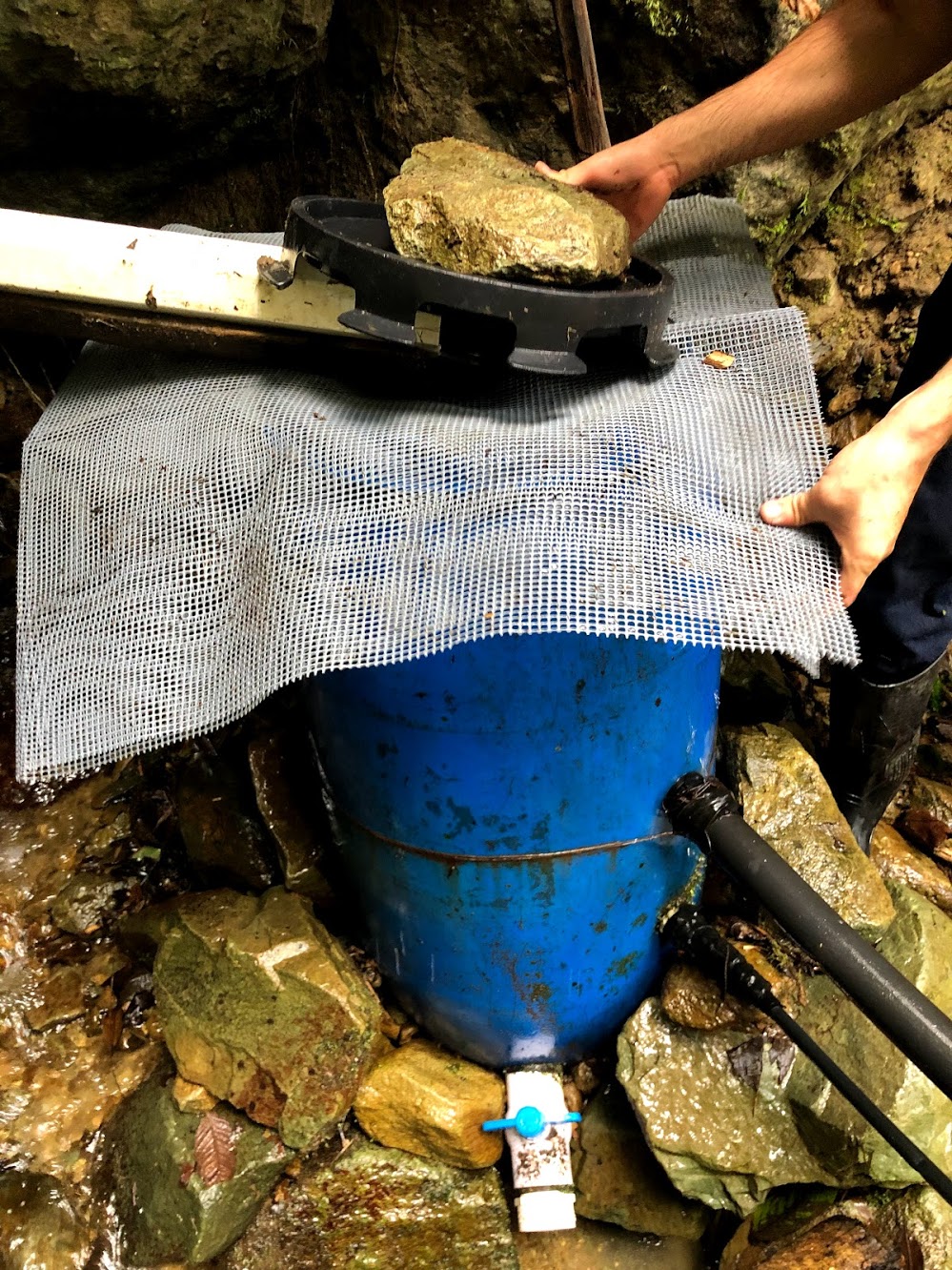
Two layers of mesh, the gutter, and a lid (held down by a rock) round out the water system.
We flushed the bucket out a few times to get rid of any built up dirt, then propped up the exiting waterway, which had been help up by a split piece of bamboo:
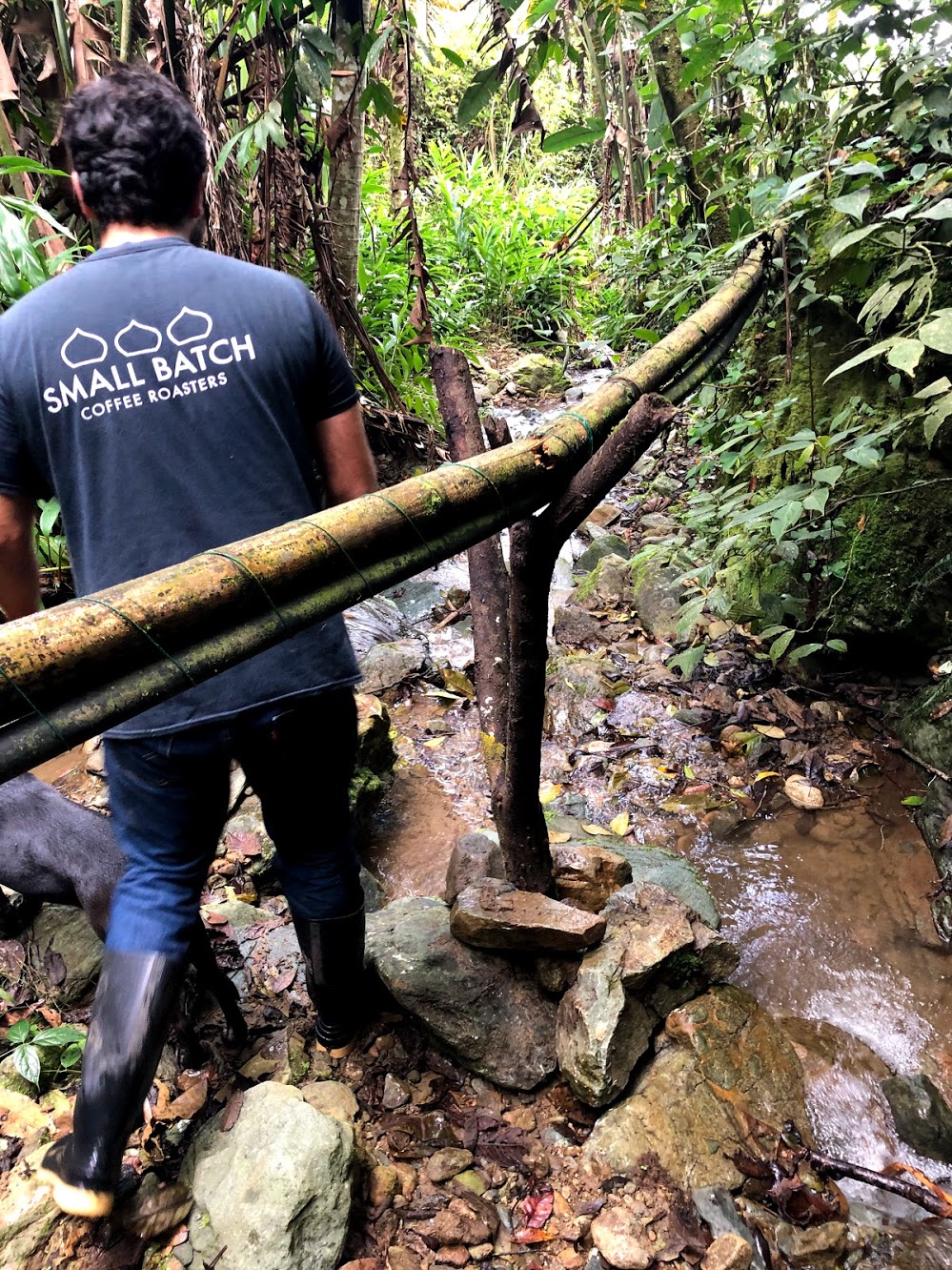
That seemed to do the trick. We followed the hoses back to the house, periodically checking their connection points to make sure they were clean. As we neared the house, we walked through the last piece of the jungle before the road, which had a number of coffee trees and other plant life. Two steps from the road, I reached out my hand to brace on a coffee tree by grabbing its trunk and – AAAAoooouch!!! – immediately felt a blinding pain coursing through my hand.
Uhoh. This was finally it: the dreaded gusano pollo.
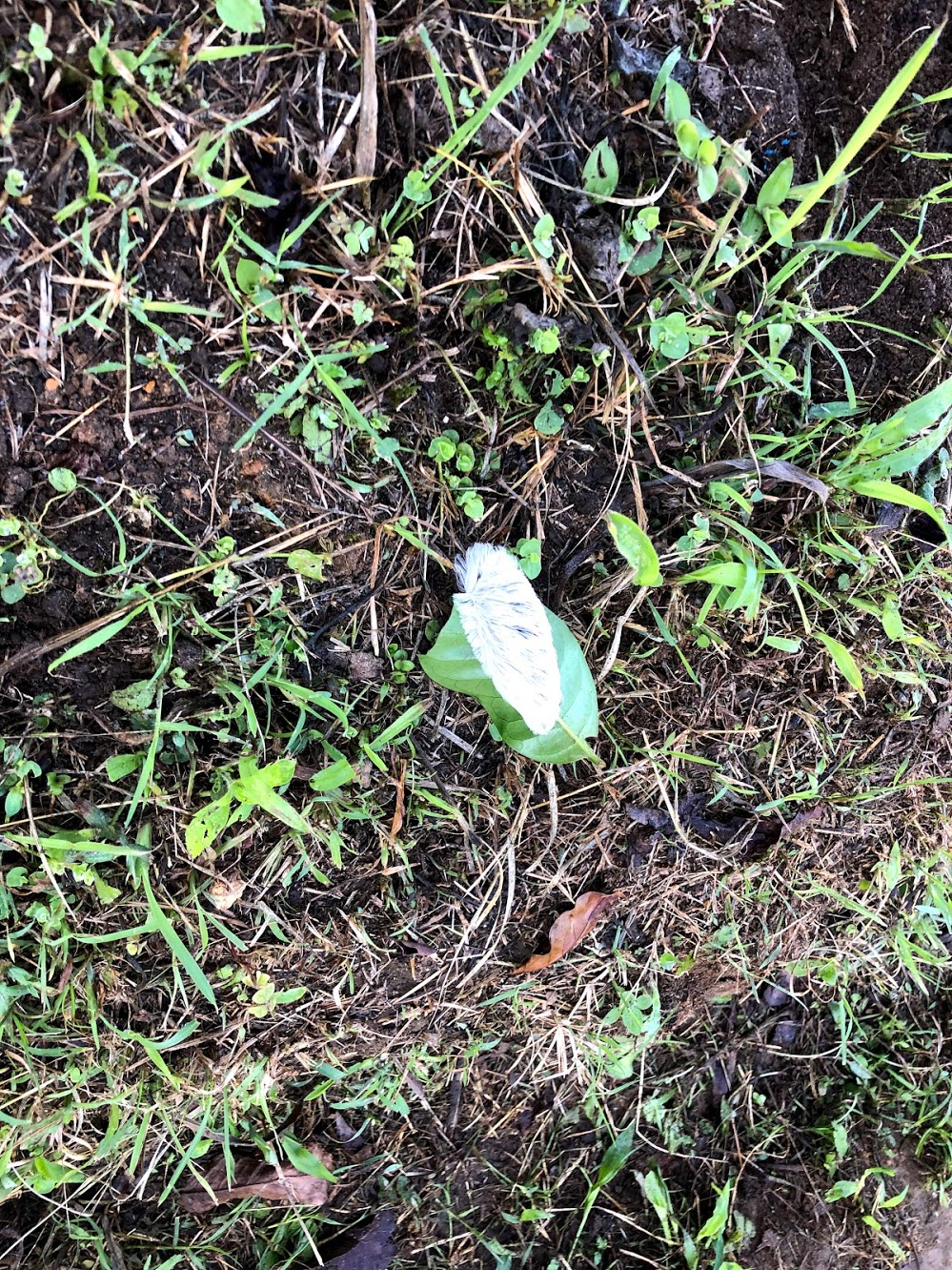
On my first day, Miguel had warned me to watch out for a big fluffy white caterpillar, because it stings. I had, for a few days, been very conscious of white bugs on the ground and wherever I saw them, but eventually forgot the advice. Finally, I was reminded of the warning as the pain shot through my hand, I yelped, and Miguel let out a knowing sigh. “Ah, shoot, it got you.”
The gusano pollo is a caterpillar covered in white bristles that sting in a similar fashion to a jellyfish. The sting is very painful, and lasts a few hours before it subsides. Wikipedia doesn’t mince words:

I put some hydrocortisone cream on it, ran it under warm water, and kind of just let it sting for a while, and I was fine. But it hurt a lot! If anything good came out of it, it was that Miguel assured me, “know you can say you are a real coffee farmer, because you have been stung by the gusano pollo.”
A few days later, another one turned up around the seedlings planting area, and a worker pointed it out to Miguel. Miguel made sure I came to see it, at which point the worker picked up the caterpillar and PROCEEDED TO PET IT!?!?!
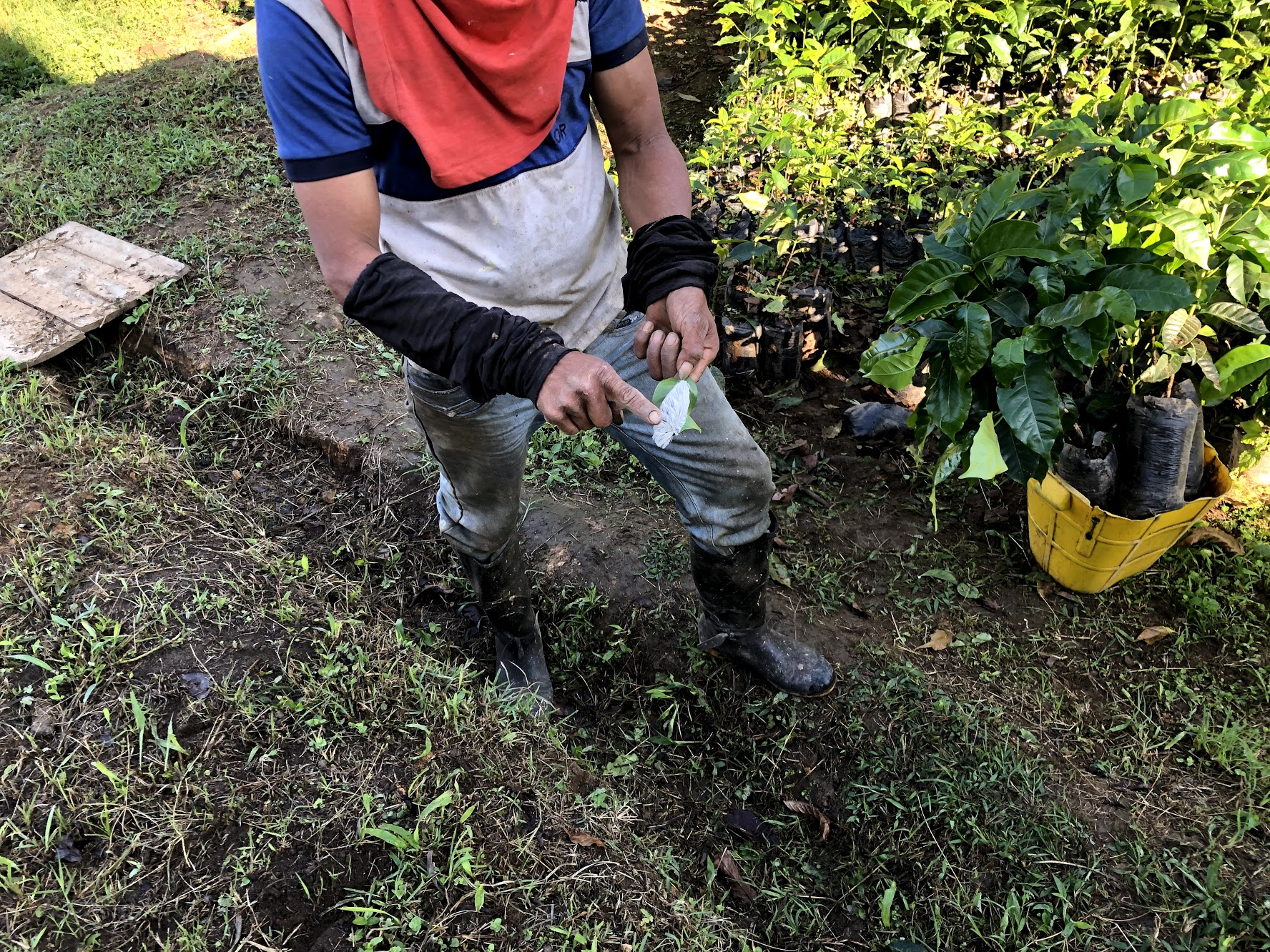
Apparently if you go “with the grain” the stingers won’t get you, but doing this takes such a ridiculous amount of confidence (and carelessness) that I don’t quite think it’s for me. In any case, I’ve checked that off the list.
I’ll end on a happier note than the gusano pollo. There are a number of fruit trees around the farm, and my favorite is without a doubt the banana trees. Not only do they add a nice tropical vibe to the landscape, but they also produce the objectively best fruit. The other day, a tree was ripe for harvesting, and we got a literal bunch of bananas from it!
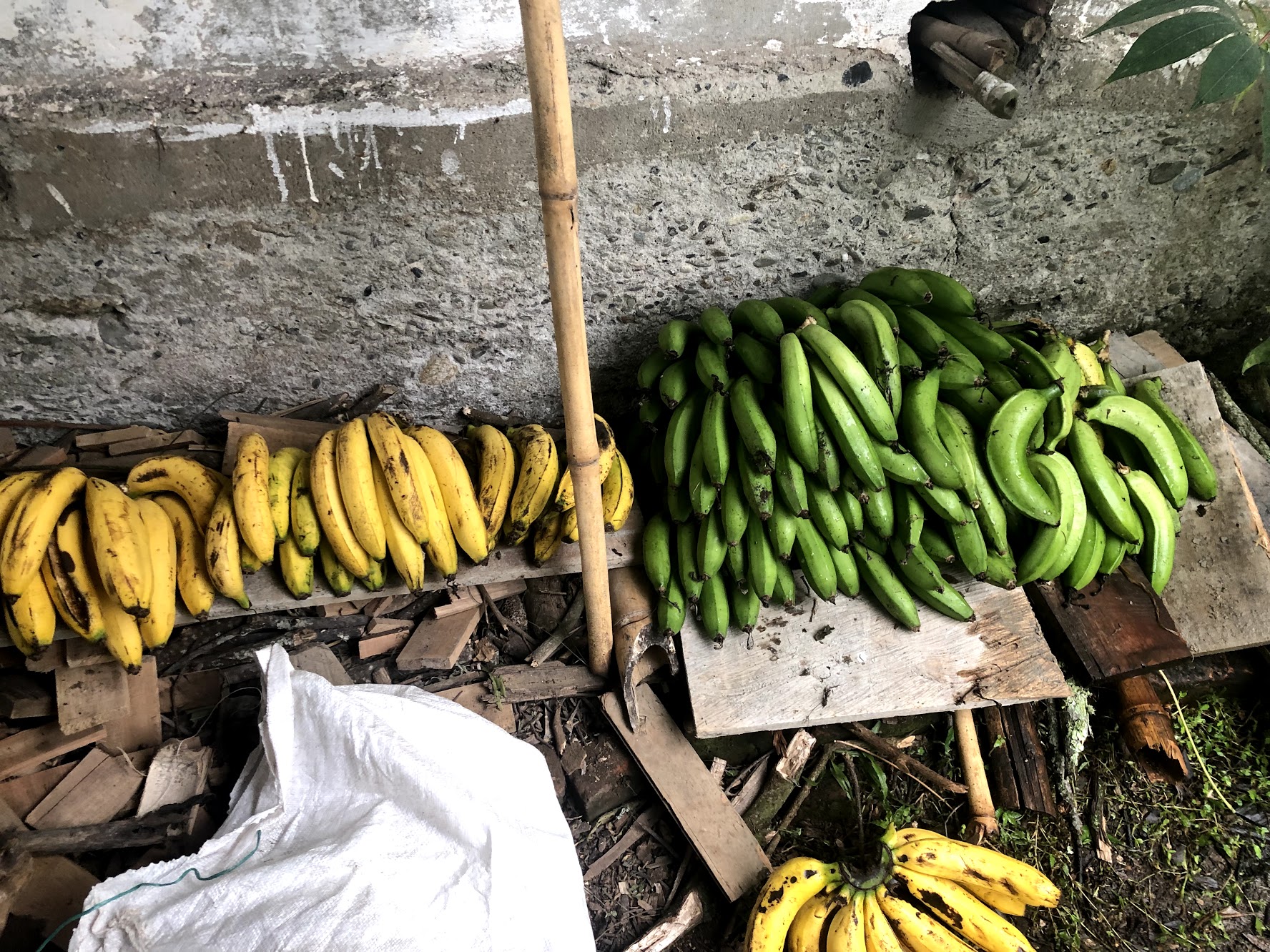
Unfortunately, if somewhat obviously, the bananas from the same bunch all ripen at the same rate. Bunches have over a hundred bananas on them, so you are often left in the predicament of having 100 ripe bananas for a 3-day window. Miguel and I delivered many of the bananas to his family members to avert this predicament, but saved enough for me to have my favorite snack in the world: a peanut butter banana.
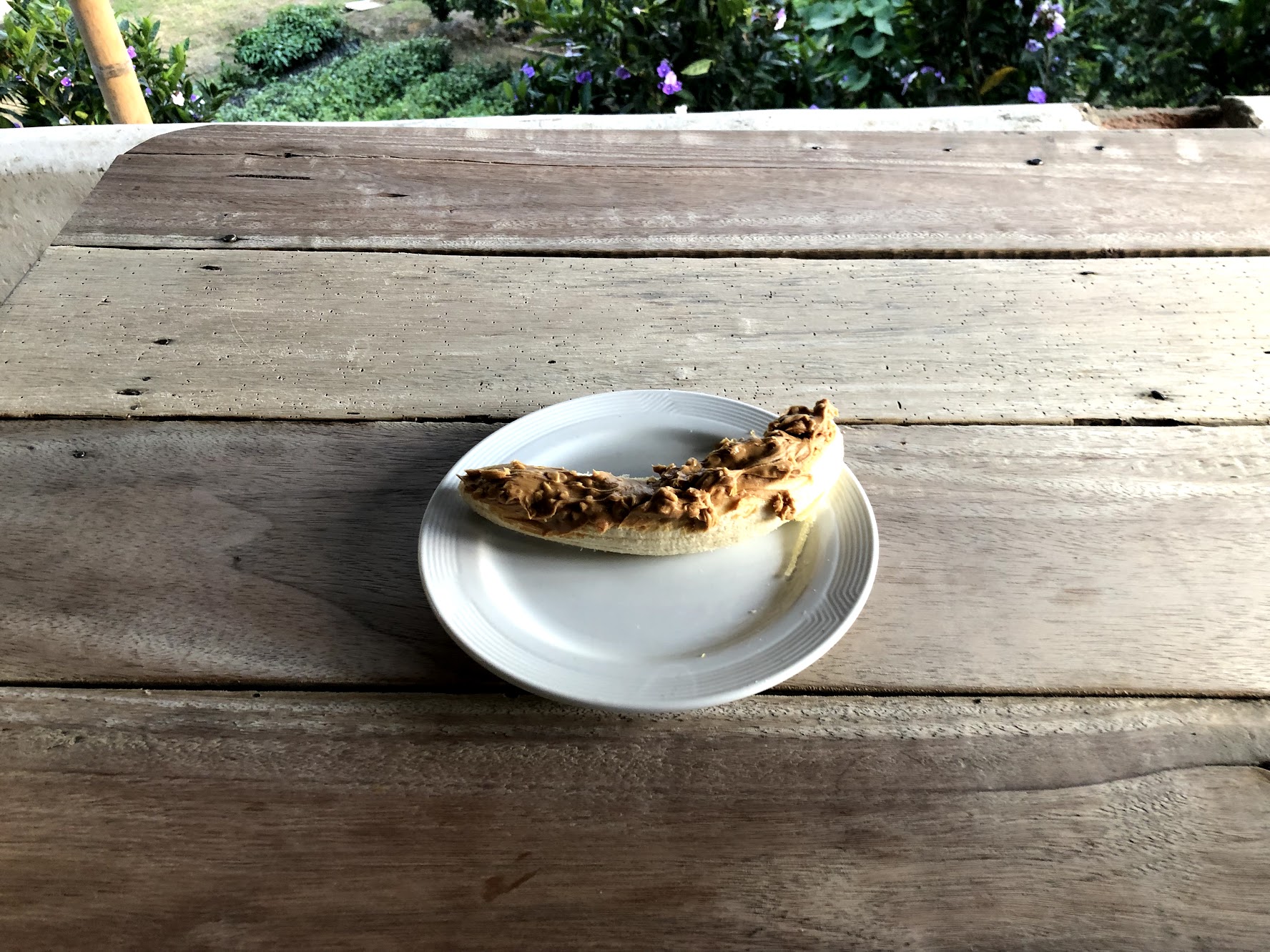
If that doesn’t leave a good taste in your mouth, nothing will.
I’ll do my best to make the most of my last few days here. It’s 10 more days until I’m back stateside, so to all my friends and family: I absolutely cannot wait to see you and share my coffee!
In the meantime, I have some more coffee to process. See you soon!
Alex
 Alex's Coffee Adventure
One thought on “Last Week on the Farm”