This past weekend was my second-to-last in Quindio, so I spent it exploring some nearby coffee towns. I spent one night in Filandia and one in Salento; both are small coffee towns nestled into hills in northern Quindio, although Salento is better known.
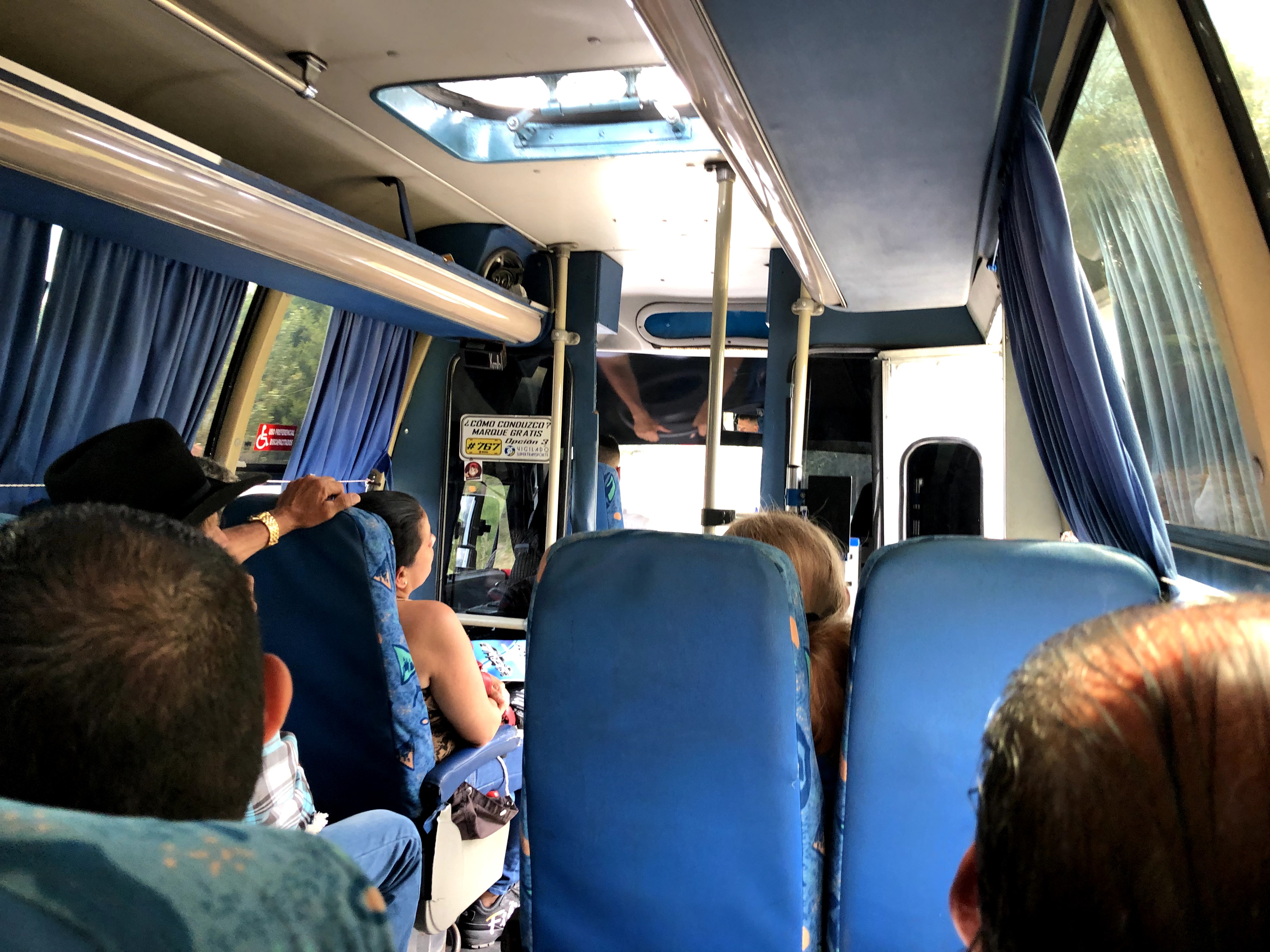
Miguel dropped me off at the Filandia access road off the side of the highway Friday afternoon, and told me to wave down the next bus going to Filandia that I saw and hop on. So I did! The 20 minute ride cost $2,000 COP, which is about 60 cents USD.
I arrived in Filandia and checked into my hostel, which is one of the better-known ones in the town and is also run by a family friend of Miguel and Alejandro’s. In Filandia, I opted to get a private room for about $20 instead of a bunk for $10, as I was looking to get a long night of sleep off the farm. The hostel and the room were welcoming and comfortable, and I really enjoyed my room!

I spent Friday afternoon getting to know Filandia. The first stop was lunch at Helena Adentro, Alejandro’s restaurant. I soon learned that Helena Adentro is not just a local Colombian restaurant, but is in fact an internationally renowned eatery with “the best food in Colombia,” according to one travel blog I found. Impressive stuff! And the restaurant absolutely lived up to the hype:
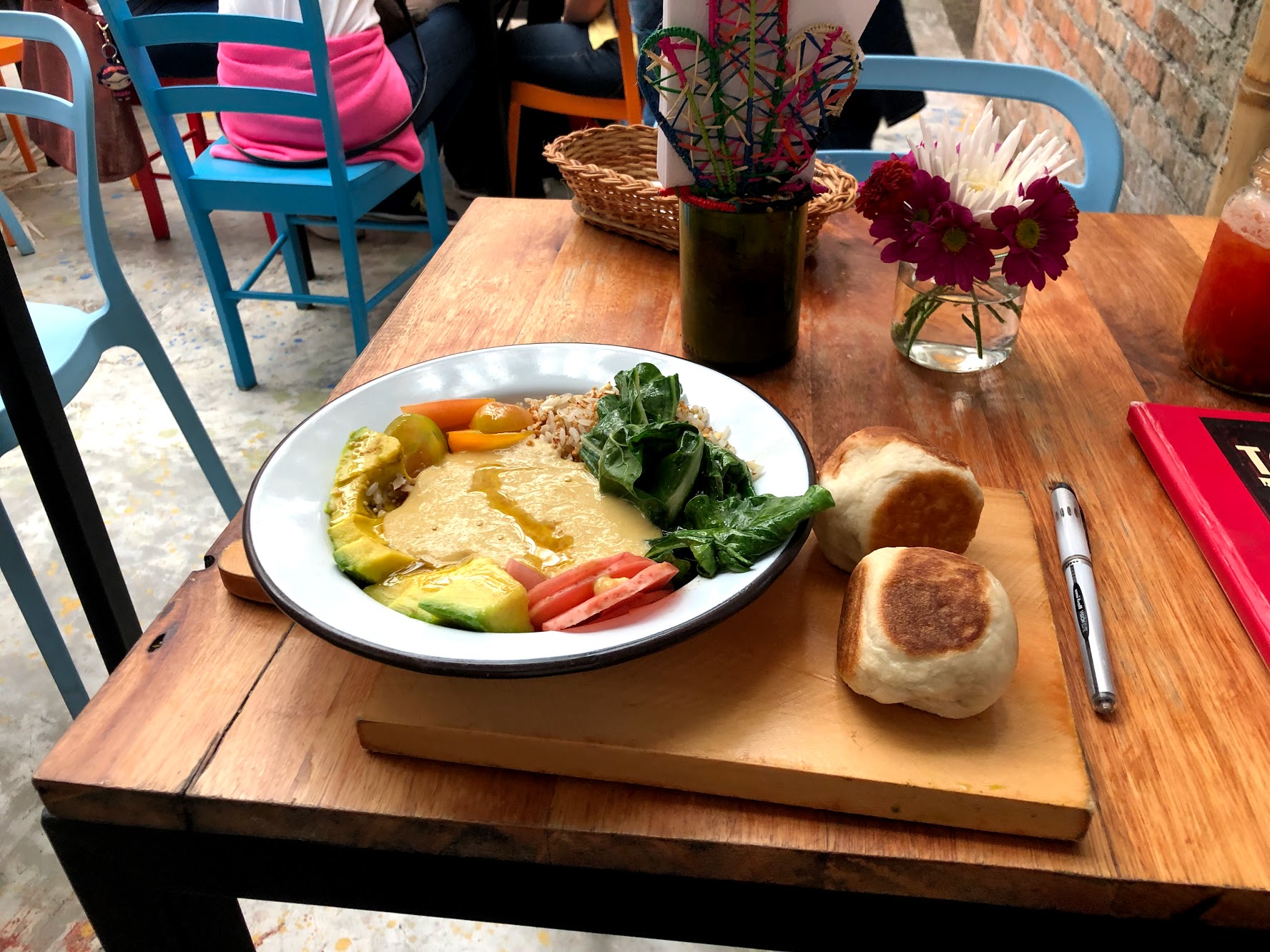
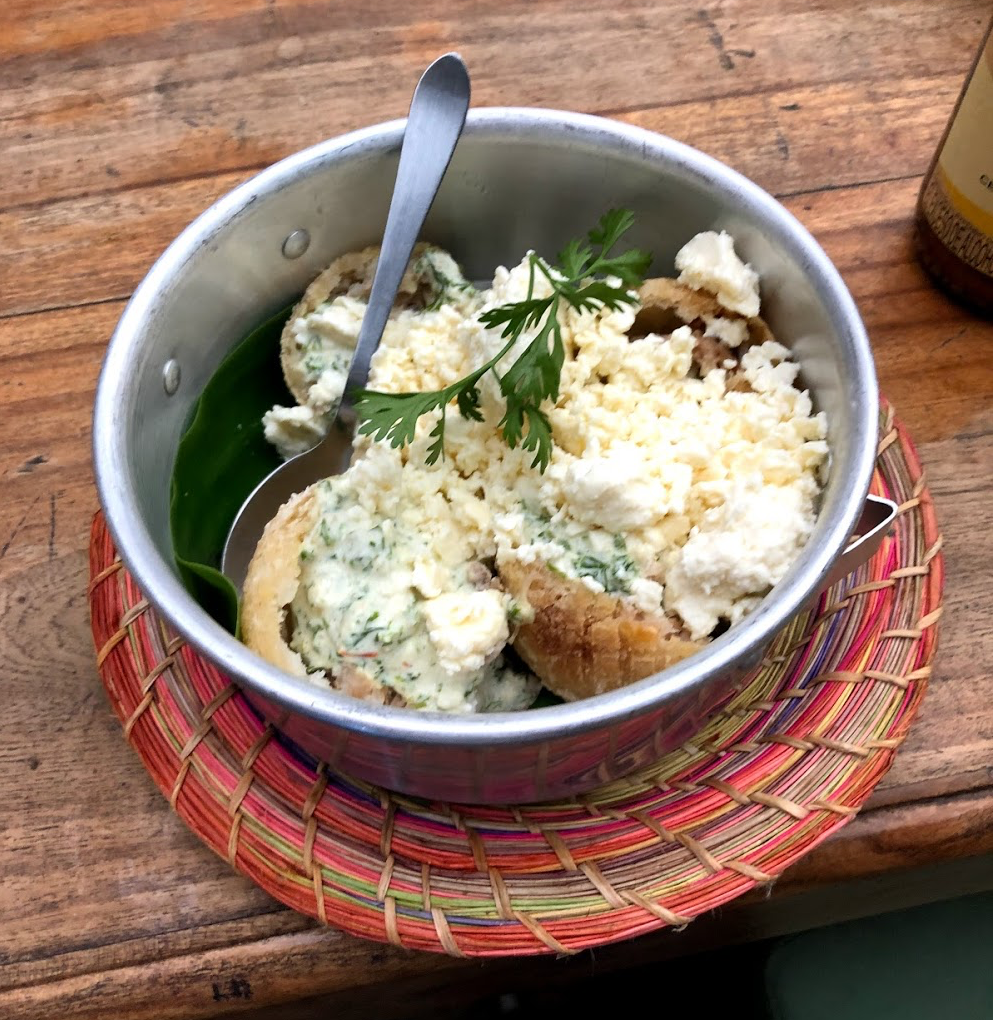

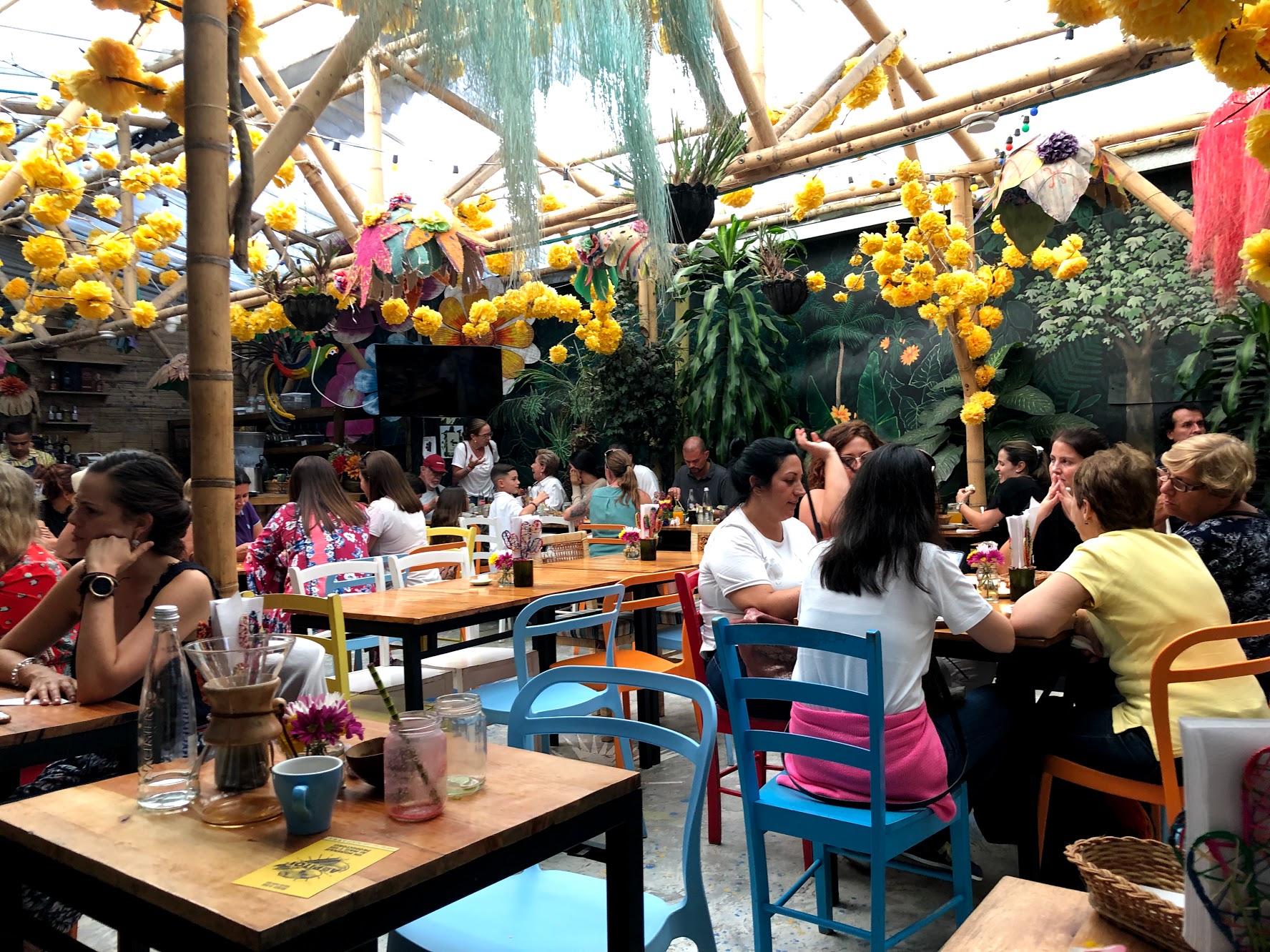
Indeed, every crevice was as instagrammable as the reviews assured. The food was also spectacular – I started with fried pork and fresh cheese balls, at the recommendation of the waiter, then treated myself to a delicious smoked hummus and veggie bowl.
I walked off the huge lunch with my signature activity in every new place I visit: trying every coffee shop I can find. I usually start the process with as much research as I can do online – first a google maps search, then reading local travel blogs, then finding some coffee websites, then clicking through images and reviews on google to find out where my first stop will be. After I find one or two places I’m excited about, I head to them, have some coffee, and ask for more coffee recommendations. The process generally snowballs until I’ve had too much caffeine, which happened both Friday and Saturday. (Pro tip: bananas can help neutralize excessive caffeine exposure. Great for me, an avid banana lover)
I had some very nice coffee around town, although the best cups were from Azahar, a roaster whose flagship store I’d already visited in Bogotá.
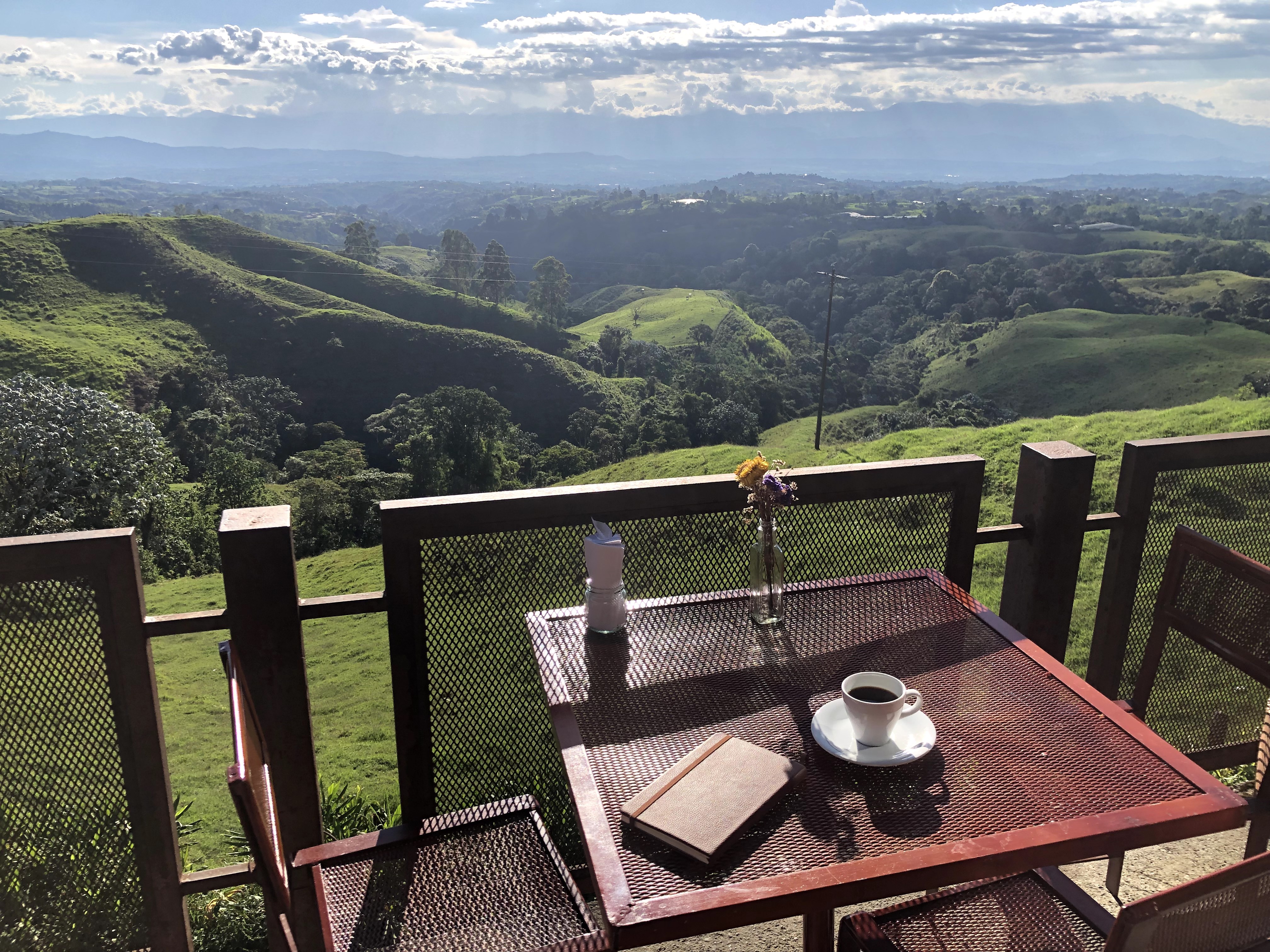

How’s that for coffee with a view?
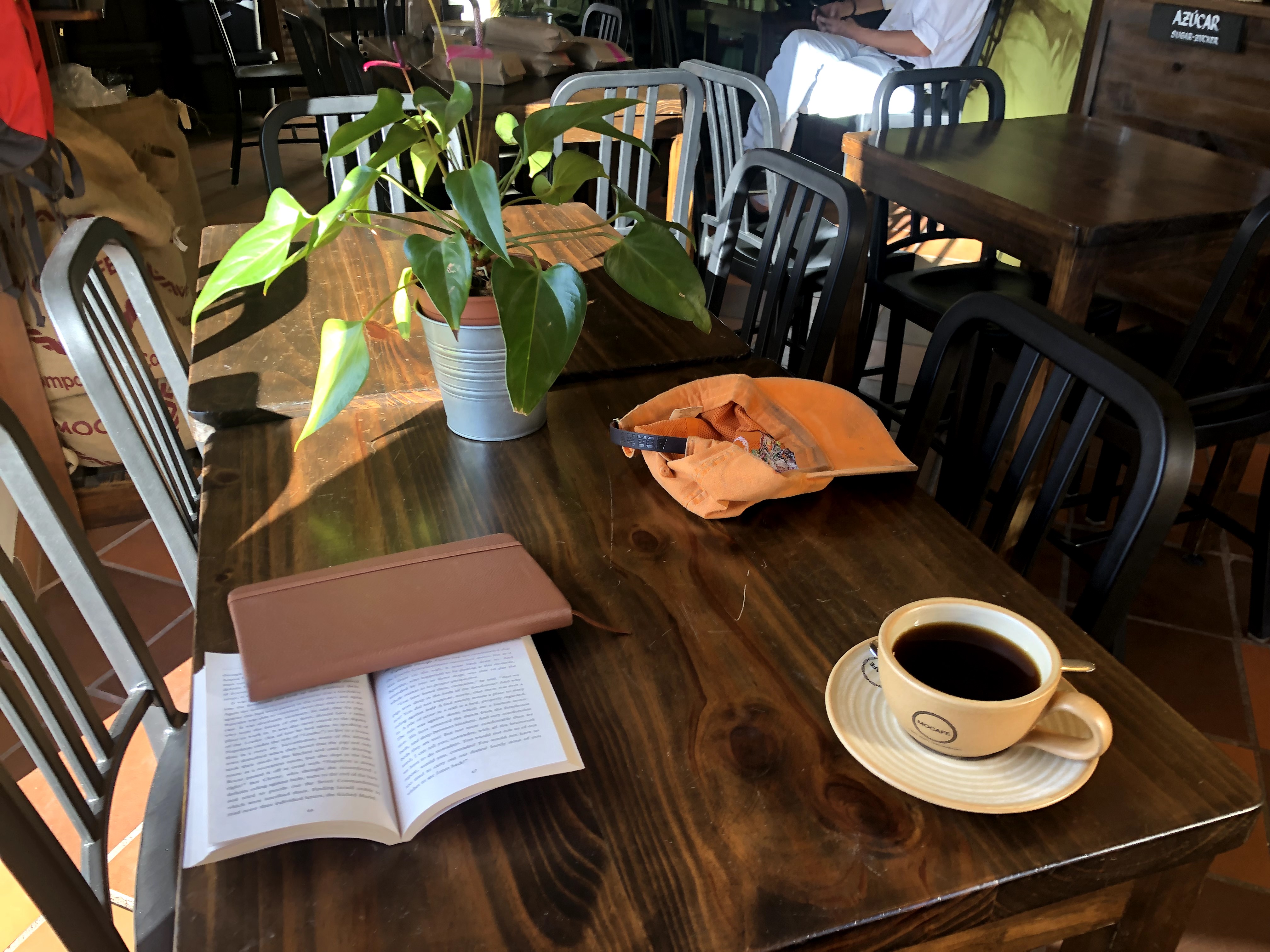
While the coffee at Cultivar Cafe (on the left with the crazy view) was the best, the most exciting moment of the tour was when I found a very familiar machine:

The roaster at MOCAFE was the same old FZ-94 from way back in my days at Dalton Coffee Roasters, which was quite the surprise. I chatted in some limited spanish with the guy running the cafe there before having a nice cup of coffee.
After a cool dinner at a local Colombian-asian fusion place called TukTuk (the restaurant that Alejandro recommended to me after Helena), I walked around town some more and had a very long night’s sleep.
The next morning, I got up to see the view from the Filandia Mirador (which means lookout or viewpoint), but was thwarted for the first time in my life for arriving too early in the morning. I was hungry for breakfast so I didn’t stick around to wait for the mirador to open, but it looked cool from the bottom:

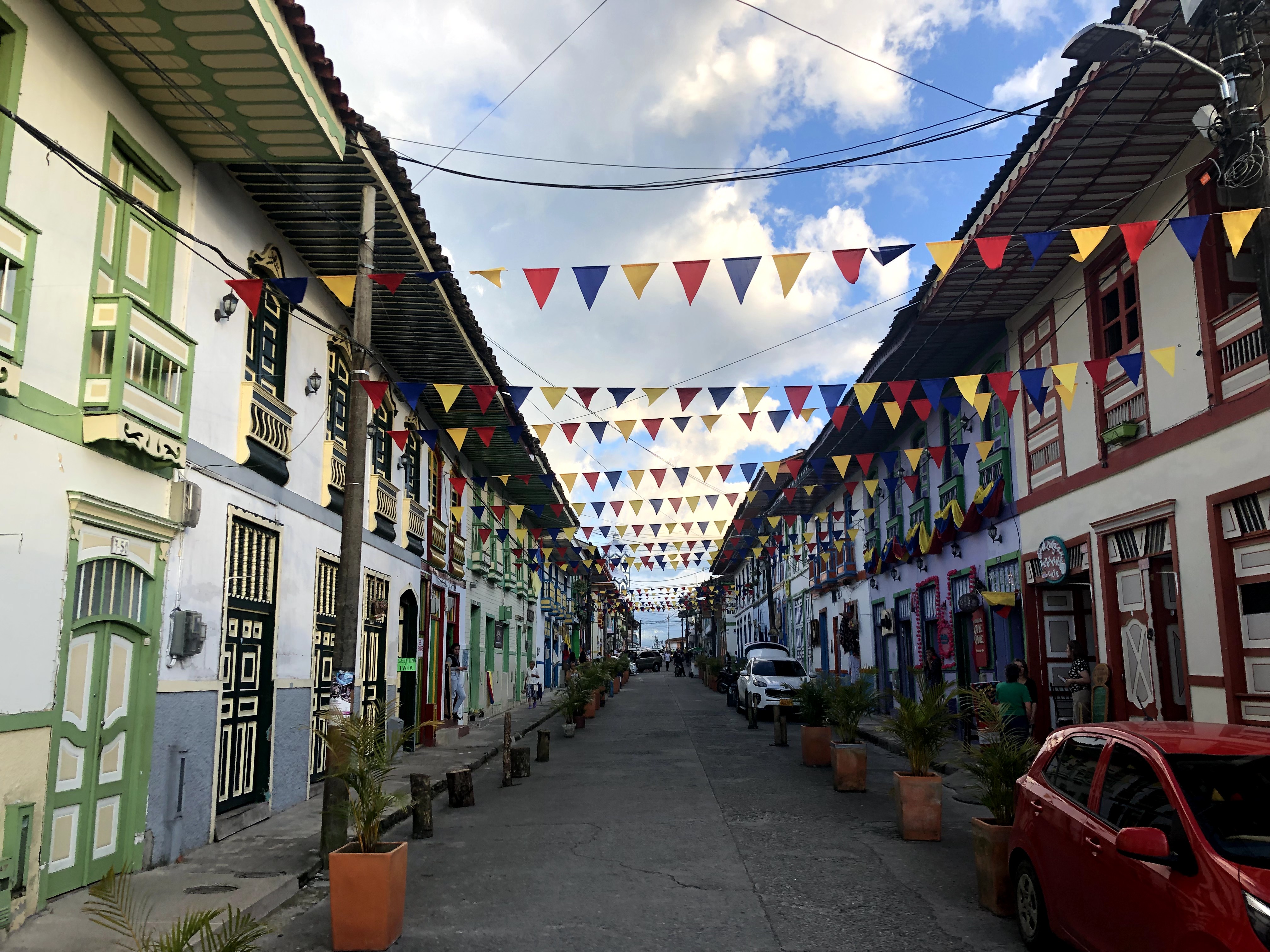
Saturday, July 20th is Independence Day in Colombia, although the celebrations are a little less intense than our July 4th. Filandia had a fun parade, which also helped explain the marching bands practicing outside my window Friday night. I walked around to a number of the local artisanal shops and had some lunch before heading off to Salento. In all, Filandia was a beautiful quaint coffee town that I thoroughly enjoyed.


Salento, the Coffee Town
My next stop was Salento, a coffee town in the northeast part of the Quindio valley. Salento is well-known through travel guides and backpacking blogs as the quintessential Colombian coffee town. This notoriety brings with it pros and cons. On the one hand, the local economy has boomed and struggling coffee farmers have had unprecedented access to tourism money. On the other hand, the main streets are lined with cheap souvenir stores and almost every other building is a hostel or hotel.
Maybe this isn’t a totally fair take – I’ve been mostly living near Calarca, which has hardly a gringo in sight. In fact, Salento lives up to its hype as a culturally distinctive and picturesque town in the Colombian country side, replete with opportunities to learn about coffee and enjoy natural scenery.
Getting to Salento was my first adventure. Transportation between the towns is “easy,” at least by Colombian standards. There is a jeep that leaves every hour from the town square. And when I say “jeep,” I really mean it – the main method of inter-municipality transportation in the countryside is antique jeeps that can handle the potholes and dirt roads:
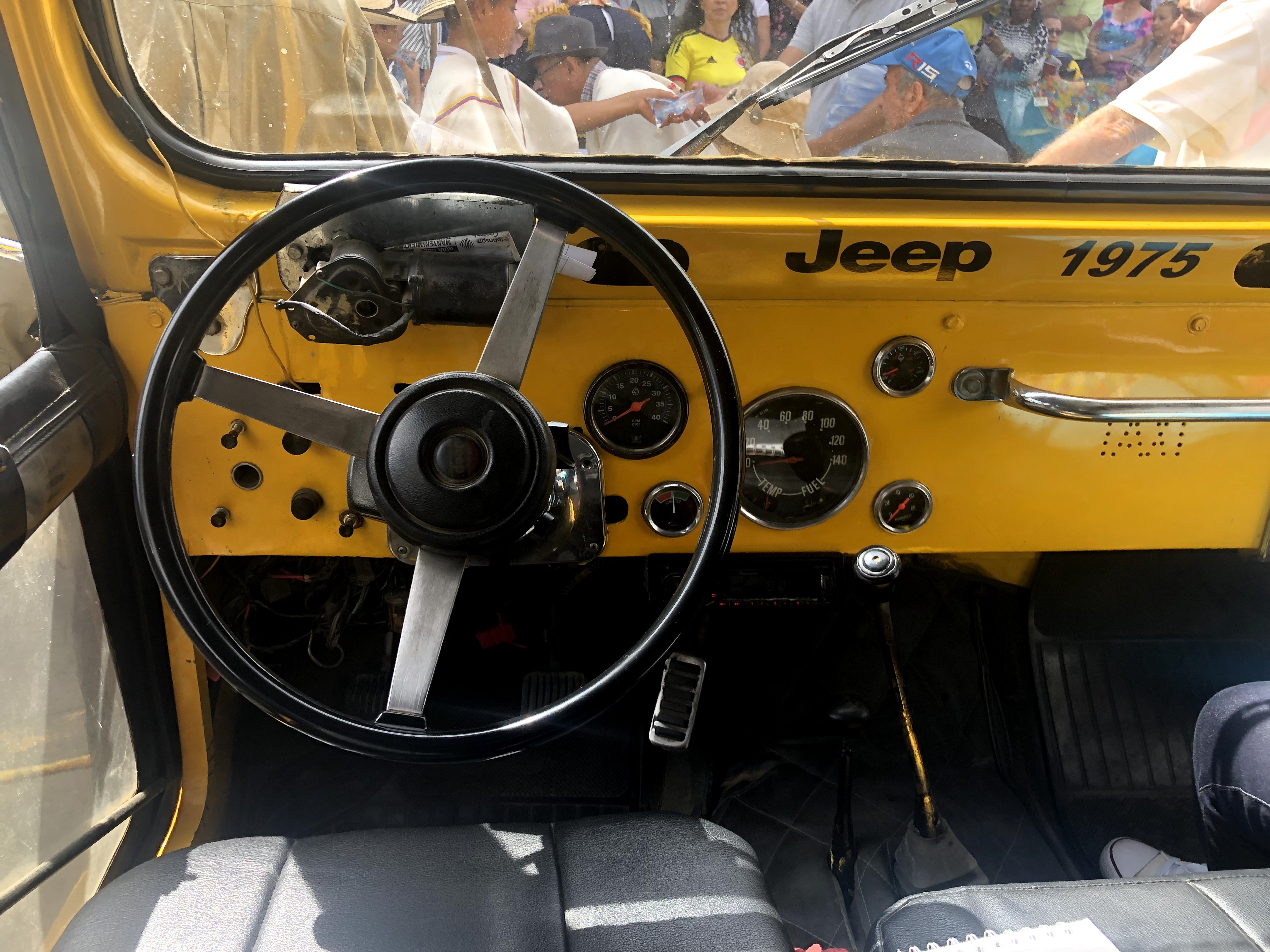
I got a seat in the back with eight others, but I was not as lucky the next day…
When I arrived in Salento, the first thing I did was, well, can you guess? Yes, more coffee. I found a small espresso bar near where my jeep dropped me off and got an Affogato, which is espresso with ice cream. Then I proceeded down the main street and stopped into three coffee shops that seemed good, two of which I’d read about beforehand. Amped up on coffee, I made my way back to the hostel, dropped my stuff off, and explored the town a bit.
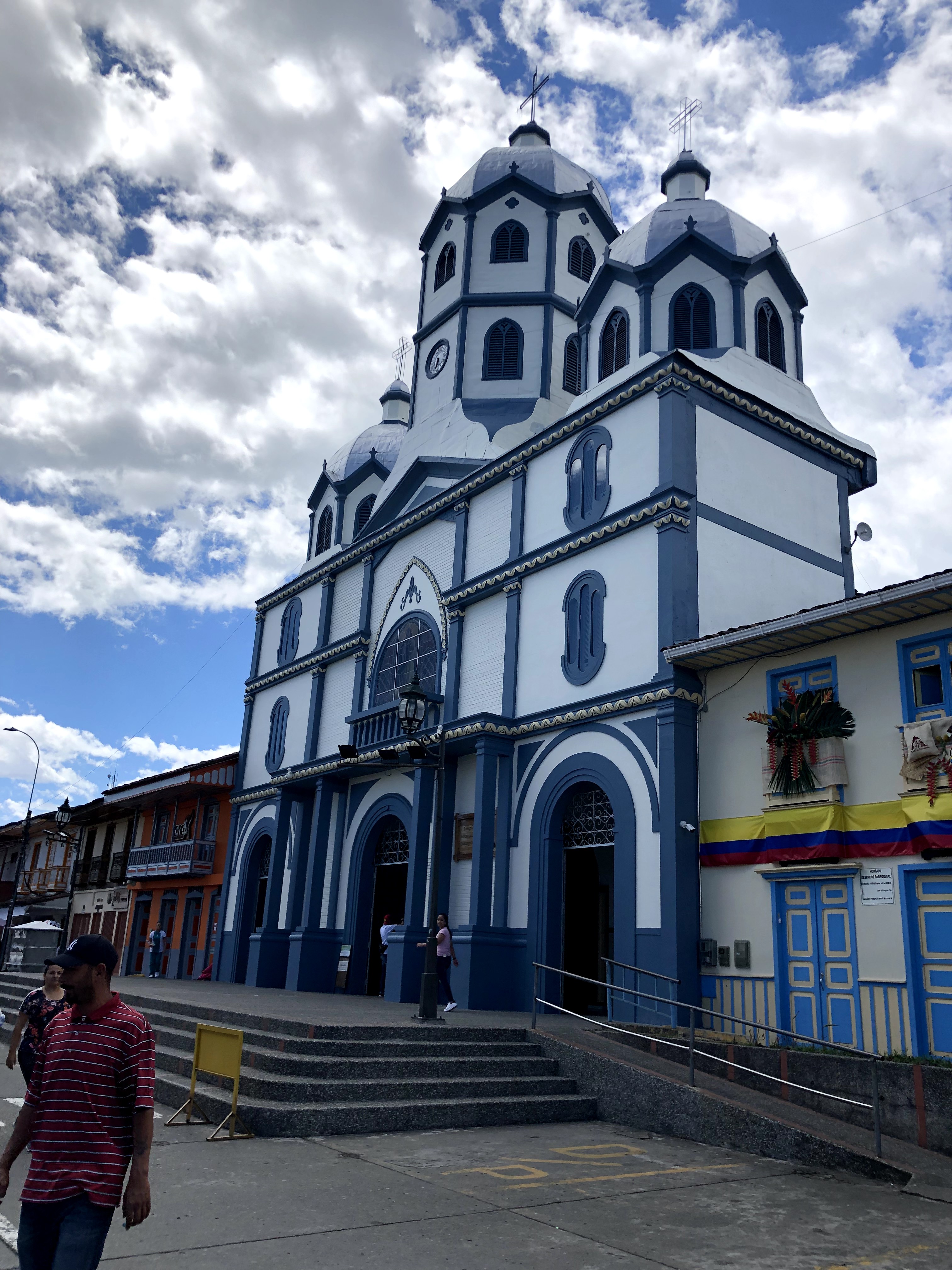
Just like every single town in Colombia, Salento (and Filandia and Calarca, literally every town) is built around a Plaza de Bolivar, or a central town square. From this plaza a a few main streets branch off, and directly on the square is the church. This very standardized layout provides a helpful way to orient yourself and a good place to go to people-watch.
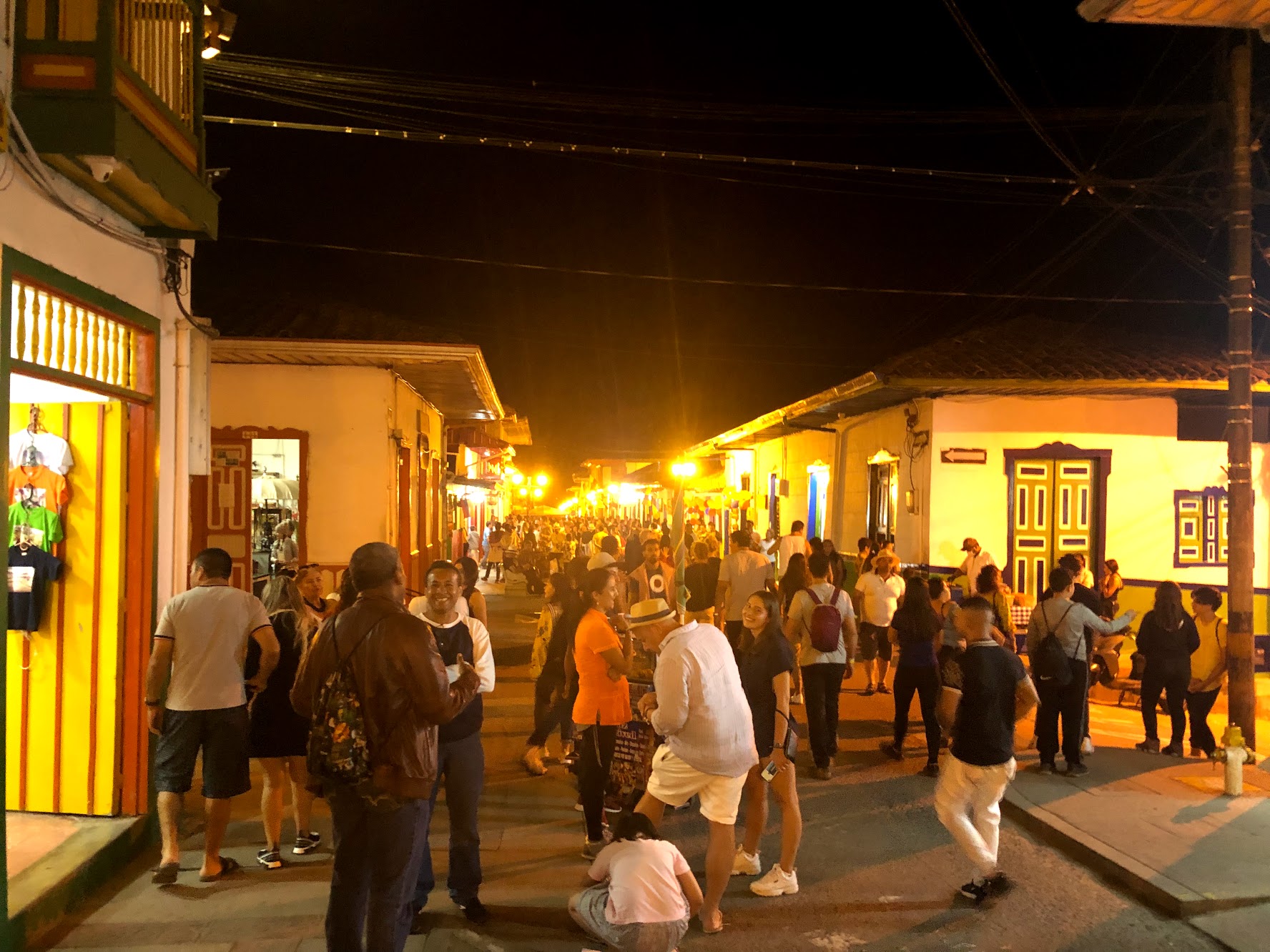


One of the first things I noticed were the horses that led tourists through town. While they are very charming to look at, they unfortunately covered most streets in very poor smelling poop. But alas, tourism must prevail.
The main thing to do in Salento is to hike the nearby Cocora valley, so I went to bed early again Saturday night in order to wake up early for my hike. The hostel sold me a packed lunch and lent me a pair of rainboots, and at 7:10AM I was on my way.
The Cocora Valley
Much like Salento (and again, anywhere), the only way to get to Cocora is on a jeep. I patiently queued in the town square for a jeep, but alas, I was the 10th person for the jeep and got stuck in a less than ideal spot. A standard Colombian jeep can seat about 13 people at its maximum: 8 squeeze in to the benches, two can fit up front with the driver, and one person – me! – stands on the back!
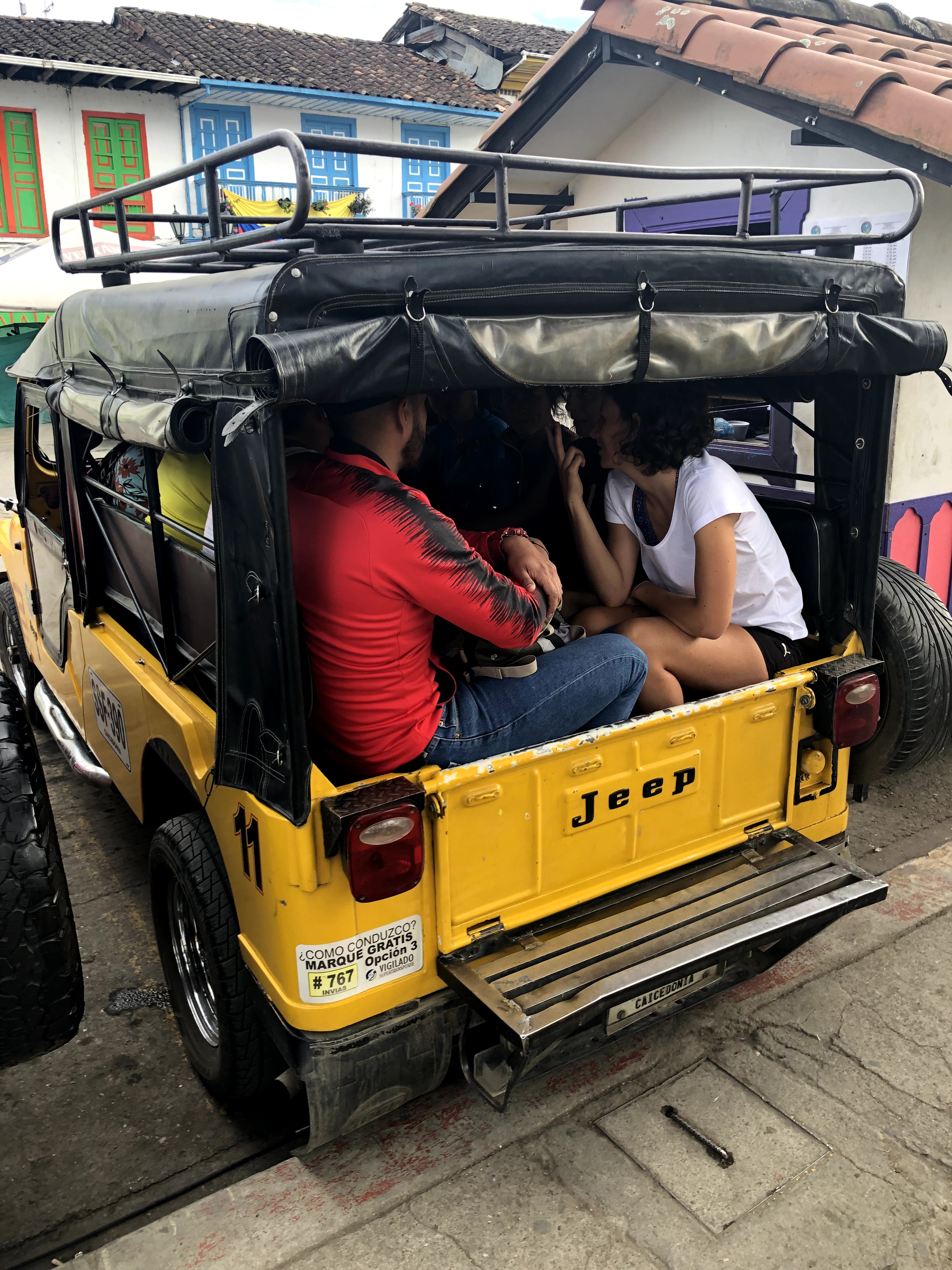
It’s not terribly unsafe, as the jeep hardly goes above 30mph and there are a lot of handholds at the top, but it’s definitely not your standard transportation method. The worst part for me were the bugs that kept flying into my face!
Finally we arrived at the Cocora valley. The cocora valley is a large nature reserve in the northeast corner of Quindio that’s nationally (and internationally) renowned for its natural beauty. After taking a jeep in, to see the Cocora valley you typically go on a hike of the full loop, which runs about 12.5km with 1,000 meters of elevation. It’s quite the hike, but it exposes you to some beautiful sights and offers many scenic stops.
There are four main sights to see on the hike: the Wax Palm Forest, Finca la Montaña, the Acaime Hummingbird Sanctuary, and the trout farm. I chose to go the counterclockwise route, and my first stop was the Wax Palm Forest. It was absolutely breathtaking.
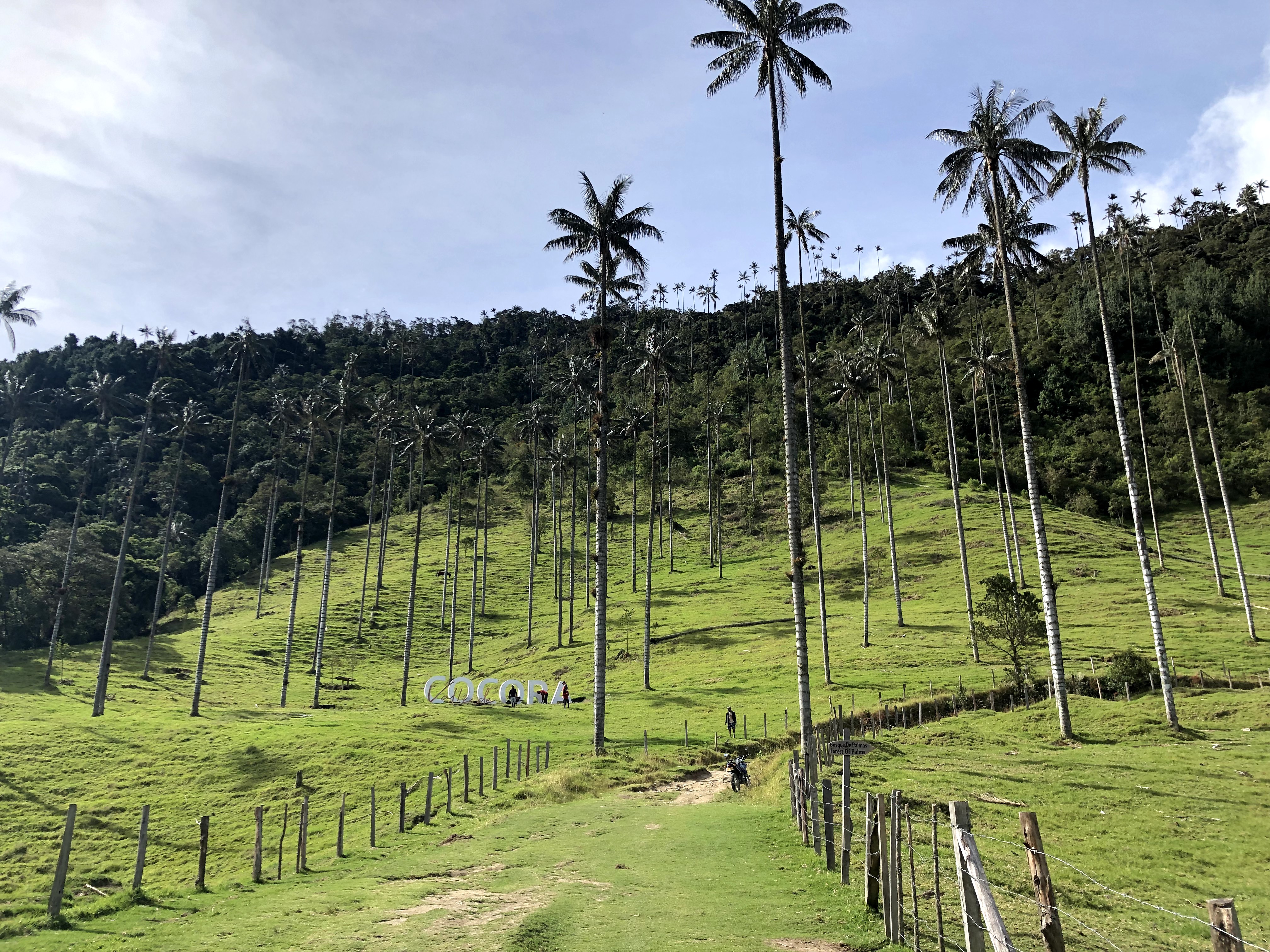
Wax palms are the national tree of Colombia, and for good reason: they grow to be upwards of 200 feet tall, and in the Cocora valley they’re surrounded by grass, accentuating their height even more.

The wax palm forest is so important to Colombia that it’s even on their $100 bill!
Next was a gradual hike up the mountain to Finca La Montaña, which marks the highest point on the hike. At 2,900 MASL, the air up there is quite thin, making it difficult to catch your breath. Luckily, there are a number of beautiful viewpoints to stop at and take in the view, which I made frequent use of.
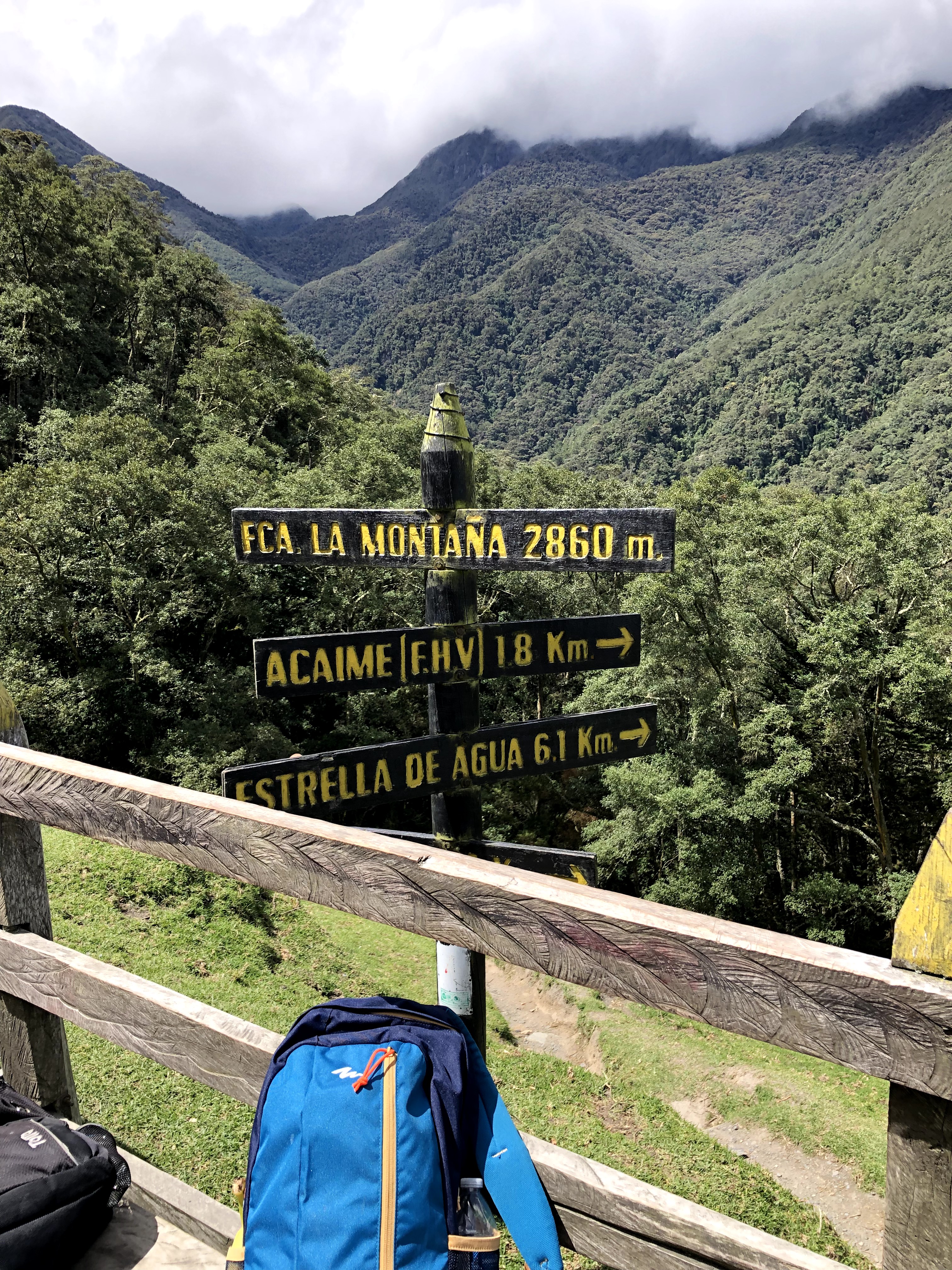
After Finca la Montaña, the trail descends into a more humid rainforest. This area is one of the most renowned bird-watching destinations in the world, and descriptions of species dot the paths. The next stop on the hike makes ample use of their location by putting out several bowls of sugar to attract hummingbirds, and it works like a charm.
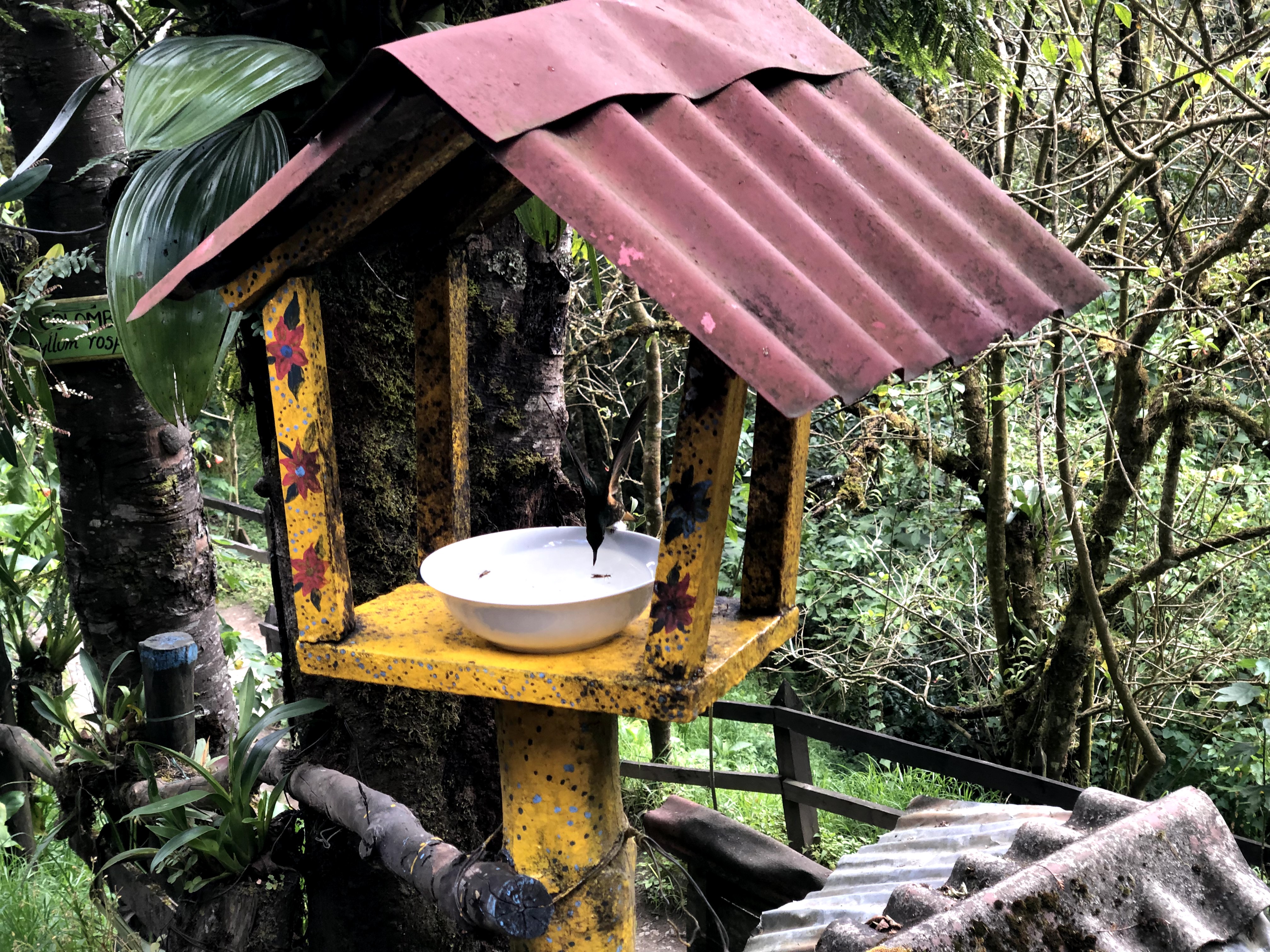
At any given moment, you could make out about 20 hummingbirds in your field of view. They would fly in, peck some water, then tag team out to make room for the next bird. I sat there for over an hour eating lunch and watching the never ending show!
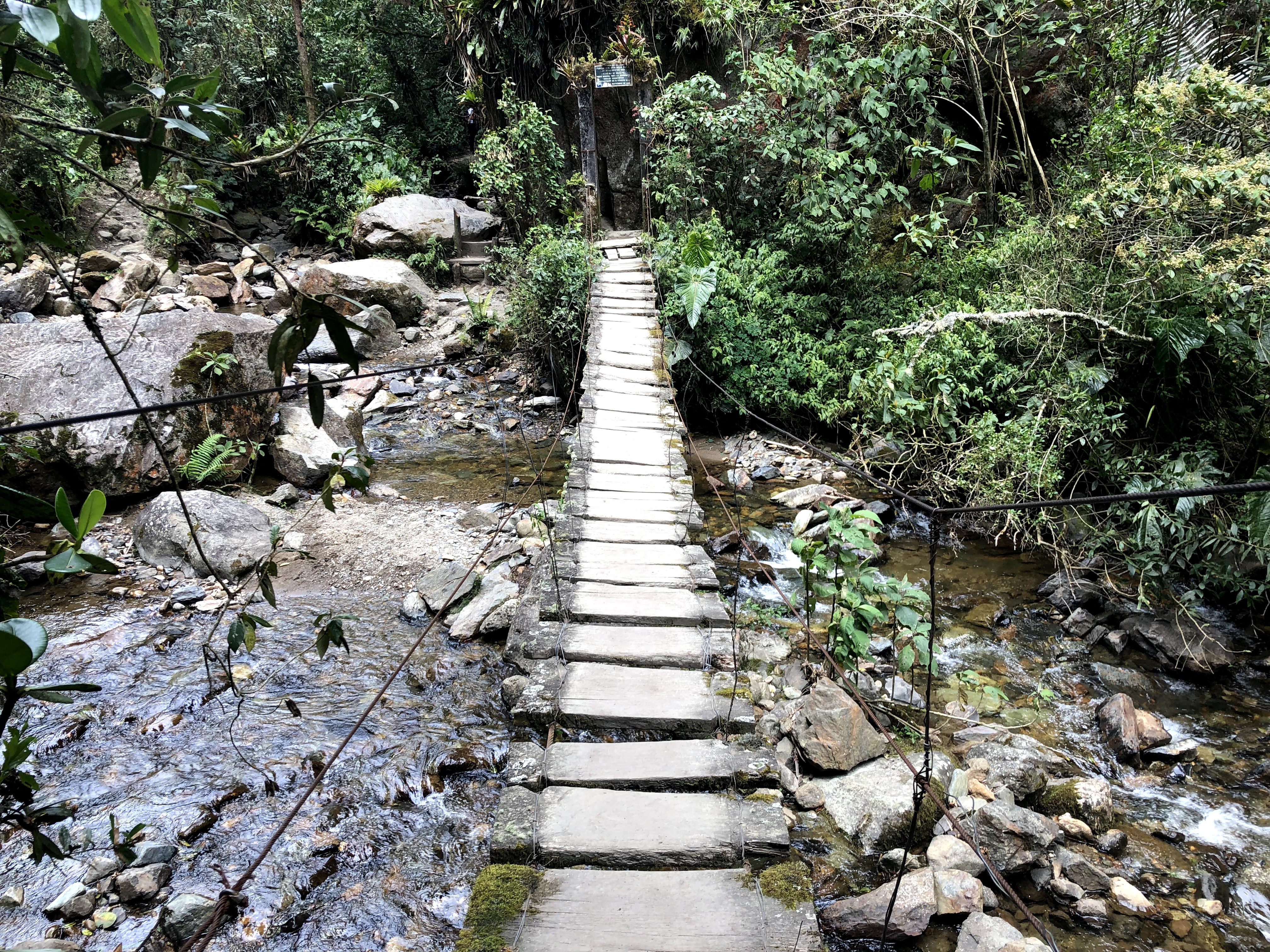
The trail follows and crisscrosses a stream on its way out before one last stop. The trail frequently crosses over the stream on bridges that do not exactly inspire confidence, but bounce only just enough to be exciting and not terrifying.
Finally, I arrived at the trout farm. For some reason, the signature dish of Salento is trout, and much of it comes from this farm. I had a delicious meal of fresh trout and fried plantains before making my way out of the Cocora valley.

After the hike, I ran back to the hostel to grab my stuff and make it on a bus to Armenia. From Armenia, I transferred to Calarca, where I met Miguel at a grocery store to pick up some food for the farm.
All in all, I had a fantastic weekend visiting the Colombian coffee countryside, and picked up a few good souvenirs along the way, including new mugs for my mug collection.
I’ll try to post some more regular updates from my last week here on the farm. After this, it’s one more week in Bogotá then back to home sweet home!
Hope you enjoyed reading, and I’ll write again soon.
Alex
 Alex's Coffee Adventure