(Editor’s note: I meant to post this yesterday but the WiFi went out. Such is life on a farm! I’ve added some more about what I did today at the bottom.)
El Fénix is right near the town of Calarca in the Quindio department, and over the weekend I got to go into town. This weekend is the culmination of the annual Quindio Coffee Festival which is held in Calarca, so there are a number of very exciting activities. Yesterday was a “Coffee Queen Pageant” and today was Desfile Yipao, which was a hilarious parade of antique Jeeps. I’ve also been working hard on my coffee experiments and have a number of exciting things coming up!
The Layout of Quindio
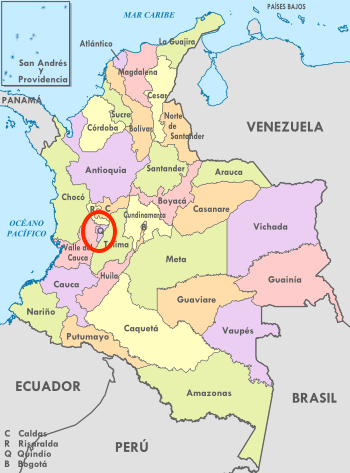
Quindio is Colombia’s smallest department 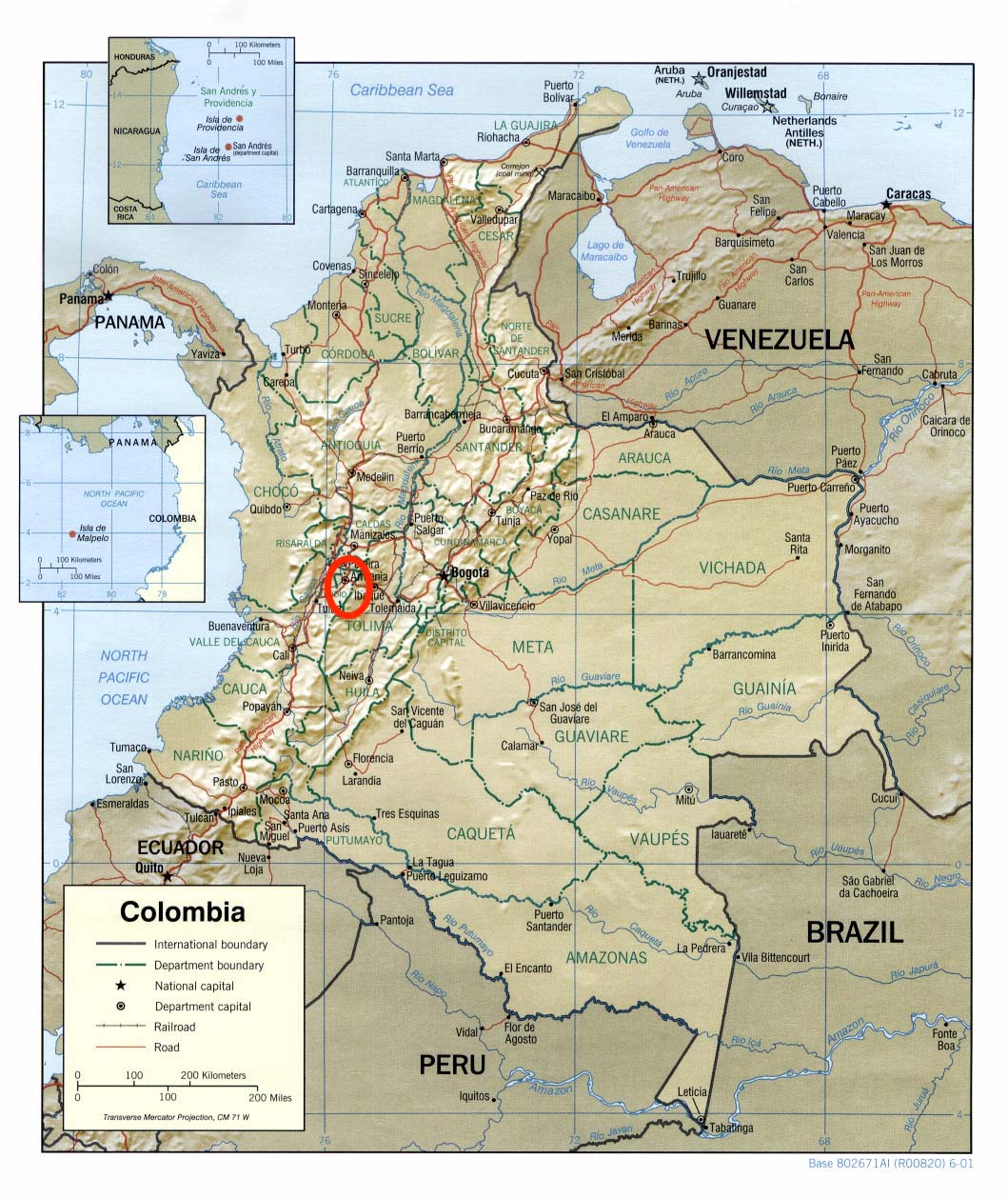
It’s tucked in between two of the largest lines of Andes mountains.
Quindio’s unique geography contributes to its microclimates and agricultural abilities. For example, Quindio is especially known for coffee because of its fertile mountains . In fact, the entire department is essentially one big valley.

Quindio has a number of cities and towns, the largest of which is the capital Armenia. Armenia has a population of about 300,000, while the town of Calarca (which is the closest town to El Fénix) has a population of 60,000.
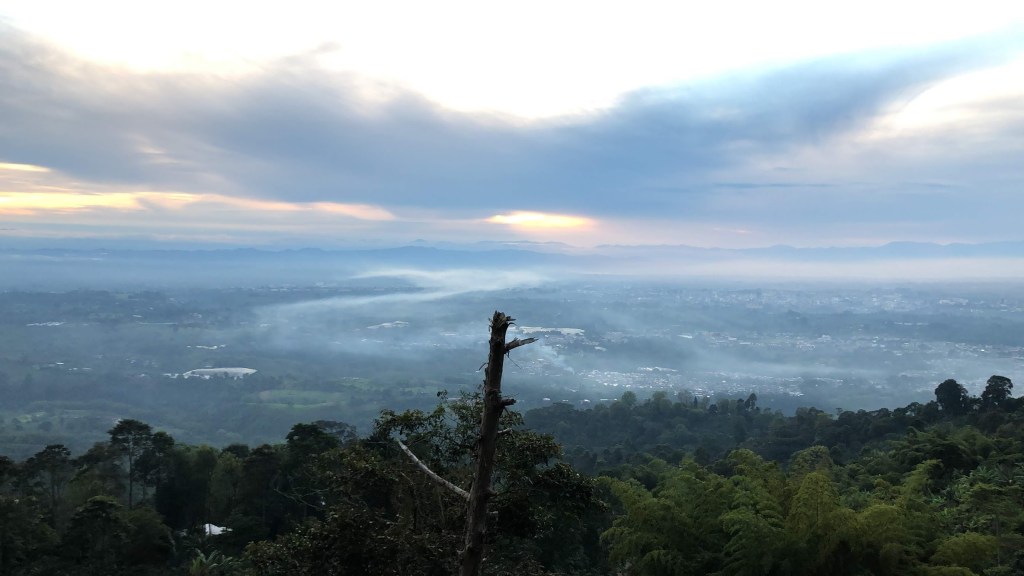
At El Fénix, we can see almost the entire department of Quindio from the cupping lab; it’s quite a view.
Two days in Calarca
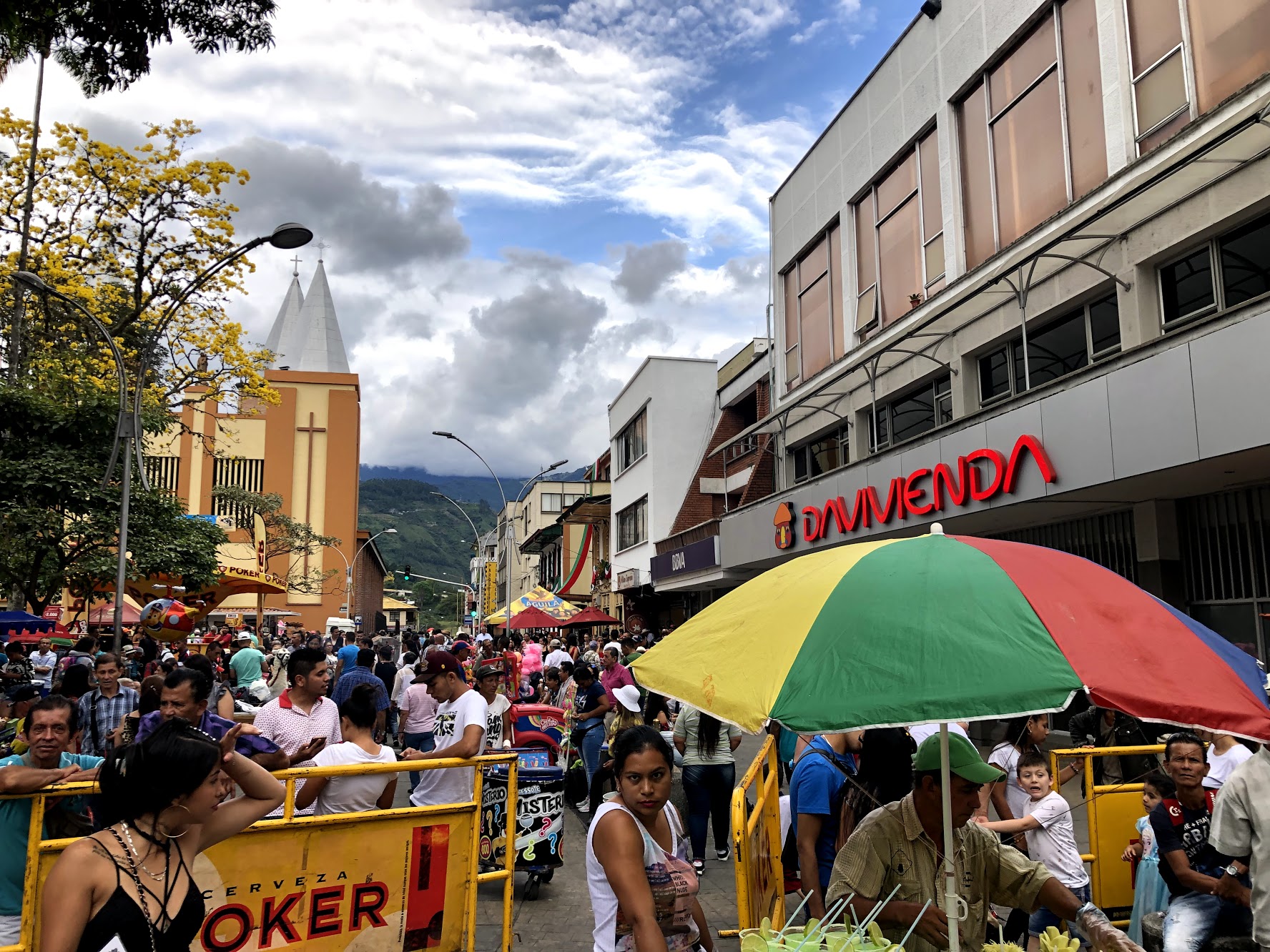
Calarca is a super fun town, because it’s filled with the same liveliness and spirit that I felt in Bogotá. While not huge, its very well-planned grid pattern gives it the feeling of a real city with all kinds of shops, cafés, and things to do.
My first time at Calarca was the day of my arrival last week when we stopped in town to pick up some food and run a few errands. I was still a bit tired from the plane, but I remember how to buy things, Miguel simply drove the car up to the necessary store and hollered for the clerk. For example, we drove down one street and purchased arepas from a street-side grill and a large chunk of cheese from a small food market down the block without getting out of the car. It was a new experience for me, but it made me feel like Calarcans (as I’ve been told is the local monicker) are generous and collaborative people.
The Festivals!
As I mentioned, this week was the big coffee festival. On Saturday, the streets were packed with participants in the “Coffee Queen Pageant,” which I haven’t totally figured out but was lead to believe it’s a kind of beauty pageant for women who live on coffee farms. I immediately thought of the festival in Márquez’s One Hundred Years of Solitude where Arcadio meets the “queen of the world” at a huge festival in the town of Macondo – not too far off!
The pageant meant that all the women in the town were dressed to the 9’s, while men sat around drinking beer. It was definitely a new cultural experience for me, and I couldn’t help but share in the communal excitement for the occasion.
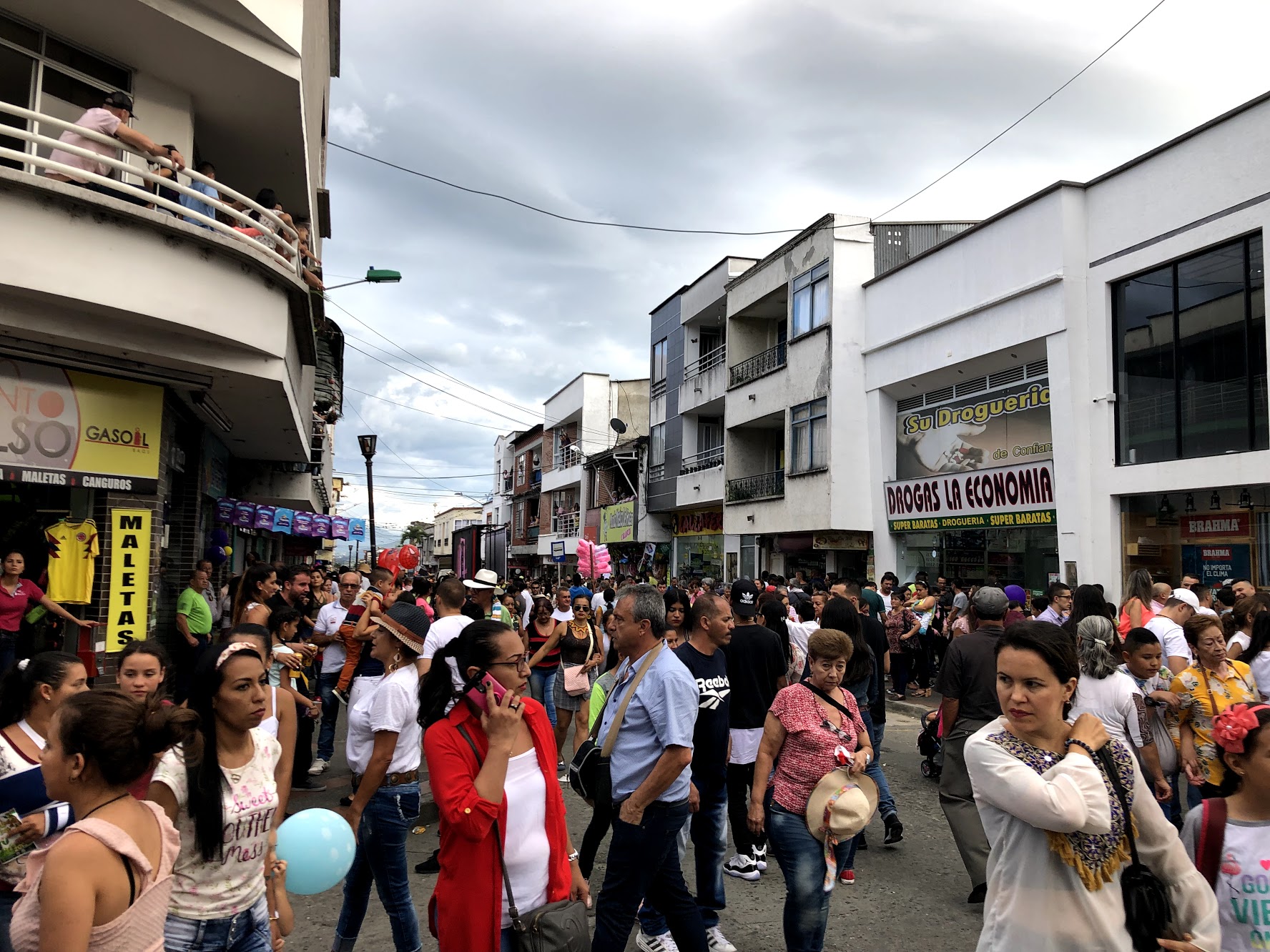
The city was packed with attendees! 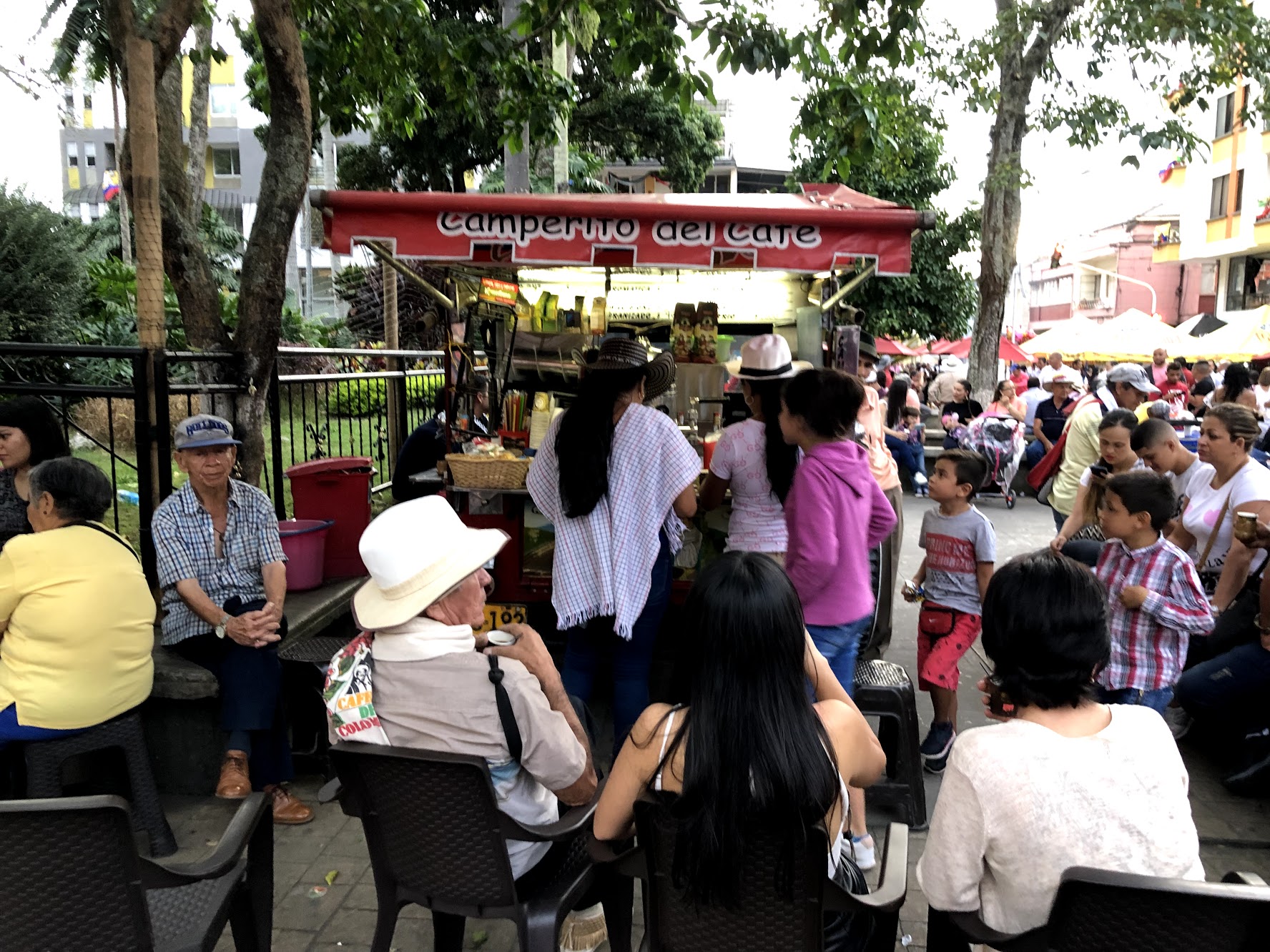
Locals crowd a coffee stand for a break in the festivities
On Sunday, we got to see the world-famous Yipao, or “Jeep-ao” – the Jeep parade!
There were a ton of Jeeps of all different styles. Many were themed, like those that symbolize moving from one home to another in the mountains (stuff piled high), military jeeps, different agricultural themes, and artistic themes. One even had a potter making ceramic bowls on a potting wheel as the jeep drove by!
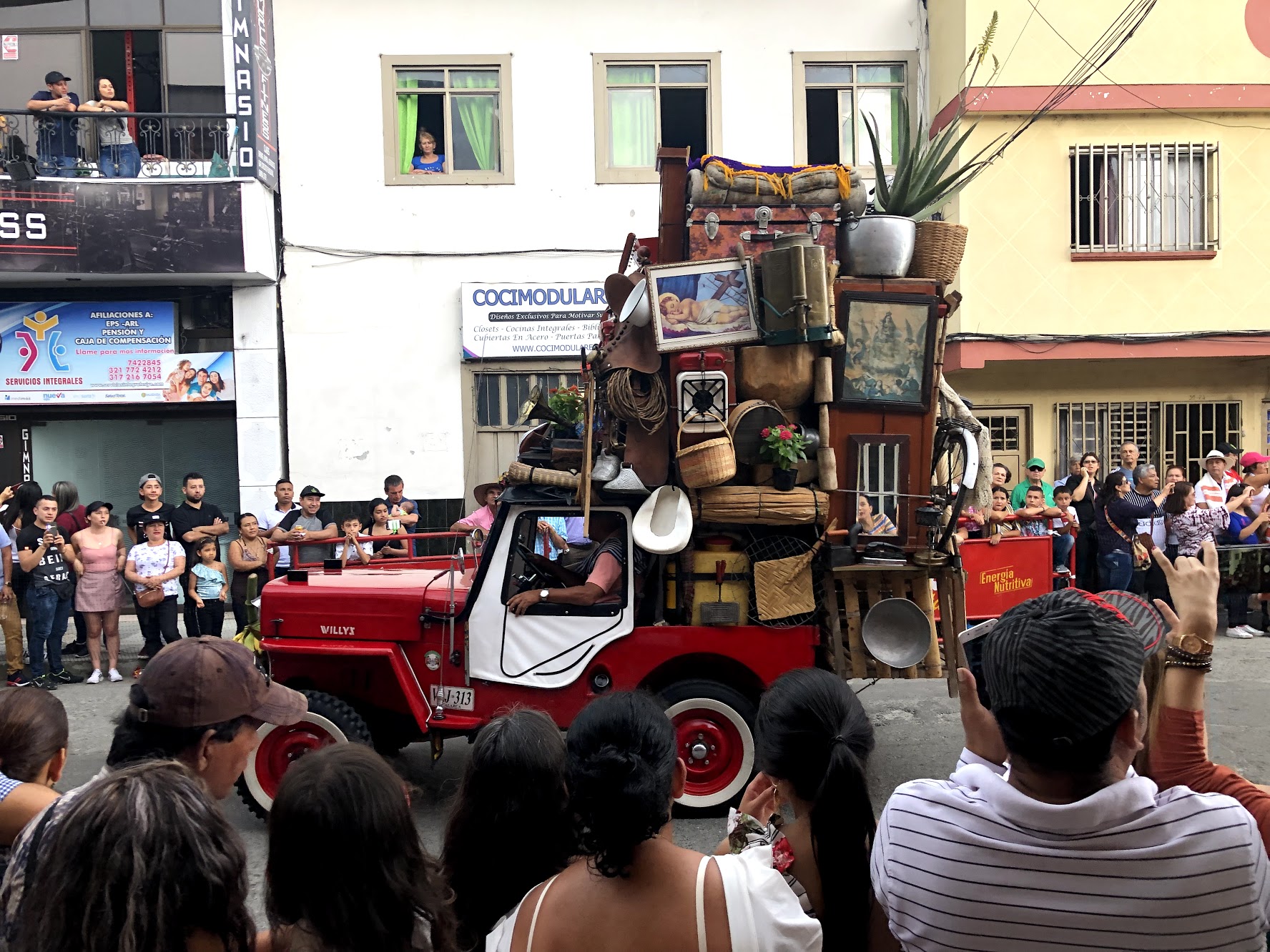
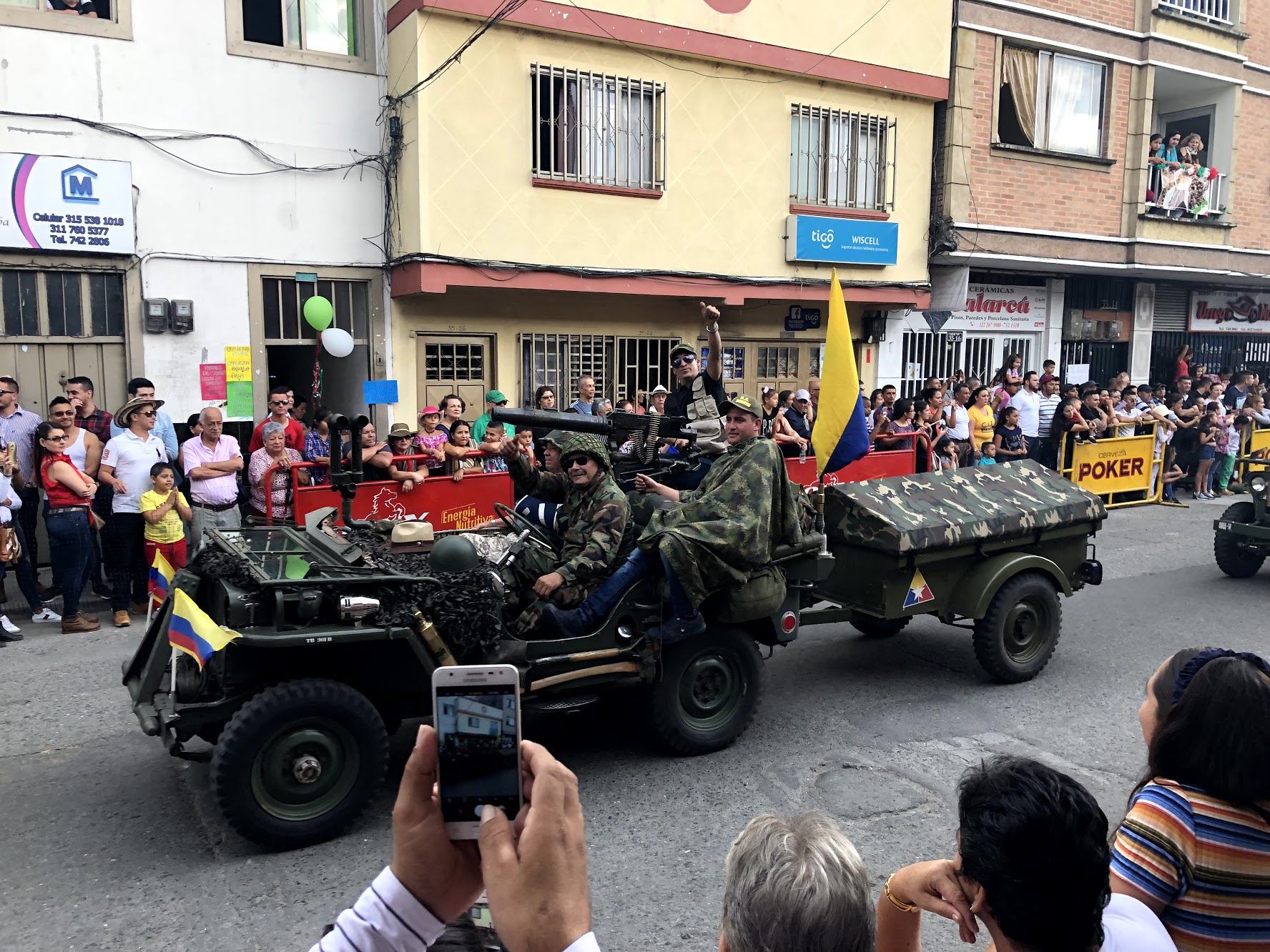
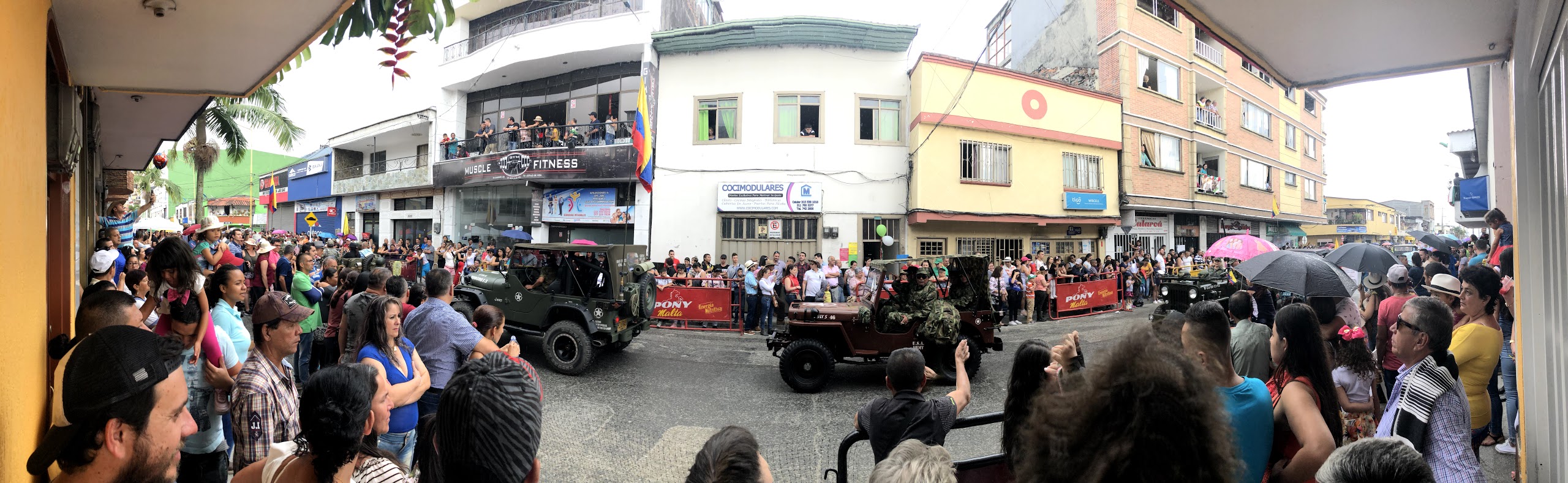
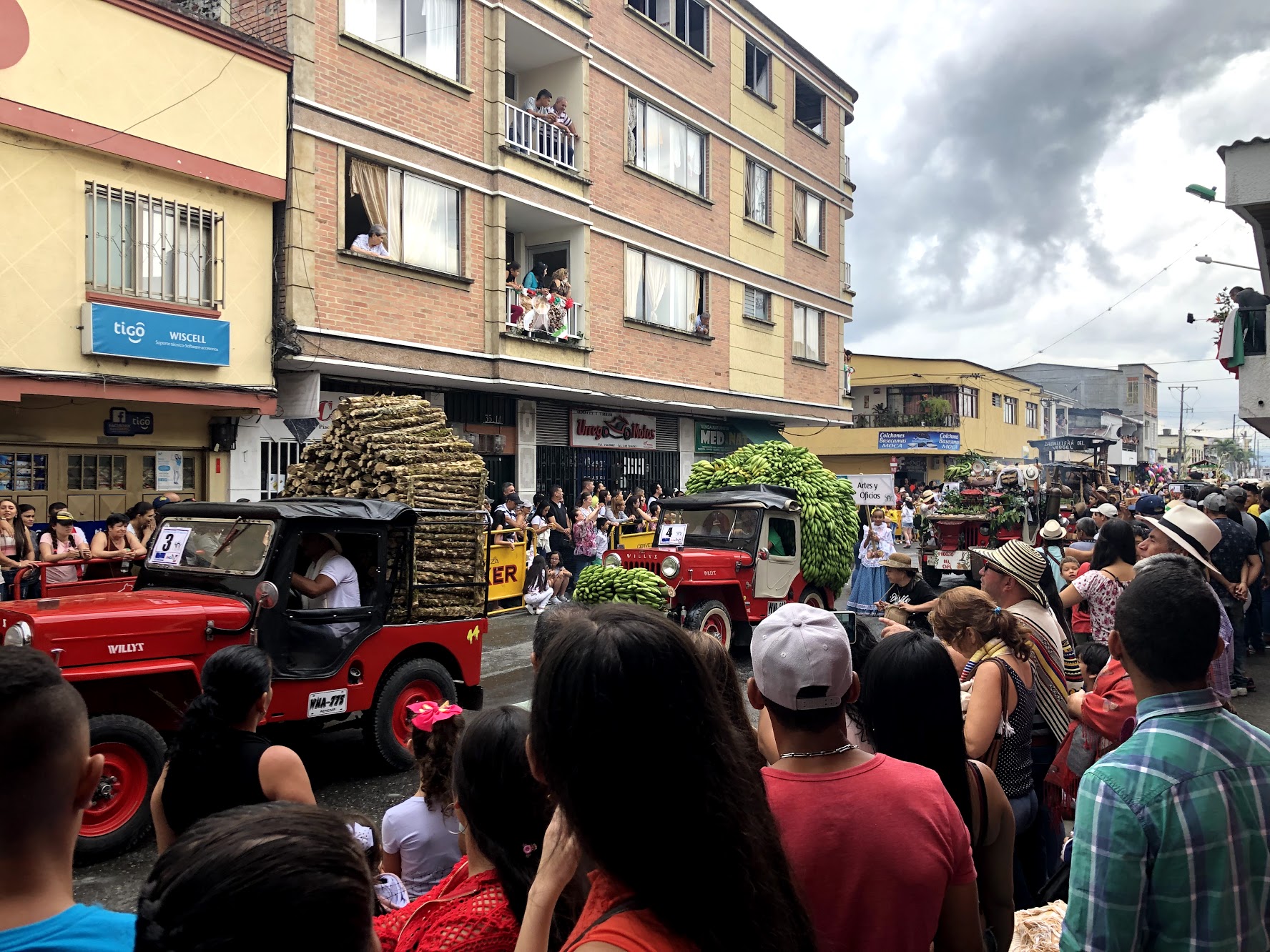
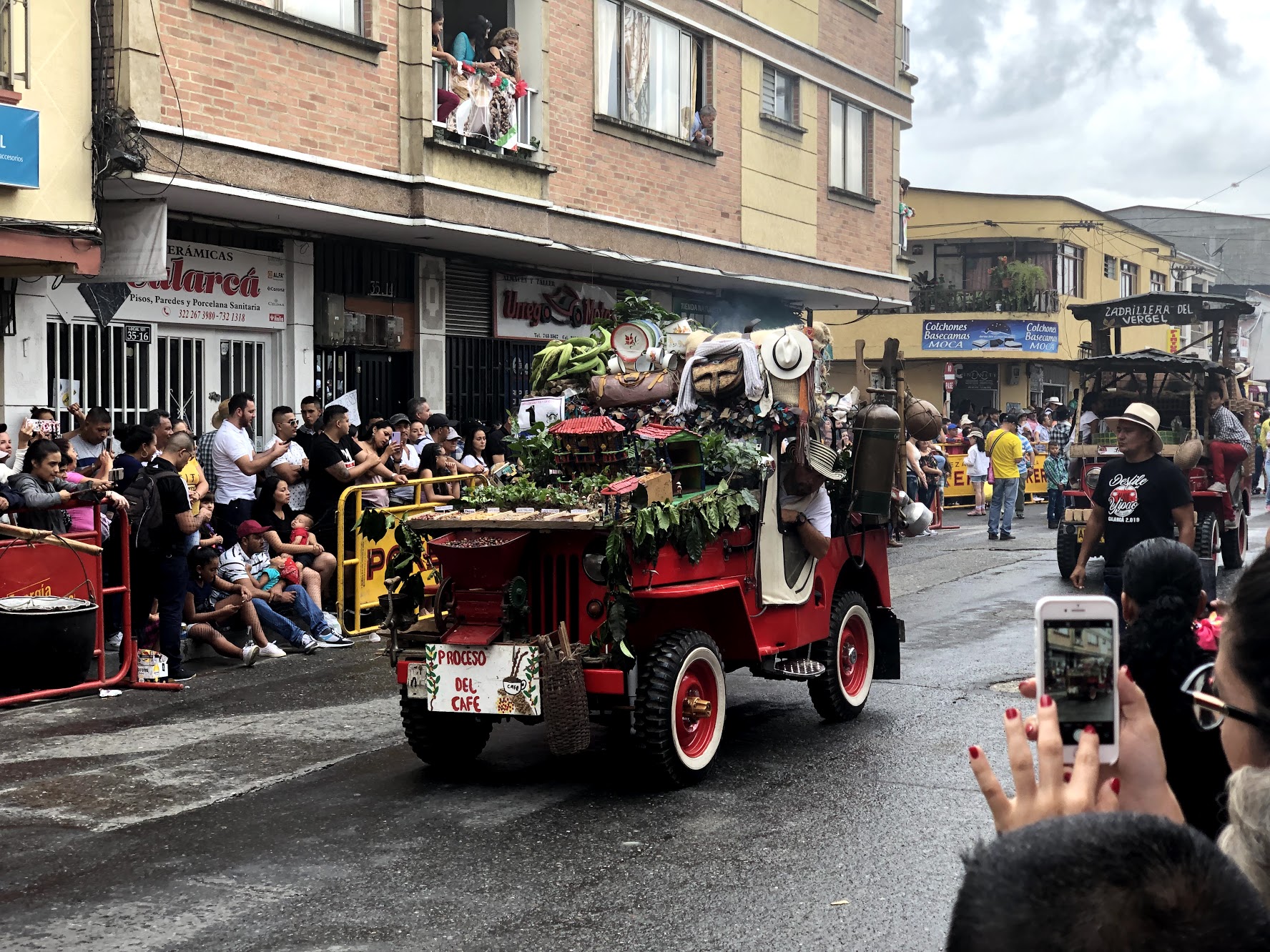
Finally, the best part of the Yipao was at the end: the wheelies!
It was amazing! And totally hilarious. There was even one Jeep that I didn’t get to record that started spinning in circles during a wheelie with people hanging off of the front and sides!
Updates from the Farm
Back here at El Fénix, everything is going well! The workers aren’t here this week, so it’s a bit quieter, but Alejandro (Miguel’s brother, who speaks English!) has moved in permanently. I have been continuing to work on my experiments and I’ve set up a few more in the meantime. Here’s a bit of a mixed bag of everything that’s happened over the last few days.
First, we had a visit from a coffee buyer this weekend! Jeff from Groundworks coffee in LA visited the farm and cupped some samples. In order to prepare for this, I cupped 19 samples by myself last week to “pre-screen” the coffee. My Q Grader came in handy!
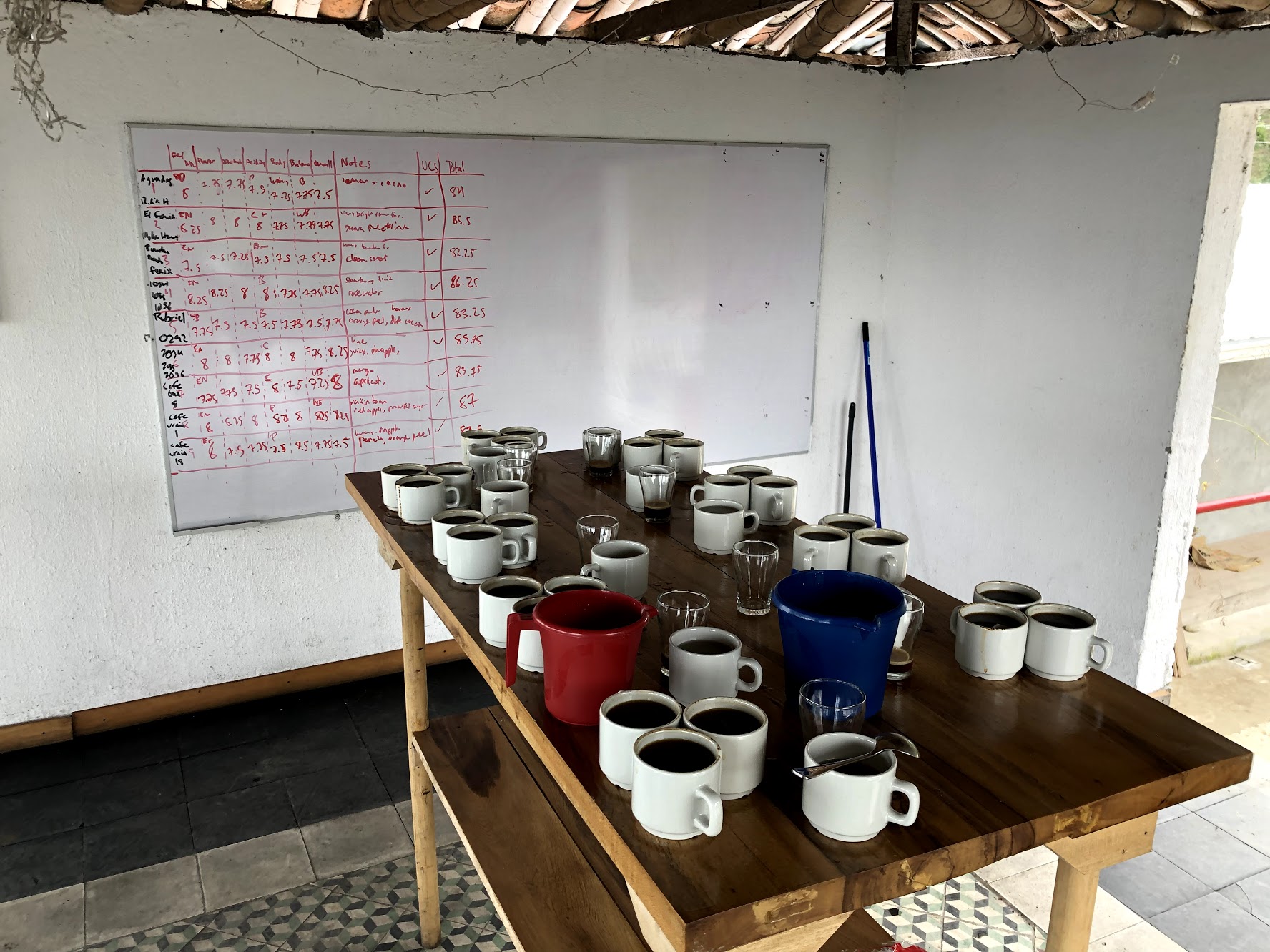
Two full tables of 9 coffees and a whiteboard to go with it 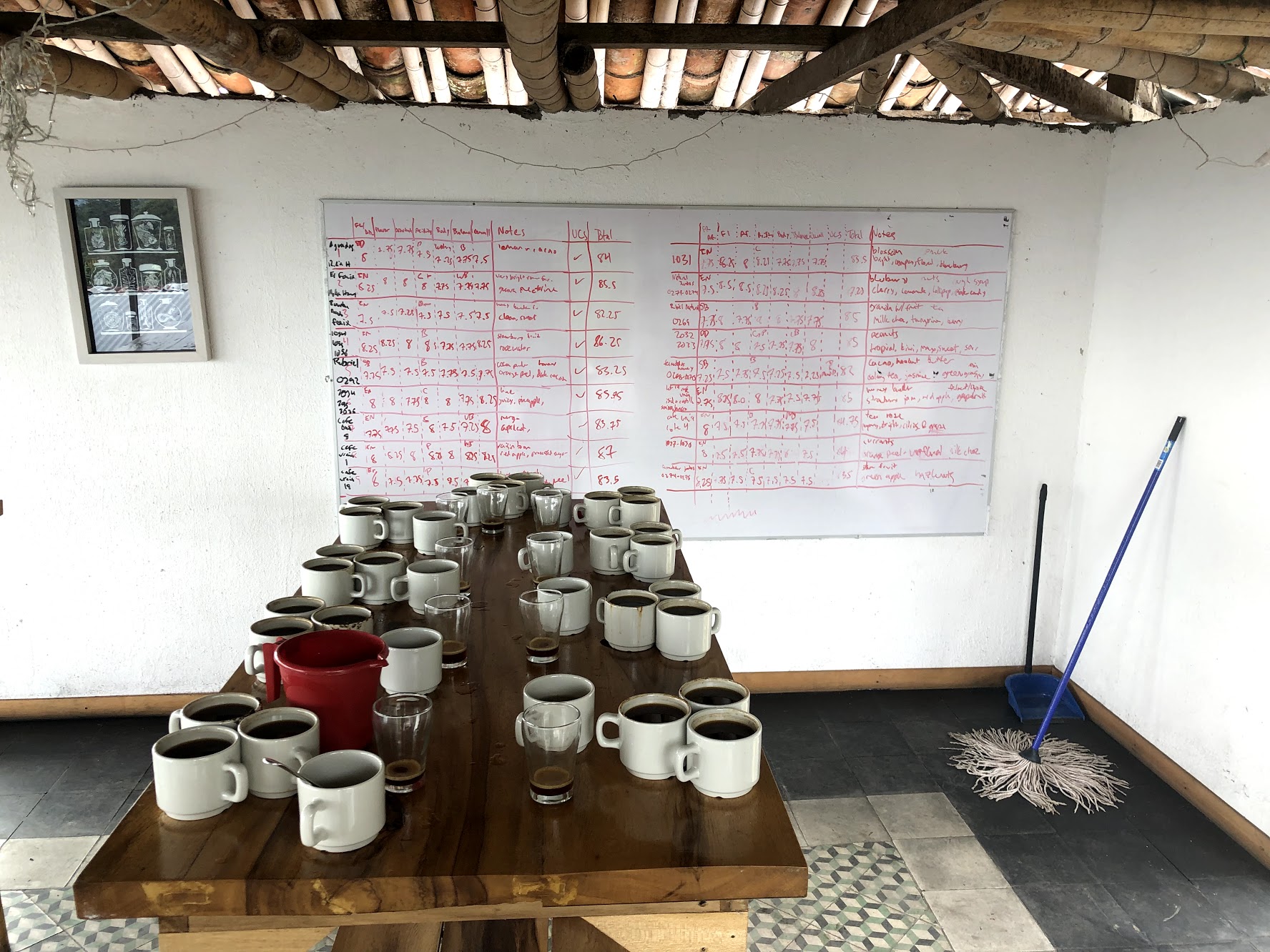
My official scores and notes visible in the back!
We cupped the same samples with Jeff on Sunday. It was very interesting for me to see the dynamic of direct trade coffee buying firsthand, especially from the producer side. It’s a back-and-forth process, with each side constantly learning from the other. Jeff had some tips for roasting very fresh samples and advice on building a water treatment setup for the cupping lab, while Miguel explained how extended fermentation can impact the shelf-life and shipping stability of coffee.

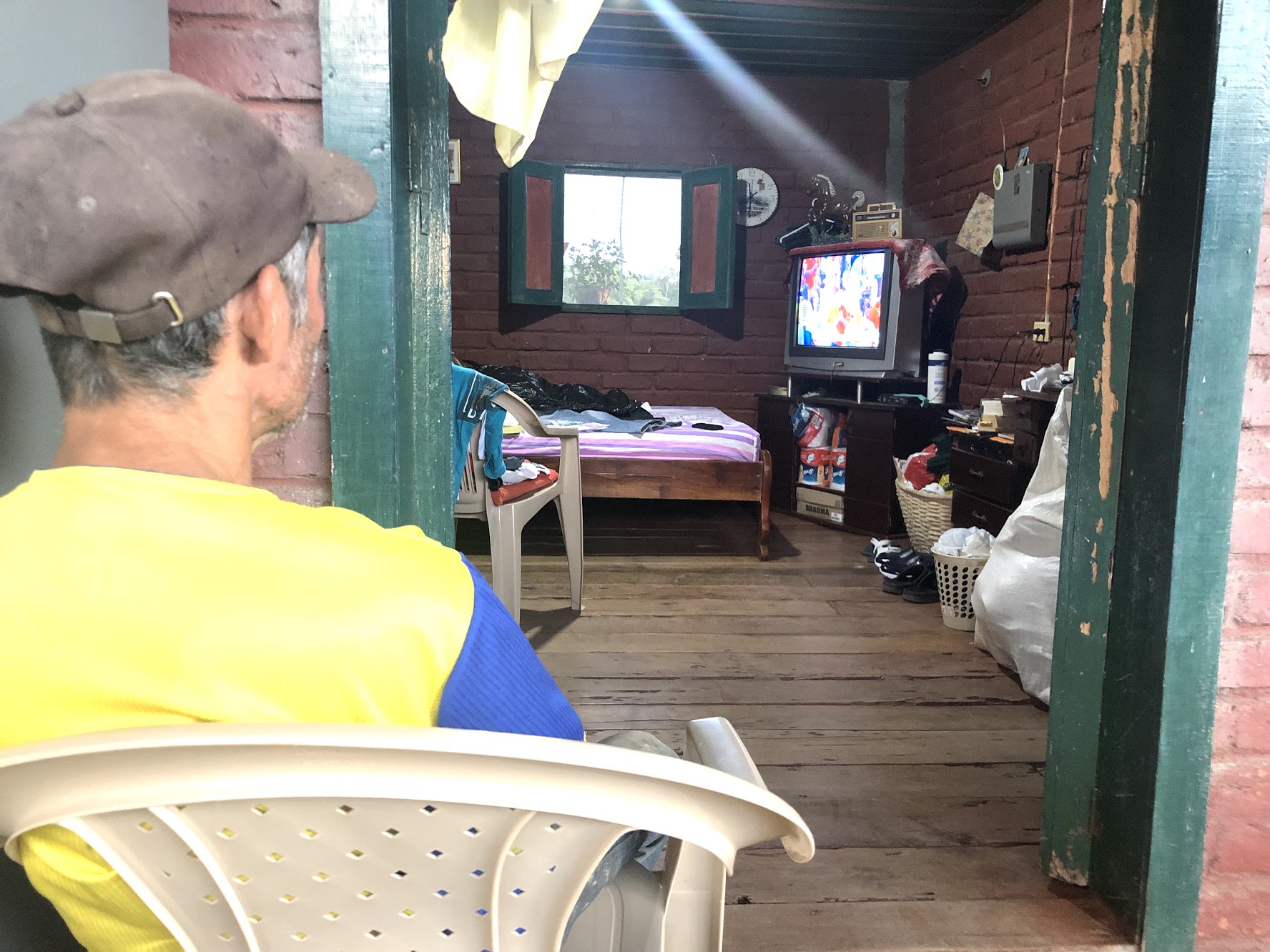
While today was a great day for USA soccer, Colombia hasn’t done as well. Colombia lost the big semifinal game in the Copa America 0 (4) – 0 (5), which was a national tragedy.
In other news, coffee processing and experimentation has been going great! The harvesting period for the Castillos is over, so there will be no new coffee coming from pickers every day. However, there are a few ripe cherries around the farm from trees that will be in harvest in about 3 weeks. It’s certainly not enough to pay someone to go around and pick, but for an intern to go collect one afternoon to learn from, it’s perfect!
So I spent yesterday afternoon picking Pink Bourbon, which is one of the newer varietals here, and processing it. It was so gratifying to be fully responsible for the entire process of the coffee (besides planting the tree!): I harvested it, washed it, processed it, and it’s now drying on one of the raised beds.
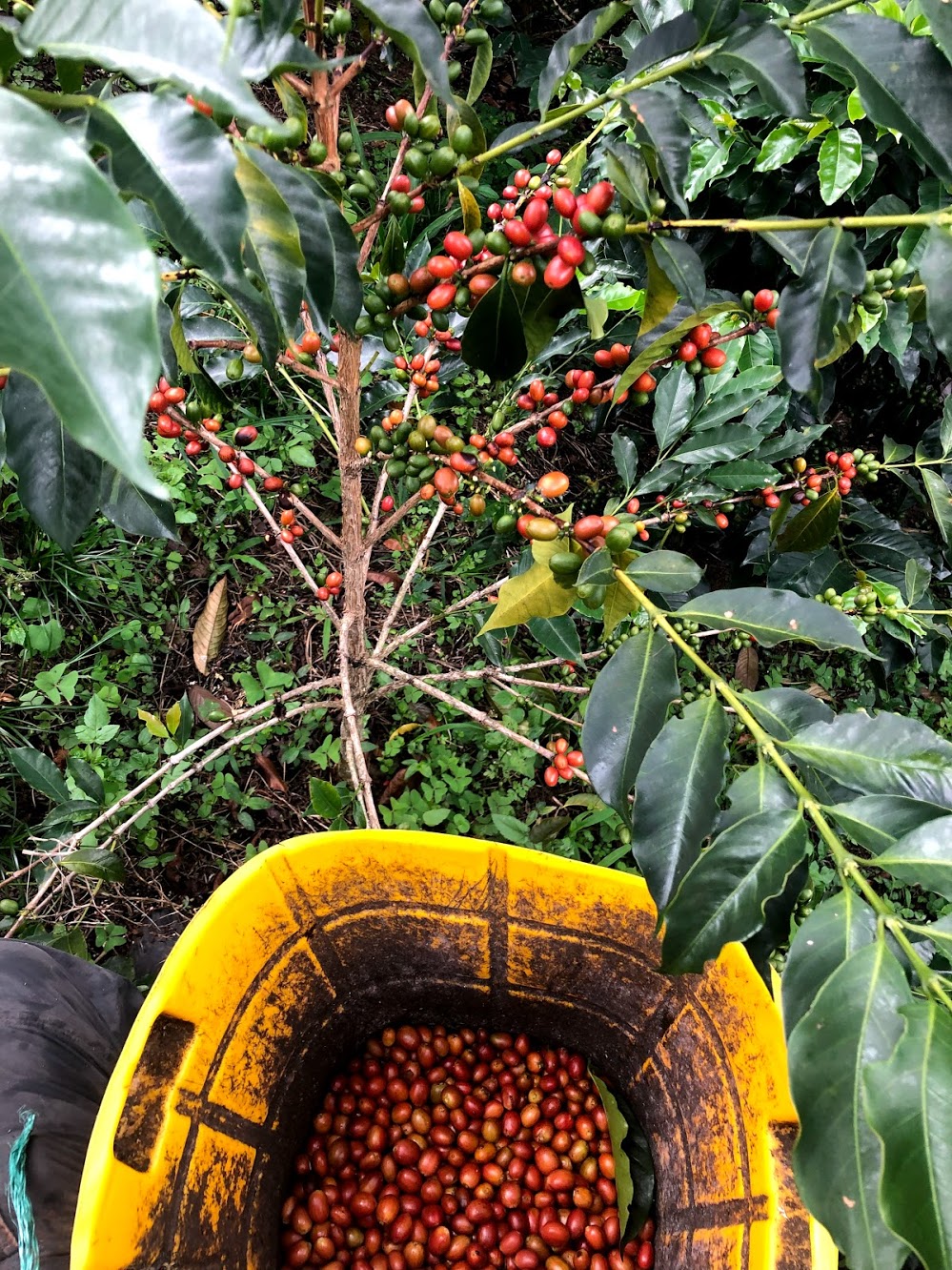
This tree was especially inviting. The cherries ripened faster due to the lack of leaves, which died because of an especially bad case of la Roya. 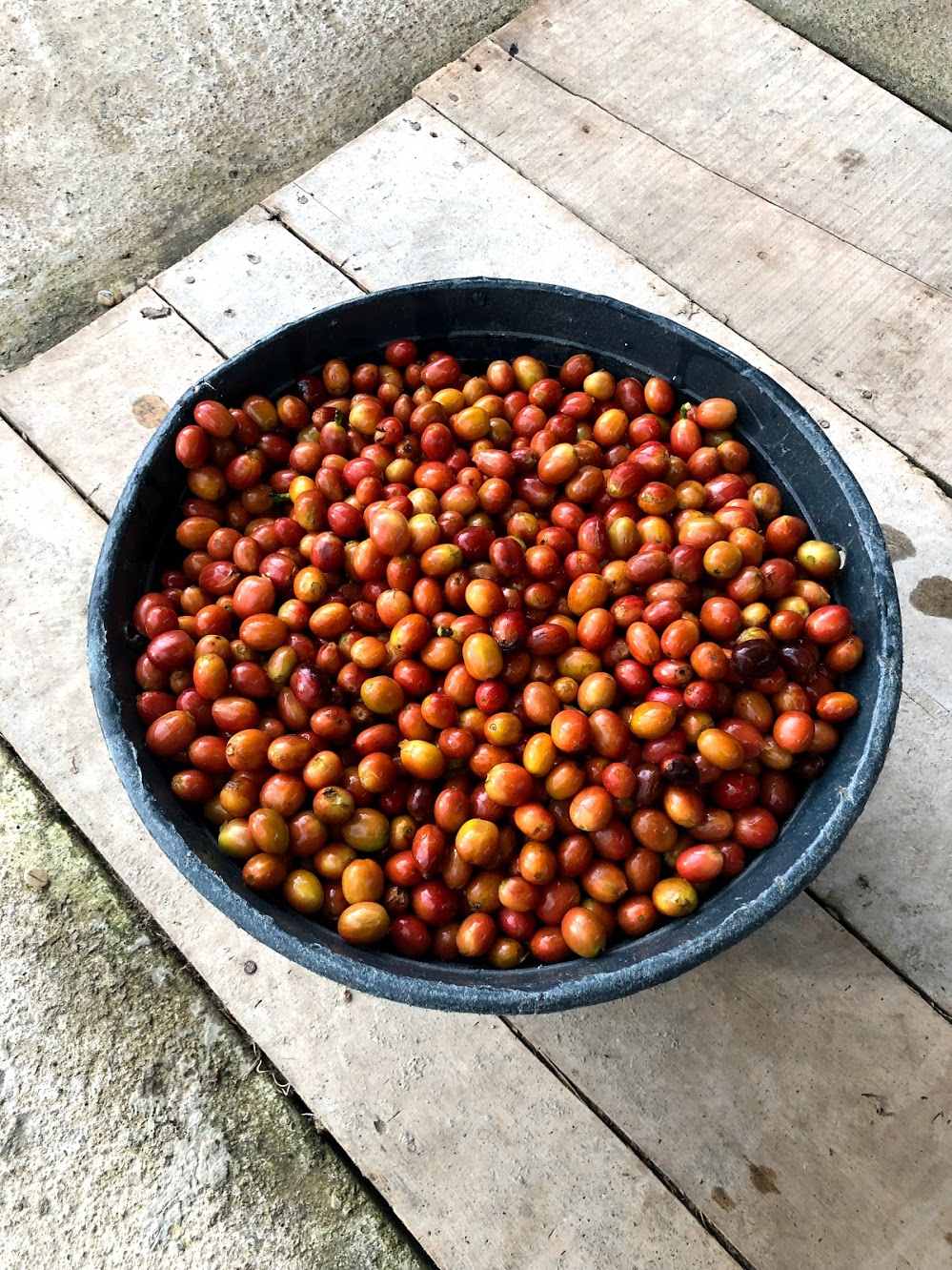
My yield for the afternoon. Instagram-worthy! 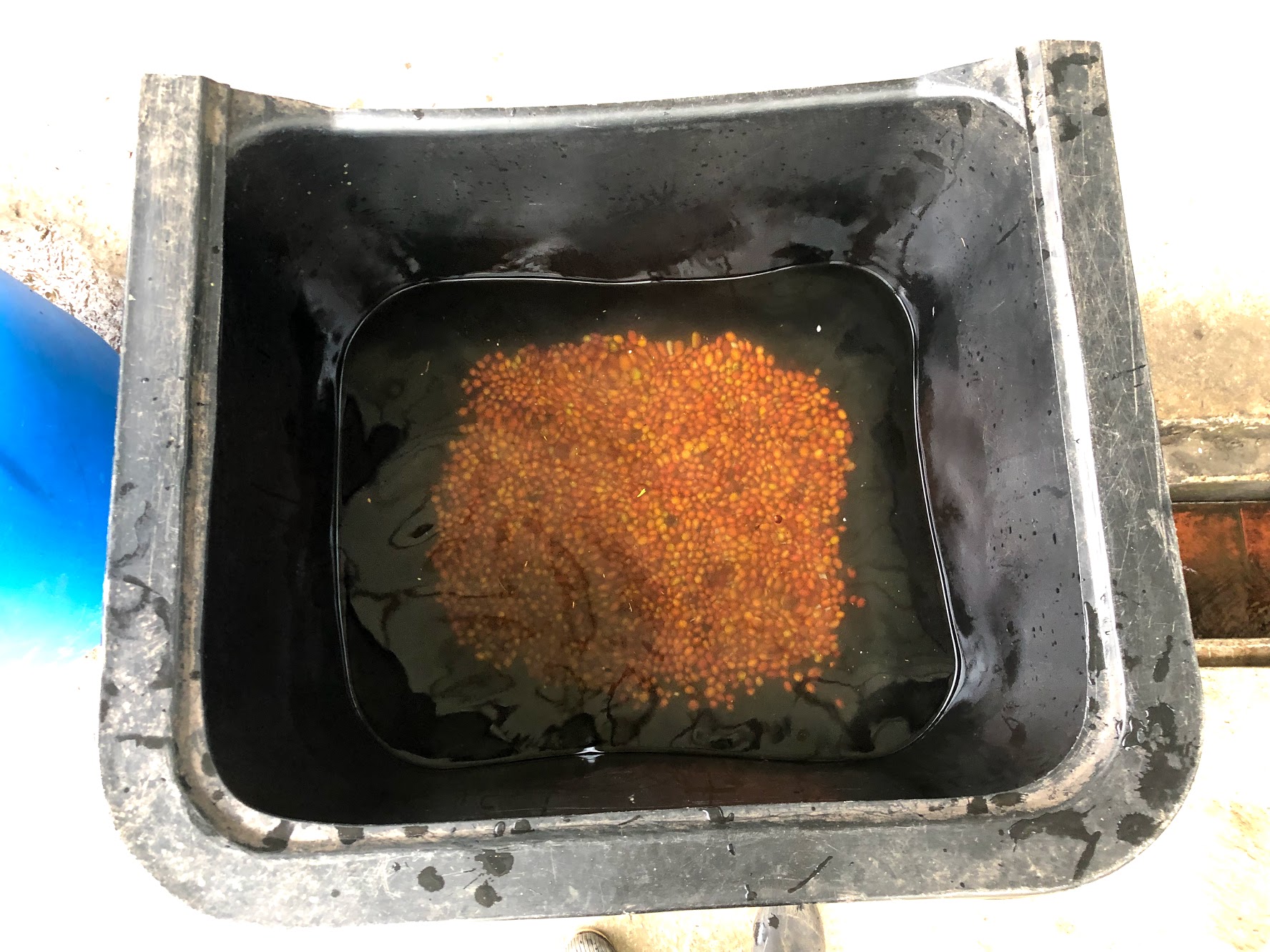
Floating and cleaning the cherries 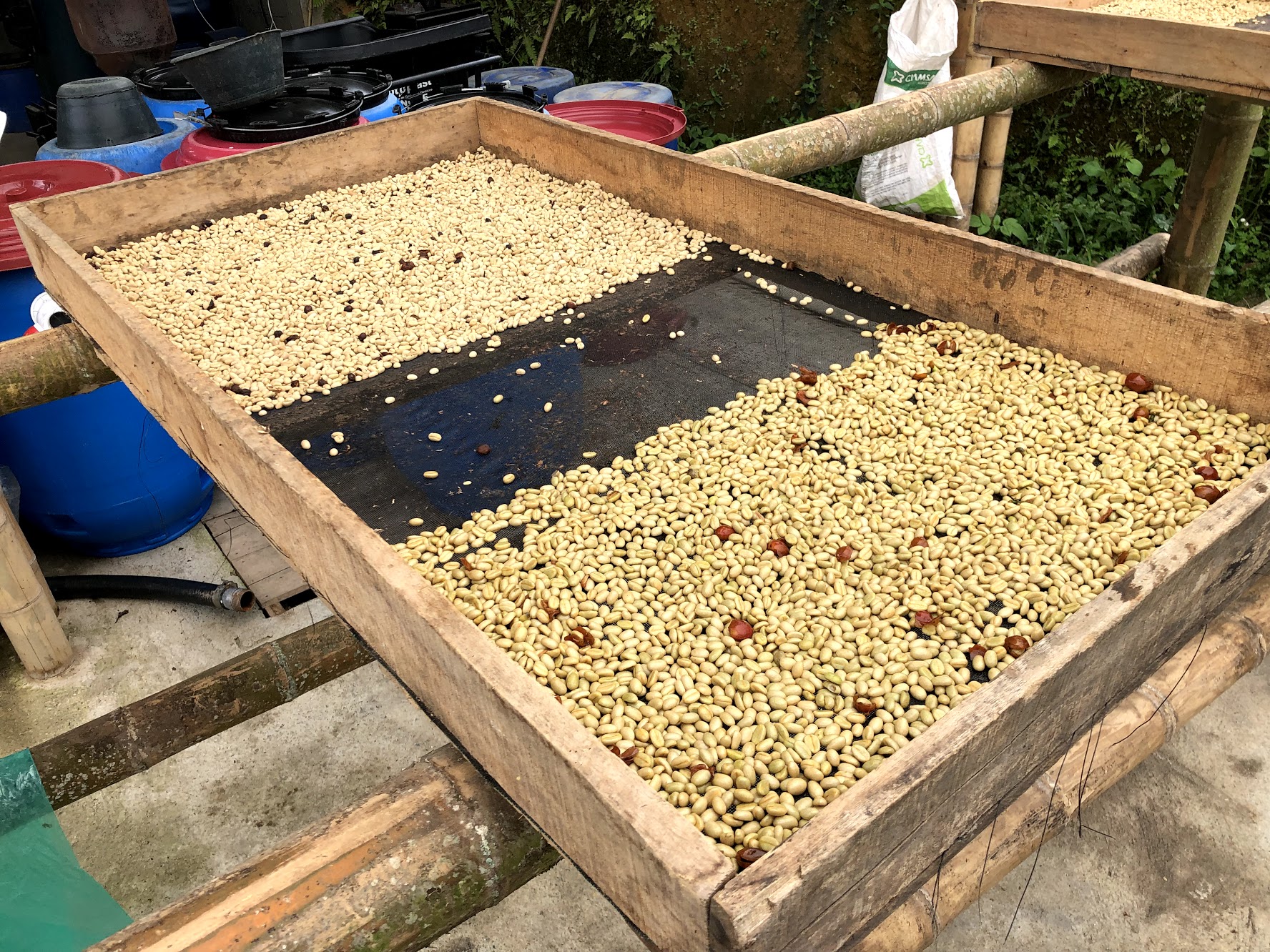
Processed Pink Bourbons on the drying bed! (near side)
Today, I dug a big hole! Me and Alejandro are working on a water treatment system for runoff water from the wet mill. Washing coffee is a very water-intensive process, and the acids and sugars from the coffee mucilage can be very harmful for water quality. In fact, coffee processing makes water so acidic that it can kill a whole host of crops that it runs off to. We found this to be the case on the farm:
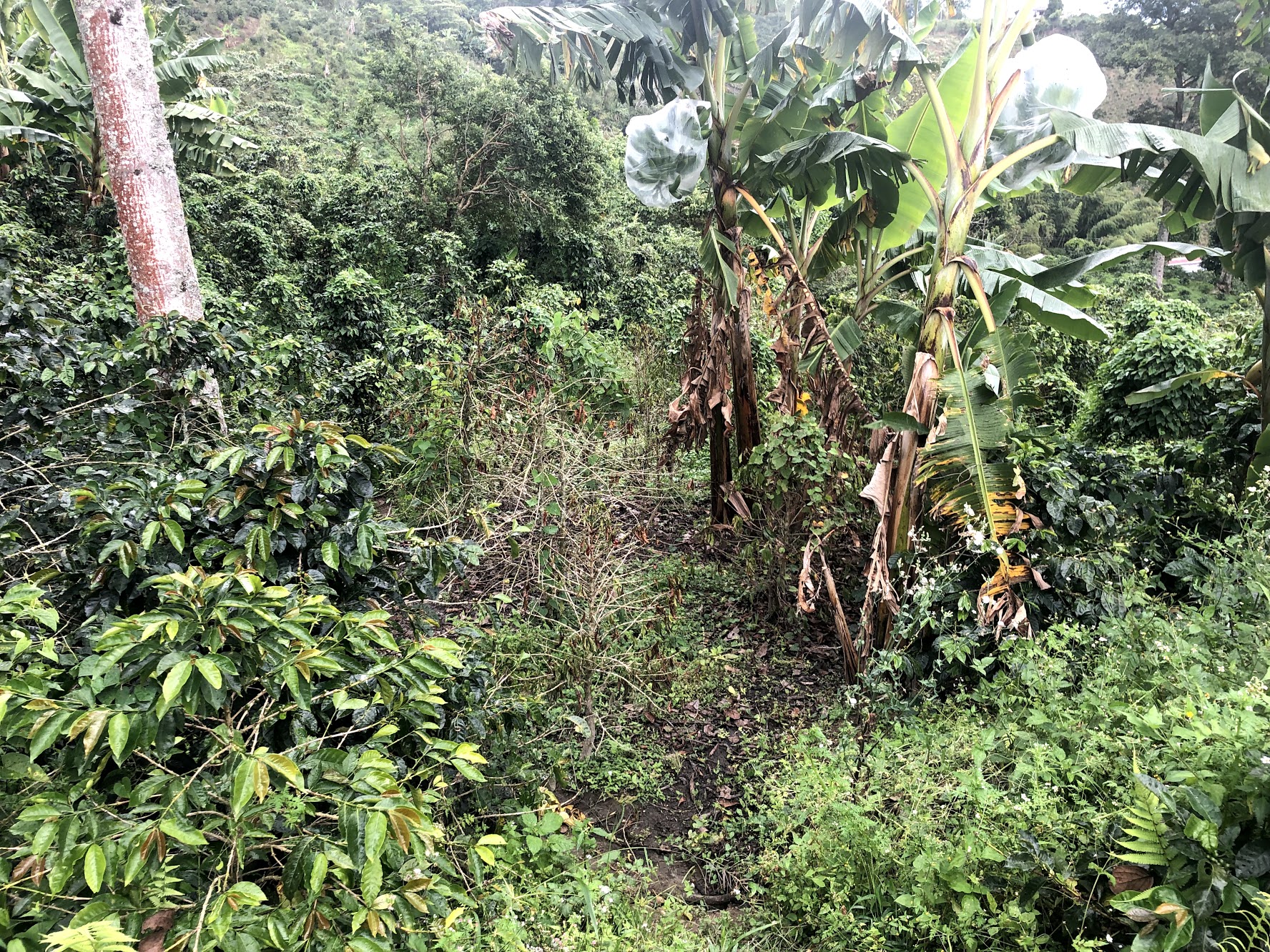
To fix this, we’re building a 3-tank water treatment system. The first will mostly hold rocks and gravel to capture solids. The second tank will have sand across the bottom, where the water comes in, and full of water lilies on top to naturally treat the water. The third tank will be host to fish and plants that will further lean the water. After the fish tank, the water will be clean enough to irrigate crops.

Finally, I have a couple of fun pictures from around the farm:
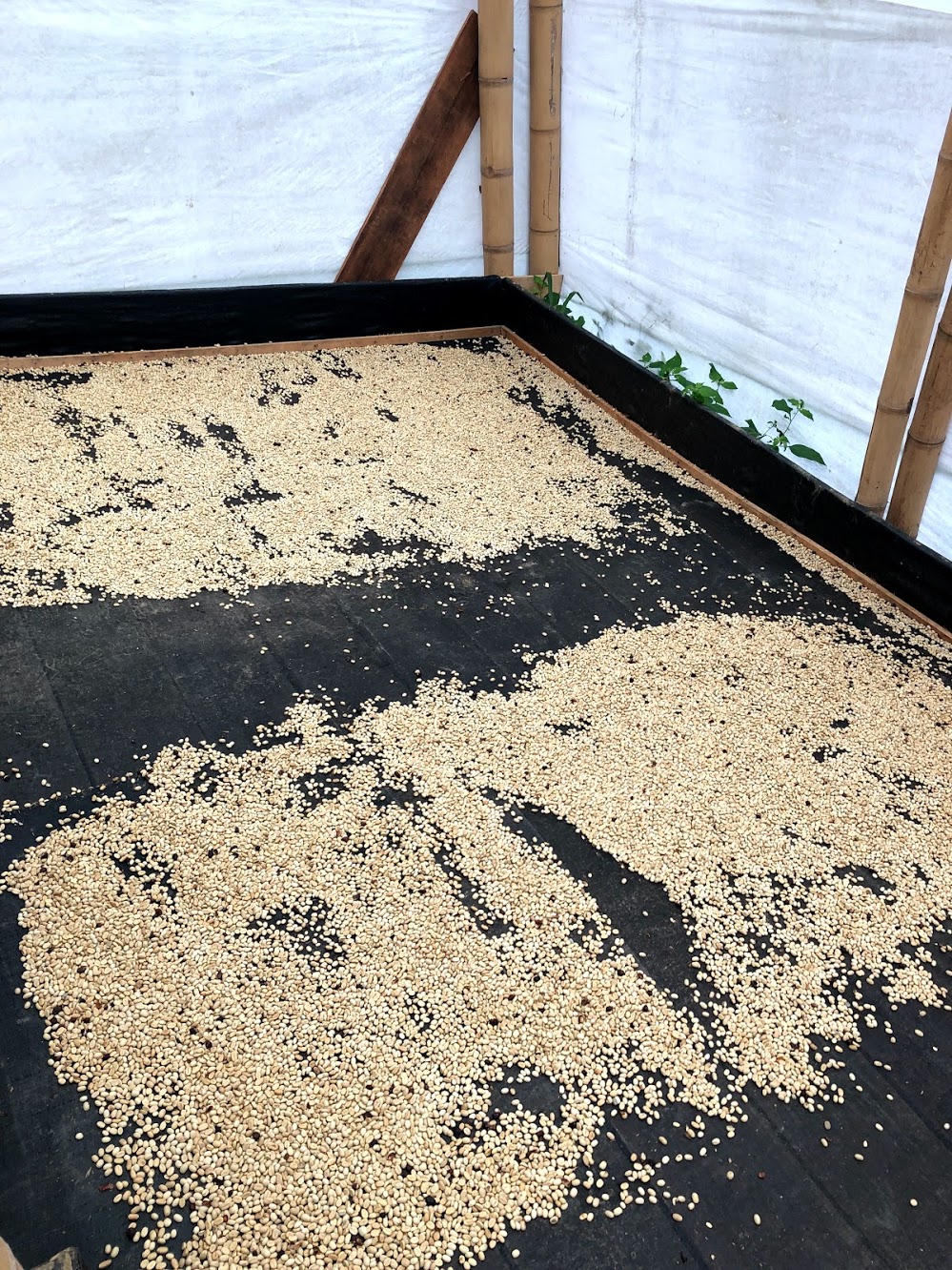

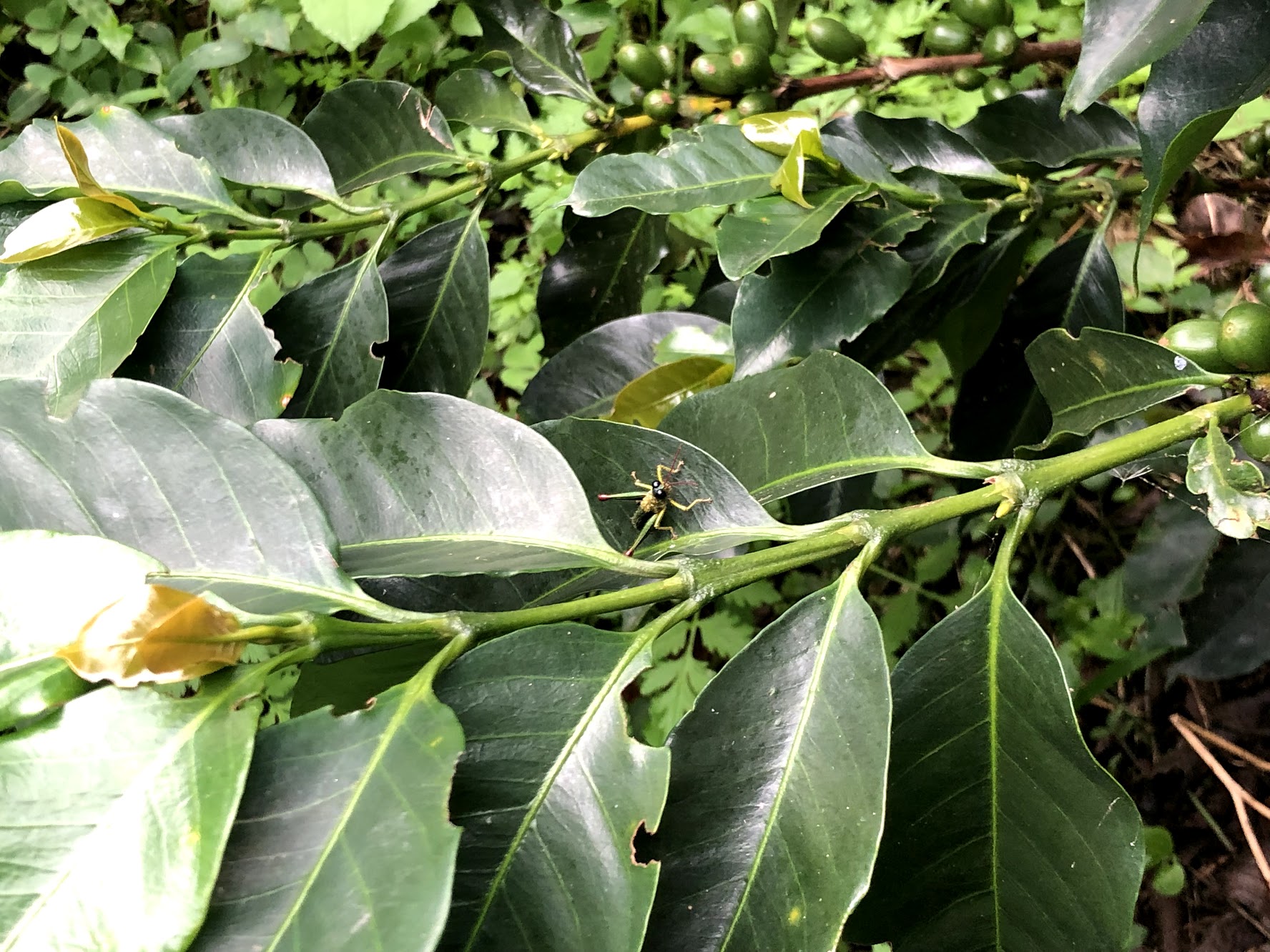
That’s all I got. This week, I’ll plant more coffee trees, work on the water tank holes, and do whatever else comes up. I hope all is well in your life!
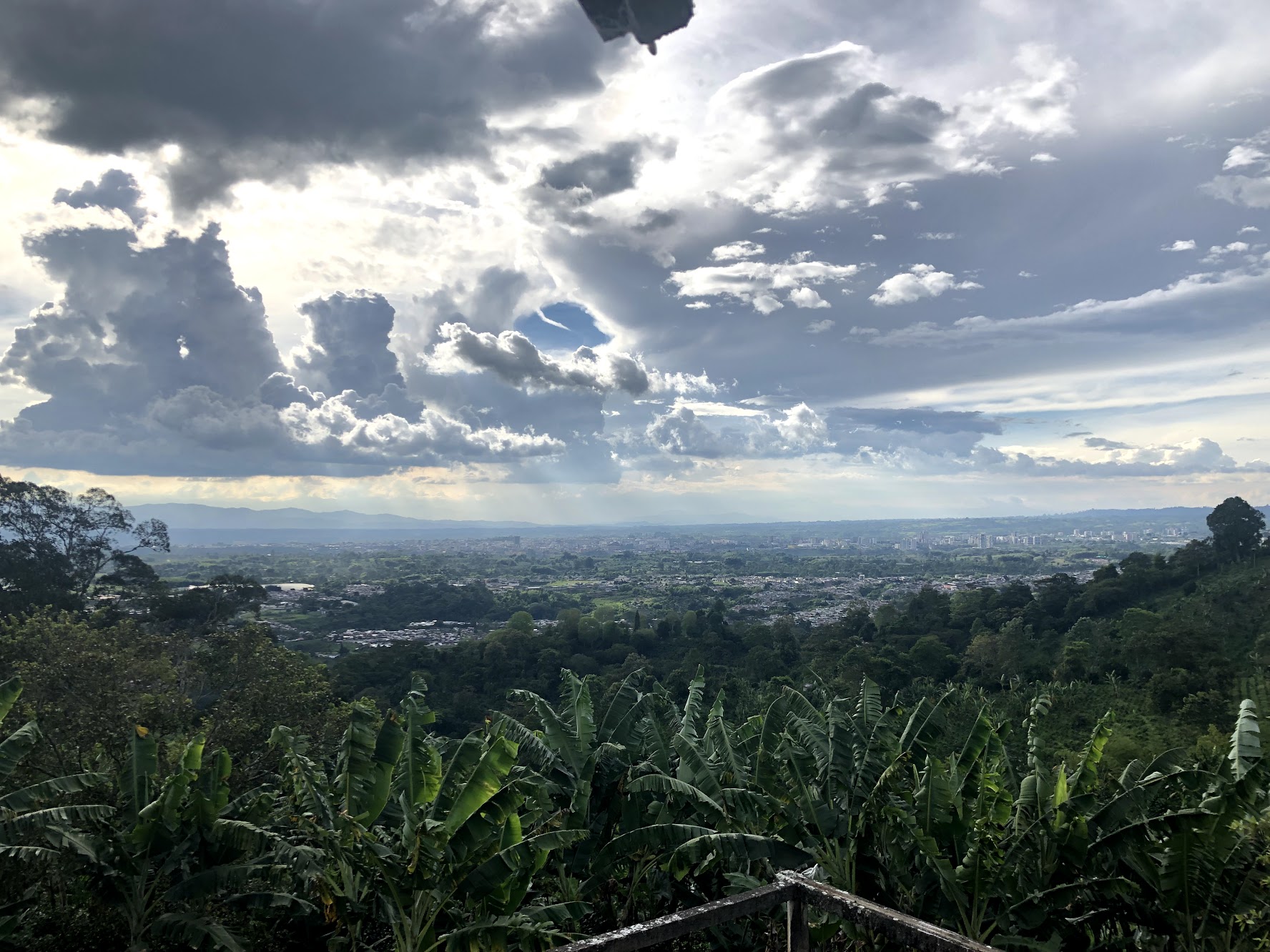
Have a wonderful day, and I’ll try to post again soon!
Alex
 Alex's Coffee Adventure