I’ve wrapped up Bogotá Day 3, and I’m getting into the coffee groove now. Today I visited 4 specialty cafés, talked with a number of really knowledgeable baristas, and had time for a couple of cool tourists stops as well. I also had some delicious Colombian food! My favorite part of the day was talking to the barista at Café Cultor, who was warm, knowledgeable, and very open about his experience. I’ve come up with a pretty lengthy blog post to recount it, and I hope you enjoy!
After a bit of a slow start out the gate, I made it out of the hotel in time for a breakfast of some Colombian pastries from a bakery down the street. I hopped onto one of those electric scooters for rental again and took it down to Cafe Devoción, which is tucked into the lobby of the Hilton Bogota.
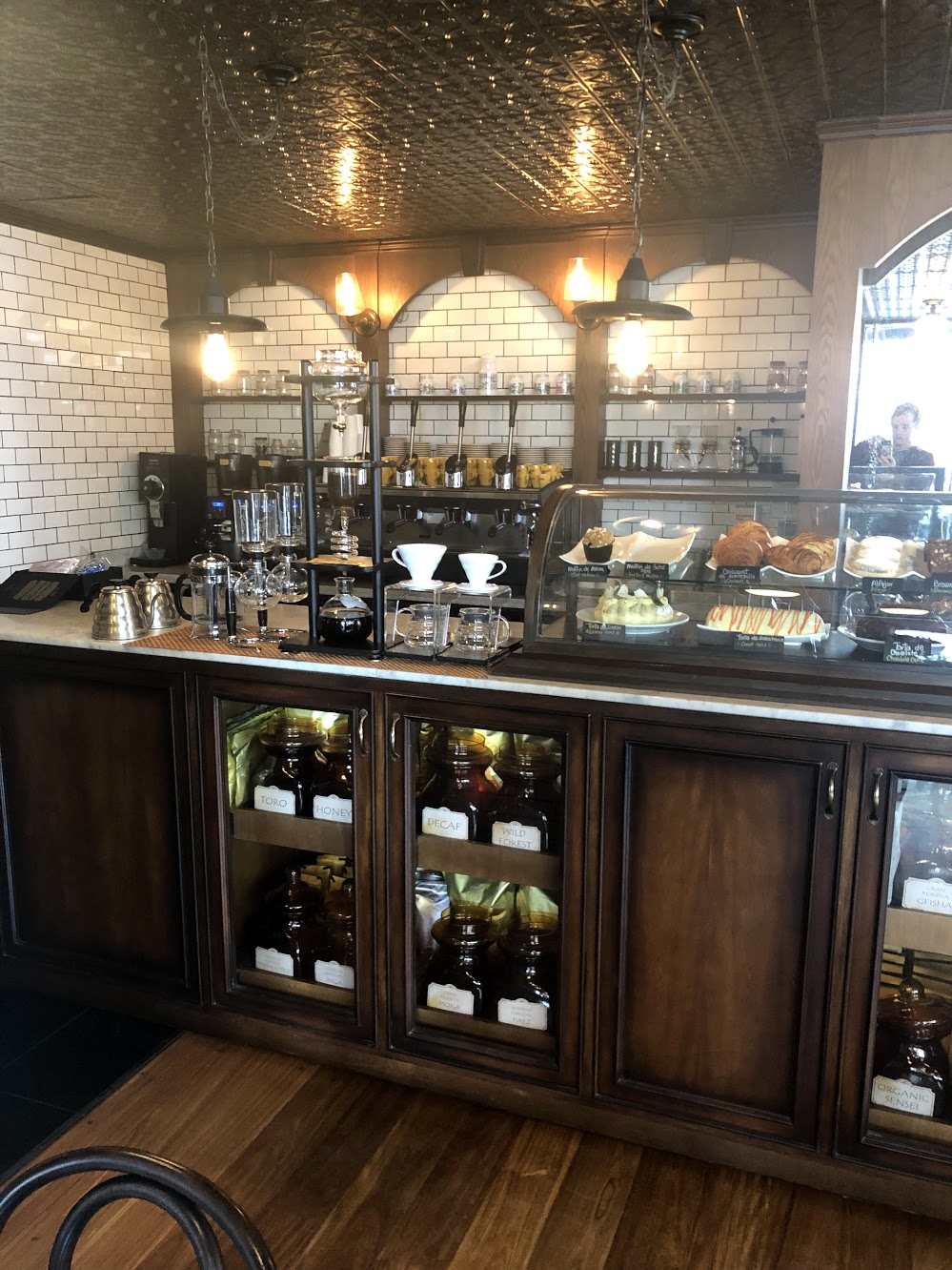
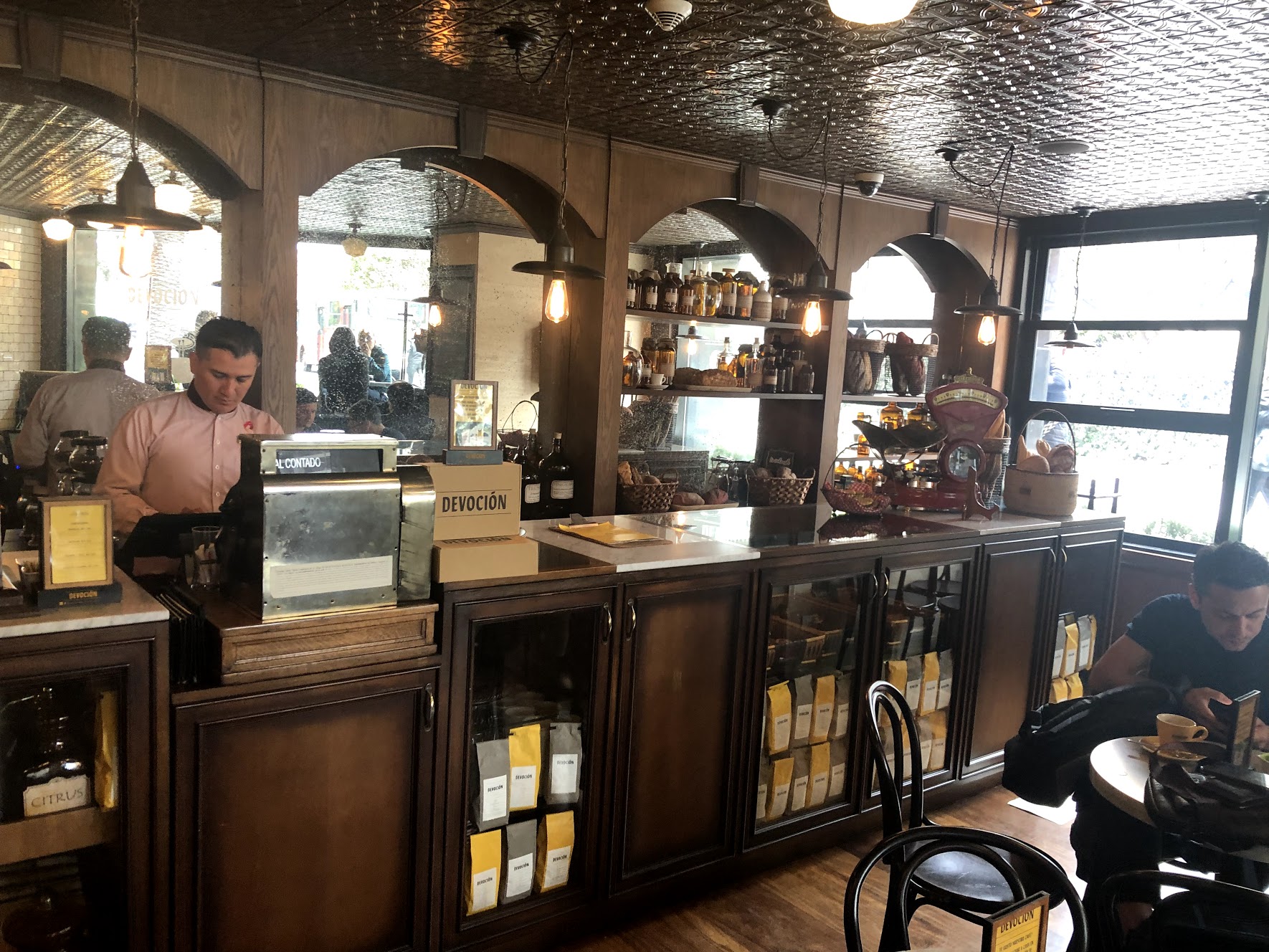
Cool vibe! 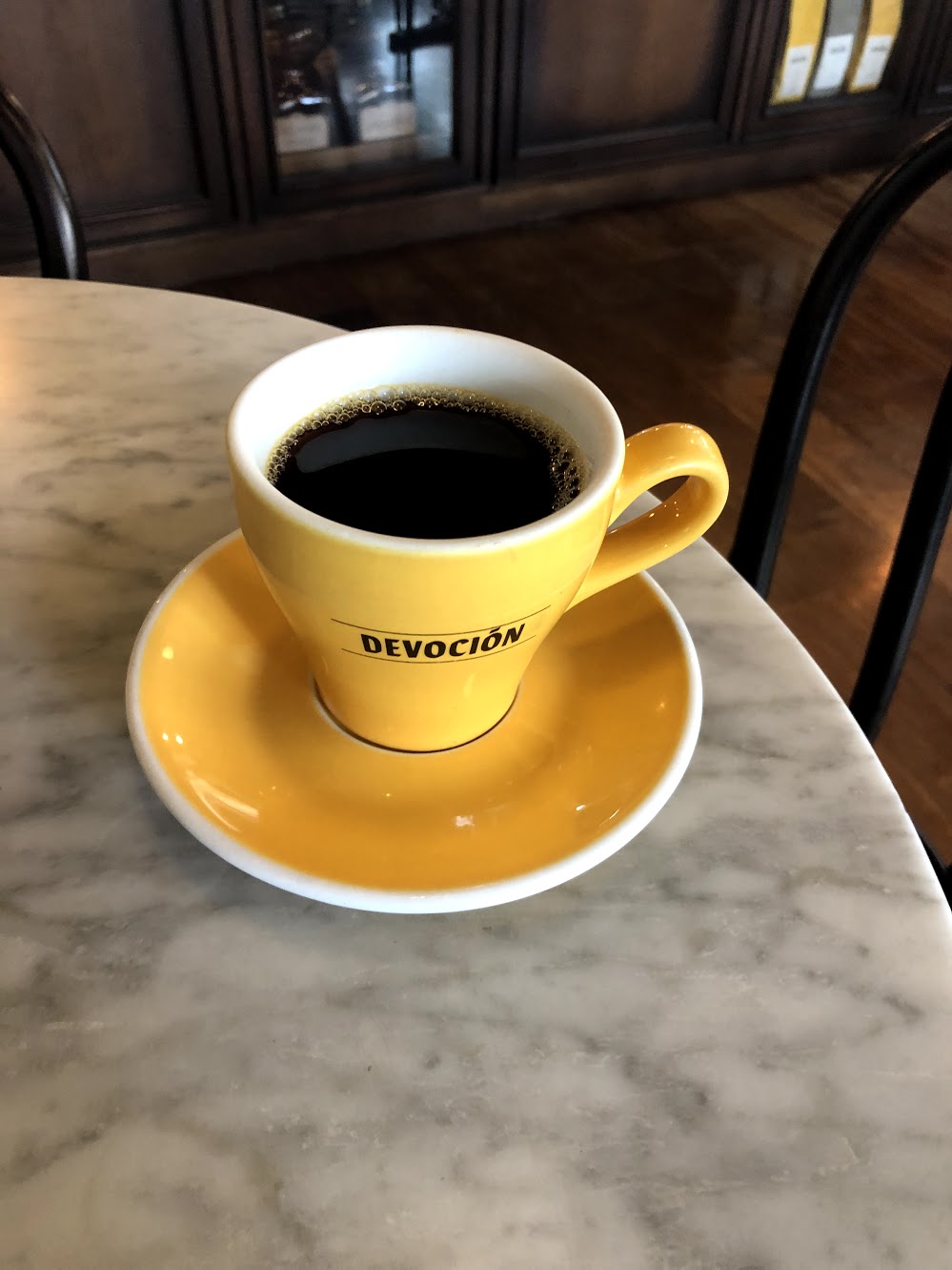
Red Barrel – always my favorite blend
It was super fun to drink the coffee at Devocion because it tasted just like I remembered it from NYC. The shop also had a great vibe to it. After Devocion, I walked around a bit and ended up at another coffee shop. This one was probably my favorite coffee of the day, and the shop is beautifully situated, tucked into an alley. The cafe is called Libertario.
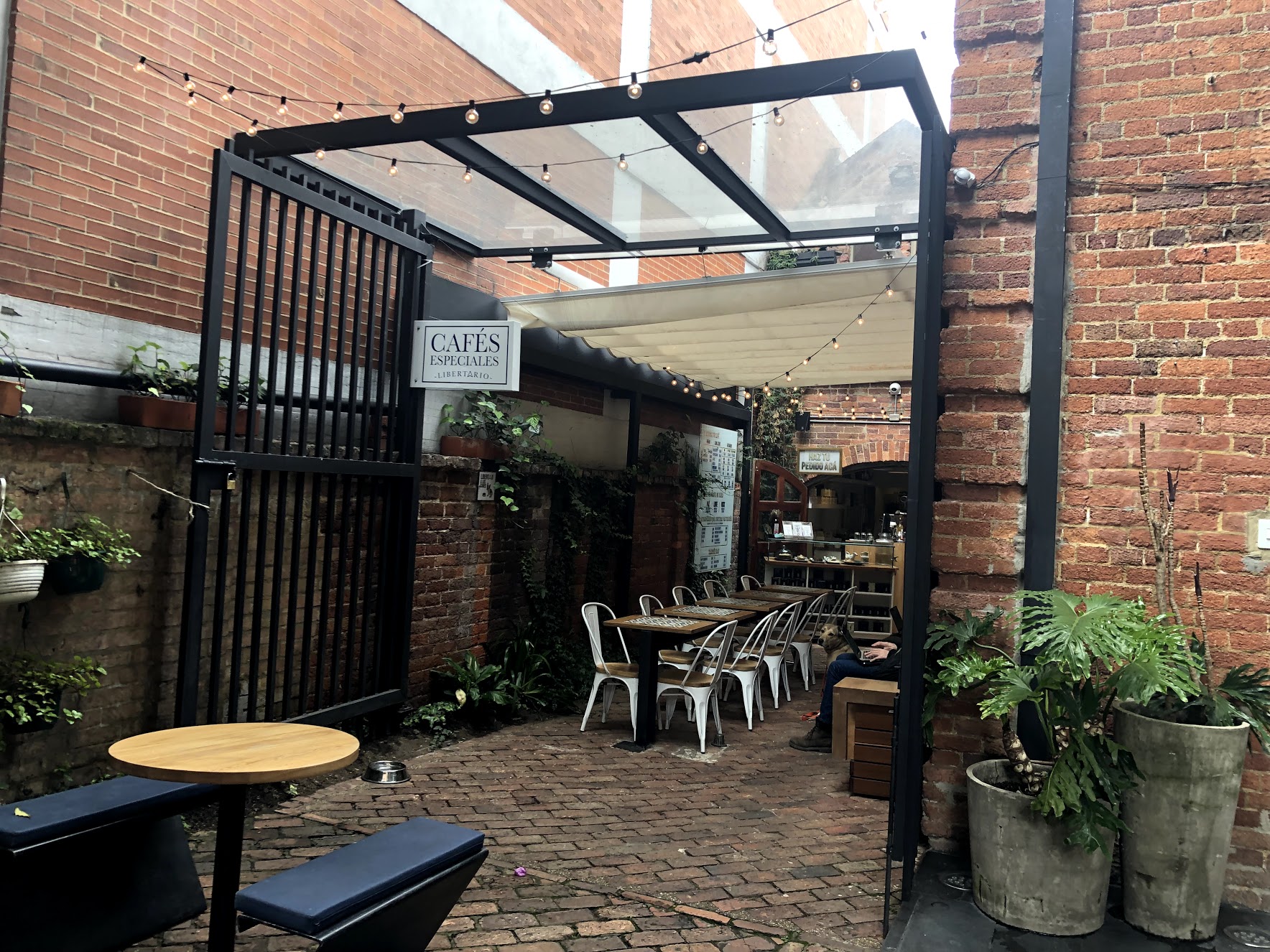
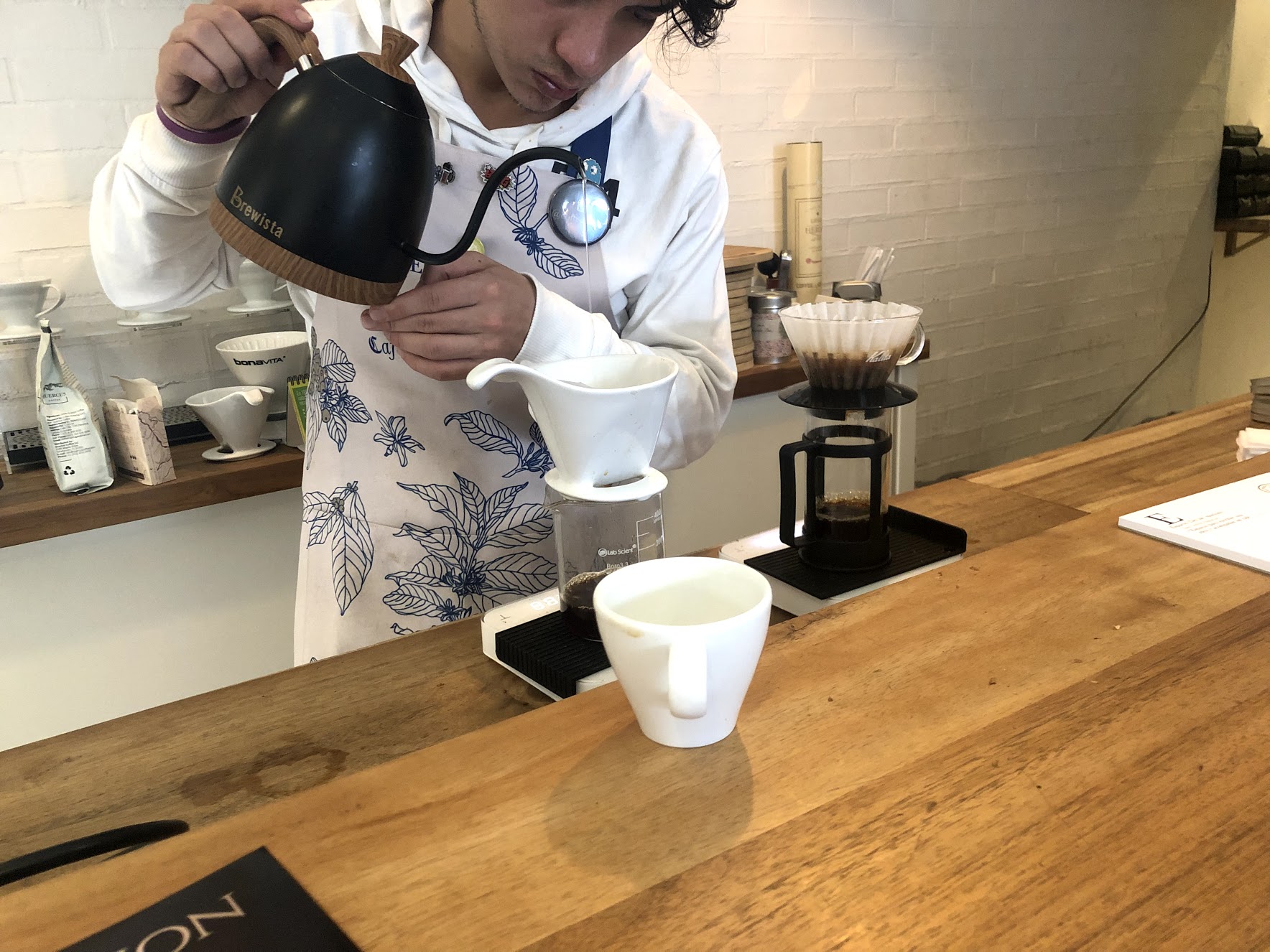
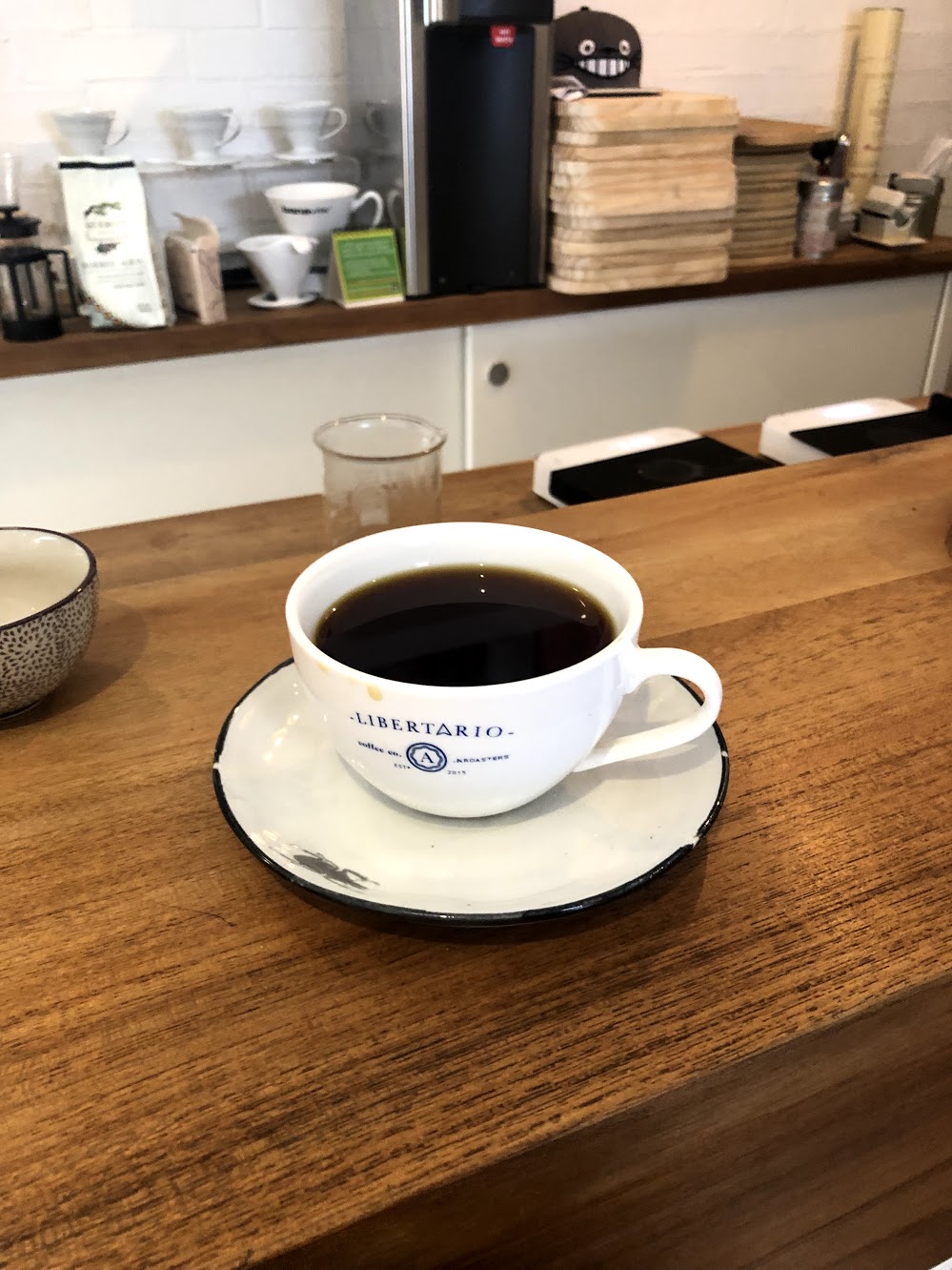
Libertario was a really cool coffee shop for many reasons. First and foremost, they exclusively source coffee from the La Palma Y El Tucán farm outside of Bogotá, which is where I’ll be staying this weekend! (La Palma has a couple of cabins nestled among the coffee trees, which I’ve heard makes for an awesome experience. La Palma is different from the farm I’ll spend the bulk of the summer on, El Fenix.) You’ll hear more about La Palma soon, but it was cool to see Colombian coffee being served just an hour away from the farm.
I drank the honey processed Gesha from La Palma, which Libertario calls “el Rock.” The honey processing removed some of the sharpness from the acidity and blunted floral flavors of the cup, in return for sweeter fruit notes like cantaloupe. I really enjoyed the coffee, and Julian, the barista, did an excellent job brewing it. Every time someone ordered a pour over, he poured whatever didn’t fit into the mug into an espresso cup and told me to try it. It was a super fun time.
What made my experience at Libertario special, though, was a wonderful conversation with Julian. Julian competes in barista competitions and is a highly skilled brewer of all things coffee. We discussed the specialty coffee market and Libertario’s place in the Colombian coffee scene. He was enthusiastic about the growing demand for specialty coffee in Colombia, which helps keep the profits of the booming market in producing countries where they can be directly reinvested. Our conversation flipped between me asking questions very slowly in as basic English as I could muster, him answering rapidly in Spanish (about 40% of which I could understand), and a couple of stints with Google Translate. Ended up working out pretty well!
After Libertario, I needed some food to stomach the caffeine. I found an awesome restaurant nearby called Restaraunte la Herencia, which offers a wide spread of Colombian specialties and new dishes in a very cozy environment. All of the seats were couches!

Before I left for Colombia, Sergio, Devocion’s NYC roaster/coffee master whom I studied under for a summer in 2017, gave me a big list of things I had to try. At the top of the list was Ajiaco, a very hearty chicken stew. When I saw it on the menu at la Herencia, I knew what I had to do. Sergio, I was not disappointed! It had a ton of interesting flavors and textures, including different types of potatoes, shredded chicken, and guasca, a unique Colombian herb. The ajiaco was also a great way to digest some caffeine.
Can you guess what I did after lunch? Yes, got more coffee.
Next on the list was Café Cultor, one of the specialty coffee shops I’d heard the most about from baristas and online blogs. It was also one of the select few that Sergio recommended I try.

Café Cultor is tucked into a lively old brick house in the Chapinero neighborhood of Bogotá. 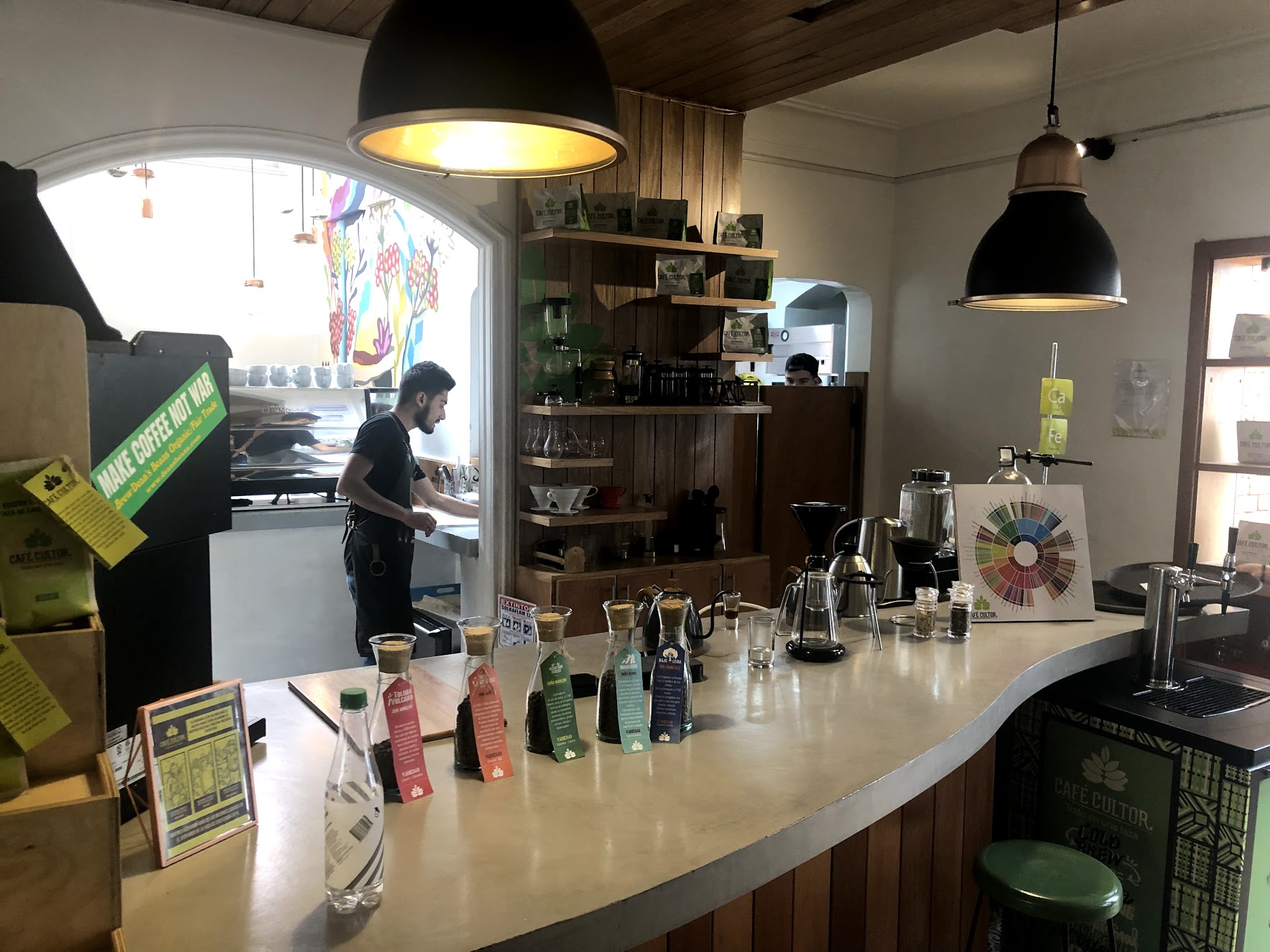
The brew bar had a bunch of stools for you to sit down and watch the barista brew your coffee, and even to chat! It also had those vials of coffee that you’re invited to smell before you decide which coffee you want to drink. 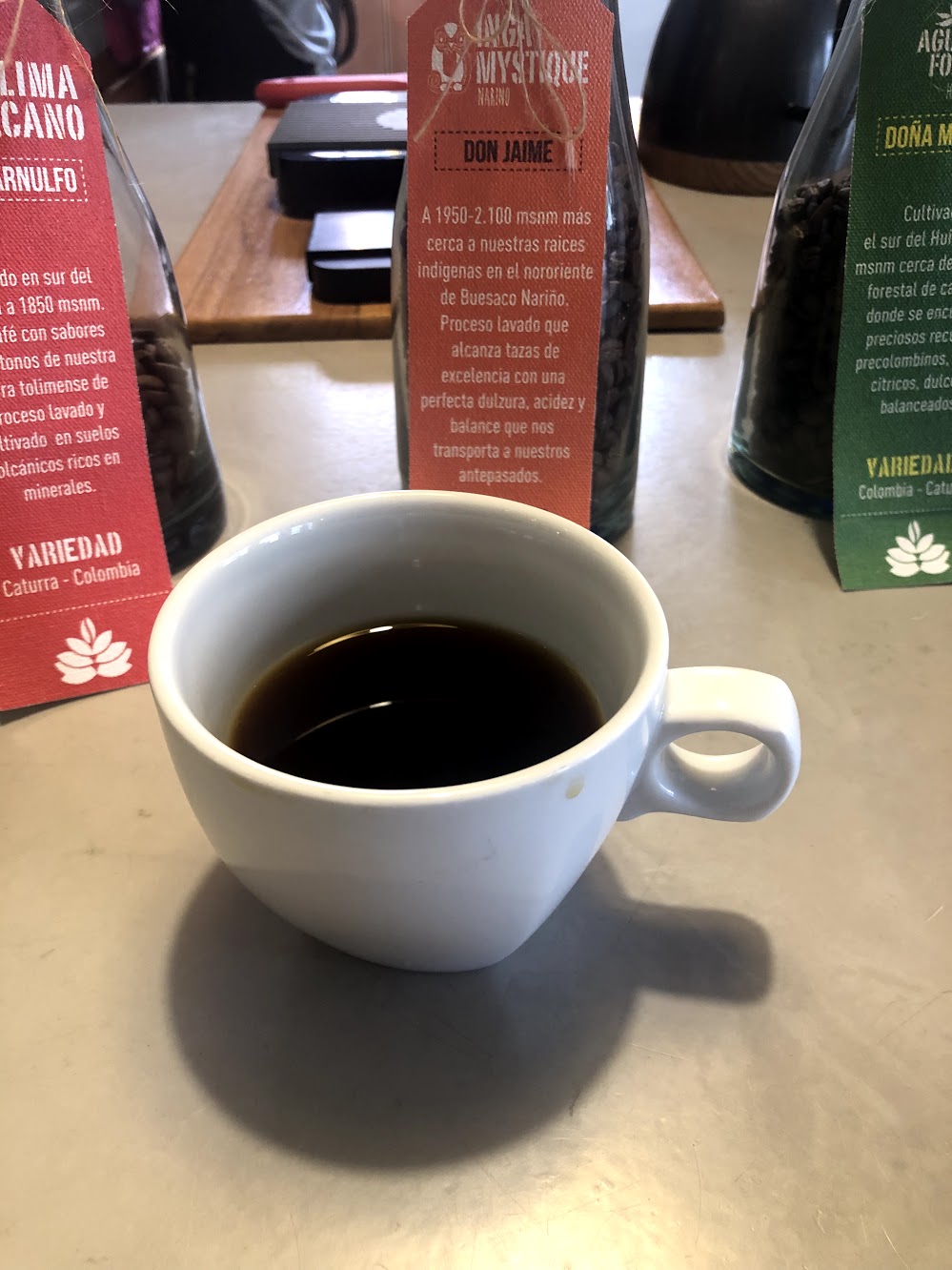
They money shot. I got the Volcanic Caturra, whose label you can barely make out on the left. 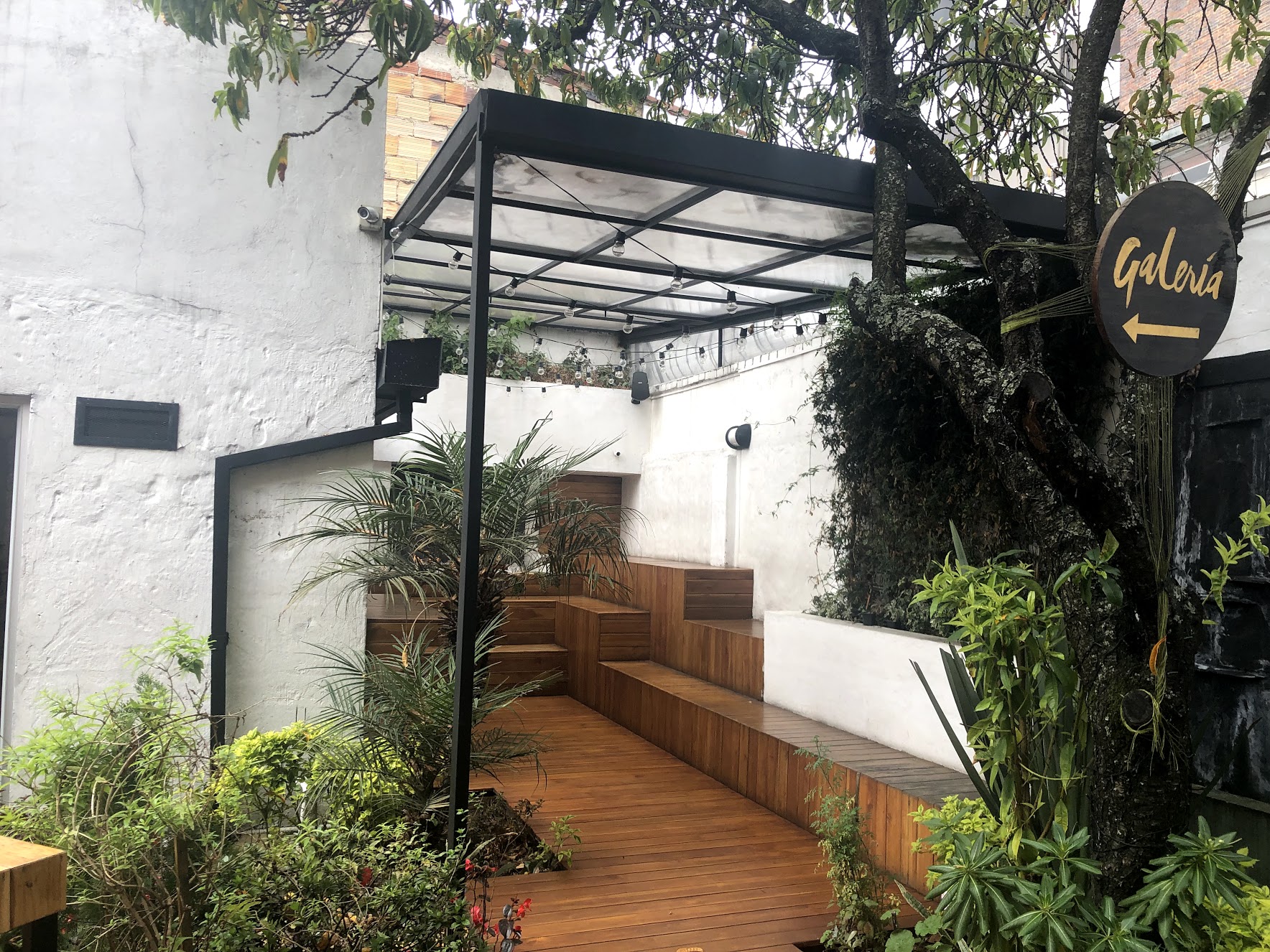
All of the specialty cafés in Bogotá for some reason have a ridiculously nice backyard seating area, and Cultor was no exception.
I got lucky at Café Cultor, because all of the baristas working there spoke very good English. Hernando brewed my coffee, and we ended up chatting for about half an hour. Hernando has a really cool story in coffee – the kind you can only find in a country like Colombia.
Hernando’s family are coffee growers in the Cauca department, and he grew up growing coffee with them. He decided to come to Bogotá to learn about the specialty coffee market and further his knowledge. Hernando spends a lot of his free time at Cultor learning how to evaluate samples, from sample roasting to cupping. He explained that he wants to build this knowledge so that he can better understand quality in the cup.
What struck me most was that Hernando’s goal was not to just become your standard industry coffee pro. His goal is to go back to his family’s coffee farm in Cauca and use what he has learned in the specialty industry to improve his family’s product and improve their standard of living.
Of course, this lends him an incredibly unique perspective which I was eager to learn about. According to Hernando, the largest issues facing coffee producers all stem from a lack of education. Fermentation and processing methods are chief among these, especially as coffee buyers look for more and more unique coffees to set them apart. Well-funded places like La Palma can keep up, and continue to experiment with new varietals, unique fermentation processes, and processing methods. (That honey Gesha I had at Libertario from La Palma underwent a lactic fermentation process, which is very new to the industry and pretty hard to control.) Most farmers can’t.
Add this on top of the fact that farms are facing increasingly difficult growing conditions due to the spread of funguses and pests (La Broca and La Roya) and you’ve got a hard deal for most smallholder farmers. Then factor in varying weather patterns, increased heat, and changes in soil content due to climate change, and well, you can see why the industry is in a tough spot. Around the same time I was talking to Hernando, one of my professors at Princeton emailed me this article from the Washington Post which confirms as much for Guatemalan growers and links the coffee industry to increasing asylum claims from undocumented migrants.
Tough stuff. Hernando’s shift was over, and I thanked him a lot for the wonderful conversation. It started to get really nice and sunny out, and the forecast for the rest of the day did not have rain, for once! This gave me a golden opportunity to see one of Bogotá’s best sites, or, should I say, see Bogotá from one of its best sites: Mt. Monserrate. I took a funicular up the mountain, and arrived to a stunning spot.
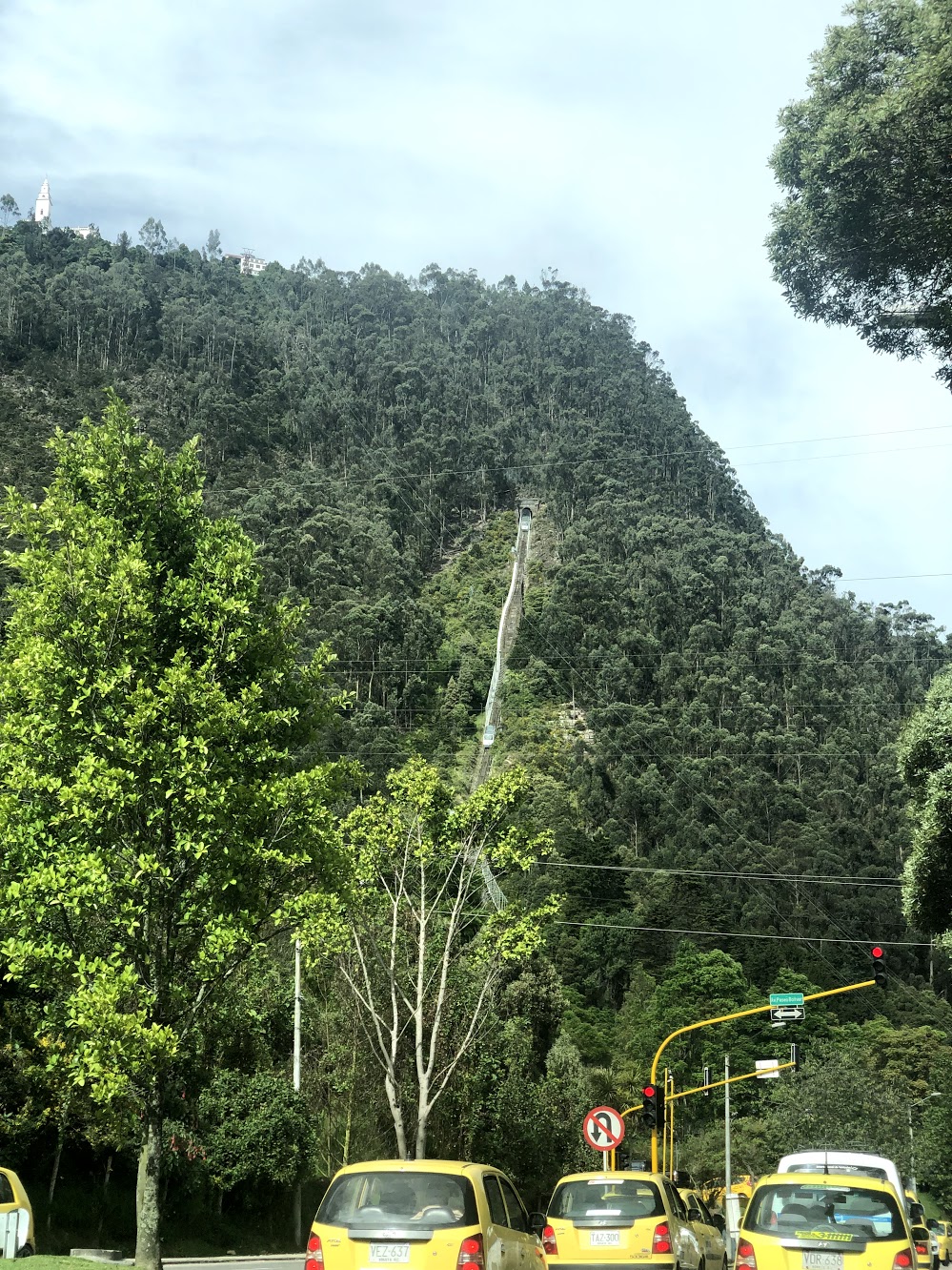
You can kind of make out that tiny little rail track for the funicular here! 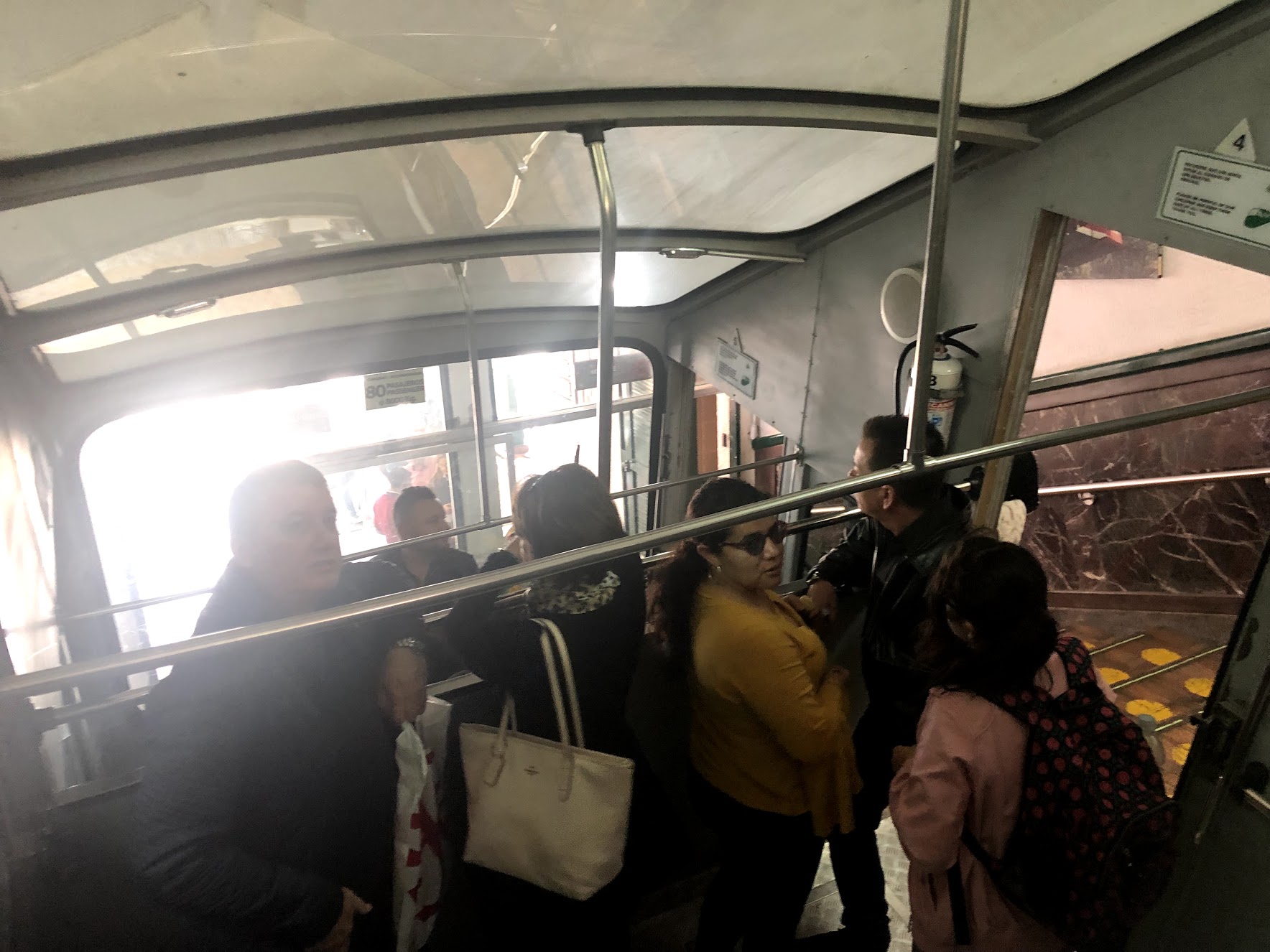
It was pretty packed inside. 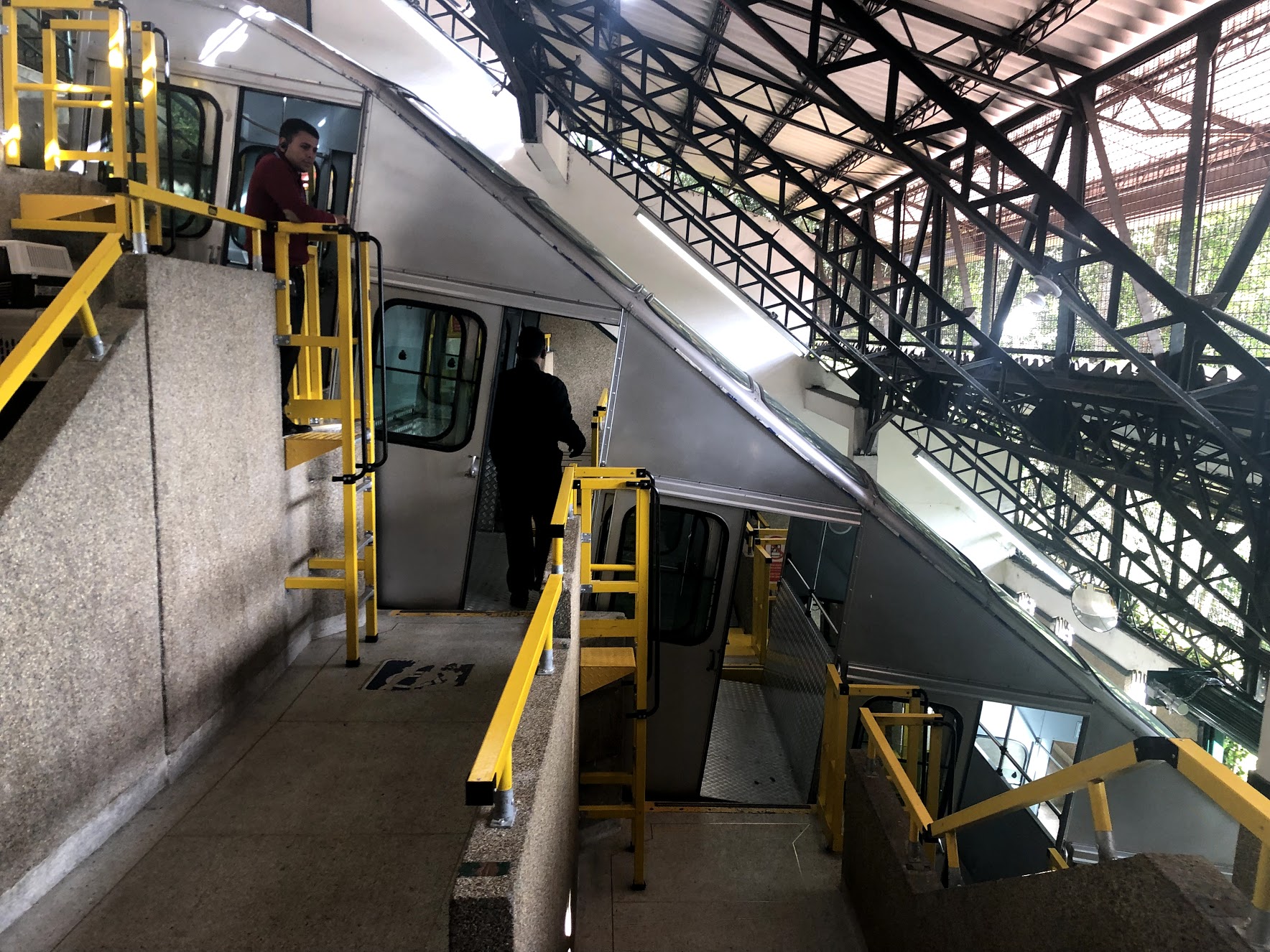
It also leaned like 10º over at all times, which is a little concerning. 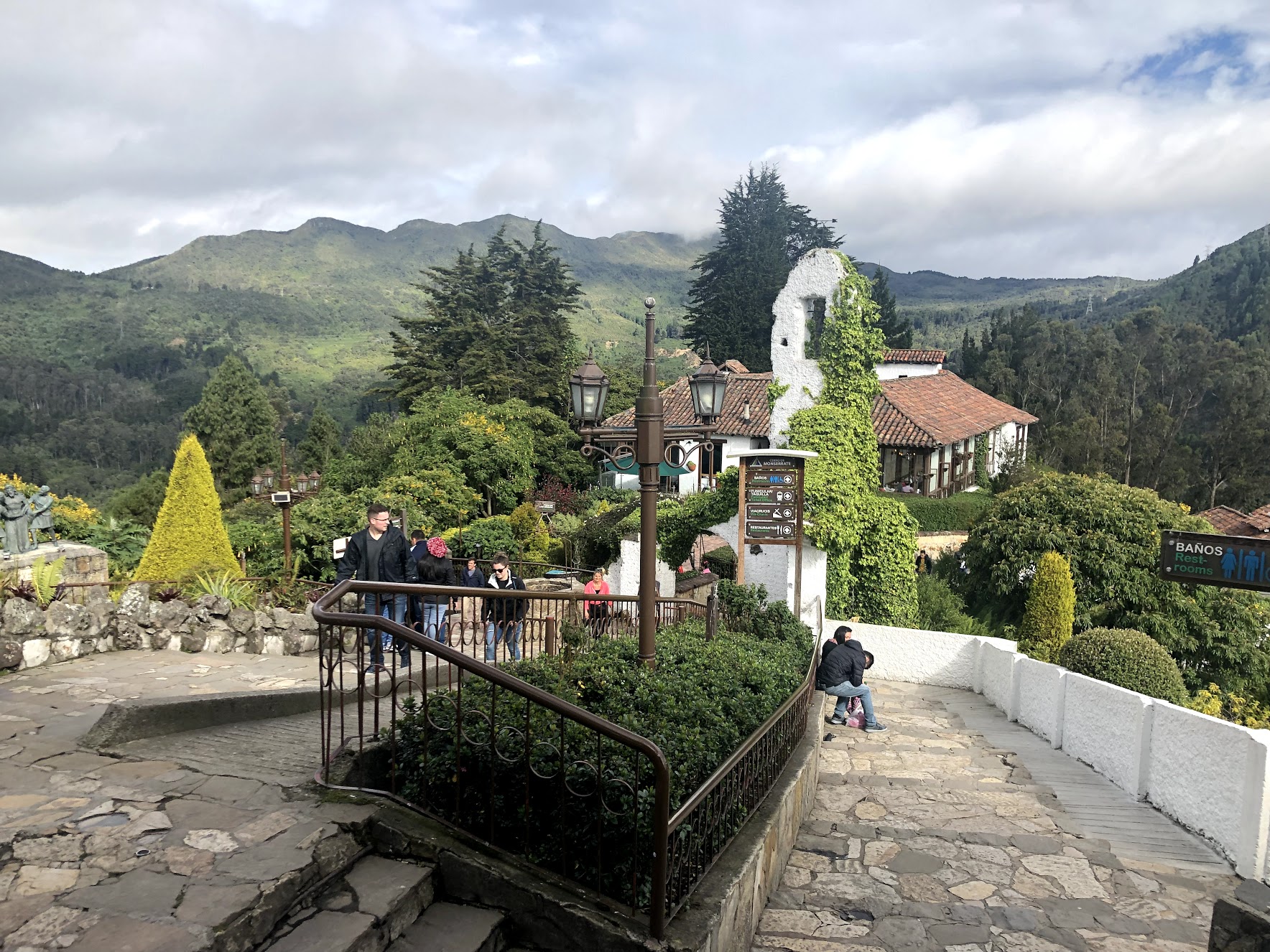
The outpost up top is a series of classic Colombian buildings surrounding a Church.
Then, I saw the view.
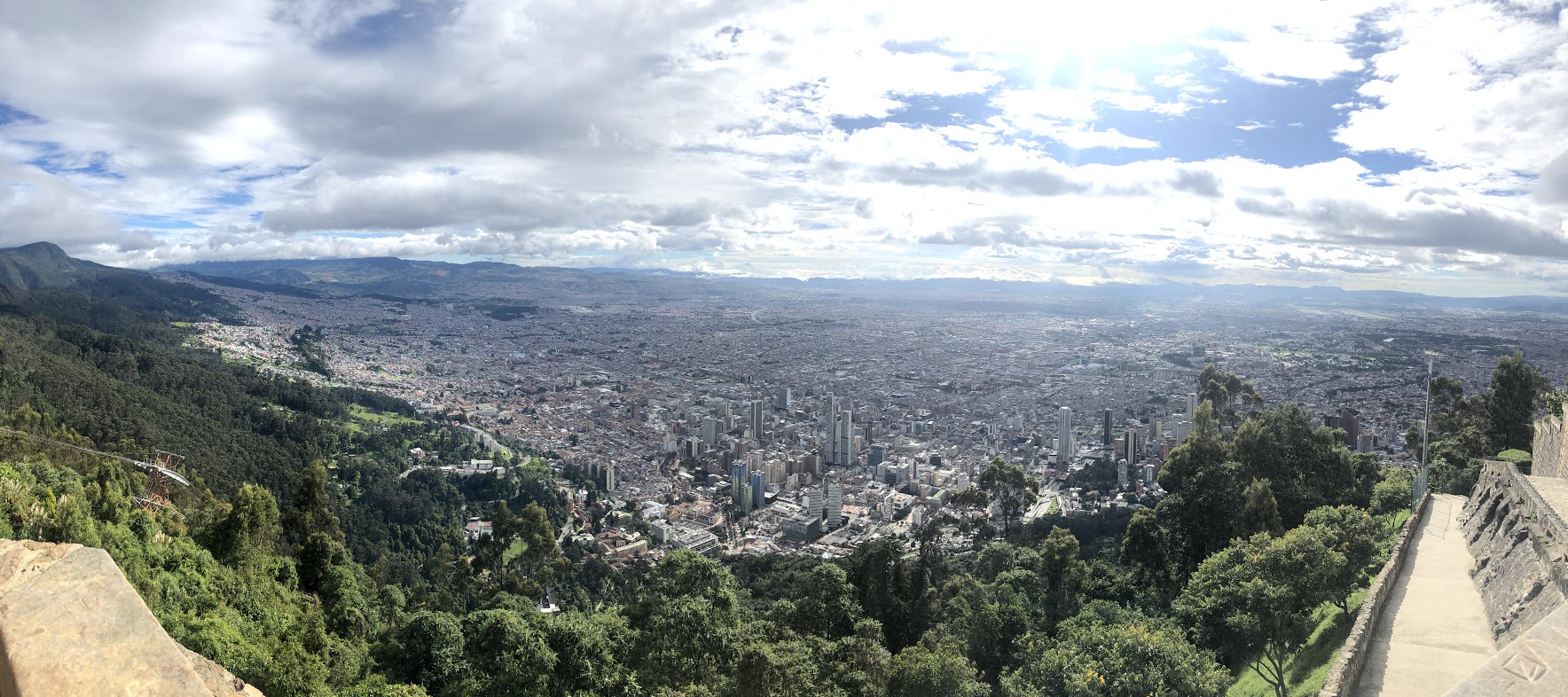
It was breathtaking (and that’s not just because you’re at 3,000 m.a.s.l. – meters above sea level). Bogotá is a miracle of a city, and you start to realize that from up there. The city rests at about 2,600 m.a.s.l., which is crazy high. It’s nested into a valley between branches of the Andes mountains.
Before I left for Colombia, my dad was very curious as to why the capital city is in the middle of nowhere, stuck in the mountains of Colombia. I didn’t know! It certainly seems like it would make commerce and governance harder. Up on the top of Mt. Monserrate, you start to get the feel that it’s just the sheer beauty of the setting that caused it.

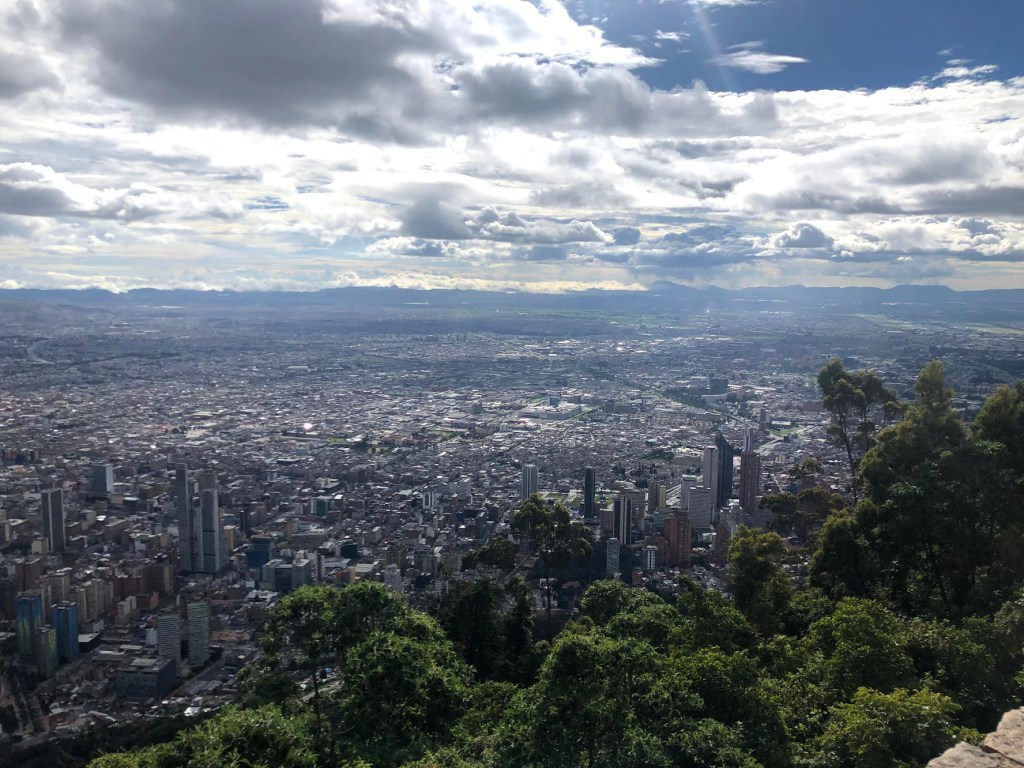


It turns out, that’s not true. But it’s nice to believe it as you take in the view. The real explanation, as I learned later today, is that Bogotá was believed to be the famed city of El Dorado due to its huge amount of gold. I got to see a lot of this gold later, but not before a few more stops.
At the base of Mt. Monserrate is the compound that Simon Bolivar lived at for many years. If you’ve never heard of Bolivar, read his whole wikipedia page right now, it’s insane. He reminds me of the kind of pseudo-credible historical stories that my dad would tell: “yeah, that guy liberated all of South America.” Except Bolivar actually did! Here’s the wiki: “Bolivar, or The Liberator, […] led the secession of what are currently the states of Venezuela, Bolivia, Colombia, Ecuador, Peru, and Panama from the Spanish Empire.” What!!!
I went to see Quinto Bolivar, which is now a museum that you pay $1.10usd to get into. I was the only one there!
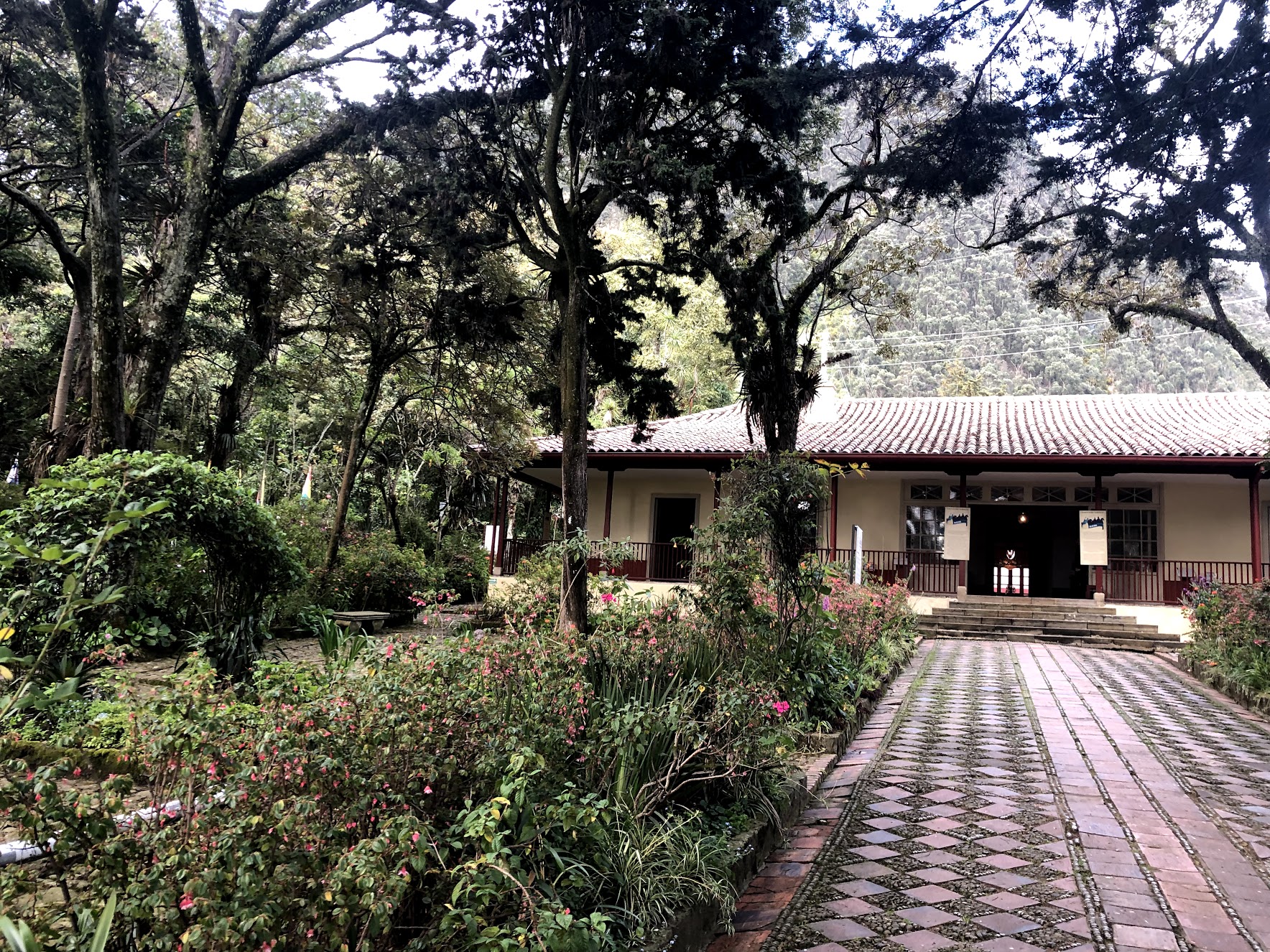
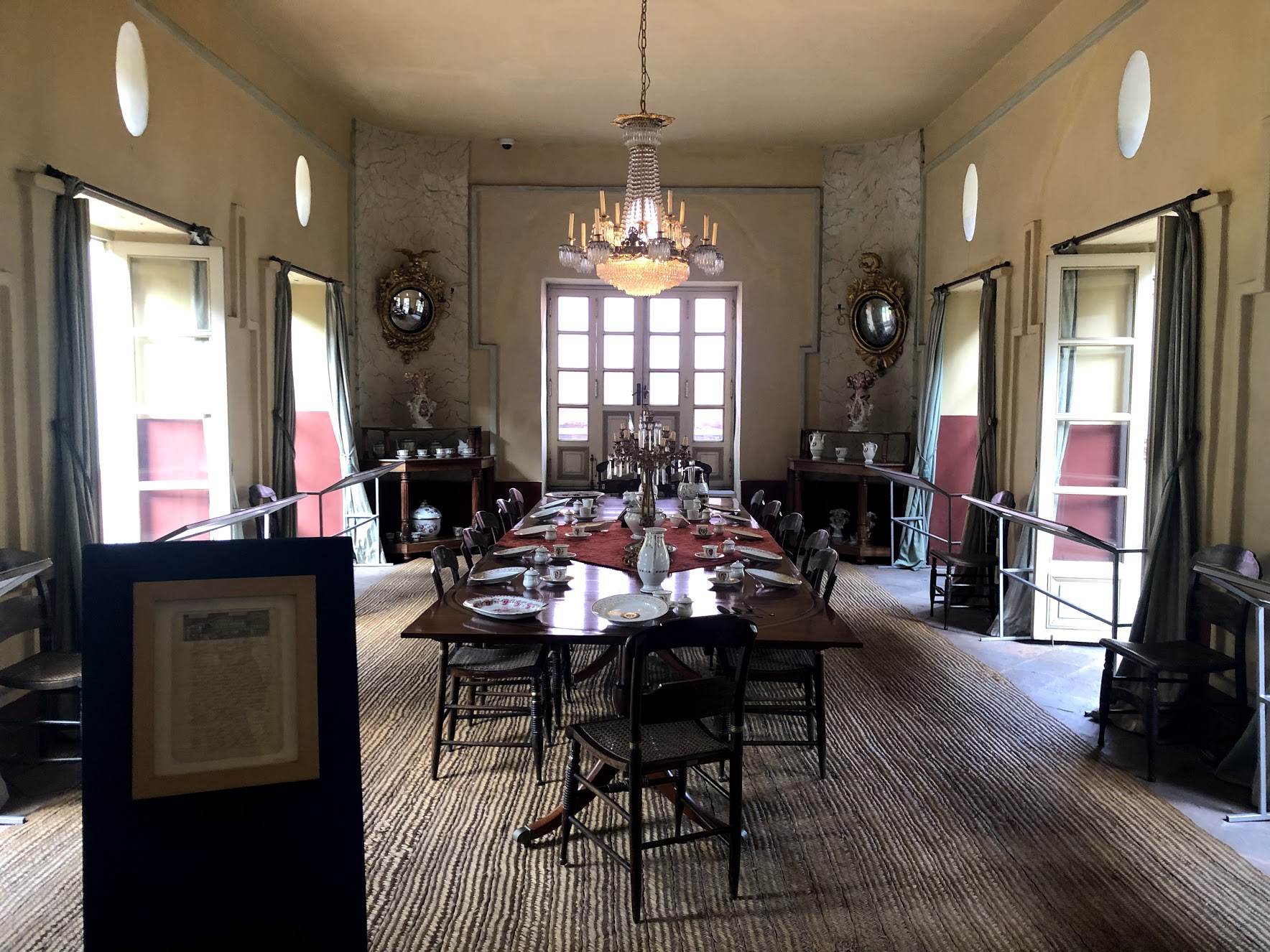
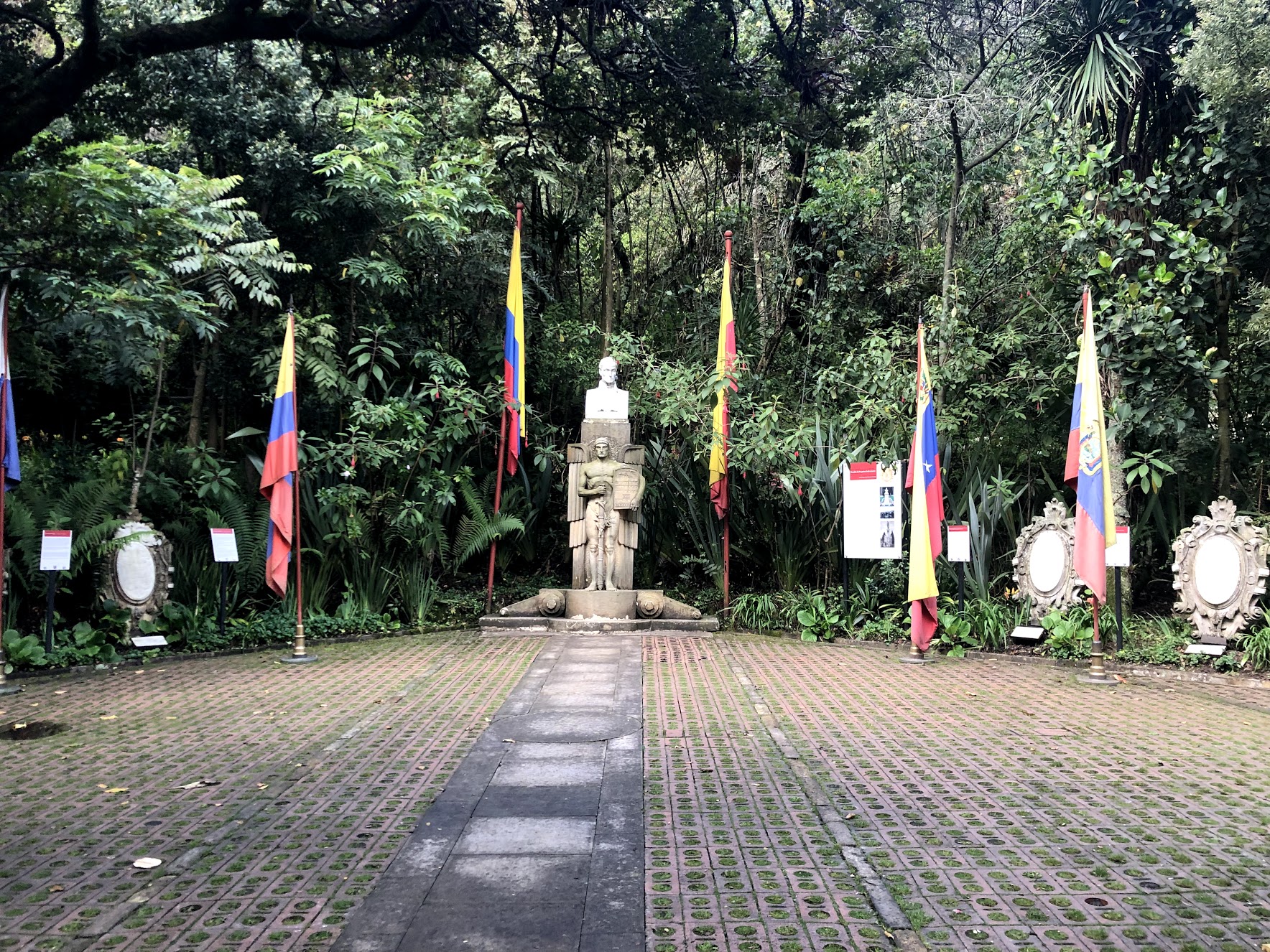
It was a pretty cool sight, and there were English plaques that helped explain some of the icons.
Next, I went to… you guessed it, another coffee shop. This was the last one of the day, and was a fun, hip spot called Varietale.
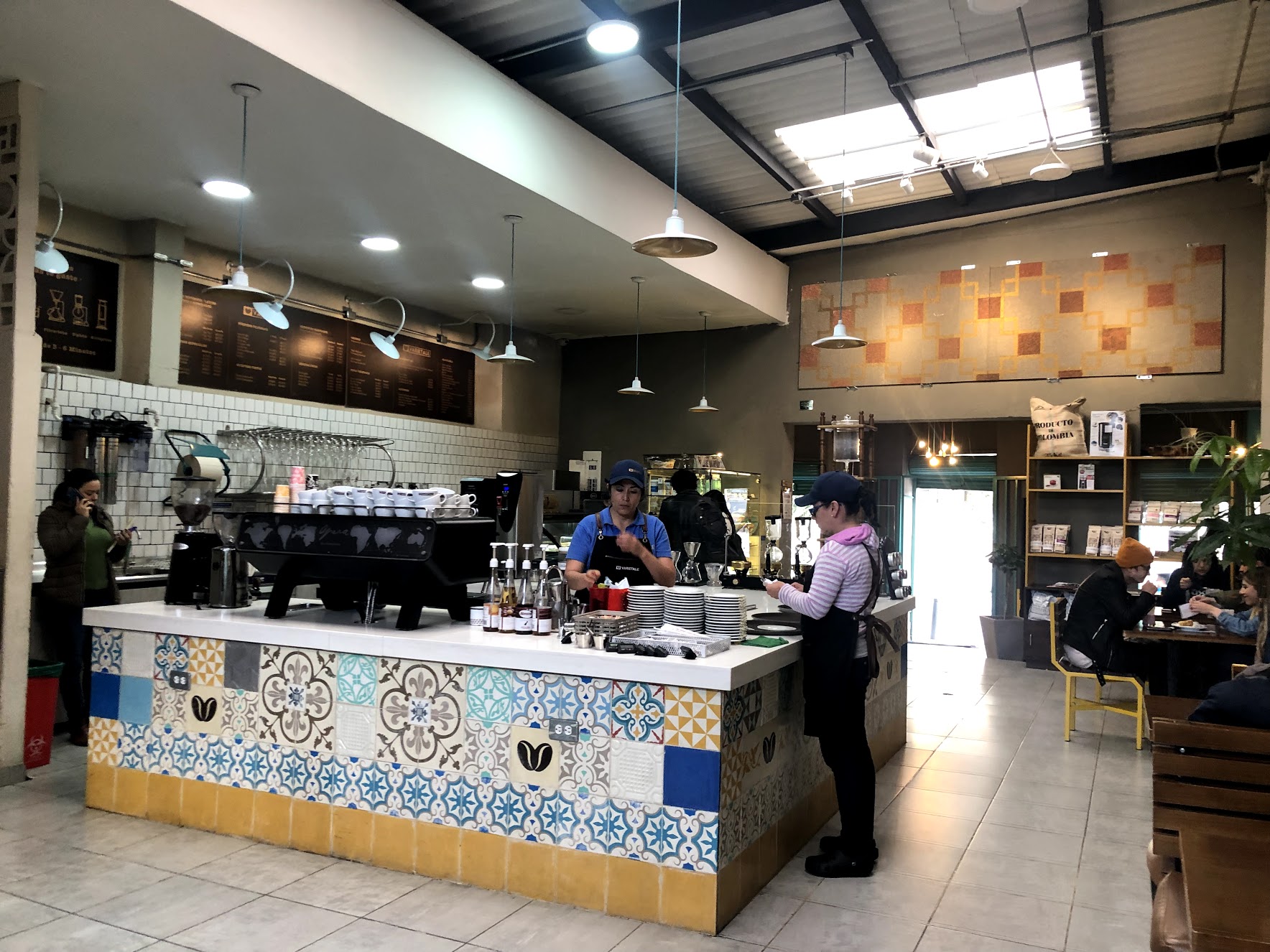
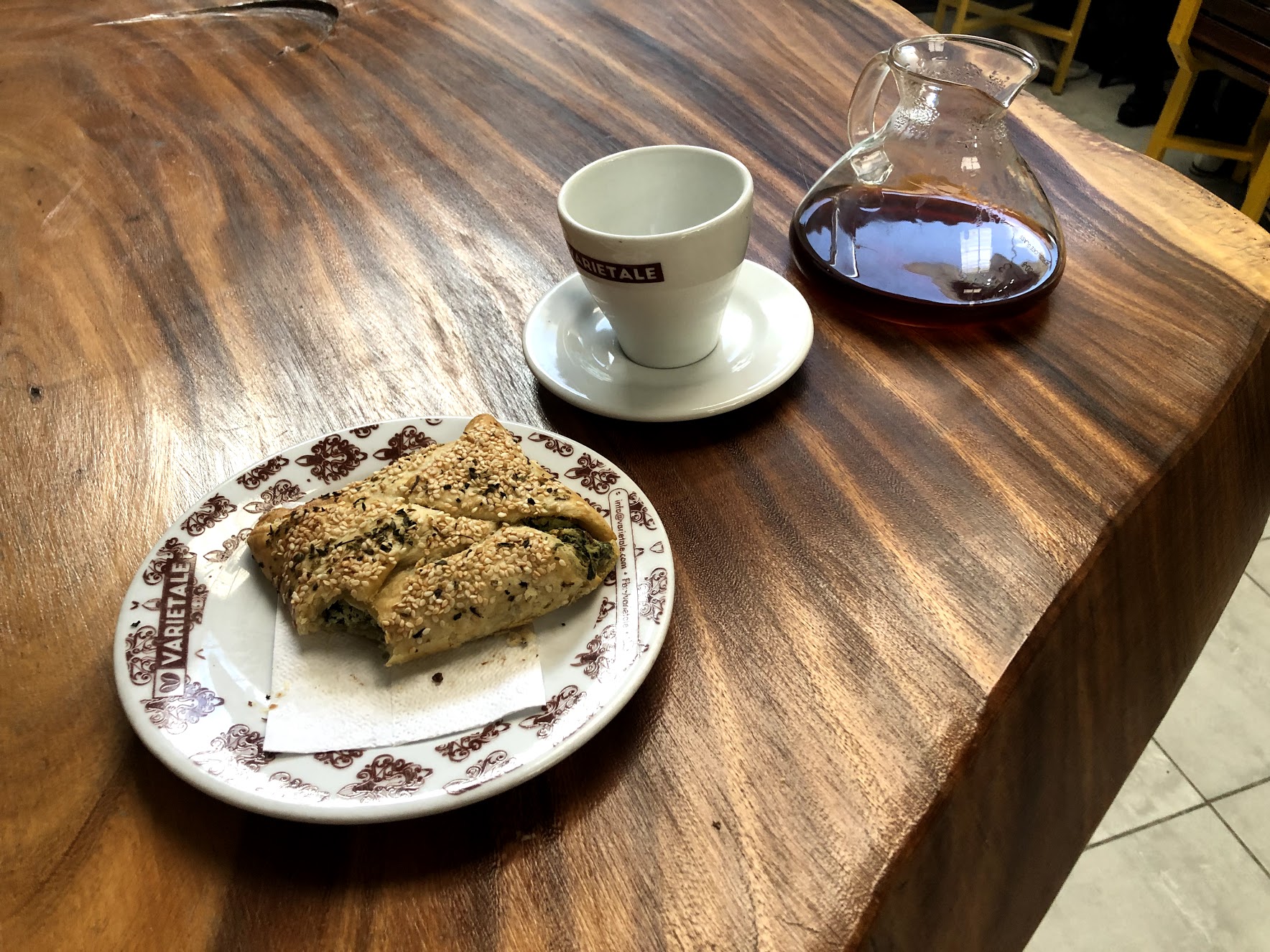
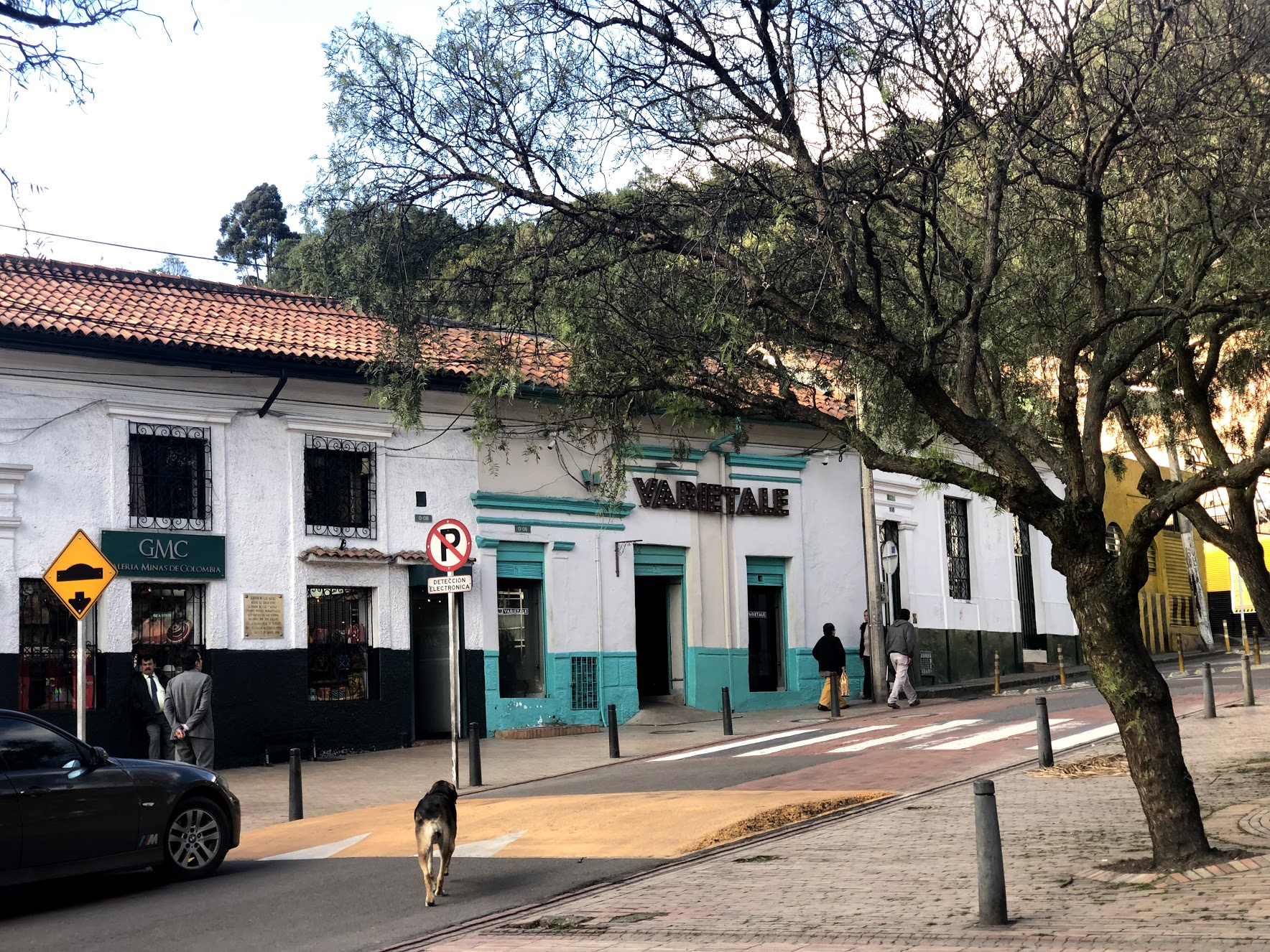
The coffee at Varietale was a roasted a bit darker than my preference, but it was probably the best medium-dark roast I’ve had. It was rich and sugary, with a big, chewy body. I didn’t enjoy the ever-so-slight smokey aftertaste, but that’s the trade off with bringing out more chocolatey and caramelized notes.
After Varietale, I saw what’s listed as the #1 thing to do in Bogotá: the Gold Museum, or Museo del Oro. The Gold Museum boasts an astoundingly large collection of pre-Colombian golden works from in and around Colombia. It just kept going on and on!
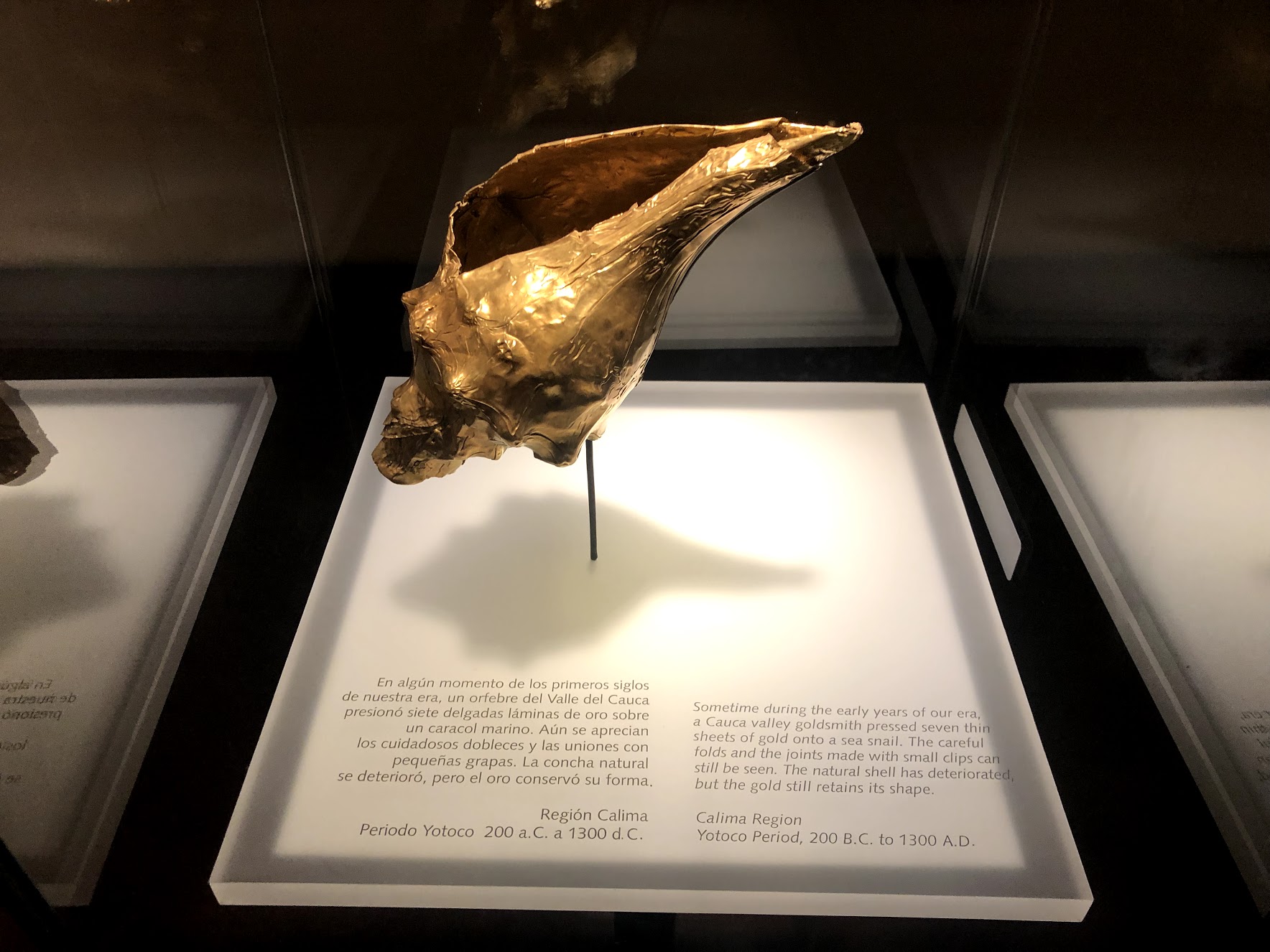
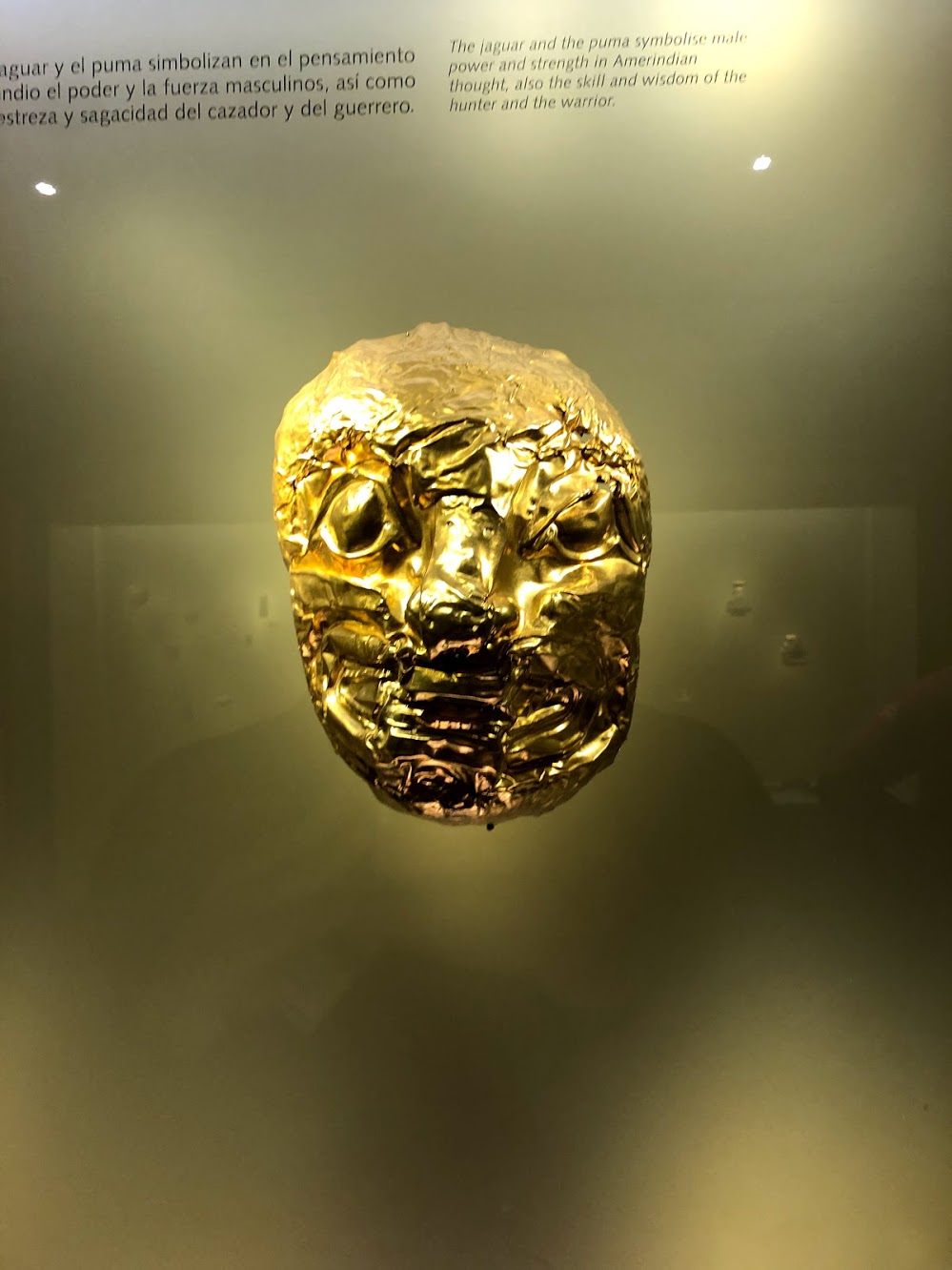
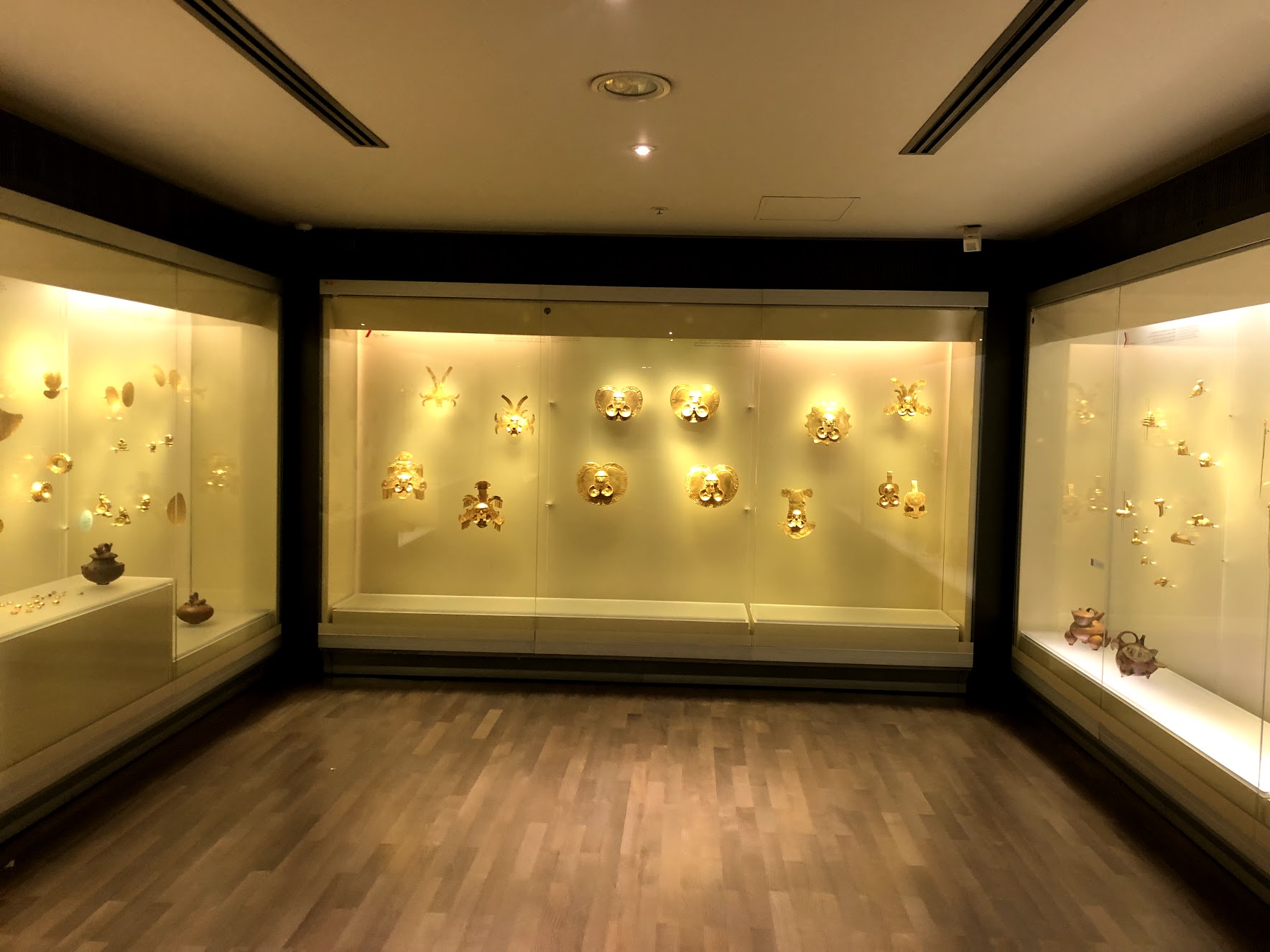
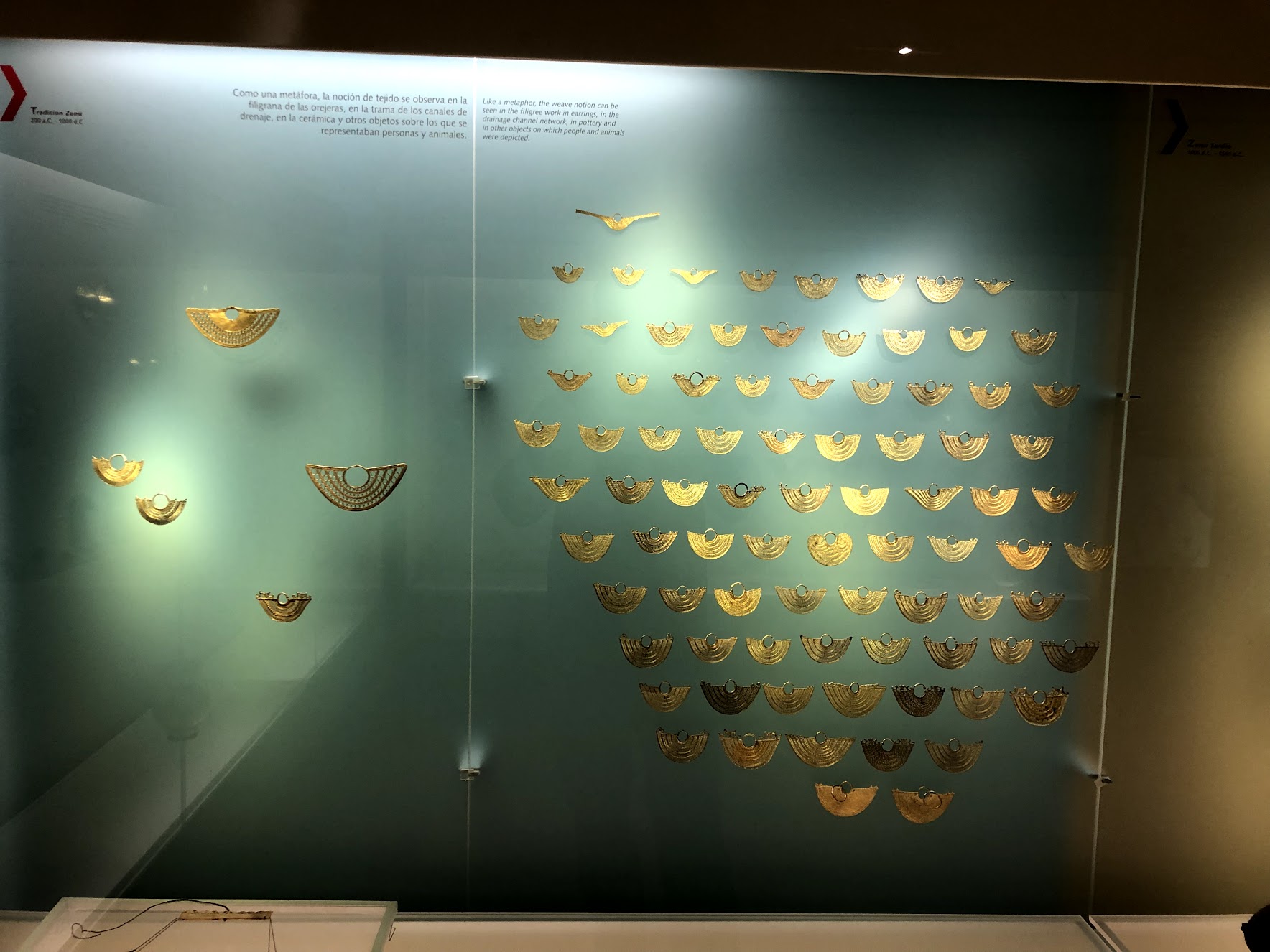
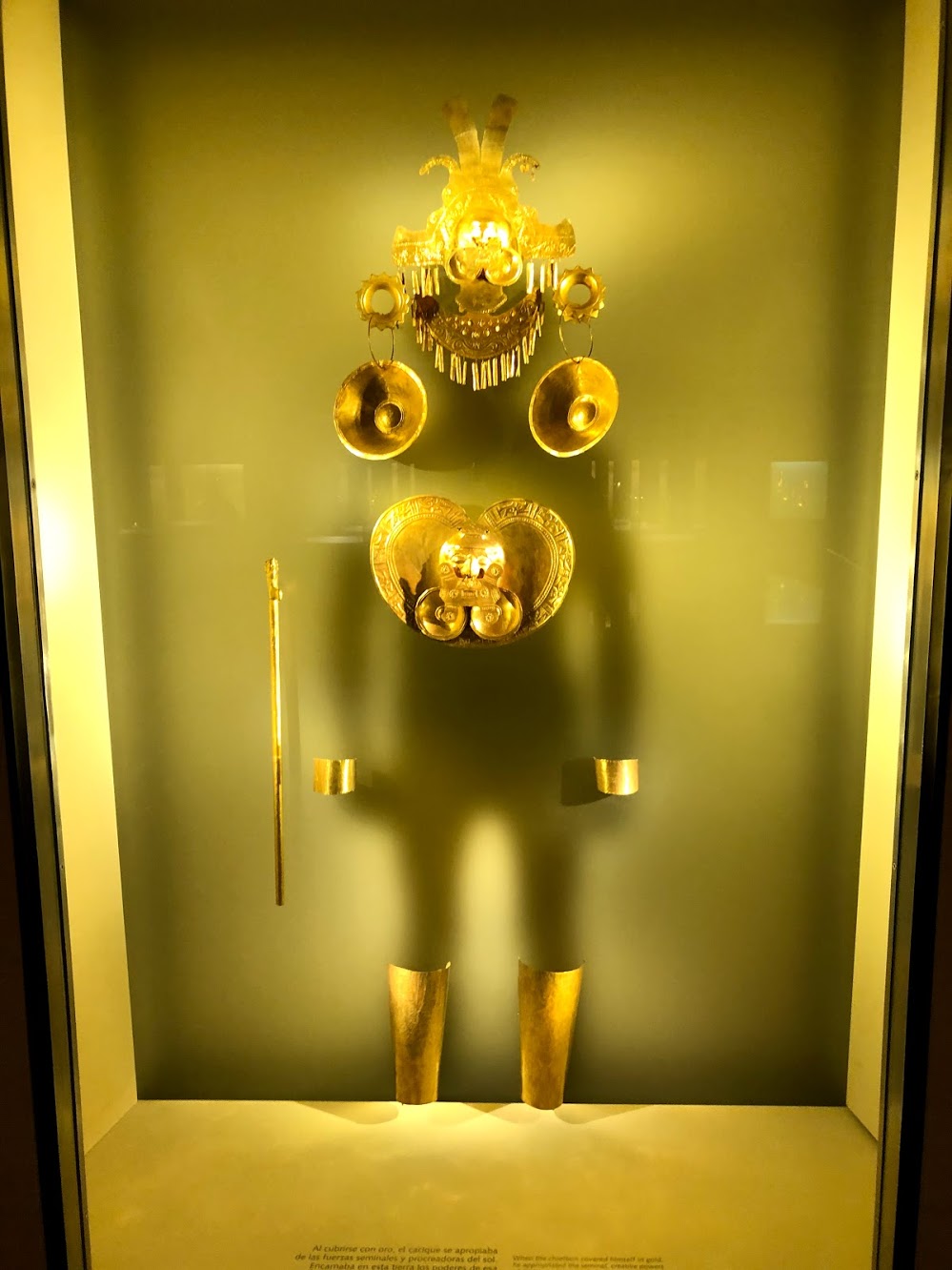
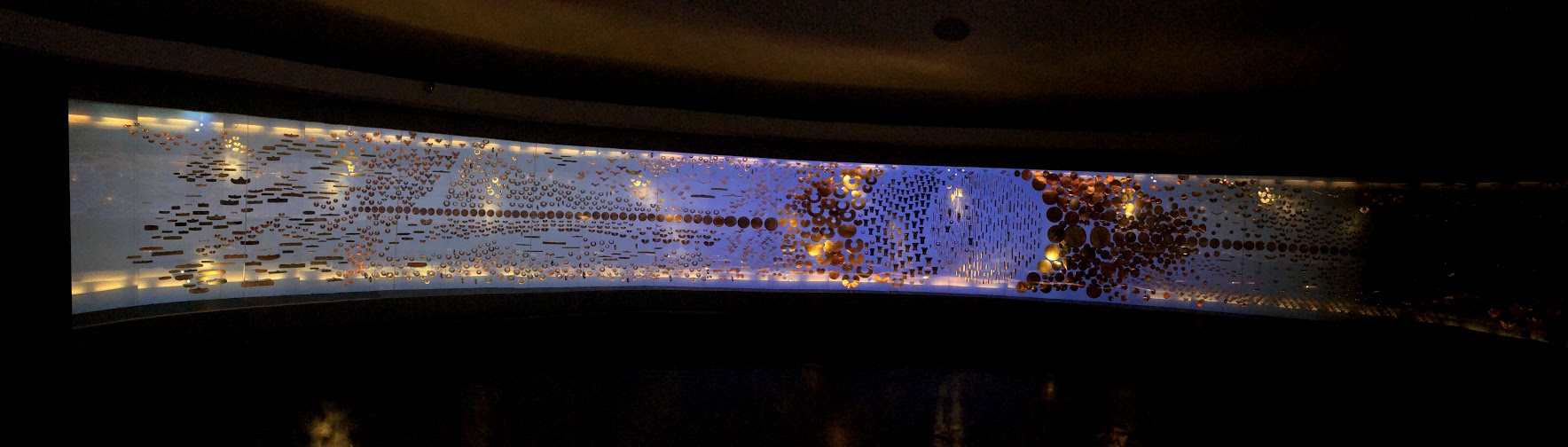
At the Msueo del Oro, I learned some of the anthropological history of Colombia. For about 2500 years, Colombia was exclusively inhabited by an array of indigenous tribes. Each had unique customs and rituals, but they all shared at least one major aspect in common: the use of gold in spiritual practices. The Colombian Andes were incredibly rich in gold, and metallurgy developed as early as 1500AD.
Bogotá specifically was one of the most gold-rich parts of Colombia. In fact, so many Bogotans wore golden jewelry that legend spread through the Colombian countryside that there was a large city in the highlands that was made of gold. This myth was retold to colonial explorers, who dutifully passed on the legend of El Dorado – the city of gold.
Of course, Bogotá was not made of gold, but it did contain an exorbitant amount of it. One of the most interesting facets of this supply was an annual ritual with the leader of the local tribe: the community would travel up to Lake Guatavita, the leader would cleanse himself in golden dust, and all of the observers would throw gold and emeralds into the lake as offerings. Talk about oversupply!
When conquistadors heard of this legend, they quickly consumed themselves with finding and draining the lake. Despite numerous attempts, colonists were never able to steal the majority of the offerings buried in Lake Guatavita. Since 1965, the lake has been protected by the Colombian government.
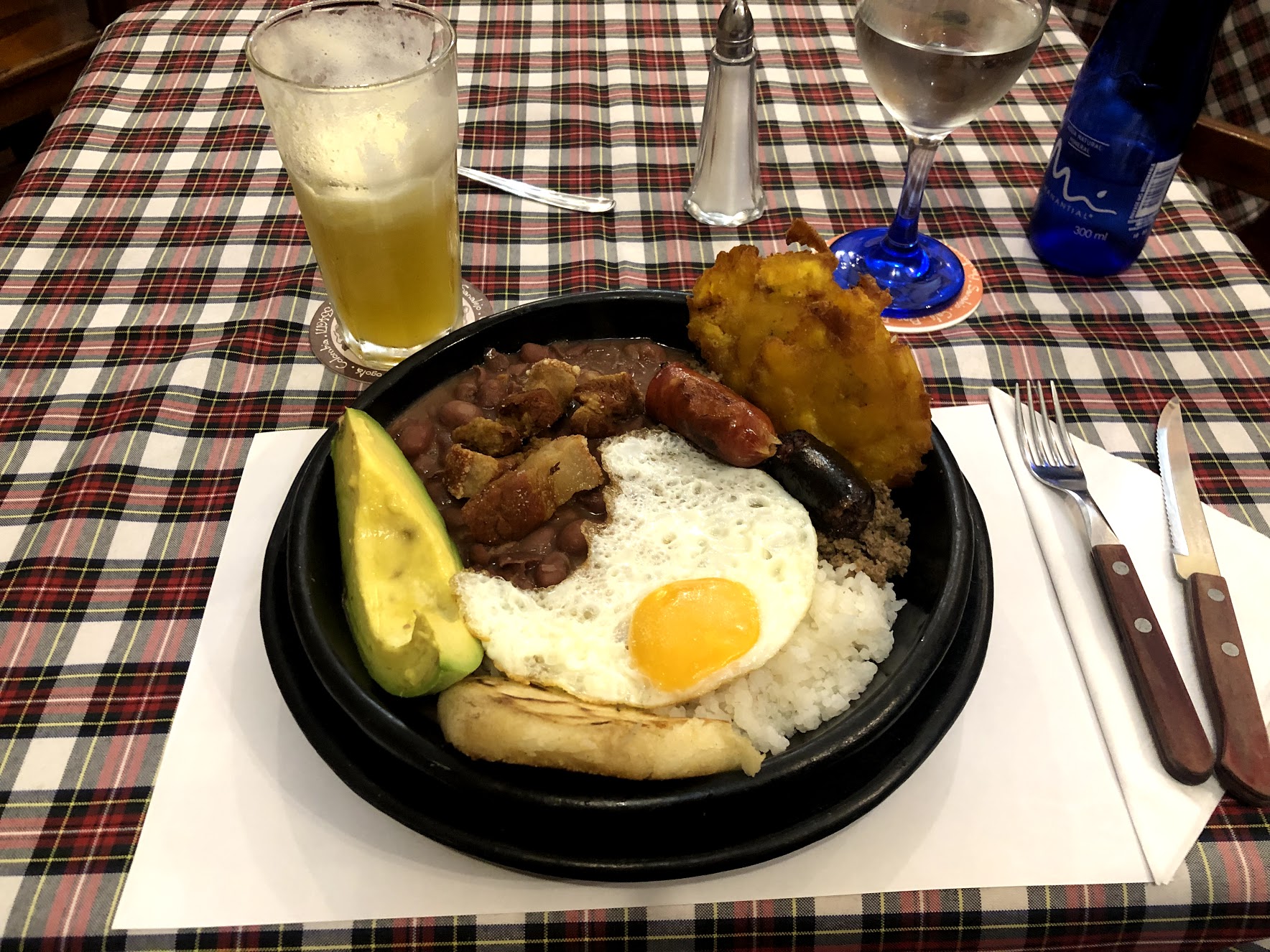
After the Gold Museum, I had some more incredible Colombian food for dinner at a nearby restaurant. This time, I got the Bandeja Paisa, which is a huge mix of meats, beans, rice, plantains, and everything else that’s good in the world:
That was a great way to end another awesome day in Bogotá.
Phrase of the day: ¿Cuál es tu café favorito? The only thing you’ll ever have to ask a barista!
See you tomorrow!
Alex
 Alex's Coffee Adventure